Tardive Dyskinesia Market Summary
- Tardive Dyskinesia is a chronic, drug-induced movement disorder affecting an estimated 20–30% of patients receiving antipsychotic therapy, with risk increasing with older age, female sex, prolonged antipsychotic exposure, mood disorders, and use of first-generation antipsychotics.
- The condition is primarily associated with long-term exposure to dopamine receptor–blocking agents (DRBAs), particularly first-generation antipsychotics such as haloperidol and chlorpromazine, which carry a higher risk than second-generation antipsychotics, including risperidone, olanzapine, and quetiapine. Additional contributors include certain antiemetics, gastrokinetic agents, and antidepressants.
Tardive Dyskinesia Market and Epidemiology Analysis
- Clinical management increasingly emphasizes routine screening and longitudinal monitoring, with tools such as the Abnormal Involuntary Movement Scale (AIMS) supporting earlier diagnosis and intervention in patients receiving DRBAs.
- Despite growing awareness, Tardive Dyskinesia remains significantly underdiagnosed and undertreated, particularly in long-term care settings, where reliance on non-targeted symptomatic therapies and low uptake of guideline-recommended treatments continue to create substantial care gaps.
- Frequent overlap and misclassification with broader extrapyramidal symptoms (EPS) contribute to delayed diagnosis, inappropriate treatment selection, and inconsistent disease management, highlighting the need for improved diagnostic accuracy and standardized screening practices.
- The absence of unified European guidance for the diagnosis and management of Tardive Dyskinesia continues to contribute to underrecognition and variability in treatment practices across the region.
- Currently approved VMAT2 inhibitors, including INGREZZA (Valbenazine) and AUSTEDO (Deutetrabenazine), have established themselves as the standard of care due to their proven efficacy in reducing involuntary movements and improving symptom control.
- The Tardive Dyskinesia Pipeline remains relatively limited, with most emerging candidates concentrated in early- to mid-stage development and largely centered on VMAT2 modulation strategies. Current Tardive Dyskinesia Pipeline assets include NBI-‘890 (Neurocrine Biosciences), SOM3355 (SOM Biotech), LY03015 (Luye Pharma), and ACP-2712 (Acadia Pharmaceuticals).
Tardive Dyskinesia Market Size and Forecast in the 7MM
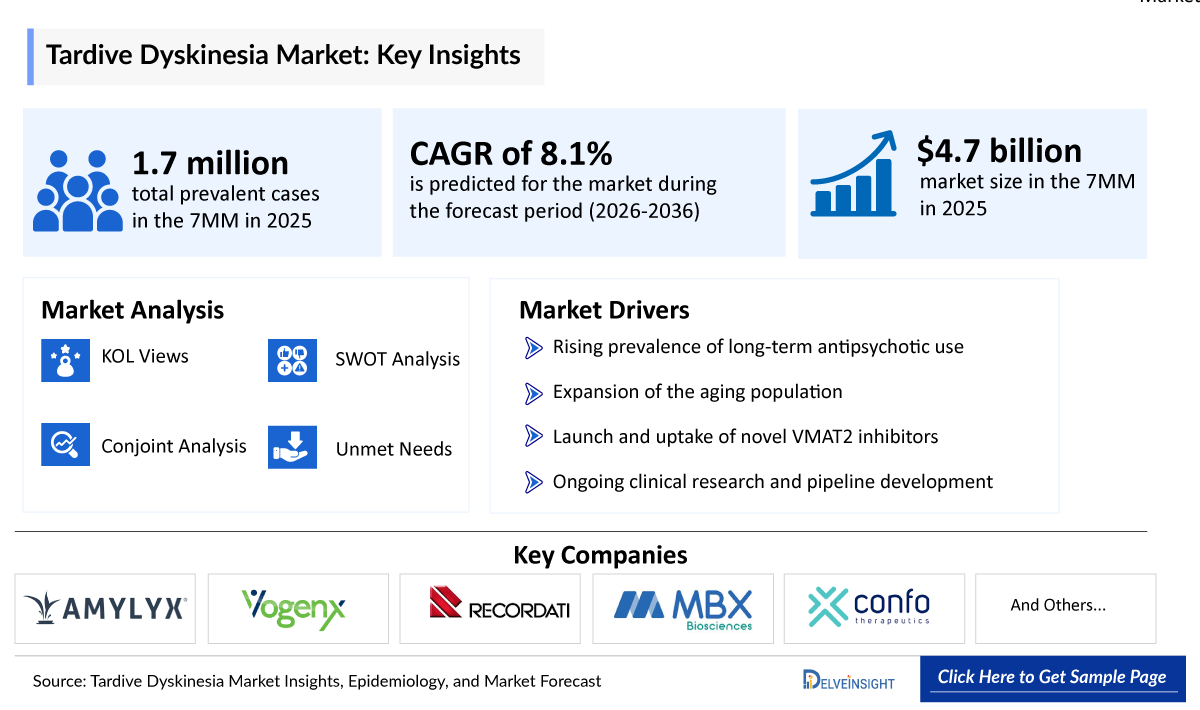
| 2025 Tardive Dyskinesia Market Size | ~USD ~4,400 million |
| 2036 Projected Tardive Dyskinesia Market Size | |
| Tardive Dyskinesia Growth Rate (2026–2036) | 8.1% CAGR |
Key Factors Driving the Tardive Dyskinesia Market Growth
-
Tardive Dyskinesia Remains the Primary Revenue Driver for VMAT2 Therapies
Tardive Dyskinesia continues to represent the leading commercial indication for VMAT2 inhibitors, driven by increasing diagnosis rates, chronic treatment needs, and rising adoption of targeted therapies such as valbenazine and deutetrabenazine.
-
Market Growth Continues to be Penetration-Led
The Tardive Dyskinesia Therapeutics Market remains substantially under-penetrated, with many eligible patients still undiagnosed or untreated. Tardive Dyskinesia Therapeutics Market expansion is primarily being driven by increasing treatment penetration and rising new-to-brand prescriptions rather than market share shifts between therapies.
-
Clinical Differentiation is Driving Competitive Advantage
Key differentiators, including treatment persistence, dosing convenience, and higher VMAT2 target occupancy, are expected to remain important factors influencing physician preference and long-term therapy adoption.
-
Pipeline Expansion Beyond Traditional VMAT2 Mechanisms
The Tardive Dyskinesia pipeline is expanding beyond traditional VMAT2 inhibitors, with emerging therapies targeting novel mechanisms such as GPR88 agonists, P5P analogues, next-generation LAIs, and VMAT2 inhibitor/Sigma-1 agonist combinations, supporting future treatment innovation.
DelveInsight's ‘Tardive Dyskinesia Market Insights, Epidemiology and Market Forecast – 2036’ report delivers an in-depth understanding of the Tardive Dyskinesia, historical and forecasted epidemiology, as well as the Tardive Dyskinesia market trends in the United States, EU4 (Germany, Spain, Italy, and France), and the United Kingdom, and Japan.
The Tardive Dyskinesia Treatment Market Report delivers a comprehensive analysis of the current treatment landscape, including standards of care, clinical practices, and evolving therapeutic algorithms. It evaluates Tardive Dyskinesia patient burden trends, revenue & market share dynamics, peak patient share & therapy uptake analysis, and provides an in-depth Tardive Dyskinesia Market Size assessment, and growth rate projections (Historical & Forecast 2022–2036) across global regions.
The Tardive Dyskinesia Therapeutics Market Report highlights key unmet medical needs in Tardive Dyskinesia and maps the competitive and clinical landscape to uncover high-value opportunities, providing a clear outlook on future market growth potential.
Scope of the Tardive Dyskinesia Market Report | |
|
Study Period |
2022–2036 |
|
Historical Year |
2022–2025 |
|
Forecast Period |
2026–2036 |
|
Base Year |
2026 |
|
Geographies Covered |
|
|
Tardive Dyskinesia Market CAGR (Forecast period) | |
|
Tardive Dyskinesia Epidemiology Segmentation Analysis |
Patient Burden Assessment
|
|
Tardive Dyskinesia Therapies |
|
|
Tardive Dyskinesia Companies |
|
|
Tardive Dyskinesia Market |
Segmented by
|
|
Analysis |
|
Tardive Dyskinesia Understanding and Treatment Algorithm
Tardive Dyskinesia Overview and Diagnosis
Tardive Dyskinesia is a drug-induced movement disorder marked by involuntary, repetitive, hyperkinetic movements of the face, mouth, tongue, and jaw, with possible involvement of the trunk and limbs. It is mainly linked to long-term exposure to Dopamine Receptor–blocking agents (DRBAs), particularly antipsychotics, and also certain antiemetics (e.g., metoclopramide). It is typically chronic and persistent, often continuing after drug withdrawal, with a fluctuating course that impairs functioning and quality of life.
The condition is thought to involve dopamine receptor supersensitivity, oxidative stress, and GABAergic dysfunction. Despite rising awareness, Tardive Dyskinesia remains a significant clinical burden. Available therapies, including VMAT2 inhibitors (valbenazine, deutetrabenazine), are symptomatic only, highlighting an ongoing unmet need.
Tardive Dyskinesia is diagnosed clinically based on history of DRBAs exposure and the presence of characteristic involuntary movements, but remains underdiagnosed in routine practice. The DSM-5-TR defines it as a medication-induced movement disorder after = 3 months of antipsychotic exposure (or = 1 month in elderly patients), while the Schooler–Kane criteria and AIMS scale support confirmation and severity assessment.
It must be differentiated from other drug-induced movement disorders such as Parkinsonism, akathisia, dystonia, and tremor, as well as neuroleptic malignant syndrome, with key distinction being its onset after long-term exposure and potential persistence after drug withdrawal, making accurate diagnosis critical for appropriate management.
Tardive Dyskinesia Treatment
Management of Tardive Dyskinesia focuses on early detection, prevention, and symptom control while maintaining psychiatric stability, with routine monitoring using the AIMS scale recommended in patients on long-term DRBAs. Initial steps include reassessing antipsychotic therapy, using the lowest effective dose, reducing unnecessary long-term exposure, and when appropriate, switching from first-generation antipsychotics to second-generation agents or clozapine.
Evidence-based treatment is centered on VMAT2 inhibitors (valbenazine, deutetrabenazine), which are considered first-line therapies for moderate-to-severe disease and have demonstrated significant improvement in involuntary movements and quality of life in clinical trials. Other options such as benzodiazepines, amantadine, and Ginkgo biloba show limited or inconsistent benefit, while anticholinergics are generally avoided.
Further details related to country-based variations are provided in the report.
Tardive Dyskinesia Unmet Needs
The section “unmet needs of Tardive Dyskinesia” outlines the critical gaps between the current state of patient care, diagnosis, and the ideal & effective management of the disease. It highlights the obstacles experienced by patients, clinicians, and researchers and identifies potential solutions for future progress.
- Critical Gaps in Diagnosis and Screening
- Lack Of Standardized Guidelines
- Limited Understanding of Tardive Dyskinesia Pathophysiology and Diagnostic Pathways
- Limitations of Current Treatment Options
- Quantify the "hidden" burden of TD is challenging
- Restricted Specialist Access, and others…..
Note: Comprehensive unmet needs insights in Tardive Dyskinesia and their strategic implications are provided in the full report.
Tardive Dyskinesia Epidemiology
Key Findings from Tardive Dyskinesia Epidemiological Analysis and Forecast
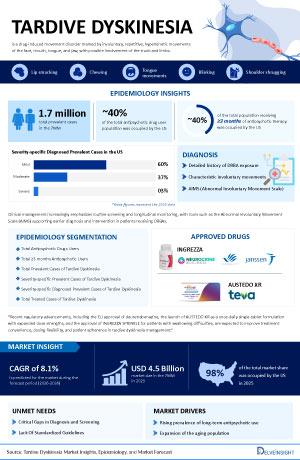
- According to DelveInsight’s estimates, in 2025, the total number of prevalent cases of Tardive Dyskinesia in the 7MM was ~1,777,000.
- The United States accounted for ~40% of the total antipsychotic drug user population across the 7MM in 2025.
- The United States accounted for ~40% of the total population receiving =3 months of antipsychotic therapy across the 7MM in 2025, making it one of the major contributing markets.
- Among the EU4 and the UK, Germany accounted for the highest number of prevalent cases of Tardive Dyskinesia in 2025, whereas the UK reported the lowest number of incident cases during the same year.
- The majority of diagnosed prevalent cases of Tardive Dyskinesia in the United States in 2025 were classified as moderate-to-severe, accounting for approximately ~60% of cases, while mild cases represented nearly ~40% of the total diagnosed prevalent population for each severity class.
Tardive Dyskinesia Market Epidemiology Segmentation in the 7MM
- Total Antipsychotic Drugs Users
- Total ≥3 months Antipsychotic Users
- Total Tardive Dyskinesia Prevalent Cases
- Tardive Dyskinesia Severity-specific Prevalent Cases
- Tardive Dyskinesia Severity-specific Diagnosed Prevalent Cases
- Total Tardive Dyskinesia Treated Cases
Tardive Dyskinesia Market Recent Breakthroughs and Development
- In Aug 2026, Neurocrine Biosciences published results from the KINECT-PRO study in a peer-reviewed journal. The data demonstrated that INGREZZA (valbenazine) capsules provided meaningful, long-term improvements in patient-reported quality of life, health outcomes, and daily functioning among adults living with tardive dyskinesia.
- In May 2026, Neurocrine Biosciences released data from a new survey highlighting the profound impact of Tardive Dyskinesia (TD)—a persistent, involuntary movement disorder—on employment. The findings reveal that a vast majority of individuals living with TD experience severe disruptions in their professional lives, including difficulty securing jobs, maintaining productivity, and facing workplace stigma. Many respondents reported reducing their working hours or leaving the workforce entirely due to involuntary physical movements. Neurocrine aims to use these insights to increase clinical awareness and advocate for better workplace accommodations and treatments.
- In May 2026, Neurocrine Biosciences released survey data revealing the profound impact of Tardive Dyskinesia (TD) on employment. TD, characterized by uncontrollable body movements caused by certain psychiatric medications, significantly affects a patient's ability to perform job duties and interact socially. The survey highlights that many individuals experience anxiety about their movements, leading to social withdrawal or job loss. These findings emphasize the "invisible" burden of the disease beyond physical symptoms, showing that social stigma can lead to severe economic hardship. Neurocrine aims to use this data to advocate for better management of the condition.
- In January 2026, Neurocrine Biosciences announced the initiation of the Phase II clinical study of investigational compound NBI-1065890 in adults with Tardive Dyskinesia.
- In January 2026, Teva announced that Deutetrabenazine received a marketing authorisation valid throughout the EU.
- In November 2025, Teva presented IMPACT-TD Registry data at the Neuroscience Education Institute (NEI) Fall Congress 2025
Tardive Dyskinesia Drug Analysis & Competitive Landscape
The Tardive Dyskinesia drug chapter provides a detailed, market-focused review of the emerging Tardive Dyskinesia Pipeline across Phase I–II clinical trials. It covers the Tardive Dyskinesia mechanism of action, clinical trial data, regulatory approvals, patents, collaborations, and strategic partnerships for each therapy, along with their advantages, limitations, and recent developments.
This section offers critical insights into the Tardive Dyskinesia treatment landscape, supporting market assessment, competitive analysis, and growth forecasting for the Tardive Dyskinesia therapeutics market.
Tardive Dyskinesia Approved Therapies
-
Valbenazine (INGREZZA): Neurocrine Biosciences/Mitsubishi Tanabe Pharma Corporation/Janssen Pharmaceutical
Valbenazine, developed by Neurocrine Biosciences, selectively inhibits VMAT2 with no appreciable binding affinity for VMAT1, dopaminergic (including D2), serotonergic, adrenergic, histaminergic or muscarinic receptors. INGREZZA dosages approved for use are 40 mg, 60 mg and 80 mg capsules. In 2017, Neurocrine Biosciences launched valbenazine in the US for Tardive Dyskinesia, followed by the 2024 FDA approval of INGREZZA SPRINKLE, an oral granule formulation aimed at improving treatment convenience.
-
Deutetrabenazine (AUSTEDO XR): Teva Pharmaceuticals
Deutetrabenazine is a VMAT2 inhibitor approved by the US FDA in adults for the treatment of Tardive Dyskinesia and for the treatment of chorea associated with Huntington’s disease. AUSTEDO XR is the once-daily formulation of AUSTEDO. In 2017, Teva Pharmaceuticals received FDA approval for deutetrabenazine for adults with Tardive Dyskinesia. In 2023, the company further expanded the franchise with approval of AUSTEDO XR, a once-daily extended-release formulation of deutetrabenazine.
Competitive Landscape of Tardive Dyskinesia Marketed/Approved Therapies | ||||||
|
Drug/Therapy |
Company |
Indication |
Molecule Type |
MoA |
RoA |
Marketed Region |
|
Valbenazine (INGREZZA) |
Neurocrine Biosciences/Mitsubishi Tanabe Pharma Corporation/Janssen Pharmaceutical |
Tardive Dyskinesia |
Small molecule |
Oral |
VMAT2 inhibitor |
US: 2017; JP: 2022 |
|
Deutetrabenazine (AUSTEDO XR) |
Teva Pharmaceuticals |
Tardive Dyskinesia |
Small molecule |
Oral |
VMAT2 inhibitor |
US: 2017; EU: 2026 |
Tardive Dyskinesia Pipeline Analysis
-
NBI-'890: Neurocrine Biosciences
NBI-'890, discovered and developed internally at Neurocrine, is a potent, selective, and orally bioavailable inhibitor of Vesicular Monoamine Transporter 2 (VMAT2) in clinical development for the treatment of Tardive Dyskinesia. Inhibition of VMAT2 is expected to provide therapeutic benefit in Tardive Dyskinesia, other hyperkinetic movement disorders, and potentially other CNS disorders where dopaminergic signaling is dysregulated. NBI-'890 is currently in Phase II of development for Tardive Dyskinesia.
-
SOM3355: SOM Biotech
SOM3355 is an investigational therapy currently in Phase IIb development for Tardive Dyskinesia, leveraging a unique multimodal mechanism that combines selective ß1-adrenergic modulation with VMAT1 and VMAT2 inhibition. Unlike conventional dopamine-depleting agents, SOM3355 is designed to reduce involuntary movements while potentially minimizing neuropsychiatric adverse effects such as depression, somnolence, anxiety, and akathisia. Backed by encouraging safety and efficacy findings from Huntington’s disease studies, the therapy is being advanced as a potential next-generation option for TD with the ability to address both motor and behavioral symptom burden.
Tardive Dyskinesia Competitive Landscape of Emerging Drugs | ||||||
|
Drug Name |
Company |
Highest Phase |
Indication |
RoA |
MoA |
Anticipated Launch in the US |
|
NBI-'890 |
Neurocrine Biosciences |
II |
Tardive Dyskinesia |
Oral |
VMAT2 inhibitor |
Information is available in the full report |
|
SOM3355 |
SOM Biotech |
IIb |
Tardive Dyskinesia |
Oral |
selective β-blocker and a VMAT1/2 inhibitor |
Information is available in the full report |
|
ACP-2712 |
Acadia |
I |
Tardive Dyskinesia |
Oral |
GPR88 agonist |
Information is available in the full report |
|
Acadia Pharmaceuticals plans to initiate a first-in-human study in healthy volunteers in the fourth quarter of 2026 | ||||||
|
Note: Launch insights are provisional and may change with future report updates or the occurrence of major key catalysts. | ||||||
Tardive Dyskinesia Companies
- Neurocrine Biosciences/Mitsubishi Tanabe Pharma Corporation/Janssen Pharmaceutical
- Teva Pharmaceuticals
- Neurocrine Biosciences
- SOM Biotech
- Acadia Xenon Pharmaceuticals, and others
Tardive Dyskinesia Market Outlook
The Tardive Dyskinesia Market has evolved significantly with the introduction of VMAT2 inhibitors, shifting treatment from supportive and symptomatic management toward targeted pharmacological therapy. Historically, management relied on reducing or discontinuing dopamine receptor-blocking agents (DRBAs), switching antipsychotics, or using supportive agents such as benzodiazepines and amantadine with limited efficacy.
The approvals of valbenazine and deutetrabenazine in 2017 marked the first FDA-approved therapies specifically indicated for Tardive Dyskinesia and substantially transformed the Tardive Dyskinesia Treatment Market Landscape.
Current Tardive Dyskinesia Treatment strategies increasingly focus on long-term symptom control, treatment persistence, and dosing convenience. VMAT2 inhibitors have demonstrated durable improvements in AIMS scores with favorable safety and tolerability profiles. Valbenazine continues to maintain a strong competitive position due to convenient once-daily dosing, higher treatment persistence, and nearly two-fold higher VMAT2 target occupancy compared with deutetrabenazine.
Despite these advancements, substantial unmet needs remain due to underdiagnosis, inconsistent screening practices, healthcare disparities, and restricted access to newer therapies, particularly among elderly and long-term care populations. Additionally, the pipeline remains relatively limited and largely focused on next-generation VMAT2 modulation strategies, highlighting the ongoing need for novel therapies with improved long-term tolerability and broader symptom control.
Key Findings from Tardive Dyskinesia Market Forecast Report
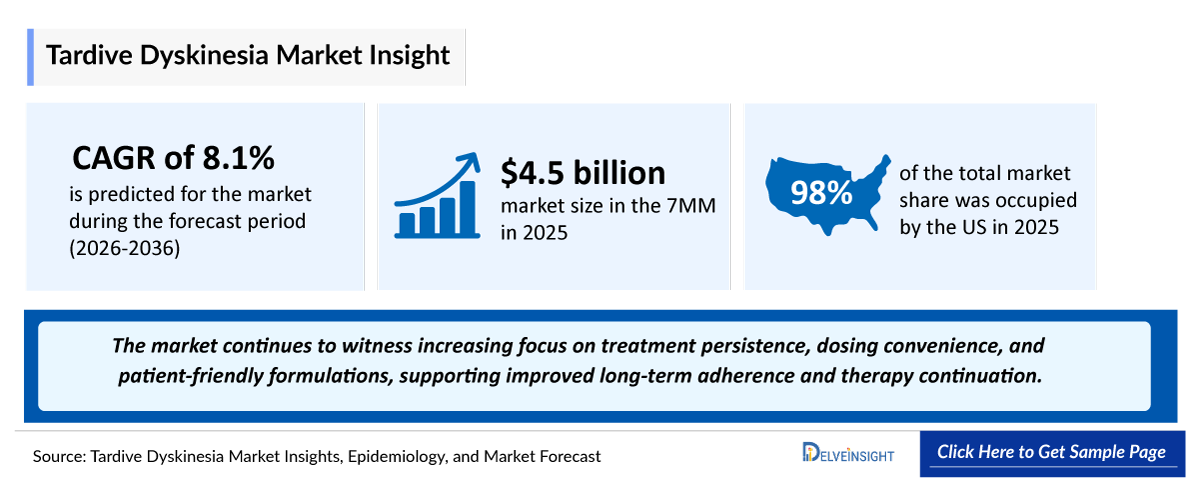
- In 2025, the Tardive Dyskinesia Therapeutics Market across the 7MM was valued at ~USD 4,400 million, with the United States accounting for nearly ~98% of the total Tardive Dyskinesia Treatment Market Size, representing the largest share among all markets.
- VMAT2 inhibitors, particularly valbenazine and deutetrabenazine, have become the standard targeted therapeutic approach for Tardive Dyskinesia management and are expected to remain key market growth drivers during the forecast period.
- The Tardive Dyskinesia Treatment Market continues to witness increasing focus on treatment persistence, dosing convenience, and patient-friendly formulations, supporting improved long-term adherence and therapy continuation.
- Real-world studies continue to highlight substantial underdiagnosis and treatment disparities, particularly among elderly patients, long-term care populations, and underserved patient groups.
- The Tardive Dyskinesia Pipeline remains relatively limited, with most emerging therapies focused on next-generation VMAT2 modulation and novel neuropsychiatric mechanisms, reflecting continued unmet clinical needs.
- Future Tardive Dyskinesia Therapeutics Market Growth is expected to be supported by expanding access to newer therapies, development of long-acting and patient-friendly formulations, and increasing research into personalized and disease-modifying therapeutic strategies.
Tardive Dyskinesia Drug Class/Insights into Leading Emerging and Marketed Therapies (2022–2036 Forecast)
The Tardive Dyskinesia Treatment Market Landscape has shifted from supportive management toward targeted therapies focused on reducing involuntary movements while maintaining psychiatric stability. The introduction of VMAT2 inhibitors has significantly transformed disease management and established a targeted standard of care.
Small Molecules: The Tardive Dyskinesia Treatment Market remains predominantly small molecule-driven, with both approved and pipeline therapies largely focused on VMAT inhibition strategies. Marketed therapies, including Valbenazine and Deutetrabenazine, are currently the only approved targeted therapies and have established VMAT2 inhibition as the standard treatment approach. Pipeline development also remains centered on next-generation VMAT-targeted small molecules such as NBI-1065890 (NBI-’890) and SOM3355, alongside emerging novel mechanisms, including GPR88 agonists such as ACP-2712.
Tardive Dyskinesia Drug Uptake
This section focuses on the uptake rate of potential Tardive Dyskinesia drugs expected to be launched in the market during the forecast period (2026–2036). The analysis covers the Tardive Dyskinesia drug’s uptake, performance at peak, factors affecting performance during prime years of growth, patient uptake by therapy, and anticipated sales generated by each drug.
The uptake of Tardive Dyskinesia Therapies is expected to be primarily driven by VMAT2 inhibitors, alongside supportive management approaches and antipsychotic optimization strategies. Earlier, treatment relied on dose reduction, switching antipsychotics, and off-label therapies with limited and inconsistent efficacy.
Valbenazine and Deutetrabenazine are expected to see increasing uptake due to growing clinical awareness, improved diagnosis rates, and strong evidence supporting their efficacy in reducing involuntary movements and improving quality of life. Increasing recognition of VMAT2 inhibitors as the standard of care in US and European guidance is also expected to support broader adoption.
Emerging therapies such as NBI-1065890 (NBI-’890), Bevantolol, and other novel mechanism-based approaches may gain gradual uptake as clinical evidence on long-term efficacy, safety, tolerability, and neuropsychiatric outcomes continues to evolve. Future adoption is expected to depend on their ability to provide improved symptom control with favorable safety and dosing profiles.
Tardive Dyskinesia Market Access and Reimbursement
Reimbursement is a crucial factor that affects the drug’s access to the market. Often, the decision to reimburse comes down to the price of the drug relative to the benefit it produces in treated patients. To reduce the healthcare burden of these high-cost therapies, many payment models are being considered by payers and other industry insiders.
The US Reimbursement for Tardive Dyskinesia Therapies | |
|
Drug |
Access Program |
|
INGREZZA/INGREZZA SPRINKLES |
|
Tardive Dyskinesia Therapies Price Scenario & Trends
Pricing and analogue assessment of Tardive Dyskinesia therapies highlights evolving price dynamics structures. This section summarizes the cost of approved treatments, the closest and most appropriate analogue selection for emerging therapies, and understanding of how pricing influences market access, adherence, and long-term uptake.
Further details are provided in the final report….
Tardive Dyskinesia Industry Experts and Physician Views
To keep up with Tardive Dyskinesia Treatment Market Trends, we take Key Opinion Leaders (KOLs) and Subject Matter Experts (SMEs) opinions working in the domain through primary research to fill the data gaps and validate our secondary research. Industry experts were contacted for insights on the emerging Tardive Dyskinesia therapies, evolving Tardive Dyskinesia Treatment Market Landscape, patient adherence to conventional therapies, therapy switching trends, drug adoption and uptake, accessibility challenges, and epidemiology and real-world prescription patterns in Tardive Dyskinesia, including MD, PhD, Instructor, Postdoctoral Researcher, Professor, Researcher, and others.
DelveInsight’s analysts connected with 10+ KOLs to gather insights at the country level. Centers such as the University of Niigata, Perelman School of Medicine, University of Pennsylvania, University of Washington School of Medicine etc., were contacted. Their opinion helps understand and validate current and emerging Tardive Dyskinesia therapies, highlight unmet medical needs, provide epidemiological context, and support strategic decisions for market access, therapy adoption, and pipeline prioritization in Tardive Dyskinesia.
Region |
Key Opinion Leaders (KOLs) and Subject Matter Experts (SMEs) |
|
Japan |
“Tardive Dyskinesia is a significant concern for patients on long-term antipsychotic therapy. Early detection and innovative treatment options should be prioritized to improve patient quality of life.” |
|
United States |
“Tardive Dyskinesia had been thought to be uncommon and restricted to patients with chronic mental illness, but recent evidence has shown that anyone exposed to dopamine-receptor blocking drugs, not just persons with chronic mental illness, may be at risk.” |
Tardive Dyskinesia Report Qualitative Analysis: SWOT and Conjoint Analysis
We perform qualitative and Tardive Dyskinesia Therapeutics Market Intelligence analysis using various approaches, such as SWOT analysis and conjoint analysis. In the SWOT analysis of Tardive Dyskinesia, strengths, weaknesses, opportunities, and threats in terms of disease diagnosis, patient awareness, patient burden, competitive landscape, cost-effectiveness, and geographical accessibility of therapies are provided.
Conjoint analysis analyzes Tardive Dyskinesia Emerging Therapies based on relevant attributes such as safety, efficacy, frequency of administration, route of administration, and order of entry. Scoring is given based on these parameters to analyze the effectiveness of therapy.
The team of analysts analyzes promising Tardive Dyskinesia Emerging Therapies based on relevant attributes such as safety, efficacy, frequency of administration, route of administration, and order of entry. In efficacy, the trial’s primary and secondary outcome measures are evaluated, whereas the therapies’ safety is evaluated, wherein the acceptability, tolerability, and adverse events are majorly observed.
In addition, the scoring is also based on the route of administration, order of entry, probability of success, and the addressable patient pool for each therapy. According to these parameters, the final weightage score and the ranking of the emerging therapies are decided.
Scope of the Tardive Dyskinesia Market Report
- The Tardive Dyskinesia Therapeutics Market Report covers a segment of key events, an executive summary, a descriptive overview, explaining their causes, signs and symptoms, pathogenesis, and currently available treatments.
- Comprehensive insight has been provided into the epidemiology segments and forecasts, the future growth potential of the diagnosis rate, and disease progression along Tardive Dyskinesia Treatment guidelines.
- Additionally, an all-inclusive account of both the current and emerging treatments, along with the elaborate profiles of late-stage and prominent therapies, will have an impact on the current Tardive Dyskinesia Treatment Landscape.
- A detailed review of the Tardive Dyskinesia Treatment Market, historical and forecasted Tardive Dyskinesia Market Size, Tardive Dyskinesia Drugs Market Share by therapies, detailed assumptions, and rationale behind our approach is included in the report, covering the 7MM drug outreach.
- The Tardive Dyskinesia Therapeutics Market Report provides an edge while developing business strategies by understanding trends through SWOT analysis and expert insights/KOL views, patient journey, and treatment preferences that help in shaping and driving the 7MM Tardive Dyskinesia Drugs Market.
Tardive Dyskinesia Market Report Insights
- Tardive Dyskinesia Patient Population Forecast
- Tardive Dyskinesia Therapeutics Market Size
- Tardive Dyskinesia Pipeline Analysis
- Tardive Dyskinesia Market Size and Trends
- Tardive Dyskinesia Market Opportunity (Current and Forecasted)
Tardive Dyskinesia Market Report Key Strengths
- Epidemiology-based (Epi-based) Bottom-up Forecasting
- Artificial Intelligence (AI)-Enabled Market Research Report
- 11-Year Forecast
- Tardive Dyskinesia Market Outlook (North America, Europe, Asia-Pacific)
- Patient Burden Trends (By Geography)
- Tardive Dyskinesia Treatment Addressable Market (TAM)
- Tardive Dyskinesia Competitive Landscape
- Tardive Dyskinesia Major Companies Insights
- Tardive Dyskinesia Price Trends and Analogue Assessment
- Tardive Dyskinesia Therapies Drug Adoption/Uptake
- Tardive Dyskinesia Therapies Peak Patient Share Analysis
Tardive Dyskinesia Market Report Assessment
- Current Tardive Dyskinesia Treatment Practices
- Tardive Dyskinesia Unmet Needs
- Tardive Dyskinesia Clinical Development Analysis
- Tardive Dyskinesia Emerging Drugs Product Profiles
- Tardive Dyskinesia Market Attractiveness
- Tardive Dyskinesia Qualitative Analysis (SWOT and Conjoint Analysis)
Key Questions Answered in the Tardive Dyskinesia Therapeutics Market Report
Tardive Dyskinesia Treatment Market Insights
- What was the Tardive Dyskinesia Treatment Market Size, the Tardive Dyskinesia Market Size by therapies, the Tardive Dyskinesia Drugs Market Share (%) distribution in 2025, and what would it look like by 2036? What are the contributing factors for this growth?
- What are the anticipated pricing variations among different geographies for the Tardive Dyskinesia Emerging Therapies in the future?
- What can be the future treatment paradigm of Tardive Dyskinesia?
- What are the disease risks, burdens, and unmet needs of Tardive Dyskinesia?
- What will be the growth opportunities across the 7MM concerning the patient population with Tardive Dyskinesia?
- Who is the major future competitor in the market, and how will the competitors affect their market share?
- What are the current options for the treatment of Tardive Dyskinesia?
- What are the current guidelines for treating Tardive Dyskinesia in the US, Europe, and Japan?
Reasons to Buy the Tardive Dyskinesia Therapeutics Market Report
- The Tardive Dyskinesia Therapeutics Market Report will help in developing business strategies by understanding the latest trends and changing treatment dynamics driving the Tardive Dyskinesia Drugs Market.
- Bottom up forecasting builds from the affected population to product forecasts, delivering a robust, data driven approach ideal for new therapies and novel classes.
- Insights on patient burden/disease: Tardive Dyskinesia Incidence, evolution in diagnosis, and factors contributing to the change in the epidemiology of the disease during the forecast years.
- Understand the existing market opportunities in varying geographies and the growth potential over the coming years.
- Identifying strong upcoming players in the Tardive Dyskinesia Drugs Market will help devise strategies to help get ahead of competitors.
- Detailed analysis and ranking of class-wise potential current and emerging therapies under the conjoint analysis section to provide visibility around leading classes.
- To understand KOLs’ perspectives on the accessibility, acceptability, and compliance-related challenges of existing treatment to overcome barriers in the future.
- Detailed insights into the unmet needs of the existing Tardive Dyskinesia Drugs Market so that the upcoming players can strengthen their development and launch strategy.
- This Artificial Intelligence (AI) enabled report summarizes and simplifies complex datasets within the report into clear, actionable insights for stakeholders, investors, and healthcare providers, enabling faster, data driven decisions.
Stay updated with us for Recent Articles @ New DelveInsight Blogs