
Teleradiology Market Summary
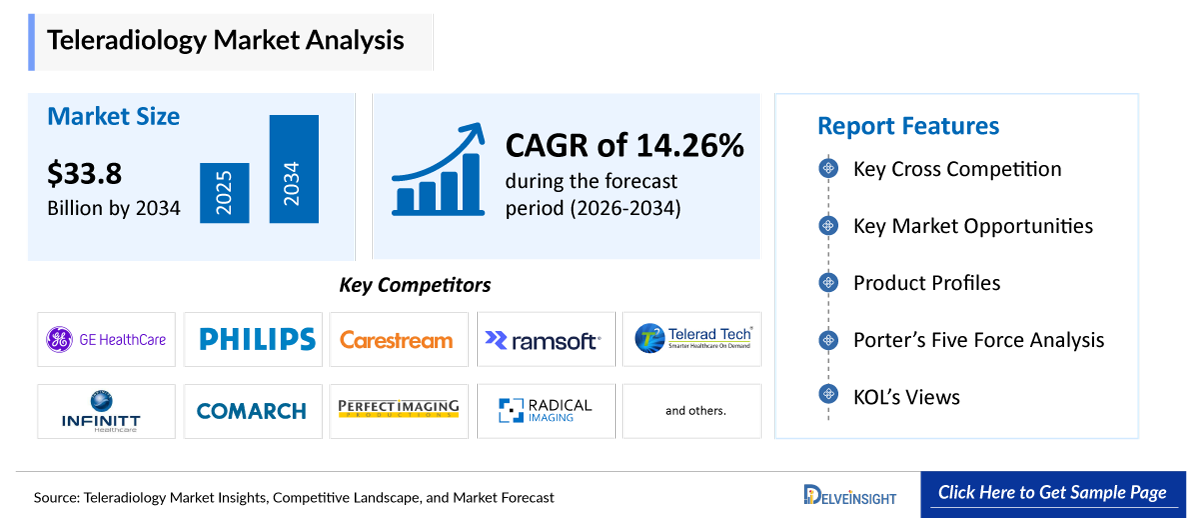
- The global teleradiology market is expected to increase from USD 10,236.87 million in 2025 to USD 33,891.12 million by 2034, reflecting strong and sustained growth.
- The global teleradiology market is growing at a CAGR of 14.26% during the forecast period from 2026 to 2034.
- The growth of the teleradiology market is primarily driven by the increasing shortage of radiologists, particularly in rural and underserved healthcare facilities, which has created a strong need for remote image interpretation. Additionally, the rising volume of diagnostic imaging procedures such as CT scans, MRI, X-rays, and ultrasound due to the growing prevalence of chronic diseases like cancer and cardiovascular disorders is increasing the demand for efficient radiology reporting services. The expanding adoption of digital healthcare technologies, including PACS, RIS, and cloud-based imaging platforms, has further enabled the seamless transmission and analysis of medical images across different locations. Moreover, the increasing demand for 24/7 radiology services and access to subspecialty radiology expertise is encouraging hospitals and diagnostic centers to adopt teleradiology solutions, thereby supporting overall market growth.
- The leading Teleradiology companies operating in the teleradiology market include GE HealthCare, Koninklijke Philips N.V., Carestream Health, RamSoft, Telerad Tech, INFINITT Healthcare, Comarch, Perfect Imaging, Radical Imaging, OpenRad, OnePACS, Millensys, Softmed Technologies, Everrtech, Life Image, Nanox Imaging LTD (USARAD.COM), Everlight Radiology, and others.
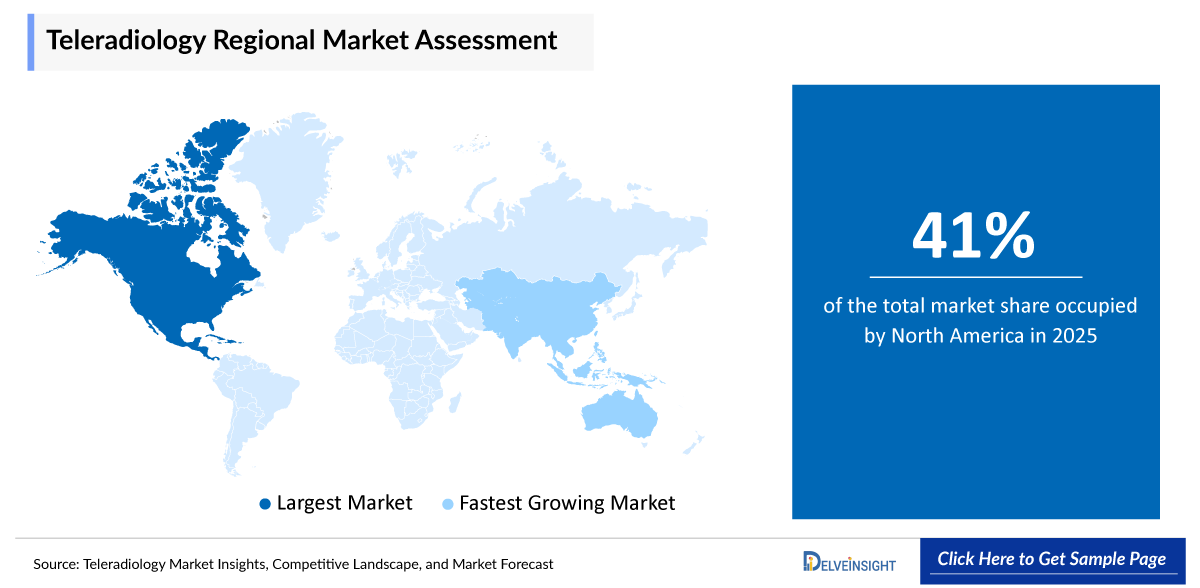
- North America is expected to dominate the teleradiology market due to the presence of advanced healthcare infrastructure, widespread adoption of digital imaging technologies such as PACS and RIS, and the strong presence of leading teleradiology solution providers in the region. Additionally, the increasing demand for remote radiology services, rising imaging procedure volumes, and the growing need for 24/7 radiology reporting are further supporting market growth. Favorable reimbursement policies, high healthcare spending, and the increasing adoption of cloud-based healthcare solutions in countries such as the United States and Canada also contribute to the region’s leading position in the teleradiology market.
- In the component segment of the teleradiology market, the software category is estimated to account for the largest market share in 2025.
Request for unlocking the report of the @Teleradiology Market
Teleradiology Market Size and Forecasts
|
Report Metrics |
Details |
|
2025 Market Size |
USD 10,236.87 million |
|
2034 Projected Market Size |
USD 33,891.12 million |
|
Growth Rate (2026-2034) |
14.26% CAGR |
|
Largest Market |
North America |
|
Fastest Growing Market |
Asia-Pacific |
|
Market Structure |
Moderately Concentrated |
Factors Contributing to the Growth of the Teleradiology Market
- Growing volume of diagnostic imaging procedures is escalating the market of teleradiology: The growing volume of diagnostic imaging procedures is significantly driving the expansion of the teleradiology market. With the increasing prevalence of chronic diseases such as cancer, cardiovascular disorders, neurological conditions, and musculoskeletal diseases, the demand for imaging procedures like CT scans, MRI, X-rays, ultrasound, and mammography has risen substantially. This surge in imaging studies has increased the workload on radiology departments, making it difficult for on-site radiologists to interpret all images promptly. Teleradiology helps address this challenge by enabling remote radiologists to analyze and report imaging results, thereby improving workflow efficiency and ensuring faster diagnosis and patient management.
- Rising shortage of radiologists leading to a surge in teleradiology: The rising shortage of radiologists across many healthcare systems is significantly driving the adoption of teleradiology services. Many hospitals, especially in rural and underserved regions, lack sufficient radiology specialists to interpret the growing volume of diagnostic imaging studies such as CT scans, MRI, and X-rays. Teleradiology enables medical images to be transmitted to remotely located radiologists for timely interpretation, helping healthcare providers maintain continuous diagnostic services and reduce reporting delays. As a result, healthcare institutions are increasingly adopting teleradiology solutions to address workforce shortages and ensure faster and more efficient patient diagnosis.
- Increase in product development activites among the key market players: Growing volume of diagnostic imaging procedures is escalating the market of teleradiology: The growing volume of diagnostic imaging procedures is significantly driving the expansion of the teleradiology market. With the increasing prevalence of chronic diseases such as cancer, cardiovascular disorders, neurological conditions, and musculoskeletal diseases, the demand for imaging procedures like CT scans, MRI, X-rays, ultrasound, and mammography has risen substantially. This surge in imaging studies has increased the workload on radiology departments, making it difficult for on-site radiologists to interpret all images promptly. Teleradiology helps address this challenge by enabling remote radiologists to analyze and report imaging results, thereby improving workflow efficiency and ensuring faster diagnosis and patient management.
Teleradiology Market Report Segmentation
This teleradiology market report offers a comprehensive overview of the global teleradiology market, highlighting key trends, growth drivers, challenges, and opportunities. It covers detailed market segmentation by Component (Software, Hardware, and Services), Deployment Mode (Cloud-Based, Web-Based, and On-Premises), Modality (X-Ray, Computed Tomography (CT) Scan, Magnetic Resonance Imaging (MRI), Ultrrasocund, and Others ), End-Users (Hospitals & Clinics and Diagnostic Imaging Centers), and geography. The report provides valuable insights into the competitive landscape, regulatory environment, and market dynamics across major markets, including North America, Europe, and Asia-Pacific. Featuring in-depth profiles of leading industry players and recent product innovations, this report equips businesses with essential data to identify market potential, develop strategic plans, and capitalize on emerging opportunities in the rapidly growing teleradiology market.
Teleradiology is the practice of transmitting radiological medical images from one location to another for interpretation and diagnosis by a radiologist using telecommunications technology. It allows radiologists to review imaging studies such as X-rays, CT scans, MRI scans, ultrasound images, and mammograms without being physically present at the location where the imaging was performed.
The growth of the teleradiology market is primarily driven by the increasing shortage of radiologists across many healthcare systems, particularly in rural and underserved areas where access to specialized radiology professionals is limited. This shortage has created a strong demand for remote image interpretation services that allow healthcare providers to transmit medical images to radiologists located in different regions for timely diagnosis. At the same time, the rising volume of diagnostic imaging procedures, including CT scans, MRI, X-rays, ultrasound, and mammography, driven by the growing prevalence of chronic diseases such as cancer, cardiovascular disorders, and neurological conditions, is increasing the workload on radiology departments. Teleradiology helps healthcare facilities manage this growing imaging burden by enabling remote reporting and faster turnaround times. In addition, the expanding adoption of digital healthcare technologies such as Picture Archiving and Communication Systems (PACS), Radiology Information Systems (RIS), and cloud-based imaging platforms has made it easier to securely store, transmit, and analyze large imaging datasets across different locations. Furthermore, the increasing demand for 24/7 radiology services, particularly for emergency cases such as trauma and stroke, along with the need for subspecialty radiology expertise, is encouraging hospitals and diagnostic centers to adopt teleradiology solutions, thereby supporting the overall growth of the market.
Get More Insights into the Report @Teleradiology Market
What are the latest teleradiology market dynamics and trends?
The global teleradiology market is growing significantly, driven by the increasing shortage of radiologists and the rising volume of diagnostic imaging procedures, including CT scans, MRI, X-rays, ultrasound, and mammography, driven by the growing prevalence of chronic diseases such as cancer, cardiovascular disorders, and neurological conditions, is increasing the workload on radiology departments.
According to data provided by the Royal College of Radiologist (2025), almost one million patients in 2024 waited more than a month for their scan results. Additionally, as per the recent studies (2025), there were approximately 345,475 radiologists worldwide as of 2023, averaging 45 radiologists per million people globally. Many hospitals and diagnostic centers face challenges in maintaining a sufficient number of radiologists to interpret the continuously increasing volume of imaging studies. Teleradiology addresses this issue by enabling healthcare providers to transmit medical images to remotely located radiologists who can interpret scans and deliver reports in a timely manner. This capability helps healthcare institutions maintain efficient diagnostic services and ensures that patients receive prompt medical evaluation even when on-site radiology expertise is unavailable.
Furthermore, the rising volume of diagnostic imaging procedures, including CT scans, MRI, X-rays, ultrasound, and mammography, driven by the growing prevalence of chronic diseases such as cancer, cardiovascular disorders, and neurological conditions have further escalated the overall market of Teleradiology. According to the data provided by the International Agency for Research on Cancer (2026), in 2025, the estimated new cases of cancer globally was 2,13,25,245 and the projections further estimated that these cases would rise upto 3,26,44,562 by 2045.
Aditionally, as per the recent data provided by the World Health Organization (2025), neurological conditions are the leading cause of ill health and disability, affecting over 1 in 3 people worldwide. The rising prevalence of cancer and neurological disorders is significantly boosting the growth of the teleradiology market as these conditions require frequent and advanced diagnostic imaging for early detection, treatment planning, and disease monitoring. Patients with cancers often undergo imaging procedures such as CT scans, MRI, PET scans, and mammography to identify tumors and assess disease progression, while neurological disorders such as stroke, brain tumors, epilepsy, and multiple sclerosis rely heavily on imaging techniques like MRI and CT for accurate diagnosis. The increasing number of such imaging examinations generates a large volume of medical images that need timely interpretation. Teleradiology enables remote radiologists to analyze these images quickly and provide diagnostic reports, helping healthcare facilities manage the growing imaging workload and improving access to specialized radiology expertise.
Furthermore, the increase in product development activities are further boosting the overall market of teleradiology. For instance, in March 2025, GE HealthCare announced its new Genesis solutions, a portfolio of cloud enterprise imaging software-as-a-service (SaaS) solutions. This Genesis solution will have four features when commercially released edge, storage, vendor neutral archive and data migration. These cloud solutions, are designed to help enhance healthcare organizations’ efficiency and precision, streamline workflows, and optimize the use of capital and IT resources.
Thus, the factors mentioned above are expected to boost the overall market of teleradiology during the forecast period.
However, the teleradiology involves the transmission of sensitive patient medical images and information through digital networks and cloud-based platforms, which raises concerns regarding data privacy, cybersecurity threats, and potential data breaches. Healthcare organizations must comply with strict data protection regulations, increasing operational complexity and sometimes limiting adoption. Additionally, radiologists providing teleradiology services across different states or countries must adhere to various licensing requirements, medical regulations, and healthcare policies, which can create regulatory barriers and complicate cross-border radiology reporting, thereby restraining the expansion of the teleradiology market.
Teleradiology Market Segment Analysis
Teleradiology Market Component (Software, Hardware, and Services), Deployment Mode (Cloud-Based, Web-Based, and On-Premises), Modality (X-Ray, Computed Tomography (CT) Scan, Magnetic Resonance Imaging (MRI), Ultrrasocund, and Others ), End-Users (Hospitals & Clinics and Diagnostic Imaging Centers), and Geography (North America, Europe, Asia-Pacific, and Rest of the World)
By Component: Software Category Projected to Register Highest Revenue Share
In the component segment of the teleradiology market, software, category is estimated to account for the largest market share of 41% in 2025, due to its critical role in enabling the storage, transmission, visualization, and interpretation of medical imaging data across remote locations. Teleradiology primarily relies on advanced software platforms such as Picture Archiving and Communication Systems (PACS), Radiology Information Systems (RIS), vendor-neutral archives (VNA), and dedicated teleradiology reporting platforms, which allow healthcare providers to efficiently manage and share large volumes of diagnostic images including CT scans, MRI, X-rays, ultrasound, and mammography. These software solutions enable radiologists to securely access imaging data, review images using advanced visualization tools, generate diagnostic reports, and collaborate with other clinicians regardless of geographic location. In addition, the growing integration of cloud computing, artificial intelligence (AI), and workflow automation technologies into teleradiology software is further enhancing image analysis, improving reporting turnaround time, and increasing diagnostic accuracy. Healthcare institutions are increasingly investing in these digital platforms to streamline radiology workflows, reduce reporting delays, and manage the rising volume of imaging procedures. Furthermore, software solutions are highly scalable and can be integrated with existing hospital information systems and electronic medical records, making them essential for the efficient operation of teleradiology services. As a result, the increasing adoption of advanced radiology software platforms by hospitals, diagnostic imaging centers, and telehealth providers is expected to drive the dominance of the software segment in the teleradiology market.
Additioanlly, the increasing product development activities are further boosting the segment. For instance, in March 2026, Ultrasound AI, a provider of artificial intelligence applications for medical imaging, received FDA De Novo clearance for its flagship Delivery Date AI technology, a cloud-based Software as a Medical Device (SaMD) that determines a Predicted Delivery Date (PDD) solely from standard ultrasound images and seamless integration into current OB/MFM prenatal visit workflows.
Thus, the factors mentioned above are expected to boost the market of segment and thereby escalating the overall market teleradiology.
By Deployment Mode: Cloud-based Category Dominates the Market
In the deployment mode segment of the teleradiology market, cloud-based category are projected to hold the largest market share of 48% in 2025, due to its ability to provide scalable, flexible, and cost-effective solutions for storing, transmitting, and accessing medical imaging data. Cloud-based teleradiology platforms allow healthcare providers and radiologists to securely upload, store, and retrieve large imaging files such as CT scans, MRI, X-rays, and ultrasound images from any location with internet access. This deployment model eliminates the need for extensive on-site IT infrastructure and reduces maintenance and operational costs for hospitals and diagnostic imaging centers. Additionally, cloud systems support seamless integration with radiology software such as PACS, RIS, and electronic health records, enabling efficient workflow management and real-time collaboration among radiologists and clinicians. The increasing adoption of telemedicine, the growing need for remote radiology reporting, and the rising demand for faster image sharing across healthcare facilities are further encouraging the use of cloud-based teleradiology solutions. Moreover, cloud platforms provide enhanced data backup, disaster recovery capabilities, and advanced cybersecurity features, which help healthcare organizations manage large volumes of imaging data securely and efficiently. As healthcare institutions continue to shift toward digital and remote healthcare infrastructure, the adoption of cloud-based deployment models is expected to increase significantly, thereby driving the dominance of the cloud-based segment in the teleradiology market.
By Modality: Computed Tomography (CT) Scan Category Dominates the Market
In the modality segment of the teleradiology market, Computed Tomography (CT) Scan category is projected to hold the largest market share of 33% in 2025, due to the widespread use of CT imaging in diagnosing a wide range of acute and chronic medical conditions. CT scans provide highly detailed cross-sectional images of internal organs, bones, blood vessels, and soft tissues, making them essential for the detection and evaluation of conditions such as trauma injuries, cancers, cardiovascular diseases, pulmonary disorders, abdominal conditions, and neurological disorders. CT imaging is particularly critical in emergency departments for rapid diagnosis of life-threatening conditions such as stroke, internal bleeding, head injuries, and pulmonary embolism, which require immediate interpretation by radiologists. As the number of CT examinations continues to increase globally, radiology departments are experiencing a growing workload, creating a strong demand for remote interpretation services. Teleradiology enables hospitals and diagnostic centers to transmit CT images to off-site radiologists who can quickly analyze the scans and provide diagnostic reports, ensuring faster clinical decision-making and improved patient outcomes. Additionally, advancements in CT imaging technology, such as multi-slice CT scanners and high-resolution imaging, generate large volumes of complex imaging data that require specialized radiology expertise. Teleradiology platforms allow healthcare providers to access subspecialty radiologists remotely, improving diagnostic accuracy for complex CT cases. Furthermore, the rising prevalence of cancer, cardiovascular diseases, neurological disorders, and traumatic injuries, along with the increasing adoption of CT imaging for routine diagnostic evaluation, is further contributing to the dominance of the CT scan segment in the teleradiology market.
Additionally, the increase in FDA approvals and product launch activities among the key market players have further escalated the demand of CT imaging technology in Teleradiology. For instance, in November 2025, a2z Radiology AI received U.S. FDA clearance for a2z-Unified-Triage, a single device that flags and prioritizes seven urgent findings on abdomen-pelvis CT scans simultaneously.
Thus, the factors mentoned above are expected to boost the overall market of the segment and thereby escalating the overall market of teleradiology.
By End-Users: Hospitals & Clinics Category Driving the Market
Hospitals and clinics are significantly boosting the teleradiology market as they increasingly adopt remote radiology solutions to manage the growing volume of diagnostic imaging procedures and address the shortage of on-site radiologists. Many healthcare facilities rely on teleradiology services to obtain timely interpretation of imaging studies such as CT scans, MRI, X-rays, and ultrasound, especially during emergency situations and after-hours operations. In addition, hospitals and clinics use teleradiology to access subspecialty radiology expertise that may not be available locally, improving diagnostic accuracy and patient care. The rising adoption of digital imaging systems and telehealth infrastructure in healthcare facilities is further encouraging the use of teleradiology solutions, thereby driving overall market growth.
Teleradiology Market Regional Analysis
North America Teleradiology Market Trends
North America is poised to secure the largest share of 41% in the global teleradiology market in 2025, due to the presence of advanced healthcare infrastructure, widespread adoption of digital imaging technologies such as PACS and RIS, and the strong presence of leading teleradiology solution providers in the region. Additionally, the increasing demand for remote radiology services, rising imaging procedure volumes, and the growing need for 24/7 radiology reporting are further supporting market growth. Favorable reimbursement policies, high healthcare spending, and the increasing adoption of cloud-based healthcare solutions in countries such as the United States and Canada also contribute to the region’s leading position in the teleradiology market.
According to data provided by the recent studies, by 2033, the United States could have a shortfall of nearly 42,000 radiologists and other clinical specialists, according to a newly released analysis. The shortage of radiologists is significantly boosting the growth of the teleradiology market as many healthcare facilities face challenges in managing the increasing number of diagnostic imaging procedures with limited radiology specialists. Hospitals and diagnostic centers, particularly in rural and underserved areas, often lack sufficient on-site radiologists to interpret imaging studies such as CT scans, MRI, X-rays, and ultrasound. Teleradiology helps address this gap by enabling medical images to be transmitted to remote radiologists for timely interpretation and reporting. This ensures continuous radiology services, reduces diagnostic delays, and improves patient care, thereby driving the adoption of teleradiology solutions.
According to the data provided by the International Agency for Research on Cancer (2026), in 2025, the estimated new cases of cancer in North America was 28,50,879 and the projections further estimated that these cases would rise upto 38,28,805 by 2045. The rising prevalence of cancer is boosting the teleradiology market as cancer diagnosis and monitoring require frequent imaging procedures such as CT scans, MRI, PET scans, and mammography. As the number of imaging examinations increases, healthcare facilities rely on teleradiology services to manage the growing workload and ensure timely interpretation of cancer-related imaging studies.
Additionally, the increasing number of product development activities in the region by the regulatory bodies is further going to accelerate the growth of the teleradiology market. For instance, in January 2026, Aidoc received U.S. FDA clearance for its Comprehensive Abdomen CT Triage solution based on the CARE™ platform, an AI-powered software that analyzes abdominal CT scans and triages 14 critical findings, enabling radiologists to prioritize urgent cases and improve imaging workflow efficiency.
Thus, the factors mentioned above are expected to boost the overall market of teleradiology across the region.
Europe Teleradiology Market Trends
Europe is increasingly poised to play a leading role in the overall teleradiology market due to the growing adoption of digital healthcare technologies, well-established healthcare infrastructure, and increasing demand for remote radiology services across the region. Many European countries are investing in advanced imaging systems, cloud-based healthcare platforms, and telemedicine solutions to improve diagnostic efficiency and patient care. Additionally, the rising volume of diagnostic imaging procedures and the shortage of radiologists in several countries are encouraging hospitals and diagnostic centers to adopt teleradiology services, further supporting market growth in Europe.
Recent studies found that more than 80% of health systems in UK were reporting shortages in their radiology departments, creating a healthcare emergency that threatens timely patient diagnosis and treatment. Additionally, as per the data provided by the Royal College of Radiologist (2025), in England, approximately, 31% shortfall of clinical radiologists was observed and was projected to rise to 41% in five years' time, which means increasing waiting times for patients who need a timely diagnosis, thereby increasing the demand of teleradiology across the region.
Additionally, the European market is also a hub for innovation, with leading manufacturers continually launching new products and expanding the market of teleradiology. A prime example is, in March 2026, Aidoc received CE marking under the Medical Device Regulation (MDR) for its AI triage solution for acute abdomen CT findings, developed using its CARE™ AI foundation model. The CE-marked solution covered 14 key acute indications and integrated them into a single workflow, enabling healthcare systems to identify critical findings earlier and reduce delays caused by emergency department crowding and imaging backlogs. The system also demonstrated improved signal quality with significantly fewer false alerts compared to traditional single-condition AI solutions.
Thus, the factors mentioned are expected to boost the market of teleradiology market in Europe.
Asia-Pacific Teleradiology Market Trends
The Asia-Pacific region is rapidly emerging as one of the fastest-growing and most influential markets in the global teleradiology industry due to the increasing adoption of digital healthcare technologies, expanding healthcare infrastructure, and the rising demand for diagnostic imaging services. The growing prevalence of chronic diseases, large patient population, and shortage of radiologists in several countries are encouraging healthcare providers to adopt remote radiology solutions. Additionally, increasing investments in telemedicine and cloud-based healthcare platforms are further supporting the growth of the teleradiology market across the region.
According to the data provided by the International Agency for Research on Cancer (2026), in 2025, the estimated new cases of cancer in Asia was 1,05,60,301 and the projections further estimated that these cases would rise upto 1,61,62,830 by 2045. Cancer cases often require accurate image interpretation by subspecialty radiologists, such as oncologic or thoracic radiologists, for tumor detection, staging, and treatment monitoring. Teleradiology enables hospitals and diagnostic centers to access remote radiology specialists who can review complex cancer imaging cases, improving diagnostic accuracy and supporting effective treatment planning.
Thus, the factors mentioned above are expected to boost the overall market of teleradiology across the Asia-Pacific region.
Who are the major players in the teleradiology market?
The following are the leading companies in the teleradiology market. These companies collectively hold the largest market share and dictate industry trends.
- GE HealthCare
- Koninklijke Philips N.V.
- Carestream Health
- RamSoft
- Telerad Tech
- INFINITT Healthcare
- Comarch
- Perfect Imaging
- Radical Imaging
- OpenRad
- OnePACS
- Millensys
- Softmed Technologies
- Everrtech
- Life Image
- Nanox Imaging LTD (USARAD.COM)
- Everlight Radiology
- Others
How is the competitive landscape shaping the Teleradiology market?
The competitive landscape of the teleradiology market is characterized by moderate market concentration and intense competition among global imaging technology providers, specialized teleradiology service companies, and emerging AI-driven radiology platforms. Leading companies such as GE HealthCare, Siemens Healthineers, Philips Healthcare, RadNet, and Agfa-Gevaert Group play a significant role by offering advanced imaging platforms, cloud-based PACS solutions, and AI-enabled radiology workflows. At the same time, specialized service providers such as Everlight Radiology, 4ways Healthcare, and Teleradiology Solutions focus on delivering remote radiology interpretation services to hospitals and diagnostic centers worldwide. The market is considered moderately concentrated, with the top companies controlling roughly 55–60% of the overall market share, while numerous small and medium-sized providers compete by offering niche services and regional expertise. Strategic initiatives such as mergers and acquisitions, partnerships with healthcare institutions, AI integration, and cloud-based imaging platforms are increasingly shaping the competitive dynamics of the industry. These strategies help companies expand their geographic presence, improve diagnostic efficiency, and strengthen their position in the rapidly growing teleradiology market.
Recent Developmental Activities in the Teleradiology Market
- In March 2026, Aidoc received CE marking under the Medical Device Regulation (MDR) for its AI triage solution for acute abdomen CT findings, developed using its CARE™ AI foundation model.
- In March 2026, Ultrasound AI, a provider of artificial intelligence applications for medical imaging, received FDA De Novo clearance for its flagship Delivery Date AI technology, a cloud-based Software as a Medical Device (SaMD) that determines a Predicted Delivery Date (PDD) solely from standard ultrasound images and seamless integration into current OB/MFM prenatal visit workflows.
- In February 2026, the US Food and Drug Administration (FDA) had given 510(k) class II clearance of qXR-Detect, the latest computer-assisted detection (CADe) radiography solution from global AI company Qure.ai. It powers the early identification, highlighting and categorizing of key positive findings on plain film chest X-rays to support emergency room (ER) physicians, family medicine practitioners and radiologists.
- In January 2026, Aidoc received U.S. FDA clearance for its Comprehensive Abdomen CT Triage solution based on the CARE™ platform, an AI-powered software that analyzes abdominal CT scans and triages 14 critical findings, enabling radiologists to prioritize urgent cases and improve imaging workflow efficiency.
- In November 2025, a2z Radiology AI received U.S. FDA clearance for a2z-Unified-Triage, a single device that flags and prioritizes seven urgent findings on abdomen-pelvis CT scans simultaneously.
- In March 2025, GE HealthCare announced its new Genesis solutions, a portfolio of cloud enterprise imaging software-as-a-service (SaaS) solutions. This Genesis solution will have four features when commercially released edge, storage, vendor neutral archive and data migration. These cloud solutions, are designed to help enhance healthcare organizations’ efficiency and precision, streamline workflows, and optimize the use of capital and IT resources.
|
Report Metrics |
Details |
|
Study Period |
2023 to 2034 |
|
Base Year |
2025 |
|
Forecast Period |
2026 to 2034 |
|
Teleradiology Market CAGR (2026-2034) |
14.26% |
|
Key Companies in the Teleradiology Market |
GE HealthCare, Koninklijke Philips N.V., Carestream Health, RamSoft, Telerad Tech, INFINITT Healthcare, Comarch, Perfect Imaging, Radical Imaging, OpenRad, OnePACS, Millensys, Softmed Technologies, Everrtech, Life Image, Nanox Imaging LTD (USARAD.COM), Everlight Radiology, and others. |
|
Teleradiology Market Segments |
by Component, by Deployment Type, by Modality, by End-users, and by Geography |
|
Teleradiology Regional Scope |
North America, Europe, Asia Pacific, Middle East, Africa, and South America |
|
Teleradiology Country Scope |
U.S., Canada, Mexico, Germany, United Kingdom, France, Italy, Spain, China, Japan, India, Australia, South Korea, and key Countries |
Teleradiology Market Segmentation
- Teleradiology by Component Exposure
- Hardware
- Software
- Services
- Teleradiology Deployment Type Exposure
- Cloud-Based
- Web-Based
- On-Premises
- Teleradiology Modality Exposure
- X-Ray
- Computed Tomography (CT) Scan
- Magnetic Resonance Imaging (MRI)
- Ultrrasocund
- Others
- Teleradiology End-Users Exposure
- Hospitals & Clinics
- Diagnostic Imaging Centers
- Others
- Teleradiology Geography Exposure
- North America Teleradiology Market
- United States Teleradiology Market
- Canada Teleradiology Market
- Mexico Teleradiology Market
- Europe Teleradiology Market
- United Kingdom Teleradiology Market
- Germany Teleradiology Market
- France Teleradiology Market
- Italy Teleradiology Market
- Spain Teleradiology Market
- Rest of Europe Teleradiology Market
- Asia-Pacific Teleradiology Market
- China Teleradiology Market
- Japan Teleradiology Market
- India Teleradiology Market
- Australia Teleradiology Market
- South Korea Teleradiology Market
- Rest of Asia-Pacific Teleradiology Market
- Rest of the World Teleradiology Market
- Middle East Teleradiology Market
- Africa Teleradiology Market
- South America Teleradiology Market
- North America Teleradiology Market
Teleradiology Market Recent Industry Trends and Milestones (2022-2026)
|
Category |
Key Developments |
|
Teleradiology Regulatory Approvals |
Qure AI - qXR-Detect (FDA), Aidoc - CARE™ platform (FDA and EU), |
|
Teleradiology Launches |
GE HealthCare launched its new Genesis solutions, a portfolio of cloud enterprise imaging software-as-a-service (SaaS) solutions |
|
Partnerships in Teleradiology |
InHealth and Apollo Radiology International, Max Healthcare Institute (India) and a Dubai-based teleradiology firm, Avicenna.AI and an Australian teleradiology provider |
|
Acquisitions in Teleradiology |
Premier Radiology Services acquired MetisMD, I-MED Radiology Network (Australia) acquired StatRad |
|
Company Strategy |
GE HealthCare is focusing on acquisitions and cloud-based imaging ecosystem development to strengthen its teleradiology capabilities. Experity is adopting a growth through acquisition strategy to strengthen its teleradiology software capabilities. In August 2023, the company acquired OnePACS, a cloud-based PACS platform used in teleradiology workflows. |
|
Emerging Technology |
Artificial Intelligence (AI) and Machine Learning, Cloud-Based PACS and Imaging Platforms, Advanced Imaging Technologies (3D Imaging and Photon-Counting CT), Mobile Teleradiology and Diagnostic Viewing Apps, and others |
Impact Analysis
AI-Powered Innovations and Applications:
AI-powered innovations are transforming the teleradiology field by improving the speed, accuracy, and efficiency of remote radiology interpretation. Artificial intelligence algorithms and machine learning models are increasingly being integrated into teleradiology platforms to automatically analyze medical images such as CT scans, MRI, X-rays, and ultrasound. These AI systems can detect abnormalities including tumors, fractures, hemorrhages, lung nodules, and other critical findings, assisting radiologists in making faster and more accurate diagnoses. AI-powered triage tools can also prioritize urgent cases by flagging life-threatening conditions such as stroke or intracranial bleeding, allowing radiologists to review critical images first and reduce reporting delays. In addition, AI applications support automated image segmentation, quantitative analysis, and clinical decision support, helping radiologists evaluate disease progression and treatment response more effectively. Many teleradiology platforms are also incorporating AI-driven workflow automation, which optimizes case distribution among radiologists, reduces workload, and improves reporting turnaround times. As a result, the integration of AI technologies is enhancing diagnostic capabilities, improving patient outcomes, and significantly advancing the efficiency of teleradiology services.
U.S. Tariff Impact Analysis on Teleradiology Market:
The U.S. tariff policies have had an indirect impact on the Delhi radiology and broader Indian medical imaging sector, mainly through their effect on medical devices and imaging equipment used in radiology. Higher tariffs imposed by the United States on Indian medical device exports—ranging from around 26–27% in recent trade measures—have raised concerns about reduced competitiveness for Indian manufacturers in the U.S. market and potential disruptions in global medical technology trade. At the same time, India imports a large amount of advanced radiology equipment such as MRI scanners, diagnostic reagents, and imaging systems from the U.S., meaning tariff-related trade tensions can increase costs and create supply chain uncertainties for hospitals and diagnostic centers in cities like Delhi. These factors may indirectly influence the radiology ecosystem by affecting equipment pricing, investment in imaging infrastructure, and the adoption of new radiology technologies used in teleradiology and diagnostic services.
How This Analysis Helps Clients
Cost Management: By understanding the tariff landscape, clients can anticipate cost increases and adjust pricing strategies accordingly, ensuring profitability.
Supply Chain Optimization: Clients can identify alternative sourcing options and diversify their supply chains to reduce dependency on high-tariff regions, enhancing resilience.
Regulatory Navigation: Expert guidance on navigating the evolving regulatory environment helps clients maintain compliance and avoid potential legal challenges.
Strategic Planning: Insights into tariff impacts enable clients to make informed decisions about manufacturing locations, partnerships, and market entry strategies.
Startup Funding & Investment Trends
|
Company Name |
Total Funding |
Main Products |
Stage of Development |
Core Technology |
|
Aidoc |
$66 million |
AI-powered radiology workflow and triage platform for CT and other imaging scans |
Series C |
Deep learning algorithms that automatically detect critical findings (e.g., stroke, pulmonary embolism) and prioritize urgent scans in radiology workflows. |
Key takeaways from the Teleradiology market report study
- Market size analysis for the current teleradiology market size (2025), and market forecast for 8 years (2026 to 2034)
- Top key product/technology developments, mergers, acquisitions, partnerships, and joint ventures happened over the last 3 years.
- Key companies dominating the teleradiology market.
- Various opportunities available for the other competitors in the teleradiology market space.
- What are the top-performing segments in 2025? How these segments will perform in 2034?
- Which are the top-performing regions and countries in the current teleradiology market scenario?
- Which are the regions and countries where companies should have concentrated on opportunities for the teleradiology market growth in the future?

