
Ultrasound Gels Market Summary
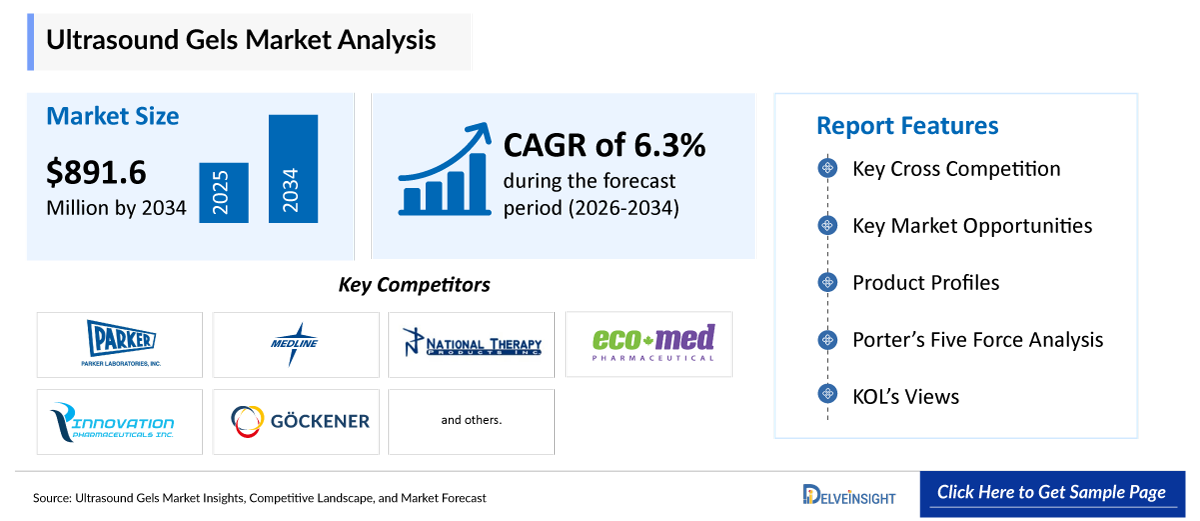
- The Ultrasound Gels market size is estimated at USD 512.4 million in 2025 and is projected to reach USD 891.6 million by 2034. Growth is anchored in rising diagnostic imaging procedure volumes, the proliferation of point-of-care ultrasound (POCUS) devices, and expanding hospital and diagnostic-imaging infrastructure worldwide.
- The global ultrasound gels market is growing at a CAGR of 6.3% during the forecast period from 2026 to 2034.
- By product type, the non-sterile ultrasound gel segment dominated the Ultrasound Gels market with a 64% share in 2025.
- By viscosity type, the medium-viscosity gel segment dominated the Ultrasound Gels market with a 46% share in 2025.
- By application, the diagnostic imaging segment dominated the Ultrasound Gels market with a 58% share in 2025.
- By end-users, the hospitals segment dominated the Ultrasound Gels market with a 49% share in 2025.
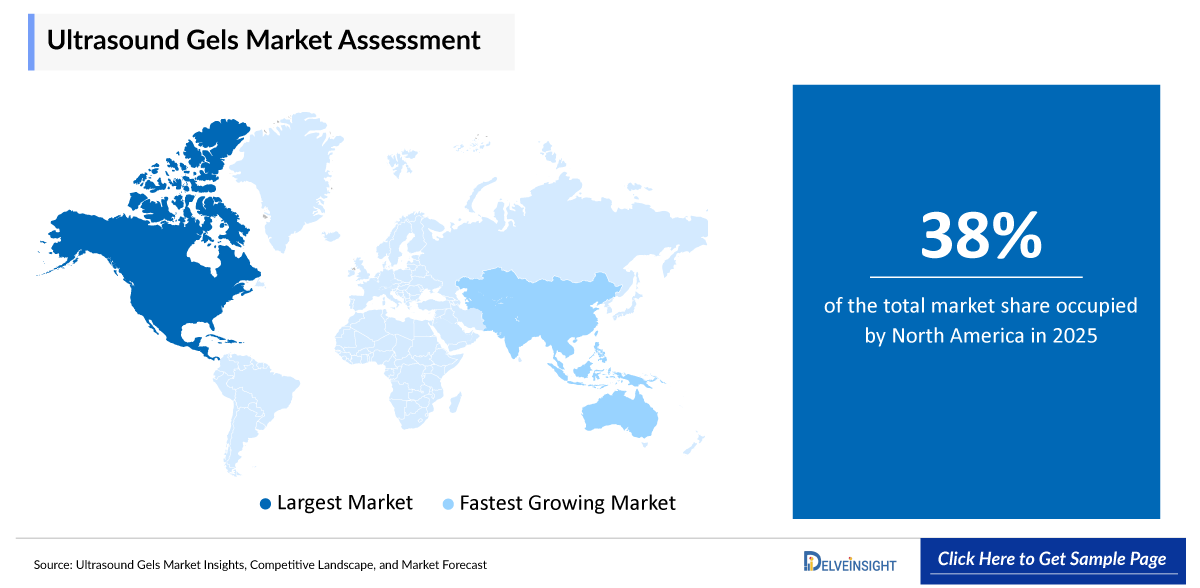
- North America dominated the global ultrasound gels market revenue with a 38% share in 2025, representing the highest regional market share globally.
An ultrasound gel is a water-based, non-toxic acoustic coupling medium applied between an ultrasound transducer and the patient's skin to eliminate air gaps and enable efficient transmission of sound waves, which is essential for producing clear, artifact-free diagnostic images. Because air is a poor conductor of ultrasonic energy, hospitals, diagnostic imaging centers, and specialty clinics rely on formulated gels engineered for specific viscosity, conductivity, hypoallergenic, and infection-control requirements across diagnostic and procedural settings.
The market is organized by product type across sterile and non-sterile gels; by viscosity type, including low-, medium-, and high-viscosity formulations suited to different transducer types and examination durations; by application across diagnostic imaging, obstetrics and gynecology, cardiovascular imaging, musculoskeletal imaging, and other therapeutic and cosmetic uses; and by end-users, led by hospitals alongside diagnostic imaging centers and specialty clinics. Driven by the global expansion of diagnostic imaging volumes, the miniaturization and proliferation of portable and point-of-care ultrasound systems, rising obstetric and cardiovascular screening, and growing emphasis on infection prevention through single-use sterile packettes, ultrasound gels have become an indispensable, high-frequency consumable underpinning the global sonography workflow.
Ultrasound Gels Market Key Growth Drivers
- The sustained global rise in diagnostic ultrasound procedure volumes across radiology, obstetrics, cardiology, and musculoskeletal medicine is directly increasing per-procedure gel consumption across hospitals and imaging centers.
- The rapid miniaturization and adoption of point-of-care and handheld ultrasound systems is expanding gel usage beyond radiology departments into emergency medicine, primary care, and ambulatory settings.
- Rising birth rates in emerging economies and the expansion of routine prenatal screening programs are driving strong demand for obstetric-grade ultrasound gel.
- The growing global burden of cardiovascular disease is expanding echocardiography and vascular imaging volumes, sustaining demand for medium- and high-viscosity conductive gels.
- Heightened infection-control standards in hospitals are accelerating the shift toward sterile, single-use gel packettes, particularly in interventional radiology, regional anesthesia, and vascular access procedures.
- Manufacturers such as Parker Laboratories are securing national group purchasing agreements, including its 2026 agreement with Premier, Inc., that expand institutional access to branded gel portfolios and consolidate hospital-system demand.
- Growing demand for hypoallergenic, paraben-free, and eco-friendly biodegradable gel formulations is prompting manufacturers to reformulate product lines and expand private-label offerings.
- The convergence of rising imaging volumes, point-of-care proliferation, obstetric and cardiovascular screening growth, and infection-control adoption is expected to sustain steady, mid-single-digit growth in the market through 2034.
Key Companies in Ultrasound Gels Market
The competitive landscape is led by the following active manufacturers:
- Parker Laboratories, Inc.
- Medline Industries, LP
- National Therapy Products Inc.
- Eco-Med Pharmaceutical Inc.
- HR Pharmaceuticals Inc.
- Pharmaceutical Innovations, Inc.
- GÖCKENER GmbH
- ORIZI Group
- Nuvia
- USM Enterprises Pvt. Ltd., and others
For illustrative purposes, only the top 10 companies are listed in the Table of Contents. The report may include analysis and references to additional companies relevant to the market assessment.
Ultrasound Gels Market Size
The following snapshot summarizes the principal report metrics for the Ultrasound Gels market.
|
Report Metrics |
Details |
|
2025 Market Size |
USD 512.4 million |
|
2034 Projected Market Size |
USD 891.6 million |
|
Growth Rate (2026-2034) |
6.3% CAGR |
|
Largest Market |
North America |
|
Fastest Growing Market |
Asia-Pacific |
|
Market Structure |
Fragmented |
All market values are expressed in USD and represent DelveInsight estimates synthesized from primary and secondary research.
Factors Contributing to the Growth of the Ultrasound Gels Market
Ultrasound Gels Market Drivers
- Rising Global Volume of Diagnostic Ultrasound Procedures: The most consistent driver of the Ultrasound Gels market is the steady global rise in diagnostic ultrasound procedure volumes. Ultrasound remains among the most widely used, radiation-free imaging modalities across radiology, obstetrics, cardiology, and musculoskeletal medicine, and every examination requires an application of coupling gel to eliminate air gaps between the transducer and the patient's skin. As hospitals and diagnostic imaging centers expand their installed base of ultrasound systems and as chronic disease screening becomes more routine, per-procedure gel consumption scales directly with imaging volumes. This high-frequency, recurring consumption pattern, largely insulated from capital-equipment cycles, provides a durable and predictable revenue base for gel manufacturers and anchors market growth through 2034.
- Proliferation of Point-of-Care and Handheld Ultrasound Devices: The rapid miniaturization of ultrasound technology and the growing adoption of point-of-care ultrasound (POCUS) and handheld, smartphone-connected probes are expanding gel usage well beyond traditional radiology departments. Emergency medicine, primary care, anesthesiology, and even home-based physiotherapy are increasingly incorporating point-of-care scanning, each new use case requiring its own gel consumption. Compact and portable formats, including single-use sachets and travel-sized bottles, are emerging to match the mobility of these devices. As point-of-care ultrasound continues to decentralize diagnostic imaging away from hospital radiology suites, the addressable base of gel-consuming touchpoints broadens materially across the forecast period.
- Expanding Obstetric and Prenatal Screening Programs: Growing emphasis on maternal and fetal health is expanding routine prenatal ultrasound screening across both developed and emerging economies. Government-backed maternal health initiatives and rising awareness of early prenatal diagnostics are increasing the frequency of obstetric ultrasound visits per pregnancy, and obstetrics and gynecology represents one of the largest recurring application areas for ultrasound gel. As antenatal care guidelines standardize multiple ultrasound touchpoints per pregnancy and as birth rates in South Asia, Southeast Asia, and parts of Africa remain elevated, demand for obstetric-grade, skin-friendly gel formulations continues to expand steadily through the forecast period.
- Rising Global Cardiovascular Disease Burden: The growing global burden of cardiovascular disease is expanding demand for echocardiography, vascular Doppler studies, and related cardiac imaging, all of which require conductive coupling gel calibrated for consistent acoustic transmission. As cardiovascular screening becomes more routine within preventive care pathways and as aging populations in North America, Europe, and East Asia drive higher rates of cardiac diagnostic testing, cardiovascular imaging is sustaining strong, recurring gel demand. This trend reinforces the medium- and high-viscosity segments of the market, which are formulated to maintain stable acoustic coupling over the longer scan durations typical of echocardiographic examinations.
- Heightened Infection-Control Standards and Sterile Packette Adoption: Heightened infection-prevention standards in hospitals are accelerating the shift toward sterile, single-use ultrasound gel packettes, particularly for invasive and semi-invasive procedures such as vascular access, regional anesthesia, and interventional radiology. Bulk, multi-use gel bottles carry a documented risk of microbial cross-contamination, prompting infection-control committees to mandate sterile, individually packaged gel for higher-risk applications. Leading manufacturers, including Parker Laboratories with its Aquasonic line, have expanded sterile and non-sterile single-use packette portfolios to meet this demand. As regulatory and accreditation bodies continue to tighten infection-control requirements, the sterile product-type segment is expected to post the fastest growth within the market through 2034.
- Institutional Purchasing Agreements and Private-Label Expansion: Large healthcare group purchasing organizations (GPOs) and private-label distributors are reshaping how ultrasound gel is procured and are expanding the addressable market for manufacturers with scale. Parker Laboratories was awarded a national group purchasing agreement with Premier, Inc. in 2026 covering its ultrasound gel portfolio alongside probe-disinfection products, while Medline Industries has expanded its private-label ultrasound gel line with a focus on hypoallergenic, latex-free formulations. These institutional agreements consolidate hospital-system purchasing, extend distribution reach, and favor manufacturers capable of supplying consistent, large-volume, regulatory-compliant product across diverse care settings.
- Demand for Hypoallergenic, Eco-Friendly, and Sustainable Formulations: Growing patient-safety and environmental-sustainability considerations are driving reformulation toward hypoallergenic, paraben-free, fragrance-free, and biodegradable ultrasound gels. Manufacturers such as Eco-Med Pharmaceutical have built their commercial positioning around environmentally responsible formulations and sustainable packaging, while industry-wide product launches through early 2026 have emphasized bacteriostatic and hypoallergenic gel chemistries. As hospital sustainability procurement policies mature and as clinicians increasingly favor gels formulated without irritants for sensitive-skin patients and neonatal use, this trend is reshaping product development roadmaps across the competitive landscape.
Ultrasound Gels Market Restraints
Despite steady momentum, the Ultrasound Gels market faces material constraints. The product category is highly commoditized, with limited technical differentiation between competing formulations, which intensifies price competition and compresses margins, particularly in the non-sterile, hospital-tender segment. Raw-material cost volatility, especially for carbomer-based thickening agents, propylene glycol, and specialty preservatives, can pressure manufacturing economics and disrupt supply for smaller regional producers. The market is also highly fragmented, with numerous regional and private-label manufacturers competing on price, which limits pricing power for branded players and slows consolidation. Regulatory classification of ultrasound gel varies across jurisdictions, ranging from medical device to cosmetic or general consumable status, creating inconsistent compliance requirements that complicate cross-border distribution. Environmental concerns around single-use plastic packaging and petroleum-derived gelling agents are prompting scrutiny from sustainability-focused procurement policies, requiring costly reformulation and packaging redesign. Counterfeit and substandard gel products in price-sensitive emerging markets can undermine brand trust and, in rare cases, pose patient-safety risks. Together, these commoditization, raw-material, regulatory, and sustainability pressures temper the pace of margin expansion, even as the underlying drivers of imaging-volume growth and point-of-care proliferation remain firmly intact.
Ultrasound Gels Market Segment Analysis
The ultrasound gels market by product type (sterile ultrasound gel, non-sterile ultrasound gel), viscosity type (low-viscosity gel, medium-viscosity gel, high-viscosity gel), application (diagnostic imaging, obstetrics & gynecology, cardiovascular imaging, musculoskeletal imaging, others), end-users (hospitals, diagnostic imaging centers, specialty clinics, others), and geography (North America, Europe, Asia-Pacific, and Rest of World).
By Product Type
Dominant Subsegment: Non-Sterile Ultrasound Gel.
The non-sterile ultrasound gel segment accounted for 64% of the Ultrasound Gels market in 2025. Non-sterile gel is the leading product type because it is the standard, cost-effective coupling medium used in the overwhelming majority of routine, non-invasive diagnostic imaging examinations performed daily across hospitals, diagnostic imaging centers, and specialty clinics. Its lower unit cost, availability in large-volume bottles and cubitainers, and suitability for external-only diagnostic scanning make it the default choice for high-throughput radiology and obstetric imaging departments. The segment benefits directly from the sheer frequency of routine ultrasound scans, where sterility is not clinically required. While the sterile ultrasound gel segment is the fastest-growing product type, propelled by tightening infection-control standards for invasive and semi-invasive procedures such as vascular access and interventional radiology, the volume and cost advantage of non-sterile gel in routine diagnostic settings secures its leadership across the forecast period.
By Viscosity Type
Dominant Subsegment: Medium-Viscosity Gel.
The medium-viscosity gel segment accounted for 46% of the Ultrasound Gels market in 2025. Medium-viscosity formulations are the leading viscosity type because they offer the optimal balance of spreadability, cling, and acoustic conductivity for the broadest range of general diagnostic imaging applications, including abdominal, obstetric, and routine radiology scans. Their versatility allows a single product to serve most everyday scanning needs without the excessive run-off associated with low-viscosity gels or the handling difficulty of high-viscosity formulations, making them the default stocking choice for hospitals and imaging centers. High-viscosity gels are gaining share fastest, particularly for musculoskeletal and cardiovascular imaging where longer scan durations and vertical or hard-to-reach scanning surfaces demand superior cling and reduced drip, while low-viscosity gels remain preferred for pediatric and gel-warmer-compatible applications. Nonetheless, the broad clinical applicability of medium-viscosity gel secures its leadership across the forecast period.
By Application
Dominant Subsegment: Diagnostic Imaging.
The diagnostic imaging segment accounted for 58% of the Ultrasound Gels market in 2025. Diagnostic imaging is the leading application because general radiology, abdominal, and soft-tissue ultrasound examinations represent the single largest and most frequent category of sonography procedures performed globally across hospitals and diagnostic imaging centers. The broad clinical utility of ultrasound as a first-line, radiation-free diagnostic tool across nearly every medical specialty sustains consistently high procedure volumes and, correspondingly, high gel consumption. Obstetrics and gynecology and cardiovascular imaging are the fastest-growing applications, propelled by expanding prenatal screening programs and rising cardiovascular disease prevalence, while musculoskeletal imaging is benefiting from the growth of point-of-care ultrasound in sports medicine and physiotherapy. Nonetheless, the sheer breadth and volume of general diagnostic imaging procedures secure the segment's leadership across the forecast period.
By End-Users
Dominant Subsegment: Hospitals.
The hospitals segment accounted for 49% of the Ultrasound Gels market in 2025. Hospitals are the leading end-user because they host the largest installed base of ultrasound systems and perform the highest volume of diagnostic and interventional imaging procedures across radiology, obstetrics, cardiology, emergency medicine, and surgical departments. Centralized procurement through group purchasing organizations, as reflected in agreements such as Parker Laboratories' 2026 national agreement with Premier, Inc., further consolidates large-volume hospital demand with established manufacturers. Diagnostic imaging centers are growing quickly as outpatient imaging volumes shift away from hospital settings, and specialty clinics, including obstetric, cardiology, and physiotherapy practices, are expanding their use of point-of-care ultrasound. Nonetheless, the scale, procedure diversity, and purchasing concentration of hospitals secure their leadership across the forecast period.
Ultrasound Gels Market Region Analysis
Dominant Region: North America
North America accounted for 38% of the global ultrasound gels market revenue in 2025, representing the highest regional market share globally. The region's dominance reflects a mature, high-volume diagnostic imaging infrastructure, dense hospital and outpatient imaging-center networks, and stringent infection-control standards that favor branded and sterile product lines. The United States hosts the largest concentration of hospital systems, diagnostic imaging centers, and point-of-care ultrasound adoption, and sponsors benefit from established manufacturers such as Parker Laboratories, Medline Industries, National Therapy Products, and HR Pharmaceuticals operating extensive domestic distribution networks. Large group purchasing agreements, including Parker Laboratories' 2026 agreement with Premier, Inc., and Medline's expanding private-label portfolio, reinforce demand concentration among established regional suppliers. Strong reimbursement for diagnostic imaging, high per-capita ultrasound procedure volumes, and continued point-of-care device adoption anchor the region's continued leadership across the forecast period.
Fastest Growing Region: Asia-Pacific
Asia-Pacific is the fastest-growing region in the Ultrasound Gels market. The region's elevated CAGR is driven by expanding hospital and diagnostic-imaging infrastructure, rising birth rates supporting prenatal screening, and growing healthcare investment across China, Japan, India, South Korea, and Australia. China is rapidly expanding its installed base of ultrasound systems across tier-two and tier-three cities, India is scaling low-cost domestic gel manufacturing through producers such as USM Enterprises to serve both domestic and export markets, and Japan and South Korea continue to widen point-of-care ultrasound adoption in outpatient and primary-care settings. Government healthcare investment, expanding diagnostic-imaging penetration, and growing regional manufacturing capacity are accelerating adoption, while regional producers scale output and align with international quality standards. The combination of high procedure-volume growth, infrastructure build-out, and cost-competitive regional manufacturing positions Asia-Pacific as the principal source of incremental growth over the forecast period.
Ultrasound Gels Market Regional Commentary
North America
North America accounted for 38% of the global ultrasound gels market revenue in 2025. The United States dominates on the strength of its dense hospital and outpatient imaging infrastructure, established manufacturers, and stringent infection-control and GPO purchasing standards, while Canada contributes through established producers such as Eco-Med Pharmaceutical and steady public healthcare imaging demand.
Europe
Europe is a large and mature regional market, supported by an established base of specialized manufacturers, including GÖCKENER GmbH in Germany and other regional contract producers, alongside harmonized CE medical-device requirements. Steady diagnostic imaging volumes across Germany, France, the United Kingdom, Italy, and Spain, combined with growing demand for hypoallergenic and eco-friendly formulations, reinforce the region's role as both a manufacturing base and a stable consumption market.
Asia-Pacific
Asia-Pacific is the fastest-growing region, propelled by expanding hospital and diagnostic-imaging infrastructure, rising birth rates supporting prenatal screening, and growing healthcare investment across China, Japan, India, South Korea, and Australia. Regional manufacturers, including USM Enterprises in India, are scaling cost-competitive production to serve both fast-growing domestic demand and export markets across South and Southeast Asia.
Rest of World
The Rest of World region, spanning Latin America, the Middle East, and Africa, is an emerging growth frontier. Expanding hospital and diagnostic-imaging infrastructure, rising demand for maternal-health and cardiovascular screening, and gradual alignment of regulatory frameworks with international medical-device standards are broadening access, while distributors and regional producers, including ORIZI Group, support the build-out of local supply.
Ultrasound Gels Market Competitive Landscape
The Ultrasound Gels market is classified as Fragmented. A group of established, broad-portfolio manufacturers with national distribution reach, including Parker Laboratories, Medline Industries, and National Therapy Products, anchor the top tier, while specialized regional and private-label producers such as Eco-Med Pharmaceutical, HR Pharmaceuticals, Pharmaceutical Innovations, GÖCKENER GmbH, ORIZI Group, Nuvia, and USM Enterprises compete through formulation specialization, regional manufacturing proximity, and private-label and contract-manufacturing partnerships, sustaining intense price and innovation competition across the market.
The competitive landscape can be evaluated across the following dimensions:
- Market concentration: Fragmented, with a small group of broad-portfolio national suppliers competing against a large base of regional and private-label manufacturers.
- Leading players: Parker Laboratories, Medline Industries, and National Therapy Products anchor the top tier through brand recognition and institutional purchasing agreements.
- Geographic reach: Leading players operate multi-country distribution networks; Parker Laboratories' Aquasonic portfolio and GPO agreements extend reach across thousands of North American healthcare facilities.
- Product portfolio strength: Top players offer sterile and non-sterile lines across low-, medium-, and high-viscosity formulations, including hypoallergenic and gel-warmer-compatible variants.
- Institutional access: Group purchasing agreements, such as Parker Laboratories' 2026 agreement with Premier, Inc., and expanding private-label programs from Medline Industries, are decisive advantages.
- Strategic partnerships: Contract-manufacturing and private-label tie-ups with hospital distributors and regional partners extend market reach for specialized producers such as Pharmaceutical Innovations and GÖCKENER GmbH.
- Sustainability positioning: Active reformulation toward biodegradable, hypoallergenic, and paraben-free gels, led by producers such as Eco-Med Pharmaceutical and HR Pharmaceuticals' EcoVue line.
- Manufacturing capabilities: Aseptic single-use packette filling, vacuum-processed bubble-free formulation, and large-volume cubitainer and bottle filling are key competitive differentiators.
- Innovation focus: Sterile single-use packettes, hypoallergenic and eco-friendly reformulation, high-viscosity products for musculoskeletal and cardiovascular imaging, and sustainable packaging design.
Ultrasound Gels Market Recent Developmental Activities
- In June 2026, Parker Laboratories, Inc. was awarded a national group purchasing agreement with Premier, Inc. covering its Aquasonic ultrasound gel portfolio alongside probe-disinfection products, effective June 1, 2026. Strategic significance: Expands institutional access to Parker's branded gel portfolio and consolidates hospital-system purchasing across the Premier network.
- In April 2026, industry manufacturers advanced formulation technologies to introduce hypoallergenic, paraben-free, and bacteriostatic ultrasound gels aimed at improving patient safety and reducing infection risk in diagnostic imaging procedures. Strategic significance: Reflects sector-wide reformulation toward safer, more differentiated product lines.
- In February 2026, healthcare suppliers expanded production of high-viscosity ultrasound gels designed for enhanced acoustic conductivity, supporting improved imaging clarity in radiology and cardiology applications. Strategic significance: Strengthens the high-viscosity segment serving cardiovascular and musculoskeletal imaging.
- In January 2026, market participants increased focus on eco-friendly and biodegradable gel formulations, aligning with hospital sustainability initiatives and reducing medical-waste impact. Strategic significance: Positions sustainability as a growing procurement criterion for hospital buying committees.
- In December 2025, Medline Industries expanded its private-label ultrasound gel portfolio with a focus on hypoallergenic and latex-free formulations for clinical use. Strategic significance: Broadens Medline's institutional supply footprint and strengthens its position in hospital private-label procurement.
- In 2025, Eco-Med Pharmaceutical Inc. continued to expand its Canadian manufacturing capacity for sustainable, environmentally focused ultrasound gel, lotion, and topical product lines. Strategic significance: Reinforces Eco-Med's positioning as a sustainability-focused regional supplier in North America.
- In 2025, HR Pharmaceuticals, Inc. continued to expand its EcoVue sustainable ultrasound gel line, including high-viscosity and flexible-packaging variants designed to reduce environmental footprint. Strategic significance: Extends HR Pharmaceuticals' sustainable product range across viscosity tiers and packaging formats.
- In 2025, GÖCKENER GmbH continued to expand its contract-manufacturing capabilities for hypoallergenic, vacuum-processed, bubble-free ultrasound gel formulations at its German production facility. Strategic significance: Strengthens Europe's contract-manufacturing base for private-label and specialty gel formulations.
- In 2025, ORIZI Group and Nuvia continued to expand regional distribution and manufacturing capacity for sterile and non-sterile ultrasound gel serving hospital and diagnostic-imaging channels. Strategic significance: Broadens regional supply reach and supports institutional demand outside the largest global markets.
- In 2025, USM Enterprises Pvt. Ltd. continued to scale export-oriented manufacturing of diagnostic and therapeutic ultrasound gel formulations from its Indian production base. Strategic significance: Supports cost-competitive supply for fast-growing Asia-Pacific and export markets.
Ultrasound Gels Market Segmentation
- Ultrasound Gels Market by Product Type
- Sterile Ultrasound Gel
- Non-Sterile Ultrasound Gel
- Ultrasound Gels Market by Viscosity Type
- Low-Viscosity Gel
- Medium-Viscosity Gel
- High-Viscosity Gel
- Ultrasound Gels Market by Application
- Diagnostic Imaging
- Obstetrics & Gynecology
- Cardiovascular Imaging
- Musculoskeletal Imaging
- Others
- Ultrasound Gels Market by End-Users
- Hospitals
- Diagnostic Imaging Centers
- Specialty Clinics
- Others
Ultrasound Gels Market by Geography
- North America Ultrasound Gels Market
- United States Ultrasound Gels Market Size in USD million (2023-2034)
- Canada Ultrasound Gels Market Size in USD million (2023-2034)
- Mexico Ultrasound Gels Market Size in USD million (2023-2034)
- Europe Ultrasound Gels Market
- Germany Ultrasound Gels Market Size in USD million (2023-2034)
- United Kingdom Ultrasound Gels Market Size in USD million (2023-2034)
- France Ultrasound Gels Market Size in USD million (2023-2034)
- Italy Ultrasound Gels Market Size in USD million (2023-2034)
- Spain Ultrasound Gels Market Size in USD million (2023-2034)
- Rest of Europe Ultrasound Gels Market Size in USD million (2023-2034)
- Asia-Pacific Ultrasound Gels Market
- China Ultrasound Gels Market Size in USD million (2023-2034)
- Japan Ultrasound Gels Market Size in USD million (2023-2034)
- India Ultrasound Gels Market Size in USD million (2023-2034)
- Australia Ultrasound Gels Market Size in USD million (2023-2034)
- South Korea Ultrasound Gels Market Size in USD million (2023-2034)
- Rest of Asia-Pacific Ultrasound Gels Market Size in USD million (2023-2034)
- Rest of the World (RoW) Ultrasound Gels Market
- Middle East Ultrasound Gels Market Size in USD million (2023-2034)
- Africa Ultrasound Gels Market Size in USD million (2023-2034)
- South America Ultrasound Gels Market Size in USD million (2023-2034)
Ultrasound Gels Market Recent Industry Trends and Milestones (2023-2026):
|
Category |
Key Developments |
|
Ultrasound Gels Market Product Approval |
Regulatory and quality clearances continue to support new product launches. Manufacturers introduced hypoallergenic, paraben-free, and bacteriostatic ultrasound gels through 2026 to improve patient safety, while sterile single-use packette formats gained wider institutional clearance for invasive and semi-invasive procedures. Each new formulation and packaging approval creates durable demand among infection-control-conscious hospital buying committees, the large majority of which is supplied through established branded and private-label manufacturers. |
|
Ultrasound Gels Market Expansion |
Manufacturers broadened capacity and distribution across the value chain. Parker Laboratories secured a national group purchasing agreement with Premier, Inc. in 2026, Medline Industries expanded its private-label hypoallergenic and latex-free gel portfolio, and Cardinal Health strengthened its North American distribution network for medical ultrasound gels. Regional manufacturers, including GÖCKENER GmbH in Europe and USM Enterprises in Asia, scaled production capacity to serve growing institutional and export demand. |
|
Ultrasound Gels Market Investment |
Capital deployment has concentrated on formulation innovation, sustainable packaging, and capacity expansion rather than large-scale M&A. Eco-Med Pharmaceutical and HR Pharmaceuticals continued to invest in sustainable, biodegradable gel lines, while regional producers such as ORIZI Group and Nuvia expanded manufacturing footprints to meet rising institutional and export demand across their respective regions. |
|
Company Strategy |
Parker Laboratories, Inc.: Institutional leadership through GPO agreements and its flagship Aquasonic brand. Medline Industries, LP: Private-label portfolio expansion and mass-scale hospital supply-chain optimization. National Therapy Products Inc. and Pharmaceutical Innovations, Inc.: Broad diagnostic and therapeutic gel portfolios for North American hospital and clinic channels. Eco-Med Pharmaceutical Inc. and HR Pharmaceuticals Inc.: Sustainability-led formulation and packaging innovation. GÖCKENER GmbH: European contract manufacturing and private-label specialization. ORIZI Group, Nuvia, and USM Enterprises Pvt. Ltd.: Regional manufacturing scale-up and export-oriented growth across Europe, the Middle East, and Asia-Pacific. |
|
Emerging Technologies |
Sterile single-use packettes and hypoallergenic, paraben-free formulations are the leading edge of product innovation, supported by growing infection-control mandates. High-viscosity gels engineered for musculoskeletal and cardiovascular imaging are gaining share, while biodegradable, low-waste formulations and flexible, low-residue packaging are expanding in response to hospital sustainability procurement policies. Vacuum-processed, bubble-free manufacturing techniques are improving acoustic consistency, and gel-warmer-compatible packaging is growing alongside patient-comfort initiatives. |
Ultrasound Gels Market Startup Funding and Investment Trends
Investment in the Ultrasound Gels ecosystem has concentrated on sustainable formulation, sterile single-use packaging, and regional manufacturing capacity expansion. The following companies illustrate recent funding and investment activity and technology focus.
|
Company |
Total Funding |
Funding Stage |
Main Offering |
Core Technology |
|
Nuvia |
Privately Held |
Growth / Strategic |
Sterile and non-sterile ultrasound gel manufacturing for hospital and OEM channels |
Aseptic single-use packette filling and cold-chain-ready packaging |
|
Request for unlocking the report of the @ Ultrasound Gels Market Insights | ||||
Capital is flowing toward manufacturers that combine cost-competitive scale with formulation differentiation. Nuvia and USM Enterprises are expanding sterile and non-sterile gel manufacturing capacity to serve institutional and export-oriented demand, while established players including Eco-Med Pharmaceutical and HR Pharmaceuticals continue to invest in sustainable, hypoallergenic product lines. Collectively, these investments signal conviction that sterile single-use formats, sustainable formulation, and regional manufacturing proximity will define the next phase of competitive advantage in the global ultrasound gels market.
Key Takeaways from the Ultrasound Gels Market Report Study
- Market size analysis for the current ultrasound gels market size (2025), and market forecast for 9 years (2026 to 2034).
- Top key product/technology developments, mergers, acquisitions, partnerships, and joint ventures that happened over the last 3 years.
- Key companies dominating the global ultrasound gels market.
- Various opportunities available for competitors in the Ultrasound Gels market space.
- What are the top-performing segments in 2025? How will these segments perform in 2034?
- Which are the top-performing regions and countries in the current Ultrasound Gels market scenario?
- Which are the regions and countries where companies should concentrate their opportunities for Ultrasound Gels market growth in the future?
Target audience who can benefit from this ultrasound gels market report study
- Ultrasound Gels product providers
- Research organizations and consulting companies
- Neurodegenerative disease therapeutics-related organizations, associations, forums, and other alliances
- Government and corporate offices
- Start-up companies, venture capitalists, and private equity firms
- Distributors and traders dealing in Ultrasound Gels
- Various end-users who want to know more about the Ultrasound Gels market and the latest technological developments in the Ultrasound Gels market.

