Uterine Fibroids Epidemiology
- Uterine fibroids are benign, hormone-dependent tumors arising from the smooth muscle layer of the uterus and represent one of the most common gynecological conditions among reproductive-age women in the United States. They are associated with symptoms such as heavy menstrual bleeding, pelvic pain, bulk-related symptoms, infertility, and pregnancy complications.
- According to DelveInsight’s analysis, in 2025, uterine fibroids reported approximately 27 million prevalent cases and around 8 million diagnosed prevalent cases in the US.
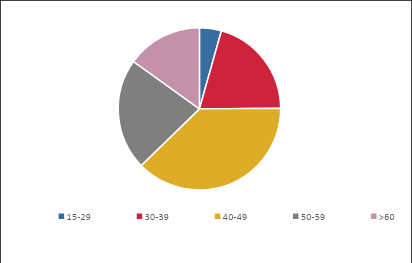
- The uterine fibroids landscape shows a notable contrast between age groups, where the 40-49 age demographic accounts for approximately 3 million cases. In comparison, the younger 15–29 age group represents the lowest burden with approximately 400,000 cases.
- Diagnosis of uterine fibroids is primarily based on clinical evaluation, pelvic examination, and imaging studies. Ultrasonography is the first-line diagnostic modality for confirming fibroid presence and assessing size and location, while magnetic resonance imaging (MRI) is used for detailed characterization and treatment planning when required.
- Approximately 50% of diagnosed women in the US are currently receiving treatment for uterine fibroids, reflecting a significant treated patient pool of 4 million reported in 2025.
- Laboratory testing, including complete blood count, is commonly performed to evaluate anemia associated with heavy menstrual bleeding and support clinical management.
DelveInsight’s ‘Uterine Fibroids –Epidemiology Forecast – 2036’ report delivers an in-depth understanding of uterine fibroids, historical and forecasted epidemiology in the United States, EU4 (Germany, Spain, Italy, and France), the United Kingdom, and Japan.
Geography Covered
North America: The United States
Europe: Germany, France, Italy, and Spain and the UK
Asia-Pacific: Japan
|
Study Period |
2022–2036 |
|
Historical Year |
2022–2025 |
|
Forecast Period |
2026–2036 |
|
Base Year |
2025 |
|
Geographies Covered |
|
|
Uterine Fibroids Epidemiology CAGR (the US; Forecast period) |
1.73% (2026-2036) |
|
Uterine Fibroids Epidemiology Segmentation Analysis |
Patient Burden Assessment
|
|
Uterine Fibroids Epidemiology Segmentation Analysis |
Segmented by
|
|
Analysis |
|
Uterine Fibroids Understanding and Treatment Algorithm
Uterine Fibroids Overview and Diagnosis
Uterine fibroids, also known as leiomyomas or myomas, are benign tumors driven by the proliferation of smooth muscle tissue within the uterus. They represent the most prevalent pelvic tumors in women of reproductive age globally. The disease is characterized by extreme heterogeneity in size, number, and anatomical location, unfolding as a chronic condition that can range from completely asymptomatic to severe, life-altering symptomatic presentations. While estrogen and progesterone drive their growth, the clinical narrative is dominated by heavy menstrual bleeding, pelvic pressure, and reproductive complications such as infertility or pregnancy loss.
Diagnosis relies on clinical pelvic evaluation and advanced imaging modalities to ensure precise characterization for treatment planning. The diagnostic pathway typically includes transvaginal ultrasound as the first-line tool, with MRI or hysteroscopy used for complex cases to determine the exact burden. Early recognition is essential to prevent secondary complications like iron-deficiency anemia and to manage bulk-related symptoms.
Further details are provided in the report.
Uterine Fibroids Epidemiology
Key Findings from Uterine Fibroids Epidemiological Analysis and Forecast
- The uterine fibroids prevalent population represents a massive disease burden in the United States, contributing approximately 27 million cases in 2025. This high volume underscores the widespread nature of the condition and its significant impact on the women's healthcare infrastructure.
- In 2025, the US reported approximately 8 million diagnosed prevalent cases. This reflects an increasing diagnosis rate attributed to improved clinical awareness and the wider use of advanced diagnostic modalities like high-resolution ultrasound and MRI during routine screenings.
- In 2025, uterine fibroid burden increases with age, peaking at 40–49 years (~38%) and remaining lowest in 15-29 years (~4%) of total cases of uterine fibroids in the US.
- According to Dai et al. (2024), approximately 2.3 million prevalent uterine fibroid cases were estimated in the UK, corresponding to a crude prevalence rate of approximately 6,870 per 100,000 population.
Age-specific Diagnosed Prevalent Cases of Uterine Fibroids in the US in 2025
Industry Experts and Physician Views for Uterine Fibroids
To keep up with uterine fibroids dynamic epidemiology trends, we take Key Opinion Leaders (KOLs) and Subject Matter Experts (SMEs) opinions working in the domain through primary research to fill the data gaps and validate our secondary research. Industry Experts were contacted for insights on the uterine fibroids epidemiology, including MD, PhD, Instructor, Postdoctoral Researcher, Professor, Researcher, and others. DelveInsight’s analysts connected with 10+ KOLs to gather insights at country level. Centers such as the Memorial Sloan Kettering Cancer Center, University of California San Francisco, State University of New York Upstate Medical University, etc. were contacted.
Their opinion helps understand, validate, highlight and provide epidemiological context in uterine fibroids.
|
Region |
Key Opinion Leaders (KOLs) and Subject Matter Experts (SMEs) |
|
United States |
“Several studies have reported a significant association between arterial hypertension and uterine fibroids. Elevated diastolic blood pressure has been linked to an increased risk of fibroid development, independent of antihypertensive medication use.” |
|
Germany |
“Women frequently develop uterine myomas, which are strongly correlated with age, rising during the reproductive years and falling after menopause.They don't seem to be related to body mass index or age of first menstruation. Age remains the dominant factor, while reproductive history requires deeper investigation to fully understand its role.” |
Scope of the Report
- The report covers a segment of key events, an executive summary, a descriptive overview of uterine fibroids, explaining their causes, signs and symptoms and pathogenesis.
- Comprehensive insight has been provided into the epidemiology segments and forecasts, the future growth potential of the diagnosis rate, and disease progression along diagnostic guidelines.
- The report provides an edge for understanding trends, expert insights/KOL views, and patient journeys in the 7MM.
- A detailed review of current challenges in establishing the diagnosis.
Report Insights
- Uterine Fibroids Patient Population Forecast
- Country-wise Epidemiology Distribution
- Prevalent Cases of Uterine Fibroids
- Diagnosed Prevalent Cases of Uterine Fibroids
- Age-specific Diagnosed Prevalent Cases of Uterine Fibroids
- Treated Cases of Uterine Fibroids
Report Key Strengths
- Epidemiology‑based (Epi‑based) Bottom‑up Forecasting
- 11-year forecast
- Patient Burden Trends (by geography)
- The 7MM Coverage
FAQs
Epidemiology Insights
- What is the forecast period covered in the report?
- How is epidemiological data collected and analyzed for forecasting purposes?
- Out of all EU4 countries and the UK, which country had the highest population of uterine fibroids cases?
- What are the disease risks and burdens of uterine fibroids?
- At what compound annual growth rate the population is expected to grow across the 7MM during the forecast period?
- What would be the forecasted patient population of uterine fibroids at the 7MM level?
Reasons to Buy
- The report will help in developing business strategies by understanding the latest epidemiology trends.
- Insights on patient burden, evolution in diagnosis, and factors contributing to the change in the epidemiology of the disease during the forecast years.
- To understand KOLs’ perspectives on the dynamic epidemiology trends.
- This Artificial Intelligence (AI) ‑ enabled report summarize and simplify complex datasets with in the report into clear, actionable insights for stakeholders, investors, and healthcare providers, enabling faster, data‑driven decisions.