Vascular Malformations Market
Key Highlights
- Vascular malformations are rare, with some types found in less than 1 percent of the population.
- VIJOICE (alpelisib) is currently the only Food and Drug Administration (FDA)-approved drug available for the treatment of vascular malformations associated with PIK3CA-related Overgrowth Spectrum (PROS). It is the sole approved therapy on the market addressing the underlying disease biology of PROS-related vascular malformations.
- With the upcoming therapies for vascular malformations, the market size is expected to increase. Major emerging players include Neurelis, Protara Therapeutics, Kaken Pharmaceutical (ARTham Therapeutics), Relay Therapeutics, OnKure Therapeutics, and others.
DelveInsight's "Vascular Malformations Market Insights, Epidemiology, and Market Forecast-2036" report delivers an in-depth understanding of the Vascular Malformations, historical and forecasted epidemiology as well as the Vascular Malformations market trends in the United States, EU5 (Germany, Spain, Italy, France, and United Kingdom) and Japan.
The Vascular Malformations market report provides current treatment practices, emerging drugs, Vascular Malformations market share of the individual therapies, current and forecasted Vascular Malformations market Size from 2022 to 2036 segmented by seven major markets. The Report also covers current Vascular Malformations treatment practice/algorithm, market drivers, market barriers and unmet medical needs to curate the best of the opportunities and assesses the underlying potential of the Vascular Malformations market.
Geography Covered
- The United States
- EU5 (Germany, France, Italy, Spain, and the United Kingdom)
- Japan
Study Period: 2022-2036
Key Factors Influencing the Vascular Malformations Market
- Rising Disease Awareness: Increasing awareness regarding vascular malformations and improved understanding of disease pathology are contributing to earlier diagnosis and better disease management. Improved awareness among healthcare professionals and patients is expected to support market growth during the forecast period.
- Increasing Prevalence of Vascular Malformations: The prevalence of vascular malformations continues to increase across the 7MM. Venous malformations remain the most common subtype, contributing significantly to the overall disease burden.
- Growing Understanding of Genetic Mutations: The identification of mutations involving pathways such as PI3K/AKT and RAS/MAPK has improved the understanding of vascular malformation pathophysiology. The growing focus on mutation-targeted therapies is expected to positively influence treatment development.
- Emergence of Targeted Therapies: The emergence of novel therapies such as KP-001 (ART-001), TARA-002, and NRL-1049 is expected to improve the future treatment landscape. These therapies are being developed to address unmet needs associated with vascular malformations.
- Limited Approved Treatment Options: Currently, VIJOICE (alpelisib) remains the only FDA-approved therapy for PROS-related vascular malformations. Limited approved treatment availability for other vascular malformation types creates a substantial unmet need in the market.
- Increasing Focus on Minimally Invasive Procedures: Minimally invasive approaches such as embolization, laser therapy, and sclerotherapy are increasingly being adopted for vascular malformation management due to reduced complications and improved patient outcomes.
- High Recurrence Rate and Diagnostic Challenges: Vascular malformations frequently recur even after treatment, requiring long-term monitoring and repeated interventions. In addition, venous malformations are often confused with hemangiomas, making diagnosis challenging.
- Growing Pipeline Activity: Several companies, including Kaken Pharmaceutical, Protara Therapeutics, Neurelis, Relay Therapeutics, and OnKure Therapeutics, are actively involved in developing therapies for vascular malformations, which is expected to expand future market opportunities.
Vascular Malformations Disease Understanding and Treatment Algorithm
Vascular malformations are most easily categorized based on the type of vessels involved and how blood flows through them. They include capillary malformations, also known as port-wine stains, slow-flow venous and lymphatic malformations, fast-flow arteriovenous malformations (AVMs) and arteriovenous fistulas (AVF), and congenital mixed syndromes such as Klippel-Trenaunay syndrome.
Vascular malformations are rare, with some types found in less than 1 percent of the population. Vascular malformations result from the abnormal growth and development of a single type of vessel or a combination of vessels. Over the years, malformations can grow larger and become problematic depending on what type of vessel is involved. They can be harmless and minor or very serious, sometimes even life-threatening.
Mutations in genes that are involved in two significant intracellular signaling pathways, RAS/MAPK and PI3K/AKT, have been implicated in the pathophysiology of the majority of vascular malformations. This opens the possibility that drugs/inhibitors currently being used in cancer patients may be used to treat patients with vascular malformations.
Vascular Malformations Diagnosis
Until recently, medical experts had an insufficient and sometimes haphazard lexicon to describe vascular anomalies, resulting in poor communication among doctors and patients alike. While this has largely changed, many people still visit multiple doctors as they seek an accurate diagnosis.
Early diagnosis and management by a multidisciplinary team is crucial for patients with scalp and facial vascular malformations as treatment or careful observation can prevent hemorrhages, growth, or the need for more invasive procedures.
Venous malformations can be challenging to diagnose and are often confused with hemangioma in terminology as well as with imaging.
Vascular Malformations Treatment
Treatment for vascular malformation varies depending on the type of blood vessel involved, the type of vascular malformation or syndrome, and the overall health of the patient. Since there is no cure for most vascular malformations, treatment aims to minimize symptoms.
Other than capillary malformations, which typically do not necessitate interventional treatment, all other vascular malformations can be addressed using interventional techniques that usually involve transarterial, transvenous, or direct access methods.
The most common techniques for treating vascular malformation include embolization, laser treatment, sclerotherapy, and surgery.
Embolization is a minimally invasive procedure that closes the abnormal blood vessels from the inside using glues or particles. Sometimes surgical removal of the malformation or treating it with radiosurgery is preferred.
Laser treatment can be effective for treating superficial venous malformations or the superficial component of a deep lesion. Lasers are used to reduce the bluish discoloration of the lining of the lip mouth and skin.
Vascular Malformations Epidemiology
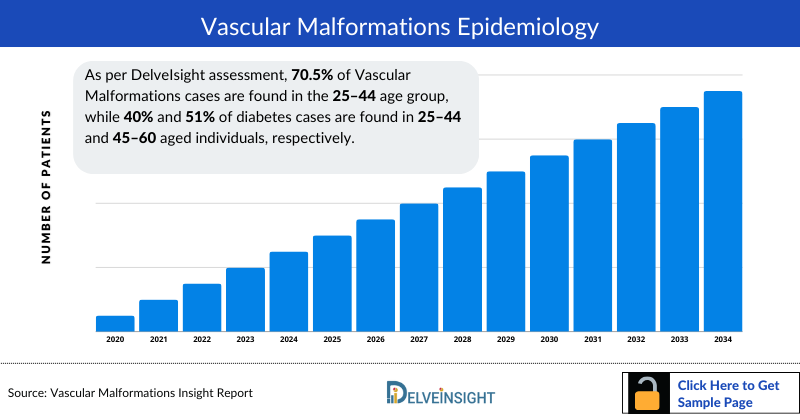
The Vascular Malformations epidemiology section provides insights about the historical and current Vascular Malformations patient pool and forecasted trends for individual seven major countries. It helps to recognize the causes of current and forecasted trends by exploring numerous studies and views of key opinion leaders. This part of the Vascular Malformations market report also provides the diagnosed patient pool and their trends along with assumptions undertaken.
Key Findings
- The disease epidemiology covered in the report provides historical as well as forecasted Vascular Malformations epidemiology scenario in the 7MM covering the United States, EU5 countries (Germany, Spain, Italy, France, and the United Kingdom), and Japan from 2022 to 2036.
- According to Loose et al. (2024), in Germany, around 2–4% of newborns suffer from congenital vascular malformation.
- Reynolds et al. (2023) assessed the prevalence in Piedmont Region (Italy), including all participants diagnosed with PROS born from 1998 to 2021. The study identified 37 cases of PROS born across 25 years, providing a prevalence of 1:22,313 live births. Molecularly positive PROS prevalence was 1:27,519.
- As per Orphanet, the overall prevalence of all cerebral cavernous malformations has been estimated at 1/200 to 1/1,000 individuals.
- The National Organization for Rare Disorders (NORD) reports that the exact prevalence of lymphatic malformations in the general population is unknown, but is thought to be approximately 1:4000 live births.
Vascular Malformations Drug Chapters
The drug chapter segment of the Vascular Malformations report encloses the detailed analysis of Vascular Malformations marketed drugs and late-stage (Phase-III and Phase-II) Vascular Malformations pipeline drugs. It also helps to understand the Vascular Malformations clinical trial details, expressive pharmacological action, agreements and collaborations, approval and patent details, advantages and disadvantages of each included drug and the latest news and press releases.
Vascular Malformations Marketed Drugs
The report provides the details of the marketed products/off-label treatments available for Vascular Malformations treatment.
Vascular Malformations Emerging Drugs
KP-001 (ART-001): Kaken Pharmaceutical (ARTham Therapeutics)
KP-001 is an orally available PI3Kα inhibitor that is currently under development for slow-flow vascular malformations. Currently, KP-001 is undergoing Phase III clinical trials for the treatment of refractory vascular malformations in Japan (jRCT2041230065), while it has completed Phase I trials in the United States. Additionally, the company is consulting with the FDA regarding its Phase III plan.
In November 2025, Kaken Pharmaceutical announced the result for the Phase III clinical trial of KP-001 (Serabelisib) in Japanese patients with refractory vascular malformations. The company aims to file for marketing authorization in fiscal year 2026, based on the results of the ongoing Phase III long-term administration study in Japan.
TARA-002: Protara Therapeutics
TARA-002 is an investigational cell therapy in development for the treatment of lymphatic malformations. It has been granted Rare Pediatric Disease designation by the US FDA and orphan drug designation by the European Commission for the treatment of lymphatic malformations. The company is currently conducting a Phase II (STARBORN-1) clinical trial for patients with lymphatic malformations.
NRL-1049: Neurelis
NRL-1049 is an investigational Phase I stage small molecule, Rho kinase (ROCK) inhibitor designed to potentially reduce the accumulation of new lesions, as well as alleviate neurological symptoms associated with cerebral cavernous malformations (CCM).
Recent Developments
- In January 2026, Protara Therapeutics announced that the US FDA has granted both Breakthrough Therapy and Fast Track designations to TARA-002 for the treatment of pediatric patients with macrocystic and mixed cystic lymphatic malformations.
- In November 2025, Kaken Pharmaceutical announced the result for the Phase III clinical trial of KP-001 in Japanese patients with refractory vascular malformations. The company aims to file for marketing authorization in fiscal year 2026, based on the results of the ongoing Phase III long-term administration study in Japan.
- In November 2025, Protara Therapeutics announced positive interim results from its ongoing Phase II STARBORN-1 trial assessing intracystic injection of TARA-002 in pediatric patients with macrocystic and mixed cystic lymphatic malformations.
- In November 2025, Neurelis presented new data at the Alliance to Cure Cavernous Malformation (CCM) 21st International Scientific & Clinical Meeting, where they showcased Phase I study results of NRL-1049 in cerebral cavernous malformation.
Vascular Malformations Market Outlook
The Vascular Malformations market outlook of the report helps to build a detailed comprehension of the historic, current, and forecasted Vascular Malformations market trends by analyzing the impact of current Vascular Malformations therapies on the market, unmet needs, drivers and barriers, and demand for better technology.
This segment gives a thorough detail of Vascular Malformations market trend of each marketed drug and late-stage pipeline therapy by evaluating their impact based on the annual cost of therapy, inclusion and exclusion criteria's, mechanism of action, compliance rate, growing need of the market, increasing patient pool, covered patient segment, expected launch year, competition with other therapies, brand value, their impact on the market and view of the key opinion leaders. The calculated Vascular Malformations market data are presented with relevant tables and graphs to give a clear view of the market at first sight.
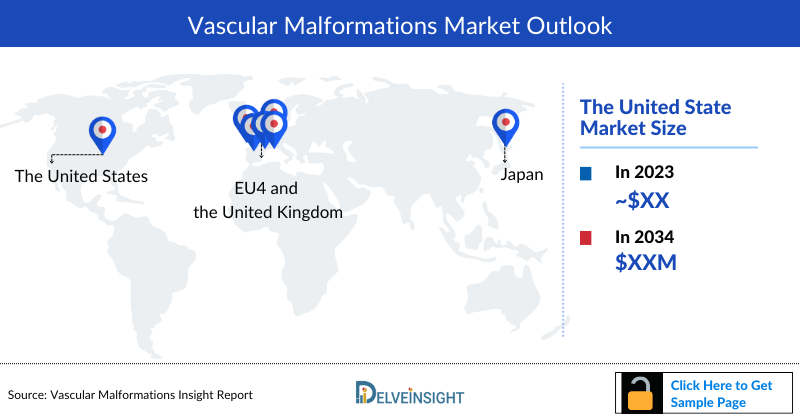
According to DelveInsight, the Vascular Malformations market in 7MM is expected to witness a major change in the study period 2022-2036.
Key Findings
This section includes a glimpse of the Vascular Malformations market in 7MM.
The United States Market Outlook
This section provides the total Vascular Malformations market size and market size by therapies in the United States.
EU-5 Countries: Market Outlook
The total Vascular Malformations market size and market size by therapies in Germany, France, Italy, Spain, and the United Kingdom is provided in this section.
Japan Market Outlook
The total Vascular Malformations market size and market size by therapies in Japan is also mentioned.
Vascular Malformations Drugs Uptake
This section focuses on the rate of uptake of the potential Vascular Malformations drugs recently launched in the Vascular Malformations market or expected to get launched in the market during the study period 2022-2036. The analysis covers Vascular Malformations market uptake by drugs; patient uptake by therapies; and sales of each drug.
Vascular Malformations Drugs Uptake helps in understanding the drugs with the most rapid uptake, reasons behind the maximal use of new drugs, and allow the comparison of the drugs on the basis of Vascular Malformations market share and size which again will be useful in investigating factors important in market uptake and in making financial and regulatory decisions.
Vascular Malformations Pipeline Development Activities
The Vascular Malformations report provides insights into different therapeutic candidates in Phase II, and Phase III stage. It also analyses Vascular Malformations key players involved in developing targeted therapeutics.
Pipeline Development Activities
The Vascular Malformations report covers the detailed information of collaborations, acquisition, and merger, licensing, patent details, and other information for Vascular Malformations emerging therapies.
Reimbursement Scenario in Vascular Malformations
Approaching reimbursement proactively can have a positive impact both during the late stages of product development and well after product launch. In a report, we take reimbursement into consideration to identify economically attractive indications and market opportunities. When working with finite resources, the ability to select the markets with the fewest reimbursement barriers can be a critical business and price strategy.
KOL- Views
To keep up with current Vascular Malformations market trends, we take KOLs and SMEs ' opinion working in the Vascular Malformations domain through primary research to fill the data gaps and validate our secondary research. Their opinion helps to understand and validate current and emerging therapies treatment patterns or Vascular Malformations market trends. This will support the clients in potential upcoming novel treatment by identifying the overall scenario of the market and the unmet needs.
Competitive Intelligence Analysis
We perform Competitive and Market Intelligence analysis of the Vascular Malformations Market by using various Competitive Intelligence tools that include - SWOT analysis, PESTLE analysis, Porter's five forces, BCG Matrix, Market entry strategies etc. The inclusion of the analysis entirely depends upon the data availability.
Scope of the Report
- The report covers the descriptive overview of Vascular Malformations, explaining its causes, signs and symptoms, pathophysiology, diagnosis and currently available therapies
- Comprehensive insight has been provided into the Vascular Malformations epidemiology and treatment in the 7MM
- Additionally, an all-inclusive account of both the current and emerging therapies for Vascular Malformations is provided, along with the assessment of new therapies, which will have an impact on the current treatment landscape
- A detailed review of the Vascular Malformations market; historical and forecasted is included in the report, covering drug outreach in the 7MM
- The report provides an edge while developing business strategies, by understanding trends shaping and driving the global Vascular Malformations market
Report Highlights
- In the coming years, the Vascular Malformations market is set to change due to the rising awareness of the disease, and incremental healthcare spending across the world; which would expand the size of the market to enable the drug manufacturers to penetrate more into the market
- The companies and academics are working to assess challenges and seek opportunities that could influence Vascular Malformations R&D. The therapies under development are focused on novel approaches to treat/improve the disease condition
- Major players are involved in developing therapies for Vascular Malformations. The launch of emerging therapies will significantly impact the Vascular Malformations market
- A better understanding of disease pathogenesis will also contribute to the development of novel therapeutics for Vascular Malformations
- Our in-depth analysis of the pipeline assets across different stages of development (Phase III and Phase II), different emerging trends and comparative analysis of pipeline products with detailed clinical profiles, key cross-competition, launch date along with product development activities will support the clients in the decision-making process regarding their therapeutic portfolio by identifying the overall scenario of the research and development activities
Vascular Malformations Report Insights
- Vascular Malformations Patient Population
- Therapeutic Approaches
- Vascular Malformations Pipeline Analysis
- Vascular Malformations Market Size and Trends
- Vascular Malformations Market Opportunities
- Impact of upcoming Vascular Malformations Therapies
Vascular Malformations Report Key Strengths
- 11 Years Forecast
- 7MM Coverage
- Vascular Malformations Epidemiology Segmentation
- Key Cross Competition
- Highly Analyzed Market
- Drugs Uptake
Vascular Malformations Report Assessment
- Current Treatment Practices
- Unmet Needs
- Vascular Malformations Pipeline Product Profiles
- Vascular Malformations Market Attractiveness
- Market Drivers and Barriers
Key Questions
Market Insights:
- What was the Vascular Malformations drug class share (%) distribution in 2022 and how it would look like in 2036?
- What would be the Vascular Malformations total market size as well as market size by therapies across the 7MM during the forecast period (2022-2036)?
- What are the key findings pertaining to the market across 7MM and which country will have the largest Vascular Malformations market size during the forecast period (2022-2036)?
- At what CAGR, the Vascular Malformations market is expected to grow by 7MM during the forecast period (2022-2036)?
- What would be the Vascular Malformations market outlook across the 7MM during the forecast period (2022-2036)?
- What would be the Vascular Malformations market growth till 2036, and what will be the resultant market Size in the year 2036?
- How would the unmet needs affect the market dynamics and subsequent analysis of the associated trends?
Epidemiology Insights:
- What are the disease risk, burden, and regional/ethnic differences of the Vascular Malformations?
- What are the key factors driving the epidemiology trend for seven major markets covering the United States, EU5 (Germany, Spain, France, Italy, UK), and Japan?
- What is the historical Vascular Malformations patient pool in seven major markets covering the United States, EU5 (Germany, Spain, France, Italy, UK), and Japan?
- What would be the forecasted patient pool of Vascular Malformations in seven major markets covering the United States, EU5 (Germany, Spain, France, Italy, UK), and Japan?
- Where will be the growth opportunities in the 7MM with respect to the patient population pertaining to Vascular Malformations?
- Out of all 7MM countries, which country would have the highest prevalent population of Vascular Malformations during the forecast period (2022-2036)?
- At what CAGR the patient population is expected to grow in 7MM during the forecast period (2022-2036)?
Current Treatment Scenario, Marketed Drugs and Emerging Therapies:
- What are the current options for the Vascular Malformations treatment in addition to the approved therapies?
- What are the current treatment guidelines for the treatment of Vascular Malformations in the USA, Europe, and Japan?
- What are the Vascular Malformations marketed drugs and their respective MOA, regulatory milestones, product development activities, advantages, disadvantages, safety and efficacy, etc.?
- How many companies are developing therapies for the treatment of Vascular Malformations?
- How many therapies are in-development by each company for Vascular Malformations treatment?
- How many are emerging therapies in mid-stage, and late stage of development for Vascular Malformations treatment?
- What are the key collaborations (Industry - Industry, Industry - Academia), Mergers and acquisitions, licensing activities related to the Vascular Malformations therapies?
- What are the recent novel therapies, targets, mechanisms of action and technologies being developed to overcome the limitation of existing therapies?
- What are the clinical studies going on for Vascular Malformations and their status?
- What are the current challenges faced in drug development?
- What are the key designations that have been granted for the emerging therapies for Vascular Malformations?
- What are the global historical and forecasted market of Vascular Malformations?
Reasons to buy
- The report will help in developing business strategies by understanding trends shaping and driving the Vascular Malformations market
- To understand the future market competition in the Vascular Malformations market and Insightful review of the key market drivers and barriers
- Organize sales and marketing efforts by identifying the best opportunities for Vascular Malformations in the US, Europe (Germany, Spain, Italy, France, and the United Kingdom) and Japan
- Identification of strong upcoming players in the market will help in devising strategies that will help in getting ahead of competitors
- Organize sales and marketing efforts by identifying the best opportunities for Vascular Malformations market
- To understand the future market competition in the Vascular Malformations market