
visceral pain associated with gi disorders market
Key Highlights
- Visceral pain originates from internal gastrointestinal organs and differs from somatic pain because it is generally poorly localized, diffuse, and often perceived in the midline.
- Visceral hypersensitivity is a major mechanism underlying GI-related pain.
- Key companies in the Visceral Pain associated with GI disorders market include Vanda Pharmaceuticals, Ironwood Pharmaceuticals, Ardelyx, Takeda Pharmaceutical Company, AbbVie, Pfizer, AstraZeneca, Bausch Health, Salix Pharmaceuticals, Neurogastrx, Ventyx Biosciences, RedHill Biopharma, Arena Pharmaceuticals, and Evoke Pharma.
- Key therapies for visceral pain associated with GI disorders include antispasmodics, neuromodulators, tricyclic antidepressants (TCAs), selective serotonin reuptake inhibitors (SSRIs), serotonin-norepinephrine reuptake inhibitors (SNRIs), gabapentinoids, opioids, peripheral opioid receptor agonists/antagonists, 5-HT3 receptor antagonists, 5-HT4 receptor agonists, chloride channel activators, guanylate cyclase-C agonists, μ-opioid receptor antagonists, bile acid sequestrants, proton pump inhibitors (PPIs), H2-receptor antagonists, nonsteroidal anti-inflammatory drugs (NSAIDs), acetaminophen, and emerging peripherally acting visceral analgesics.
DelveInsight's "Visceral Pain associated with GI disorders Market Insights, Epidemiology, and Market Forecast-2036" report delivers an in-depth understanding of the Visceral Pain associated with GI disorders, historical and forecasted epidemiology as well as the Visceral Pain associated with GI disorders market trends in the United States, EU5 (Germany, Spain, Italy, France, and United Kingdom) and Japan.
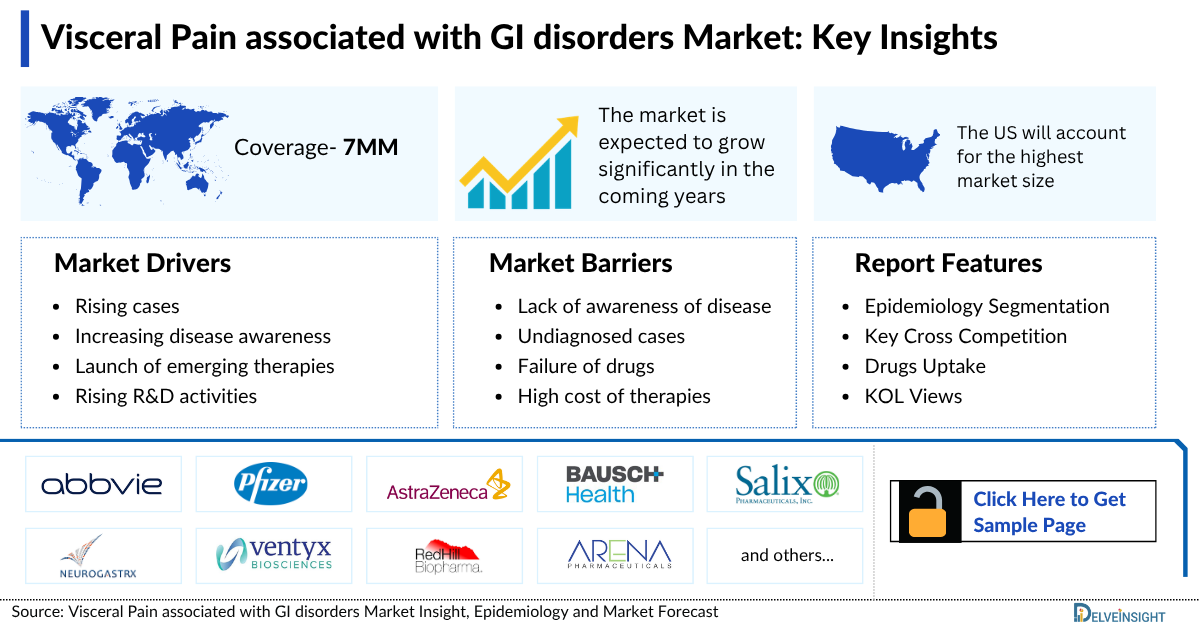
The Visceral Pain associated with GI disorders market report provides current treatment practices, emerging drugs, Visceral Pain associated with GI disorders market share of the individual therapies, current and forecasted Visceral Pain associated with GI disorders market Size from 2022 to 2036 segmented by seven major markets. The Report also covers current Visceral Pain associated with GI disorders treatment practice/algorithm, market drivers, market barriers and unmet medical needs to curate the best of the opportunities and assesses the underlying potential of the Visceral Pain associated with GI disorders market.
Geography Covered
- The United States
- EU5 (Germany, France, Italy, Spain, and the United Kingdom)
- Japan
Study Period: 2022-2036
Key Factors Driving the Growth of the Visceral Pain Associated with GI Disorders Market
- Rising Prevalence of Gastrointestinal Disorders: The increasing burden of irritable bowel syndrome (IBS), inflammatory bowel disease (IBD), functional dyspepsia, gastroesophageal reflux disease (GERD), and other GI conditions is contributing to a larger patient population experiencing visceral pain. This is increasing demand for effective pain-management and disease-specific therapies.
- Growing Incidence of IBS and Functional GI Disorders: IBS and other disorders of gut–brain interaction are major contributors to chronic visceral pain. Greater recognition of symptoms such as abdominal pain, bloating, and altered bowel habits is supporting diagnosis and treatment, expanding the addressable market.
- Increasing Awareness and Diagnosis of Visceral Pain: Improved understanding of visceral hypersensitivity and altered gut–brain signaling is helping clinicians recognize visceral pain as a distinct component of GI disease. Advances in diagnostic approaches are also supporting earlier identification and management.
- Unmet Need for Effective Pain Management: Many patients continue to experience persistent abdominal pain despite conventional treatment of the underlying GI disorder. This unmet need is encouraging pharmaceutical companies to develop therapies targeting visceral hypersensitivity, neuronal signaling, inflammation, and gut–brain interactions.
Visceral Pain associated with GI disorders Disease Understanding and Treatment Algorithm
Visceral pain associated with gastrointestinal (GI) disorders originates from internal organs and is typically caused by distension, inflammation, ischemia, obstruction, or abnormal contractions of the gastrointestinal tract. It is commonly experienced as a deep, diffuse, poorly localized discomfort and may be accompanied by nausea, bloating, changes in bowel habits, or referred pain. Visceral pain is frequently associated with conditions such as irritable bowel syndrome (IBS), inflammatory bowel disease (IBD), gastroesophageal reflux disease (GERD), functional dyspepsia, peptic ulcer disease, pancreatitis, and biliary disorders. The underlying mechanisms can involve increased sensitivity of visceral sensory pathways, altered gut motility, mucosal inflammation, and dysregulation of the gut–brain axis. The clinical burden of chronic visceral pain is substantial because persistent symptoms can impair eating, sleep, daily activities, and overall quality of life.
Visceral Pain associated with GI disorders Diagnosis
Diagnosis of visceral pain associated with GI disorders generally begins with a detailed assessment of symptom characteristics, including location, duration, severity, timing, relationship to meals or bowel movements, associated symptoms, and potential triggers. A physical examination and medical history help distinguish visceral pain from somatic, neuropathic, or referred pain and identify potential underlying GI conditions. Depending on the clinical presentation, diagnostic evaluation may include blood and stool tests, abdominal ultrasound, computed tomography (CT), magnetic resonance imaging (MRI), endoscopy, colonoscopy, or specialized gastrointestinal function tests. In patients with suspected functional disorders such as IBS or functional dyspepsia, clinicians may apply established symptom-based diagnostic criteria after excluding appropriate structural or inflammatory causes. Identification of alarm features—including gastrointestinal bleeding, unexplained weight loss, anemia, persistent vomiting, fever, or new-onset symptoms at an older age—may warrant more extensive investigation to rule out serious disease.
Visceral Pain associated with GI disorders Treatment
Treatment of visceral pain associated with GI disorders is primarily directed toward the underlying cause while also providing symptom relief. Management may include dietary and lifestyle modifications, treatment of inflammation or infection when present, and medications tailored to the specific disorder. Depending on the condition, pharmacological options can include antispasmodics, acid-suppressing therapies, laxatives, antidiarrheal agents, anti-inflammatory or immunomodulatory therapies, and selected analgesics. For functional GI disorders, centrally acting agents such as certain antidepressants may be used at low doses to modulate visceral hypersensitivity and gut–brain signaling. Psychological interventions, including cognitive behavioral therapy, relaxation techniques, and gut-directed therapies, can also support symptom management, particularly in chronic functional disorders. Treatment is increasingly focused on a multimodal approach that addresses gastrointestinal physiology, visceral hypersensitivity, behavioral factors, and the gut–brain axis while minimizing inappropriate long-term use of opioids, which can worsen gastrointestinal motility and pain in some patients.
Visceral Pain associated with GI disorders Epidemiology
The Visceral Pain associated with GI disorders epidemiology section provides insights about the historical and current Visceral Pain associated with GI disorders patient pool and forecasted trends for individual seven major countries. It helps to recognize the causes of current and forecasted trends by exploring numerous studies and views of key opinion leaders. This part of the Visceral Pain associated with GI disorders market report also provides the diagnosed patient pool and their trends along with assumptions undertaken.
Key Findings
The disease epidemiology covered in the report provides historical as well as forecasted Visceral Pain associated with GI disorders epidemiology scenario in the 7MM covering the United States, EU5 countries (Germany, Spain, Italy, France, and the United Kingdom), and Japan from 2022 to 2036.
Visceral Pain associated with GI disorders Drug Chapters
The drug chapter segment of the Visceral Pain associated with GI disorders report encloses the detailed analysis of Visceral Pain associated with GI disorders marketed drugs and late-stage (Phase-III and Phase-II) Visceral Pain associated with GI disorders pipeline drugs. It also helps to understand the Visceral Pain associated with GI disorders clinical trial details, expressive pharmacological action, agreements and collaborations, approval and patent details, advantages and disadvantages of each included drug and the latest news and press releases.
Visceral Pain associated with GI disorders Emerging Drugs
CIN-103: CinRx Pharma
CIN-103 is an investigational, proprietary formulation of phloroglucinol, a non-opioid small molecule used in some countries for GI disorders. CinRx developed the formulation using immediate- and delayed-release technology intended to provide sustained exposure and potentially address several IBS-D symptoms, including abdominal pain, intestinal spasms, altered motility, secretion, and inflammation. CIN-103 is being evaluated in adults with IBS-D in a Phase II program, including U.S. clinical research. The candidate is of particular interest for visceral pain because its proposed therapeutic profile extends beyond diarrhea control to the abdominal pain and spasm components of IBS.
TRP-8802 (psilocybin): Tryptamine Therapeutics
TRP-8802 is an investigational psilocybin-assisted therapy being developed for IBS, with the therapeutic concept centered on modulation of the gut-brain axis and central pain processing rather than directly targeting intestinal motility. Tryptamine Therapeutics conducted a Phase IIa study in collaboration with Massachusetts General Hospital in the U.S., with chronic abdominal pain and visceral tenderness among the key outcomes being investigated. The rationale is based on the role of altered central pain processing and visceral hypersensitivity in IBS; the program combines psilocybin administration with psychotherapy.
Visceral Pain associated with GI disorders Market Outlook
The Visceral Pain associated with GI disorders market outlook of the report helps to build a detailed comprehension of the historic, current, and forecasted Visceral Pain associated with GI disorders market trends by analyzing the impact of current Visceral Pain associated with GI disorders therapies on the market, unmet needs, drivers and barriers, and demand for better technology.
This segment gives a thorough detail of Visceral Pain associated with GI disorders market trend of each marketed drug and late-stage pipeline therapy by evaluating their impact based on the annual cost of therapy, inclusion and exclusion criteria's, mechanism of action, compliance rate, growing need of the market, increasing patient pool, covered patient segment, expected launch year, competition with other therapies, brand value, their impact on the market and view of the key opinion leaders. The calculated Visceral Pain associated with GI disorders market data are presented with relevant tables and graphs to give a clear view of the market at first sight.
According to DelveInsight, the Visceral Pain associated with GI disorders market in 7MM is expected to witness a major change in the study period 2022-2036.
Visceral Pain associated with GI disorders Drugs Uptake
This section focuses on the rate of uptake of the potential Visceral Pain associated with GI disorders drugs recently launched in the Visceral Pain associated with GI disorders market or expected to get launched in the market during the study period 2022-2036. The analysis covers Visceral Pain associated with GI disorders market uptake by drugs; patient uptake by therapies; and sales of each drug.
Visceral Pain associated with GI disorders Drugs Uptake helps in understanding the drugs with the most rapid uptake, reasons behind the maximal use of new drugs, and allow the comparison of the drugs on the basis of Visceral Pain associated with GI disorders market share and size which again will be useful in investigating factors important in market uptake and in making financial and regulatory decisions.
Visceral Pain associated with GI disorders Pipeline Development Activities
The Visceral Pain associated with GI disorders report provides insights into different therapeutic candidates in Phase II, and Phase III stage. It also analyses Visceral Pain associated with GI disorders key players involved in developing targeted therapeutics.
Pipeline Development Activities
The Visceral Pain associated with GI disorders report covers the detailed information of collaborations, acquisition, and merger, licensing, patent details, and other information for Visceral Pain associated with GI disorders emerging therapies.
Reimbursement Scenario in Visceral Pain associated with GI disorders
Approaching reimbursement proactively can have a positive impact both during the late stages of product development and well after product launch. In a report, we take reimbursement into consideration to identify economically attractive indications and market opportunities. When working with finite resources, the ability to select the markets with the fewest reimbursement barriers can be a critical business and price strategy.
KOL- Views
To keep up with current Visceral Pain associated with GI disorders market trends, we take KOLs and SMEs ' opinion working in the Visceral Pain associated with GI disorders domain through primary research to fill the data gaps and validate our secondary research. Their opinion helps to understand and validate current and emerging therapies treatment patterns or Visceral Pain associated with GI disorders market trends. This will support the clients in potential upcoming novel treatment by identifying the overall scenario of the market and the unmet needs.
Competitive Intelligence Analysis
We perform Competitive and Market Intelligence analysis of the Visceral Pain associated with GI disorders Market by using various Competitive Intelligence tools that include - SWOT analysis, PESTLE analysis, Porter's five forces, BCG Matrix, Market entry strategies etc. The inclusion of the analysis entirely depends upon the data availability.
Scope of the Visceral Pain associated with GI disorders Market Report
- The Visceral Pain associated with GI disorders Therapeutics Market Report covers a segment of key events, an executive summary, a descriptive overview, explaining their causes, signs and symptoms, pathogenesis, and currently available treatments.
- Comprehensive insight has been provided into the epidemiology segments and forecasts, the future growth potential of the diagnosis rate, and disease progression along Visceral Pain associated with GI disorders Treatment guidelines.
- Additionally, an all-inclusive account of both the current and emerging treatments, along with the elaborative profiles of late-stage and prominent therapies, will have an impact on the current Visceral Pain associated with GI disorders Treatment landscape.
- A detailed review of the Visceral Pain associated with GI disorders Therapeutics Market, historical and forecasted Visceral Pain associated with GI disorders Treatment Market Size, Visceral Pain associated with GI disorders Drugs Market Share by therapies, detailed assumptions, and rationale behind our approach is included in the report, covering the 7MM drug outreach.
- The Visceral Pain associated with GI disorders Therapeutics Market Report provides an edge while developing business strategies by understanding trends through SWOT analysis and expert insights/KOL views, patient journey, and treatment preferences that help in shaping and driving the 7MM Visceral Pain associated with GI disorders Drugs Market.
Visceral Pain associated with GI disorders Market Report Insights
- Visceral Pain associated with GI disorders Patient Population Forecast
- Visceral Pain associated with GI disorders Therapeutics Market Size
- Visceral Pain associated with GI disorders Pipeline Drugs Analysis
- Visceral Pain associated with GI disorders Market Size and Trends
- Visceral Pain associated with GI disorders Therapeutics Market Opportunity (Current and Forecasted)
Visceral Pain associated with GI disorders Market Report Key Strengths
- Epidemiology-based (Epi-based) Bottom-up Forecasting
- Artificial Intelligence (AI) - enabled Market Research Report
- 11-year forecast
- Visceral Pain associated with GI disorders Market Outlook (North America, Europe, Asia-Pacific)
- Patient Burden Trends (by geography)
- Visceral Pain associated with GI disorders Treatment Addressable Market (TAM)
- Visceral Pain associated with GI disorders Competitive Landscape
- Visceral Pain associated with GI disorders Major Companies Insights
- Visceral Pain associated with GI disorders Price Trends and Analogue Assessment
- Visceral Pain associated with GI disorders Therapies Drug Adoption/Uptake
- Visceral Pain associated with GI disorders Therapies Peak Patient Share Analysis
Visceral Pain associated with GI disorders Market Report Assessment
- Visceral Pain associated with GI disorders Current Treatment Practices
- Visceral Pain associated with GI disorders Unmet Needs
- Visceral Pain associated with GI disorders Clinical Development Analysis
- Visceral Pain associated with GI disorders Emerging Drugs Product Profiles
- Visceral Pain associated with GI disorders Market Attractiveness
- Visceral Pain associated with GI disorders Qualitative Analysis (SWOT and Attribute analysis)
Key Questions Answered in the Visceral Pain associated with GI disorders Treatment Market Report
Visceral Pain associated with GI disorders Therapeutics Market Insights
- What was the Visceral Pain associated with GI disorders Treatment Market Size, the Visceral Pain associated with GI disorders Market Size by therapies, Visceral Pain associated with GI disorders Drugs Market Share (%) distribution in 2025, and what would it look like by 2036? What are the contributing factors for this growth?
- What are the anticipated pricing variations among different geographies for the emerging therapies in the future?
- What can be the future treatment paradigm of Visceral Pain associated with GI disorders?
- What are the disease risks, burdens, and unmet needs of Visceral Pain associated with GI disorders?
- What will be the growth opportunities across the 7MM concerning the patient population with Visceral Pain associated with GI disorders?
- Who is the major future competitor in the market, and how will the competitors affect their market share?
- What are the current options for the treatment of Visceral Pain associated with GI disorders? What are the current guidelines for treating Visceral Pain associated with GI disorders in the US, Europe, and Japan?
Reasons to Buy the Visceral Pain associated with GI disorders Therapeutics Market Report
- The Visceral Pain associated with GI disorders Therapeutics Market Report will help in developing business strategies by understanding the latest trends and changing treatment dynamics driving the Visceral Pain associated with GI disorders Drugs Market.
- Bottom up forecasting builds from the affected population to product forecasts, delivering a robust, data driven approach ideal for new therapies and novel classes.
- Insights on patient burden/disease Visceral Pain associated with GI disorders Prevalence, evolution in diagnosis, and factors contributing to the change in the epidemiology of the disease during the forecast years.
- Understand the existing Visceral Pain associated with GI disorders Drugs Market opportunities in varying geographies and the growth potential over the coming years.
- Identifying strong upcoming players in the Visceral Pain associated with GI disorders Drugs Market will help devise strategies to help get ahead of competitors.
- Detailed analysis, ranking of class-wise potential current, and emerging therapies under the attribute analysis section to provide visibility around leading classes.
- To understand KOLs’ perspectives on the accessibility, acceptability, and compliance-related challenges of existing treatment to overcome barriers in the future.
- Detailed insights on the unmet needs of the existing Visceral Pain associated with GI disorders Drugs Market so that the upcoming players can strengthen their development and launch strategy.
- This Artificial Intelligence (AI) enabled report summarize and simplify complex datasets with in the report into clear, actionable insights for stakeholders, investors, and healthcare providers, enabling faster, data driven decisions.