Vitiligo Market Summary
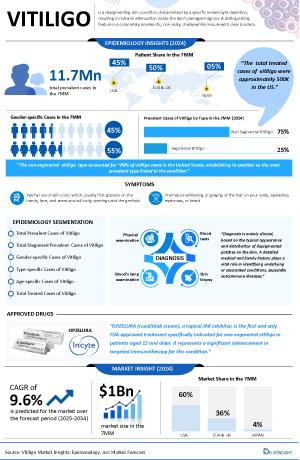
- In 2025, the 7MM accounted for more than 11 million prevalent cases of vitiligo, including approximately 5 million male and 6 million female cases. The prevalent patient pool is projected to increase through 2036, primarily driven by population growth, improved disease recognition and diagnosis, and the persistence of a substantial affected population requiring long-term management.
- The current treatment landscape for vitiligo continues to be anchored by established topical and phototherapy-based approaches, particularly topical corticosteroids, topical calcineurin inhibitors, and narrowband ultraviolet B (NB-UVB) phototherapy, which remain central to disease management. Ruxolitinib (OPZELURA) and upadacitinib (RINVOQ) are approved targeted therapies that provide JAK inhibition as an additional treatment approach, while phototherapy and surgical procedures complement pharmacological management in appropriate patients.
- The emerging vitiligo pipeline is increasingly focused on targeted immunomodulatory approaches, particularly JAK inhibition, with candidates such as ritlecitinib (LITFULO) from Pfizer and povorcitinib from Incyte among others being investigated for nonsegmental vitiligo. Both candidates have demonstrated positive Phase III results, with regulatory submissions anticipated following their respective clinical development programs.
- A significant gap in vitiligo care is the severe undertreatment of patients within the first year following diagnosis. Real-world evidence shows that more than half of newly diagnosed patients do not receive any medical therapy during this critical period despite the potential benefits of early intervention. Among those who do initiate treatment, most are prescribed topical calcineurin inhibitors or corticosteroids as first-line therapies, with minimal switching or combination therapy observed. This limited therapeutic approach may reflect both the restricted range of approved and effective treatments for vitiligo and a lack of proactive management strategies.
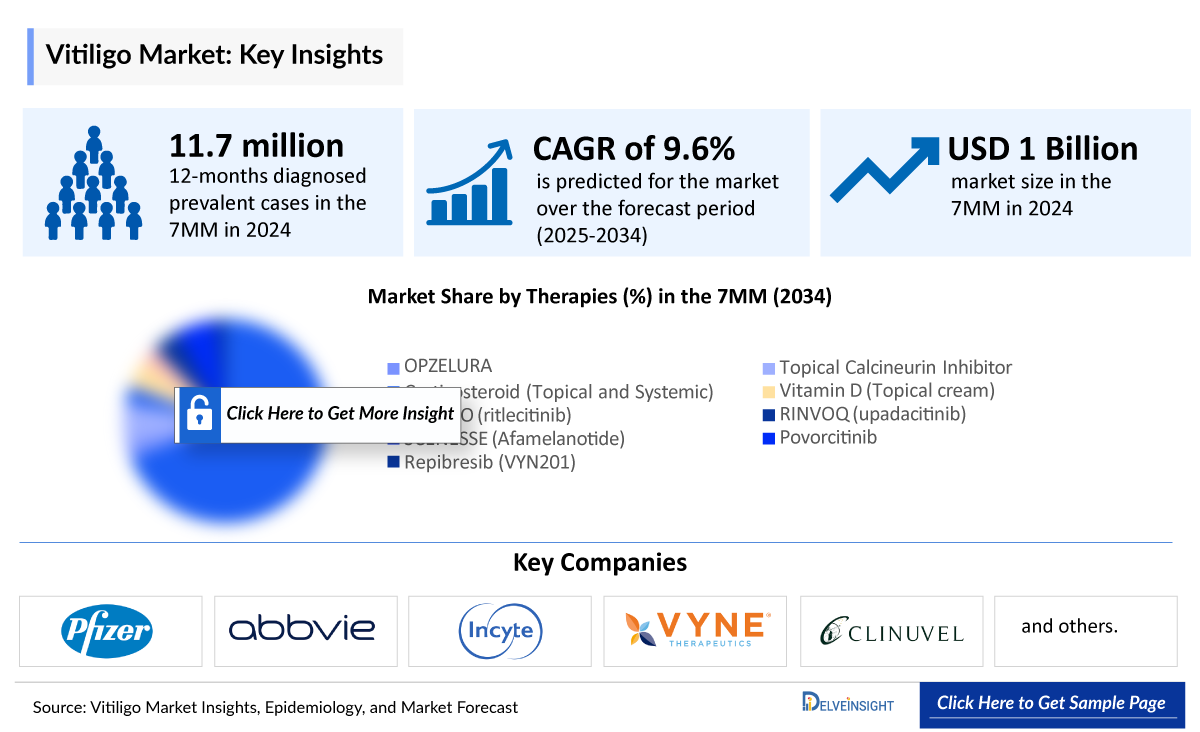
DelveInsight's ‘Vitiligo – Market Insights, Epidemiology and Market Forecast – 2036’ report delivers an in-depth understanding of vitiligo, historical and forecasted epidemiology, as well as the vitiligo market trends in the United States, EU4 (Germany, Spain, Italy, and France), the United Kingdom, and Japan.
The vitiligo market report delivers a comprehensive analysis of the current treatment landscape, including standards of care, clinical practices, and evolving therapeutic algorithms. It evaluates, vitiligo patient burden trends, revenue & market share dynamics, peak patient share & therapy uptake analysis, and provides an in-depth market size assessment, and growth rate projections (Historical & Forecast 2022–2036) across the 7MM regions. The report highlights key unmet medical needs in vitiligo and maps the competitive and clinical landscape to uncover high‑value opportunities, providing a clear outlook on future market growth potential.
Geography Covered
North America: The United States
Europe: Germany, France, Italy, Spain and the United Kingdom
Asia-Pacific: Japan
|
Study Period |
2022–2036 |
|
Historical Year |
2022–2025 |
|
Forecast Period |
2026–2036 |
|
Base Year |
2025 |
|
Geographies Covered |
|
|
Vitiligo Epidemiology Segmentation Analysis |
Patient Burden Assessment
|
|
Vitiligo Companies |
And more |
|
Vitiligo Therapies |
And more |
|
Vitiligo Market |
Segmented by
|
|
Analysis |
|
Vitiligo- Understanding and Treatment Algorithm
Vitiligo Overview and Diagnosis
Vitiligo, also known as leucoderma, is a chronic depigmenting skin disorder that causes the formation of discolored patches of skin. Also, hair on these skin regions can lose pigment and appear white. This condition is characterized by the selective loss of melanocytes—cells responsible for imparting color to skin, leading to pigment dilution in the affected areas of the skin. The affected skin then turns into typical nonscaly, chalky-white macules. It is the most common depigmenting skin disorder. The average age of onset of vitiligo is in the mid-twenties, but it can appear at any age. Once affected, the size and number of patches vary from one person to another.
The diagnosis of vitiligo does not require confirmatory laboratory tests in most cases, irrespective of its clinical subtype. Dermatologists often diagnose vitiligo based solely on a physical examination. Doctors may suggest a skin biopsy or blood test if they need more information about the mechanism of the condition affecting skin cells. In vivo, confocal microscopy (noninvasive) or a skin biopsy using specific markers can assess the absence of melanocytes from lesions. No screening methods are available for vitiligo. The clinical screening of associated disorders in diagnosing vitiligo is a debatable topic. Wood’s lamp examination of vitiligo reveals a chalky white enhancement of depigmented skin, while hypopigmented skin is not enhanced.
Further details are provided in the report.
Current Vitiligo Treatment Landscape
Vitiligo treatment aims to restore skin color and improve appearance, though results may not be permanent or prevent progression. Initial management by a general physician includes sun protection, camouflage creams, and topical steroids for limited non-segmental vitiligo. If further care is needed, a dermatologist may prescribe calcineurin inhibitors, phototherapy, or surgical options like skin grafts for stable cases.
- Topical corticosteroids: The application of a potent or very potent corticosteroid anti-inflammatory cream or ointment to vitiligo-affected areas may help restore pigment. However, side effects such as skin thinning and stretch marks can occur with prolonged use.
- Calcineurin inhibitors: This alternative class of anti-inflammatory creams and ointments may also help restore pigment in some individuals. These treatments avoid the side effects of skin thinning seen with corticosteroids and may be especially useful for facial vitiligo. Calcineurin inhibitors may be prescribed in alternation with corticosteroid creams or ointments to reduce the risk of side effects associated with prolonged corticosteroid use.
- Oral corticosteroids: Short courses of oral corticosteroids can sometimes be considered for individuals with rapidly spreading vitiligo. However, this treatment is associated with a wide range of potential side effects, including weight gain, skin thinning, mood changes, and cataracts.
Further details related to country-based variations are provided in the report.
Vitiligo Unmet Needs
The section “unmet needs of vitiligo” outlines the critical gaps between the current state of patient care, diagnosis, and the ideal & effective management of the disease. It highlights the obstacles experienced by patients, clinicians, and researchers and identifies potential solutions for future progress.
- Absence of aligned treatment targets and standardised assessment of disease severity, patient impact and treatment response
- Limited approved and reimbursed treatment options with safety and efficacy constraints
- Broad spectrum of psychosocial challenges in vitiligo
- Recognition and mitigation of economic burden
and others…..
Note: Comprehensive unmet needs insights in vitiligo and their strategic implications are provided in the full report.
Vitiligo Epidemiology
Key Findings from Vitiligo Epidemiological Analysis and Forecast
- In 2025, the segmental vitiligo accounted for approximately 3 million cases and non segmental vitiligo accounted for approximately 9 million cases in the 7MM.
- In 2025, females accounted for approximately 60% cases and males accounted for almost 40% cases of Vitiligo in 7MM.
- In Japan in 2025, vitiligo cases are highest in the 0–11 years age group (approximately 23% cases), followed by the 30–39 years group (about 15% cases), while the lowest burden is observed in the 50–59 years group (around 9% cases), indicating a relatively higher impact in early life.
Patient Share (%) Distribution of Vitiligo by Countries in the 7MM in 2025
Recent Development
In Sep 2026, Specialised Therapeutics expanded its commercial distribution agreement with Incyte to include Opzelura (ruxolitinib) cream in Australia. Opzelura, a topical JAK inhibitor, is approved for non-segmental vitiligo and mild-to-moderate atopic dermatitis. Under the expanded agreement, Specialised Therapeutics assumes regulatory, medical, and commercialization responsibilities to bring the topical treatment to Australian healthcare providers and patients, broadening Incyte's dermatological footprint across the Independent Asia-Pacific region.
In Sep 2026, Accro Bioscience received IND clearance from the NMPA for a Phase 2/3 clinical trial of AC-201, an oral, highly selective TYK2/JAK1 inhibitor, to treat non-segmental vitiligo. Developed in partnership with Fosun Pharma, AC-201 targets the pseudokinase domain (JH2) without disrupting the JAK2/JAK2 pathway. The adaptive seamless design trial will evaluate the drug's safety and efficacy in mainland China, expanding its therapeutic application across immune-mediated inflammatory conditions.
Vitiligo Drug Analysis & Competitive Landscape
The vitiligo drug chapter provides a detailed, market-focused review of the emerging pipeline across Phase I-III clinical trials. It covers mechanism of action, clinical trial data, regulatory approvals, patents, collaborations, strategic partnerships upcoming key catalyst for each therapy, along with their advantages, limitations, and recent developments. This section offers critical insights into the vitiligo treatment landscape, supporting market assessment, competitive analysis, and growth forecasting for the vitiligo therapeutics market.
Approved Therapies for Vitiligo
Upadacitinib (RINVOQ): AbbVie
Upadacitinib (RINVOQ) is an oral, selective and reversible Janus kinase (JAK) inhibitor that preferentially targets JAK1-mediated signaling, with greater inhibitory activity against JAK1 than JAK2, JAK3, and TYK2. By modulating the activity of cytokines involved in immune and inflammatory responses, upadacitinib helps regulate abnormal immune activity. In vitiligo, this mechanism may help reduce T-cell-mediated melanocyte destruction, thereby supporting the stabilization of disease activity and repigmentation of affected skin.
|
Vitiligo Marketed/Approved Therapies | ||||||
|
Drug Name |
Company |
Indication |
Molecule Type |
RoA |
MoA |
Marketed Region |
|
Upadacitinib (RINVOQ) |
AbbVie |
Vitiligo |
Small molecules |
Oral |
JAK inhibitor |
EU: 2026 |
|
Ruxolitinib (OPZELURA) |
Incyte Corporation |
Vitiligo |
Small molecules |
Topical |
JAK inhibitor |
US: 2022 EU: 2023 |
- In July 2026, AbbVie announced European Commission Approval of RINVOQ for the treatment of adults and adolescents with non-segmental vitiligo. RINVOQ is the first and only systemic medication approved in the European Union to treat adult and adolescent patients with non-segmental vitiligo.
Note: Detailed marketed therapies assessment will be provided in the final report.
Vitiligo Pipeline Analysis
Ritlecitinib (LITFULO): Pfizer
Ritlecitinib (LITFULO) is a selective inhibitor of JAK3 and the TEC family of kinases. By inhibiting these pathways, LITFULO may suppress cytokine signaling and T-cell cytolytic activity, which are implicated in the autoimmune destruction of melanocytes in vitiligo. LITFULO is being investigated in a Phase III clinical trial as a potential treatment for vitiligo, with the aim of reducing disease activity and promoting repigmentation of affected skin.
|
Competitive Landscape of Pipeline Drugs | ||||||
|
Drug Name |
Company |
Highest Phase |
Indication |
RoA |
MoA |
Anticipated Launch in the US |
|
Ritlecitinib (LITFULO) |
Pfizer |
III |
Vitiligo |
AK3 and the TEC kinases inhibitor |
Information is available in the full report | |
|
Povorcitinib |
Incyte Corporation |
III |
Vitiligo |
JAK inhibitor |
Information is available in the full report | |
|
Note: Launch insights are provisional and may change with future report updates or the occurrence of major key catalysts. | ||||||
Note: Detailed emerging therapies assessment will be provided in the final report.
Vitiligo Key Players, Market Leaders and Emerging Companies
- Pfizer
- Incyte Corporation
- AbbVie
- Teva Pharmaceutical
and others
Vitiligo Drug Updates
- In July 2026, Pfizer announced positive topline results from 2 phase III trials evaluating ritlecitinib in patients with nonsegmental vitiligo. Both the studies met their co-primary end points, with the 50 mg and 100 mg once-daily doses producing significant, clinically meaningful improvement in facial and total body repigmentation versus placebo at week 52.
- In July 2026, Incyte reported that for nonsegmental vitiligo, povorcitinib broadens its franchise through expansion into moderate-to-severe disease, supported by positive Phase III data from the STOP-V1 and STOP-V2 trials in 1H 2026, with regulatory submissions planned for 1H 2027.
Vitiligo Market Outlook
The vitiligo market is transitioning from a predominantly off-label, corticosteroid- and phototherapy-based treatment paradigm toward targeted, systemic, and regenerative approaches. OPZELURA (ruxolitinib) has established the first disease-specific topical pharmacologic treatment for nonsegmental vitiligo, while RINVOQ (upadacitinib) has further expanded the targeted treatment landscape following its European Commission approval in 2026 for adults and adolescents aged 12 years and older with non-segmental vitiligo who are candidates for systemic therapy. Meanwhile, the emerging pipeline remains active, investigating additional immune-modulatory or melanocyte-directed mechanisms. Overall, the market is moving toward broader systemic disease control, targeted immune modulation, and regenerative repigmentation, with future competition likely to focus on durability of repigmentation, treatment of extensive disease, difficult-to-treat anatomical sites, and long-term safety.
Further details will be provided in the report.
Drug Class/Insights into Leading Emerging Therapies in Vitiligo (2022–2036 Forecast)
The vitiligo treatment landscape includes topical JAK inhibitors, oral JAK inhibitors, melanocyte-stimulating approaches, and combination therapies, with increasing emphasis on durable repigmentation, broader body-surface-area coverage, reduced relapse, and convenient administration. JAK inhibitors have emerged as an important targeted treatment class because of their ability to suppress the interferon-gamma–JAK–STAT signaling pathway implicated in melanocyte destruction. Emerging approaches are increasingly focused on achieving deeper and more sustained immune control while promoting melanocyte recovery.
- Small molecules: They represent a key drug class in vitiligo, particularly through JAK inhibitors, which target cytokine signaling involved in the autoimmune destruction of melanocytes. This class includes approved topical ruxolitinib (OPZELURA) and upadacitinib (RINVOQ), with upadacitinib approved in the EU in 2026 for nonsegmental vitiligo, while ritlecitinib remains an emerging oral JAK inhibitor under investigation for broader disease control. The development of both topical and oral small-molecule therapies is expected to expand treatment options across localized and extensive disease.
Further details will be provided in the report.
Vitiligo Drug Uptake
This section focuses on the uptake rate of potential drugs expected to be launched in the market during the forecast period (2026–2036). The analysis covers the vitiligo drug’s uptake, performance at peak, factors affecting performance during prime years of growth, patient uptake by therapy, and anticipated sales generated by each drug.
Developed by Incyte Corporation, povorcitinib is an oral, selective JAK1 inhibitor being investigated for the treatment of non-segmental vitiligo, including patients with extensive disease. The therapy is designed to modulate JAK1-mediated cytokine signaling involved in the autoimmune destruction of melanocytes and has demonstrated clinical activity in promoting repigmentation in patients with non-segmental vitiligo. Its development represents an emerging systemic targeted treatment approach for patients who may require broader disease control beyond topical therapies.
Detailed insights of emerging therapies' drug uptake is included in the report.
Market Access and Reimbursement of Therapies in Vitiligo
The report further provides detailed insights on the country-wise accessibility and reimbursement scenarios, cost-effectiveness scenario of therapies, programs making accessibility easier and out-of-pocket costs more affordable, insights on patients insured under federal or state government prescription drug programs, etc.
EU4 and the UK
|
France Reimbursement of Therapies Approved for Vitiligo | |
|
Drug/Therapy |
Haute Autorité de Santé (HAS) Reimbursement |
|
Ruxolitinib (OPZELURA) |
OPZELURA is reimbursed at 65% by national health insurance, which is the standard rate for most medications. |
Reimbursement is a crucial factor that affects the drug’s access to the market. Often, the decision to reimburse comes down to the price of the drug relative to the benefit it produces in treated patients. To reduce the healthcare burden of these high-cost therapies, many payment models are being considered by payers and other industry insiders.
NOTE: Further Details are provided in the final report.
Industry Experts and Physician Views for Vitiligo
To keep up with vitiligo market trends, we take Key Opinion Leaders (KOLs) and Subject Matter Experts (SMEs) opinions working in the domain through primary research to fill the data gaps and validate our secondary research. Industry Experts were contacted for insights on the Vitiligo emerging therapies, evolving treatment landscape, patient adherence to conventional therapies, therapy switching trends, drug adoption and uptake, accessibility challenges, and epidemiology and real-world prescription patterns in vitiligo, including MD, PhD, Instructor, Postdoctoral Researcher, Professor, Researcher, and others.
DelveInsight’s analysts connected with 10+ KOLs to gather insights at country level. Centers such as the The Warren Alpert Medical School of Brown University, Rutgers University, Philadelphia College of Osteopathic Medicine, Paris-Est Créteil University etc. were contacted.
Their opinion helps understand and validate current and emerging vitiligo therapies, highlight unmet medical needs, provide epidemiological context, and support strategic decisions for market access, therapy adoption, and pipeline prioritization in vitiligo.
|
Region |
Key Opinion Leaders (KOLs) and Subject Matter Experts (SMEs) |
|
United States |
“Management of vitiligo remains challenging, though several therapies have emerged to slow progression and induce repigmentation. Topical corticosteroids and calcineurin inhibitors are typically first-line for early-stage or localized disease. Targeted phototherapy, including narrowband ultraviolet B (NBUVB), excimer laser, and excimer lamp, is considered the backbone of treatment for more extensive or refractory cases. A detailed clinical history and laboratory screening should be performed before initiating JAK inhibitors to assess contraindications and ensure patient safety.” |
|
Japan |
“It is important to recognize that diagnosing vitiligo is already challenging. The appearance (and progression) of the lesions varies, which causes confusion with symptoms of other skin conditions. People living with vitiligo are prone to developing other diseases, including psoriasis, diabetes and rheumatoid arthritis, in addition to the lack of consensus on treatment for the condition itself.” |
Qualitative Analysis: SWOT and Attribute Analysis
We perform qualitative and market Intelligence analysis using various approaches, such as SWOT analysis and attribute analysis.
In the SWOT analysis of vitiligo, strengths, weaknesses, opportunities, and threats in terms of disease diagnosis, patient awareness, patient burden, competitive landscape, cost-effectiveness, and geographical accessibility of therapies are provided. Attribute analysis analyzes emerging therapies based on relevant attributes such as safety, efficacy, frequency of administration, route of administration, and order of entry. Scoring is given based on these parameters to analyze the effectiveness of therapy.
The team of analysts analyzes promising emerging therapies based on relevant attributes such as safety, efficacy, frequency of administration, route of administration, and order of entry. In efficacy, the trial’s primary and secondary outcome measures are evaluated, whereas the therapies’ safety is evaluated, wherein the acceptability, tolerability, and adverse events are majorly observed. In addition, the scoring is also based on the route of administration, order of entry, probability of success, and the addressable patient pool for each therapy. According to these parameters, the final weightage score and the ranking of the emerging therapies are decided.
Scope of the Report
- The report covers a segment of key events, an executive summary, a descriptive overview of vitiligo, explaining their causes, signs and symptoms, pathogenesis, and currently available treatments.
- Comprehensive insight has been provided into the epidemiology segments and forecasts, the future growth potential of the diagnosis rate, and disease progression along treatment guidelines.
- Additionally, an all-inclusive account of both the current and emerging treatments, along with the elaborative profiles of mid-stage and prominent therapies, will have an impact on the current treatment landscape.
- A detailed review of the vitiligo market, historical and forecasted market size, market share by therapies, detailed assumptions, and rationale behind our approach is included in the report, covering the 7MM drug outreach.
- The report provides an edge while developing business strategies by understanding trends through SWOT analysis and expert insights/KOL views, patient journey, and treatment preferences that help in shaping and driving the 7MM vitiligo market.
Report Insights
- Vitiligo Patient Population Forecast
- Vitiligo Therapeutics Market Size
- Vitiligo Pipeline Analysis
- Vitiligo Market Size and Trends
- Vitiligo Market Opportunity (Current and Forecasted)
Report Key Strengths
- Epidemiology‑based (Epi‑based) Bottom‑up Forecasting
- Artificial Intelligence (AI)-enabled Market Research Report
- 11-year forecast
- Vitiligo Market Outlook (North America, Europe, Asia-Pacific)
- Patient Burden Trends (by geography)
- Vitiligo Treatment Addressable Market (TAM)
- Vitiligo Competitive Landscape
- Vitiligo Major Companies Insights
- Vitiligo Price Trends and Analogue Assessment
- Vitiligo Therapies Drug Adoption/Uptake
- Vitiligo Therapies Peak Patient Share analysis
Report Assessment
- Vitiligo Current Treatment Practices
- Vitiligo Unmet Needs
- Vitiligo Clinical Development Analysis
- Vitiligo Emerging Drugs Product Profiles
- Vitiligo Market Attractiveness
- Vitiligo Qualitative Analysis (SWOT and Attribute analysis)
FAQs
Market Insights
- What was the vitiligo market size, the market size by therapies, market share (%) distribution in 2025, and what would it look like by 2036? What are the contributing factors for this growth?
- What are the anticipated pricing variations among different geographies for the emerging therapies in the future?
- What can be the future treatment paradigm of vitiligo?
- What are the disease risks, burdens, and unmet needs of vitiligo? What will be the growth opportunities across the 7MM concerning the patient population with vitiligo?
- Who is the major future competitor in the market, and how will the competitors affect their market share?
- What are the current options for the treatment of vitiligo? What are the current guidelines for treating vitiligo in the US, Europe, and Japan?
Reasons to Buy
- The report will help in developing business strategies by understanding the latest trends and changing treatment dynamics driving the vitiligo market.
- Bottom‑up forecasting builds from the affected population to product forecasts, delivering a robust, data‑driven approach ideal for new therapies and novel classes.
- Insights on patient burden/disease prevalence, evolution in diagnosis, and factors contributing to the change in the epidemiology of the disease during the forecast years.
- Understand the existing market opportunities in varying geographies and the growth potential over the coming years.
- Identifying strong upcoming players in the market will help devise strategies to help get ahead of competitors.
- Detailed analysis and ranking of class-wise potential current and emerging therapies under the attribute analysis section to provide visibility around leading classes.
- To understand KOLs’ perspectives on the accessibility, acceptability, and compliance-related challenges of existing treatment to overcome barriers in the future.
- Detailed insights on the unmet needs of the existing market so that the upcoming players can strengthen their development and launch strategy.
- This Artificial Intelligence (AI) ‑ enabled report summarize and simplify complex datasets within the report into clear, actionable insights for stakeholders, investors, and healthcare providers, enabling faster, data‑driven decisions.