Vulvodynia Market Summary
- The Vulvodynia market in the 7MM is projected to grow at a significant CAGR by 2036 in the leading countries (US, EU4, UK and Japan).
- NIH materials report that approximately 62% of diagnosed women have limited intercourse because of pain
- Key companies active in the market incude Initiator Pharma; Merz Therapeutics; Centers for Vulvovaginal Disorders; MAC Clinical Research; National Institutes of Health (NIH/NICHD); National Vulvodynia Association; Gynecologic Cancers Research Foundation; Women's Health Research organizations and academic vulvovaginal-pain research centers.
Vulvodynia Market and Epidemiology Analysis
DelveInsight's "Vulvodynia Market Insights, Epidemiology, and Market Forecast-2036" report delivers an in-depth understanding of the Vulvodynia, historical and forecasted epidemiology as well as the Vulvodynia market trends in the United States, EU5 (Germany, Spain, Italy, France, and United Kingdom) and Japan.
The Vulvodynia market report provides current treatment practices, emerging drugs, Vulvodynia market share of the individual therapies, current and forecasted Vulvodynia market Size from 2022 to 2036 segmented by seven major markets. The Report also covers current Vulvodynia treatment practice/algorithm, market drivers, market barriers and unmet medical needs to curate the best of the opportunities and assesses the underlying potential of the Vulvodynia market.
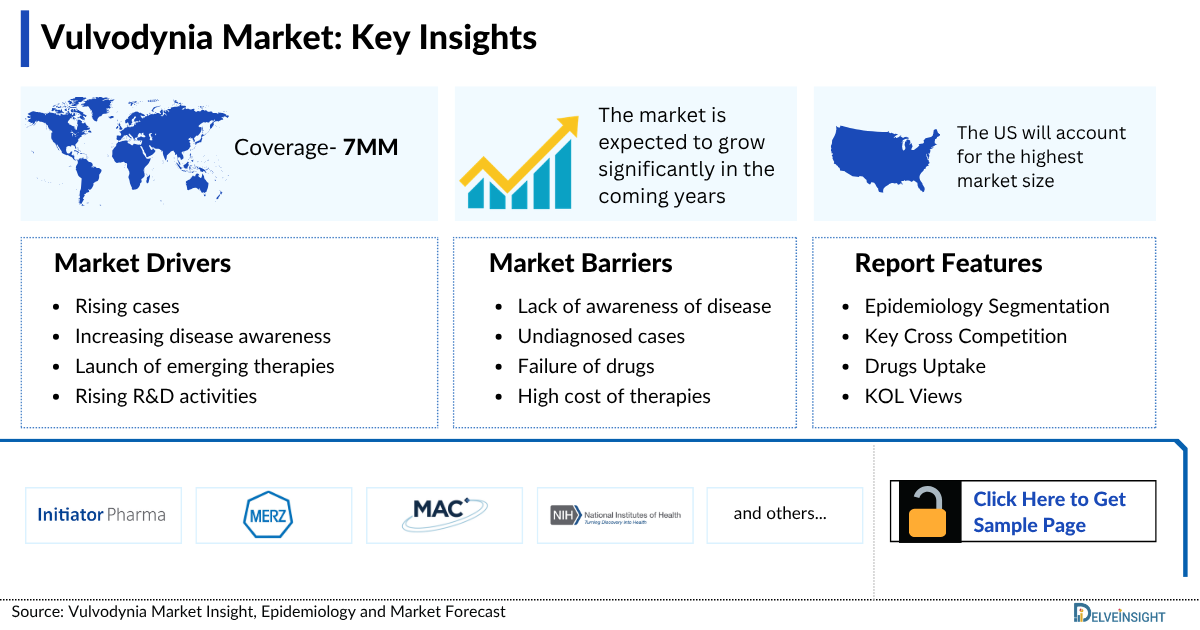
Factors Impacting the Vulvodynia Market Growth
-
Rising awareness and improved diagnostic capabilities
Growing medical attention and recognition of vulvodynia as a legitimate chronic pain condition is leading to increased diagnosis rates, with healthcare providers becoming better equipped to identify the condition that was previously underdiagnosed due to stigma and lack of awareness among both patients and clinicians
-
Advancements in targeted therapeutic options
Development of diverse treatment modalities including antidepressants dominating market share, anticonvulsants, topical anesthetics, nerve blocks, and innovative pain management strategies is expanding the therapeutic arsenal, with antidepressants accounting for the largest treatment segment and novel formulations improving efficacy
-
Adoption of non-invasive and multimodal treatment approaches
Growing preference for non-invasive therapies combining pharmacological interventions with physical therapy, behavioral therapies, and lifestyle modifications is transforming treatment paradigms, offering patients comprehensive pain management options beyond traditional pharmaceutical approaches
-
Expansion of retail pharmacy distribution channels
Retail pharmacy chains play a crucial role in market distribution accounting for the majority of market share, improving accessibility and convenience for patients seeking long-term pain management therapies, particularly important for conditions requiring ongoing treatment adherence
-
Strong regional growth in emerging markets
Asian markets particularly India and China are demonstrating higher growth rates compared to developed markets, driven by relatively lower medical treatment costs making long-term pain management more accessible, combined with expanding healthcare infrastructure and increasing healthcare expenditure in these regions
-
Robust R&D investments and strategic collaborations
Substantial investments in research activities focused on understanding the complex pathophysiology of vulvodynia, along with strategic partnerships between pharmaceutical companies and healthcare providers for product differentiation through innovative formulations and enhanced distribution networks, are accelerating development of more potent medications
Vulvodynia Disease Understanding
Vulvodynia is a chronic vulvar pain condition defined as vulvar pain lasting at least three months without an identifiable cause. It may be localized or generalized, and pain may be provoked by touch/intercourse, spontaneous (unprovoked), or mixed. Provoked vestibulodynia is a common subtype in which pain is concentrated around the vaginal opening and triggered by contact. The underlying biology is considered multifactorial and may involve peripheral nerve sensitization, neuroinflammation, pelvic-floor dysfunction, hormonal factors, and altered pain processing. Vulvodynia can substantially affect sexual activity, relationships, physical activity, psychological well-being, and quality of life.
Vulvodynia Diagnosis
Diagnosis is primarily clinical and is generally considered a diagnosis of exclusion. Clinicians obtain a detailed history covering pain location, duration, quality, triggers, sexual and urinary symptoms, previous infections, medications, hormonal factors, and associated pelvic-floor symptoms. Physical examination assesses the vulvar skin and mucosa and looks for infections, dermatoses, lesions, atrophy, or other causes of pain. A cotton-swab/Q-tip test can map and quantify vestibular pain and distinguish localized provoked pain from generalized or unprovoked pain. Vaginal/vulvar cultures or swabs may be used when infection is suspected, while biopsy is generally reserved for refractory cases or suspicious lesions.
Vulvodynia Treatment
Treatment is individualized and generally multimodal, because no single therapy consistently eliminates symptoms. Pelvic-floor physical therapy, cognitive behavioral therapy, psychosexual counseling, mindfulness, and lifestyle measures are commonly used as first-line approaches. Pharmacological management may include topical anesthetics such as lidocaine and systemic neuropathic-pain medicines such as tricyclic antidepressants, anticonvulsants or other neuropathic-pain agents, although clinical evidence is inconsistent and several commonly used medicines are prescribed off-label. Hormonal therapy may be considered when vulvar pain is associated with hormonal changes. For refractory localized provoked vestibulodynia, procedures including botulinum toxin and, as a last resort, vestibulectomy may be considered.
Vulvodynia Epidemiology
The Vulvodynia epidemiology section provides insights about the historical and current Vulvodynia patient pool and forecasted trends for individual seven major countries. It helps to recognize the causes of current and forecasted trends by exploring numerous studies and views of key opinion leaders. This part of the Vulvodynia market report also provides the diagnosed patient pool and their trends along with assumptions undertaken.
Key Findings from the Vulvodynia Epidemiology Analysis
The disease epidemiology covered in the report provides historical as well as forecasted Vulvodynia epidemiology scenario in the 7MM covering the United States, EU5 countries (Germany, Spain, Italy, France, and the United Kingdom), and Japan from 2022 to 2036.
Get detailed insights into the historical as well as forecasted epidemiology trends in the 7MM, at: Vulvodynia Epidemiology Forecast
Vulvodynia Drug Analysis
The drug chapter segment of the Vulvodynia report encloses the detailed analysis of Vulvodynia marketed drugs and late-stage (Phase-III and Phase-II) Vulvodynia pipeline drugs. It also helps to understand the Vulvodynia clinical trial details, expressive pharmacological action, agreements and collaborations, approval and patent details, advantages and disadvantages of each included drug and the latest news and press releases.
Vulvodynia Emerging Drugs
Pudafensine (IP2015/IP2018): Initiator Pharma
Pudafensine is an investigational oral analgesic being developed for vulvodynia based on its potential effects on neuropathic pain. Initiator Pharma initiated a randomized, placebo-controlled Phase IIa vulvodynia study in late 2025, although the study itself is being conducted in the UK rather than the US. The 24-patient crossover study is designed to assess pain relief and safety, with completion and topline results expected in 2026.
IncobotulinumtoxinA: Merz
IncobotulinumtoxinA, a botulinum toxin type A product, is being investigated for provoked vestibulodynia associated with overactive pelvic-floor muscles. A Phase 2, double-blind, placebo-controlled US study began in February 2026 and is recruiting at sites in Washington, D.C., and New York. The study plans to enroll 54 participants and evaluate changes in pain during standardized dilator testing and patient-reported global improvement.
Key Developments in the Vulvodynia Market
- In August 2026, Initiator Pharma reported in its Q2 2026 update that it had prioritized pudafensine as its lead clinical candidate and that enrollment in its Phase IIa vulvodynia study was progressing, with approximately half of the targeted participants already dosed.
- In April 2026, Initiator Pharma announced continued progress in its Phase IIa pudafensine vulvodynia study, stating that half of the planned population had already been dosed and that completion and topline data were expected by year-end 2026.
Vulvodynia Market Outlook
The Vulvodynia market outlook of the report helps to build a detailed comprehension of the historic, current, and forecasted Vulvodynia market trends by analyzing the impact of current Vulvodynia therapies on the market, unmet needs, drivers and barriers, and demand for better technology.
This segment gives a thorough detail of Vulvodynia market trend of each marketed drug and late-stage pipeline therapy by evaluating their impact based on the annual cost of therapy, inclusion and exclusion criteria's, mechanism of action, compliance rate, growing need of the market, increasing patient pool, covered patient segment, expected launch year, competition with other therapies, brand value, their impact on the market and view of the key opinion leaders. The calculated Vulvodynia market data are presented with relevant tables and graphs to give a clear view of the market at first sight.
According to DelveInsight, the Vulvodynia market in 7MM is expected to witness a major change in the study period 2022-2036.
Vulvodynia Drugs Uptake
This section focuses on the rate of uptake of the potential Vulvodynia drugs recently launched in the Vulvodynia market or expected to get launched in the market during the study period 2022-2036. The analysis covers Vulvodynia market uptake by drugs; patient uptake by therapies; and sales of each drug.
Vulvodynia Drugs Uptake helps in understanding the drugs with the most rapid uptake, reasons behind the maximal use of new drugs, and allow the comparison of the drugs on the basis of Vulvodynia market share and size which again will be useful in investigating factors important in market uptake and in making financial and regulatory decisions.
Vulvodynia Clinical Trials Analysis
The Vulvodynia report provides insights into different therapeutic candidates in Phase II, and Phase III stage. It also analyses Vulvodynia companies involved in developing targeted therapeutics.
Pipeline Development Activities
The Vulvodynia report covers the detailed information of collaborations, acquisition, and merger, licensing, patent details, and other information for Vulvodynia emerging therapies.
Reimbursement Scenario in Vulvodynia
Approaching reimbursement proactively can have a positive impact both during the late stages of product development and well after product launch. In a report, we take reimbursement into consideration to identify economically attractive indications and market opportunities. When working with finite resources, the ability to select the markets with the fewest reimbursement barriers can be a critical business and price strategy.
Latest KOL Views on Vulvodynia
To keep up with current Vulvodynia market trends, we take KOLs and SMEs ' opinion working in the Vulvodynia domain through primary research to fill the data gaps and validate our secondary research. Their opinion helps to understand and validate current and emerging therapies treatment patterns or Vulvodynia market trends. This will support the clients in potential upcoming novel treatments by identifying the overall scenario of the market and the Vulvodynia unmet needs.
Competitive Intelligence Analysis
We perform Competitive and Market Intelligence analysis of the Vulvodynia Market by using various Competitive Intelligence tools that include - SWOT analysis, PESTLE analysis, Porter's five forces, BCG Matrix, Market entry strategies etc. The inclusion of the analysis entirely depends upon the data availability.
Scope of the Vulvodynia Market Report
- The Vulvodynia Therapeutics Market Report covers a segment of key events, an executive summary, a descriptive overview, explaining their causes, signs and symptoms, pathogenesis, and currently available treatments.
- Comprehensive insight has been provided into the epidemiology segments and forecasts, the future growth potential of the diagnosis rate, and disease progression along Vulvodynia Treatment guidelines.
- Additionally, an all-inclusive account of both the current and emerging treatments, along with the elaborative profiles of late-stage and prominent therapies, will have an impact on the current Vulvodynia Treatment landscape.
- A detailed review of the Vulvodynia Therapeutics Market, historical and forecasted Vulvodynia Treatment Market Size, Vulvodynia Drugs Market Share by therapies, detailed assumptions, and rationale behind our approach is included in the report, covering the 7MM drug outreach.
- The Vulvodynia Therapeutics Market Report provides an edge while developing business strategies by understanding trends through SWOT analysis and expert insights/KOL views, patient journey, and treatment preferences that help in shaping and driving the 7MM Vulvodynia Drugs Market.
Vulvodynia Market Report Insights
- Vulvodynia Patient Population Forecast
- Vulvodynia Therapeutics Market Size
- Vulvodynia Pipeline Drugs Analysis
- Vulvodynia Market Size and Trends
- Vulvodynia Therapeutics Market Opportunity (Current and Forecasted)
Vulvodynia Market Report Key Strengths
- Epidemiology-based (Epi-based) Bottom-up Forecasting
- Artificial Intelligence (AI) - enabled Market Research Report
- 11-year forecast
- Vulvodynia Market Outlook (North America, Europe, Asia-Pacific)
- Patient Burden Trends (by geography)
- Vulvodynia Treatment Addressable Market (TAM)
- Vulvodynia Competitive Landscape
- Vulvodynia Major Companies Insights
- Vulvodynia Price Trends and Analogue Assessment
- Vulvodynia Therapies Drug Adoption/Uptake
- Vulvodynia Therapies Peak Patient Share Analysis
Vulvodynia Market Report Assessment
- Vulvodynia Current Treatment Practices
- Vulvodynia Unmet Needs
- Vulvodynia Clinical Development Analysis
- Vulvodynia Emerging Drugs Product Profiles
- Vulvodynia Market Attractiveness
- Vulvodynia Qualitative Analysis (SWOT and Attribute analysis)
Key Questions Answered in the Vulvodynia Treatment Market Report
Vulvodynia Therapeutics Market Insights
- What was the Vulvodynia Treatment Market Size, the Vulvodynia Market Size by therapies, Vulvodynia Drugs Market Share (%) distribution in 2025, and what would it look like by 2036? What are the contributing factors for this growth?
- What are the anticipated pricing variations among different geographies for the emerging therapies in the future?
- What can be the future treatment paradigm of Vulvodynia?
- What are the disease risks, burdens, and unmet needs of Vulvodynia?
- What will be the growth opportunities across the 7MM concerning the patient population with Vulvodynia?
- Who is the major future competitor in the market, and how will the competitors affect their market share?
- What are the current options for the treatment of Vulvodynia? What are the current guidelines for treating Vulvodynia in the US, Europe, and Japan?
Reasons to Buy the Vulvodynia Therapeutics Market Report
- The Vulvodynia Therapeutics Market Report will help in developing business strategies by understanding the latest trends and changing treatment dynamics driving the Vulvodynia Drugs Market.
- Bottom up forecasting builds from the affected population to product forecasts, delivering a robust, data driven approach ideal for new therapies and novel classes.
- Insights on patient burden/disease Vulvodynia Prevalence, evolution in diagnosis, and factors contributing to the change in the epidemiology of the disease during the forecast years.
- Understand the existing Vulvodynia Drugs Market opportunities in varying geographies and the growth potential over the coming years.
- Identifying strong upcoming players in the Vulvodynia Drugs Market will help devise strategies to help get ahead of competitors.
- Detailed analysis, ranking of class-wise potential current, and emerging therapies under the attribute analysis section to provide visibility around leading classes.
- To understand KOLs’ perspectives on the accessibility, acceptability, and compliance-related challenges of existing treatment to overcome barriers in the future.
- Detailed insights on the unmet needs of the existing Vulvodynia Drugs Market so that the upcoming players can strengthen their development and launch strategy.
- This Artificial Intelligence (AI) enabled report summarize and simplify complex datasets with in the report into clear, actionable insights for stakeholders, investors, and healthcare providers, enabling faster, data driven decisions.