Alzheimer’s Disease market size is projected to grow at a CAGR of 23.7% by 2034
Get a Sneak Peek at the Latest alzheimers disease market size and forecast Report
The Alzheimer’s disease market size was worth USD 5,048 million in 2025 and is expected to expand at a strong CAGR of 23.7% throughout the forecast period (2020–2034). DelveInsight’s comprehensive market research provides critical insights into such market trends, enabling stakeholders to understand growth drivers, emerging opportunities, and potential challenges within the Alzheimer’s Disease landscape.
In 2023, the United States represented the largest share of the Alzheimer’s disease market, making up about 54% of the total market across the 7MM, surpassing other key regions such as the EU4 (Germany, France, Italy, and Spain), the United Kingdom, and Japan. Within Europe, Germany led with a market value of USD 267 million, while the UK had the smallest share at roughly USD 104 million. Japan’s Alzheimer’s disease market was estimated at around USD 845 million in 2023.
With the anticipated introduction of new Alzheimer’s disease treatments including Masitinib, Valiltramiprosate (ALZ-801), Tricaprilin (CER0001), Bezisterim (NE3107), and others the overall market size for Alzheimer’s disease is projected to shift in the coming years.
In 2023, there were about 15.84 million diagnosed prevalent cases of Alzheimer’s disease across the 7MM, highlighting a substantial healthcare burden and the urgent need for new therapeutic options. The United States recorded nearly 5.233 million diagnosed cases of Alzheimer’s-related agitation the same year, a number projected to rise by 2034. Within the EU4 and the UK, Germany had the highest share of diagnosed Alzheimer’s cases in 2023, accounting for 30%, followed by France with 24%. DelveInsight’s analysis suggests that diagnosed prevalence will continue to increase in the years ahead. Japan alone reported roughly 3.92 million diagnosed cases in 2023.
In 2023, the United States accounted for around 44% of all diagnosed Alzheimer’s disease cases within the 7MM, totaling about 6.98 million patients, and this number is expected to rise by 2034 according to DelveInsight projections. In Japan, the diagnosed population included roughly 1.39 million men and 2.53 million women in 2023, reflecting a notable gender imbalance in disease prevalence.
In the US, Alzheimer’s disease cases are divided into four age groups: under 65, 65–74, 75–84, and 85+. In 2023, the highest number of cases about 2.79 million occurred in the 75–84 age group, while the under-65 group had the fewest, with roughly 175,000 cases.
Alzheimer’s disease is further categorized by severity into mild cognitive impairment (MCI), mild, moderate, and severe dementia. In 2023, across the EU4 and the UK, the MCI stage accounted for the largest share with approximately 2.56 million cases, whereas severe dementia represented the smallest group with about 645,000 cases.
In Japan, around 2.03 million cases of Alzheimer’s-related psychosis were recorded in 2023, and this figure is expected to rise in the coming years.
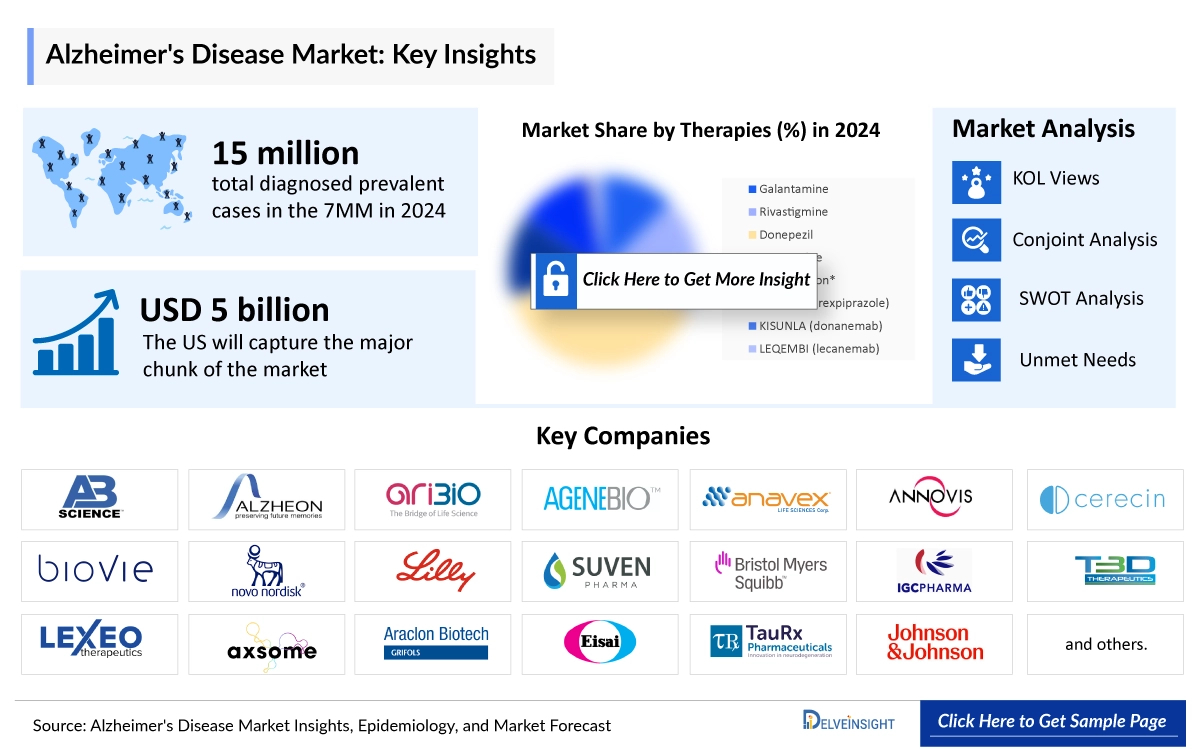
DelveInsight’s report “Alzheimer’s Disease Market Insights, Epidemiology, and Market Forecast-2034,” provides a comprehensive analysis of the Alzheimer’s Disease landscape. The report delivers detailed insights into the disease, including historical and projected epidemiology, helping stakeholders understand the prevalence, incidence, and patient demographics across key regions.
The Alzheimer’s Disease market report covers emerging drugs, current treatment practices, market share of the individual therapies, and current & forecasted market size from 2020 to 2034. It also evaluates the current treatment practice/algorithm, market drivers & barriers, and unmet medical needs to curate the best of the opportunities and assess the underlying potential of the market.
To Know in detail about the Alzheimer’s Disease market outlook, drug uptake, treatment scenario and epidemiology trends, Click here; Alzheimer’s Disease Market Insights
Some of the key facts of the Alzheimer’s Disease Market Report:
- Key Alzheimer’s Disease Companies: Biogen Inc., Eisai Co., Ltd., Eli Lilly and Company, AB Science, Alzheon, Inc., Cerecin, BioVie, and others
- Key Alzheimer’s Disease Therapies: LEQEMBI (lecanemab), KISUNLA (Donanemab), Masitinib (AB1010), Valiltramiprosate (ALZ-801), Tricaprilin (CER-0001), Bezisterim (NE3107), and others
- Analysis indicates that approximately 2.325 million men and 4.65 million women in the US were living with Alzheimer’s disease in 2023, and these figures are projected to rise by 2034.
Alzheimer’s Disease Overview
Alzheimer’s Disease is a progressive neurodegenerative disorder that affects memory, thinking, and behavior. It is the most common cause of dementia, typically occurring in older adults. The condition is characterized by the accumulation of amyloid-beta plaques and tau tangles in the brain, leading to the death of nerve cells and gradual cognitive decline. Early symptoms include memory loss, confusion, and difficulty performing daily tasks, which worsen over time. Although there is currently no cure, medications and lifestyle interventions can help manage symptoms and slow disease progression, improving quality of life for patients and caregivers.
Get a Free sample for the Alzheimer’s Disease Market Report:
https://www.delveinsight.com/report-store/alzheimers-disease-ad-market
Key Trends in Alzheimer’s Disease Therapeutics Market:
- Rise of Biomarker-Driven Diagnostics & Early Intervention: There’s growing emphasis on using PET imaging, cerebrospinal fluid (CSF) assays, and plasma assays for early detection of Alzheimer’s disease and stratifying patients for targeted therapies.
- Surge in Disease-Modifying Therapies (DMTs): After decades of symptomatic treatments, several amyloid-beta and tau-targeting drugs are advancing through Phase II/III, signalling a shift toward therapies that can slow or halt disease progression.
- Emergence of Gene & Cell-Based Approaches: Novel technologies including APOE gene modulation, stem-cell therapies, and gene therapy platforms for neuroprotection or regeneration are entering the pipeline, broadening therapeutic strategies.
- Increased Focus on Combination Therapeutics & Multi-Modal Treatment: Recognizing Alzheimer’s as a multifactorial disease, research is moving toward combining anti-amyloid/tau agents with metabolic, vascular and inflammation-modulating therapies.
- Growing Role of Digital Health, Real-World Evidence & Remote Monitoring: Wearables, cognitive monitoring apps, and AI algorithms are being leveraged for remote patient monitoring, earlier diagnosis, and adaptive clinical trial designs to support therapy development.
Alzheimer’s Disease Market
The dynamics of the Alzheimer’s Disease market are anticipated to change in the coming years owing to the expected launch of emerging therapies and others during the forecast period 2025-2034.
“Of the emerging therapies, the most anticipated product to get launched is BAN2401. Apart from this, several other molecules are in early clinical stage or completed clinical studies such as ALZT-OP1, Gantenerumab, Brexpiprazole, and others.”
Alzheimer’s Disease Epidemiology
The Alzheimer’s Disease epidemiology section provides insights into the historical, current, and forecasted epidemiology trends in the seven major countries (7MM) from 2020 to 2034. It helps to recognize the causes of current and forecasted trends by exploring numerous studies and views of key opinion leaders. The epidemiology section also provides a detailed analysis of the diagnosed patient pool and future trends.
Alzheimer’s Disease Epidemiology Segmentation:
The Alzheimer’s Disease market report proffers epidemiological analysis for the study period 2020–2034 in the 7MM segmented into:
- Total Diagnosed Prevalent Cases of Alzheimer’s Disease
- Gender-specific Diagnosed Prevalent Cases of Alzheimer’s Disease
- Age-specific Diagnosed Prevalent Cases of Alzheimer’s Disease
- Severity-specific Diagnosed Prevalent Cases of Alzheimer’s Disease
- Diagnosed Prevalent Cases of Agitation in Alzheimer’s Disease
- Diagnosed Prevalent Cases of Psychosis in Alzheimer’s Disease
Download the report to understand which factors are driving Alzheimer’s Disease epidemiology trends @ Alzheimer’s Disease Epidemiological Insights
Recent Developments in the Alzheimer’s Disease Treatment Landscape:
- In September 2025, Eisai’s experimental anti-MTBR tau antibody, etalanetug (E2814), has been granted Fast Track status by the FDA for use in treating Alzheimer’s disease.
- In September 2025, Actinogen Medical Limited (ASX: ACW) reported that it has successfully concluded its planned Type C meeting, conducted via written response, with the U.S. FDA concerning its Alzheimer’s disease (AD) program.
In September 2025, Alzinova AB revealed that the U.S. FDA has given the green light to its Investigational New Drug (IND) application, allowing the company to move forward with a Phase II clinical trial of ALZ-101, its vaccine candidate for Alzheimer’s disease. - In August. 2025 Eisai Co., Ltd. (Headquarters: Tokyo, CEO: Haruo Naito, "Eisai") and Biogen Inc. (Nasdaq: BIIB, Headquarters: Cambridge, Massachusetts, CEO: Christopher A. Viehbacher, "Biogen") announced that the U.S. Food and Drug Administration (FDA) has approved the Biologics License Application (BLA) for once weekly lecanemab-irmb subcutaneous injection (U.S. brand name: LEQEMBI® IQLIK™, pronounced "I Click") for maintenance dosing. LEQEMBI IQLIK is a subcutaneous autoinjector (SC-AI) developed by Eisai, containing 360 mg/1.8 mL (200 mg/mL) that can be administered in approximately 15 seconds. LEQEMBI IQLIK autoinjector is indicated for maintenance dosing to treat Alzheimer's disease (AD) in patients with mild cognitive impairment (MCI) or mild dementia stage of disease (collectively referred to as early AD) in the U.S. After 18 months of LEQEMBI (lecanemab-irmb) intravenous (IV) treatment at 10 mg/kg every two weeks, patients may either continue IV infusions at 10 mg/kg once every four weeks or start the new weekly 360 mg subcutaneous injection using the LEQEMBI IQLIK autoinjector.
- In July 2025, Cognition Therapeutics’ investigational dementia treatment demonstrated up to a 129% reduction in the rate of cognitive decline among patients with mild Alzheimer’s disease in a Phase II trial. The Phase II SHINE study (NCT03507790), evaluating zervimesine in Alzheimer’s patients, revealed that those with less advanced brain pathology—measured by lower levels of the blood biomarker p-tau217—experienced significant slowing of cognitive deterioration. Within this subgroup, approximately half of the participants had mild Alzheimer’s disease, while the other half were classified as having moderate Alzheimer’s disease.
- In July 2025, Roche’s Alzheimer’s disease therapy demonstrated sustained benefits in a long-term extension study, showing positive outcomes after 28 weeks of treatment. In the high-dose group of the ongoing Phase Ib/IIa Brainshuttle AD trial (NCT04639050), trontinemab successfully lowered amyloid levels below the 24-centiloid positivity threshold in 91% of patients, with 72% reaching deep clearance below 11 centiloids. Additionally, the study reported early and notable reductions in Alzheimer’s disease biomarkers, including total tau, phosphorylated tau (pTau)181, pTau217, and neurogranin, as measured in both CSF and plasma.
- In July 2025, INmune Bio’s stock dropped over 50% after its TNF inhibitor failed to show efficacy in Alzheimer’s patients in a Phase II trial. The MINDFuL study (NCT05318976) tested XPro (pegipanermin), a selective soluble TNF inhibitor, in early Alzheimer’s patients with inflammatory biomarkers. While no overall benefit was observed at the six-month mark in the intent-to-treat group, patients with two or more inflammation biomarkers showed a modest 0.27-point improvement on the Early Mild Alzheimer’s Cognitive Composite (EMACC) and a -0.20 change in pTau217 blood levels. Inmune Bio suggests this subgroup might benefit from XPro.
- In June 2025, The UAB Brain Aging and Memory Clinic, which opened in spring 2024, ushers in a new chapter of care for Alzheimer’s disease and memory disorders in Alabama and the surrounding region. This facility has played a key role in supporting clinical trials, strengthening UAB’s position as a leading site for testing the latest generation of anti-Alzheimer therapies.
In May 2025, Nuravax Inc. received a USD 3 million grant from the National Institutes of Health (NIH) to advance Duvax, the first dual-target Alzheimer’s vaccine, into human clinical trials. - In April 2025, Biogen Inc. (Nasdaq: BIIB) announced that the U.S. Food and Drug Administration (FDA) has awarded Fast Track designation to BIIB080, an experimental antisense oligonucleotide (ASO) therapy targeting tau, for treating Alzheimer’s disease. This designation aims to accelerate the development and review process of investigational drugs addressing serious diseases with unmet medical needs.
- In March 2025, Acumen Pharmaceuticals completed enrollment for its multi-center, double-blind Phase II ALTITUDE-AD trial evaluating the humanized monoclonal antibody sabirnetug (ACU193) in patients with early Alzheimer’s disease. Sabirnetug is noted as the first antibody to selectively target amyloid beta oligomers (AβOs), a toxic form of amyloid beta implicated in the early stages of Alzheimer’s. The ALTITUDE-AD trial, initiated last year, is a randomized, placebo-controlled study that has enrolled 542 participants across Canada, the EU, the US, and the UK.
Alzheimer’s Disease Drugs Uptake and Pipeline Development Activities
The Alzheimer’s Disease drugs uptake section focuses on the rate of uptake of the potential drugs recently launched in the Alzheimer’s Disease market or expected to get launched during the study period. The analysis covers Alzheimer’s Disease market uptake by drugs, patient uptake by therapies, and sales of each drug.
Moreover, the therapeutics assessment section helps understand the drugs with the most rapid uptake and the reasons behind the maximal use of the drugs. Additionally, it compares the drugs based on market share.
The report also covers the Alzheimer’s Disease Pipeline Development Activities. It provides valuable insights about different therapeutic candidates in various stages and the key companies involved in developing targeted therapeutics. It also analyses recent developments such as collaborations, acquisitions, mergers, licensing patent details, and other information for emerging therapies.
Alzheimer’s Disease Therapies and Key Companies
- LEQEMBI (lecanemab): Biogen Inc./Eisai Co., Ltd.
- KISUNLA (Donanemab): Eli Lilly and Company
- Masitinib (AB1010): AB Science
- \Valiltramiprosate (ALZ-801): Alzheon, Inc.
- Tricaprilin (CER-0001): Cerecin
- Bezisterim (NE3107): BioVie
To know more about Alzheimer’s Disease treatment, visit @ Alzheimer’s Disease Medications
Alzheimer’s Disease Market Drivers
- Rising Global Prevalence and Aging Population: Increasing life expectancy and growth in the elderly demographic continue to expand the patient pool, driving demand for diagnostics and therapeutics.
- Advancements in Biomarker-Based Diagnosis & Imaging Technologies: Improved early detection through PET scans, CSF biomarkers, and blood-based biomarkers is enabling earlier intervention and treatment uptake.
- Growing Pipeline of Disease-Modifying Therapies (DMTs): Increased R&D focus on anti-amyloid, anti-tau, neuroprotective, and gene-based therapies is reshaping the long-term market outlook.
- Government Funding & Supportive Regulatory Pathways: Priority review, accelerated approvals, and investments from NIH, EU, and other agencies are boosting innovation and clinical trial activity.
- Rising Healthcare Awareness & Demand for Cognitive Health Solutions: Increased public awareness, caregiver support programs, and digital cognitive assessment tools are accelerating market engagement.
Alzheimer’s Disease Market Barriers
- High Failure Rate & Cost of Drug Development: Alzheimer’s remains one of the most expensive and high-risk therapeutic areas, with historically low clinical success rates and multi-billion-dollar R&D losses.
- Limited Availability of Curative Treatments: Existing therapies largely offer symptomatic relief, and only a few recently approved DMTs show modest benefit, slowing adoption among clinicians and payers.
- Complexity of Diagnosis and Late Detection: Underdiagnosis and delayed disease identification limit the window for treatment effectiveness and market penetration.
- Reimbursement and Pricing Challenges: High cost of novel biologics (e.g., anti-amyloid mAbs) and strict insurance coverage policies restrict patient access, especially in low- and middle-income regions.
- Safety Concerns and Regulatory Scrutiny: Adverse effects such as ARIA (Amyloid-Related Imaging Abnormalities) and long-term safety risks in new drug classes continue to limit approval speed and acceptance.
Scope of the Alzheimer’s Disease Market Report
- Study Period: 2020–2034
- Coverage: 7MM [The United States, EU5 (Germany, France, Italy, Spain, and the United Kingdom), and Japan]
- Key Alzheimer’s Disease Companies: Biogen Inc., Eisai Co., Ltd., Eli Lilly and Company, AB Science, Alzheon, Inc., Cerecin, BioVie, and others
- Key Alzheimer’s Disease Therapies: LEQEMBI (lecanemab), KISUNLA (Donanemab), Masitinib (AB1010), Valiltramiprosate (ALZ-801), Tricaprilin (CER-0001), Bezisterim (NE3107), and others
- Alzheimer’s Disease Therapeutic Assessment: Alzheimer’s Disease current marketed and Alzheimer’s Disease emerging therapies
- Alzheimer’s Disease Market Dynamics: Alzheimer’s Disease market drivers and Alzheimer’s Disease market barriers
- Competitive Intelligence Analysis: SWOT analysis, PESTLE analysis, Porter’s five forces, BCG Matrix, Market entry strategies
- Alzheimer’s Disease Unmet Needs, KOL’s views, Analyst’s views, Alzheimer’s Disease Market Access and Reimbursement
Discover more about therapies set to grab major Alzheimer’s Disease market share @ Alzheimer’s Disease Treatment Landscape
Need more?
- ✅ Connect with our analyst to learn how this research was developed
- ✅ Expand the scope with additional segments or countries through free customization
- ✅ Discover how this report can directly influence your business growth
Related Reports

Alzheimer's disease (AD) - Pipeline Insight, 2025
Alzheimer’s disease (AD) Pipeline Insights, 2025 report by DelveInsight outlays comprehensive insights of present clinical development scenario and growth prospects across the Alzheimer’s

Alzheimer's disease (AD) - Epidemiology Forecast - 2034
Alzheimer's disease Epidemiology Forecast 2034 report delivers a detailed understanding of the disease, historical, and forecasted epidemiology in the 7MM.
