Epidermolysis Bullosa Market Positioned for Significant Growth Through 2034, DelveInsight Finds
Get a Sneak Peek at the Latest epidermolysis bullosa market insights Report
The Epidermolysis Bullosa market was valued at approximately USD 1.3 billion in the United States during 2023 and is projected to grow substantially during the forecast period (2020–2034). DelveInsight's comprehensive market research provides critical insights into such market trends, enabling stakeholders to understand growth drivers, emerging opportunities, and potential challenges within the Epidermolysis Bullosa landscape.
By analyzing historical data, current market dynamics, and future projections, DelveInsight equips pharmaceutical companies, investors, and healthcare professionals with actionable intelligence to make informed strategic decisions, identify investment opportunities, optimize product positioning, and plan research and development initiatives effectively.
The Epidermolysis Bullosa market is increasingly defined by gene therapy innovations and cell-based treatment approaches. The approval of VYJUVEK (beremagene geperpavec) represents a watershed moment, marking the first topical gene therapy for Epidermolysis Bullosa. More recently, ZEVASKYN (prademagene zamikeracel) received FDA approval in April 2025, establishing itself as the first cell-based gene therapy for Epidermolysis Bullosa.
Epidermolysis Bullosa comprises multiple subtypes, each with distinct clinical presentations and treatment requirements. Simplex Epidermolysis Bullosa represents the least severe form, with many individuals experiencing improvements as they age. Conversely, recessive dystrophic Epidermolysis Bullosa represents the most critical and debilitating subtype. In 2023, among type-specific cases, more than 30% of prevalent cases were observed in dystrophic Epidermolysis Bullosa, while only 5% were identified in junctional Epidermolysis Bullosa.
The total prevalent cases of Epidermolysis Bullosa in the 7MM comprised approximately 46,500 cases in 2023 and are projected to increase during the forecasted period. The United States contributed to the highest prevalent cases, accounting for approximately 65% of the 7MM in 2023. The European Union countries and the United Kingdom, as well as Japan, accounted for around 30% and approximately 5% of the total population share, respectively, in 2023.
According to DelveInsight estimates, in the United States, there were approximately 18,000 cases of Epidermolysis Bullosa simplex, around 1,450 cases of junctional Epidermolysis Bullosa, and approximately 8,500 cases of dystrophic Epidermolysis Bullosa in 2023. There is a slight difference in the ratio of males versus females, with patient share of males being slightly higher.
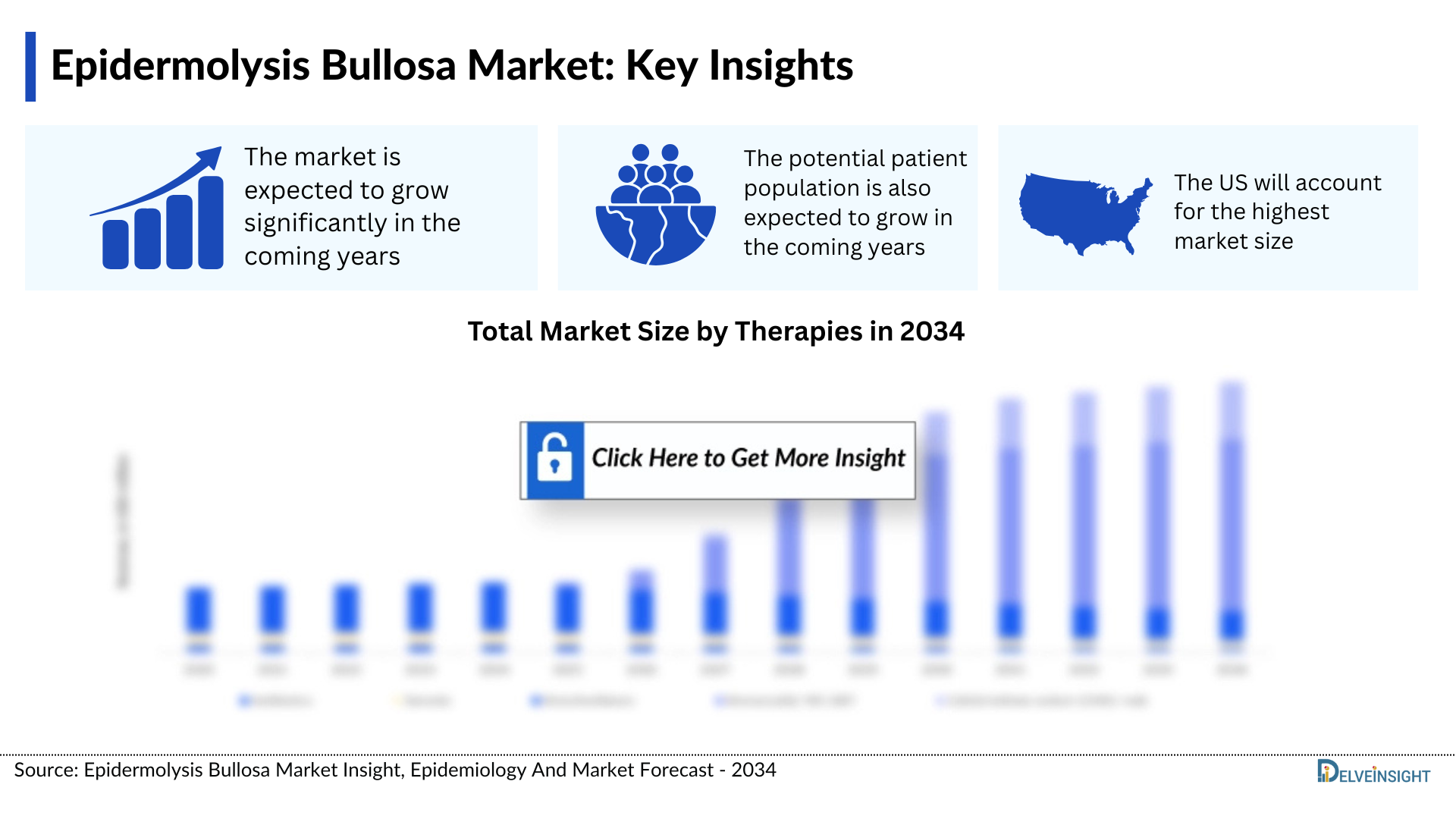
DelveInsight's report, "Epidermolysis Bullosa Market Insights, Epidemiology, and Market Forecast–2034," provides a comprehensive analysis of the Epidermolysis Bullosa landscape. The report delivers detailed insights into the disease, including historical and projected epidemiology, helping stakeholders understand the prevalence, incidence, and patient demographics across key regions.
Additionally, it examines the Epidermolysis Bullosa market dynamics, offering a thorough assessment of current and emerging market trends, treatment patterns, and therapeutic developments. The analysis spans major markets, including the United States, EU4 (Germany, Spain, Italy, France, and the United Kingdom), and Japan, equipping decision-makers with actionable intelligence for strategic planning, investment, and research initiatives.
To know in detail about the Epidermolysis Bullosa market outlook, drug uptake, treatment scenario and epidemiology trends, visit Epidermolysis Bullosa Market Forecast
Some of the key facts of the Epidermolysis Bullosa Market Report:
- Key Epidermolysis Bullosa Companies: Krystal Biotech, Abeona Therapeutics, Chiesi Farmaceutici, Castle Creek Biosciences, Relief Therapeutics, BPGbio, Japan Tissue Engineering, Shionogi, Ishin Pharma, and others
- Key Epidermolysis Bullosa Therapies: VYJUVEK (beremagene geperpavec), FILSUVEZ (oleogel-S10), ZEVASKYN (prademagene zamikeracel), EB-101, D-Fi (dabocemagene autoficel), JACE, RLF-TD011, BPM31510T, ISN001, ALLO-RV-LAMB3-transduced epidermal stem cells, and others
- The Epidermolysis Bullosa market is expected to surge due to the disease's significant clinical burden, limited treatment options, and the emergence of innovative gene therapy and cell-based therapeutic approaches during the forecast period. Furthermore, launching various pipeline Epidermolysis Bullosa products will significantly revolutionize the Epidermolysis Bullosa market dynamics.
Epidermolysis Bullosa Overview
Epidermolysis Bullosa is a rare, ultra-rare genetic skin disorder characterized by extreme skin fragility and blistering in response to minimal friction or trauma. The condition is caused by genetic mutations affecting proteins responsible for maintaining the structural integrity of the skin. The severity of Epidermolysis Bullosa can vary widely, ranging from mild to life-threatening, depending on the specific subtype. Early diagnosis and personalized treatment approaches are crucial for managing disease progression and improving patient outcomes. Epidermolysis Bullosa encompasses three major types: simplex (characterized by intraepidermal blistering), junctional (affecting the basement membrane zone), and dystrophic (involving abnormalities in type VII collagen). The disease imposes significant physical, emotional, and economic burdens on patients and their families, necessitating multidisciplinary care approaches and supportive management strategies.
Key Trends in Epidermolysis Bullosa Therapeutics Market:
- Gene Therapy Innovation: Increasing development and approval of gene therapies, including topical formulations like VYJUVEK and cell-based therapies like ZEVASKYN, representing paradigm shifts in treatment approaches.
- Cell-Based Therapies Expansion: Growing investment in autologous cell sheet-based therapies and mesenchymal stromal cell approaches for addressing chronic wounds and disease pathology.
- Precision Medicine and Diagnostic Advancement: Enhanced molecular diagnostics enabling identification of specific genetic mutations and targeted treatment selection.
- Combination Therapy Development: Investigation of multimodal approaches combining gene therapy with supportive care and adjunctive treatments.
- Expanded Access Programs: Implementation of specialized treatment centers and patient support programs to ensure equitable access to advanced therapies.
- Regulatory Momentum: Accelerated approval pathways and regulatory incentives facilitating faster development and commercialization of innovative therapies.
Epidermolysis Bullosa Epidemiology
The report section on Epidermolysis Bullosa epidemiology provides a comprehensive analysis of the disease's prevalence, incidence, and patient demographics. It includes age- and gender-specific distribution, regional and global trends, and data on type-specific presentations including simplex, junctional, and dystrophic Epidermolysis Bullosa. The report also highlights disease burden, quality of life impacts, and projections for future trends, helping stakeholders understand the scope of Epidermolysis Bullosa and plan targeted interventions, research, and treatment strategies.
Epidermolysis Bullosa Epidemiology Segmentation:
The Epidermolysis Bullosa market report proffers epidemiological analysis for the study period 2020–2034 in the 7MM segmented into:
- Total prevalent cases of Epidermolysis Bullosa
- Total diagnosed prevalent cases of Epidermolysis Bullosa
- Gender-specific cases of Epidermolysis Bullosa
- Age-specific cases of Epidermolysis Bullosa
- Type-specific cases of Epidermolysis Bullosa
Download the report to understand which factors are driving Epidermolysis Bullosa epidemiology trends @ Epidermolysis Bullosa Epidemiology
Recent Development In The Epidermolysis Bullosa Treatment Landscape:
- In December 2025, a groundbreaking clinical trial was announced to repurpose existing drugs for treating Epidermolysis Bullosa. The Advancing Repurposed Therapeutics (ART) EB trial, led by Dr Su Lwin from King's College London and funded by LifeArc and DEBRA UK, represents the world's largest drug repurposing initiative for Epidermolysis Bullosa. The five-year trial aims to investigate whether drugs already used to treat common skin conditions can be effectively repurposed for Epidermolysis Bullosa, with recruitment beginning in 2026 and the drug trial commencing in 2027.
- In April 2025, the U.S. FDA approved ZEVASKYN (prademagene zamikeracel), an autologous cell sheet-based gene therapy developed by Abeona Therapeutics for treating wounds in patients with recessive dystrophic Epidermolysis Bullosa. ZEVASKYN represents the first and only cell-based gene therapy for Epidermolysis Bullosa.
- In May 2025, Relief Therapeutics Holding announced that the FDA has granted Rare Pediatric Disease designation to RLF-TD011 for treating Epidermolysis Bullosa. The drug had previously received Orphan Drug Designation for this indication, highlighting the commitment to developing treatments for this ultra-rare condition.
- In February 2025, the European Medicines Agency recommended granting marketing authorization for VYJUVEK (beremagene geperpavec) in the European Union to treat wounds in patients of all ages with dystrophic Epidermolysis Bullosa, further expanding access to this innovative topical gene therapy across European markets.
Epidermolysis Bullosa Drugs Uptake and Pipeline Development Activities
The drugs uptake section focuses on the rate of uptake of potential drugs recently launched in the Epidermolysis Bullosa market or expected to be launched during the study period. The analysis covers Epidermolysis Bullosa market uptake by drugs, patient uptake by therapies, and sales of each drug.
Moreover, the therapeutics assessment section helps understand the drugs with the most rapid uptake and the reasons behind the maximal use of the drugs. Additionally, it compares the drugs based on market share.
The report also covers the Epidermolysis Bullosa Pipeline Development Activities. It provides valuable insights about different therapeutic candidates in various stages and the key companies involved in developing targeted therapeutics. It also analyzes recent developments such as collaborations, acquisitions, mergers, licensing patent details, and other information for emerging therapies.
Epidermolysis Bullosa Therapies and Key Companies
- VYJUVEK (beremagene geperpavec): Krystal Biotech
- FILSUVEZ (oleogel-S10): Chiesi Farmaceutici
- ZEVASKYN (prademagene zamikeracel): Abeona Therapeutics
- EB-101: Abeona Therapeutics
- D-Fi (dabocemagene autoficel): Castle Creek Biosciences
- JACE (human epidermal cell sheet): Japan Tissue Engineering
- RLF-TD011: Relief Therapeutics
- BPM31510T: BPGbio
- ISN001: Ishin Pharma
- ALLO-RV-LAMB3-transduced epidermal stem cells: Holostem Terapie Avanzate
- Redasemtide: Shionogi
- PTR-01: Passage Bio
To know more about Epidermolysis Bullosa companies working in the treatment market, visit @ Epidermolysis Bullosa Clinical Trials and Therapeutic Assessment
Epidermolysis Bullosa Market Drivers
- Increasing global awareness of Epidermolysis Bullosa and improved diagnostic capabilities
- Breakthrough approvals of gene therapy and cell-based therapies addressing previously unmet needs
- Expansion of specialized treatment centers and multidisciplinary care models
- Growing investment in rare disease therapeutics and personalized medicine approaches
- Patient advocacy initiatives and support networks facilitating clinical trial recruitment
- Regulatory incentives including orphan drug designations and rare pediatric disease designations accelerating development timelines
- Significant economic burden of chronic wound care creating motivation for innovative solutions
Epidermolysis Bullosa Market Barriers
- Extremely limited patient population constraining commercial incentives
- High manufacturing and treatment delivery costs limiting patient accessibility
- Complex nature of autologous cell and gene therapies requiring specialized infrastructure
- Limited healthcare infrastructure and expertise in certain geographic regions
- Genetic heterogeneity requiring customized therapeutic approaches
- Long development timelines and substantial regulatory requirements for gene and cell therapies
- Geographic disparities in access to specialized treatment centers
Scope of the Epidermolysis Bullosa Market Report
- Study Period: 2020–2034
- Coverage: 7MM [The United States, EU4 (Germany, France, Italy, and Spain), the United Kingdom, and Japan]
- Key Epidermolysis Bullosa Companies: Krystal Biotech, Abeona Therapeutics, Chiesi Farmaceutici, Castle Creek Biosciences, Relief Therapeutics, BPGbio, Japan Tissue Engineering, Shionogi, Ishin Pharma, Passage Bio, Holostem Terapie Avanzate, and others
- Key Epidermolysis Bullosa Therapies: VYJUVEK (beremagene geperpavec), FILSUVEZ (oleogel-S10), ZEVASKYN (prademagene zamikeracel), EB-101, D-Fi (dabocemagene autoficel), JACE, RLF-TD011, BPM31510T, ISN001, ALLO-RV-LAMB3-transduced epidermal stem cells, Redasemtide, and others
- Epidermolysis Bullosa Therapeutic Assessment: Epidermolysis Bullosa current marketed and emerging therapies
- Epidermolysis Bullosa Market Dynamics: Epidermolysis Bullosa market drivers and Epidermolysis Bullosa market barriers
- Competitive Intelligence Analysis: SWOT analysis, PESTLE analysis, Porter's five forces, BCG Matrix, Market entry strategies
- Epidermolysis Bullosa Unmet Needs, KOL's views, Analyst's views, Epidermolysis Bullosa Market Access and Reimbursement
Discover more about therapies set to grab major Epidermolysis Bullosa market share @ Epidermolysis Bullosa Treatment Market
Need more?
- ✅ Connect with our analyst to learn how this research was developed
- ✅ Expand the scope with additional segments or countries through free customization
- ✅ Discover how this report can directly influence your business growth
Related Reports

Epidermolysis Bullosa Market Insight, Epidemiology And Market Forecast - 2034
DelveInsight's Epidermolysis Bullosa Market Insights, Epidemiology, and Market Forecast-2034" report delivers an in-depth understanding of the Epidermolysis Bullosa, historical & forecasted..
