High-Grade Glioma Market Valued at USD 830M in 2023, Projected Strong CAGR Through 2034
Get a Sneak Peek at the Latest high grade glioma market size and forecast Report
The High-grade Glioma market size was valued approximately USD 830 million in 2023 and is anticipated to grow with a significant CAGR during the study period (2020-2034). DelveInsight’s comprehensive market research provides critical insights into such market trends, enabling stakeholders to understand growth drivers, emerging opportunities, and potential challenges within the High-grade Glioma landscape.
In 2023, the US represented the largest market for high-grade glioma in the 7MM, with a value of approximately USD 580 million. DCVax-L is expected to emerge as the leading revenue-generating therapy, followed closely by ONC-201 across the 7MM by 2034.
In 2023, the US reported the highest number of incident high-grade glioma cases in the 7MM, totaling approximately 16,200. Within the EU4 and UK, Germany had the largest number of cases, followed by France, while Spain reported the fewest. Incident cases of glioblastoma were significantly higher than those of anaplastic astrocytoma, with the US recording around 13,100 glioblastoma cases compared to approximately 1,600 anaplastic astrocytoma cases. Age-specific data indicate that adults represent a substantially larger portion of cases than pediatric patients.
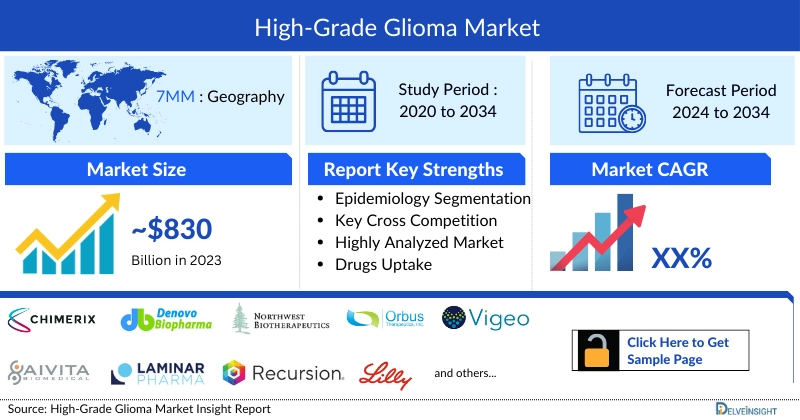
DelveInsight’s report “High-grade Glioma Market Insights, Epidemiology, and Market Forecast-2034” provides a comprehensive analysis of the High-grade Glioma landscape. The report delivers detailed insights into the disease, including historical and projected epidemiology, helping stakeholders understand the prevalence, incidence, and patient demographics across key regions.
Additionally, it examines High-grade Glioma market dynamics, offering a thorough assessment of current and emerging market trends, treatment patterns, and therapeutic developments. The analysis spans major markets, including the United States, EU4 (Germany, Spain, Italy, France, and the United Kingdom), and Japan, equipping decision-makers with actionable intelligence for strategic planning, investment, and research initiatives.
To Know in detail about the High-grade Glioma market outlook, drug uptake, treatment scenario and epidemiology trends, Click here; High-grade Glioma Market Forecast
Some of the key facts of the High-grade Glioma Market Report:
- Key High-grade Glioma Companies: Everfront Biotech Co., Ltd., BioMimetix JV, LLC, Chimerix, Laminar Pharmaceuticals, Nationwide Children's Hospital, Rigel Pharmaceuticals, Orbus Therapeutics, BioMimetix, Bayer, MedImmune, DNAtrix, Chimerix, CNS Pharmaceuticals, VBI Vaccines, Kazia Therapeutics, Aivita Biomedical, Medicenna Therapeutics, DelMar Pharmaceuticals, Bristol-Myers Squibb, Laminar Pharmaceuticals, Immunomic Therapeutics, Inovio Pharmaceuticals, and others
- Key High-grade Glioma Therapies: Cerebraca wafer, BMX-001, ONC201, LAM561, Ribociclib, Olutasidenib + TMZ, Eflornithine + Lomustine, BMX-001, Regorafenib, Durvalumab (MEDI4736), Tasadenoturev (DNX-2401), ONC201, Berubicin, VBI-1901, Paxalisib (GDC-0084), AV-GBM-1, MDNA55, VAL-083 (Dianhydrogalactitol), Pomalidomide, LP561A1 (2-OHOA), ITI-1000 (pp65 DC Vaccine), INO-5401+ INO-9012+ Cemiplimab (REGN2810), and others
- The High-grade Glioma epidemiology based on gender analyzed that High-grade Glioma is more common in men than in women
- The High-grade Glioma market is expected to surge due to the disease's increasing prevalence and awareness during the forecast period. Furthermore, launching various multiple-stage High-grade Glioma pipeline products will significantly revolutionize the High-grade Glioma market dynamics.
High-grade Glioma Overview
High-grade glioma (HGG) is an aggressive type of brain tumor that arises from glial cells, which support and protect neurons in the brain. These tumors are fast-growing, infiltrative, and often difficult to completely remove surgically. They are classified as Grade III or IV by the World Health Organization (WHO), with glioblastoma (Grade IV) being the most common and lethal form. Symptoms vary depending on tumor location and may include headaches, seizures, neurological deficits, and cognitive changes. Treatment typically involves surgery, radiation, and chemotherapy, but prognosis remains poor due to high recurrence rates.
Get a Free sample for the High-grade Glioma Market Forecast, Size & Share Analysis Report:
https://www.delveinsight.com/report-store/high-grade-glioma-hgg-market
Key Trends in High-grade Glioma Therapeutics Market:
- Growing shift toward targeted therapies & immunotherapies: There’s rising adoption of molecular‑targeted agents and immune‑based approaches (e.g. checkpoint inhibitors, cell‑ or virus‑based therapies) rather than relying solely on conventional surgery, radiotherapy, and chemotherapy.
- Personalized / precision medicine based on tumor genomics and biomarkers: Genetic profiling (e.g. mutation status, promoter methylation) and advanced diagnostics enable more tailored treatments, improving efficacy and reducing unnecessary toxicity.
- Robust R&D & innovation pipeline with novel modalities: The pipeline includes next‑generation therapies such as oncolytic viruses, targeted small molecules, and experimental agents alongside standard-of-care, reflecting strong investment in new options for patients.
- Better diagnostics and early detection improving treatment planning: Advances in imaging, molecular diagnostics, and monitoring technologies are enabling earlier and more precise detection, which supports more effective intervention strategies.
- Rising market growth driven by increasing incidence and unmet need: As high‑grade gliomas remain aggressive and carry poor prognosis, growing incidence globally plus unmet therapeutic needs are prompting market expansion and increased funding for research and therapy development.
High-grade Glioma Epidemiology
The High-grade Glioma epidemiology section provides insights into the historical, current, and forecasted epidemiology trends in the seven major countries (7MM) from 2020 to 2034. It helps to recognize the causes of current and forecasted trends by exploring numerous studies and views of key opinion leaders. The epidemiology section also provides a detailed analysis of the diagnosed patient pool and future trends.
High-grade Glioma Epidemiology Segmentation:
The High-grade Glioma market report proffers epidemiological analysis for the study period 2020–2034 in the 7MM segmented into:
- Total Prevalence of High-grade Glioma
- Prevalent Cases of High-grade Glioma by severity
- Gender-specific Prevalence of High-grade Glioma
- Diagnosed Cases of Episodic and Chronic High-grade Glioma
Download the report to understand which factors are driving High-grade Glioma epidemiology trends @ High-grade Glioma Epidemiology Forecast
Recent Development In The High-grade Glioma Treatment Landscape:
- In November 2025, enrollment started for the second part of a clinical trial evaluating safusidenib, an investigational oral therapy, as a maintenance treatment for high-grade IDH1-mutant astrocytoma, a severe form of glioma. Sponsored by Nuvation Bio, the study (NCT05303519) plans to enroll 300 adults across sites in the U.S., Australia, and China. Eligible participants must have completed standard-of-care treatments such as chemotherapy, radiation, or surgery. The trial consists of two parts: the first assessed safusidenib’s efficacy, safety, and pharmacokinetics in patients with recurrent or progressive IDH1-mutant glioma, while the second will compare maintenance safusidenib versus placebo following standard-of-care therapy.
- In September 2025, FluoGuide received positive FDA feedback at a pre-IND consultation for its U.S. clinical study of FG001, an intraoperative imaging agent for high-grade glioma, supporting both the IND submission and a future NDA filing.
- In June 2025, Iopofosine I-131 showed clinical activity and a favorable safety profile in pediatric patients with relapsed or refractory high-grade glioma, according to early results from the Phase 1 CLOVER-2 trial (NCT05610891). Observed toxicities were consistent with prior reports for the agent. Among 7 patients who received a cumulative dose of at least 55 mCi, the mean progression-free survival (PFS) was 5.4 months and the mean overall survival (OS) was 8.6 months. All patients in this group achieved disease control based on Response Assessment in Pediatric Neuro-Oncology (RAPNO) criteria, which is associated with improved survival outcomes in this population.
- In June 2025, Initial results from the Phase 1 CLOVER-2 trial (NCT05610891) indicated that iopofosine I-131 was safe and demonstrated clinical activity in pediatric patients with relapsed/refractory high-grade glioma. The therapy showed a favorable safety profile, with observed toxicities aligning with previously reported data for the drug.
- In April 2025, Preliminary findings from the Phase 2 IPAX-Linz study revealed that TLX101 (¹³¹I-iodofalan), an investigational targeted radiotherapy, showed a favorable safety profile and early indications of clinical activity in patients with recurrent high-grade glioma (HGG).
- In April 2024, Denovo Biopharma LLC, a leader in utilizing precision medicine for developing innovative therapies, announced today that the California Institute for Regenerative Medicine (CIRM) has awarded an $11.8 million grant to support the continued development of DB107. This late-stage gene therapy, guided by Denovo's DGM7™ biomarker, targets high-grade glioma (HGG), including glioblastoma (GBM), a form of malignant brain cancer.
In January 2024, Rigel Pharmaceuticals has partnered with CONNECT, the global network of pediatric cancer centers, to launch a Phase II clinical trial of REZLIDHIA (olutasidenib) for newly diagnosed pediatric and young adult patients with high-grade glioma (HGG). In this trial, REZLIDHIA will be administered alongside temozolomide as maintenance therapy for patients with HGG that has an isocitrate dehydrogenase-1 (IDH1) mutation.
High-grade Glioma Drugs Uptake and Pipeline Development Activities
The drugs uptake section focuses on the rate of uptake of the potential drugs recently launched in the High-grade Glioma market or expected to get launched during the study period. The analysis covers High-grade Glioma market uptake by drugs, patient uptake by therapies, and sales of each drug.
Moreover, the therapeutics assessment section helps understand the drugs with the most rapid uptake and the reasons behind the maximal use of the drugs. Additionally, it compares the drugs based on market share.
The report also covers the High-grade Glioma Pipeline Development Activities. It provides valuable insights about different therapeutic candidates in various stages and the key companies involved in developing targeted therapeutics. It also analyzes recent developments such as collaborations, acquisitions, mergers, licensing patent details, and other information for emerging therapies.
High-grade Glioma Therapies and Key Companies
- Cerebraca wafer: Everfront Biotech Co., Ltd.
- BMX-001: BioMimetix JV, LLC
- ONC201: Chimerix
- LAM561: Laminar Pharmaceuticals
- Ribociclib: Nationwide Children's Hospital
- Olutasidenib + TMZ: Rigel Pharmaceuticals
- Eflornithine + Lomustine: Orbus Therapeutics
- BMX-001: BioMimetix
- Regorafenib: Bayer
- Durvalumab (MEDI4736): MedImmune
- Tasadenoturev (DNX-2401): DNAtrix
- ONC201: Chimerix
- Berubicin: CNS Pharmaceuticals
- VBI-1901: VBI Vaccines
- Paxalisib (GDC-0084): Kazia Therapeutics
- AV-GBM-1: Aivita Biomedical
- MDNA55: Medicenna Therapeutics
- VAL-083 (Dianhydrogalactitol): DelMar Pharmaceuticals
- Pomalidomide: Bristol-Myers Squibb
- LP561A1 (2-OHOA): Laminar Pharmaceuticals
- ITI-1000 (pp65 DC Vaccine): Immunomic Therapeutics
- INO-5401+ INO-9012+ Cemiplimab (REGN2810): Inovio Pharmaceuticals
Discover more about therapies set to grab major High-grade Glioma market share @ High-grade Glioma Treatment Landscape
High-grade Glioma Market Drivers
- Rising Incidence: Increasing prevalence of high-grade gliomas, particularly glioblastoma, globally is driving market demand.
- Advancements in Targeted Therapies: Development of novel therapies such as DCVax-L and ONC-201 offering improved survival outcomes.
- Enhanced Diagnostic Capabilities: Better imaging techniques and molecular profiling enable earlier detection and personalized treatment strategies.
- Growing Investment in R&D: Increased focus from biopharmaceutical companies on innovative therapies and clinical trials for high-grade gliomas
- Supportive Regulatory Environment: Accelerated approvals and orphan drug designations facilitating faster market entry of new treatments.
High-grade Glioma Market Barriers
- High Treatment Costs: Expensive therapies and complex treatment regimens limit patient access, particularly in low- and middle-income countries.
- Limited Efficacy of Current Therapies: Conventional treatments such as chemotherapy and radiotherapy have limited survival benefits.
- Complex Disease Biology: Heterogeneity of tumors and resistance mechanisms pose challenges in developing effective treatments.
- Side Effects and Toxicity: Severe adverse effects associated with aggressive therapies can affect patient compliance.
- Market Fragmentation: Availability of therapies varies across regions, and lack of standardized treatment guidelines hampers uniform adoption.
Scope of the High-grade Glioma Market Report
- Study Period: 2020–2034
- Coverage: 7MM [The United States, EU5 (Germany, France, Italy, Spain, and the United Kingdom), and Japan]
- Key High-grade Glioma Companies: Everfront Biotech Co., Ltd., BioMimetix JV, LLC, Chimerix, Laminar Pharmaceuticals, Nationwide Children's Hospital, Rigel Pharmaceuticals, Orbus Therapeutics, BioMimetix, Bayer, MedImmune, DNAtrix, Chimerix, CNS Pharmaceuticals, VBI Vaccines, Kazia Therapeutics, Aivita Biomedical, Medicenna Therapeutics, DelMar Pharmaceuticals, Bristol-Myers Squibb, Laminar Pharmaceuticals, Immunomic Therapeutics, Inovio Pharmaceuticals, and others
- Key High-grade Glioma Therapies: Cerebraca wafer, BMX-001, ONC201, LAM561, Ribociclib, Olutasidenib + TMZ, Eflornithine + Lomustine, BMX-001, Regorafenib, Durvalumab (MEDI4736), Tasadenoturev (DNX-2401), ONC201, Berubicin, VBI-1901, Paxalisib (GDC-0084), AV-GBM-1, MDNA55, VAL-083 (Dianhydrogalactitol), Pomalidomide, LP561A1 (2-OHOA), ITI-1000 (pp65 DC Vaccine), INO-5401+ INO-9012+ Cemiplimab (REGN2810), and others
- High-grade Glioma Therapeutic Assessment: High-grade Glioma current marketed and High-grade Glioma emerging therapies
- High-grade Glioma Market Dynamics: High-grade Glioma market drivers and High-grade Glioma market barriers
- High-grade Glioma Competitive Intelligence Analysis: SWOT analysis, PESTLE analysis, Porter’s five forces, BCG Matrix, Market entry strategies
- High-grade Glioma Unmet Needs, KOL’s views, Analyst’s views, High-grade Glioma Market Access and Reimbursement
To know more about High-grade Glioma companies working in the treatment market, visit @ High-grade Glioma Clinical Trials and Therapeutic Assessment
About DelveInsight
DelveInsight is a leading Healthcare Business Consultant, and Market Research firm focused exclusively on life sciences. It supports Pharma companies by providing comprehensive end-to-end solutions to improve their performance.
It also offers Healthcare Consulting Services, which benefits in market analysis to accelerate the business growth and overcome challenges with a practical approach.
Need more?
- ✅ Connect with our analyst to learn how this research was developed
- ✅ Expand the scope with additional segments or countries through free customization
- ✅ Discover how this report can directly influence your business growth
Related Reports
High-Grade Glioma - Pipeline Insight, 2025
"High-Grade Glioma Pipeline Insights, 2025" report by DelveInsight outlays comprehensive insights of present clinical development scenario and growth prospects across..
