Non-Small Cell Lung Cancer Market Positioned for Accelerated Development Through 2034, DelveInsight Finds
Get a Sneak Peek at the Latest non small cell lung cancer market insights Report
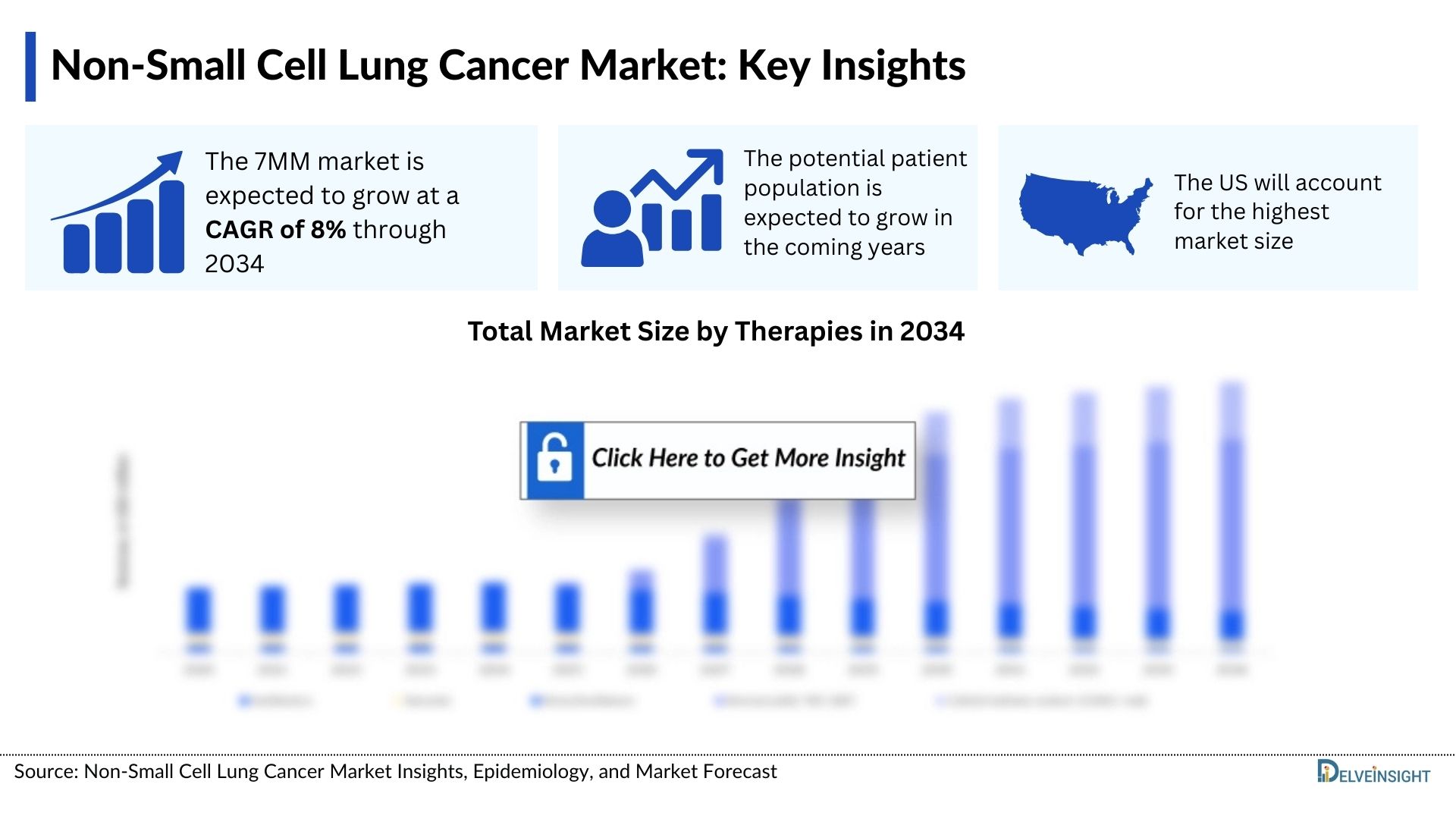
The non-small cell lung cancer (NSCLC) market in the 7MM was valued at approximately USD 32,442 million in 2025 and is projected to reach USD 64,819 million by 2034, growing at a robust CAGR of 8% during the forecast period (2025–2034). DelveInsight's comprehensive market research provides critical insights into such market trends, enabling stakeholders to understand growth drivers, emerging opportunities, and potential challenges within the non-small cell lung cancer landscape.
By analyzing historical data, current market dynamics, and future projections, DelveInsight equips pharmaceutical companies, investors, and healthcare professionals with actionable intelligence to make informed strategic decisions, identify investment opportunities, optimize product positioning, and plan research and development initiatives effectively.
The non-small cell lung cancer market is increasingly becoming a biomarker-driven oncology landscape, with major therapeutic innovations addressing specific molecular subtypes. KEYTRUDA represents the dominant revenue-generating therapy across the 7MM, established as the "gold standard" of care in first-line treatment when combined with platinum-containing chemotherapy regardless of PD-L1 status. TAGRISSO leads the EGFR inhibitor segment as a blockbuster therapy generating approximately USD 6 billion in annual sales, driven by exceptional efficacy in patients with sensitizing EGFR mutations and emerging applications in earlier treatment stages. The market is further augmented by emerging antibody-drug conjugates such as Datopotamab deruxtecan (Dato-DXd), projected to capture significant market share in PD-L1-positive populations and compete directly with established immunotherapy platforms.
DelveInsight's report, "Non-Small Cell Lung Cancer Market Insights, Epidemiology, and Market Forecast-2034," provides a comprehensive analysis of the non-small cell lung cancer landscape. The report delivers detailed insights into the disease across oncogenic drivers and biomarkers including EGFR, c-MET, ROS1, KRAS, ALK, HER2, BRAF, RET fusion, NRG1 fusion, NTRK1/2/3 gene fusion, and PD-L1, helping stakeholders understand prevalence, incidence, and patient demographics across key regions.
Additionally, it examines non-small cell lung cancer market dynamics, offering a thorough assessment of current and emerging market trends, treatment patterns, and therapeutic developments. The analysis spans major markets, including the United States, EU4 (Germany, France, Italy, and Spain), the United Kingdom, and Japan, equipping decision-makers with actionable intelligence for strategic planning, investment, and research initiatives.
To know in detail about the non-small cell lung cancer market outlook, drug uptake, treatment scenario and epidemiology trends, visit Non-Small Cell Lung Cancer Market Forecast
Some of the key facts of the Non-Small Cell Lung Cancer Market Report:
- Key Non-Small Cell Lung Cancer Companies: Novartis, AstraZeneca, Roche, Merck, Bristol Myers Squibb, Pfizer, Takeda, Johnson & Johnson Innovative Medicine, Eli Lilly, AbbVie, Daiichi Sankyo, Shanghai Henlius Biotech, Gilead Sciences, BeiGene, Nuvalent, and others
- Key Non-Small Cell Lung Cancer Therapies: KEYTRUDA (pembrolizumab), TECENTRIQ (atezolizumab), TAGRISSO (osimertinib), ALECENSA (alectinib), ALUNBRIG (brigatinib), LORLATINIB, OPDIVO (nivolumab) + YERVOY (ipilimumab), ENHERTU (trastuzumab deruxtecan), Datopotamab deruxtecan (Dato-DXd), Telisotuzumab vedotin, and others
- The non-small cell lung cancer market is expected to surge due to the disease's increasing prevalence and awareness during the forecast period. Furthermore, launching various multiple-stage NSCLC pipeline products with novel mechanisms including antibody-drug conjugates, bispecific antibodies, and precision cancer vaccines will significantly revolutionize the NSCLC market dynamics.
Non-Small Cell Lung Cancer Overview
Non-small cell lung cancer (NSCLC) is the most common type of lung cancer, accounting for approximately 80–85% of all lung cancer diagnoses, with three main histological subtypes including adenocarcinoma (59% of lung cancers in the US), squamous cell carcinoma (25%), and large cell carcinoma (6%). NSCLC grows and spreads more slowly than small cell lung cancer and includes multiple molecular subtypes driven by specific genetic mutations, with diagnosis often delayed until advanced stages because symptoms are frequently mistaken for common illnesses or attributed to long-term smoking history. Approximately 80% of patients are diagnosed at advanced or metastatic stages, significantly compromising treatment outcomes and prognosis. Risk factors include smoking, environmental exposures, genetic predisposition, and increasingly recognized oncogenic drivers such as EGFR mutations, ALK rearrangements, KRAS mutations, and other targetable molecular alterations. Early detection through advanced imaging, biomarker testing, and access to precision-driven targeted therapies and immunotherapies substantially improve patient survival rates and functional outcomes.
Key Trends in Non-Small Cell Lung Cancer Therapeutics Market:
- Rising Adoption of Biomarker-Driven Precision Oncology: Increasing molecular testing enabling patient stratification and targeted therapy selection based on EGFR, ALK, KRAS, HER2, BRAF, RET, and other oncogenic drivers.
- Shift to Immunotherapy as Standard of Care: Expanding first-line use of PD-1/PD-L1 checkpoint inhibitors as monotherapy or combined with platinum-containing chemotherapy for patients without actionable mutations.
- Targeted Therapy Dominance in Mutation-Positive Disease: Growing uptake of next-generation TKIs such as TAGRISSO for EGFR-sensitizing mutations and emerging therapies for resistant populations.
- Antibody-Drug Conjugate Expansion: Rapid development of ADCs targeting diverse antigens (TROP2, c-Met, HER2, B7-H3) competing with traditional immunotherapy platforms.
- Combination Therapy Paradigm: Integration of immunotherapy plus targeted therapy and immunotherapy plus chemotherapy combinations improving progression-free and overall survival.
- Emerging Therapeutic Classes: Development of bispecific antibodies, cancer vaccines, and novel kinase inhibitors targeting previously undruggable mutations including KRAS and NRG1.
Non-Small Cell Lung Cancer Epidemiology
The report on non-small cell lung cancer epidemiology provides a comprehensive analysis of the disease's prevalence, incidence, and patient demographics stratified by biomarker status, disease stage, histological subtype, age, gender, and geographic region. It includes detailed segmentation of incident cases across major oncogenic drivers and emerging molecular subtypes. The report also highlights risk factors, disease burden, and projections for future trends, helping stakeholders understand the scope of NSCLC and plan targeted interventions, research, and treatment strategies.
Non-Small Cell Lung Cancer Epidemiology Segmentation:
The non-small cell lung cancer market report proffers epidemiological analysis for the study period 2020–2034 in the 7MM segmented into:
- Total NSCLC Incidence Cases
- Gender-specific Cases of NSCLC
- Age-specific Cases of NSCLC
- Total Incident Cases by Histology
- Total Cases by Disease Stage
- Total Incident Cases by Genetic Mutation/Biomarkers
- Line-wise Treated Cases of Metastatic NSCLC
Download the report to understand which factors are driving non-small cell lung cancer epidemiology trends @ Non-Small Cell Lung Cancer Epidemiology Forecast
Recent Developments In The Non-Small Cell Lung Cancer Treatment Landscape:
- In September 2025, Merck announced FDA approval of KEYTRUDA QLEX™, a subcutaneous formulation of pembrolizumab combined with berahyaluronidase alfa, for use in adults across most solid tumor indications, with expected US availability by late September 2025, representing a major advancement in treatment administration convenience.
- In August 2025, TOLREMO Therapeutics announced its lead candidate TT125-802 received two FDA Fast Track designations for NSCLC treatment, accelerating development timelines.
- In August 2025, Innovent Biologics received FDA clearance for global Phase 3 trial MarsLight-11 of IBI363, a novel PD-1/IL-2α-bias bispecific antibody, for immunotherapy-resistant squamous NSCLC, marking its first global pivotal study.
- In August 2025, SystImmune and Bristol Myers Squibb announced FDA Breakthrough Therapy Designation for izalontamab brengitecan for EGFR exon 19 deletion or exon 21 L858R mutation-positive NSCLC after TKI and platinum-based chemotherapy progression.
- In July 2025, Thermo Fisher Scientific announced FDA approval of the Oncomine™ Dx Express Test as companion diagnostic for Dizal's ZEGFROVY® (sunvozertinib) detecting EGFR exon 20 insertion mutations in NSCLC, enabling rapid 24-hour genomic profiling of 46 genes.
- In May 2025, Roche announced FDA approval of VENTANA® MET (SP44) RxDx Assay as the first companion diagnostic for assessing MET protein expression in non-squamous NSCLC patients eligible for AbbVie's telisotuzumab vedotin (EMRELIS™).
- In May 2025, AbbVie announced FDA accelerated approval of EMRELIS™ (telisotuzumab vedotin-tllv) for treating adults with locally advanced or metastatic non-squamous NSCLC with high c-Met protein overexpression after prior systemic therapy.
- In May 2025, Hansoh Pharma announced approval of Ameile (almonertinib) in China for adjuvant treatment of NSCLC patients with EGFR exon 19 deletion or exon 21 L858R mutations post-surgery, marking its fourth approved indication.
- In April 2025, AstraZeneca announced European Commission approval of IMFINZI (durvalumab) combined with chemotherapy for neoadjuvant and adjuvant treatment of resectable NSCLC at high risk of recurrence without EGFR mutations or ALK rearrangements.
- In April 2025, Halozyme announced European Commission approval of subcutaneous RYBREVANT® (amivantamab) plus LAZCLUZE® (lazertinib) for first-line treatment of advanced EGFR-mutated NSCLC, representing an important delivery convenience advancement.
Non-Small Cell Lung Cancer Drugs Uptake and Pipeline Development Activities
The drugs uptake section focuses on the rate of uptake of potential non-small cell lung cancer drugs expected to be launched in the market during 2025–2034. The analysis covers NSCLC market uptake by drugs, patient uptake by therapies, and sales of each drug. KEYTRUDA demonstrates sustained rapid uptake across multiple treatment lines with continuous label expansions. TAGRISSO achieved fast market penetration in EGFR-sensitizing mutation populations with sustained growth due to superior efficacy profiles. Emerging ADCs such as Dato-DXd are projected to achieve medium-to-fast uptake in PD-L1-positive populations, directly competing with established immunotherapy platforms.
Moreover, the therapeutics assessment section helps understand the drugs with the most rapid uptake and the reasons behind maximal use. Additionally, it compares the drugs based on market share and identifies therapeutic classes with greatest commercial potential through 2034.
The report also covers non-small cell lung cancer pipeline development activities, providing valuable insights about different therapeutic candidates in various stages and the key companies involved in developing targeted therapeutics. It analyzes recent developments including collaborations, acquisitions, mergers, licensing, patent details, and other information for emerging therapies.
Non-Small Cell Lung Cancer Therapies and Key Companies
- KEYTRUDA (pembrolizumab): Merck
- TECENTRIQ (atezolizumab): Roche / Genentech
- TAGRISSO (osimertinib): AstraZeneca
- ALECENSA (alectinib): Roche / Genentech
- ALUNBRIG (brigatinib): Takeda
- LORLATINIB: Pfizer
- OPDIVO (nivolumab) + YERVOY (ipilimumab): Bristol Myers Squibb
- ENHERTU (trastuzumab deruxtecan): Daiichi Sankyo / AstraZeneca
- Datopotamab deruxtecan (Dato-DXd): AstraZeneca / Daiichi Sankyo
- Telisotuzumab vedotin: AbbVie
- EMRELIS™ (telisotuzumab vedotin-tllv): AbbVie
- Eftilagimod alpha: Immutep
- Serplulimab (HLX10): Shanghai Henlius Biotech
- V940 (mRNA-4157) + Pembrolizumab: Moderna Therapeutics / Merck
- Plinabulin + Docetaxel: BeyondSpring
- Zipalertinib: Cullinan Oncology / Taiho Pharma
- Sigvotatug vedotin: Pfizer
To know more about non-small cell lung cancer companies working in the treatment market, visit @ Non-Small Cell Lung Cancer Clinical Trials and Therapeutic Assessment
Non-Small Cell Lung Cancer Market Drivers
- Increasing NSCLC prevalence globally with approximately 537,700 incident cases in the 7MM in 2024 and rising incidence driven by aging populations, continued smoking, and improved diagnostic capabilities, creating substantial market demand for innovative therapies.
- Growth of pharmaceutical innovations addressing previously unmet medical needs with diverse therapeutic mechanisms including biomarker-driven targeted therapies, immunotherapy, antibody-drug conjugates, and bispecific antibodies demonstrating superior efficacy profiles.
- Expansion of combination therapy paradigms including immunotherapy plus chemotherapy, immunotherapy plus targeted therapy, and ADC plus immunotherapy combinations improving progression-free and overall survival outcomes.
- Rising disease awareness and improved diagnostic capabilities through molecular biomarker testing enabling earlier identification and appropriate therapeutic selection based on tumor genetics.
- Development of companion diagnostics facilitating patient stratification based on specific oncogenic drivers and predictive biomarkers (EGFR, ALK, KRAS, HER2, BRAF, RET, NRG1, NTRK, c-Met, PD-L1 expression).
- Paradigm shift toward precision oncology with biomarker-driven treatment selection expanding addressable populations and enabling label expansions to earlier disease stages and neoadjuvant/adjuvant settings.
Non-Small Cell Lung Cancer Market Barriers
- High cost of advanced therapies limiting patient access, particularly in emerging markets and among underinsured populations in developed countries, with significant increases in treatment costs over time.
- Complex diagnostic requirements and access gaps to molecular testing and specialized pathology services in certain geographic regions with limited oncology infrastructure.
- Rapid treatment landscape evolution creating challenges for physicians and payers in identifying optimal therapeutic sequencing and cost-effectiveness of expensive combination regimens.
- Resistance development to targeted therapies and immunotherapies requiring sequential therapeutic approaches and additional biomarker testing to identify mechanisms of resistance.
- Variable patient response and heterogeneous disease biology within biomarker-defined subgroups limiting predictability of therapeutic outcomes.
- Reimbursement challenges and payer skepticism regarding cost-effectiveness of emerging premium-priced therapies despite superior clinical benefits.
- Patent expiry of blockbuster therapies such as KEYTRUDA creating pricing pressure and market disruption for newer agents targeting overlapping populations.
Scope of the Non-Small Cell Lung Cancer Market Report
- Study Period: 2020–2034
- Coverage: 7MM [The United States, EU4 (Germany, France, Italy, and Spain), the United Kingdom, and Japan]
- Key Non-Small Cell Lung Cancer Companies: Novartis, AstraZeneca, Roche, Merck, Bristol Myers Squibb, Pfizer, Takeda, Johnson & Johnson Innovative Medicine, Eli Lilly, AbbVie, Daiichi Sankyo, Shanghai Henlius Biotech, Gilead Sciences, BeiGene, Nuvalent, and others
- Key Non-Small Cell Lung Cancer Therapies: KEYTRUDA (pembrolizumab), TECENTRIQ (atezolizumab), TAGRISSO (osimertinib), ALECENSA (alectinib), ALUNBRIG (brigatinib), LORLATINIB, OPDIVO (nivolumab) + YERVOY (ipilimumab), ENHERTU (trastuzumab deruxtecan), Datopotamab deruxtecan (Dato-DXd), Telisotuzumab vedotin, and others
- Non-Small Cell Lung Cancer Therapeutic Assessment: NSCLC current marketed and NSCLC emerging therapies
- Non-Small Cell Lung Cancer Market Dynamics: NSCLC market drivers and NSCLC market barriers
- Competitive Intelligence Analysis: SWOT analysis, PESTLE analysis, Porter's five forces, BCG Matrix, Market entry strategies
- Non-Small Cell Lung Cancer Unmet Needs, KOL's views, Analyst's views, Non-Small Cell Lung Cancer Market Access and Reimbursement
Discover more about therapies set to grab major non-small cell lung cancer market share @ Non-Small Cell Lung Cancer Treatment Market
Need more?
- ✅ Connect with our analyst to learn how this research was developed
- ✅ Expand the scope with additional segments or countries through free customization
- ✅ Discover how this report can directly influence your business growth
Related Reports
Non-Small Cell Lung Cancer (NSCLC) Market Insight, Epidemiology and Market Forecast -2034
DelveInsight’s Non-Small Cell Lung Cancer Market Insights, Epidemiology and Market Forecast - 2034 report provides the detailed overview of the disease..
