
Achondroplasia Epidemiology
Achondroplasia Insights and Trends
- According to DelveInsight’s analysis, the total diagnosed prevalent cases of Achondroplasia were ~28,500 in the 7MM (the United States, the EU4 (Germany, France, Italy, and Spain), the United Kingdom, and Japan) in 2025.
- Achondroplasia is caused by fully penetrant autosomal dominant mutations with modest variability in expression. An affected individual with an average-stature partner has a 50% chance of having an affected child. However, about 80% of cases result from new spontaneous mutations, meaning most affected infants are born to unaffected, average-stature parents.
- Achondroplasia occurs globally with a relatively uniform prevalence, as it is primarily caused by spontaneous mutations in the FGFR3 gene rather than environmental or lifestyle factors. However, higher rates of diagnosis in developed countries such as the US and parts of Europe are driven by improved genetic testing capabilities, greater clinical awareness, and better access to specialized healthcare services.
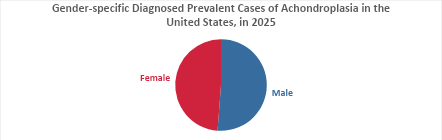
- Males show a slight predominance in achondroplasia compared to females; however, the overall disease burden remains comparable across genders. This observed difference may be influenced by reporting patterns and genetic variability, though the condition affects both sexes equally in terms of clinical severity and complications.
- The burden of achondroplasia is expected to remain stable over time due to its genetic origin, with prevalence largely unaffected by external factors. However, improvements in early diagnosis, multidisciplinary care, and the emergence of targeted therapies are anticipated to significantly influence disease management and long-term outcomes in the coming years.
Achondroplasia Epidemiology Forecast in the 7MM
- 2025 Diagnosed Prevalent Cases of Achondroplasia: ~28,500
- 2036 Projected Diagnosed Prevalent Cases of Achondroplasia: XXXX
- Achondroplasia Growth Rate (2026–2036): XX CAGR
DelveInsight's ‘Achondroplasia – Epidemiology Forecast – 2036’ report delivers an in-depth understanding of the Achondroplasia, historical and forecasted epidemiology in the United States, EU4 (Germany, Spain, Italy, and France), and the United Kingdom, and Japan.
|
Study Period |
2022–2036 |
|
Historical Year |
2022–2025 |
|
Forecast Period |
2026–2036 |
|
Base Year |
2026 |
|
Geographies Covered |
|
|
Achondroplasia Epidemiology CAGR (Study period/Forecast period) |
XX (2026-2036) |
|
Achondroplasia Epidemiology Segmentation Analysis |
Patient Burden Assessment
|
Achondroplasia Understanding and Diagnosis Algorithm
Achondroplasia Overview
Achondroplasia is the most common form of disproportionate short stature, caused by a genetic mutation that affects bone growth and development, particularly in the long bones. It typically presents at birth and is characterized by shortened limbs, a relatively normal trunk, and distinctive facial features. While intelligence and life expectancy are generally normal, individuals may experience complications such as spinal stenosis, respiratory issues, and joint problems, especially in more severe cases. Achondroplasia is primarily caused by mutations in the FGFR3 gene that limit cartilage conversion to bone.
Achondroplasia Diagnosis
Achondroplasia is diagnosed through clinical evaluation and genetic testing, often identified at birth or during prenatal screening. Physical features such as disproportionate short stature, enlarged head, and characteristic facial features raise suspicion. Imaging (X-rays) supports the diagnosis by showing typical skeletal changes, while genetic testing confirms mutations in the FGFR3 gene.
Further details are provided in the report.
Achondroplasia Epidemiology
Key Findings from Achondroplasia Epidemiological Analysis and Forecast
- According to DelveInsight’s estimates, the total diagnosed prevalent cases of Achondroplasia in the 7MM were approximately 28,500 in 2025, with the US accounting for the highest share.
- Among the EU4, France accounted for the highest number of diagnosed prevalent cases of Achondroplasia, followed by Germany, whereas Spain accounted for the lowest number of cases in 2025.
- The observed slight male predominance and earlier onset of Achondroplasia highlight the importance of early diagnosis, timely genetic confirmation, and proactive monitoring to enable appropriate intervention and reduce the risk of long-term complications.
Scope of the Report
- The report covers a segment of an executive summary, a descriptive overview of Achondroplasia, explaining its causes, signs and symptoms, and pathogenesis.
- Comprehensive insight has been provided into the epidemiology segments and forecasts, the future growth potential of the diagnosis rate, and disease progression.
Report Insights
Achondroplasia Patient Population Forecast
Report Key Strengths
- Epidemiology‑based (epi‑based) Bottom‑up Forecasting
- 11-year Forecast
- Patient Burden Trends (by geography)
FAQs
- What are the disease risks, burdens, and unmet needs of Achondroplasia? What will be the growth opportunities across the 7MM concerning the patient population with Achondroplasia?
- What is the historical and forecasted Achondroplasia patient pool in the US, EU4 (Germany, France, Italy, and Spain), the UK, and Japan?
Reasons to Buy
- Insights on patient burden/disease prevalence, evolution in diagnosis, and factors contributing to the change in the epidemiology of the disease during the forecast years.
- To understand key opinion leaders’ perspectives on the diagnostic challenges to overcome barriers in the future.
- Detailed insights into various factors hampering disease diagnosis and other existing diagnostic challenges.