Acute Coronary Syndrome (ACS) Insights and Trends
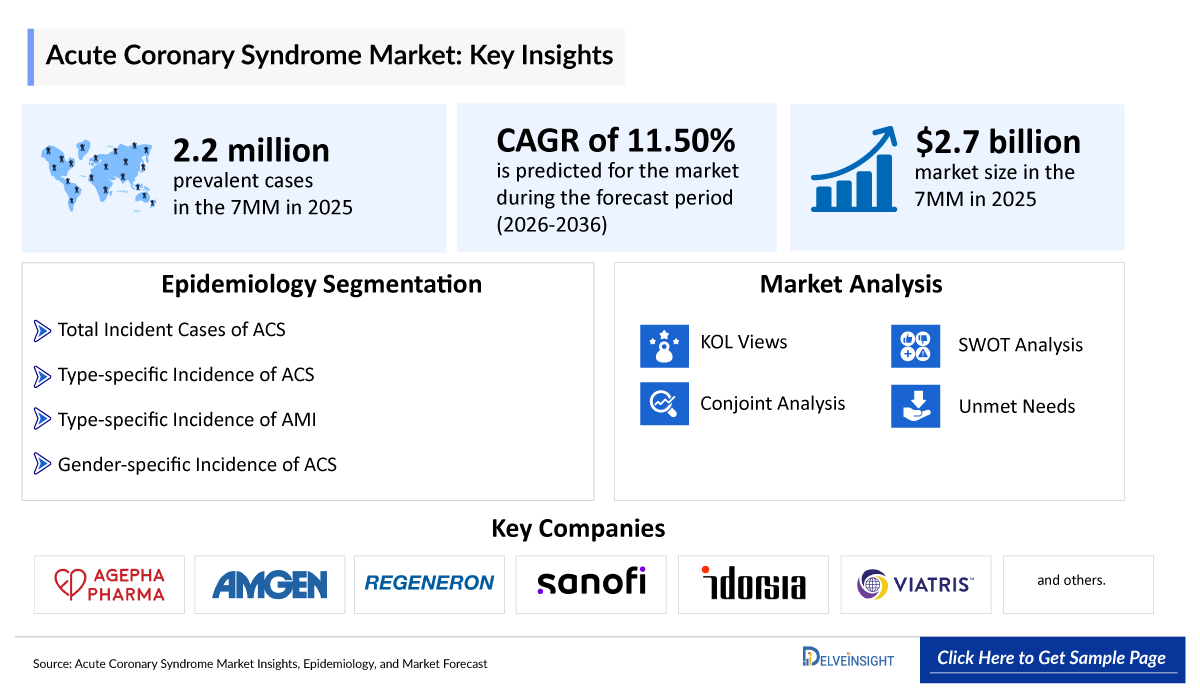
- Acute Coronary Syndrome (ACS) comprises acute myocardial infarction and Unstable Angina together. The total incidence cases of ACS in the 7MM were ~2.2 million in 2025, of which the highest incidence cases of this disease were in the United States.
- ACS arise from a sudden blockage in a coronary artery and include Unstable Angina, Non-ST-Segment Elevation Myocardial Infarction (NSTEMI), and ST-Segment Elevation Myocardial Infarction (STEMI). Unstable Angina presents with chest pain without ECG or blood test evidence of heart damage, NSTEMI shows elevated cardiac biomarkers without ST-segment elevation, while STEMI involves both biomarker elevation and ST-segment elevation on ECG.
- Secondary findings suggest that unstable angina accounts for roughly 10–30% of overall ACS cases.
- The incidence of ACS is higher in men, but certain risk factors have a stronger association with ACS in women. Although these sex-specific differences lessen with age, women often retain a relatively higher risk where differences persist. With aging populations and rising lifestyle-related risk factors, ACS incidence in women is expected to approach that of men.
- The current treatment market has been segmented into the following therapeutic classes, include Antiplatelet agents, Anticoagulants, Vasodilators, Beta Blockers, Lipid-lowering drugs, Angiotensin-converting Enzyme Inhibitors (ACE), Angiotensin-II receptor Blockers (ARBs), and Calcium channel blockers.
- Despite significant advances in patient management and population-wide lifestyle changes in several predisposing factors, AMI continues to be a major cause of morbidity and mortality in the US.
- Due to its high prevalence, early detection and management of ACS are critical. Atypical presentations, influenced by age, sex, and ethnicity, can lead to missed diagnoses, requiring greater clinical awareness.
- Most pharmaceutical efforts have been centered on AMI or the broader ACS category rather than unstable angina. The higher mortality and morbidity associated with AMI create a stronger demand for novel therapies that can address unmet needs in terms of immediate intervention, long-term cardiovascular protection, and post-AMI care.
- Recent trial failures of leading SGLT2 inhibitors, JARDIANCE and FARXIGA/FORXIGA, in achieving the primary composite endpoint of reducing cardiovascular death and heart failure hospitalizations in myocardial infarction patients, raise doubts about expanding the use of this class in this area.
Acute Coronary Syndrome (ACS) Market Size and Forecast in the 7MM
- 2025 ACS Market Size: ~USD 2,700 million
- 2036 Projected ACS Market Size: ~USD 9,000 million
- ACS Growth Rate (2026–2036): 11.5% CAGR
DelveInsight's ‘Acute Coronary Syndrome (ACS) – Market Insights, Epidemiology and Market Forecast – 2036’ report delivers an in-depth understanding of the ACS, historical and forecasted epidemiology, as well as the ACS market trends in the United States, EU4 (Germany, Spain, Italy, and France) and the United Kingdom, and Japan.
The Acute Coronary Syndrome (ACS) market report delivers a comprehensive analysis of the current treatment landscape, including standards of care, clinical practices, and evolving therapeutic algorithms. It evaluates ACS patient burden trends, revenue & market share dynamics, peak patient share & therapy uptake analysis, and provides an in-depth market size assessment, and growth rate projections (Historical & Forecast 2022–2036) across global regions. The report highlights key unmet medical needs in Acute Coronary Syndrome (ACS) and maps the competitive and clinical landscape to uncover high‑value opportunities, providing a clear outlook on future market growth potential.
|
Study Period |
2022–2036 |
|
Historical Year |
2022–2025 |
|
Forecast Period |
2026–2036 |
|
Base Year |
2026 |
|
Geographies Covered |
|
|
ACS Market CAGR (Study period/Forecast period) |
11.5% (2026 ̶ 2036) |
|
ACS Epidemiology Segmentation Analysis |
Patient Burden Assessment
|
|
ACS Companies |
|
|
ACS Therapies |
|
|
ACS Market |
Segmented by
|
|
Analysis |
|
Key Factors Driving the Acute Coronary Syndrome (ACS) Market
Rising ACS incidence
The increasing incidence of ACS, driven by aging populations and rising lifestyle-related risk factors, is a key factor supporting market growth. In the US, there were ~1.3 million incident cases of ACS in 2025, which are expected to increase further by 2036.
Rising Opportunities in Targeted Biologics and JAK Inhibitors
Emerging therapies in ACS are shifting toward inflammation targeting and optimized antithrombotic strategies, offering improved outcomes with controlled bleeding risk. Agents like Colchicine and advanced P2Y12 inhibitors such as Ticagrelor highlight growing innovation. This creates opportunities for drug developers to focus on inflammatory pathways, platelet inhibition, and safer anticoagulation approaches in ACS management.
Emerging ACS Competitive Landscape
Some of the ACS drugs in clinical trials include Selatogrel, FDY-5301, Ziltivekimab, and others.
Acute Coronary Syndrome (ACS) Understanding and Treatment Algorithm
Acute Coronary Syndrome (ACS) Overview and Diagnosis
Acute Coronary Syndrome (ACS) is a group of conditions caused by a sudden reduction or blockage of blood flow to the heart. It includes unstable angina, NSTEMI, and STEMI, representing varying degrees of severity. ACS commonly presents with chest pain or discomfort, though symptoms can differ across patients. Chest pain or discomfort is the immediate signal for heart problems like ACS. Chest pain caused by ACS can come on suddenly, as is the case with a heart attack. Other times, the pain can be unpredictable or get worse even with rest—both hallmark symptoms of unstable angina. People who experience chronic chest pain resulting from decreased blood flow to the heart due to years of cholesterol buildup in their arteries can develop ACS if a blood clot forms on top of the plaque buildup. It is primarily triggered by plaque rupture and clot formation in the coronary arteries. Risk factors include hypertension, diabetes, smoking, obesity, and a sedentary lifestyle. The condition is more common in older adults and men, though the incidence in women is rising.
Acute Coronary Syndrome (ACS) Diagnosis
Diagnosis of ACS is based on a combination of clinical evaluation, electrocardiogram (ECG), and cardiac biomarkers. Patients are assessed for symptoms such as chest pain, shortness of breath, and radiating discomfort. ECG is performed immediately to identify changes such as ST-segment elevation or depression. Cardiac biomarkers, particularly troponins, are measured to detect heart muscle damage. Serial testing is often required to confirm a diagnosis. Additional tools such as echocardiography or coronary angiography may be used to assess heart function and identify the site of blockage. Early and accurate diagnosis is critical to guide timely treatment and improve outcomes.
Further details are provided in the report.
Acute Coronary Syndrome (ACS) Treatment
Treatment of ACS focuses on restoring blood flow, relieving symptoms, and preventing complications. Initial management includes antiplatelet agents, anticoagulants, nitrates, beta-blockers, and statins. Reperfusion therapy is critical, especially in severe cases, and may involve percutaneous coronary intervention (PCI) or thrombolytic therapy to reopen blocked arteries. Oxygen and pain relief may also be provided as needed. Long-term management includes lifestyle modification, cardiac rehabilitation, and continued pharmacotherapy to reduce the risk of recurrence and improve survival.
Further details related to country-based variations are provided in the report.
Acute Coronary Syndrome (ACS) Unmet Needs
The section “unmet needs of Acute Coronary Syndrome (ACS)” outlines the critical gaps between the current state of patient care, diagnosis, and the ideal & effective management of the disease. It highlights the obstacles experienced by patients, clinicians, and researchers and identifies potential solutions for future progress.
- Delayed or missed diagnosis, especially in atypical presentations
- Need for better risk stratification and personalized treatment
- Poor control of modifiable risk factors (e.g., diabetes, hypertension)
- High risk of recurrence despite existing therapies
- Limited awareness and delays in accessing timely care
- Suboptimal long-term treatment adherence, and others…..
Comprehensive unmet needs insights in Acute Coronary Syndrome (ACS) and their strategic implications are provided in the full report.
Acute Coronary Syndrome (ACS) Epidemiology
Key Findings from Acute Coronary Syndrome (ACS) Epidemiological Analysis and Forecast
- According to DelveInsight’s estimates, the total incident cases of ACS in the 7MM were approximately 2.2 million in 2025.
- In 2025, Acute Myocardial Infarction (AMI) accounted for a higher proportion of ACS cases; ~835,000 in the United States compared to Unstable Angina, indicating a shift toward more severe clinical presentations.
- Approximately three-quarters of AMI cases were NSTEMI (~75%), while STEMI accounted for about one-quarter, indicating a clear predominance of NSTEMI presentations.
- ACS cases were predominantly observed in males (~75%), while females accounted for a smaller proportion, indicating male predominance.
Acute Coronary Syndrome (ACS) Drug Chapters & Competitive Analysis
The ACS drug chapter provides a detailed, market-focused review of approved therapies and the emerging pipeline across Phase I–III clinical trials. It covers the mechanism of action, clinical trial data, regulatory approvals, patents, collaborations, and strategic partnerships for each therapy, along with their advantages, limitations, and recent developments. This section offers critical insights into the ACS treatment landscape, supporting market assessment, competitive analysis, and growth forecasting for the ACS therapeutics market.
Approved Therapies for Acute Coronary Syndrome (ACS)
Colchicine (LODOCO): AGEPHA Pharma
Colchicine has emerged as a key therapy in cardiovascular inflammation, transitioning from its traditional use in gout to reducing recurrent pericarditis and major adverse cardiovascular events (MACE). Its action involves inhibition of β-tubulin polymerization, thereby suppressing neutrophil activation and inflammasome signaling, leading to reduced inflammation markers such as hs-CRP. In June 2023, the US Food and Drug Administration approved LODOCO as the first targeted anti-inflammatory therapy for atherosclerotic cardiovascular disease. Developed by AGEPHA Pharma, it demonstrated a ~31% reduction in cardiovascular events versus placebo and became available for prescription in the second half of 2023.
Evolocumab (REPATHA): Amgen
REPATHA is a human monoclonal antibody that inhibits proprotein convertase subtilisin/kexin type 9 (PCSK9). Over the last decade, inhibition of proprotein convertase subtilisin/kexin type 9 (PCSK9) has emerged as a promising target to reduce residual cardiovascular disease risk. PCSK9 is a protein that binds to low-density lipoprotein (LDL) receptors (LDLR) to promote their degradation. Monoclonal antibodies inhibit PCSK9 and thus prevent LDLR degradation.
ACS Marketed/Approved Therapies | ||||||
|
Drug/Therapy |
Company |
Indication |
Molecule Type |
RoA |
MoA |
Marketed Region |
|
Colchicine (LODOCO) |
AGEPHA Pharma |
Myocardial infarction |
Small Molecule |
Oral |
Disrupts cytoskeletal functions |
US: 2023 |
|
Evolocumab (REPATHA) |
Amgen |
Myocardial infarction |
Monoclonal antibody |
SC |
PCSK9 inhibitor |
US: 2017 |
|
Alirocumab (PRALUENT) |
Regeneron and Sanofi |
Myocardial infarction/ unstable angina requiring hospitalization |
Monoclonal antibody |
SC |
PCSK9 inhibitor |
US: 2019 EU: 2025 |
Note: Detailed marketed therapies assessment of therapies will be provided in the final report.
Acute Coronary Syndrome (ACS) Pipeline Analysis
Selatogrel (ACT-246475): Idorsia Pharmaceuticals and Viatris
Selatogrel is a potent, fast-acting, reversible, and highly selective P2Y12 inhibitor being developed for the treatment of AMI in patients with a history of AMI. It is intended to be self-administered subcutaneously via a drug delivery system (autoinjector). This novel, self-administered emergency agent has the potential to protect the heart muscle in the very early phase of an AMI, in the crucial time between symptom onset and first medical attention to treat the ongoing AMI, and prevent early death.
FDY-5301: Faraday Pharmaceuticals
FDY-5301 is a patented elemental reducing agent containing sodium iodide. It works to catalytically destroy hydrogen peroxide, which is generated as a response to acute injury and contributes to loss of muscle mass and function. Preclinical studies of FDY-5301 have demonstrated its ability to reduce cardiac and skeletal muscle injury. Phase I data have demonstrated no signs of toxicity in healthy subjects. A Phase II trial of FDY-5301 in treating reperfusion injury following STEMI demonstrated that the treatment was well-tolerated and provided encouraging signals of potential efficacy in minimizing cardiac damage.
Comparison of Emerging Drugs Under Development | |||||||
|
Drug Name |
Company |
Highest Phase |
Indication |
RoA |
MoA |
Molecule Type |
Anticipated Launch in the US |
|
Selatogrel (ACT-246475) |
Idorsia Pharmaceuticals and Viatris |
III |
AMI |
SC |
P2Y12 inhibitor |
Small molecule |
2028 |
|
FDY-5301 |
Faraday Pharmaceuticals |
III |
Ischemia-reperfusion injury (IRI) following myocardial infarction |
IV bolus |
Anti-peroxidant |
Small molecule |
Information is available in the full report |
|
Ziltivekimab |
Novo Nordisk |
III |
AMI |
SC |
Inhibition of IL-6 |
Monoclonal antibody |
Information is available in the full report |
|
Note: Launch insights are provisional and may change with future report updates or the occurrence of major key catalysts. | |||||||
Note: A detailed emerging therapies assessment will be provided in the final report
Acute Coronary Syndrome (ACS) Key Players, Market Leaders, and Emerging Companies
- AGEPHA Pharma
- Amgen
- Regeneron
- Sanofi
- Idorsia Pharmaceuticals
- Viatris
- Faraday Pharmaceuticals
- Novo Nordisk, and others
Acute Coronary Syndrome (ACS) Drug Updates
- As per Idorsia Pharmaceuticals’ Annual Report 2025, late-stage programs for selatogrel continue to progress toward important readouts starting from the end of 2026.
- As per Novo Nordisk’s Annual Report 2025, the data readouts are expected between 2026 and 2027 across three clinical settings. Ziltivekimab could offer people with diabetes crucial protection against cardiovascular complications.
- In April 2025, AGEPHA Pharma highlighted the clinical data that provides new information about how low-dose colchicine, 0.5 mg, reduces the risk of major adverse cardiovascular events (MACE) and supports its use in the treatment of cardiovascular disease.
Acute Coronary Syndrome (ACS) Market Outlook
The treatment of ACS is a medical emergency focused on relieving symptoms, interrupting thrombosis, restoring myocardial perfusion, limiting infarct size, and preventing complications through rapid diagnosis and intervention. Management typically involves a combination of revascularization procedures (PCI, CABG, or fibrinolysis) and pharmacologic therapy. Core drug classes include antiplatelets, anticoagulants, beta-blockers, nitrates, statins, ACE inhibitors/ARBs, and calcium channel blockers, which together reduce mortality, recurrent ischemic events, and cardiac workload. Risk stratification tools such as TIMI and GRACE scores guide treatment initiation, including antithrombotic therapy and high-intensity statins. In addition, agents like Eplerenone (INSPRA) are used adjunctively in post-MI patients with heart failure or hypertension. Notably, Plavix, developed by Sanofi and Bristol Myers Squibb, received expanded approval from the US Food and Drug Administration in 2017 for reducing mortality and recurrent cardiovascular events in STEMI patients, reinforcing its central role in ACS management.
From an emerging perspective, ACS management is shifting toward targeted and preventive strategies beyond traditional antithrombotics. While standard agents like Ticagrelor and Plavix remain central, newer approaches such as LODOCO highlight the role of inflammation control in reducing residual cardiovascular risk. Increasing emphasis on personalized therapy and novel pathways (e.g., factor XI and platelet signaling) is creating opportunities for safer and more effective ACS treatment.
Overall, the launch of first-in-class therapies, improved diagnostic approaches, and increasing disease awareness are expected to drive steady growth in the 7MM ACS market from 2022–2036, with strong commercial implications for both marketed products and emerging pipelines.
- According to the estimates, the largest market size of ACS was captured by the United States, i.e., ~USD 2,200 million in 2025.
- The ACS market is evolving as treatment focus shifts from traditional broad antithrombotic approaches to more targeted and mechanism-driven therapies, with agents like LODOCO highlighting the growing role of inflammation modulation alongside optimized P2Y12 inhibitors such as Ticagrelor, driven by improved efficacy–safety balance and residual risk reduction.
- Regional market dynamics show the US leading in revenue, while Europe and Japan demonstrate steady growth, supported by increasing cardiovascular disease burden, improved diagnosis rates, and gradual adoption of novel adjunctive therapies and personalized treatment strategies in ACS management.
- In 2025, among all the therapies for ACS, the highest revenue is estimated to be generated by Antiplatelet Agents in the United States.
Further details will be provided in the report….
Drug Class/Insights into Leading Emerging and Marketed Therapies in Acute Coronary Syndrome (ACS) (2022–2036 Forecast)
The ACS market is primarily driven by antithrombotic agents, lipid-lowering therapies, and emerging anti-inflammatory approaches, each targeting key pathways such as platelet activation, thrombin generation, lipid metabolism, and vascular inflammation underlying atherosclerotic events.
- PCSK9 inhibitors: Evolocumab and Alirocumab are monoclonal antibodies that inhibit PCSK9, significantly lowering LDL-C levels and reducing the risk of recurrent cardiovascular events post-ACS. These agents validate the role of targeted lipid-lowering biologics in secondary prevention, particularly in high-risk patients inadequately controlled on statins.
- Targeted small molecules (anti-inflammatory): LODOCO (colchicine) represents a novel oral anti-inflammatory approach that modulates inflammasome activity and cytokine signaling, reducing residual inflammatory risk and recurrent major adverse cardiovascular events, highlighting the growing importance of inflammation-targeted therapies in ACS.
- Advanced antiplatelet therapies: Ticagrelor and Prasugrel are potent P2Y12 inhibitors that provide faster, more consistent platelet inhibition compared to older agents, reinforcing their role as cornerstones of dual antiplatelet therapy (DAPT) in ACS with improved clinical outcomes.
Further details will be provided in the report….
Acute Coronary Syndrome (ACS) Drug Uptake
This section focuses on the uptake rate of potential drugs expected to be launched in the market during the forecast period (2026–2036). The analysis covers the ACS market's uptake by drugs, patient uptake by therapy, and sales of each drug.
The uptake of therapies in ACS is expected to vary across anti-inflammatory agents, novel antiplatelet agents, metabolic therapies, and emerging regenerative approaches. Recently approved or emerging therapies such as LODOCO (colchicine) are expected to demonstrate moderate uptake, driven by their novel inflammation-targeting mechanism and proven reduction in cardiovascular events, while fast-acting agents like Selatogrel and Zalunfiban are anticipated to show rapid uptake, supported by their potential for early intervention and improved acute management outcomes.
In comparison, combination and regenerative approaches such as Dutogliptin + Filgrastim are expected to exhibit moderate but gradual uptake as clinical evidence evolves, while novel candidates like FDY-5301 may experience faster adoption, contingent on favorable efficacy and safety outcomes. Overall, adoption trends are likely to be driven by the need to address residual cardiovascular risk, improve early intervention, and complement existing standard-of-care therapies in ACS.
Further detailed analysis of emerging therapies' drug uptake in the report…
Market Access and Reimbursement of ACS
The United States
The US Reimbursement for ACS Therapies | |
|
Drug |
Access Program |
|
Alirocumab (PRALUENT) |
MyPRALUENT copay card program MyPRALUENT patient assistance program (PAP) |
Reimbursement is a crucial factor that affects the drug’s access to the market. Often, the decision to reimburse comes down to the price of the drug relative to the benefit it produces in treated patients. To reduce the healthcare burden of these high-cost therapies, many payment models are being considered by payers and other industry insiders.
Further details are provided in the final report….
Acute Coronary Syndrome (ACS) Therapies Price Scenario & Trends
Pricing and analogue assessment of ACS therapies highlights evolving price dynamics structures. This section summarizes the cost of approved treatments, the closest and most appropriate analogue selection for emerging therapies, and the understanding of how pricing influences market access, adherence, and long-term uptake.
- Pricing of Acute Coronary Syndrome (ACS) Approved Drugs
Agepha Pharma announced FDA approval of LODOCO (colchicine) as an anti-inflammatory atheroprotective cardiovascular treatment demonstrated to reduce the risk of myocardial infarction, stroke, coronary revascularization, and cardiovascular death in adult patients with established atherosclerotic disease or with multiple risk factors for cardiovascular disease. LODOCO 0.5mg tablet cost per day is USD 495. This results in an annual cost of USD 5,940.
Further details are provided in the final report….
Industry Experts and Physician Views for Acute Coronary Syndrome (ACS)
To keep up with ACS market trends, we take Key Opinion Leaders (KOLs) and Subject Matter Experts (SMEs) opinions working in the domain through primary research to fill the data gaps and validate our secondary research. Industry experts were contacted for insights on the ACS emerging therapies, evolving treatment landscape, patient adherence to conventional therapies, therapy switching trends, drug adoption and uptake, accessibility challenges, and epidemiology and real-world prescription patterns in ACS, including MD, PhD, Instructor, Postdoctoral Researcher, Professor, Researcher, and others.
DelveInsight’s analysts connected with 10+ KOLs to gather insights; however, interviews were conducted with 6+ KOLs in the 7MM. Centers such as the University School of Medicine in Atlanta, the Berlin Institute of Health at Charité, and the University of Nottingham, etc. were contacted. Their opinion helps understand and validate current and emerging ACS therapies, highlight unmet medical needs, provide epidemiological context, and support strategic decisions for market access, therapy adoption, and pipeline prioritization in ACS.
|
Region |
Key Opinion Leaders (KOLs) and Subject Matter Experts (SMEs) |
|
United States |
“Some of these ideas about educating and informing patients may seem obvious, but we often fail to implement them. Given the relatively short hospitalizations for ACS, typically four or five days if they undergo a catheterization lab procedure without complications, there must be a conscious effort to provide all the information that should be given to them.” |
|
Germany |
“I was elated to see that, on top of our progress improving short-term survival for people suffering a heart attack, the last 2 decades have also seen remarkable improvements in long-term survival. We have invested much effort in improving the quality of heart attack care – both at the time of hospitalization and after survival. This study shows that these efforts have improved the likelihood that people live a long time after a heart attack.” |
Qualitative Analysis: SWOT and Conjoint Analysis
We perform qualitative and market Intelligence analysis using various approaches, such as SWOT analysis and conjoint analysis.
In the SWOT analysis of Acute Coronary Syndrome (ACS), strengths, weaknesses, opportunities, and threats in terms of disease diagnosis, patient awareness, patient burden, competitive landscape, cost-effectiveness, and geographical accessibility of therapies are provided.
Conjoint analysis analyzes emerging therapies based on relevant attributes such as safety, efficacy, frequency of administration, route of administration, and order of entry. Scoring is given based on these parameters to analyze the effectiveness of therapy.
The team of analysts analyzes promising emerging therapies based on relevant attributes such as safety, efficacy, frequency of administration, route of administration, and order of entry. In efficacy, the trial’s primary and secondary outcome measures are evaluated, whereas the therapies’ safety is evaluated, wherein the acceptability, tolerability, and adverse events are mainly observed. In addition, the scoring is also based on the route of administration, order of entry, probability of success, and the addressable patient pool for each therapy. According to these parameters, the final weightage score and the ranking of the emerging therapies are decided.
Scope of the Report
- The report covers a segment of key events, an executive summary, a descriptive overview of ACS, explaining its causes, signs and symptoms, pathogenesis, and currently available treatments.
- Comprehensive insight has been provided into the epidemiology segments and forecasts, the future growth potential of the diagnosis rate, and disease progression along treatment guidelines.
- Additionally, an all-inclusive account of both the current and emerging treatments, along with the elaborate profiles of late-stage and prominent therapies, will have an impact on the current treatment landscape.
- A detailed review of the ACS market, historical and forecasted market size, market share by therapies, detailed assumptions, and rationale behind our approach is included in the report, covering the 7MM drug outreach.
- The report provides an edge while developing business strategies by understanding trends through SWOT analysis and expert insights/KOL views, patient journey, and treatment preferences that help in shaping and driving the 7MM ACS market.
Report Insights
- Acute Coronary Syndrome (ACS) Patient Population Forecast
- Acute Coronary Syndrome (ACS) Therapeutics Market Size
- Acute Coronary Syndrome (ACS) Pipeline Analysis
- Acute Coronary Syndrome (ACS) Market Size and Trends
- Acute Coronary Syndrome (ACS) Market Opportunity (Current and forecasted)
Report Key Strengths
- Epidemiology‑based (Epi‑based) Bottom‑up Forecasting
- Artificial Intelligence (AI)-enabled Market Research Report
- 11-year forecast
- Acute Coronary Syndrome (ACS) Market Outlook (North America, Europe, Asia-Pacific)
- Patient Burden Trends (by geography)
- Acute Coronary Syndrome (ACS) Treatment Addressable Market (TAM)
- Acute Coronary Syndrome (ACS) Competitive Landscape
- Acute Coronary Syndrome (ACS) Major Companies Insights
- Acute Coronary Syndrome (ACS) Price Trends and Analogue Assessment
- Acute Coronary Syndrome (ACS) Therapies Drug Adoption/Uptake
- Acute Coronary Syndrome (ACS) Therapies Peak Patient Share analysis
Report Assessment
- Acute Coronary Syndrome (ACS) Current Treatment Practices
- Acute Coronary Syndrome (ACS) Unmet Needs
- Acute Coronary Syndrome (ACS) Clinical Development Analysis
- Acute Coronary Syndrome (ACS) Emerging Drugs Product Profiles
- Acute Coronary Syndrome (ACS) Market Attractiveness
- Acute Coronary Syndrome (ACS) Qualitative Analysis (SWOT and Conjoint Analysis)
FAQs
Market Insights
- What was the Acute Coronary Syndrome (ACS) market size, the market size by therapies, market share (%) distribution in 2025, and what would it look like by 2036? What are the contributing factors for this growth?
- What are the anticipated pricing variations among different geographies for the emerging therapies in the future?
- What can be the future treatment paradigm of Acute Coronary Syndrome (ACS)?
- What are the disease risks, burdens, and unmet needs of Acute Coronary Syndrome (ACS)? What will be the growth opportunities across the 7MM concerning the patient population with Acute Coronary Syndrome (ACS)?
- Who is the major future competitor in the market, and how will the competitors affect their market share?
- What are the current options for the treatment of Acute Coronary Syndrome (ACS)? What are the current guidelines for treating Acute Coronary Syndrome (ACS) in the US, Europe, and Japan?
Reasons to Buy
- The report will help in developing business strategies by understanding the latest trends and changing treatment dynamics driving the Acute Coronary Syndrome (ACS) market.
- Bottom‑up forecasting builds from the affected population to product forecasts, delivering a robust, data‑driven approach ideal for new therapies and novel classes.
- Insights on patient burden/disease incidence, evolution in diagnosis, and factors contributing to the change in the epidemiology of the disease during the forecast years.
- Understand the existing market opportunities in varying geographies and the growth potential over the coming years.
- Identifying strong upcoming players in the market will help devise strategies to help get ahead of competitors.
- Detailed analysis and ranking of class-wise potential current and emerging therapies under the conjoint analysis section to provide visibility around leading classes.
- To understand KOLs’ perspectives on the accessibility, acceptability, and compliance-related challenges of existing treatment to overcome barriers in the future.
- Detailed insights into the unmet needs of the existing market so that the upcoming players can strengthen their development and launch strategy.
- This Artificial Intelligence (AI)‑enabled report summarizes and simplifies complex datasets within the report into clear, actionable insights for stakeholders, investors, and healthcare providers, enabling faster, data‑driven decisions.
-pipeline.png&w=256&q=75)