Acute Ischemic Stroke Epidemiology
Acute Ischemic Stroke Insights and Trends
- Acute Ischemic Stroke is a serious neurological condition caused by the sudden blockage of blood flow to a part of the brain, leading to oxygen deprivation and rapid damage to brain tissue. It is the most common type of stroke, accounting for nearly 85% of all stroke cases worldwide.
- The major types of ischemic stroke include large artery atherosclerotic stroke, cardioembolic stroke, small vessel occlusion (lacunar stroke), and cryptogenic stroke, each differing based on the underlying cause of arterial blockage.
- Common symptoms of acute ischemic stroke include sudden weakness or numbness on one side of the body, facial drooping, difficulty speaking, vision disturbances, dizziness, loss of coordination, and severe headache. These symptoms usually occur suddenly and require immediate medical attention.
- The severity of acute ischemic stroke varies depending on the location and extent of the arterial blockage, the duration of interrupted blood flow, and the patient’s overall health status. Severe cases may result in permanent neurological deficits, cognitive impairment, paralysis, or complications affecting other organ systems.
- Diagnosis of acute ischemic stroke typically involves rapid neurological assessment, brain imaging techniques such as computed tomography (CT) scan or magnetic resonance imaging (MRI), vascular imaging, laboratory testing, and evaluation of cardiovascular risk factors. Early and accurate diagnosis is essential to differentiate ischemic stroke from hemorrhagic stroke and to guide timely treatment decisions.
- Early diagnosis and prompt treatment with thrombolytic therapy or mechanical thrombectomy are crucial to restoring blood flow, minimizing brain damage, improving functional recovery, and reducing the risk of long-term disability and stroke recurrence.
Acute Ischemic Stroke Epidemiology Forecast in the 7MM
- 2025 Total Incident Cases of Acute Ischemic Stroke: ~ 1,700,000
- 2036 Projected Incident Cases of Acute Ischemic Stroke: XXXX
- Acute Ischemic Stroke Growth Rate (2026–2036): XX% CAGR
DelveInsight's ‘Acute Ischemic Stroke Epidemiology Forecast – 2036’ report delivers an in-depth understanding of the acute ischemic stroke, historical and forecasted epidemiology of the United States, EU4 (Germany, Spain, Italy, and France), and the United Kingdom, and Japan.
|
Study Period |
2022–2036 |
|
Historical Year |
2022–2025 |
|
Forecast Period |
2026–2036 |
|
Base Year |
2026 |
|
Geographies Covered |
|
|
Acute Ischemic Stroke Epidemiology CAGR (Forecast period) |
XX% (2026–2036) |
|
Acute Ischemic Stroke Epidemiology Segmentation Analysis |
Patient Burden Assessment
|
Acute Ischemic Stroke Understanding and Diagnosis Algorithm
Acute Ischemic Stroke Overview
Acute ischemic stroke is caused by a sudden blockage of blood flow to the brain, leading to oxygen deprivation and rapid neuronal damage. It is the most common type of stroke and is mainly associated with thrombosis, embolism, atherosclerosis, and cardiovascular disorders such as atrial fibrillation. Major risk factors include hypertension, diabetes, obesity, smoking, and aging. Acute ischemic stroke is a leading cause of mortality and long-term disability worldwide, significantly impacting patients’ quality of life and healthcare systems.
Acute Ischemic Stroke Diagnosis
Diagnosis of acute ischemic stroke involves rapid neurological assessment and imaging techniques to confirm ischemia and exclude hemorrhage. A non-contrast CT scan is the primary diagnostic tool, while an MRI provides detailed detection of early ischemic changes. Additional tests, such as CT angiography, carotid ultrasound, and cardiac evaluations, help identify the underlying cause and vascular blockage. Early and accurate diagnosis is essential to ensure timely treatment and improve clinical outcomes.
Further details are provided in the report…
Acute Ischemic Stroke Epidemiology
Key Findings from Acute Ischemic Stroke Epidemiological Analysis and Forecast
- In 2025, the United States accounted for approximately 788,000 incident cases of acute ischemic stroke, with a nearly equal distribution between males and females.
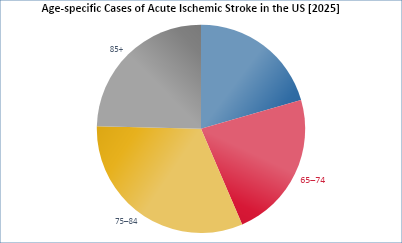
- In Japan, the burden of acute ischemic stroke was highest among older adults, with approximately 80,000 cases occurring in individuals aged 75–84 years, followed by 60,000 cases in those aged 85 years and older.
- Across the EU4 and the UK, there were approximately 667,000 incident cases of acute ischemic stroke in 2025.
- Within the EU4 and the UK, Germany recorded the highest number of cases, contributing around 40% of the total burden, followed by the United Kingdom.
- By etiological subtype in the United States, undetermined causes represented the largest share of cases (~37%), followed by cardioembolism (~27%), small artery occlusions (~23%), and large artery atherosclerosis (~13%).
Scope of the Report
- The report covers a segment of a descriptive overview of acute ischemic stroke, explaining its causes, signs and symptoms, and pathogenesis.
- Comprehensive insight has been provided into the epidemiology segments and forecasts, the future growth potential of the diagnosis rate, and disease progression.
Report Insights
Acute Ischemic Stroke Patient Population Forecast
Report Key Strengths
- Epidemiology‑based (Epi‑based) bottom‑up forecasting
- 11-year forecast
- Patient Burden trends (by geography)
FAQs
- What are the disease risks, burdens, and unmet needs of acute ischemic stroke? What will be the growth opportunities across the 7MM concerning the patient population with acute ischemic stroke?
- What is the historical and forecasted acute ischemic stroke patient pool in the US, EU4 (Germany, France, Italy, and Spain), the UK, and Japan?
Reasons to Buy
- Insights on patient burden/disease prevalence, evolution in diagnosis, and factors contributing to the change in the epidemiology of the disease during the forecast years.
- To understand key opinion leaders’ perspectives on the diagnostic challenges to overcome barriers in the future.
- Detailed insights into various factors hampering disease diagnosis and other existing diagnostic challenges.


