Acute ischemic stroke Market
Acute Ischemic Stroke Insights and Trends
- In thrombosis, an obstructive process prevents blood flow to regions of the brain. The most common risk factor is large vessel atherosclerosis. Other risk factors include vasculitides and arterial dissection.
- Nearly a quarter of these strokes, nearly 185,000 cases, occur in individuals with a history of previous strokes. Ischemic strokes, blocking blood flow to the brain, constitute about 87% of all strokes. According to the Framingham Heart Study, stroke incidence has declined.
- In March 2025, Genentech announced that the US Food and Drug Administration (FDA) had approved TNKase for the treatment of acute ischemic stroke in adults. This approval of TNKase marks Genentech’s second approval for stroke, reinforcing the company's long-standing dedication to advancing stroke care as the developer of the only two FDA-approved medicines for acute ischemic stroke, TNKase and ACTIVASE.
- In February 2025, Vena Medical announced that the FDA had granted Breakthrough Device designation for its MicroAngioscope, marking a "historic leap forward" in neurovascular care and stroke treatment.
- The ischemic stroke treatment market is driven by advancements in thrombectomy, increasing incidence due to lifestyle factors, and funding for stroke care. Barriers include limited treatment windows, high costs, and a lack of awareness. Ischemic stroke unmet needs encompass improved diagnostics, extended treatment windows, neuroprotection, and better post-stroke rehabilitation.
- The current ischemic stroke treatment market comprises antiplatelets, anticoagulants, tissue plasminogen activator (tPA), edaravone, and lipid-lowering agents. However, this market faces substantial challenges, such as a narrow treatment window, delayed diagnosis, limited access to specialized care, safety concerns, high costs, and regulatory obstacles. These issues highlight the critical need for improved early detection, public education, and more effective, accessible therapies.
- The emerging pipeline for ischemic stroke is showing notable activity, with several investigational candidates in development, including sovateltide (Pharmazz), DM199 (DiaMedica Therapeutics), BB-031 (Basking Biosciences), and NSC-01 (NC Medical Research). These programs reflect a growing interest in advancing novel therapeutic approaches beyond currently approved thrombolytic agents.
Acute Ischemic Stroke Market Size and Forecast in the 7MM
- 2025 Acute Ischemic Stroke Market Size: ~USD 1,500 million
- 2036 Projected Acute Ischemic Stroke Market Size: ~USD XXX million
- Acute Ischemic Stroke Growth Rate (2026–2036): XX% CAGR
Request for sample to know more about Acute ischemic stroke CAGR and Market dynamics @ Acute ischemic stroke Market Report
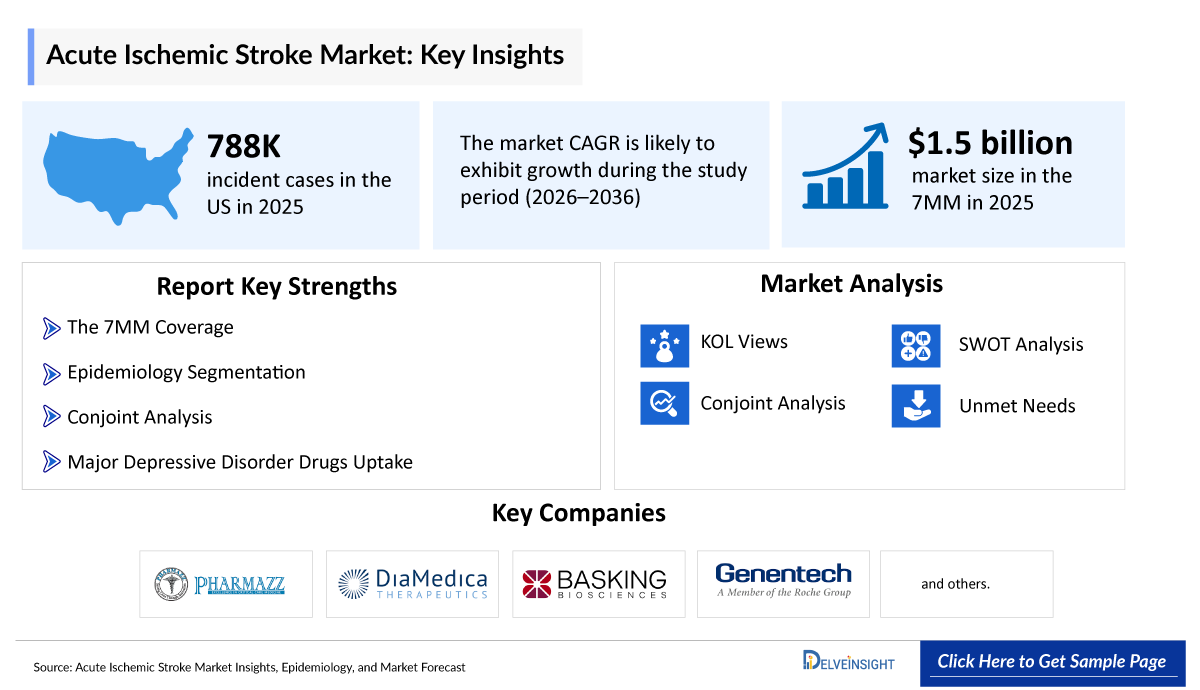
DelveInsight's ‘Acute Ischemic Stroke Market Insights, Epidemiology and Market Forecast – 2036’ report delivers an in-depth understanding of the acute ischemic stroke, historical and forecasted epidemiology, as well as the acute ischemic stroke market trends in the United States, EU4 (Germany, Spain, Italy, and France) and the United Kingdom, and Japan.
The acute ischemic stroke market report delivers a comprehensive analysis of the current treatment landscape, including standards of care, clinical practices, and evolving therapeutic algorithms. It evaluates acute ischemic stroke patient burden trends, revenue & market share dynamics, peak patient share & therapy uptake analysis, and provides an in-depth market size assessment, and growth rate projections (Historical & Forecast 2022–2036) across global regions. The report highlights key unmet medical needs in acute ischemic stroke and maps the competitive and clinical landscape to uncover high‑value opportunities, providing a clear outlook on future market growth potential.
|
Study Period |
2022–2036 |
|
Historical Year |
2022–2025 |
|
Forecast Period |
2026–2036 |
|
Base Year |
2026 |
|
Geographies Covered |
|
|
Acute Ischemic Stroke Market CAGR (Forecast period) |
XX% (2026–2036) |
|
Acute Ischemic Stroke Epidemiology Segmentation Analysis |
Patient Burden Assessment
|
|
Acute Ischemic Stroke Companies |
|
|
Acute Ischemic Stroke Therapies |
|
|
Acute Ischemic Stroke Market |
Segmented by
|
|
Analysis |
|
Key Factors Driving the Acute Ischemic Stroke Market
Growing prevalence of cardiovascular and lifestyle-related risk factors
The rising incidence of hypertension, diabetes, obesity, atrial fibrillation, and other cardiovascular disorders is contributing to a growing burden of acute ischemic stroke globally, leading to sustained demand for effective therapeutic and interventional approaches.
Advancements in thrombolytic and mechanical thrombectomy therapies
Continuous innovations in thrombolytic agents, endovascular devices, and mechanical thrombectomy procedures are significantly improving recanalization rates and clinical outcomes, driving the adoption of advanced stroke treatment strategies.
Expansion of stroke centers and improved healthcare infrastructure
The increasing establishment of specialized stroke centers, enhanced emergency medical services, and improved access to advanced neuroimaging technologies are supporting faster diagnosis and treatment delivery, thereby boosting market growth.
Acute Ischemic Stroke Understanding and Treatment Algorithm
Acute Ischemic Stroke Overview
Acute ischemic stroke is caused by a sudden blockage of blood flow to the brain, leading to oxygen deprivation and rapid neuronal damage. It is the most common type of stroke and is mainly associated with thrombosis, embolism, atherosclerosis, and cardiovascular disorders such as atrial fibrillation. Major risk factors include hypertension, diabetes, obesity, smoking, and aging. Acute ischemic stroke is a leading cause of mortality and long-term disability worldwide, significantly impacting patients’ quality of life and healthcare systems.
Acute Ischemic Stroke Diagnosis
Diagnosis of acute ischemic stroke involves rapid neurological assessment and imaging techniques to confirm ischemia and exclude hemorrhage. A non-contrast CT scan is the primary diagnostic tool, while an MRI provides detailed detection of early ischemic changes. Additional tests, such as CT angiography, carotid ultrasound, and cardiac evaluations, help identify the underlying cause and vascular blockage. Early and accurate diagnosis is essential to ensure timely treatment and improve clinical outcomes.
Further details are provided in the report.
Acute Ischemic Stroke Treatment
Treatment of acute ischemic stroke focuses on restoring blood flow and preventing further brain damage. Intravenous thrombolytic therapy with alteplase or tenecteplase is commonly used in eligible patients, while mechanical thrombectomy is effective for large vessel occlusions. Long-term management includes antiplatelet therapy, anticoagulation, risk factor control, rehabilitation, and lifestyle modifications to prevent recurrence. Advances in stroke care and emergency response systems have significantly improved survival and recovery rates in recent years.
Further details related to country-based variations are provided in the report.
Acute Ischemic Stroke Unmet Needs
The section “unmet needs of acute ischemic stroke” outlines the critical gaps between the current state of patient care, diagnosis, and the ideal & effective management of the disease. It highlights the obstacles experienced by patients, clinicians, and researchers and identifies potential solutions for future progress.
- Limited Treatment Window
- Delayed Diagnosis and Hospital Access
- Incomplete Functional Recovery
- Limited Eligibility for Existing Therapies
- High Risk of Stroke Recurrence, and others…..
Comprehensive unmet needs insights in acute ischemic stroke and their strategic implications are provided in the full report.
Acute Ischemic Stroke Epidemiology
Key Findings from Acute Ischemic Stroke Epidemiological Analysis and Forecast
- In 2025, the United States accounted for approximately 788,000 incident cases of acute ischemic stroke, with a nearly equal distribution between males and females.
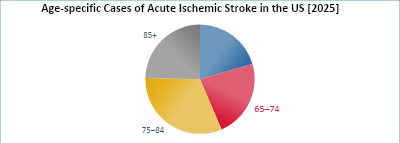
- In Japan, the burden of acute ischemic stroke was highest among older adults, with approximately 80,000 cases occurring in individuals aged 75–84 years, followed by 60,000 cases in those aged 85 years and older.
- Across the EU4 and the UK, there were approximately 667,000 incident cases of acute ischemic stroke in 2025.
- Within the EU4 and the UK, Germany recorded the highest number of cases, contributing around 40% of the total burden, followed by the United Kingdom.
- By etiological subtype in the United States, undetermined causes represented the largest share of cases (~37%), followed by cardioembolism (~27%), small artery occlusions (~23%), and large artery atherosclerosis (~13%).
Acute Ischemic Stroke Drug Chapters & Competitive Analysis
The Acute Ischemic Stroke drug chapter provides a detailed, market-focused review of approved therapies and the emerging pipeline across Phase I–III clinical trials. It covers the mechanism of action, clinical trial data, regulatory approvals, patents, collaborations, and strategic partnerships for each therapy, along with their advantages, limitations, and recent developments. This section offers critical insights into the acute ischemic stroke treatment landscape, supporting market assessment, competitive analysis, and growth forecasting for the acute ischemic stroke therapeutics market.
Approved Therapies for Acute Ischemic Stroke
ACTIVASE (alteplase): Genentech
ACTIVASE, a tissue‑type plasminogen activator (tPA), is indicated for the treatment of acute ischemic stroke. It was the sole FDA-approved thrombolytic for acute ischemic stroke when it received approval in 1996.
TNKase (tenecteplase): Genentech
TNKase is a tissue plasminogen activator, a clot-dissolving, thrombolytic medicine. TNKase is administered as a single five-second intravenous bolus and starts a biochemical reaction that can break down fibrin, a component of blood clots.
In March 2025, Genentech announced that the US FDA had approved TNKase for the treatment of acute ischemic stroke in adults. This approval of TNKase marks Genentech’s second approval for stroke, reinforcing the company's long-standing dedication to advancing stroke care as the developer of the only two FDA-approved medicines for acute ischemic stroke, TNKase and ACTIVASE.
Acute Ischemic Stroke Marketed/Approved Therapies | |||||
|
Drug/Therapy |
Company |
Indication |
RoA |
MoA |
Marketed Region |
|
ACTIVASE (alteplase) |
Genentech |
Acute ischemic stroke in adults |
IV |
Plasminogen activator |
US: 1996 |
|
TNKase (tenecteplase) |
Genentech |
Acute ischemic stroke in adults |
IV |
Plasminogen activator |
US: 2025 |
Note: Detailed marketed therapies assessment of therapies will be provided in the final report.
Acute Ischemic Stroke Pipeline Analysis
Sovateltide (PMZ-1620): Pharmazz
Sovateltide, an endothelin-B receptor agonist, has been previously shown to increase cerebral blood flow, have anti-apoptotic activity, and produce neurovascular remodeling when administered intravenously following acute cerebral ischemic stroke. Promising results of the Phase II study have led to an efficacy study in a larger cohort of ischemic stroke patients, and sovateltide is currently being tested in a multicentric, randomized, blinded, controlled efficacy clinical trial, Phase III.
- In February 2026, Pharmazz announced the presentation of positive interim results from its ongoing Phase IV clinical study of sovateltide (TYCAMZZI) in patients with acute cerebral ischemic stroke at the International Stroke Conference (ISC) 2026 in New Orleans.
- In July 2025, Pharmazz announced that the first patient had been enrolled and treated in the pivotal Phase III RESPECT-ETB clinical trial assessing the safety and efficacy of sovateltide for the treatment of acute cerebral ischemic stroke.
DM199 (rinvecalinase alfa): DiaMedica Therapeutics
DM199 is a recombinant form of human tissue kallikrein-1 (rhKLK1) in clinical development for acute ischemic stroke. DiaMedica reiterates its guidance for the interim analysis on the first 200 patients to be completed in the first half of 2026.
- In March 2026, DiaMedica announced the completion of the interim analysis in the second half of 2026.
- In May 2025, DiaMedica Therapeutics announced a poster presentation of the safety and clinical outcomes for the ReMEDy2 study, the planned pivotal Phase II/III trial of DM199 in acute ischemic stroke patients, at the 11th European Stroke Organisation Conference (ESOC) 2025.
Comparison of Emerging Drugs Under Development | |||||
|
Drug Name |
Company |
Indication |
Highest Phase |
MoA |
Anticipated Launch in the US |
|
Sovateltide (PMZ-1620) |
Pharmazz |
Acute cerebral ischemic stroke |
III |
Endothelin-B receptor agonist |
Information is available in the full report |
|
DM199 (rinvecalinase alfa) |
DiaMedica Therapeutics |
Acute ischemic stroke |
II/III |
Tissue kallikrein replacements |
Information is available in the full report |
|
BB-031 |
Basking Biosciences |
Acute ischemic stroke |
II |
Von Willebrand factor inhibitors |
Information is available in the full report |
|
Note: Launch insights are provisional and may change with future report updates or the occurrence of major key catalysts. | |||||
Note: A detailed emerging therapies assessment will be provided in the final report
Acute Ischemic Stroke Key Players, Market Leaders, and Emerging Companies
- Pharmazz
- DiaMedica Therapeutics
- Basking Biosciences
- NC Medical Research
- Genentech
- and others
Acute Ischemic Stroke Drug Updates
- In March 2026, DiaMedica announced the completion of the interim analysis in the second half of 2026.
- In February 2026, Pharmazz announced the presentation of positive interim results from its ongoing Phase IV clinical study of sovateltide (TYCAMZZI) in patients with acute cerebral ischemic stroke at the International Stroke Conference (ISC) 2026 in New Orleans.
- In March 2025, Genentech announced that the US FDA had approved TNKase for the treatment of acute ischemic stroke in adults. This approval of TNKase marks Genentech’s second approval for stroke, reinforcing the company's long-standing dedication to advancing stroke care as the developer of the only two FDA-approved medicines for acute ischemic stroke, TNKase and ACTIVASE.
Acute Ischemic Stroke Market Outlook
The treatment landscape for ischemic stroke has remained relatively limited, with only a few FDA-approved pharmacologic options available. ACTIVASE has long been the standard of care, being the first FDA-approved therapy for ischemic stroke in 1996. TNKase only received FDA approval for ischemic stroke treatment in 2025, marking the first new approval in this space in nearly three decades. Despite their clinical value, both agents come with limitations, including a narrow therapeutic window and safety concerns, especially in high-risk patients.
While the standard of care has seen minimal evolution, there is renewed interest in expanding therapeutic options through innovative drug development. Several emerging candidates are in the pipeline, such as Sovateltide (PMZ-1620), DM199 (rinvecalinase alfa), BB-031, and NSC-01, which are exploring new mechanisms to improve both acute outcomes and long-term recovery. These agents represent a shift toward more comprehensive stroke management, emphasizing neuroprotection, vascular repair, and regenerative approaches. The long-standing stagnation in ischemic stroke drug development underscores the need for more effective, accessible, and safer treatments. As stroke continues to be a leading cause of death and long-term disability globally, the development of novel therapies remains a critical priority.
Further details will be provided in the report….
Drug Class/Insights into Leading Emerging and Marketed Therapies in Acute Ischemic Stroke (2026–2036 Forecast)
In the marketed class of drugs, the cornerstone of therapy includes Plasminogen activators such as ACTIVASE and TNKase, while the emerging class includes endothelin-B receptor agonist (Sovateltide), kallikrein replacements (DM199), Von Willebrand factor inhibitors (BB-031), and cell replacements (NSC-01), among others.
Plasminogen activators
Plasminogen activators involve the conversion of plasminogen, an inactive precursor present in the bloodstream, into plasmin, an active enzyme responsible for breaking down fibrin, the key structural component of blood clots. In the setting of ischemic stroke, where a thrombus obstructs cerebral blood flow, this fibrinolytic action helps dissolve the clot and restore perfusion to oxygen-deprived brain tissue. ACTIVASE, approved in 1996, is a genetically modified variant of ACTIVASE that offers improved fibrin specificity and a longer half-life, allowing for more convenient single-dose administration.
Further details will be provided in the report….
Acute Ischemic Stroke Drug Uptake
This section focuses on the uptake rate of potential drugs expected to be launched in the market during the forecast period (2026–2036). The analysis covers the acute ischemic stroke market's uptake by drugs, patient uptake by therapy, and sales of each drug.
Further detailed analysis of emerging therapies' drug uptake in the report…
Market Access and Reimbursement of Acute Ischemic Stroke
-
US
Reimbursement is a crucial factor that affects the drug’s access to the market. Often, the decision to reimburse comes down to the price of the drug relative to the benefit it produces in treated patients. To reduce the healthcare burden of these high-cost therapies, many payment models are being considered by payers and other industry insiders.
Further details are provided in the final report….
Acute Ischemic Stroke Therapies Price Scenario & Trends
Pricing and analogue assessment of acute ischemic stroke therapies highlights evolving price dynamics structures. This section summarizes the cost of approved treatments, the closest and most appropriate analogue selection for emerging therapies, and understanding of how pricing influences market access, adherence, and long-term uptake.
Further details are provided in the final report….
Industry Experts and Physician Views for Acute Ischemic Stroke
To keep up with acute ischemic stroke market trends, we take Key Opinion Leaders (KOLs) and Subject Matter Experts (SMEs) opinions working in the domain through primary research to fill the data gaps and validate our secondary research. Industry experts were contacted for insights on the acute ischemic stroke emerging therapies, evolving treatment landscape, patient adherence to conventional therapies, therapy switching trends, drug adoption and uptake, accessibility challenges, and epidemiology and real-world prescription patterns in acute ischemic stroke, including MD, PhD, Instructor, Postdoctoral Researcher, Professor, Researcher, and others.
DelveInsight’s analysts connected with 10+ KOLs to gather insights; however, interviews were conducted with 6+ KOLs in the 7MM. Centers such as the University of North Carolina at Chapel Hill, the Berlin Institute of Health at Charité, and the University of Nottingham, etc. were contacted. Their opinion helps understand and validate current and emerging acute ischemic stroke therapies, highlight unmet medical needs, provide epidemiological context, and support strategic decisions for market access, therapy adoption, and pipeline prioritization in acute ischemic stroke.
|
Region |
Key Opinion Leaders (KOLs) and Subject Matter Experts (SMEs) |
|
United States |
“As the most common type of stroke, ischemic strokes pose a significant burden on public health systems and individuals alike. With its pervasive impact across diverse patient populations, strokes constitute a significant source of morbidity and mortality worldwide.” |
|
Germany |
“Early intervention and rehabilitation significantly influence prognosis, highlighting the importance of prompt medical attention and personalized care. While some individuals may achieve full recovery, others might experience long-term disabilities or complications. The prognosis in stroke emphasizes the need for multidisciplinary approaches, ongoing monitoring, and support to optimize outcomes and enhance the quality of life for affected individuals and their families.” |
Qualitative Analysis: SWOT and Conjoint Analysis
We perform qualitative and market Intelligence analysis using various approaches, such as SWOT analysis and conjoint analysis.
In the SWOT analysis of acute ischemic stroke, strengths, weaknesses, opportunities, and threats in terms of disease diagnosis, patient awareness, patient burden, competitive landscape, cost-effectiveness, and geographical accessibility of therapies are provided.
Conjoint analysis analyzes emerging therapies based on relevant attributes such as safety, efficacy, frequency of administration, route of administration, and order of entry. Scoring is given based on these parameters to analyze the effectiveness of therapy.
The team of analysts analyzes promising emerging therapies based on relevant attributes such as safety, efficacy, frequency of administration, route of administration, and order of entry. In efficacy, the trial’s primary and secondary outcome measures are evaluated, whereas the therapies’ safety is evaluated, wherein the acceptability, tolerability, and adverse events are mainly observed. In addition, the scoring is also based on the route of administration, order of entry, probability of success, and the addressable patient pool for each therapy. According to these parameters, the final weightage score and the ranking of the emerging therapies are decided.
Scope of the Report
- The report covers a segment of key events, an executive summary, a descriptive overview of acute ischemic stroke, explaining its causes, signs and symptoms, pathogenesis, and currently available treatments.
- Comprehensive insight has been provided into the epidemiology segments and forecasts, the future growth potential of the diagnosis rate, and disease progression along treatment guidelines.
- Additionally, an all-inclusive account of both the current and emerging treatments, along with the elaborative profiles of late-stage and prominent therapies, will have an impact on the current treatment landscape.
- A detailed review of the acute ischemic stroke market, historical and forecasted market size, market share by therapies, detailed assumptions, and rationale behind our approach is included in the report, covering the 7MM drug outreach.
- The report provides an edge while developing business strategies by understanding trends through SWOT analysis and expert insights/KOL views, patient journey, and treatment preferences that help in shaping and driving the 7MM acute ischemic stroke market.
Report Insights
- Acute Ischemic Stroke Patient Population Forecast
- Acute Ischemic Stroke Therapeutics Market Size
- Acute Ischemic Stroke Pipeline Analysis
- Acute Ischemic Stroke Market Size and Trends
- Acute Ischemic Stroke Market Opportunity (Current and forecasted)
Report Key Strengths
- Epidemiology‑based (Epi‑based) Bottom‑up Forecasting
- Artificial Intelligence (AI)-enabled Market Research Report
- 11-year forecast
- Acute Ischemic Stroke Market Outlook (North America, Europe, Asia-Pacific)
- Patient Burden Trends (by geography)
- Acute Ischemic Stroke Treatment Addressable Market (TAM)
- Acute Ischemic Stroke Competitive Landscape
- Acute Ischemic Stroke Major Companies Insights
- Acute Ischemic Stroke Price Trends and Analogue Assessment
- Acute Ischemic Stroke Therapies Drug Adoption/Uptake
- Acute Ischemic Stroke Therapies Peak Patient Share Analysis
Report Assessment
- Acute Ischemic Stroke Current Treatment Practices
- Acute Ischemic Stroke Unmet Needs
- Acute Ischemic Stroke Clinical Development Analysis
- Acute Ischemic Stroke Emerging Drugs Product Profiles
- Acute Ischemic Stroke Market Attractiveness
- Acute Ischemic Stroke Qualitative Analysis (SWOT and Conjoint Analysis)
FAQs
Market Insights
- What was the acute ischemic stroke market size, the market size by therapies, market share (%) distribution in 2025, and what would it look like by 2036? What are the contributing factors for this growth?
- What are the anticipated pricing variations among different geographies for the emerging therapies in the future?
- What can be the future treatment paradigm of acute ischemic stroke?
- What are the disease risks, burdens, and unmet needs of acute ischemic stroke? What will be the growth opportunities across the 7MM concerning the patient population with acute ischemic stroke?
- Who is the major future competitor in the market, and how will the competitors affect their market share?
- What are the current options for the treatment of acute ischemic stroke? What are the current guidelines for treating acute ischemic stroke in the US, Europe, and Japan?
Reasons to Buy
- The report will help in developing business strategies by understanding the latest trends and changing treatment dynamics driving the acute ischemic stroke market.
- Bottom-up forecasting builds from the affected population to product forecasts, delivering a robust, data-driven approach ideal for new therapies and novel classes.
- Insights on patient burden/disease incidence, evolution in diagnosis, and factors contributing to the change in the epidemiology of the disease during the forecast years.
- Understand the existing market opportunities in varying geographies and the growth potential over the coming years.
- Identifying strong upcoming players in the market will help devise strategies to help get ahead of competitors.
- Detailed analysis and ranking of class-wise potential current and emerging therapies under the conjoint analysis section to provide visibility around leading classes.
- To understand KOLs’ perspectives on the accessibility, acceptability, and compliance-related challenges of existing treatment to overcome barriers in the future.
- Detailed insights into the unmet needs of the existing market so that the upcoming players can strengthen their development and launch strategy.
- This Artificial Intelligence (AI)-enabled report summarize and simplify complex datasets within the report into clear, actionable insights for stakeholders, investors, and healthcare providers, enabling faster, data-driven decisions.
Related Insights: