
Alcoholic Hepatitis Market Summary
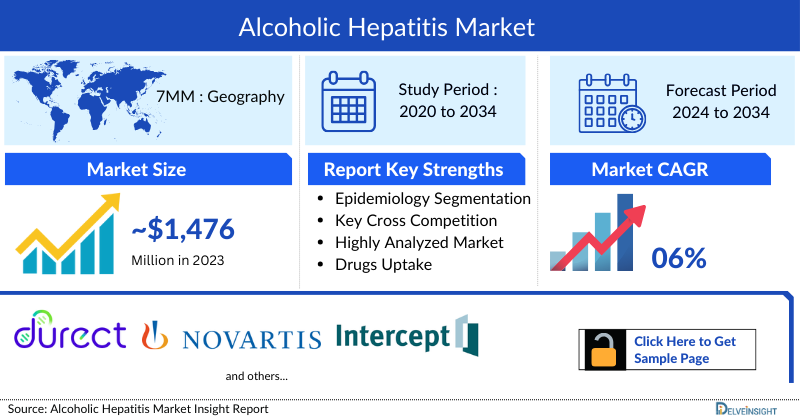
- The Alcoholic Hepatitis Market is projected to grow at a significant CAGR by 2034 in leading countries (the US, EU4, UK, and Japan).
- The leading Alcoholic Hepatitis Companies such as DURECT Corporation, Novartis, and others.
Alcoholic Hepatitis Market and Epidemiology Analysis
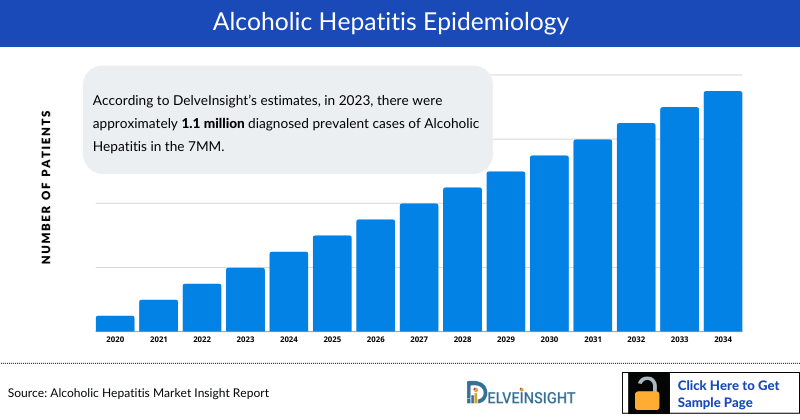
- According to DelveInsight’s estimates, in 2023, there were approximately 1.1 million diagnosed prevalent cases of Alcoholic Hepatitis in the 7MM. Of these, the United States accounted for 23% of the cases, while EU4 and the UK represented 63% and Japan accounted for 14% of the cases, respectively.
- The Alcoholic Hepatitis market is set for steady growth, with a compound annual growth rate (CAGR) of 6% from 2024 to 2034. This expansion in the 7MM is driven by the introduction of innovative therapies such as Larsucosterol, and INT-787, along with a rising incidence of the disease due to genetic influences and lifestyle factors, including alcohol consumption.
- A significant unmet need exists for effective pharmacological therapies in alcoholic hepatitis, as there are currently no FDA-approved treatments. This gap underscores the urgent requirement for innovative drug development to improve clinical outcomes and reduce mortality in affected patients.
- A significant market barrier in alcoholic hepatitis is the lack of robust diagnostic tools to accurately identify and stratify disease severity. This limitation hampers early intervention efforts, reduces patient enrollment in clinical trials, and impedes the development of targeted therapies, ultimately affecting treatment outcomes and market growth potential.
Factors Impacting the Alcoholic Hepatitis Market Growth
-
Rising Prevalence of Alcohol Consumption Disorders
The increasing rates of excessive alcohol consumption across the globe significantly drive the alcoholic hepatitis market. Lifestyle changes, stress, and growing alcohol dependency are leading to higher incidences of liver-related disorders, creating a sustained demand for advanced treatment options and therapeutic solutions in this domain.
-
Growing Awareness and Diagnosis Rates
Improved healthcare infrastructure, public awareness campaigns, and early diagnostic tools are facilitating timely identification of alcoholic hepatitis cases. This heightened awareness not only ensures earlier intervention but also accelerates the adoption of advanced therapies, thereby fueling market growth in both developed and emerging economies.
-
Advancements in Treatment Options and Pipeline Therapies
The continuous research and development activities in hepatology have led to innovative therapies being tested and introduced. With several pharmaceutical companies focusing on targeted and novel drug development for alcoholic hepatitis, the pipeline remains strong, and the availability of effective therapies will boost market expansion.
DelveInsight’s “Alcoholic Hepatitis Treatment Market Insights, Epidemiology, and Market Forecast – 2034” report delivers an in-depth understanding of alcoholic hepatitis, historical and forecasted epidemiology, as well as the alcoholic hepatitis market trends in the United States, EU4 (Germany, France, Italy, and Spain) and the United Kingdom, and Japan.
The Alcoholic Hepatitis Treatment Market Report provides current treatment practices, emerging drugs, market share of individual therapies, and current and forecasted 7MM alcoholic hepatitis market size from 2020 to 2034. The report also covers alcoholic hepatitis treatment practices/algorithms and unmet medical needs to curate the best opportunities and assess the market’s potential.
Scope of the Alcoholic Hepatitis Market Report | |
|
Study Period |
2020–2034 |
|
Forecast Period |
2024–2034 |
|
Geographies Covered |
US, EU4 (Germany, France, Italy, and Spain) and the UK, and Japan |
|
Alcoholic Hepatitis Epidemiology |
|
|
Alcoholic Hepatitis Market |
|
|
Market Analysis |
|
|
Alcoholic Hepatitis Companies |
|
|
Future opportunity |
A significant future opportunity in alcoholic hepatitis lies in the development of novel therapeutic agents targeting specific pathways involved in liver inflammation and fibrosis. Advancements in personalized medicine, including biomarker identification and genetic profiling, can enhance treatment efficacy and patient outcomes. Additionally, increased awareness and education about alcohol-related liver disease may drive demand for effective interventions, presenting a promising landscape for pharmaceutical innovation and market expansion. |
Alcoholic Hepatitis Disease Understanding
Alcoholic Hepatitis overview
Alcoholic hepatitis is characterized by inflammation of the liver resulting from excessive alcohol intake, typically marked by a history of heavy drinking, approximately 8–10 drinks per day over several decades. Patients often present with clinical features such as fever, anorexia, weight loss, fatigue, generalized weakness, nausea, vomiting, and progressive jaundice. Key risk factors include prolonged alcohol abuse, male gender, older age, and the presence of coexisting liver diseases. The etiology involves the toxic effects of alcohol on liver cells, leading to oxidative stress, inflammatory responses, and subsequent liver damage. This complex interplay of factors contributes to the pathophysiology of alcoholic hepatitis, underscoring the need for effective prevention and management strategies.
Alcoholic Hepatitis diagnosis
The diagnosis of alcoholic hepatitis involves a comprehensive evaluation of clinical history, physical examination, and targeted laboratory tests. Clinicians must ascertain the patient's alcohol consumption history, noting the volume, type, and recent increases in intake, often linked to significant life stressors. Physical findings may include hepatomegaly, jaundice, and ascites. Laboratory tests typically reveal an elevated aspartate aminotransferase (AST) to alanine aminotransferase (ALT) ratio greater than 1.5, alongside elevated serum bilirubin levels exceeding 2 mg/dL. Additional markers, such as gamma-glutamyltransferase (GGT) and mean corpuscular volume (MCV), may support the diagnosis. A pronounced leukocytosis and low total cholesterol levels (<100 mg/dL) can indicate a poor prognosis. In uncertain cases, imaging modalities like a technetium sulfur colloid liver-spleen scan may be employed to confirm AH noninvasively, while liver biopsy is rarely indicated unless to clarify discrepancies in alcohol consumption history. Further details related to country-based variations are provided in the report…
Alcoholic Hepatitis Treatment
The treatment landscape for alcoholic hepatitis (AH) primarily involves strategies such as complete alcohol abstinence, nutritional support, and pharmacological interventions, including corticosteroids and pentoxifylline, along with liver transplantation for eligible patients. Corticosteroids are regarded as the standard of care for patients with severe AH who do not exhibit signs of concomitant sepsis; however, only approximately 40% of Alcoholic Hepatitis Patients qualify for this therapy. The absence of effective pharmaceutical options for the remaining patient population highlights a critical gap in the treatment paradigm. Significant advancements in therapeutic development targeting this unmet need are anticipated to profoundly transform the market landscape during the forecast period, emphasizing the necessity for innovative solutions.
Alcoholic Hepatitis Epidemiology
As the market is derived using a patient-based model, the Alcoholic Hepatitis epidemiology chapter in the report provides historical as well as forecasted epidemiology segmented by total prevalent cases of alcoholic hepatitis, total diagnosed prevalent cases of alcoholic hepatitis, gender-specific diagnosed prevalent cases of alcoholic hepatitis, and severity-specific diagnosed prevalent cases of alcoholic hepatitis in the 7MM covering the United States, EU4 countries (Germany, France, Italy, and Spain) and the United Kingdom, and Japan from 2020 to 2034.
Key Findings from the Alcoholic Hepatitis Epidemiological Analysis and Forecast
- According to DelveInsight’s epidemiology model, in the US, the total diagnosed prevalent cases of alcoholic hepatitis were approximately 250 thousand in 2023. This number is anticipated to rise during the forecast period (2024-2034), driven by increased awareness and screening, along with advancements in genetic testing.
- Among the EU4 and the UK, Germany accounted for the highest number of diagnosed prevalent cases of alcoholic hepatitis, with approximately 174 thousand cases in 2023, and Spain accounted for the lowest cases with approximately 109 thousand.
- Among the gender-specific diagnosed prevalent cases of alcoholic hepatitis in the US in 2023, there were approximately 188 thousand cases for males and around 63 thousand cases for females.
- Based on severity-specific criteria, alcoholic hepatitis was categorized into mild and moderate to severe. In 2023, moderate to severe cases were higher with around 94 thousand cases as compared to 63 thousand cases of mild in Japan.
Alcoholic Hepatitis Epidemiology Segmentation
- Total Alcoholic Hepatitis Prevalent Cases
- Total Alcoholic Hepatitis Diagnosed Prevalent Cases
- Alcoholic Hepatitis Gender-specific Diagnosed Prevalent Cases
- Alcoholic Hepatitis Severity-specific Diagnosed Prevalent Cases
Alcoholic Hepatitis Drug Analysis
Alcoholic Hepatitis Emerging Drugs
-
Larsucosterol: Durect Corporation
Larsucosterol, an endogenous sulfated oxysterol and epigenetic modulator, regulates gene expression by inhibiting DNA methyltransferases (DNMT1, DNMT3a, DNMT3b), addressing epigenetic dysregulation seen in acute conditions like alcoholic hepatitis (AH) and chronic diseases like MASH. In April 2024, DURECT Corporation announced topline results from the Phase IIb AHFIRM trial, demonstrating a compelling efficacy signal with a clinically relevant 90-day mortality reduction of 41% for the 30 mg dose and 35% for the 90 mg dose compared to standard of care. The FDA granted Breakthrough Therapy Designation to larsucosterol for severe AH in May 2024. DURECT plans to present these results at the EASL Congress 2024 and hold an End of Phase 2 (EOP2) meeting with the FDA to discuss the Phase III registration trial design in the first quarter of 2024.
-
INT-787: Intercept Pharmaceuticals
INT-787, developed by Intercept Pharmaceuticals, is a selective FXR agonist under investigation for severe alcohol-associated hepatitis (sAH). By activating FXR, INT-787 modulates bile acid metabolism and reduces liver inflammation. Alcohol-related liver disease, which is now the leading cause for liver transplant listings in the US, has seen a rise in sAH cases requiring transplantation. In May 2024, Intercept announced that nine abstracts related to primary biliary cholangitis (PBC) and alcohol-related liver disease would be presented at the EASL Congress in Milan (June 5–8). Results showed INT-787 was well tolerated in healthy subjects, with most treatment-emergent adverse events being mild and no treatment-limiting or serious adverse events reported.
|
Drug |
MoA |
RoA |
Company |
Phase |
|
Tadekinig Alfa |
Interleukin 1 beta inhibitors |
IV |
Durect Corporation |
III |
|
INT-787 |
FXR agonist |
IV |
Intercept Pharmaceuticals |
IIa |
|
XX |
XX |
XX |
XXX |
II |
Alcoholic Hepatitis Drugs Market Insights
The treatment of alcoholic hepatitis involves several drug classes aimed at reducing inflammation and liver damage. Corticosteroids, such as prednisolone, are the standard of care for severe AH, reducing inflammation but with limited eligibility due to infection risks. Antioxidants like N-acetylcysteine are used to combat oxidative stress in the liver. Pentoxifylline, a phosphodiesterase inhibitor, helps reduce inflammation and fibrosis, though its efficacy is debated. TNF-alpha inhibitors, such as infliximab, target inflammation pathways but are not widely recommended due to safety concerns. Emerging therapies include epigenetic modulators like Larsucosterol and FXR agonists such as INT-787, which aim to address underlying liver dysfunction and inflammation.
Alcoholic Hepatitis Market Outlook
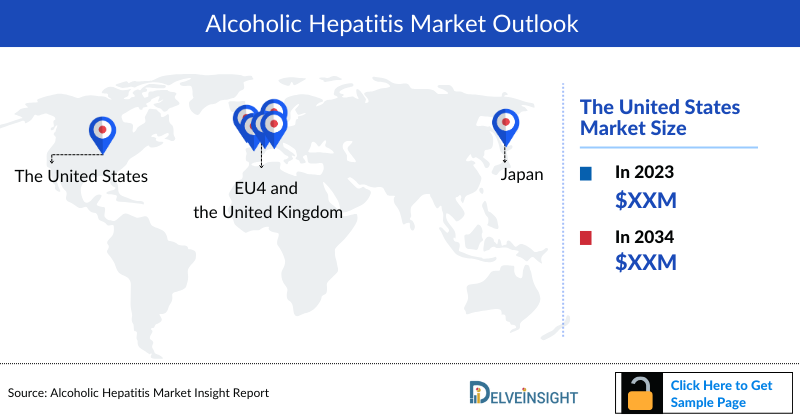
The alcoholic hepatitis treatment landscape primarily involves abstinence, nutritional support, corticosteroids, pentoxifylline, and liver transplantation. Despite corticosteroids being the standard of care for severe AH patients without sepsis, only about 40% of patients are eligible for this therapy, leaving significant unmet needs. Emerging therapies like Larsucosterol and INT-787 are poised to address these gaps. Larsucosterol, an endogenous sulfated oxysterol and epigenetic modulator, inhibits DNA methyltransferases, regulating gene expression and addressing epigenetic dysregulation in AH and MASH. INT-787, a selective FXR agonist, modulates bile acid metabolism and reduces liver inflammation in severe alcohol-associated hepatitis (sAH).
Alcoholic Hepatitis Drugs Uptake
This section focuses on the uptake rate of potential Alcoholic Hepatitis drugs expected to be launched in the market during 2020–2034. For example, Larsucosterol is expected to enter the US market in 202X and is projected to have a medium uptake during the forecast period.
Alcoholic Hepatitis Pipeline Development Activities
The Alcoholic Hepatitis Therapeutics Market report provides insights into different therapeutic candidates in Phase III, Phase II, and Phase I. It also analyzes key players involved in developing targeted therapeutics.
Latest KOL Views on Alcoholic Hepatitis
To keep up with current market trends, we take KOLs and SMEs’ opinions working in the domain through primary research to fill the data gaps and validate our secondary research. Industry Experts contacted for insights on Alcoholic Hepatitis evolving treatment landscape, patient reliance on conventional therapies, patient therapy switching acceptability, and drug uptake, along with challenges related to accessibility, including Medical/scientific writers, Medical Professionals, Professors, Directors, and Others.
DelveInsight’s analysts connected with 50+ KOLs to gather insights; however, interviews were conducted with 15+ KOLs in the 7MM. Centers like the Department of Internal Medicine, Division of Gastroenterology, Virginia Commonwealth University School of Medicine; Department of Internal Medicine, University of Texas Medical Branch, Galveston, United States, among others, were contacted. Their opinion helps understand and validate current and emerging therapy treatment patterns or Alcoholic Hepatitis market trends. This will support the clients in potential upcoming novel treatments by identifying the overall scenario of the market and the unmet needs.
Physician’s View
As per the KOLs from the US, Although there is not one specific sign or symptom related to alcoholic hepatitis (AH), a constellation of symptoms and signs can help make the diagnosis of AH with reasonable accuracy. Documentation of chronic and active alcohol abuse is paramount in making a diagnosis of AH. Clinical presentation after abstinence for more than 3 m should raise doubts about the diagnosis of AH and dictate the need for considering other causes of liver disease, decompensation of alcoholic cirrhosis, sepsis, and malignancy as the cause of the patient’s clinical profile.
Alcoholic Hepatitis Qualitative Analysis
We perform Qualitative and market Intelligence analysis using various approaches, such as SWOT and Conjoint Analysis. In the SWOT analysis, strengths, weaknesses, opportunities, and threats in terms of disease diagnosis, patient awareness, patient burden, competitive landscape, cost-effectiveness, and geographical accessibility of therapies are provided. These pointers are based on the Analyst’s discretion and assessment of the patient burden, cost analysis, and existing and evolving treatment landscape.
Conjoint Analysis analyzes multiple emerging therapies based on relevant attributes such as safety, efficacy, frequency of administration, route of administration, and order of entry. Scoring is given based on these parameters to analyze the effectiveness of therapy. To analyze the effectiveness of these therapies, have calculated their attributed analysis by giving them scores based on their ability to improve atrial and ventricular dimension/function and ability to regulate heart rate.
Further, the therapies’ safety is evaluated wherein the adverse events are majorly observed, and it sets a clear understanding of the side effects posed by the drug in the trials, which directly affects the safety of the molecule in the upcoming trials. It sets a clear understanding of the side effects posed by the drug in the trials. In addition, the scoring is also based on the route of administration, order of entry and designation, probability of success, and the addressable patient pool for each therapy. According to these parameters, the final weightage score and the ranking of the emerging therapies are decided.
Alcoholic Hepatitis Market Access and Reimbursement
The high cost of therapies for the treatment is a major factor restraining the growth of the global drug market. Because of the high cost, the economic burden is increasing, leading the patient to escape from proper treatment. The report provides detailed insights on the country-wise accessibility and reimbursement scenarios, cost-effectiveness scenarios, programs making accessibility easier and out-of-pocket costs more affordable, insights on patients insured under federal or state government prescription drug programs, etc.
Scope of the Alcoholic Hepatitis Market Report
- The report covers a segment of key events, an executive summary, and a descriptive overview of alcoholic hepatitis explaining its causes, signs and symptoms, pathogenesis, and currently available therapies.
- Comprehensive insight into the epidemiology segments and forecasts, the future growth potential of diagnosis rate, disease progression, and treatment guidelines have been provided.
- Additionally, an all-inclusive account of the current and emerging therapies and the elaborative profiles of late-stage and prominent therapies will impact the current treatment landscape.
- A detailed review of the alcoholic hepatitis market, historical and forecasted market size, market share by therapies, detailed assumptions, and rationale behind our approach is included in the report, covering the 7MM drug outreach.
- The report provides an edge while developing business strategies by understanding trends through SWOT analysis and expert insights/KOL views, patient journey, and treatment preferences that help shape and drive the 7MM alcoholic hepatitis market.
Alcoholic Hepatitis Market Report Insights
- Patient-based Alcoholic Hepatitis Market Forecasting
- Therapeutic Approaches
- Alcoholic Hepatitis Pipeline Drugs Analysis
- Alcoholic Hepatitis Market Size and Trends
- Existing and Future Market Opportunity
Alcoholic Hepatitis Market Report Key Strengths
- 11 years Alcoholic Hepatitis Market Forecast
- The 7MM Coverage
- Alcoholic Hepatitis Epidemiology Segmentation
- Key Cross Competition
- Conjoint analysis
- Drugs Uptake and Key Alcoholic Hepatitis Market Forecast Assumptions
Alcoholic Hepatitis Market Report Assessment
- Current Alcoholic Hepatitis Treatment Practices
- Alcoholic Hepatitis Unmet Needs
- Alcoholic Hepatitis Pipeline Drugs Profiles
- Alcoholic Hepatitis Market Attractiveness
- Alcoholic Hepatitis Qualitative Analysis (SWOT and Conjoint Analysis)
Key Questions Answered in the Alcoholic Hepatitis Market Report
Alcoholic Hepatitis Market Insights
- What was the total market size of alcoholic hepatitis, the market size of alcoholic hepatitis by therapies, and market share (%) distribution in 2020, and what would it look like by 2034? What are the contributing factors for this growth?
- How will Larsucosterol affect the treatment paradigm of alcoholic hepatitis?
- Which drug is going to be the largest contributor by 2034?
- How would future opportunities affect the market dynamics and subsequent analysis of the associated trends?
Alcoholic Hepatitis Epidemiology Insights
- What are the disease risks, burdens, and unmet needs of alcoholic hepatitis? What will be the growth opportunities across the 7MM with respect to the patient population pertaining to alcoholic hepatitis?
- What is the historical and forecasted alcoholic hepatitis patient pool in the United States, EU4 (Germany, France, Italy, and Spain) and the United Kingdom, and Japan?
- Out of the countries mentioned above, which country would have the highest diagnosed prevalent alcoholic hepatitis population during the forecast period (2024–2034)?
- What factors are contributing to the growth of alcoholic hepatitis cases?
Current Treatment Scenario, Marketed Drugs, and Emerging Therapies
- What are the current options for the treatment of alcoholic hepatitis? What are the current clinical and treatment guidelines for treating alcoholic hepatitis?
- How many companies are developing therapies for the treatment of alcoholic hepatitis?
- How many emerging therapies are in the mid-stage and late stage of development for treating alcoholic hepatitis?
- What are the recent novel therapies, targets, mechanisms of action, and technologies developed to overcome the limitations of existing therapies?
- What is the cost burden of current treatment on the patient?
- Patient acceptability in terms of preferred treatment options as per real-world scenarios?
- What are the accessibility issues of approved therapy in the US?
- What is the 7MM historical and forecasted Alcoholic Hepatitis Market?
Reasons to Buy the Alcoholic Hepatitis Market
- The Alcoholic Hepatitis Therapeutics Market Report will help develop business strategies by understanding the latest trends and changing treatment dynamics driving the alcoholic hepatitis drugs market.
- Insights on patient burden/disease Alcoholic Hepatitis prevalence, evolution in diagnosis, and factors contributing to the change in the epidemiology of the disease during the forecast years.
- Understand the existing Alcoholic Hepatitis drugs market opportunities in varying geographies and the growth potential over the coming years.
- The distribution of historical and current patient share is based on real-world prescription data in the US, EU4 (Germany, France, Italy, and Spain) and the United Kingdom, and Japan.
- Identifying upcoming solid players in the Alcoholic Hepatitis drugs market will help devise strategies to help get ahead of competitors.
- Detailed analysis and ranking of class-wise potential current and emerging therapies under the conjoint analysis section to provide visibility around leading classes.
- Highlights of access and reimbursement policies for alcoholic hepatitis, barriers to accessibility of approved therapy, and patient assistance programs.
- To understand Key Opinion Leaders’ perspectives around the accessibility, acceptability, and compliance-related challenges of existing treatment to overcome barriers in the future.
- Detailed insights on the unmet needs of the existing Alcoholic Hepatitis drugs market so that the upcoming players can strengthen their development and launch strategy.
Stay updated with us for Recent Articles @ New DelveInsight Blogs