MASH Market Summary
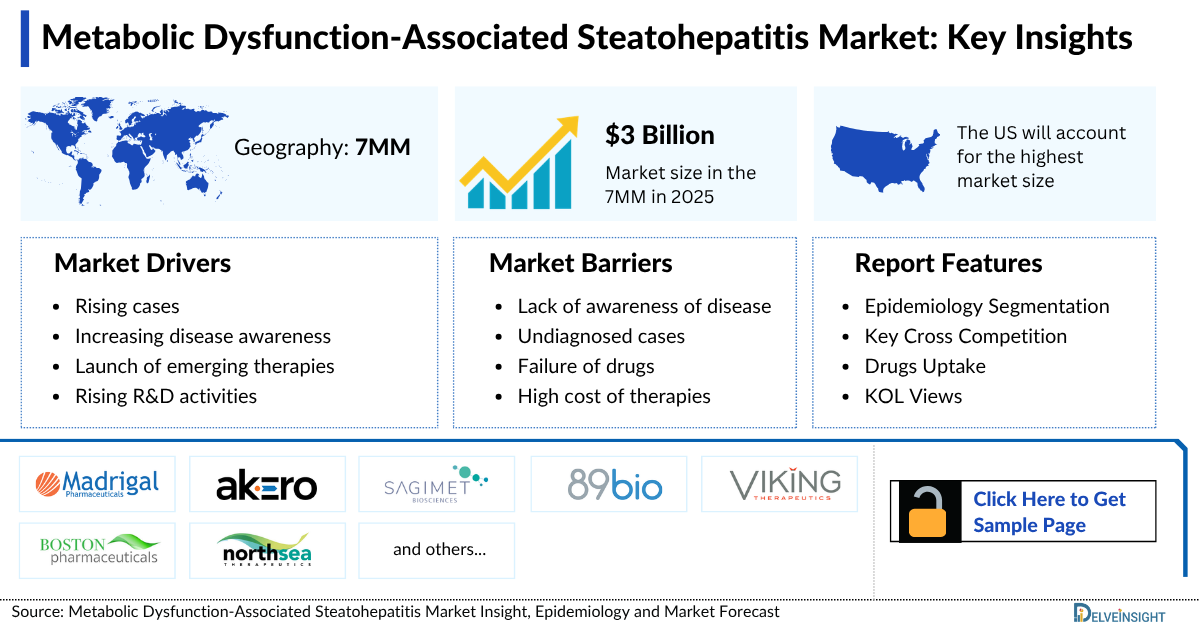
- The MASH Market Size in 2025 in the 7MM was ~USD 3 billion. It is expected to grow at a significant CAGR, reaching a notable value by the end of 2036.
- The leading MASH Companies include Madrigal Pharmaceuticals, Akero Therapeutics, Sagimet Pharmaceuticals, 89Bio, Viking Therapeutics, Boston Pharmaceuticals, NorthSea Therapeutics, and others.
MASH Market and Epidemiology Forecast
- In 2025, the US accounted for over USD 2 billion of the 7MM MASH Market. According to DelveInsight's analysis, the MASH Market Growth is anticipated with the introduction of emerging therapies, leading to an expansion in MASH Market Size throughout the forecast period (2026–2036). This anticipated growth is driven by advancements in treatment options, greater healthcare access, and a rising prevalence of the condition, which together foster higher demand for innovative and effective therapies.
- The MASH Market is expected to experience steady growth with a strong compound annual growth rate projected from 2026 to 2036 across the 7MM. This expansion will be driven by the introduction of innovative therapies, including efruxifermin (EFX), VK2809, efimosfermin alfa (BOS-580), icosabutate, denifanstat, and pegozafermin, among others. Additionally, the rising MASH Prevalence, fueled by increasing obesity, sedentary lifestyles, poor diets, an aging population, and improved awareness and diagnosis, will further support MASH Market Growth.
- The management of MASH/NASH primarily focuses on lifestyle changes to reduce liver fat and slow disease progression. Currently, REZDIFFRA (Resmetirom) is the only US FDA-approved therapy available for MASH Treatment, specifically targeting noncirrhotic NASH with moderate to advanced fibrosis.
- However, a therapeutic gap remains as most treatments address underlying causes rather than reversing fibrosis, leaving many patients without effective therapies. The limited availability of antifibrotic options highlights the need for safe, broad-spectrum antifibrotic agents.
- Efruxifermin, an innovative therapy in development, is currently in Phase III MASH Clinical Trials and is anticipated to launch by 2027 for the MASH Treatment.
- MASH market is witnessing strong growth across the leading markets, including the United States, EU4 (Germany, France, Italy, and Spain), the United Kingdom, and Japan, driven by the rising prevalence of metabolic dysfunction-associated liver disease (MASLD), increasing disease awareness and diagnosis, and the growing demand for effective pharmacological therapies targeting liver inflammation and fibrosis.
- MASH affects approximately 5% of adults globally, with an estimated 10–30% of individuals with MASLD progressing to MASH.
- MASH prevalence is estimated at just under 3% of the population across the United Kingdom, France, and Germany, while diagnosis rates remain below 18%.
- MASH exhibits a distinct sex-based disparity, with males showing a higher propensity for disease progression than females.
- The treatment of MASH primarily involves lifestyle modification, metabolic risk-factor management, and disease-directed therapies such as resmetirom (REZDIFFRA) and semaglutide (WEGOVY) for eligible patients with noncirrhotic MASH and F2–F3 fibrosis.
- F2–F3 fibrosis has emerged as the key treatable segment for currently approved MASH therapies, while F4/compensated cirrhosis remains a major unmet need, creating substantial opportunity for next-generation therapies.
- The MASH treatment landscape is rapidly expanding, with approved therapies complemented by a broad pipeline of FGF21 analogs, THR-ß agonists, PPAR modulators, and incretin-based therapies. Key emerging assets include efruxifermin and efimosfermin alfa, with several candidates advancing into Phase III and expanding development into compensated F4 MASH, where significant unmet need remains.
- The complementary effects of incretin-based therapies on weight and cardiometabolic risk and liver-directed agents on steatosis and fibrosis are driving interest in sequential or combination treatment strategies, although prospective evidence remains limited.
To know in detail about MASH Market dynamics, click here @ MASH Treatment Market
Key Factors Driving the Metabolic Dysfunction-Associated Steatohepatitis Market
- Rising MASH prevalence and at-risk population: The increasing prevalence of MASH, driven by the growing burden of obesity, type 2 diabetes, and metabolic syndrome, is expanding the addressable patient population and supporting market growth across major markets.
- Expanding MASH treatment landscape: The MASH market is transitioning from a largely lifestyle-based treatment paradigm toward pharmacological management, following the approval of resmetirom (REZDIFFRA) and the emergence of additional late-stage candidates, including semaglutide, alongside several investigational therapies targeting different stages and mechanisms of disease.
- Growing Opportunities in targeted MASH therapies: The increasing understanding of hepatic inflammation, lipotoxicity, and fibrosis is creating opportunities for therapies targeting the underlying drivers of MASH, with the emergence of liver-directed and metabolic therapies broadening treatment options beyond lifestyle modification.
DelveInsight's ‘MASH Market Insights, Epidemiology and Market Forecast – 2036’ report delivers an in-depth understanding of MASH, historical and forecasted epidemiology, as well as the MASH market trends in the United States, EU4 (Germany, Spain, Italy, and France) and the United Kingdom, and Japan.
The MASH market report delivers a comprehensive analysis of the current treatment landscape, including standards of care, clinical practices, and evolving therapeutic algorithms. It evaluates MASH patient burden trends, revenue & market share dynamics, peak patient share & therapy uptake analysis, and provides an in-depth market size assessment and growth rate projections (Historical & Forecast 2022–2036) across global regions. The report highlights key unmet medical needs in MASH and maps the competitive and clinical landscape to uncover high-value opportunities, providing a clear outlook on future market growth potential.
Metabolic Dysfunction-Associated Steatohepatitis Disease Understanding
MASH Overview
Metabolic dysfunction-associated steatohepatitis (MASH), formerly known as NASH, is a progressive form of fatty liver disease characterized by excessive fat accumulation (steatosis), liver inflammation, and hepatocellular injury. MASH is often asymptomatic, although some patients may experience fatigue or pain in the upper-right abdomen; symptoms may become more apparent as liver damage progresses. Persistent inflammation can lead to fibrosis and cirrhosis, resulting in irreversible liver damage and substantially increasing the risk of hepatocellular carcinoma (HCC). Advanced MASH may also cause serious complications, including ascites, hepatic encephalopathy, and variceal bleeding, and is a leading cause of liver transplantation.
MASH Diagnosis
MASH is frequently detected incidentally during routine blood tests or screening for other conditions, with elevated liver enzymes serving as an early indicator. Although routine screening for MASLD/MASH is not currently recommended, individuals at risk may undergo blood tests, BMI assessment, ultrasound, CT scan, and non-invasive elastography to evaluate liver fat and fibrosis. Diagnosis also requires excluding other causes of hepatic steatosis, particularly alcohol-associated liver disease, through clinical assessment and alcohol-use history.
Note: Further details are provided in the report....
MASH Treatment
The first-line management of MASH focuses on lifestyle modification and weight loss, including a healthy, calorie-controlled diet and increased physical activity. A 3%–5% reduction in body weight may improve hepatic steatosis, while weight loss of >10% may provide greater benefits for liver fibrosis. Regular moderate-intensity exercise may also improve MASH outcomes, while bariatric surgery may be considered for eligible patients. In March 2024, the FDA approved resmetirom (REZDIFFRA) for adults with noncirrhotic MASH/NASH and moderate-to-advanced fibrosis (F2–F3), in conjunction with diet and exercise, making it the first FDA-approved pharmacologic treatment for MASH. Management may involve a multidisciplinary care team, including hepatologists, dietitians, cardiologists, and endocrinologists, depending on patients’ comorbidities and disease severity.
Note: Further details related to country-based variations are provided in the report...
MASH Unmet Needs
The section “unmet needs of MASH” outlines the critical gaps between the current state of patient care, diagnosis, and the ideal & effective management of the disease. It highlights the obstacles experienced by patients, clinicians, and researchers and identifies potential solutions for future progress.
- Limited treatment options across early and advanced MASH stages
- High disease underdiagnosis due to asymptomatic progression and diagnostic barriers
- Limited adoption of scalable non-invasive tests for early and accurate diagnosis
- Need for therapies addressing the multifactorial drivers of MASH, including lipotoxicity, inflammation, and fibrosis, and others..
Note: Comprehensive unmet needs insights and their strategic implications are provided in the full report...

Metabolic Dysfunction-Associated Steatohepatitis Epidemiology
The MASH epidemiology section provides insights about the historical and current MASH patient pool and forecasted trends for individual seven major countries. It helps to recognize the causes of current and forecasted trends by exploring numerous studies and views of key opinion leaders. This part of the MASH market report also provides the diagnosed patient pool and their trends along with assumptions undertaken.
Key Findings from MASH Epidemiological Analysis and Forecast
- MASH affects an estimated 1.5–6.5% of US adults, representing approximately 9–15 million individuals, with prevalence projected to increase by 63% by 2030.
- Despite its higher incidence in males, MASH is the leading cause of liver transplantation among women in the United States and the second leading cause among men.
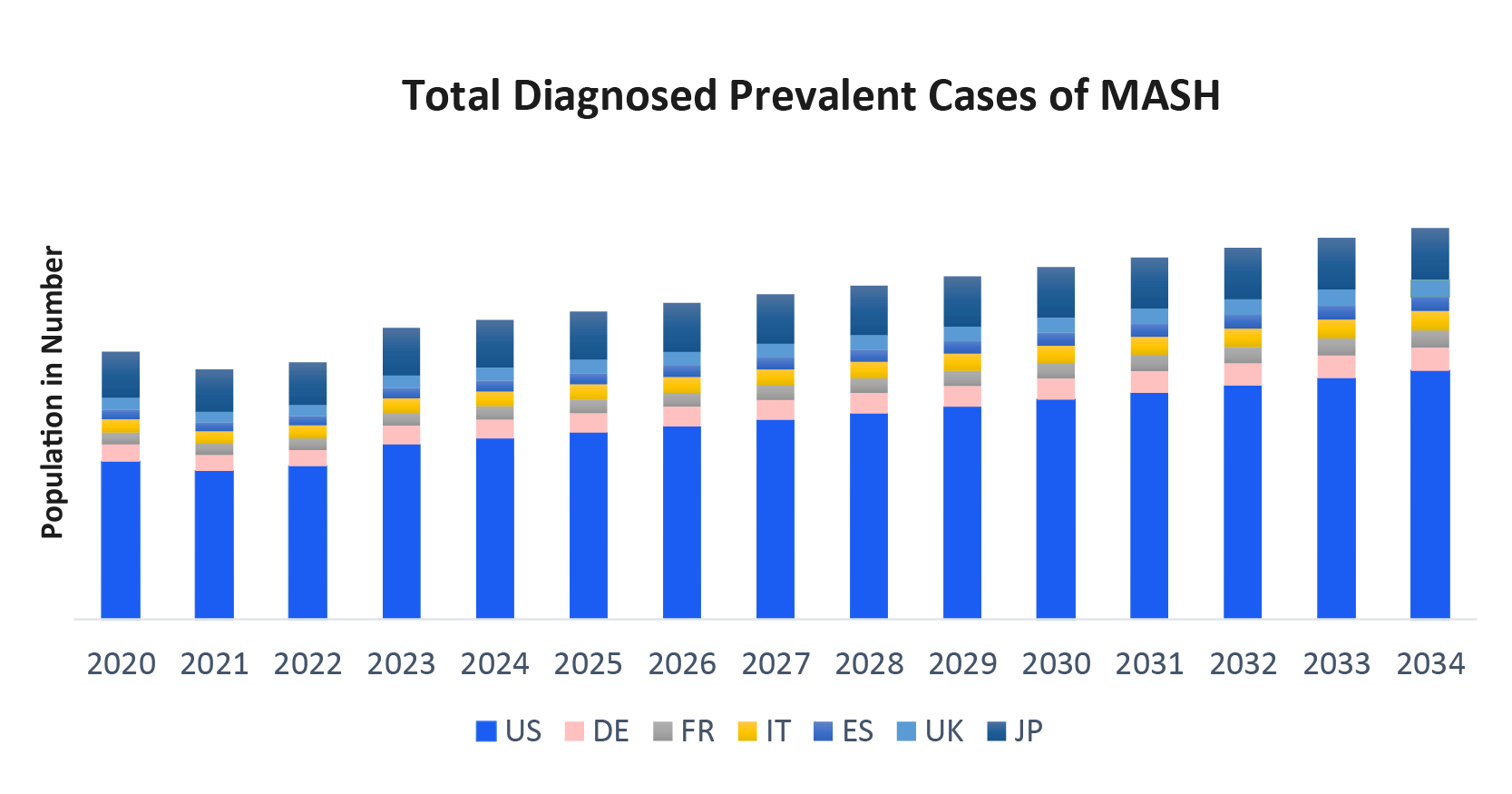
- In 2025, EU4 and the UK accounted for ~3 million diagnosed prevalent cases of MASH, with Germany reporting the highest burden, followed by Italy, while Spain had the lowest.
- Approximately 9–30% of Japanese adults have ultrasonography-diagnosed MASLD, with at least 10–20% diagnosed with MASH.
- In Japan, MASH prevalence was substantially higher among obese MASLD patients (17.3%) than lean MASLD patients (3.8%), based on biopsy-confirmed cases.
Metabolic Dysfunction-Associated Steatohepatitis Epidemiology Segmentation
- Total MASH Prevalence Cases of MASLD/NAFLD
- Total Prevalent cases of MASH/NASH
- Total Diagnosed Prevalent Cases of MASH/NASH
- Severity-specific Diagnosed Prevalent Cases of MASH/NASH
Recent Developments in the MASH Treatment Landscape:
- In July 2026, the UK Medicines and Healthcare products Regulatory Agency (MHRA) approved semaglutide (WEGOVY) for the treatment of MASH in adults with moderate-to-advanced liver fibrosis (F2–F3).
- In July 2026, Madrigal Pharmaceuticals announced that the United States Patent and Trademark Office (USPTO) issued three new US patents for resmetirom, strengthening the IP portfolio for REZDIFFRA. Two patents covering F2/F3 MASH are expected to be listed in the FDA Orange Book, including a patent covering weight-threshold step-down dosing in patients receiving moderate CYP2C8 inhibitors, with protection extending to 2045. A third patent covers the use of resmetirom for well-compensated cirrhosis (F4c), providing protection through 2042.
- In July 2026, Suzhou Ribo Life Science and its subsidiary Ribocure Pharmaceuticals, alongside Madrigal Pharmaceuticals, announced achieving their first candidate drug nomination milestone under their siRNA research partnership. The collaboration focuses on developing advanced RNA therapeutics for liver diseases, specifically targeting metabolic dysfunction-associated steatohepatitis (MASH). Reached just a few months into the agreement, this milestone will trigger the immediate start of IND-enabling studies to support planned clinical trials. The partnership blends Ribo’s oligonucleotide drug delivery platforms with Madrigal’s clinical expertise in MASH to deliver novel, targeted treatment options for patients worldwide.
- In June 2026, semaglutide received approval in Japan for noncirrhotic MASH with moderate-to-advanced fibrosis (F2–F3), becoming the first treatment specifically approved for MASH in Japan.
In March 2026, semaglutide received a conditional marketing authorisation in the EU under the brand name KAYSHILD, for adults with non-cirrhotic MASH and moderate-to-advanced liver fibrosis (F2–F3). - In January 2026, Sagimet Biosciences announced that it would present a poster at the 10th Annual MASH-TAG Conference highlighting anti-fibrotic effects observed in F3 and qFibrosis stage 4 MASH patients from the Phase IIb FASCINATE-2 trial evaluating denifanstat.
- In November 2025, Akero Therapeutics reported additional Phase IIb SYMMETRY and HARMONY analyses at the AASLD Liver Meeting, further supporting efruxifermin’s antifibrotic effect and demonstrating alignment between digital and conventional pathology findings.
- In Sept 2025, Echosens announced FDA CDER acceptance of its Letter of Intent to qualify Liver Stiffness Measurement by FibroScan® as a surrogate endpoint in clinical trials for metabolic dysfunction-associated steatohepatitis (MASH).
- In August 2025, Madrigal Pharmaceuticals announced that the European Commission granted conditional marketing authorization for Rezdiffra (resmetirom) to treat adults with noncirrhotic MASH with moderate to advanced liver fibrosis. Rezdiffra is now the first and only approved MASH therapy in the EU.
- In May 2025, Novo Nordisk announced that it will present new data from its portfolio in metabolic and cardiovascular health at the 32nd European Congress on Obesity (ECO) from May 11–14, 2025. The data will include real-world evidence studies on semaglutide, additional analysis of the SELECT cardiovascular outcomes trial, and part 1 of the phase 3 ESSENCE trial for metabolic dysfunction-associated steatohepatitis (MASH).
- In May 2025, Roche announced the launch of its Elecsys® PRO-C3 test, a new diagnostic solution designed to assess the severity of liver fibrosis in patients with metabolic dysfunction-associated steatotic liver disease (MASLD). Developed in collaboration with Nordic Bioscience, the test provides clinicians with a simple and efficient way to identify patients with liver fibrosis of varying severity, facilitating timely intervention and management of the disease.
- On November 1, 2024, Novo Nordisk announced positive results for semaglutide in treating metabolic dysfunction-associated steatohepatitis (MASH). In the Phase 3 Essence trial, a once-weekly 2.4 mg dose of semaglutide improved liver fibrosis and resolved steatohepatitis without worsening liver fibrosis in MASH patients with stage 2 or stage 3 fibrosis, meeting the primary endpoints.
- On October 29, 2024, Sagimet Biosciences (SGMT) announced that it has successfully completed end-of-Phase 2 interactions with the FDA, paving the way for denifanstat to advance into Phase 3 trials for metabolic dysfunction-associated steatohepatitis.
Metabolic Dysfunction-Associated Steatohepatitis Drug Chapters & Competitive Analysis
The MASH drug chapter provides a detailed, market-focused review of approved therapies and the emerging pipeline across Phase I–III MASH clinical trials. It covers the mechanism of action, clinical trial data, regulatory approvals, patents, collaborations, and strategic partnerships for each therapy, along with their advantages, limitations, and recent developments. This section offers critical insights into the MASH treatment landscape, supporting market assessment, competitive analysis, and growth forecasting for the MASH therapeutics market.
Approved Therapies for Metabolic Dysfunction-Associated Steatohepatitis (MASH)
Resmetirom (REZDIFFRA): Madrigal Pharmaceuticals
Resmetirom is a once-daily oral, liver-directed thyroid hormone receptor beta (THR-ß) agonist designed to selectively target the liver and reduce hepatic steatosis, inflammation, and fibrosis in patients with MASH. In March 2024, it became the first FDA-approved therapy for noncirrhotic MASH with moderate-to-advanced liver fibrosis (F2–F3), to be used in conjunction with diet and exercise. The drug is also being investigated in a Phase III clinical trial for MASH with compensated cirrhosis (F4c). In Q2 2026, REZDIFFRA generated net sales of USD 364.3 million, representing 71% year-over-year growth, reflecting strong commercial uptake since its launch.
Semaglutide (WEGOVY/KAYSHILD): Novo Nordisk
Semaglutide is a once-weekly SC GLP-1 receptor agonist that promotes weight loss and improves metabolic parameters, with benefits in MASH through reductions in body weight, hepatic steatosis, and liver inflammation. In August 2025, semaglutide became the first GLP-1 treatment approved for MASH in the US, for adults with noncirrhotic MASH and moderate-to-advanced liver fibrosis (F2–F3). In Japan, with its latest approval, semaglutide became the first treatment approved specifically for MASH, further establishing semaglutide as an important therapy in the Japanese MASH treatment landscape.
Note: Detailed marketed therapies assessment will be provided in the final report...
Metabolic Dysfunction-Associated Steatohepatitis Pipeline Analysis
Efruxifermin: Akero Therapeutics (acquired by Novo Nordisk)
Efruxifermin is a long-acting FGF21 analogue designed to improve hepatic steatosis, lipid metabolism, insulin sensitivity, and liver fibrosis in patients with MASH. The once-weekly SC therapy is being developed across multiple stages of MASH, including pre-cirrhotic MASH with F2–F3 fibrosis and F4.
The drug is currently being investigated in Phase III through the ongoing SYNCHRONY program, which includes SYNCHRONY Histology in patients with biopsy-confirmed noncirrhotic MASH and F2–F3 fibrosis, SYNCHRONY Outcomes in patients with MASH-related compensated cirrhosis (F4), and SYNCHRONY Real-World in patients with MASLD/MASH across F1–F4 fibrosis. Phase III safety and tolerability results from SYNCHRONY Real-World are expected in Q4 2026.
- In October 2025, Novo Nordisk announced its acquisition of Akero Therapeutics for approximately USD 4.7 billion, bringing efruxifermin into its MASH portfolio. The Phase III SYNCHRONY program is ongoing, building on Phase IIb results showing significant fibrosis improvement in both F2–F3 and F4 MASH populations.
Efimosfermin alfa: GSK
Efimosfermin alfa is a once-monthly SC long-acting FGF21 analogue designed to regulate key metabolic pathways, reduce liver fat and inflammation, and improve liver fibrosis in patients with MASH. The drug is acquired by GSK from Boston Pharmaceuticals in July 2025, bringing the asset into its liver disease portfolio. Further, it is currently in Phase III, with the ZENITH program evaluating patients with F2–F3 MASH; ZENITH-1 and ZENITH-2 are actively recruiting. GSK is also evaluating efimosfermin in Phase III NEBULA trials in compensated F4 MASH cirrhosis.
- In April 2026, efimosfermin received FDA Breakthrough Therapy Designation and EMA PRIME designation for MASH, following Phase II data showing improvement in liver fibrosis.
Note: A detailed emerging therapies assessment will be provided in the final report...
Metabolic Dysfunction-Associated Steatohepatitis Key Players, Market Leaders and Emerging Companies
- Madrigal Pharmaceuticals
- Novo Nordisk
- Eli Lilly
- Akero Therapeutics
- Amgen
- Viking Therapeutics
- Sagimet Biosciences
- GSK, and others
MASH Drugs Market Insights
Efruxifermin (EFX) is an investigational Fc-FGF21 fusion protein developed by Akero Therapeutics for the treatment of MASH. Designed to mimic the biological activity of FGF21, EFX aims to address key drivers of MASH by reducing liver fat and inflammation, reversing fibrosis, and improving insulin sensitivity and lipid metabolism.
In a 96-week Phase IIb study, 39% of patients with compensated cirrhosis due to MASH experienced a reversal of cirrhosis without worsening of the disease, compared to 15% in the placebo group. These promising results have led to the initiation of the Phase III SYNCHRONY clinical program, which includes trials evaluating EFX in patients with pre-cirrhotic MASH (F2-F3 fibrosis) and those with compensated cirrhosis (F4) due to MASH.
Pegozafermin is an investigational glycoPEGylated analog of Fibroblast Growth Factor 21 (FGF21) developed by 89bio for the treatment of MASH and fibrosis. Engineered to mimic and extend the activity of native FGF21, pegozafermin aims to address metabolic abnormalities underlying liver diseases. In a Phase IIb trial, pegozafermin demonstrated significant improvements in liver fibrosis among MASH patients, supporting its progression to Phase III studies. Notably, the ENLIGHTEN-Cirrhosis Phase III trial has been initiated to evaluate its efficacy in MASH patients with compensated cirrhosis (F4), marking the first FGF21 analog to reach this advanced stage in such a population.

Metabolic Dysfunction-Associated Steatohepatitis Market Outlook
The MASH market is undergoing a major transformation from lifestyle modification and off-label/metabolic management toward disease-directed pharmacotherapy targeting hepatic steatosis, inflammation, and fibrosis. Historically, treatment relied primarily on weight loss through diet and exercise, management of metabolic comorbidities, and off-label use of agents targeting obesity or T2D, with limited options specifically addressing the underlying liver pathology. The treatment landscape has now shifted with the approval of resmetirom (REZDIFFRA) in March 2024 and semaglutide (WEGOVY/KAYSHILD) in August 2025 for adults with noncirrhotic MASH and moderate-to-advanced fibrosis (F2–F3), establishing the first disease-specific pharmacological options in the US. The emergence of these therapies has created a more competitive treatment environment, while a broad pipeline targeting FGF21 agonism, thyroid hormone receptor-ß activation, and incretin-based mechanisms continues to advance, with key assets such as efruxifermin, efimosfermin alfa, and others in Phase III development and several programs expanding into F4.
Key Findings from MASH Market Forecast Report
- The MASH Therapeutics Market Size in 2025 in the 7MM was ~USD 3 billion. It is expected to grow at a significant CAGR, reaching a notable value by the end of 2036.
- In 2025, the US accounted for over USD 2 billion of the 7MM market. According to DelveInsight's analysis, MASH Market Growth is anticipated with the introduction of emerging therapies, leading to an expansion in MASH market size throughout the forecast period (2026–2036). This anticipated growth is driven by advancements in treatment options, greater healthcare access, and a rising prevalence of the condition, which together foster higher demand for innovative and effective therapies.
- According to DelveInsight’s analysts, the EU4 and the UK MASH Treatment Market Size was found to be ~USD 500 million in 2025, which is further expected to increase in the forecast period (2026–2036).
- The MASH Therapeutics Market Size in Japan was ~USD 100 million in 2025, accounting for nearly 3% of the MASH Market of the 7MM, and it is anticipated to change by 2036.
- The MASH market is transitioning from predominantly lifestyle and metabolic management toward targeted disease-modifying treatment, with resmetirom and semaglutide establishing the initial commercial market and emerging therapies such as efruxifermin, efimosfermin alfa, and others expected to intensify competition through differentiated mechanisms and potential benefits across fibrosis stages.
- Regional market dynamics show the US leading in clinical development, regulatory activity, and commercial potential, while Europe and Japan are also progressing toward broader adoption of MASH-specific therapies.
Overall, increasing disease awareness, rising prevalence of obesity and T2D, improvements in non-invasive liver disease diagnosis and staging, and the emergence of multiple disease-modifying therapies are expected to drive continued MASH market growth, with increasing segmentation by fibrosis stage, treatment mechanism, metabolic comorbidity, and route/frequency of administration, creating opportunities for established pharmaceutical companies and emerging biotechnology innovators.
Note: Further details will be provided in the report...
The MASH market comprises FGF21 agonists and metabolic/fibrosis-modulating therapies, thyroid hormone receptor-ß (THR-ß) agonists, incretin-based therapies, and other liver-directed metabolic and anti-fibrotic therapies, with multiple drug classes targeting hepatic steatosis, inflammation, metabolic dysfunction, and fibrosis associated with MASH.
- FGF21 agonists and metabolic/fibrosis-modulating therapies: These therapies are designed to improve hepatic lipid metabolism, insulin sensitivity, steatosis, inflammation, and fibrosis by mimicking or enhancing FGF21 signaling. Representative therapies include efruxifermin by Novo Nordisk and efimosfermin alfa by GSK.
- THR-ß agonists: These therapies selectively activate hepatic THR-ß to enhance lipid metabolism, reduce hepatic fat accumulation, and potentially improve liver inflammation and fibrosis. Key therapies include resmetirom (REZDIFFRA) by Madrigal Pharmaceuticals and investigational VK2809 by Viking Therapeutics.
- Incretin-based therapies: These therapies target GLP-1 and/or GIP pathways to promote weight loss and improve insulin sensitivity and metabolic dysfunction, with downstream reductions in hepatic steatosis and MASH activity. Key therapies include semaglutide (WEGOVY/KAYSHILD) by Novo Nordisk and tirzepatide by Eli Lilly.
Lifestyle modification, metabolic risk-factor management, and approved liver-directed therapies currently form the foundation of the MASH treatment landscape, while FGF21 agonists, THR-ß agonists, incretin-based therapies, and others are driving future innovation aimed at addressing the underlying metabolic, inflammatory, and fibrotic mechanisms of disease.
Note: Further details will be provided in the report...
Metabolic Dysfunction-Associated Steatohepatitis Drug Uptake
This section focuses on the uptake rate of potential MASH drugs expected to be launched in the market during the forecast period (2026–2036). The analysis covers the MASH market's uptake by drugs, patient uptake by therapy, and sales of each drug.
The uptake of therapies in MASH is expected to vary across approved liver-directed treatments, metabolic therapies, and emerging disease-modifying agents. Existing therapies such as resmetirom (REZDIFFRA) and semaglutide (WEGOVY/KAYSHILD) are expected to account for the highest uptake, supported by established clinical evidence and regulatory approvals. Among emerging therapies, efruxifermin and efimosfermin alfa are anticipated to witness relatively stronger future uptake owing to their potential to improve hepatic steatosis and fibrosis and their ongoing Phase III development, while tirzepatide and other targeted metabolic therapies are expected to gain gradual adoption as clinical evidence, regulatory approvals, and physician awareness continue to expand.
Note: Further detailed analysis of emerging therapies' drug uptake in the report...
Market Access and Reimbursement of Metabolic Dysfunction-Associated Steatohepatitis
The report further provides detailed insights on the country-wise accessibility and reimbursement scenarios, cost-effectiveness scenario of approved therapies, programs making accessibility easier and out-of-pocket costs more affordable, insights on patients insured under federal or state government prescription drug programs, etc.
The United States
Reimbursement is a crucial factor that affects the drug’s access to the market. Often, the decision to reimburse comes down to the price of the drug relative to the benefit it produces in treated patients. To reduce the healthcare burden of these high-cost therapies, many payment models are being considered by payers and other industry insiders.
Note: Further details are provided in the final report...
MASH Therapies Price Scenario & Trends
Pricing and analogue assessment of MASH therapies highlights evolving price dynamics structures. This section summarizes the cost of approved treatments, closest and most appropriate analogue selection for emerging therapies, and understanding of how pricing influences market access, adherence, and long-term uptake.
Note: Further details are provided in the final report...
Industry Experts and Physician Views for Metabolic Dysfunction-Associated Steatohepatitis (MASH)
To keep up with MASH market trends, we take Key Opinion Leaders (KOLs) and Subject Matter Experts (SMEs) opinions working in the domain through primary research to fill the data gaps and validate our secondary research. Industry experts were contacted for insights on the MASH emerging therapies, evolving treatment landscape, patient adherence to conventional therapies, therapy switching trends, drug adoption and uptake, accessibility challenges, and epidemiology and real-world prescription patterns in MASH, including MD, PhD, Instructor, Postdoctoral Researcher, Professor, Researcher, and others.
DelveInsight’s analysts connected with 10+ KOLs to gather insights; however, interviews were conducted with 6+ KOLs in the 7MM. Centers such as the University of Mississippi Medical Center, University of Bologna, and Teikyo University School of Medicine, etc. were contacted. Their opinions help understand and validate current and emerging MASH therapies, highlight unmet medical needs, provide epidemiological context, and support strategic decisions for market access, therapy adoption, and pipeline prioritization in MASH.
MASH Report Qualitative Analysis: SWOT and Conjoint Analysis
We perform qualitative and market Intelligence analysis using various approaches, such as SWOT analysis and conjoint analysis.
In the SWOT analysis of Metabolic Dysfunction-Associated Steatohepatitis (MASH), strengths, weaknesses, opportunities, and threats in terms of disease diagnosis, patient awareness, patient burden, competitive landscape, cost-effectiveness, and geographical accessibility of therapies are provided.
Conjoint analysis analyzes emerging therapies based on relevant attributes such as safety, efficacy, frequency of administration, route of administration, and order of entry. Scoring is given based on these parameters to analyze the effectiveness of therapy.
The team of analysts analyzes promising emerging therapies based on relevant attributes such as safety, efficacy, frequency of administration, route of administration, and order of entry. In efficacy, the trial’s primary and secondary outcome measures are evaluated, whereas the therapies’ safety is evaluated, wherein acceptability, tolerability, and adverse events are majorly observed. In addition, the scoring is also based on the route of administration, order of entry, probability of success, and the addressable patient pool for each therapy. According to these parameters, the final weightage score and the ranking of the emerging therapies are decided.
Scope of the Metabolic Dysfunction-Associated Steatohepatitis Market Report
- The report covers a segment of key events, an executive summary, a descriptive overview of MASH, explaining its causes, signs and symptoms, pathogenesis, and currently available treatments.
- Comprehensive insight has been provided into the epidemiology segments and forecasts, the future growth potential of the diagnosis rate, and disease progression along treatment guidelines.
- Additionally, an all-inclusive account of both the current and emerging treatments, along with the elaborative profiles of late-stage and prominent therapies, will have an impact on the current treatment landscape.
- A detailed review of the MASH market, historical and forecasted market size, market share by therapies, detailed assumptions, and the rationale behind our approach is included in the report, covering the 7MM drug outreach.
- The report provides an edge while developing business strategies by understanding trends through SWOT analysis and expert insights/KOL views, patient journey, and treatment preferences that help in shaping and driving the 7MM MASH market.
Metabolic Dysfunction-Associated Steatohepatitis Market Report Insights
- MASH Patient Population Forecast
- MASH Therapeutics Market Size
- MASH Pipeline Analysis
- MASH Market Size and Trends
- MASH Market Opportunity (Current and Forecasted)
Metabolic Dysfunction-Associated Steatohepatitis Market Report Key Strengths
- MASH Epidemiology-based (Epi-based) Bottom-up Forecasting
- Artificial Intelligence (AI)-enabled Market Research Report
- 11-year Forecast
- MASH Market Outlook (North America, Europe, Asia-Pacific)
- MASH Patient Burden Trends (By Geography)
- MASH Treatment Addressable Market (TAM)
- MASH Competitive Landscape
- MASH Major Companies Insights
- MASH Price Trends and Analogue Assessment
- MASH Therapies Drug Adoption/Uptake
- MASH Therapies Peak Patient Share Analysis
Metabolic Dysfunction-Associated Steatohepatitis Market Report Assessment
- MASH Current Treatment Practices
- MASH Unmet Needs
- MASH Clinical Development Analysis
- MASH Emerging Drugs Product Profiles
- MASH Market Attractiveness
- MASH Qualitative Analysis (SWOT and Conjoint Analysis)
- MASH Market Drivers
FAQs Realted to the MASH Market Report:
MASH Market Insights
- What was the MASH market size, the market size by therapies, market share (%) distribution in 2025, and what would it look like by 2036? What are the contributing factors for this growth?
- What are the anticipated pricing variations among different geographies for the emerging therapies in the future?
- What can be the future treatment paradigm of Metabolic Dysfunction-Associated Steatohepatitis (MASH)?
- What are the disease risks, burdens, and unmet needs of Metabolic Dysfunction-Associated Steatohepatitis (MASH)? What will be the growth opportunities across the 7MM concerning the MASH patient population?
- Who is the major future competitor in the market, and how will the competitors affect their market share?
- What are the current options for the treatment of Metabolic Dysfunction-Associated Steatohepatitis (MASH)? What are the current guidelines for treating MASH in the US, Europe, and Japan?
Reasons to Buy MASH Market Forecast Report
- The report will help in developing business strategies by understanding the latest trends and changing treatment dynamics driving the MASH market.
- Bottom up forecasting builds from the affected population to product forecasts, delivering a robust, data driven approach ideal for new therapies and novel classes.
- Insights on patient burden/disease incidence, evolution in diagnosis, and factors contributing to the change in the epidemiology of the disease during the forecast years.
- Understand the existing market opportunities in varying geographies and the growth potential over the coming years.
- Identifying strong upcoming players in the market will help devise strategies to help get ahead of competitors.
- Detailed analysis and ranking of class-wise potential current and emerging therapies under the conjoint analysis section to provide visibility around leading classes.
- To understand KOLs’ perspectives on the accessibility, acceptability, and compliance-related challenges of existing treatment to overcome barriers in the future.
- Detailed insights on the unmet needs of the existing market so that the upcoming players can strengthen their development and launch strategy.
- This Artificial Intelligence (AI) enabled report summarize and simplify complex datasets within the report into clear, actionable insights for stakeholders, investors, and healthcare providers, enabling faster, data driven decisions.
Stay updated with us for Recent Articles @ New DelveInsight Blogs




