
Alzheimer’s Disease Biomarker Market Summary
- The Alzheimer’s Disease Biomarker Market Size is estimated at USD 2.25 billion in 2025 and is projected to reach USD 4.72 billion by 2034. Growth is anchored by the rising global prevalence of Alzheimer's disease and dementia, accelerating FDA clearances and commercial rollout of blood-based biomarker tests, expanding use of amyloid-targeting disease-modifying therapies that require biomarker-confirmed diagnosis, and broadening reimbursement coverage for blood-based and cerebrospinal fluid biomarker testing.
- The Global Alzheimer’s Disease Biomarker Market Size is growing at a CAGR of 8.69% during the forecast period from 2026 to 2034.
Alzheimer’s Disease Biomarker Market Trends & Insights
- By biomarker type, the amyloid biomarkers segment dominated the Alzheimer's disease biomarker market with a 41% share in 2025.
- By sample type, the blood (plasma/serum) segment dominated the Alzheimer's disease biomarker market with a 53% share in 2025.
- By technology, the immunoassays segment dominated the Alzheimer's disease biomarker market with a 54% share in 2025.
- North America dominated the global Alzheimer's disease biomarker market revenue with a 41% share in 2025, representing the highest regional market share globally.
Request to unlock the sample page of the "Alzheimer’s Disease Biomarker Market"
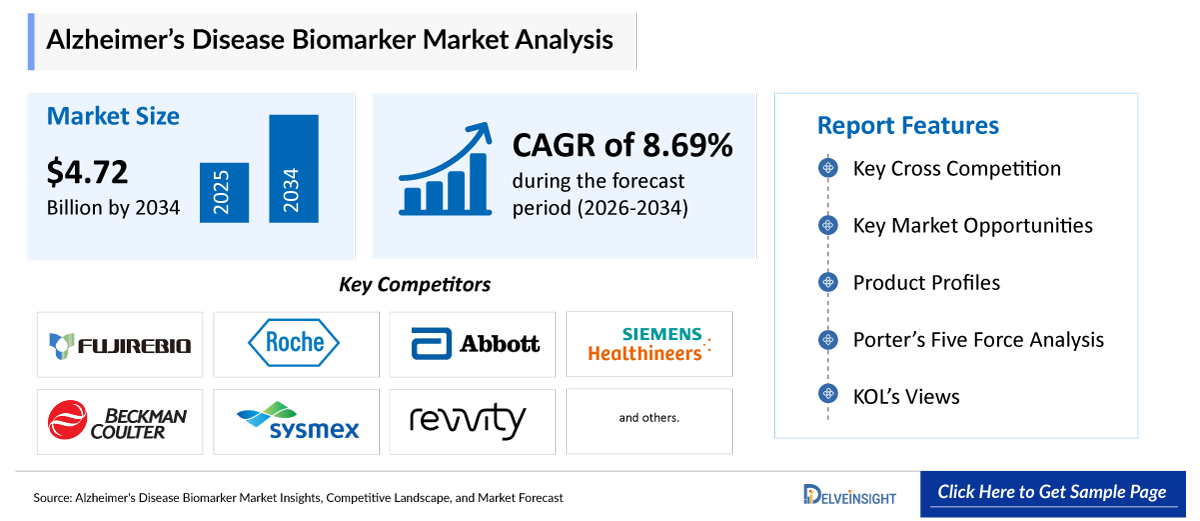
Alzheimer’s Disease Biomarker Market Size
The following snapshot summarizes the principal report metrics for the Alzheimer’s disease Biomarker market.
|
Report Metrics |
Details |
|
2025 Market Size | |
|
2034 Projected Market Size | |
|
Growth Rate (2026-2034) | |
|
Largest Market |
North America |
|
Fastest Growing Market |
Asia-Pacific |
|
Market Structure |
Moderately Concentrated |
All market values are expressed in USD and represent DelveInsight estimates synthesized from primary and secondary research.
Factors Contributing to the Growth of the Alzheimer’s Disease Biomarker Market
Alzheimer’s Disease Biomarker Market Drivers
-
Rising Global Burden of Alzheimer's Disease and Dementia
The most powerful driver of the Alzheimer's Disease Biomarker market is the steadily rising global prevalence of Alzheimer's disease and related dementias. An estimated 7.4 million Americans age 65 and older are living with clinical Alzheimer's dementia in 2026, with official death certificates recording 116,022 Alzheimer's-related deaths in 2024, making it the sixth-leading cause of death in the United States and the fifth-leading cause among Americans age 65 and older, according to the Alzheimer's Association's 2026 Facts and Figures report.
As the size of the aging population continues to grow worldwide, the number of individuals requiring biomarker-based diagnostic evaluation, staging, and monitoring is expected to rise steadily through 2034, translating directly into sustained demand for amyloid, tau, and neurodegeneration biomarker testing.
-
FDA Clearances Accelerating Adoption of Blood-Based Biomarker Testing
Regulatory clearances of blood-based biomarker tests are a central growth engine for the market, dramatically expanding access beyond specialist-only cerebrospinal fluid and positron emission tomography testing. In May 2025, Fujirebio's Lumipulse G pTau217/beta-Amyloid 1-42 Plasma Ratio test became the first FDA-cleared blood-based in vitro diagnostic test to aid in identifying amyloid pathology associated with Alzheimer's disease, followed by Roche's October 2025 FDA clearance of its Elecsys pTau181 plasma test to help rule out Alzheimer's disease in primary care settings.
Quest Diagnostics began offering the Lumipulse blood test in mid-2025, and Labcorp launched the test nationwide in August 2025, substantially improving accessibility for clinicians and patients. As additional blood-based assays progress through regulatory review, the addressable population for biomarker-confirmed diagnosis continues to expand.
-
Approval of Amyloid-Targeting Therapeutics Anchoring Biomarker-Confirmed Diagnosis
The availability of amyloid-targeting disease-modifying therapies has fundamentally changed the clinical role of Alzheimer's disease biomarkers, shifting them from a research and diagnostic aid into a mandatory gatekeeping step for treatment eligibility.
Biomarker confirmation of amyloid pathology is required before initiating anti-amyloid therapy and is used throughout treatment to monitor safety and response, creating recurring, therapy-linked demand for amyloid and tau biomarker testing that scales directly with the growth of the treated patient population.
-
Clinical Shift from Cerebrospinal Fluid and PET Imaging to Blood-Based Biomarkers
A structural shift from invasive lumbar puncture and costly positron emission tomography imaging toward minimally invasive, scalable blood-based testing is a central growth driver. Guidance presented at the Alzheimer's Association International Conference and published by the Alzheimer's Association indicates that blood-based biomarker tests demonstrating high sensitivity and specificity can effectively triage patients and, in appropriately selected individuals, may substitute for amyloid PET or CSF testing.
Among available biomarkers, phosphorylated tau 217-containing panels consistently demonstrate superior diagnostic performance compared with earlier-generation biomarkers such as pTau181 or the Abeta42/40 ratio alone, reinforcing the clinical and commercial momentum behind blood-based testing.
-
Expanding Reimbursement and New Proprietary Laboratory Analysis Coding Pathways
Broadening payer coverage is concentrating and accelerating demand for compliant, code-supported biomarker assays. New proprietary laboratory analysis codes covering plasma amyloid and tau ratio testing, neurofilament light chain testing, and glial fibrillary acidic protein testing, offered through laboratories including Neurocode USA, Fujirebio Diagnostics, and Quanterix/ALZpath, took effect through 2025 and 2026, reflecting the accelerating integration of blood-based biomarkers into routine reimbursed clinical care pathways.
-
Growing Application in Pharmaceutical Research and Companion Diagnostic Development
Alzheimer's disease biomarkers play a critical role in modern drug development, supporting patient stratification, trial enrichment, and companion diagnostic development for pharmaceutical and biotechnology sponsors. Because Alzheimer's pathology can accumulate for ten to twenty years before cognitive symptoms manifest, biomarker-based staging tools are increasingly used to identify presymptomatic and prodromal patients for enrollment in prevention and early-intervention trials, expanding demand for biomarker testing from academic, research, and pharmaceutical end-users.
-
Strategic Licensing and Partnerships Expanding pTau217 Antibody Access
A wave of licensing agreements is broadening commercial access to high-performance biomarker antibodies and accelerating platform adoption across the diagnostics industry. ALZpath licensed its proprietary pTau217 antibody to Roche in June 2024 and to Beckman Coulter Diagnostics in July 2024 to support development of diagnostic blood tests, and partnered with Bio-Techne in November 2024 to advance neurodegenerative disease research reagents, illustrating how proprietary biomarker technology is being embedded across multiple diagnostic platforms and expanding the overall addressable testing ecosystem.
Alzheimer’s Disease Biomarker Overview
An Alzheimer's Disease Biomarker is a measurable biological indicator, detected in blood, cerebrospinal fluid (CSF), or other biological fluids, that reflects the underlying pathological processes of Alzheimer's disease, including amyloid-beta plaque accumulation, tau protein aggregation and neurofibrillary tangle formation, neurodegeneration, synaptic dysfunction, and neuroinflammation. These biomarkers enable clinicians to detect Alzheimer's pathology years before the onset of overt cognitive symptoms, differentiate Alzheimer's disease from other causes of cognitive decline, stage disease severity, monitor disease progression, and determine patient eligibility for amyloid-targeting disease-modifying therapies.
Alzheimer's disease biomarkers are broadly classified into amyloid biomarkers (amyloid-beta 42, amyloid-beta 42/40 ratio), tau biomarkers (phosphorylated tau 217, phosphorylated tau 181, total tau), neurodegeneration biomarkers (neurofilament light chain, total tau), neuroinflammation biomarkers (glial fibrillary acidic protein, YKL-40), and synaptic dysfunction biomarkers (neurogranin, SNAP-25). Testing technologies span immunoassays, including chemiluminescent enzyme immunoassay and ultrasensitive single-molecule array (Simoa) platforms, mass spectrometry, polymerase chain reaction, and next-generation sequencing.
Widely used commercial assays include Fujirebio's Lumipulse G pTau217/beta-Amyloid 1-42 Plasma Ratio test, Roche's Elecsys pTau181 assay, C2N Diagnostics' PrecivityAD2, and Quanterix/ALZpath's Simoa pTau217 immunoassay. The selection of a biomarker panel and testing technology depends on the clinical setting, intended use (diagnostic aid, prognostic staging, treatment eligibility, or therapy monitoring), and the level of diagnostic certainty required.
Overall, Alzheimer's disease biomarkers are transforming the diagnostic paradigm from a symptom-based, exclusionary approach toward an accessible, biologically confirmed diagnosis, improving early detection, expanding treatment eligibility for anti-amyloid therapies, and supporting clinical trial recruitment and companion diagnostic development.
Alzheimer’s Disease Biomarker Market Key Growth Drivers
- The rising global prevalence of Alzheimer's disease and other dementias is significantly driving demand for biomarker-based diagnostics, with an estimated 7.4 million Americans age 65 and older living with clinical Alzheimer's dementia in 2026, a figure projected to rise to nearly 13.8 million by 2060 absent medical breakthroughs.
- Accelerating FDA clearances of blood-based biomarker tests, including Fujirebio's Lumipulse G pTau217/beta-Amyloid 1-42 Plasma Ratio test in May 2025 and Roche's Elecsys pTau181 plasma test in October 2025, are expanding diagnostic access beyond specialist-only CSF and PET testing into primary care settings.
- The regulatory approval and expanding clinical use of amyloid-targeting disease-modifying therapies, including lecanemab and donanemab, is driving demand for biomarker confirmation of amyloid pathology before treatment initiation and for ongoing monitoring during therapy.
- A structural clinical shift from invasive, costly cerebrospinal fluid lumbar puncture and positron emission tomography imaging toward minimally invasive, scalable blood-based biomarker testing is broadening the addressable patient population for early Alzheimer's disease detection.
- Expanding reimbursement coverage and the introduction of new proprietary laboratory analysis CPT codes for Alzheimer's disease blood biomarker assays are improving payer access and supporting broader adoption across clinical diagnostic laboratories.
- Growing use of Alzheimer's disease biomarkers in pharmaceutical clinical trials for patient stratification, trial enrichment, and companion diagnostic development is expanding demand from pharmaceutical and biotechnology sponsors.
- Continuous technological advancement in ultrasensitive immunoassay platforms, mass spectrometry, and multiplexed proteomic technologies is improving the sensitivity and specificity of phosphorylated tau 217 and related biomarkers, supporting their adoption as reliable diagnostic and prognostic tools.
- The convergence of rising disease burden, expanding blood-based testing access, growing therapeutic biomarker requirements, and continued innovation in ultrasensitive detection technologies is expected to sustain strong growth in the global Alzheimer's disease biomarker market through the forecast period.
Major Alzheimer’s Disease Biomarker Companies
The Alzheimer’s Disease Biomarker Competitive Landscape is led by the following active providers and isotope suppliers:
- Fujirebio
- Roche
- Quanterix
- Abbott
- Siemens Healthineers
- Beckman Coulter Diagnostics
- Sysmex Corporation
- Revvity (PerkinElmer)
- Bio-Techne (R&D Systems)
- Thermo Fisher Scientific, and others
For illustrative purposes, only the top 10 companies are listed in the Table of Contents. The report may include analysis and references to additional companies relevant to the market assessment.
Alzheimer’s Disease Biomarker Market Restraints
Despite strong momentum, the Alzheimer's Disease Biomarker market faces material constraints. Confirmatory testing requirements add cost and complexity, as a meaningful proportion of blood-based test results fall into an indeterminate range that still requires PET or CSF confirmation before a definitive diagnosis or treatment decision can be made. Manufacturing and quality-control issues can disrupt confidence in blood-based assays, as illustrated by a Class II recall of specific Lumipulse pTau217/beta-Amyloid 1-42 lots in early 2026 following data presented at the December 2025 Clinical Trials on Alzheimer's Disease conference showing unexpectedly elevated false-positive rates linked to a manufacturing issue.
Reimbursement for advanced biomarker panels remains uneven across geographies, and limited access to dementia specialists and neurologists constrains the pace of biomarker-guided diagnosis in primary care and underserved regions. Regulatory approval pathways for novel biomarker assays can be lengthy, and the higher cost of mass spectrometry-based and multiplex proteomic panels relative to conventional immunoassays can limit adoption among smaller clinical laboratories.
Together, these confirmatory-testing, quality-control, reimbursement, access, and cost barriers temper the pace of growth, even as the underlying drivers of rising disease prevalence, expanding blood-based testing access, and growing therapeutic biomarker requirements remain firmly intact.
Alzheimer’s Disease Biomarker Market Segment Analysis
The Alzheimer’s Disease Biomarker by Biomarker Type (Amyloid Biomarkers, Tau Biomarkers, Neurodegeneration Biomarkers, Neuroinflammation Biomarkers, Synaptic Dysfunction Biomarkers, and Others), Sample Type (Blood [Plasma/Serum], Cerebrospinal Fluid [CSF], Urine, Saliva, and Other Biological Fluids), Technology (Immunoassays, Mass Spectrometry, Polymerase Chain Reaction [PCR], Next-Generation Sequencing [NGS], and Others), Disease Stage (Preclinical Alzheimer's Disease, Mild Cognitive Impairment [MCI] Due to Alzheimer's Disease, Early-Stage Alzheimer's Disease, Moderate Alzheimer's Disease, and Severe Alzheimer's Disease), End-Users (Hospitals, Clinical Diagnostic Laboratories, Academic & Research Institutes, and Pharmaceutical & Biotechnology Companies), and Geography (North America, Europe, Asia-Pacific, Rest of World).
-
Alzheimer’s Disease Biomarker Market Segmentation By Biomarker Type
Dominant Subsegment: Amyloid Biomarkers. The amyloid biomarkers category is expected to dominate the market.
Dominant: Amyloid Biomarkers ~ 41%
The amyloid biomarkers segment accounted for 41% of the alzheimer’s disease biomarker market in 2025. Amyloid biomarkers, including amyloid-beta 42 and the amyloid-beta 42/40 ratio, remain the leading biomarker type because amyloid pathology is the defining hallmark of Alzheimer's disease and the required gatekeeping biomarker for eligibility for amyloid-targeting disease-modifying therapies. The FDA-cleared Lumipulse and Elecsys assays are both built around amyloid and phosphorylated tau ratio measurement, cementing amyloid biomarkers at the center of routine clinical testing.
Tau biomarkers, particularly phosphorylated tau 217, are the fastest-growing biomarker type given superior diagnostic performance compared with earlier-generation markers, while neurodegeneration biomarkers such as neurofilament light chain and neuroinflammation biomarkers such as glial fibrillary acidic protein are gaining traction as complementary panels for staging and monitoring. Nonetheless, the central diagnostic and therapy-eligibility role of amyloid biomarkers secures their leadership across the forecast period.
-
Alzheimer’s Disease Biomarker Market Segmentation By Sample Type
Dominant Subsegment: Blood (Plasma/Serum). The blood (plasma/serum) category is expected to dominate the market.
Dominant: Blood (Plasma/Serum) ~ 53%
The blood (plasma/serum) segment accounted for 53% of the alzheimer’s disease biomarker market in 2025. Blood-based testing is the leading sample type following the FDA clearance of Fujirebio's Lumipulse plasma ratio test in May 2025 and Roche's Elecsys plasma pTau181 test in October 2025, both of which enabled minimally invasive testing in primary care and specialist settings without the need for lumbar puncture.
Rapid rollout by national reference laboratories, including Quest Diagnostics and Labcorp, has further accelerated adoption. Cerebrospinal fluid remains a substantial and clinically validated sample type, particularly for confirmatory testing and in specialized memory clinics, while blood-based testing is the fastest-growing sample type given its scalability, lower cost, and suitability for broad population screening and primary care triage. Saliva and urine-based biomarker testing remain nascent but represent emerging areas of research interest for non-invasive monitoring.
-
Alzheimer’s Disease Biomarker Market Segmentation By Technology
Dominant Subsegment: Immunoassays. The immunoassays category is expected to dominate the market.
Dominant: Immunoassays ~ 54%
The immunoassays segment accounted for 54% of the alzheimer’s disease biomarker market in 2025. Immunoassay platforms, including chemiluminescent enzyme immunoassay technology used in Fujirebio's Lumipulse G and Roche's Elecsys systems, and the ultrasensitive single-molecule array (Simoa) platform used in Quanterix and ALZpath's pTau217 assays, are the leading technology because they combine high sensitivity with the automation and throughput required for routine clinical laboratory use.
Mass spectrometry-based platforms, such as those underlying C2N Diagnostics' PrecivityAD2, are the fastest-growing technology given their high analytical precision for quantifying amyloid and tau isoforms, particularly in confirmatory and research settings. Polymerase chain reaction and next-generation sequencing technologies remain concentrated in genetic risk profiling, including APOE genotyping, and companion research applications rather than routine biomarker quantification.
-
Alzheimer’s Disease Biomarker Market Segmentation By Disease Stage
Dominant Subsegment: MCI Due to Alzheimer's Disease. The MCI due to alzheimer's disease category is expected to dominate the market.
Dominant: MCI Due to Alzheimer's Disease ~ 36%
The mild cognitive impairment segment accounted for 36% of the alzheimer’s disease biomarker market in 2025. This stage is the leading disease-stage segment because current FDA-cleared blood-based tests and approved anti-amyloid therapies are indicated specifically for patients presenting with early cognitive decline, including MCI and mild dementia, making this population the largest and most consistent source of biomarker testing demand.
Preclinical Alzheimer's disease is the fastest-growing disease-stage segment, propelled by expanding research and pharmaceutical interest in identifying amyloid-positive, cognitively unimpaired individuals for prevention and early-intervention clinical trials. Early-stage, moderate, and severe Alzheimer's disease segments continue to generate steady demand for biomarker testing in differential diagnosis and disease-monitoring applications.
-
Alzheimer’s Disease Biomarker Market Segmentation By End-Users
Dominant Subsegment: Clinical Diagnostic Laboratories. The clinical diagnostic laboratories category is expected to dominate the market.
Dominant: Clinical Diagnostic Laboratories ~ 42%
The clinical diagnostic laboratories segment accounted for 42% of the alzheimer’s disease biomarker market in 2025. Clinical diagnostic laboratories are the leading end-user because national reference laboratories, including Quest Diagnostics and Labcorp, process the majority of ordered blood-based and CSF biomarker tests referred by physicians across hospital and outpatient settings. Hospitals are the fastest-growing end-user segment as memory clinics and neurology departments increasingly integrate biomarker-confirmed diagnostic pathways into routine dementia care.
Academic and research institutes remain significant end-users for biomarker discovery and validation studies, while pharmaceutical and biotechnology companies represent a growing end-user category as biomarker testing becomes embedded in clinical trial design and companion diagnostic development.
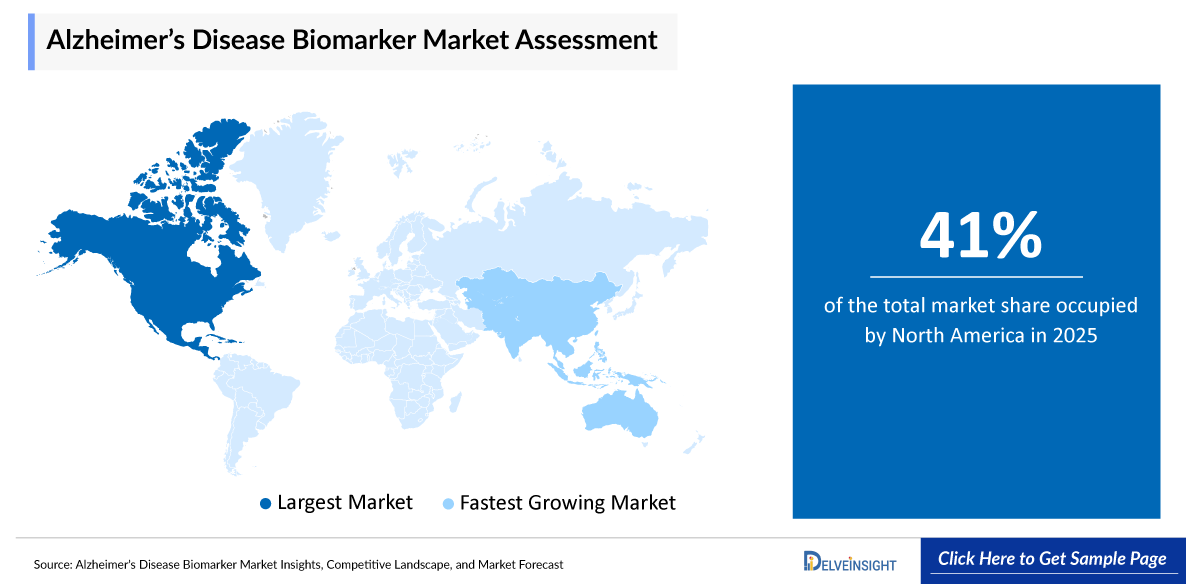
Alzheimer’s Disease Biomarker Market Region Analysis
- Dominant Region: North America
Dominant: North America ~ 41% (Largest)
North America accounted for 41% of the global alzheimer’s disease biomarker market revenue in 2025, representing the highest regional market share globally. The region's dominance reflects the world's largest population of individuals living with Alzheimer's disease, an estimated 7.4 million Americans age 65 and older in 2026, advanced healthcare and diagnostic laboratory infrastructure, and a concentration of leading biomarker assay manufacturers and reference laboratories.
Regulatory clarity from the FDA, including the May 2025 clearance of Fujirebio's Lumipulse blood-based amyloid test and the October 2025 clearance of Roche's Elecsys pTau181 plasma test, is accelerating adoption of next-generation diagnostic technologies. National reference laboratories, including Quest Diagnostics and Labcorp, rapidly commercialized blood-based testing through 2025, while expanding CMS reimbursement pathways and new proprietary laboratory analysis codes are reinforcing payer access.
Strong presence of leading diagnostics manufacturers, including Abbott Laboratories, Siemens Healthineers, and Beckman Coulter Diagnostics, and continued expansion of biomarker-guided clinical trial infrastructure anchor the region's continued leadership across the forecast period.
- Fastest Growing Region: Asia-Pacific
Asia-Pacific is the fastest-growing region in the alzheimer’s disease biomarker market. The region's elevated CAGR is driven by a rapidly aging population, rising Alzheimer's disease and dementia prevalence, expanding diagnostic laboratory infrastructure, and growing healthcare investment across China, Japan, India, South Korea, and Australia. Japan is integrating advanced biomarker testing within its universal-insurance healthcare system given one of the world's oldest populations.
China is expanding memory clinic networks and standardizing dementia diagnostic guidelines, and India is scaling diagnostic laboratory capacity supported by growing awareness of early Alzheimer's detection. Regional distributors increasingly partner with international biomarker assay manufacturers to broaden access to blood-based and immunoassay testing platforms. The combination of rising disease burden, diagnostic infrastructure build-out, and growing clinical awareness positions Asia-Pacific as the principal source of incremental growth over the forecast period.
Alzheimer’s Disease Biomarker Regional Commentary
- North America
North America accounted for 41% of the global Alzheimer's Disease Biomarker market revenue in 2025. The United States dominates on the strength of the world's largest diagnosed and undiagnosed Alzheimer's disease patient population, a dense network of clinical reference laboratories, and clear FDA regulatory pathways, while accelerating clearances for blood-based biomarker tests reinforce its leadership.
- Europe
Europe is a large and advanced regional market, supported by an established base of diagnostics manufacturers, including Roche Diagnostics in Switzerland and Siemens Healthineers in Germany, and coordinated dementia diagnostic and reimbursement frameworks across Germany, France, the United Kingdom, Italy, and Spain. Growing adoption of blood-based biomarker testing alongside established CSF testing infrastructure reinforces the region's role in both biomarker assay manufacturing and clinical adoption.
- Asia-Pacific
Asia-Pacific is the fastest-growing region, propelled by a rapidly aging population, rising Alzheimer's disease prevalence, expanding diagnostic laboratory infrastructure, and growing healthcare investment across China, Japan, India, South Korea, and Australia. Japan's quality-focused adoption of advanced biomarker systems, China's memory clinic network expansion, and India's growing diagnostic laboratory capacity are accelerating regional demand for both blood-based and CSF biomarker testing.
- Rest of World
The Rest of World region, spanning Latin America, the Middle East, and Africa, is an emerging growth frontier. Expanding diagnostic and healthcare infrastructure, rising awareness of Alzheimer's disease and dementia, and efforts to broaden access to biomarker-based diagnostic technologies are gradually increasing adoption, while growing distribution partnerships with established international diagnostics manufacturers support the build-out of regional testing capacity.
Alzheimer’s Disease Biomarker Market Competitive Landscape
The Alzheimer's Disease Biomarker Market is classified as Moderately Consolidated. A leading tier of established in vitro diagnostics majors, including Roche Diagnostics, Abbott Laboratories, Siemens Healthineers, and Fujirebio, anchors the market through regulator-cleared assay platforms, global distribution networks, and installed automated immunoassay analyzer bases, while a broad group of specialized biomarker technology developers, including Quanterix, ALZpath, C2N Diagnostics, and Bio-Techne, compete through proprietary antibody technology, ultrasensitive detection platforms, and strategic licensing partnerships, sustaining an innovative and competitive supplier base.
The Alzheimer’s Disease Biomarker Competitive Landscape can be evaluated across the following dimensions:
- Market concentration: Moderately Consolidated, with a leading group of established, globally distributed in vitro diagnostics majors and a broad base of specialized biomarker technology developers and reference laboratories.
- Leading players: Roche Diagnostics, Abbott Laboratories, Siemens Healthineers, and Fujirebio anchor the top tier through regulator-cleared assay platforms and long-standing clinical laboratory relationships.
- Geographic reach: Leaders operate global distribution networks supplying hospitals, clinical diagnostic laboratories, and research institutes across dozens of countries, supported by national reference laboratory partners such as Quest Diagnostics and Labcorp.
- Product portfolio strength: Top players offer both blood-based and CSF immunoassay platforms, spanning amyloid, tau, neurodegeneration, and neuroinflammation biomarker panels.
- Regulatory access: Ownership of proprietary, FDA-cleared assays, including Fujirebio's Lumipulse and Roche's Elecsys blood-based tests, is a decisive competitive advantage.
- Strategic partnerships: Licensing agreements, such as ALZpath's 2024 pTau217 antibody licensing deals with Roche, Beckman Coulter Diagnostics, and Bio-Techne, extend commercial reach and platform adoption.
- M&A and investment activity: Active consolidation and platform expansion in the broader biomarker ecosystem, illustrated by Quanterix's 2025 acquisition of Akoya Biosciences to add spatial biology capabilities to its Simoa platform.
- Manufacturing capabilities: Automated, high-throughput immunoassay analyzer manufacturing, CLIA-certified laboratory operations, and global supply-continuity infrastructure are key competitive moats.
- Innovation focus: Ultrasensitive phosphorylated tau 217 detection, mass spectrometry-based confirmatory panels, multiplexed proteomic platforms, and expansion of blood-based testing into community and primary care screening settings.
Alzheimer’s Disease Biomarker Market Recent Breakthroughs and Developmental Activities
- In August 2026, Quest Diagnostics announced it will offer Roche’s newly FDA-cleared Elecsys pTau217 blood test across the U.S. The immunoassay measures phosphorylated tau-217 in blood plasma to assess Alzheimer’s disease pathology, aiding in the early identification of amyloid plaque presence. Quest’s widespread laboratory network makes advanced, minimally invasive biomarker testing accessible to primary care physicians and specialists, streamlining diagnostic pathways for patients experiencing cognitive decline.
- In May 2025, Fujirebio Diagnostics received FDA 510(k) clearance for its Lumipulse G pTau217/beta-Amyloid 1-42 Plasma Ratio in vitro diagnostic test, the first FDA-cleared blood-based test to aid in identifying patients with amyloid pathology associated with Alzheimer's disease. Strategic significance: Establishes Fujirebio as the first-mover in FDA-cleared blood-based Alzheimer's diagnostics and sets the clinical performance benchmark for subsequent entrants.
- In July 2025, Quest Diagnostics announced it would offer laboratory testing based on Fujirebio's FDA-cleared Lumipulse plasma ratio test through its national network of patient service centers. Strategic significance: Broadens patient and physician access to FDA-cleared blood-based Alzheimer's testing through one of the largest diagnostic laboratory networks in the United States.
- In August 2025, Labcorp completed the nationwide commercial launch of the Lumipulse blood-based Alzheimer's disease test, significantly improving accessibility for clinicians and patients across the United States. Strategic significance: Accelerates mainstream clinical adoption of blood-based amyloid biomarker testing.
- In October 2025, Roche received FDA clearance for its Elecsys phosphorylated tau (pTau) 181 plasma test to help rule out Alzheimer's disease in primary care settings. Strategic significance: Extends FDA-cleared blood-based testing into primary care, broadening the diagnostic funnel ahead of specialist referral.
- In December 2025, Quanterix Corporation and ALZpath supported a landmark Nature-published study using the ALZpath p-Tau-217 Advantage PLUS kit on Quanterix's fully automated Simoa HD-X analyzer to establish Alzheimer's disease neuropathology prevalence in a population-based cohort of more than 11,000 individuals in Norway. Strategic significance: Reinforces the Simoa platform's role in large-scale epidemiological and population health research.
- In early 2026, Fujirebio Diagnostics initiated a Class II recall of specific Lumipulse pTau217/beta-Amyloid 1-42 lots after data presented at the December 2025 Clinical Trials on Alzheimer's Disease conference showed elevated false-positive rates linked to a manufacturing issue, with corrected lots subsequently released. Strategic significance: Underscores the importance of manufacturing quality control and reinforces the clinical requirement for confirmatory PET or CSF testing in ambiguous cases.
- In February 2026, Lucent Diagnostics (a Quanterix brand) partnered with Life Line Screening to bring advanced blood-based Alzheimer's disease biomarker diagnostics to community screening events nationwide. Strategic significance: Extends blood-based biomarker testing beyond traditional clinical settings into community-based preventive health screening.
- In 2024, ALZpath Inc. signed licensing agreements with Roche in June 2024 and Beckman Coulter Diagnostics in July 2024 for use of its proprietary pTau217 antibody in diagnostic blood tests for Alzheimer's disease, and partnered with Bio-Techne in November 2024 to advance neurodegenerative disease research reagents. Strategic significance: Embeds ALZpath's proprietary antibody technology across multiple major diagnostics platforms, expanding the addressable biomarker testing ecosystem.
- In March 2024, C2N Diagnostics announced an investment from Eisai Inc. to catalyze expansion of the availability, accessibility, and use of its high-performance blood biomarker tests, including PrecivityAD2, for early diagnosis of Alzheimer's disease in the United States. Strategic significance: Signals continued pharmaceutical industry investment in blood-based biomarker infrastructure supporting anti-amyloid therapy adoption.
Alzheimer’s Disease Biomarker Market Segmentation
-
Alzheimer’s Disease Biomarker Market by Biomarker Type
- Amyloid Biomarkers
- Tau Biomarkers
- Neurodegeneration Biomarkers
- Neuroinflammation Biomarkers
- Synaptic Dysfunction Biomarkers
- Others
-
Alzheimer’s Disease Biomarker Market by Sample Type
- Blood (Plasma/Serum)
- Cerebrospinal Fluid (CSF)
- Urine
- Saliva
- Other Biological Fluids
-
Alzheimer’s Disease Biomarker Market by Technology
- Immunoassays
- Mass Spectrometry
- Polymerase Chain Reaction (PCR)
- Next-Generation Sequencing (NGS)
- Others
-
Alzheimer's Disease Biomarker Market by Disease Stage
- Preclinical Alzheimer's Disease
- Mild Cognitive Impairment (MCI) Due to Alzheimer's Disease
- Early-Stage Alzheimer's Disease
- Moderate Alzheimer's Disease
- Severe Alzheimer's Disease
-
Alzheimer's Disease Biomarker Market by End-Users
- Hospitals
- Clinical Diagnostic Laboratories
- Academic & Research Institutes
- Pharmaceutical & Biotechnology Companies
Alzheimer’s Disease Biomarker Market by Geography
-
North America Alzheimer’s Disease Biomarker Market
- United States Alzheimer’s Disease Biomarker Market Size in USD million (2023-2034)
- Canada Alzheimer’s Disease Biomarker Market Size in USD million (2023-2034)
- Mexico Alzheimer’s Disease Biomarker Market Size in USD million (2023-2034)
-
Europe Alzheimer’s Disease Biomarker Market
- Germany Alzheimer’s Disease Biomarker Market Size in USD million (2023-2034)
- United Kingdom Alzheimer’s Disease Biomarker Market Size in USD million (2023-2034)
- France Alzheimer’s Disease Biomarker Market Size in USD million (2023-2034)
- Italy Alzheimer’s Disease Biomarker Market Size in USD million (2023-2034)
- Spain Alzheimer’s Disease Biomarker Market Size in USD million (2023-2034)
- Rest of Europe Alzheimer’s Disease Biomarker Market Size in USD million (2023-2034)
-
Asia-Pacific Alzheimer’s Disease Biomarker Market
- China Alzheimer’s Disease Biomarker Market Size in USD million (2023-2034)
- Japan Alzheimer’s Disease Biomarker Market Size in USD million (2023-2034)
- India Alzheimer’s Disease Biomarker Market Size in USD million (2023-2034)
- Australia Alzheimer’s Disease Biomarker Market Size in USD million (2023-2034)
- South Korea Alzheimer’s Disease Biomarker Market Size in USD million (2023-2034)
- Rest of Asia-Pacific Alzheimer’s Disease Biomarker Market Size in USD million (2023-2034)
-
Rest of the World (RoW) Alzheimer’s Disease Biomarker Market
- Middle East Alzheimer’s Disease Biomarker Market Size in USD million (2023-2034)
- Africa Alzheimer’s Disease Biomarker Market Size in USD million (2023-2034)
- South America Alzheimer’s Disease Biomarker Market Size in USD million (2023-2034)
Alzheimer’s Disease Biomarker Market Recent Industry Trends and Milestones (2023-2026):
|
Category |
Key Developments |
|
Alzheimer’s Disease Biomarker Market Product Approval |
Regulatory momentum is expanding the approved use of blood-based biomarker tests. The FDA cleared Fujirebio's Lumipulse G pTau217/beta-Amyloid 1-42 Plasma Ratio test in May 2025, the first FDA-cleared blood-based Alzheimer's diagnostic, followed by Roche's Elecsys pTau181 plasma clearance in October 2025 for primary care use. Each clearance creates durable demand for compliant, regulator-cleared biomarker assays across clinical diagnostic laboratories and hospital memory clinics. |
|
Alzheimer’s Disease Biomarker Market Service Expansion |
Reference laboratories broadened access and clinical adoption across the value chain. Quest Diagnostics began offering the Lumipulse test in July 2025, and Labcorp completed its nationwide commercial launch in August 2025. Lucent Diagnostics and Life Line Screening partnered in February 2026 to extend blood-based testing into community screening settings. |
|
Alzheimer’s Disease Biomarker Market Investment |
Capital and consolidation activity underscored the strategic value of biomarker technology. Quanterix acquired Akoya Biosciences in 2025 to add spatial biology capabilities, and C2N Diagnostics received a strategic investment from Eisai Inc. in March 2024 to expand blood biomarker test availability. |
|
Company Strategy |
Fujirebio: Leadership through the first FDA-cleared blood-based amyloid test and expanding Lumipulse assay menu. Roche Diagnostics: Extending Elecsys biomarker leadership into primary care with pTau181 clearance. Quanterix/ALZpath: Ultrasensitive Simoa platform leadership with expanding licensing partnerships across major diagnostics manufacturers. C2N Diagnostics, Abbott Laboratories, Siemens Healthineers, Beckman Coulter Diagnostics, Bio-Techne, and Neurocode USA: Expanding blood-based and CSF biomarker assay menus and reimbursement coding pathways. |
|
Emerging Technologies |
Blood-based phosphorylated tau 217 testing is the leading edge of innovation, scaling on the strength of new clinical evidence and FDA clearances, while mass spectrometry-based confirmatory panels and multiplexed proteomic platforms attract continued research investment. Biomarker-guided prognostic modeling to estimate timing of symptom onset, and expansion of community-based screening programs, are broadening the clinical scope of Alzheimer's disease biomarker testing. |
Alzheimer’s Disease Biomarker Market Startup Funding and Investment Trends
Investment in the Alzheimer's Disease Biomarker ecosystem has concentrated on blood-based phosphorylated tau 217 detection, ultrasensitive immunoassay platforms, and licensing of proprietary biomarker antibody technology. The following companies illustrate recent funding and investment activity and technology focus.
|
Company |
Total Funding |
Funding Stage |
Main Offering |
Core Technology |
|
ALZpath Inc. |
USD 1.9 million raised |
Seed / Grant-funded |
pTau217 biomarker antibody and assay licensing |
Proprietary pTau217 antibody, Simoa-based assay |
|
C2N Diagnostics, LLC |
Undisclosed strategic investment (Eisai, 2024) |
Strategic / Private |
Blood-based Alzheimer's diagnostics |
PrecivityAD2 mass spectrometry platform |
|
Request for unlocking the report of the @ Alzheimer’s Disease Biomarker Market Insights | ||||
Capital continues to flow toward companies that combine proprietary biomarker antibody technology with regulator-cleared or reimbursement-coded assay platforms. ALZpath's 2024 licensing agreements with Roche, Beckman Coulter Diagnostics, and Bio-Techne demonstrate how a small, capital-efficient biomarker developer can achieve broad commercial reach through platform partnerships, while Eisai's strategic investment in C2N Diagnostics underscores continued pharmaceutical industry conviction in blood-based biomarker infrastructure supporting anti-amyloid therapy adoption.
Emerging and established providers alike are scaling ultrasensitive detection platforms and expanding biomarker testing into community and primary care settings. Collectively, these investments signal conviction that blood-based phosphorylated tau 217 testing, proprietary antibody licensing, and expansion into primary care and community screening will define the next phase of competitive advantage in the global Alzheimer's Disease Biomarker market.
Key Takeaways from the Alzheimer’s Disease Biomarker Market Report Study
- Market size analysis for the current alzheimer’s disease biomarker market size (2025), and market forecast for 9 years (2026 to 2034).
- Top key product/technology developments, mergers, acquisitions, partnerships, and joint ventures that happened over the last 3 years.
- Key companies dominating the global alzheimer’s disease biomarker market.
- Various opportunities available for competitors in the alzheimer’s disease biomarker market space.
- What are the top-performing segments in 2025? How will these segments perform in 2034?
- Which are the top-performing regions and countries in the current alzheimer’s disease biomarker market scenario?
- Which are the regions and countries where companies should concentrate their opportunities for alzheimer’s disease biomarker market growth in the future?
Target audience who can benefit from this alzheimer’s disease biomarker market report study
- Alzheimer’s disease biomarker product providers
- Research organizations and consulting companies
- Alzheimer’s disease biomarker-related organizations, associations, forums, and other alliances
- Government and corporate offices
- Start-up companies, venture capitalists, and private equity firms
- Distributors and traders dealing in alzheimer’s disease biomarker
- Various end-users who want to know more about the alzheimer’s disease biomarker market and the latest technological developments in the alzheimer’s disease biomarker market.
Stay updated with us for Recent Articles

