
Anal Fistula Epidemiology Forecast
Anal Fistula and Trends
- The epidemiology of Anal Fistula is segmented based on underlying etiologies and disease characteristics, including cryptoglandular fistulas, fistulas associated with Crohn's Disease, recurrent fistulas, and complex fistulizing disease. The patient population is further categorized into diagnosed cases, fistula complexity-specific cases, recurrence-based populations, and treated patient pools across the 7MM.
- The prevalence of Anal Fistula continues to increase globally, primarily driven by rising incidence of anorectal abscesses, increasing prevalence of inflammatory bowel diseases, improved disease recognition, and expanding access to specialist colorectal care. Adults in younger and middle-aged populations represent a substantial proportion of affected patients.
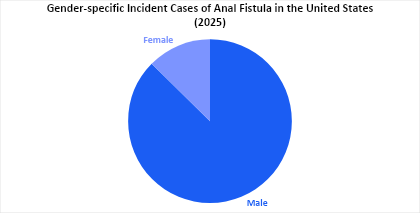
- Male patients account for a larger share of the Anal Fistula prevalent population compared with females, with epidemiological studies consistently demonstrating higher prevalence among men, potentially due to differences in anorectal gland anatomy and disease susceptibility patterns.
- The epidemiological burden of complex and recurrent Anal Fistula is expected to increase steadily during the forecast period, supported by rising prevalence of fistulizing inflammatory disorders, increasing diagnosis of recurrent disease, and improved identification through advanced imaging techniques.
Anal Fistula Epidemiology Forecast in the United States
- 2025 Prevalent Cases of Anal Fistula: ~XXXX
- 2036 Prevalent Cases of Anal Fistula: XXXX
- Anal Fistula Growth Rate (2026–2036): XX% CAGR
DelveInsight's ‘Anal Fistula Epidemiology Forecast – 2036’ report delivers an in-depth understanding of the Anal Fistula, historical and forecasted epidemiology in the United States, EU4 (Germany, Spain, Italy, and France) and the United Kingdom, and Japan.
|
Study Period |
2022–2036 |
|
Historical Year |
2022–2025 |
|
Forecast Period |
2026–2036 |
|
Base Year |
2026 |
|
Geographies Covered |
|
|
Anal Fistula Epidemiology CAGR (Study period/Forecast period) |
XX% (2026-2036) |
|
Anal Fistula Epidemiology Segmentation Analysis |
Patient Burden Assessment
|
Anal Fistula Understanding and Diagnosis Algorithm
Anal Fistula Overview and Diagnosis
Anal fistula is a chronic anorectal disorder characterized by an abnormal epithelialized tract connecting the anal canal or rectum to the perianal skin. It most commonly develops as a consequence of cryptoglandular infection following anorectal abscess formation, although it may also occur secondary to inflammatory conditions such as Crohn's Disease, trauma, radiation exposure, malignancy, or prior anorectal surgery. Anal fistulas are broadly classified as simple or complex based on tract anatomy and sphincter involvement, with complex fistulas often associated with higher recurrence risk and greater treatment challenges. Symptoms commonly include persistent pain, purulent discharge, swelling, recurrent abscesses, and impaired quality of life.
Anal Fistula Diagnosis
Diagnosis of anal fistula typically begins with clinical history and physical examination, including inspection of external openings and digital rectal examination. Imaging techniques have become increasingly important for accurate anatomical characterization and treatment planning, particularly in complex or recurrent disease. Pelvic MRI is considered the preferred imaging modality due to its high sensitivity in identifying fistula tracts and secondary extensions, while endoanal ultrasonography and examination under anesthesia may provide additional anatomical detail. Early and accurate diagnosis is critical for guiding treatment selection, minimizing recurrence risk, and preserving anal sphincter function.
Further details are provided in the report.
Anal Fistula Epidemiology
Key Findings from Anal Fistula Epidemiological Analysis and Forecast
- The epidemiology of Anal Fistula is segmented based on underlying etiologies and disease characteristics, including cryptoglandular fistulas, fistulas associated with Crohn's Disease, recurrent fistulas, and complex fistulizing disease. The patient population is further categorized into diagnosed cases, fistula complexity-specific cases, recurrence-based populations, and treated patient pools across the 7MM.
- Anal fistula is a relatively uncommon but clinically significant anorectal disorder, with reported incidence ranging from approximately 1–8 cases per 10,000 individuals annually, contributing a substantial healthcare burden due to recurrence and need for repeated interventions.
- Anal fistula demonstrates a clear male predominance, with incidence estimates of approximately 12.3 per 100,000 in men versus 5.6 per 100,000 in women, indicating nearly a two-fold greater disease burden among males.
- Cryptoglandular Anal Fistula accounts for the majority of prevalent cases across the 7MM and remains the leading etiology among diagnosed patients.
- Cases associated with Crohn’s disease represent a smaller proportion of total diagnosed Anal Fistula prevalence but contribute disproportionately to severe, recurrent, and treatment-resistant disease burden due to complex tract anatomy and lower long-term healing rates.
- The pooled analysis estimated an overall anal fistula prevalence of approximately 18.37 cases per 100,000 individuals across European populations, emphasizing that although relatively uncommon, anal fistula remains an important chronic anorectal condition associated with significant healthcare burden and quality-of-life impairment.
- The pooled analysis estimated an overall anal fistula prevalence of approximately 18.37 cases per 100,000 individuals across European populations, emphasizing that although relatively uncommon, anal fistula remains an important chronic anorectal condition associated with significant healthcare burden and quality-of-life impairment.
- Among evaluated countries, Italy demonstrated the highest prevalence, with approximately 23.2 cases per 100,000 individuals, suggesting potential regional variability influenced by healthcare systems, population characteristics, and diagnostic practices.
Scope of the Report
The report covers a segment of an executive summary, a descriptive overview of Anal Fistula, explaining its causes, signs and symptoms, and pathogenesis.
- Comprehensive insight has been provided into the epidemiology segments and forecasts, the future growth potential of the diagnosis rate, and disease progression.
Report Insights
Anal Fistula Patient Population Forecast
Report Key Strengths
- Epidemiology‑based (epi‑based) Bottom‑up Forecasting
- 11-year Forecast
- Patient Burden Trends (by geography)
FAQs
- What are the disease risks, burdens, and unmet needs of Anal Fistula? What will be the growth opportunities across the 7MM concerning the patient population with Anal Fistula?
- What is the historical and forecasted Anal Fistula patient pool in the US, EU4 (Germany, France, Italy, and Spain), the UK, and Japan?
Reasons to Buy
- Insights on patient burden/disease prevalence, evolution in diagnosis, and factors contributing to the change in the epidemiology of the disease during the forecast years.
- To understand key opinion leaders’ perspectives around the diagnostic challenges to overcome barriers in the future.
- Detailed insights on various factors hampering disease diagnosis and other existing diagnostic challenges.