Anal Fistula Market
Anal Fistula Insights and Trends
- The dynamics of the Anal Fistula market are expected to evolve significantly during the forecast period due to increasing awareness of sphincter-preserving treatment strategies, advances in regenerative medicine approaches, growing use of minimally invasive procedures, and the anticipated launch of novel cell-based and biologic therapies.
- For the United States specifically, there are currently no FDA-approved drugs indicated specifically for Anal Fistula. Management remains heavily dependent on surgery and off-label medical treatment approaches.
- The current treatment landscape for Anal Fistula remains predominantly procedure-driven, with fistulotomy considered the standard approach for simple fistulas, while complex fistulas frequently require seton placement, advancement flaps, ligation procedures, or repeat surgical intervention due to high recurrence rates.
- Conventional treatment approaches for complex anal fistula continue to face substantial limitations, as recurrence, incomplete healing, and risk of fecal incontinence remain major clinical concerns, creating a persistent unmet need for effective sphincter-sparing therapies.
- The market is increasingly shifting toward minimally invasive and tissue-preserving interventions, with techniques such as video-assisted anal fistula treatment (VAAFT), ligation of intersphincteric fistula tract (LIFT), fistula laser closure (FiLaC), and biologic plugs gaining clinical attention.
- Stem cell-based therapies are emerging as one of the most promising next-generation treatment approaches, particularly for complex and recurrent fistulas, due to their potential to promote tissue repair, reduce inflammation, and improve long-term healing outcomes while preserving sphincter function.
- Anal Fistula associated with inflammatory bowel diseases, particularly Crohn's Disease, represents a clinically challenging subgroup due to severe disease burden, recurrent tract formation, and lower healing rates, driving demand for targeted and combination therapeutic approaches.
- Biologic therapies targeting inflammatory pathways, particularly anti-TNF agents and emerging immunomodulatory approaches, are increasingly being integrated into treatment algorithms for fistulas associated with inflammatory disorders to improve disease control and reduce recurrence risk.
- The burden of recurrent and complex fistulas remains substantial, often requiring multiple surgical procedures and prolonged healthcare utilization, resulting in significant economic impact and impaired patient quality of life.
- Increasing use of advanced imaging modalities such as pelvic MRI and endoanal ultrasonography is improving characterization of fistula anatomy, facilitating earlier diagnosis, better surgical planning, and more personalized treatment selection.
- There is currently no established gold-standard treatment for complex anal fistula, and the search for more effective therapies remains ongoing.
Anal Fistula and Forecast in the 7MM
- 2025 Anal Fistula Market Size: ~USD XXX
- 2036 Anal Fistula Market Size: ~USD XXX
- Anal Fistula Growth Rate (2026–2036): XXX% CAGR
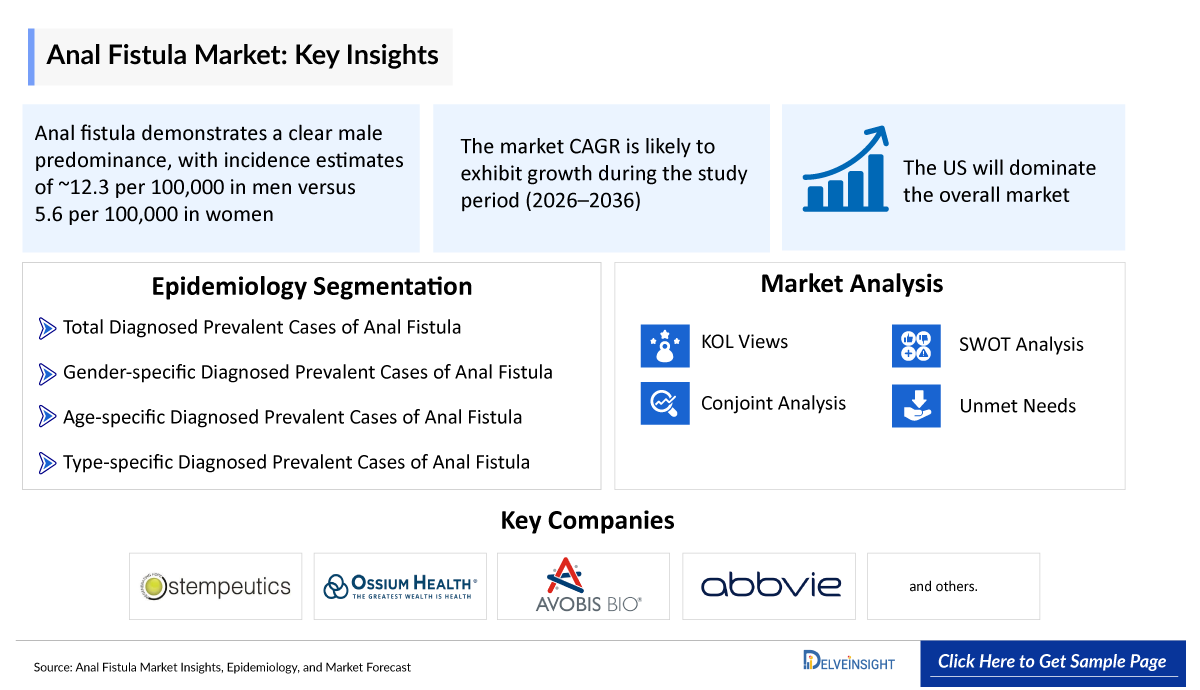
DelveInsight's ‘Anal Fistula Market Insights, Epidemiology and Market Forecast – 2036’ report delivers an in-depth understanding of the Anal Fistula, historical and forecasted epidemiology, as well as Anal Fistula market trends in the United States, EU4 (Germany, Spain, Italy, and France) and the United Kingdom, and Japan.
The Anal Fistula market report delivers a comprehensive analysis of the current treatment landscape, including standards of care, clinical practices, and evolving therapeutic algorithms. It evaluates Anal Fistula patient burden trends, revenue and market share dynamics, peak patient share & therapy uptake analysis, and provides an in-depth market size assessment and growth rate projections (Historical & Forecast 2022–2036) across global regions. The report highlights key unmet medical needs in Anal Fistula and maps the competitive and clinical landscape to uncover high‑value opportunities, providing a clear outlook on future market growth potential.
|
Study Period |
2022–2036 |
|
Historical Year |
2022–2025 |
|
Forecast Period |
2026–2036 |
|
Base Year |
2026 |
|
Geographies Covered |
|
|
Anal Fistula Market CAGR (Study period/Forecast period) |
XX% (2026 ̶ 2036) |
|
Anal Fistula Epidemiology Segmentation Analysis |
Patient Burden Assessment
|
|
Anal Fistula Companies |
|
|
Anal Fistula Therapies |
|
|
Anal Fistula Market |
Segmented by
|
|
Analysis |
|
Key Factors Driving the Anal Fistula Market
Anal Fistula Patient Pool and Rising Disease Burden
Anal fistula is a chronic anorectal condition characterized by abnormal communication between the anal canal and perianal skin, often developing following anorectal abscesses or in association with inflammatory disorders such as Crohn's Disease. The disease burden continues to rise due to increasing incidence of perianal infections, growing prevalence of Crohn’s disease, improved diagnosis of complex fistulizing conditions, and expanding awareness among colorectal specialists. The United States represents a major market due to higher diagnosis rates, established colorectal care infrastructure, and increasing utilization of advanced imaging and surgical interventions.
Anal Fistula Market Growth and Treatment Landscape
The Anal Fistula market is expected to witness steady growth through 2036, driven by increasing diagnosis of complex and recurrent fistulas, growing demand for sphincter-preserving procedures, and limitations associated with conventional surgical approaches. Current treatment remains heavily procedure-driven and includes fistulotomy, seton placement, advancement flap procedures, LIFT, and adjunctive medical therapies. However, high recurrence rates, repeated surgical interventions, and risk of fecal incontinence continue to create demand for more durable and targeted treatment strategies.
Anal Fistula Emerging Therapies
Emerging therapies are increasingly focused on regenerative medicine and tissue-repair approaches aimed at improving healing outcomes while preserving sphincter integrity. Stem-cell therapies, autologous and allogeneic mesenchymal cell platforms, biologic approaches, and advanced biomaterial-based interventions are under investigation, particularly for complex and Crohn’s-associated fistulas. These next-generation approaches seek to reduce recurrence, improve long-term healing rates, and address the limitations of conventional surgical management.
Anal Fistula Clinical Trials and Competitive Landscape
Ongoing clinical development is evaluating stem-cell therapies, biologic approaches, and minimally invasive sphincter-preserving technologies for refractory and complex disease. Key companies active in the competitive landscape include Takeda, Stempeutics Research, Avobis Bio Therapeutics, and Abbvie. The competitive environment is expected to evolve as companies focus on regenerative platforms and minimally invasive technologies designed to improve durable fistula closure and patient quality of life.
Anal Fistula Understanding and Treatment Algorithm
Anal Fistula Overview and Diagnosis
Anal fistula is a chronic anorectal disorder characterized by an abnormal epithelialized tract connecting the anal canal or rectum to the perianal skin. It most commonly develops as a consequence of cryptoglandular infection following anorectal abscess formation, although it may also occur secondary to inflammatory conditions such as Crohn's Disease, trauma, radiation exposure, malignancy, or prior anorectal surgery. Anal fistulas are broadly classified as simple or complex based on tract anatomy and sphincter involvement, with complex fistulas often associated with higher recurrence risk and greater treatment challenges. Symptoms commonly include persistent pain, purulent discharge, swelling, recurrent abscesses, and impaired quality of life.
Anal Fistula Diagnosis
Diagnosis of anal fistula typically begins with clinical history and physical examination, including inspection of external openings and digital rectal examination. Imaging techniques have become increasingly important for accurate anatomical characterization and treatment planning, particularly in complex or recurrent disease. Pelvic MRI is considered the preferred imaging modality due to its high sensitivity in identifying fistula tracts and secondary extensions, while endoanal ultrasonography and examination under anesthesia may provide additional anatomical detail. Early and accurate diagnosis is critical for guiding treatment selection, minimizing recurrence risk, and preserving anal sphincter function.
Further details are provided in the report.
Anal Fistula Treatment
The treatment of Anal Fistula depends on fistula complexity, anatomical location, sphincter involvement, recurrence status, and the presence of associated conditions such as Crohn's Disease. Management strategies include both surgical and supportive approaches aimed at eradicating the fistula tract, preventing recurrence, preserving sphincter integrity, and improving patient quality of life. Common interventions include antibiotics for infection control, drainage of associated abscesses, seton placement, fistulotomy, advancement flap procedures, and minimally invasive sphincter-preserving techniques. Treatment selection is highly individualized, particularly in patients with recurrent or complex disease.
For simple cryptoglandular fistulas, fistulotomy remains the standard treatment and is associated with high healing rates; however, the procedure may carry a risk of sphincter injury in selected patients. Complex fistulas often require sphincter-preserving procedures such as seton drainage, endorectal advancement flap repair, ligation of the intersphincteric fistula tract (LIFT), fibrin glue injection, fistula plugs, and minimally invasive techniques such as video-assisted anal fistula treatment (VAAFT) and fistula laser closure (FiLaC). These procedures are intended to improve healing while minimizing recurrence and preserving continence.
For Crohn’s-associated fistulas and inflammatory fistulizing disease, treatment frequently involves a combination of surgery and medical therapy. Biologic agents, particularly anti-TNF therapies such as infliximab and adalimumab, are commonly used to reduce inflammation and support fistula closure, often in conjunction with drainage procedures and seton placement. Despite these approaches, recurrence rates remain substantial and durable long-term healing remains difficult to achieve, particularly in refractory disease.
Recent advances in regenerative medicine and tissue-repair strategies are transforming the treatment landscape. Stem-cell therapies, mesenchymal stromal cell platforms, biomaterial-assisted closure technologies, and novel sphincter-preserving approaches are under clinical evaluation to improve healing outcomes and reduce treatment burden.
Further details related to country-based variations are provided in the report.
Anal Fistula Unmet Needs
The section “unmet needs of Anal Fistula” outlines the critical gaps between the current state of patient care, diagnosis, and the ideal & effective management of the disease. It highlights the obstacles experienced by patients, clinicians, and researchers and identifies potential solutions for future progress.
- Lack of highly effective and durable therapies capable of achieving complete fistula healing while preventing recurrence and preserving sphincter function
- High recurrence rates following conventional surgical interventions, often resulting in repeated procedures and prolonged treatment burden
- Risk of fecal incontinence associated with fistulotomy and other invasive procedures, particularly in complex or high anal fistulas
- Absence of approved targeted pharmacologic therapies specifically indicated for cryptoglandular Anal Fistula, resulting in heavy reliance on surgery-based management
- Limited treatment options for patients with complex, recurrent, branching, or treatment-resistant fistulas that demonstrate poor long-term healing outcomes and others…..
Comprehensive unmet needs insights in Anal Fistula and their strategic implications are provided in the full report.
Anal Fistula Epidemiology
Key Findings from Anal Fistula Epidemiological Analysis and Forecast
- The epidemiology of Anal Fistula is segmented based on underlying etiologies and disease characteristics, including cryptoglandular fistulas, fistulas associated with Crohn's Disease, recurrent fistulas, and complex fistulizing disease. The patient population is further categorized into diagnosed cases, fistula complexity-specific cases, recurrence-based populations, and treated patient pools across the 7MM.
- The prevalence of Anal Fistula continues to increase globally, primarily driven by rising incidence of anorectal abscesses, increasing prevalence of inflammatory bowel diseases, improved disease recognition, and expanding access to specialist colorectal care. Adults in younger and middle-aged populations represent a substantial proportion of affected patients.
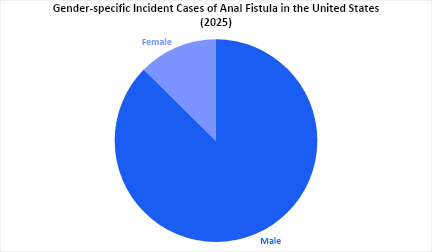
- Male patients account for a larger proportion of the Anal Fistula population compared with females, with epidemiological studies consistently demonstrating a higher incidence among men, potentially due to differences in anorectal gland anatomy and disease susceptibility patterns.
- Anal fistula is a relatively uncommon but clinically significant anorectal disorder, with reported incidence ranging from approximately 1–8 cases per 10,000 individuals annually, contributing a substantial healthcare burden due to recurrence and need for repeated interventions.
- Anal fistula demonstrates a clear male predominance, with incidence estimates of approximately 12.3 per 100,000 in men versus 5.6 per 100,000 in women, indicating nearly a two-fold greater disease burden among males.
- Cryptoglandular Anal Fistula accounts for the majority of prevalent cases across the 7MM and remains the leading etiology among diagnosed patients.
- Cases associated with Crohn’s disease represent a smaller proportion of total diagnosed Anal Fistula prevalence but contribute disproportionately to severe, recurrent, and treatment-resistant disease burden due to complex tract anatomy and lower long-term healing rates.
- The pooled analysis estimated an overall anal fistula prevalence of approximately 18.37 cases per 100,000 individuals across European populations, emphasizing that although relatively uncommon, anal fistula remains an important chronic anorectal condition associated with significant healthcare burden and quality-of-life impairment.
Anal Fistula Drug Chapters & Competitive Analysis
The Anal Fistula drug chapter provides a detailed, market-focused review of the emerging pipeline across Phase I–III clinical trials. It covers the mechanism of action, clinical trial data, regulatory approvals, patents, collaborations, and strategic partnerships for each therapy, along with their advantages, limitations, and recent developments. This section offers critical insights into the anal fisula treatment landscape, supporting market assessment, competitive analysis, and growth forecasting for the anal fistula therapeutics market.
Anal Fistula Pipeline Analysis
AVB-114: Avobis Bio Therapeutics
AVB-114, developed by Avobis Bio Therapeutics, is an autologous adipose-derived mesenchymal stem-cell therapy being investigated for complex perianal fistulas associated with Crohn's Disease. The therapy is designed to provide localized anti-inflammatory and regenerative effects that promote fistula closure while preserving sphincter function. AVB-114 is administered locally into fistula tissue and aims to improve healing outcomes and reduce recurrence. The therapy is currently in Phase II clinical development for Crohn’s-associated perianal fistulas and represents an emerging regenerative medicine approach in Anal Fistula management.
Stempeucel: Stempeutics Research
Stempeucel, developed by Stempeutics Research, is an allogeneic mesenchymal stromal cell (MSC)-based therapy being investigated for the treatment of perianal fistulas associated with Crohn's Disease. The therapy is designed to exert localized immunomodulatory and anti-inflammatory effects that promote tissue repair and facilitate fistula closure while preserving sphincter integrity. Stempeucel utilizes an off-the-shelf pooled stem-cell platform intended to provide scalable manufacturing and consistent product quality. Stempeucel is currently in Phase I/II clinical development for perianal fistulizing Crohn’s disease.
|
Table 1: Comparison of Emerging Drugs Under Development | |||||||
|
Drug Name |
Company |
Highest Phase |
Indication |
RoA |
MoA |
Molecule Type |
Anticipated Launch in the US |
|
AVB-114 |
Avobis Bio Therapeutics |
II |
Complex perianal fistulas associated with Crohn's Disease |
Local injection |
Autologous adipose-derived mesenchymal stem-cell therapy designed to provide localized immunomodulatory, anti-inflammatory, and regenerative effects to promote fistula closure |
Autologous mesenchymal stem-cell therapy |
Information is available in the full report |
|
Stempeucel |
Stempeutics Research |
II/III |
Perianal fistulas associated with Crohn's Disease |
Local injection |
Allogeneic mesenchymal stromal cell therapy designed to reduce inflammation and support tissue repair and fistula healing |
Autologous mesenchymal stem-cell therapy |
Information is available in the full report |
Note: A detailed emerging therapies assessment will be provided in the final report
Anal Fistula Key Players, and Emerging Companies
- Stempeutics Research
- Ossium Health
- Avobis Bio Therapeutics
- Abbvie, and others
Anal Fistula Key Players Drug Updates
- In October 2025, Avobis Bio Therapeutics announced that the US FDA granted Regenerative Medicine Advanced Therapy (RMAT) designation to AVB-114 for Crohn’s perianal fistulas. The designation followed encouraging Phase II findings and strengthened regulatory interactions supporting future Phase III development planning.
- In August 2025, Avobis Bio Therapeutics completed the primary analysis of the STOMP-II Phase II trial evaluating AVB-114 in Crohn’s perianal fistulas. The company reported that the findings supported an RMAT submission and highlighted continued advancement of implantable regenerative therapies for complex fistulizing disease.
- In February 2025, Avobis Bio Therapeutics Fast Track Update announced that the US FDA granted Fast Track designation to AVB-114 for Crohn’s perianal fistulas based on positive Phase I STOMP-I findings, reflecting increasing regulatory support for regenerative treatment approaches in refractory fistulizing disease.
Drug Class Insights
Anal Fistula Market Outlook
The anal fistula treatment market is gradually shifting from traditional surgical management toward minimally invasive and sphincter-preserving therapies. Conventional procedures such as fistulotomy and seton placement continue to dominate treatment, particularly for simple fistulas, due to their established efficacy and broad clinical adoption. However, concerns regarding recurrence and postoperative continence complications are increasing demand for advanced procedures such as LIFT, advancement flap surgery, and laser-assisted treatments. Improved diagnostic imaging, especially MRI-based fistula mapping, is also supporting more precise treatment planning and better patient outcomes.
The current treatment landscape remains fragmented because no single therapy consistently provides durable healing across all fistula types. In complex and Crohn’s disease-associated fistulas, biologic therapies are increasingly used alongside surgical interventions to reduce inflammation and improve healing rates. Minimally invasive approaches such as FiLaC and VAAFT are gaining attention due to reduced recovery times and lower sphincter injury risk, although long-term efficacy data remain variable. Biomaterial plugs and collagen matrices continue to have selective use, while regenerative medicine, particularly mesenchymal stem cell therapy, is emerging as a promising area for recurrent and treatment-resistant fistulas. Looking forward, the market is expected to increasingly focus on regenerative medicine, personalized treatment strategies, and combination medical-surgical approaches. Growth will likely be driven by rising inflammatory bowel disease prevalence, greater awareness of quality-of-life outcomes, and expanding adoption of outpatient colorectal procedures. North America and Europe remain leading markets for biologics and advanced therapies, while Asia-Pacific is expected to see strong growth due to improving healthcare infrastructure and specialist care access. Despite ongoing innovation, high recurrence rates and the need for continence preservation continue to represent major unmet needs, supporting continued investment in advanced and minimally invasive treatment technologies.
Further details will be provided in the report….
Drug Class/Insights into Leading Emerging and Marketed Therapies in Anal Fistula (2022–2036 Forecast)
Anal Fistula treatment has traditionally relied on surgical procedures such as fistulotomy, seton placement, advancement flaps, and LIFT, while pharmacologic therapies, particularly TNF alpha inhibitors like infliximab and adalimumab, are mainly used as adjunctive treatments in complex and fistulizing Crohn’s disease. Although these biologics help reduce inflammation and support fistula closure, treatment durability remains limited and recurrence rates remain high, especially in complex or recurrent cases.
The current market reveals a significant gap between inflammation control and true tissue restoration, as traditional biologics reduce inflammatory burden but fail to directly repair damaged tissue or achieve sustained fistula closure. This has shifted clinical and development focus toward next generation therapies that promote tissue regeneration, immunomodulation, and durable structural healing.
The emerging Anal Fistula pipeline is increasingly shifting toward regenerative medicine and cell based therapies, particularly mesenchymal stem cell (MSC) therapies that combine localized immunomodulation with tissue repair to promote durable fistula healing while preserving sphincter integrity. Emerging candidates such as AVB-114 and Stempeucel are being developed for complex Crohn’s associated perianal fistulas, with potential benefits including reduced recurrence, fewer repeat procedures, and improved functional outcomes, while additional innovation in biomaterial assisted and localized repair platforms continues to expand the treatment landscape.
Further details will be provided in the report….
Anal Fistula Drug Uptake
This section focuses on the uptake rate of potential drugs expected to be launched in the market during the forecast period (2026–2036). The analysis covers the Anal Fistula market's uptake by drugs, patient uptake by therapy, and sales of each drug.
Among currently utilized therapies, anti-TNF biologics such as infliximab and adalimumab are expected to continue demonstrating uptake in fistulizing Crohn's Disease due to their established role in controlling inflammation and supporting fistula closure. However, long-term utilization may remain constrained by variable efficacy, recurrence risk, and incomplete durable healing outcomes, particularly in complex and refractory disease.
A key treatment trend is the rising adoption of regenerative and sphincter preserving therapies aimed at reducing recurrence, repeat surgeries, and treatment related morbidity. Emerging cell based therapies such as AVB-114 and Stempeucel are gaining clinical interest due to their potential to deliver localized immunomodulation, durable fistula healing, and improved long term closure rates while overcoming limitations of conventional treatments.
Further detailed analysis of emerging therapies' drug uptake in the report…
Market Access and Reimbursement of Anal Fistula
Reimbursement is a crucial factor that affects the drug’s access to the market. Often, the decision to reimburse comes down to the price of the drug relative to the benefit it produces in treated patients. To reduce the healthcare burden of these high-cost therapies, many payment models are being considered by payers and other industry insiders.
Further details are provided in the final report….
Anal Fistula Therapies Price Scenario & Trends
Pricing and analogue assessment of Anal Fistula therapies highlights evolving price dynamics structures. This section summarizes the cost of approved treatments, closest and most appropriate analogue selection for emerging therapies, and understanding of how pricing influences market access, adherence, and long-term uptake.
Further details are provided in the final report….
Industry Experts and Physician Views for Anal Fistula
To keep up with Anal Fistula market trends, we take Key Opinion Leaders (KOLs) and Subject Matter Experts (SMEs) opinions working in the domain through primary research to fill the data gaps and validate our secondary research. Industry experts were contacted for insights on the Anal Fistula emerging therapies, evolving treatment landscape, patient adherence to conventional therapies, therapy switching trends, drug adoption and uptake, accessibility challenges, and epidemiology and real-world prescription patterns in Anal Fistula, including MD, PhD, Instructor, Postdoctoral Researcher, Professor, Researcher, and others.
DelveInsight’s analysts connected with 10+ KOLs to gather insights; however, interviews were conducted with 6+ KOLs in the 7MM. Centers such as the Harvard Medical School Department of Ophthalmology, American Optometric Association, etc. were contacted. Their opinion helps understand and validate current and emerging Anal Fistula therapies, highlight unmet medical needs, provide epidemiological context, and support strategic decisions for market access, therapy adoption, and pipeline prioritization in Anal Fistula.
|
Region |
Key Opinion Leaders (KOLs) and Subject Matter Experts (SMEs) |
|
United States |
“Despite advancements in surgical techniques and biologic therapies, recurrence remains one of the greatest challenges in anal fistula management. Durable healing without compromising sphincter function continues to represent a significant unmet need, particularly in complex and recurrent fistulas.” |
|
Japan |
“Current treatment approaches achieve symptom improvement in many patients; however, preserving continence while achieving long-term fistula closure remains difficult. Less invasive and tissue-preserving therapeutic strategies are increasingly needed.” |
Qualitative Analysis: SWOT and Conjoint Analysis
We perform qualitative and market Intelligence analysis using various approaches, such as SWOT analysis and conjoint analysis. In the SWOT analysis of Anal Fistula, strengths, weaknesses, opportunities, and threats in terms of disease diagnosis, patient awareness, patient burden, competitive landscape, cost-effectiveness, and geographical accessibility of therapies are provided.
Conjoint analysis analyzes emerging therapies based on relevant attributes such as safety, efficacy, frequency of administration, route of administration, and order of entry. Scoring is given based on these parameters to analyze the effectiveness of therapy.
The team of analysts analyzes promising emerging therapies based on relevant attributes such as safety, efficacy, frequency of administration, route of administration, and order of entry. In efficacy, the trial’s primary and secondary outcome measures are evaluated, whereas the therapies’ safety is evaluated, wherein the acceptability, tolerability, and adverse events are majorly observed. In addition, the scoring is also based on the route of administration, order of entry, probability of success, and the addressable patient pool for each therapy. According to these parameters, the final weightage score and the ranking of the emerging therapies are decided.
Scope of the Report
- The report covers a segment of key events, an executive summary, a descriptive overview of Anal Fistula, explaining its causes, signs and symptoms, pathogenesis, and currently available treatments.
- Comprehensive insight has been provided into the epidemiology segments and forecasts, the future growth potential of the diagnosis rate, and disease progression along treatment guidelines.
- Additionally, an all-inclusive account of both the current and emerging treatments, along with the elaborative profiles of late-stage and prominent therapies, will have an impact on the current treatment landscape.
- A detailed review of the anal cancer market, historical and forecasted market size, market share by therapies, detailed assumptions, and rationale behind our approach is included in the report, covering the 7MM drug outreach.
- The report provides an edge while developing business strategies by understanding trends through SWOT analysis and expert insights/KOL views, patient journey, and treatment preferences that help in shaping and driving the 7MM anal cancer market.
Report Insights
- Anal Fistula Patient Population Forecast
- Anal Fistula Therapeutics Market Size
- Anal Fistula Pipeline Analysis
- Anal Fistula Market Size and Trends
- Anal Fistula Market Opportunity (Current and Forecasted)
Report Key Strengths
- Epidemiology‑based (Epi‑based) Bottom‑up Forecasting
- Artificial Intelligence (AI)-enabled Market Research Report
- 11-year forecast
- Anal Fistula Market Outlook (North America, Europe, Asia-Pacific)
- Patient Burden Trends (by geography)
- Anal Fistula Treatment Addressable Market (TAM)
- Anal Fistula Competitive Landscape
- Anal Fistula Major Companies Insights
- Anal Fistula Price Trends and Analogue Assessment
- Anal Fistula Therapies Drug Adoption/Uptake
- Anal Fistula Therapies Peak Patient Share analysis
Report Assessment
- Anal Fistula Current Treatment Practices
- Anal Fistula Unmet Needs
- Anal Fistula Clinical Development Analysis
- Anal Fistula Emerging Drugs Product Profiles
- Anal Fistula Market Attractiveness
- Anal Fistula Qualitative Analysis (SWOT and Conjoint Analysis)
FAQs
Market Insights
- What was the Anal Fistula market size, the market size by therapies, market share (%) distribution in 2025, and what would it look like by 2036? What are the contributing factors for this growth?
- What are the anticipated pricing variations among different geographies for the emerging therapies in the future?
- What can be the future treatment paradigm of Anal Fistula?
- What are the disease risks, burdens, and unmet needs of Anal Fistula? What will be the growth opportunities across the 7MM concerning the patient population with Anal Fistula?
- Who is the major future competitor in the market, and how will the competitors affect their market share?
- What are the current options for the treatment of Anal Fistula? What are the current guidelines for treating Anal Fistula in the US, Europe, and Japan?
Reasons to Buy
- The report will help in developing business strategies by understanding the latest trends and changing treatment dynamics driving the Anal Fistula market.
- Bottom-up forecasting builds from the affected population to product forecasts, delivering a robust, data-driven approach ideal for new therapies and novel classes.
- Insights on patient burden/disease incidence, evolution in diagnosis, and factors contributing to the change in the epidemiology of the disease during the forecast years.
- Understand the existing market opportunities in varying geographies and the growth potential over the coming years.
- Identifying strong upcoming players in the market will help devise strategies to help get ahead of competitors.
- Detailed analysis and ranking of class-wise potential current and emerging therapies under the conjoint analysis section to provide visibility around leading classes.
- To understand KOLs’ perspectives on the accessibility, acceptability, and compliance-related challenges of existing treatment to overcome barriers in the future.
- Detailed insights on the unmet needs of the existing market so that the upcoming players can strengthen their development and launch strategy.
- This Artificial Intelligence (AI)-enabled report summarize and simplify complex datasets within the report into clear, actionable insights for stakeholders, investors, and healthcare providers, enabling faster, data-driven decisions.