Anaplastic Thyroid Cancer (ATC) Market
Key Highlights
- Anaplastic Thyroid Cancer (ATC) is a rare and aggressive form of thyroid cancer that grows rapidly and is often fatal.
- All cases are classified as Stage IV, with sub-stages: IVA (limited to thyroid), IVB (in thyroid and neck), and IVC (spread to other body parts).
- About 10% of patients have anaplastic thyroid cancer that is present only in the thyroid, and approximately 40% of those diagnosed have cancer that is localized in the neck and/or lymph nodes.
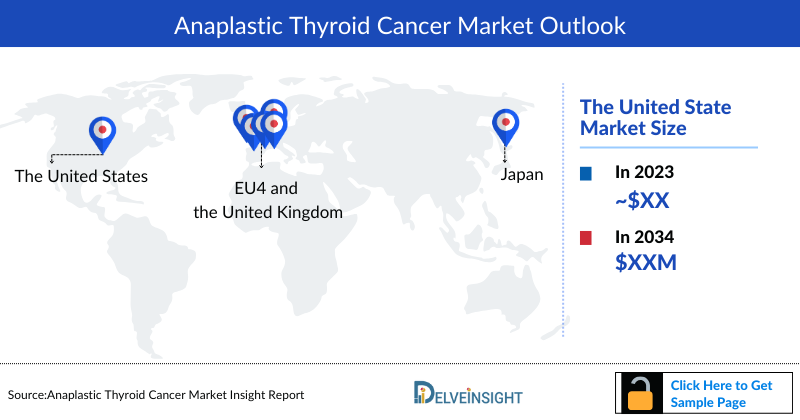
- The United States accounts for the largest market size of Anaplastic Thyroid Cancer, in comparison to EU4 (Germany, Spain, Italy, France), the United Kingdom, and Japan.
- Currently only Novartis’ combination therapy – TAFINLAR (dabrafenib) and MEKINIST (trametinib), is approved for anaplastic thyroid cancer.
- Besides, AIC100 (CAR-T), Novartis’ PDR001 and MSD’ pembrolizumab are being investigated in Phase II studies for the treatment of Anaplastic Thyroid Cancer.

DelveInsight's “Anaplastic Thyroid Cancer (ATC) – Market Insights, Epidemiology and Market Forecast – 2034” report delivers an in-depth understanding of Anaplastic Thyroid Cancer, historical and forecasted epidemiology as well as the Anaplastic Thyroid Cancer market trends in the United States, EU4 (Germany, Spain, Italy, and France) and the United Kingdom, and Japan.
Anaplastic Thyroid Cancer market report provides real-world prescription pattern analysis, emerging drugs, market share of individual therapies, and historical and forecasted 7MM Anaplastic Thyroid Cancer market size from 2020 to 2034. The report also covers current Anaplastic Thyroid Cancer treatment practices/algorithms and unmet medical needs to curate the best opportunities and assess the market’s underlying potential.
Geography Covered
- The United States
- EU4 (Germany, France, Italy, and Spain) and the United Kingdom
- Japan
|
Study Period |
2020 to 2034 |
|
Forecast Period |
2024-2034 |
|
Geographies Covered |
|
|
Anaplastic Thyroid Cancer Epidemiology |
Segmented by:
|
|
Anaplastic Thyroid Cancer Market |
Segmented by:
|
|
Anaplastic Thyroid Cancer key companies |
NOVARTIS |
|
Analysis |
|
Anaplastic Thyroid Cancer Understanding and Treatment Algorithm
Anaplastic Thyroid Cancer Overview, Country-Specific Treatment Guidelines and Diagnosis
Anaplastic thyroid cancer is also known as undifferentiated thyroid cancer because the cells do not look or behave like typical thyroid cells. The cause of anaplastic thyroid cancer is unknown, however, in some cases it arises in the setting of differentiated thyroid cancers such as papillary or follicular thyroid cancers. Overall survival statistics are discouraging – with an average survival rate of 6 months and approximately 1 in 5 alive after 12 months.
Anaplastic thyroid cancer typically manifests as a neck lump or nodule, often visibly growing quickly. It may also cause difficulty swallowing, breathing, or hoarseness due to vocal cord paralysis. Diagnosis involves fine needle aspiration (FNA) or core biopsy, followed by comprehensive health assessment, including blood tests and imaging scans (CT, MRI, etc) to assess metastasis.
Anaplastic Thyroid Cancer Treatment
Unlike other thyroid cancers, it doesn't respond to radioactive iodine therapy or TSH suppression. Treatment typically involves a multidisciplinary approach, combining surgery, external beam radiation, and chemotherapy. Surgery is recommended if feasible, but when not possible, aggressive radiation and chemotherapy may still offer hope. New chemotherapy agents show promise in slowing cancer growth. Palliative care can help manage symptoms and treatment side effects. Each case is unique, and ongoing advancements offer hope for improved treatments.
Anaplastic Thyroid Cancer Epidemiology
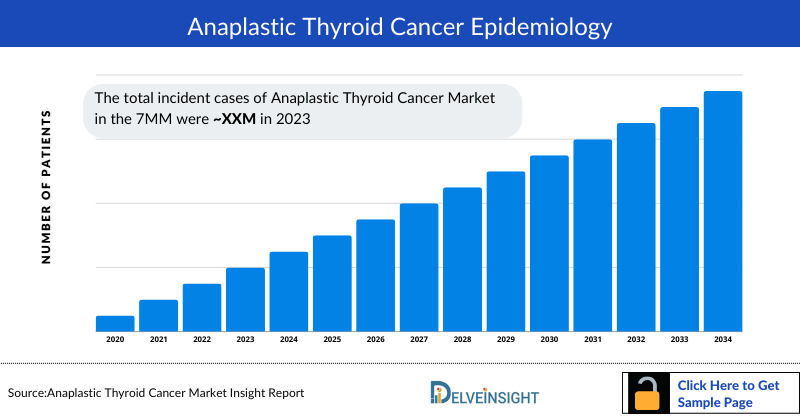
The Anaplastic Thyroid Cancer epidemiology chapter in the report provides historical as well as forecasted epidemiology in the 7MM covering the United States, EU4 countries (Germany, France, Italy, and Spain), the United Kingdom, and Japan from 2024 to 2034. The Anaplastic Thyroid Cancer epidemiology is segmented with detailed insights into incident cases, age- specific cases, gender-specific cases, mutation-specific cases, site-specific cases, and stage-specific cases.
Approximately 20–40% of anaplastic thyroid cancers (ATCs) exhibit mutations in RAS genes.
As per Delveinisght’s analysis, ATC is found to be more common in females, often preceded by longstanding goiter, particularly in endemic goiter regions.
ATC typically presents with advanced stages: 10–15% at stage IVA, 40–50% at stage IVB, and 40–45% at stage IVC, indicating widespread metastasis.
Anaplastic Thyroid Cancer Drug Chapter
The drug chapter segment of the Anaplastic Thyroid Cancer report encloses a detailed analysis of Anaplastic Thyroid Cancer marketed drugs and late-stage pipeline drugs. It also deep dives into the Anaplastic Thyroid Cancer pivotal clinical trial details, recent and expected market approvals, patent details, the latest news, and recent deals and collaborations.
Marketed Drugs
TAFINLAR and MEKINIST: NOVARTIS
In 2018, FDA has approved TAFINLAR (dabrafenib) in combination with MEKINIST (trametinib) for treating anaplastic thyroid cancer (ATC) that cannot be surgically removed or has metastasized, specifically in patients with the BRAF V600E mutation. This mutation, found in various cancers like melanoma and colorectal cancer, can promote cancer cell growth and spread.
TAFINLAR is a kinase inhibitor indicated in combination with trametinib, for the treatment of patients with locally advanced or metastatic anaplastic thyroid cancer (ATC) with BRAF V600E mutation and with no satisfactory loco-regional treatment options.
Dabrafenib is effective against mutated forms of BRAF kinases, specifically targeting BRAF V600E, V600K, and V600D enzymes with low IC50 values. Additionally, it inhibits wild-type BRAF and CRAF kinases, albeit with slightly higher IC50 values. However, it also has inhibitory effects on other kinases like SIK1, NEK11, and LIMK1 at higher concentrations. In combination with trametinib, dabrafenib exhibits enhanced growth inhibition of BRAF V600 mutation-positive tumors, both in vitro and in vivo. This combination therapy demonstrates prolonged inhibition of tumor growth compared to either drug alone.
MEKINIST is a kinase inhibitor indicated in combination with dabrafenib, for the treatment of patients with locally advanced or metastatic anaplastic thyroid cancer (ATC) with BRAF V600E mutation and with no satisfactory locoregional treatment options.
Trametinib is a reversible inhibitor of mitogen-activated extracellular signal-regulated kinase 1 (MEK1) and MEK2 activation and of MEK1 and MEK2 kinase activity. MEK proteins are upstream regulators of the extracellular signal-related kinase (ERK) pathway, which promotes cellular proliferation. BRAF V600E mutations result in constitutive activation of the BRAF pathway which includes MEK1 and MEK2. Trametinib inhibits cell growth of various BRAF V600 mutation-positive tumors. Trametinib and dabrafenib target two different kinases in the RAS/RAF/MEK/ERK pathway. Use of trametinib and dabrafenib in combination resulted in greater growth inhibition of BRAF V600 mutation-positive tumor cell lines in vitro and prolonged inhibition of tumor growth in BRAF V600 mutation-positive tumor xenografts compared with either drug alone.
Note: Detailed current therapies assessment will be provided in the full report of Anaplastic Thyroid Cancer
Emerging Drugs
AIC100: AffyImmune Therapeutics
AffyImmune Therapeutics' AIC100 is an autologous chimeric antigen receptor (CAR) T-cell therapy that has received fast track designation from the FDA for treating patients with anaplastic thyroid cancer and refractory poorly differentiated thyroid cancer.
This novel therapy is currently being investigated in a phase I study for patients with relapsed and/or refractory advanced thyroid cancer and anaplastic thyroid cancer. AIC100 aims to address the unmet medical need in the field of thyroid cancer by offering a potential treatment option for patients who have not responded to traditional therapies. The therapy involves the collection and expansion of autologous T cells to generate the AIC100 product, which is then infused at different dose levels following lymphodepleting therapy.
Note: Detailed emerging therapies assessment will be provided in the final report.
Anaplastic Thyroid Cancer Market Outlook
- Key players, such as AffyImmune Therapeutics, and others are evaluating their lead candidates in different stages of clinical development, respectively. They aim to investigate their products for the treatment of Anaplastic Thyroid Cancer.
- Treatment utilizes a multimodal therapy, which includes combination of excisional surgery, when possible, external beam radiation therapy (EBRT), chemotherapy and/or targeted therapy.
- NTRK inhibitor, RET inhibitor, BRAF and MEK inhibitors and ALK inhibitor are mostly used for the treatment as targeted therapies.
With increasing knowledge of the tumor biology, the identification of the underlying molecular pathways, associated immunomodulatory mechanisms of ATC, and the emerging role of novel, molecular-based single/multi-targeted therapies will impact the market positively.
Anaplastic Thyroid Cancer Drugs Uptake
This section focuses on the uptake rate of potential drugs expected to be launched in the market during 2024–2034, which depends on the competitive landscape, safety, and efficacy data along with order of entry. It is important to understand that the key players evaluating their novel therapies in the pivotal and confirmatory trials should remain vigilant when selecting appropriate comparators to stand the greatest chance of a positive opinion from regulatory bodies, leading to approval, smooth launch, and rapid uptake.
Further detailed analysis of emerging therapies drug uptake in the report…
Anaplastic Thyroid Cancer Activities
The report provides insights into a therapeutic candidate in Phase I stages. It also analyzes key players involved in developing targeted therapeutics.
Pipeline Development Activities
The report covers information on collaborations, acquisitions and mergers, licensing, and patent details for Anaplastic Thyroid Cancer emerging therapies.
KOL Views
To keep up with the real-world scenario in current and emerging market trends, we take opinions from Key Industry leaders working in the domain through primary research to fill the data gaps and validate our secondary research. Industry Experts were contacted for insights on the evolving treatment landscape, patient reliance on conventional therapies, patient therapy switching acceptability, and drug uptake along with challenges related to accessibility.
DelveInsight’s analysts connected with 30+ KOLs to gather insights; however, interviews were conducted with 15+ KOLs in the 7MM. Their opinion helps understand and validate current and emerging treatment patterns of Anaplastic Thyroid Cancer. This will support the clients in potential upcoming novel treatments by identifying the overall scenario of the market and the unmet needs.
Qualitative Analysis
We perform Qualitative and market Intelligence analysis using various approaches, such as SWOT analysis and Conjoint Analysis. In the SWOT analysis, strengths, weaknesses, opportunities, and threats in terms of gaps in disease diagnosis, patient awareness, physician acceptability, competitive landscape, cost-effectiveness, and geographical accessibility of therapies are provided.
Conjoint Analysis analyzes multiple approved and emerging therapies based on relevant attributes such as safety, efficacy, frequency of administration, route of administration, and order of entry. Scoring is given based on these parameters to analyze the effectiveness of therapy.
Further, the therapies’ safety is evaluated wherein the acceptability, tolerability, and adverse events are majorly observed, and it sets a clear understanding of the side effects posed by the drug in the trials. In addition, the scoring is also based on the probability of success, and the addressable patient pool for each therapy. According to these parameters, the final weightage score and the ranking of the emerging therapies are decided.
Market Access and Reimbursement
The report further provides detailed insights on the country-wise accessibility and reimbursement scenarios, cost-effectiveness scenario of currently used therapies, programs making accessibility easier and out-of-pocket costs more affordable, insights on patients insured under federal or state government prescription drug programs, etc.
Scope of the Report
- The report covers a segment of key events, an executive summary, descriptive overview of Anaplastic Thyroid Cancer, explaining its causes, signs and symptoms, pathogenesis, and currently available therapies.
- Comprehensive insight has been provided into the epidemiology segments and forecasts, the future growth potential of diagnosis rate, and disease progression along with country specific treatment guidelines.
- Additionally, an all-inclusive account of both the current and emerging therapies, along with the elaborative profiles of late-stage and prominent therapies, will have an impact on the current treatment landscape.
- A detailed review of the Anaplastic Thyroid Cancer market, historical and forecasted market size, market share by therapies, detailed assumptions, and rationale behind our approach is included in the report, covering the 7MM drug outreach.
- The report provides an edge while developing business strategies, by understanding trends, through SWOT analysis and expert insights/KOL views, patient journey, and treatment preferences that help in shaping and driving the 7MM Anaplastic Thyroid Cancer market.
Anaplastic Thyroid Cancer Report Insights
- Patient Population
- Therapeutic Approaches
- Anaplastic Thyroid Cancer Pipeline Analysis
- Anaplastic Thyroid Cancer Market Size and Trends
- Existing and future Market Opportunity
Anaplastic Thyroid Cancer Report Key Strengths
- Eleven Years Forecast
- 7MM Coverage
- Anaplastic Thyroid Cancer Epidemiology Segmentation
- Inclusion of Country specific treatment guidelines
- KOL’s feedback on approved and emerging therapies
- Key Cross Competition
- Conjoint analysis
- Drugs Uptake and Key Market Forecast Assumptions
Anaplastic Thyroid Cancer Report Assessment
- Current Treatment Practices
- Unmet Needs
- Pipeline Product Profiles
- Market Attractiveness
- Qualitative Analysis (SWOT and Conjoint Analysis)
FAQs
- What is the growth rate of the 7MM Anaplastic Thyroid Cancer treatment market?
- What was the Anaplastic Thyroid Cancer total market size, the market size by therapies, market share (%) distribution in 2020, and what would it look like in 2034? What are the contributing factors/key catalysts for this growth?
- Is there any unexplored patient setting that can open the window for growth in the future?
- What are the pricing variations among different geographies for approved and off-label therapies?
- How would the market drivers, barriers, and future opportunities affect the market dynamics and subsequent analysis of the associated trends? Although multiple expert guidelines recommend testing for targetable mutations before therapy initiation, why do barriers to testing remain high?
- What are the current and emerging options for the treatment of Anaplastic Thyroid Cancer?
- How many companies are developing therapies for the treatment of Anaplastic Thyroid Cancer?
- What are the recent novel therapies, targets, mechanisms of action, and technologies developed to overcome the limitations of existing therapies?
- Patient/physician acceptability in terms of preferred treatment options as per real-world scenarios?
- What are the country-specific accessibility issues of expensive, recently approved therapies?
Reasons to buy
- The report will help in developing business strategies by understanding the latest trends and changing treatment dynamics driving the Anaplastic Thyroid Cancer Market.
- Insights on patient burden/disease prevalence, evolution in diagnosis, and factors contributing to the change in the epidemiology of the disease during the forecast years
- Understand the existing market opportunities in varying geographies and the growth potential over the coming years.
- Distribution of historical and current patient share based on real-world prescription data along with reported sales of approved products in the US, EU4 (Germany, France, Italy, and Spain), the United Kingdom, and Japan.
- Identifying strong upcoming players in the market will help devise strategies to help get ahead of competitors.
- Detailed analysis and ranking of class-wise potential current and emerging therapies under the conjoint analysis section to provide visibility around leading classes.
- Highlights of access and reimbursement policies of approved therapies, barriers to accessibility of expensive off-label therapies, and patient assistance programs.
- To understand Key Opinion Leaders’ perspectives around the accessibility, acceptability, and compliance-related challenges of existing treatment to overcome barriers in the future.
- Detailed insights on the unmet needs of the existing market so that the upcoming players can strengthen their development and launch strategy.