Asthma Market Summary
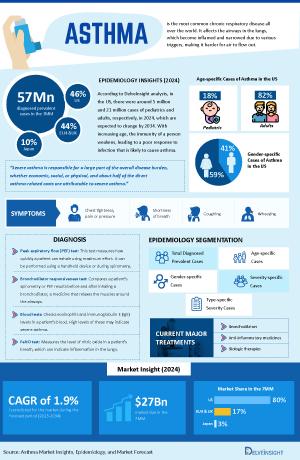
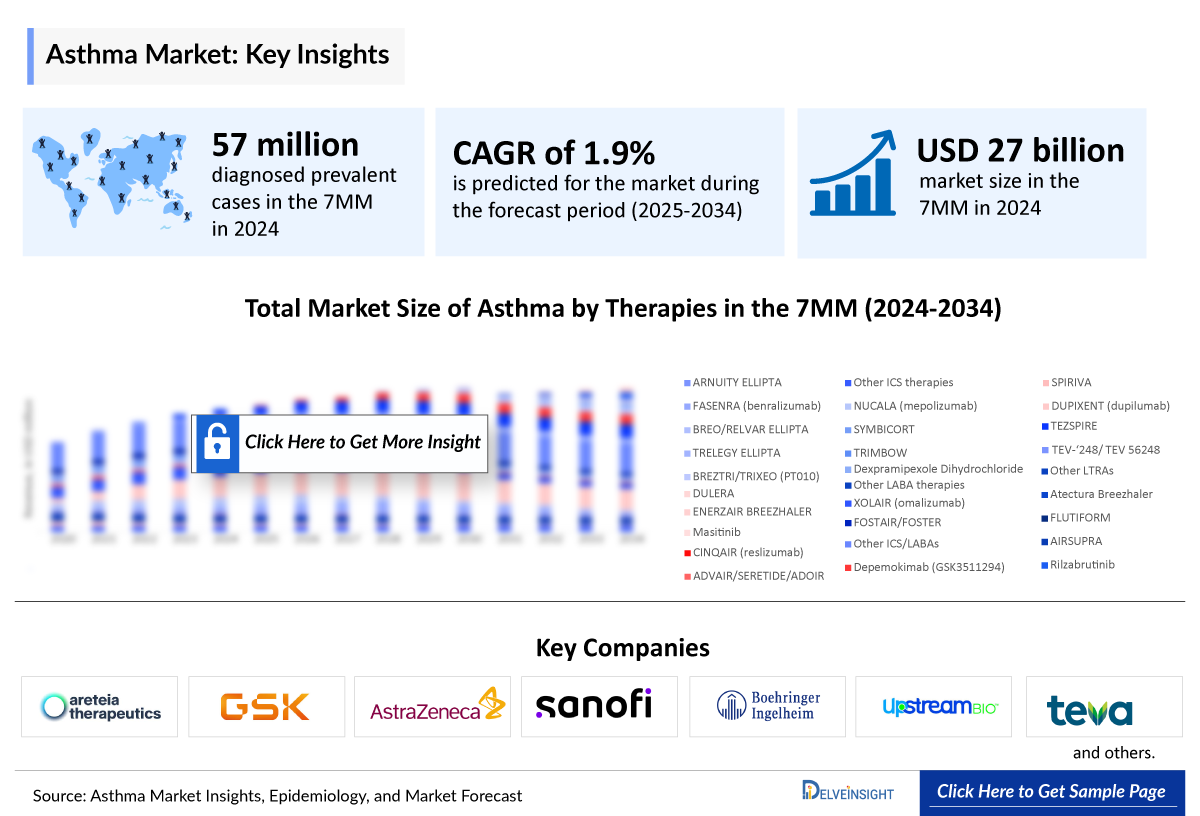
- Based on DelveInsight’s evaluation, the asthma market size across the 7MM was estimated at around USD 27 billion in 2024 and is expected to expand at a CAGR of 1.9% from 2026 to 2036.
- The Asthma companies developing therapies in the treatment landscape include - Sanofi, Regeneron Pharmaceuticals, Amgen, AstraZeneca, Areteia Therapeutics, GlaxoSmithKline, Chiesi Farmaceutici, Novartis, Teva Pharmaceuticals, and others.
Asthma Market and Epidemiology Analysis
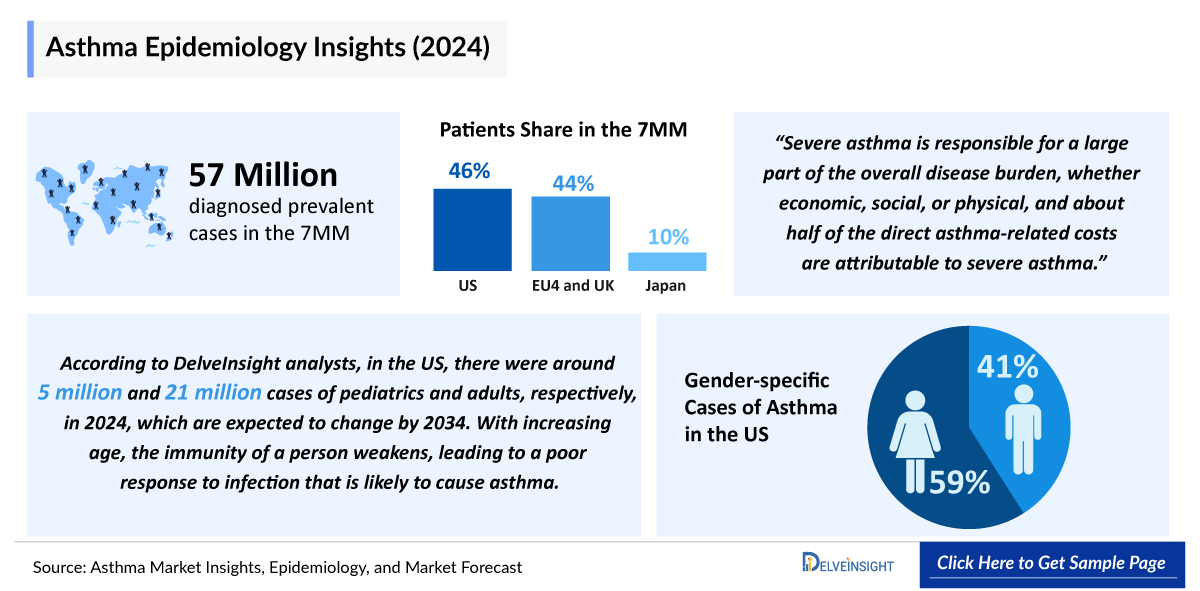
- According to DelveInsight’s estimates, in 2024, there were approximately 57 million total diagnosed prevalent cases of asthma in the 7MM. Of these, the US accounted for nearly 26 million of the cases, while the EU4 and the UK accounted for around 25 million and Japan represented approximately 6 million of the cases, respectively.
- The asthma market is projected to see consistent growth, with a robust Compound Annual Growth Rate anticipated from 2026 to 2036. This expansion across the 7MM will be driven by the introduction of innovative therapies, dexpramipexole, depemokimab (GSK3511294) and BREZTRI AEROSPHERE (PT-010), among others. Additionally, the rising prevalence of asthma, driven by factors such as urbanization, environmental pollution, aging populations, and increased awareness and diagnosis, is expected to further contribute to market growth
- In September 2025, Areteia Therapeutics announced positive Phase III results from the EXHALE-4 study, evaluating dexpramipexole as an oral add-on therapy for eosinophilic asthma. The findings support the drug's potential to improve outcomes in patients with this severe asthma subtype.
- In September 2025, AIRSUPRA’s U.S. Prescribing Information was updated to include data from the Phase IIIb BATURA study, which showed that as-needed AIRSUPRA reduced the risk of severe asthma exacerbations by 46% compared to albuterol in adults with mild asthma.
- Current management includes albuterol for quick relief, inhaled corticosteroids like budesonide for maintenance, and biologics such as omalizumab for severe allergic asthma. Off-label montelukast is also used in mild to moderate cases. While these therapies improve control and reduce exacerbations, they have limited impact on disease progression. Biologics offer targeted benefits but are constrained by cost, access, and variable response. Asthma care remains symptomatic, with no cure and persistent gaps in addressing airway remodeling and long-term lung function.
- Asthma management remains limited by a lack of disease-modifying therapies, with current treatments controlling symptoms but failing to reverse airway remodeling or halt progression. Non–type 2 asthma lacks effective options, and biologics show variable efficacy, high cost, and limited access. Poor adherence, inhaler misuse, persistent exacerbations, underdiagnosis, and limited pediatric treatments further hinder outcomes, underscoring the need for precision medicine and more accessible, long-term solutions.
- Areteia Therapeutics, GlaxoSmithKline, and AstraZeneca, among others are progressing their assets through various clinical trial phases, driving innovation in the asthma market and creating significant growth opportunities.
- Depemokimab is currently under review by the US FDA for the treatment of asthma characterized by Type 2 inflammation, with a PDUFA decision anticipated by December 16, 2025.
Request for unlocking the Sample Page of the "Asthma Market Insights"
Key Factors Driving the Asthma Market
- Rising Global Prevalence of Asthma: The increasing incidence of asthma across both pediatric and adult populations continues to expand the patient pool, directly driving demand for long-term treatment and management therapies.
- Growing Awareness and Improved Diagnosis Rates: Enhanced disease awareness, better access to healthcare, and improved diagnostic tools are leading to earlier and more accurate asthma diagnoses, increasing treatment adoption.
- Advancements in Targeted and Biologic Therapies: The development and uptake of biologics and targeted therapies for moderate-to-severe asthma are improving disease control and outcomes, contributing to higher market value.
- Increasing Environmental and Lifestyle Risk Factors: Rising air pollution, urbanization, smoking exposure, and occupational hazards are exacerbating asthma prevalence and severity, fueling sustained demand for asthma treatments.
- Strong Pipeline and Ongoing R&D Investments: Robust research activity and a growing pipeline of novel inhaled therapies and biologics are expected to enhance treatment options and drive market growth over the forecast period.
DelveInsight’s “Asthma Market Insights, Epidemiology, and Market Forecast – 2036” report delivers an in-depth understanding of asthma, historical and forecasted epidemiology, as well as the asthma therapeutics market trends in the United States, EU4 (Germany, France, Italy, and Spain) and the United Kingdom, and Japan.
The asthma market report provides current treatment practices, emerging drugs, market share of individual therapies, and current and forecasted 7MM asthma market size from 2022 to 2036. The report also covers asthma treatment practices/algorithms and unmet medical needs to curate the best opportunities and assess the market’s potential.
Scope of the Asthma Market | |
|
Study Period |
2022 to 2036 |
|
Forecast Period |
2026-2036 |
|
Geographies Covered |
|
|
Asthma Market |
|
|
Asthma Market Size | |
|
Asthma Companies |
Sanofi, Regeneron Pharmaceuticals, Amgen, AstraZeneca, Areteia Therapeutics, GlaxoSmithKline, Chiesi Farmaceutici, Novartis, Teva Pharmaceuticals, and others |
|
Asthma Epidemiology Segmentation |
|
Asthma Disease Understanding
Asthma overview
Asthma is the most prevalent chronic respiratory disease globally, marked by airway inflammation, bronchial hyper-responsiveness, and mucus overproduction. Triggers like allergens, pollution, or infections provoke a complex interplay between inflammation and airway remodeling, causing intermittent airflow obstruction. In severe asthma, this narrowing becomes persistent and less responsive to treatment, resulting in frequent exacerbations, reduced lung function, and life-threatening attacks. Despite its burden, the underlying biology remains poorly defined, and validated biomarkers for widespread clinical use are still lacking.
Severe asthma is categorized into Type 2 (T2) and non–Type 2 based on inflammatory profiles. T2 forms, driven by IgE, eosinophils, and cytokines like IL-4/IL-13, respond to targeted biologics, while non-T2 forms remain corticosteroid-resistant with limited options. Genetic variants (e.g., ORMDL3, TSLP) and environmental exposures (e.g., smoke, obesity, infections) shape both risk and treatment response. Subtypes like aspirin-exacerbated respiratory disease or occupational asthma involve unique pathophysiological mechanisms, emphasizing asthma’s heterogeneous and multifactorial nature.
Asthma diagnosis
Asthma diagnosis is established by identifying characteristic symptoms (e.g., wheezing, breathlessness, cough) and confirming variable airflow limitation using spirometry, which typically shows a reduced FEV1/FVC ratio and improvement after bronchodilator use (=12% and =200 mL increase in FEV1 per GINA). If spirometry is normal but asthma is still suspected, bronchoprovocation testing (e.g., with methacholine) can assess airway hyperresponsiveness, while FeNO testing (>40–50 ppb) supports Type 2 inflammation diagnosis. Peak expiratory flow (PEF) monitoring helps assess diurnal variability but is not diagnostic. Additional tests like SVC, pulse oximetry, and imaging may aid diagnosis in complex or atypical cases, but no single test alone confirms asthma—diagnosis relies on a combination of clinical features and objective lung function assessment.
Further details related to country-based variations are provided in the report…
Asthma treatment
Asthma management is guided by a stepwise, personalized approach aiming to control symptoms, prevent exacerbations, and maintain lung function. Initial therapy is based on symptom severity, with inhaled corticosteroids (ICS) as the cornerstone, often combined with formoterol for both maintenance and quick relief. Treatment is escalated or stepped down based on clinical response, with short-acting ß-agonists (SABA) reserved for as-needed relief.
For severe or uncontrolled asthma, phenotype-driven biologics (targeting IgE, IL-5, IL-4Ra, or TSLP) are used to suppress type 2 inflammation. Acute exacerbations require prompt use of inhaled bronchodilators, systemic steroids, and oxygen support; magnesium sulfate and ipratropium are added in moderate-to-severe attacks. In refractory cases, intubation or non-invasive ventilation may be needed. Regular follow-up ensures treatment optimization, inhaler technique review, and trigger avoidance, highlighting the need for integrated, evidence-based care.
Asthma Epidemiology
As the Asthma market is derived using a patient-based model, the asthma epidemiology chapter in the report provides historical as well as forecasted epidemiology segmented total diagnosed prevalent cases of asthma, age-specific cases of asthma, gender-specific cases of asthma, severity-specific cases of asthma and type-specific severity cases of asthma in the 7MM covering the United States, EU4 countries (Germany, France, Italy, and Spain) and the United Kingdom, and Japan from 2022 to 2036.
Key Findings from Asthma Epidemiological Analyses and Forecast
- According to DelveInsight’s estimates, the total diagnosed prevalent cases of asthma in the 7MM were around 57 million in 2024 which are expected to rise by 2036.
- Among the 7MM, the US accounted for nearly 26 million of the total diagnosed prevalent cases of asthma, with around 21 million cases in adults in 2024. These cases are expected to increase during the forecast period (2026–2036).
- In 2024, approximately 15.2 million females in the US were living with asthma—significantly higher than the 10.6 million cases reported among males.
- Based on severity-specific asthma cases in the US, there were around 9.3 million cases of intermittent asthma, nearly 7.4 million of mild, around 7.1 million of moderate, and approximately 1.9 million of severe asthma in 2024.
- In 2024, among EU4 and the UK, the UK reported the highest number of total diagnosed prevalent cases of asthma, with approximately 8.4 million cases, whereas Spain had the lowest cases, around 2.6 million.
- In France, the number of adult asthma cases in 2024 nearly 3.4 million is higher than the number of pediatric cases around 1.3 million.
- In Japan, as of 2024, there were an estimated 248 thousand severe asthma cases associated with Type 2 inflammation, while approximately 55 thousand cases were classified as Non-Type 2 inflammation.
Asthma Epidemiology Segmentation
- Total Diagnosed Prevalent Cases of Asthma
- Age-specific Cases of Asthma
- Gender-specific Cases of Asthma
- Severity-specific Cases of Asthma
- Type-specific Severity Cases of Asthma
Asthma Recent Developments
- In September 2025, Areteia Therapeutics announced positive Phase III results from the EXHALE-4 study, evaluating dexpramipexole as an oral add-on therapy for eosinophilic asthma. The findings support the drug's potential to improve outcomes in patients with this severe asthma subtype.
- In September 2025, AIRSUPRA’s U.S. Prescribing Information was updated to include data from the Phase IIIb BATURA study, which showed that as-needed AIRSUPRA reduced the risk of severe asthma exacerbations by 46% compared to albuterol in adults with mild asthma.
Asthma Drug Analysis
The drug chapter segment of the asthma report encloses a detailed analysis of asthma marketed drugs and mid to late-stage (Phase III and Phase II) Asthma pipeline drugs. It also helps understand the asthma clinical trial details, expressive pharmacological action, agreements and collaborations, approval and patent details, advantages and disadvantages of each included drug and the latest news and press releases.
Asthma Marketed Drugs
DUPIXENT (dupilumab): Sanofi/Regeneron Pharmaceuticals
DUPIXENT, developed by Sanofi and Regeneron, is a subcutaneous biologic delivered via prefilled syringe and administered under medical supervision. It is approved as an add-on maintenance therapy for patients aged 6 years and older with moderate-to-severe asthma driven by an eosinophilic phenotype or requiring oral corticosteroids. DUPIXENT targets and blocks IL-4 and IL-13 signaling, key drivers of Type 2 inflammation, offering a precise and effective approach to controlling uncontrolled asthma.
In January 2022, the EMA’s Committee for Medicinal Products for Human Use (CHMP) issued a positive opinion recommending the extension of DUPIXENT (dupilumab) approval in the EU to include add-on maintenance treatment for children aged 6–11 years with severe asthma and Type 2 inflammation, defined by elevated blood eosinophils and/or FeNO, who remain inadequately controlled on two maintenance therapies.
TEZSPIRE (tezepelumab): Amgen/AstraZeneca
Developed by AstraZeneca in collaboration with Amgen, TEZSPIRE (tezepelumab) is a first-in-class human monoclonal antibody that targets TSLP, a key epithelial cytokine driving the initiation and persistence of airway inflammation. By acting upstream of multiple inflammatory pathways, TEZSPIRE helps control allergic, eosinophilic, and other forms of severe asthma, including airway hyper-responsiveness. Its broad mechanism of action offers potential benefit regardless of biomarker status, making it a versatile option for a wide range of severe asthma patients.
In February 2023, the US FDA approved TEZSPIRE for self-administration in a prefilled, single-use pen for patients aged 12 years and older with severe asthma.
FASENRA (benralizumab): AstraZeneca
FASENRA (benralizumab), developed by AstraZeneca, is a monoclonal antibody that targets the IL-5 receptor alpha on eosinophils and recruits natural killer cells to trigger apoptosis, leading to rapid and near-complete eosinophil depletion. It is AstraZeneca’s first respiratory biologic, approved as an add-on maintenance therapy for severe eosinophilic asthma across the US, EU, Japan, and several other markets.
In April 2024, the US FDA approved FASENRA as an add-on maintenance treatment for children aged 6–11 years with severe eosinophilic asthma.
Comparison of Asthma Marketed Drugs | |||
|
Drug |
MoA |
RoA |
Company |
|
DUPIXENT (dupilumab) |
IL-4 and IL-13 signaling inhibitor |
SC |
Sanofi/Regeneron Pharmaceuticals |
|
TEZSPIRE (tezepelumab) |
Thymic stromal lymphopoietin inhibitors |
SC |
Amgen/AstraZeneca |
|
FASENRA (benralizumab) |
IL-5 antagonist |
SC |
AstraZeneca |
Asthma Emerging Drugs
Dexpramipexole: Areteia Therapeutics
Dexpramipexole is an oral small molecule with potent eosinophil-lowering and anti-sclerotic properties. It enhances mitochondrial efficiency, curbs reactive oxygen species (ROS) production, and inhibits apoptotic pathways, promoting cell survival under neurotoxic stress. Its neuroprotective potential is driven by a combination of antioxidant, antiapoptotic, and detoxifying mechanisms, alongside the upregulation of neurotrophic factors, positioning it as a promising candidate in inflammation-driven and neurodegenerative conditions.
Areteia Therapeutics’ first Phase III trial, EXHALE-4, is now fully enrolled, with top-line results expected in Q3 2025. Two additional Phase III trials, EXHALE-2 and EXHALE-3, are ongoing, with data readouts anticipated by the end of 2026.
Depemokimab (GSK3511294): GlaxoSmithKline
Depemokimab, developed by GSK, is a humanized anti-IL-5 monoclonal antibody engineered for subcutaneous use. As the first next-generation, ultra-long-acting biologic, it features enhanced IL-5 binding affinity and high potency, enabling twice-yearly dosing. By targeting IL-5, a central driver of eosinophil proliferation and survival, Depemokimab presents a promising treatment option for patients with severe eosinophilic asthma.
In September 2024, GSK presented the full Phase III SWIFT-1 and SWIFT-2 results for depemokimab in severe eosinophilic asthma at the European Respiratory Society (ERS) International Congress, accompanied by a simultaneous publication in the New England Journal of Medicine.
BREZTRI AEROSPHERE (BGF; PT-010): AstraZeneca
BREZTRI AEROSPHERE, by AstraZeneca, is a triple-combination inhaler delivering budesonide (ICS), glycopyrrolate (LAMA), and formoterol fumarate (LABA) via Aerosphere pMDI technology for enhanced lung deposition. Designed for patients needing more than dual therapy, it offers improved symptom control in obstructive airway diseases. While LABAs alone pose asthma-related risks, combining them with an ICS, as in BREZTRI, reduces this risk, making it a safer, more effective escalation option.
In May 2025, AstraZeneca reported that BREZTRI AEROSPHERE achieved all primary endpoints in the Phase III KALOS and LOGOS trials, demonstrating efficacy in patients with uncontrolled asthma.
AstraZeneca is conducting Phase III trials to assess the safety and efficacy of PT010 in adults and adolescents with severe asthma inadequately controlled with the standard of care.
Comparison of Asthma Emerging Drugs | ||||
|
Drug |
MoA |
RoA |
Company |
Phase |
|
Dexpramipexole |
Eosinophil lowering |
Oral |
Areteia Therapeutics |
III |
|
Depemokimab (GSK3511294) |
Long-acting anti-IL-5 antibody |
SC |
GlaxoSmithKline |
III |
|
BREZTRI AEROSPHERE (BGF; PT-010) |
β₂-agonist, glucocorticoid agonist, and muscarinic antagonist |
Inhalation |
AstraZeneca |
III |
|
XX |
XX |
XX |
XXX |
X |
Latest News
- In Feb 2026, the FDA approved GSK’s Exdensur (depemokimab) for the treatment of severe asthma in adults and children aged 12 and older. This approval is based on the SWIFT data, which highlighted the drug’s ability to significantly reduce exacerbations. As the first ultra-long-acting biologic with a six-month dosing schedule, depemokimab represents a paradigm shift in asthma management, moving from monthly or bi-monthly injections to twice-yearly treatment.
Asthma Drug Class Insights
Current pharmacologic strategies focus on symptom relief and exacerbation prevention, though they have limited influence on disease progression. Inhaled corticosteroids (ICS) remain the foundation of maintenance therapy and are commonly paired with long-acting beta-agonists (LABAs) in fixed-dose combinations like ENERZAIR BREEZHALER and TRIMBOW. For rapid relief, short-acting beta-agonists (SABAs) such as Albuterol are standard, and dual rescue options like AIRSUPRA (SABA + ICS) are emerging.
Other key classes include oral corticosteroids (OCS) for severe exacerbations, long-acting muscarinic antagonists (LAMAs) for add-on therapy, and biologics such as DUPIXENT (anti–IL-4Ra) for eosinophilic and allergic asthma. These biologics target IgE, IL-5, IL-5Ra, IL-4Ra, and TSLP, offering precision treatment for severe phenotypes.
Continued in report…
Asthma Market Outlook
Asthma is a common, chronic respiratory disease marked by reversible airflow obstruction and symptoms like wheezing, breathlessness, and coughing. Driven by airway inflammation and remodeling, it demands a control-based treatment approach. The goal: sustained symptom relief, reduced exacerbations, and preserved lung function, achieved through personalized, stepwise therapy and ongoing patient monitoring.
Long-term control therapies aim to prevent symptoms and reduce asthma flare-ups. Key classes include inhaled corticosteroids (the cornerstone of maintenance), biologics for severe type 2 asthma, leukotriene modifiers, mast cell stabilizers, long-acting bronchodilators (LABAs/LAMAs), and allergen immunotherapy (SCIT).
Current treatment options for moderate-to-severe asthma include biologics such as DUPIXENT (dupilumab), TEZSPIRE (tezepelumab), and FASENRA (benralizumab), approved as add-on maintenance therapies across various age groups and asthma phenotypes. Among these, FASENRA is the most recently approved, gaining the US FDA approval in April 2024 for children aged 6–11 years with severe eosinophilic asthma, highlighting continued expansion of biologics into pediatric populations.
Emerging therapies in asthma include dexpramipexole, depemokimab, and BREZTRI AEROSPHERE, among other candidates progressing through late-stage development. Dexpramipexole has top-line data from EXHALE-4 expected in Q3 2025, with additional trials ongoing. Depemokimab reported positive Phase III results in 2024, while BREZTRI AEROSPHERE met primary endpoints in two Phase III trials in May 2025. These, along with other investigational agents, reflect a robust pipeline targeting diverse asthma phenotypes and aiming to address persistent gaps in disease control.
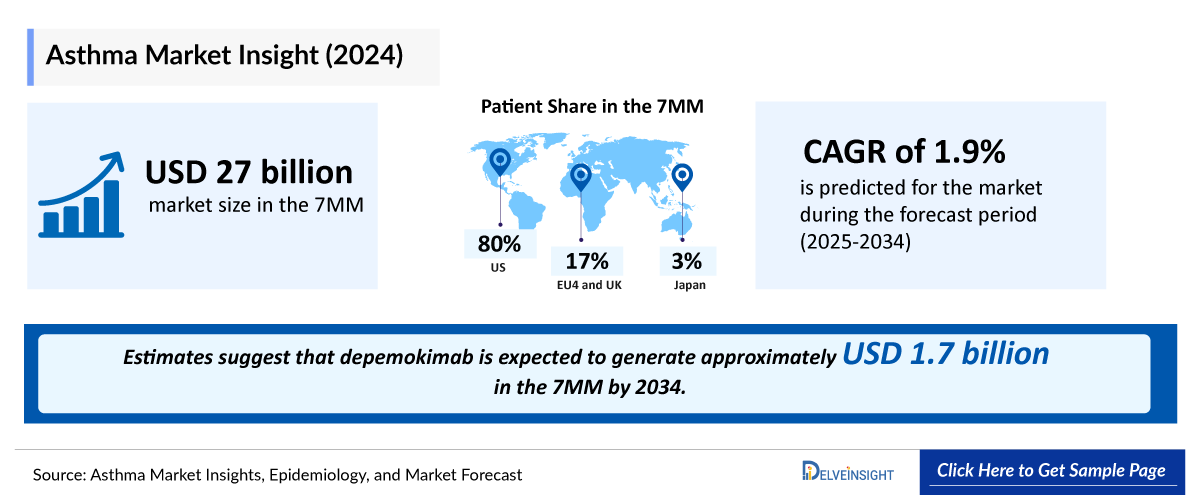
- The total market size of asthma in the 7MM was approximately USD 27 billion in 2024 and is projected to increase during the forecast period (2026–2036).
- The market size of asthma in the US was approximately USD 21.5 billion in 2024 and will increase at a CAGR of 2.1% during the forecast period driven by the increasing awareness of the disease and the launch of the emerging therapy.
- The total market size of asthma in EU4 and the UK was calculated to be approximately USD 4.5 billion in 2024, which was nearly 17% of the total market revenue for the 7MM.
- According to DelveInsight’s estimates, among EU4 and the UK, the UK accounted for the largest market for asthma, with around USD 1.7 billion in 2024 while Spain accounted for the least with USD 460 million in 2024.
- The total market size of asthma in Japan was calculated to be USD 910 million in 2024, which is expected to increase at a CAGR of 1.4% in the forecast period (2026–2036).
- The current standard of care for asthma—including rescue therapies, ICS, LAMA, LABA, Leukotriene Receptor Antagonists (LTRAs), biologics, and combination treatments such as ICS/LABA and ICS/LAMA/LABA—offers clinical benefits but still leaves a significant unmet need. According to DelveInsight estimates, these therapies collectively generated around USD 25.8 billion in 2024, underscoring the continued demand for more effective and targeted treatment options.
- Several major players, including Areteia Therapeutics, GlaxoSmithKline, and AstraZeneca, among others, are actively advancing therapies for asthma, with assets currently in the early to late stages of clinical development.
- Estimates suggest that depemokimab is expected to generate approximately USD 1.7 billion in the 7MM by 2036.
Asthma Competitive Landscape
The asthma market is highly competitive and characterized by the presence of several global pharmaceutical companies offering a range of inhaled corticosteroids, long-acting bronchodilators, combination therapies, and biologics. Major players focus on expanding their portfolios through innovation in drug delivery systems, strategic alliances, mergers, and acquisitions, and lifecycle management of existing products to maintain market share. The landscape is also shaped by the launch of novel biologics targeting severe asthma phenotypes, increasing competition among established brands and emerging entrants.
Additionally, the growing availability of generics and biosimilars is putting pricing pressure on branded therapies, prompting companies to emphasize differentiation through efficacy, safety, and patient convenience. Overall, competition is driving therapeutic advancements and broader access to treatment options across major markets.
Key Asthma Companies
The Key Asthma companies actively involved in the Asthma treatment landscape include -
- Sanofi
- Regeneron Pharmaceuticals
- Amgen
- AstraZeneca
- Areteia Therapeutics
- GlaxoSmithKline
- Chiesi Farmaceutici
- Novartis
- Teva Pharmaceuticals, and others
Asthma Drugs Uptake
This section focuses on the uptake rate of potential drugs expected to be launched in the market during 2022–2036. For example, GSK’s depemokimab, a long-acting anti-IL-5 antibody, is currently under regulatory review, with potential US market entry expected in 2026, with medium-fast uptake during the forecast period.
Further detailed analysis of emerging therapies drug uptake in the report…
Asthma Clinical Trial Activities
The Asthma pipeline report provides insights into different Asthma clinical trials within Phase III, Phase II, and Phase I. It also analyzes key players involved in developing targeted therapeutics.
Asthma Pipeline Development Activities
The Asthma clinical trial analysis report covers information on collaborations, acquisitions and mergers, licensing, and patent details for emerging therapies for asthma.
Latest KOL Views on Asthma Market Report
To keep up with current market trends, we take KOLs and SMEs’ opinions working in the domain through primary research to fill the data gaps and validate our secondary research. Industry Experts contacted for insights on asthma evolving treatment landscape, patient reliance on conventional therapies, patient therapy switching acceptability, and drug uptake, along with challenges related to accessibility, including Medical/scientific writers, Medical Professionals, Professors, Directors, and Others.
DelveInsight’s analysts connected with 50+ KOLs to gather insights; however, interviews were conducted with 15+ KOLs in the 7MM. Centers like the Johns Hopkins University School of Medicine, US University of Arizona, US, University of California San Francisco, US, Department of Pulmonology, University Hospital Munich, Germany, Hôpital Cochin, Paris, University of Milan, Italy, Asthma Outcomes Research, University of Manchester, UK, and Kyoto University Respiratory Center, Japan, among others, were contacted. Their opinion helps understand and validate current and emerging therapy treatment patterns or asthma market trends. This will support the clients in potential upcoming novel treatments by identifying the overall scenario of the market and the unmet needs.
Physician’s View on Asthma Report
As per the KOLs from the US, We are seeing an alarming disconnect between asthma control and medication adherence. The SMART approach has shown considerable promise, yet patient understanding remains a key barrier. With 70–90% of inhaler users making at least one mistake, treatment efficacy is inevitably compromised. The challenge is not just the drugs—it is the delivery and the education. Unless we standardize patient training and leverage digital inhaler tracking, we will continue to see avoidable ER visits and hospitalizations.
According to KOLs from Germany, biologics like mepolizumab are reshaping the management of severe eosinophilic asthma. However, their use remains underutilized due to complex eligibility criteria and the absence of standardized biomarkers. BMZ thickness is emerging as a promising diagnostic marker that could aid in patient stratification for targeted therapies. Strengthening clinical infrastructure is crucial to effectively integrate these advances into routine practice.
According to KOLs from Japan, the country has seen success with the adoption of biologics, particularly for eosinophilic asthma. There is cautious optimism around inhaled JAK inhibitors like AZD4604, which offer targeted anti-inflammatory action in the lungs with reduced systemic exposure—an appealing option in Japan’s safety-conscious healthcare system. However, real-world validation is essential before these therapies become mainstream. Without it, there is concern they may not deliver meaningful improvements in patient outcomes or quality of life.
Asthma Report Qualitative Analysis
We perform Qualitative and market Intelligence analysis using various approaches, such as SWOT and Attribute Analysis. In the SWOT analysis, strengths, weaknesses, opportunities, and threats in terms of disease diagnosis, patient awareness, patient burden, competitive landscape, cost-effectiveness, and geographical accessibility of therapies are provided. These pointers are based on the Analyst’s discretion and assessment of the patient burden, cost analysis, and existing and evolving treatment landscape.
Attribute analysis analyzes multiple emerging therapies based on relevant attributes such as safety, efficacy, frequency of administration, route of administration, and order of entry. Scoring is given based on these parameters to analyze the effectiveness of therapy.
To analyze the effectiveness of these therapies, have calculated their attributed analysis by giving them scores based on their ability to improve atrial and ventricular dimension/function and ability to regulate heart rate.
Further, the therapies’ safety is evaluated wherein the adverse events are majorly observed, and it sets a clear understanding of the side effects posed by the drug in the trials, which directly affects the safety of the molecule in the upcoming trials. It sets a clear understanding of the side effects posed by the drug in the trials. In addition, the scoring is also based on the route of administration, order of entry and designation, probability of success, and the addressable patient pool for each therapy. According to these parameters, the final weightage score and the ranking of the emerging therapies are decided.
Asthma Market Access and Reimbursement
NUCALA
- MyNUCALA Patient Support Program
- NUCALA Co-pay Program
- GSK Patient Assistance Program
AIRSUPRA
- AIRSUPRA Cost Assistance Program
- SUPRA Saving Card
- Patient Assistance Program
- AZ&Me Prescription Savings Program
Further details will be provided in the report...
The report provides detailed insights on the country-wise accessibility and reimbursement scenarios, cost-effectiveness scenarios, programs making accessibility easier and out-of-pocket costs more affordable, insights on patients insured under federal or state government prescription drug programs, etc.
Scope of the Asthma Market Report
- The report covers a segment of key events, an executive summary, and a descriptive overview of asthma, explaining its causes, signs and symptoms, pathogenesis, and currently available therapies.
- Comprehensive insight into the epidemiology segments and forecasts, the future growth potential of diagnosis rate, disease progression, and treatment guidelines have been provided.
- Additionally, an all-inclusive account of the current and emerging therapies and the elaborative profiles of late-stage and prominent therapies will impact the current treatment landscape.
- A detailed review of the asthma market, historical and forecasted market size, market share by therapies, detailed assumptions, and rationale behind our approach is included in the report, covering the 7MM drug outreach.
- The report provides an edge while developing business strategies by understanding trends through SWOT analysis and expert insights/KOL views, patient journey, and treatment preferences that help shape and drive the 7MM asthma market.
Asthma Market Report Insights
- Asthma Patient Population
- Asthma Therapeutic Approaches
- Asthma Pipeline Analysis
- Asthma Market Size and Trends
- Existing and Future Market Opportunity
Asthma Report Key Strengths
- 11 years Forecast
- The 7MM Coverage
- Asthma Epidemiology Segmentation
- Key Cross Competition
- Attribute analysis
- Asthma Drugs Uptake
- Key Asthma Market Forecast Assumptions
Asthma Market Report Assessment
- Current Asthma Treatment Practices
- Asthma Unmet Needs
- Asthma Pipeline Product Profiles
- Asthma Market Attractiveness
- Qualitative Analysis (SWOT and Conjoint Analysis)
- Asthma Market Drivers
- Asthma Market Barriers
Key Questions Answered in the Asthma Report:
Asthma Market Insights
- What was the total market size of asthma, the market size of asthma by therapies, and market share (%) distribution in 2022, and what would it look like by 2036? What are the contributing factors for this growth?
- How will Depemokimab (GSK3511294) affect the treatment paradigm of asthma?
- How will DUPIXENT (dupilumab) compete with similar-class products and off-label therapies?
- Which drug is going to be the largest contributor by 2036?
- What are the pricing variations among different geographies for approved and marketed therapies?
- How would future opportunities affect the market dynamics and subsequent analysis of the associated trends
Asthma Epidemiology Insights
- What are the disease risks, burdens, and unmet needs of asthma? What will be the growth opportunities across the 7MM with respect to the patient population pertaining to asthma?
- What is the historical and forecasted asthma patient pool in the United States, EU4 (Germany, France, Italy, and Spain) and the United Kingdom, and Japan?
- Out of the countries mentioned above, which country would have the highest diagnosed prevalent asthma population during the forecast period (2026–2036)?
- What factors are contributing to the growth of asthma cases?
Current Asthma Treatment Scenario, Marketed Drugs, and Emerging Therapies
- What are the current options for the treatment of asthma? What are the current clinical and treatment guidelines for treating asthma?
- How many companies are developing therapies for the treatment of asthma?
- How many emerging therapies are in the mid-stage and late stage of development for treating asthma?
- What are the recent novel therapies, targets, mechanisms of action, and technologies developed to overcome the limitations of existing therapies?
- What is the cost burden of current treatment on the patient?
- Patient acceptability in terms of preferred treatment options as per real-world scenarios?
- What are the accessibility issues of approved therapy in the US?
- What is the 7MM historical and forecasted market of asthma?
Reasons to Buy Asthma Market Forecast Report
- The report will help develop business strategies by understanding the latest trends and changing treatment dynamics driving the asthma market.
- Insights on patient burden/disease prevalence, evolution in diagnosis, and factors contributing to the change in the epidemiology of the disease during the forecast years.
- Understand the existing market opportunities in varying geographies and the growth potential over the coming years.
- The distribution of historical and current patient share is based on real-world prescription data in the US, EU4 (Germany, France, Italy, and Spain) and the United Kingdom, and Japan.
- Identifying upcoming solid players in the market will help devise strategies to help get ahead of competitors.
- Detailed analysis and ranking of class-wise potential current and emerging therapies under the conjoint analysis section to provide visibility around leading classes.
- Highlights of Access and Reimbursement policies for asthma, barriers to accessibility of approved therapy, and patient assistance programs.
- To understand Key Opinion Leaders’ perspectives around the accessibility, acceptability, and compliance-related challenges of existing treatment to overcome barriers in the future.
- Detailed insights on the unmet needs of the existing market so that the upcoming players can strengthen their development and launch strategy.