-market.png&w=256&q=75)
Atherosclerotic Cardiovascular Disease Market Summary
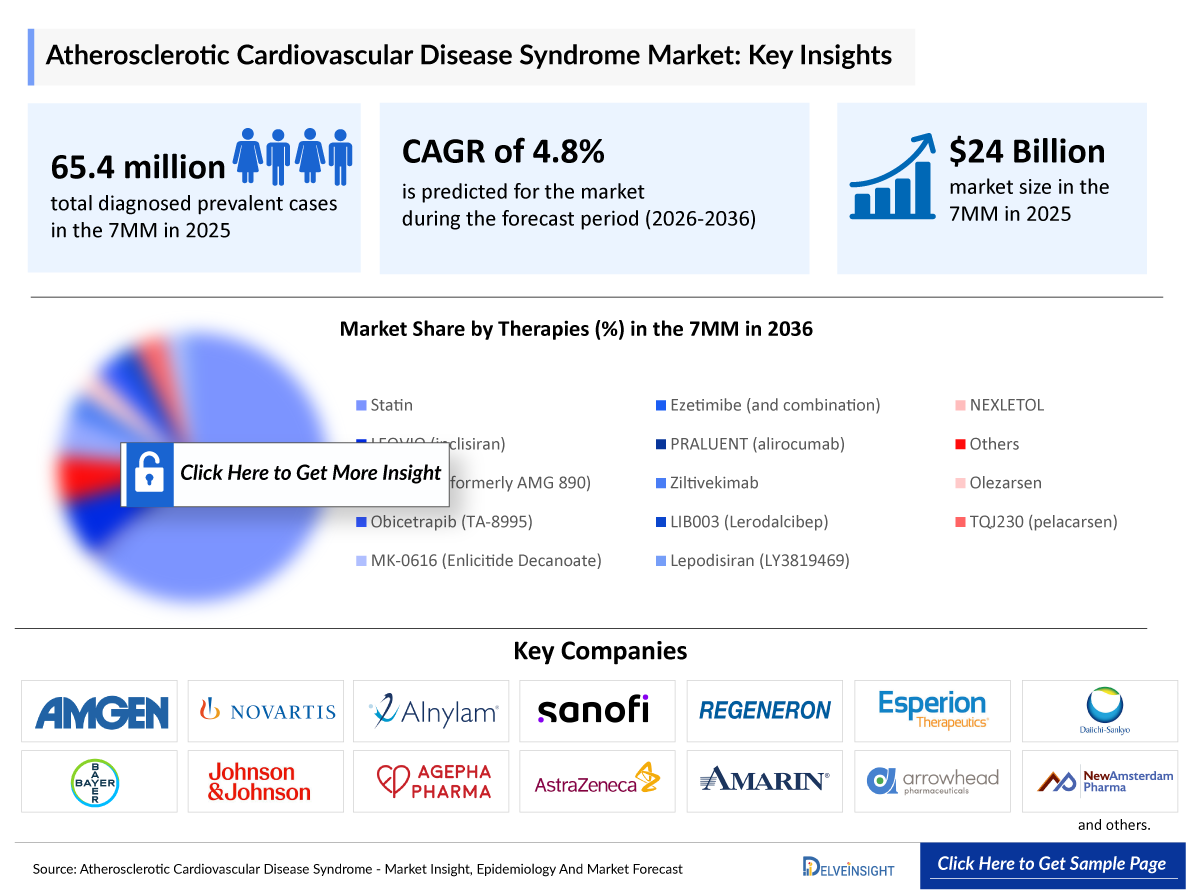
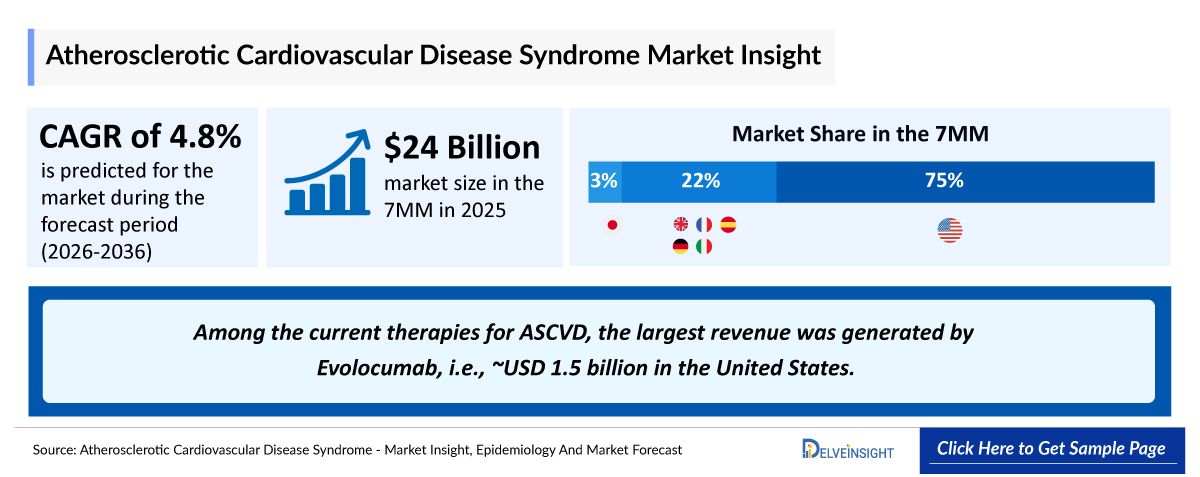
- Among 7MM, the United States accounted for the highest Atherosclerotic Cardiovascular Disease Treatment Market Size, with Germany being the second-highest contributor to the Atherosclerotic Cardiovascular Disease Market Size. The Atherosclerotic Cardiovascular Disease Therapeutics Market Size in the 7MM was USD 24,000 million in 2025, which is expected to grow by 2036.
- The leading Atherosclerotic Cardiovascular Disease Companies include Amgen, Novartis/Alnylam Pharmaceuticals, Sanofi/ Regeneron Pharmaceuticals, Esperion Therapeutics/Daiichi Sankyo, Bayer/Johnson & Johnson, AGEPHA Pharma, Resverlogix, LIB Therapeutics, AstraZeneca, Merck, Novo Nordisk, and others.
Atherosclerotic Cardiovascular Disease Market and Epidemiology Insights
- Atherosclerotic Cardiovascular Disease prevalence continues to rise across the 7MM due to population aging, improved post-event survival, and sustained exposure to cardiometabolic risk factors, expanding the long-term secondary prevention pool.
- The burden of Atherosclerotic Cardiovascular Disease increases sharply with age. Prevalence is significantly higher in older adults, particularly among medically insured populations, where comorbidity levels and cardiovascular risk factors accumulate. Younger commercial populations, though affected, display comparatively lower disease severity.
- Pharmacologic management of Atherosclerotic Cardiovascular Disease continues to center on statins, ezetimibe, antiplatelets, and cardiometabolic therapies, with PCSK9-targeted agents Evolocumab, Alirocumab, and Inclisiran, providing established options for patients who require additional LDL-C reduction.
- The evolving late-stage and emerging pipeline, encompassing oral PCSK9 inhibitors, RNA-based Lp (a) therapies, anti-inflammatory agents, and gene-editing approaches, is driving a shift toward multi-pathway, precision management, offering the potential to reduce residual cardiovascular risk, improve adherence, and expand therapeutic options for high-risk patients.
- Despite guideline-directed care, residual inflammatory risk, incomplete LDL control, comorbidity load, and access gaps to advanced therapies remain major unmet needs limiting real-world secondary prevention impact.
- REPATHA’s growth continues to accelerate 10 years post-launch and it currently dominates the PCSK9 inhibitor market; however, LEQVIO and emerging oral PCSK9 therapies are projected to capture a larger share by 2036, particularly as inclisiran patents in the United States and Europe expire in 2034 and 2035, respectively.
Atherosclerotic Cardiovascular Disease Market Size and Forecast
| 2025 Atherosclerotic Cardiovascular Disease Market Size | ~USD 24,000 million |
| 2036 Projected Atherosclerotic Cardiovascular Disease Market Size | ~USD 40,000 million |
| Atherosclerotic Cardiovascular Disease Growth Rate (2026–2036) | 4.8% CAGR |
Key Factors Driving the Growth of Atherosclerotic Cardiovascular Disease
-
Rising Global Burden of Cardiovascular Diseases
The increasing prevalence of cardiovascular diseases (CVDs) worldwide is a major driver of the Atherosclerotic Cardiovascular Disease market. Aging populations, sedentary lifestyles, unhealthy dietary habits, and the growing incidence of obesity and diabetes are contributing to a larger patient population requiring long-term cardiovascular management.
-
Increasing Prevalence of Dyslipidemia and Metabolic Disorders
The rising incidence of hypercholesterolemia, dyslipidemia, hypertension, type 2 diabetes, and metabolic syndrome has significantly increased the risk of developing ASCVD. The growing burden of these risk factors continues to drive demand for preventive and therapeutic interventions.
-
Growing Awareness of Cardiovascular Risk Prevention
Healthcare organizations and governments are increasingly emphasizing the importance of early cardiovascular risk assessment and preventive care. Improved awareness regarding cholesterol management, lifestyle modifications, and regular health screenings is contributing to earlier diagnosis and increased treatment adoption.
-
Advancements in Lipid-Lowering Therapies
Continuous innovation in lipid-lowering treatments, including PCSK9 inhibitors, siRNA therapies, ATP citrate lyase inhibitors, and other next-generation agents, has expanded therapeutic options for patients who are inadequately controlled with conventional statin therapy. These advancements are supporting sustained market growth.
-
Expanding Pipeline of Novel Cardiovascular Therapies
A robust clinical pipeline focused on lipid metabolism, inflammation, thrombosis, and other cardiovascular pathways is driving innovation in the ASCVD market. Ongoing research into first-in-class and best-in-class therapies is expected to improve patient outcomes and broaden treatment options.
-
Increasing Adoption of Precision Medicine
Advances in genetic testing, biomarker discovery, and personalized medicine are enabling more individualized cardiovascular risk assessment and treatment strategies. Precision medicine approaches are expected to optimize therapeutic outcomes while improving long-term disease management.
DelveInsight's ‘Atherosclerotic Cardiovascular Disease Market Insights, Epidemiology and Market Forecast – 2036’ report delivers an in-depth understanding of the ASCVD, historical and forecasted epidemiology, as well as the ASCVD market trends in the United States, EU4 (Germany, Spain, Italy, and France) and the United Kingdom, and Japan.
The Atherosclerotic Cardiovascular Disease Treatment Market Report delivers a comprehensive analysis of the current treatment landscape, including standards of care, clinical practices, and evolving therapeutic algorithms. It evaluates, Atherosclerotic Cardiovascular Disease patient burden trends, revenue & market share dynamics, peak patient share & therapy uptake analysis, and provides an in-depth market size assessment, and growth rate projections (Historical & Forecast 2022–2036) across global regions. The report highlights key unmet medical needs in Atherosclerotic Cardiovascular Disease and maps the competitive and clinical landscape to uncover high-value opportunities, providing a clear outlook on future market growth potential.
Scope of the Atherosclerotic Cardiovascular Disease Market Report | |
|
Study Period |
2022–2036 |
|
Historical Year |
2022–2025 |
|
Forecast Period |
2026–2036 |
|
Base Year |
2026 |
|
Geographies Covered |
|
|
ASCVD Market CAGR (Study period) | |
|
ASCVD Epidemiology Segmentation Analysis |
Patient Burden Assessment
|
|
ASCVD Companies |
|
|
ASCVD Therapies |
|
|
ASCVD Market |
Segmented by
|
|
Analysis |
|
Atherosclerotic Cardiovascular Disease Understanding and Treatment Algorithm
Atherosclerotic Cardiovascular Disease Overview
ASCVD is a medical condition characterized by the buildup of fatty deposits (plaques) on the inner walls of arteries. These plaques consist of cholesterol, fatty substances, calcium, and other cellular waste products. Over time, the plaques can harden and narrow the arteries, which reduces blood flow to vital organs and tissues.
It is a progressive and chronic condition that can affect various arteries throughout the body, including those supplying the heart (coronary arteries), brain (cerebral arteries), and legs (peripheral arteries). The most common manifestations of ASCVD include Coronary Artery Disease (CAD), cerebrovascular disease (stroke), and Peripheral Arterial Disease (PAD).
Atherosclerotic Cardiovascular Disease Diagnosis
Atherosclerotic Cardiovascular Disease Diagnosis is based on a combination of clinical evaluation, laboratory tests, genetic analysis, and imaging techniques. Initial assessment typically includes lipid profile testing measuring total cholesterol, LDL-C, HDL-C, and triglycerides along with additional biomarkers such as apolipoproteins, hsCRP, and lipoprotein (a) in selected patients to refine cardiovascular risk.
Genetic testing may be used in individuals with suspected familial hypercholesterolemia by evaluating genes such as LDLR, APOB, PCSK9, or LDLRAP1. Imaging methods including ultrasonography, CT, MRI/MRA, and invasive catheter angiography help detect arterial plaques, stenosis, or calcification, while electrocardiography can identify reduced blood flow to the heart. Regular lipid monitoring is recommended to evaluate treatment response and guide risk-based lipid management.
Further details are provided in the report.
Atherosclerotic Cardiovascular Disease Treatment
Management and prevention of Atherosclerotic Cardiovascular Disease primarily focus on lifestyle modification, pharmacotherapy, and interventional procedures. A healthy lifestyle including a balanced diet rich in fruits, vegetables, whole grains, and fish, regular physical activity, and avoidance of tobacco is the cornerstone of ASCVD prevention and risk reduction.
Pharmacologic treatment is recommended for higher-risk individuals and commonly includes statins as first-line therapy, with additional agents such as ezetimibe, PCSK9 inhibitors, and omega-3 fatty acids when lipid control is inadequate. In patients with established disease or severe coronary artery blockage, revascularization procedures such as percutaneous coronary intervention (angioplasty with stent placement) or coronary artery bypass grafting may be used to restore blood flow and reduce cardiovascular complications.
Further details related to country-based variations are provided in the report.
Atherosclerotic Cardiovascular Disease Unmet Needs
The section “unmet needs of ASCVD” outlines the critical gaps between the current state of patient care, diagnosis, and the ideal & effective management of the disease. It highlights the obstacles experienced by patients, clinicians, and researchers and identifies potential solutions for future progress.
- Inflammation in Atherosclerotic Cardiovascular Disease is not adequately addressed by current therapies
- Patients need treatments with a low risk of Drug–Drug interactions
- Strong dependence on clinician recommendation for treatment adoption
- Incomplete lipid target achievement and others…..
- Comprehensive unmet needs insights in Atherosclerotic Cardiovascular Disease and their strategic implications are provided in the full report.
Atherosclerotic Cardiovascular Disease Epidemiology
Key Findings from Atherosclerotic Cardiovascular Disease Epidemiological Analysis and Forecast
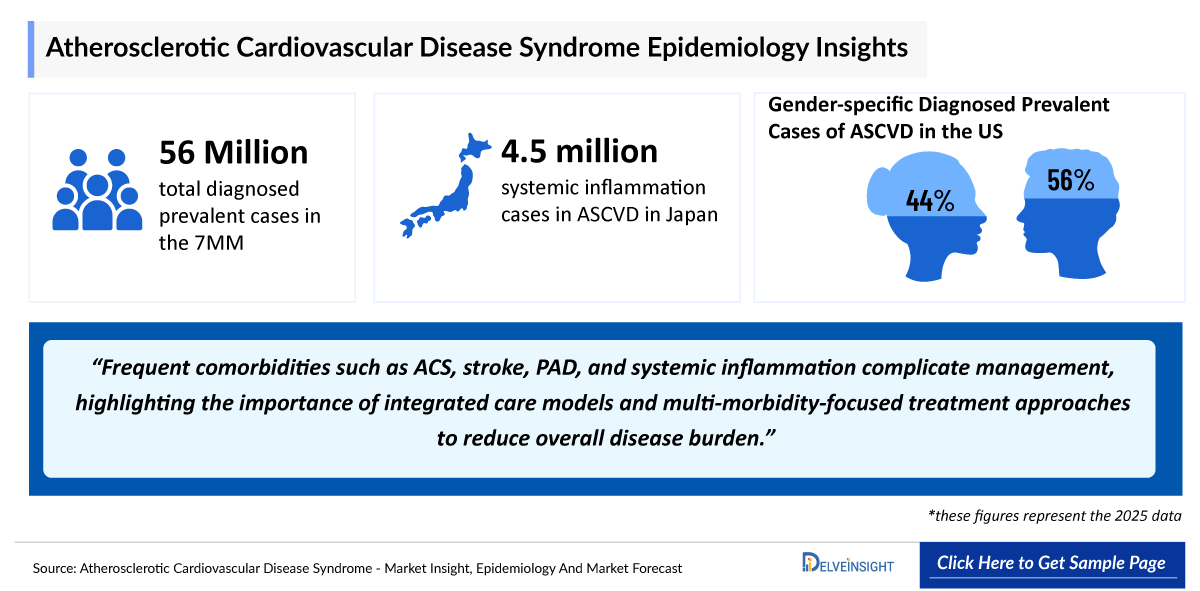
- As per the estimates by DelveInsight, the total diagnosed prevalent cases of Atherosclerotic Cardiovascular Disease in the 7MM was 65,415,000 in 2025.
- In 2025, approximately 55% of Atherosclerotic Cardiovascular Disease cases in the US occurred in males and 45% in females, accounting for around 17,300,000 male cases and 13,800,000 female cases.
- Different age groups are counted for DelveInsight’s epidemiology model; Atherosclerotic Cardiovascular Disease is categorized into age groups 18-44 years, 45-64 years, and 65 years and above. Among these age groups, the 65 and above age group was estimated to have the highest number of diagnosed Atherosclerotic Cardiovascular Disease cases in EU4 and the UK in 2025. The number of diagnosed cases for 65+ age groups was approximately 15,900,000; however, it should be noted that the least number of cases were found in patients aged 18-44 years in 2025.
- As per DelveInsight’s analysis, the comorbidity-specific diagnosed prevalent cases of ASCVD in Japan in 2025 were highest for Peripheral Artery Disease (PAD) at approximately 1,936,000 cases, while the lowest prevalence was observed in Acute Coronary Syndrome (ACS) with about 102,000 cases.
Atherosclerotic Cardiovascular Disease Epidemiology Segmentation in the 7MM
- Total Atherosclerotic Cardiovascular Disease Diagnosed Prevalent Cases
- Atherosclerotic Cardiovascular Disease Gender-specific Diagnosed Prevalent Cases
- Atherosclerotic Cardiovascular Disease Age-specific Diagnosed Prevalent Cases
- Atherosclerotic Cardiovascular Disease Comorbidity-specific Diagnosed Prevalent Cases
- Atherosclerotic Cardiovascular Disease Systemic Inflammation Cases
Atherosclerotic Cardiovascular Disease Market Recent Breakthroughs and Developments
- In Aug 2026, Insilico Medicine nominated ISM0900 as a Development Candidate (PCC) for cardiovascular risk management. Discovered via Insilico's proprietary generative AI platform, ISM0900 is a potent, novel oral LPA inhibitor engineered to lower elevated Lipoprotein(a) levels and reduce long-term atherosclerotic cardiovascular disease risks.
- In June 2026, Jiangsu Vcare PharmaTech reached a major regulatory milestone this June as China's NMPA officially accepted the New Drug Application (NDA) for Sumecigrel capsule. Formerly known as Vicagrel, this Class 1 innovative oral antiplatelet drug serves as a new-generation P2Y12 receptor antagonist. Designed to treat and prevent atherosclerotic thrombotic events, Sumecigrel improves upon traditional clopidogrel by optimizing metabolic pathways to bypass genetic polymorphism issues. Vcare is currently preparing further regulatory filings for the U.S. and European markets.
- In January 2025, Ionis Pharmaceuticals’ partner Novartis announced in its year-end earnings report that Phase III pelacarsen data are now expected in the first half of 2026, with regulatory submissions planned for the second half of the year.
- In January 2025, LIB Therapeutics announced the publication of a Phase III study of lerodalcibep in HoFH in The lancet diabetes and Endocrinology.
- In September 2025, Menarini Group announced that EMA has validated the Marketing Authorization Application (MAA) for obicetrapib and obicetrapib/ezetimibe fixed dose combination as an adjunct to diet for patients with primary hypercholesterolaemia (heterozygous familial and non-familial) or mixed dyslipidaemia and unable to reach low-density lipoprotein cholesterol (LDL-C) goals with the maximum tolerated dose of a statin or who are statin-intolerant, or for whom a statin is contraindicated. The validation of both applications confirms that the submission is complete and begins the EMA’s centralized review procedure.
Atherosclerotic Cardiovascular Disease Drug Analysis & Competitive Analysis
The Atherosclerotic Cardiovascular Disease drug chapter provides a detailed, market-focused review of approved therapies and the emerging Atherosclerotic Cardiovascular Disease pipeline across Phase I–III clinical trials. It covers the mechanism of action, clinical trial data, regulatory approvals, patents, collaborations, and strategic partnerships for each therapy, along with their advantages, limitations, and recent developments. This section offers critical insights into the ASCVD treatment landscape, supporting market assessment, competitive analysis, and growth forecasting for the ASCVD therapeutics market.
Approved Therapies for Atherosclerotic Cardiovascular Disease
-
Evolocumab (REPATHA): Amgen
REPATHA is a human immunoglobulin G2 (IgG2) monoclonal antibody directed against human PCSK9. REPATHA has an approximate molecular weight of 144 kDa and is produced in genetically engineered mammalian cells. It binds to PCSK9 and inhibits circulating PCSK9 from binding to the LDL receptor, preventing PCSK9-mediated LDL receptor degradation and permitting the LDL receptor to recycle back to the liver cell surface.
By this inhibition, REPATHA increases the number of LDL receptors available to clear LDL from the blood, thereby lowering LDL-C levels.
It was first approved in 2015 in the US and Europe for patients with hypercholesterolemia and ASCVD requiring additional LDL-C reduction. It was approved in Japan in 2016 for high-risk hypercholesterolemia patients, with later label expansions, including a 2025 US update for adults at increased risk of major adverse cardiovascular events due to uncontrolled LDL-C.
Competitive Landscape: Atherosclerotic Cardiovascular Disease Marketed Therapies | ||||||
|
Drug |
Developer |
MoA |
RoA |
Molecule Type |
Patient segment |
Approval |
|
REPATHA (evolocumab) |
Amgen |
PCSK9 inhibitor |
SC |
Human monoclonal antibody |
Primary hyperlipidemia, HeFH, HoFH, myocardial infarction, stroke, unstable angina requiring hospitalization, coronary revascularization |
US: 2015 |
|
EU: 2015 | ||||||
|
JP: 2016 | ||||||
|
Inclisiran (LEQVIO) |
Novartis/Alnylam Pharmaceuticals |
PCSK9 inhibitor |
SC |
siRNA |
Adults with clinical ASCVD or HeFH who require additional lowering of LDL-C. |
US: 2021 |
|
Patients with elevated LDL-C who have an increased risk of heart disease. |
US: 2023 | |||||
|
Adults with hypercholesterolemia |
US: 2025 | |||||
|
Adults with hypercholesterolemia or mixed dyslipidemia. |
EU: 2020 | |||||
|
Familial and non-familial hypercholesterolemia in patients at high cardiovascular risk who do not respond adequately to, or are unsuitable for, HMG-CoA reductase inhibitors. |
JP: 2023 | |||||
|
Alirocumab (PRALUENT) |
Sanofi/ Regeneron Pharmaceuticals |
PCSK9 inhibitor |
SC |
Immunoglobulin G1 (IgG1) monoclonal antibody |
Adults with HeFH or clinical ASCVD who require additional lowering of LDL-C. |
US: 2021 |
|
Adults with established cardiovascular disease. |
US: 2019 | |||||
|
Adults patients with HoFH |
US: 2021 | |||||
|
Pediatric patients aged 8 and older with HeFH. |
US: 2024 | |||||
|
Patients with primary hypercholesterolemia (HeFH and nonfamilial). |
EU: 2015 | |||||
|
Adults with established ASCVD by lowering LDL-C levels as an adjunct to the correction of other risk factors. |
EU: 2019 | |||||
|
Adults patients with hypercholesterolemia at high cardiovascular risk |
JP: 2016 | |||||
Atherosclerotic Cardiovascular Disease Pipeline Analysis
-
Olpasiran (AMG 890): Amgen/Arrowhead Pharmaceuticals
Olpasiran is an investigational siRNA therapy developed by Amgen to reduce elevated Lp (a) levels in adults with ASCVD. It functions by reducing Lp (a) production in liver cells through RNA interference, specifically inhibiting Lp(a) expression. It leverages siRNA technology, originally advanced from Arrowhead Pharmaceuticals, to achieve potent, dose-dependent Lp(a) lowering
The drug is currently being evaluated in two Phase III trials for the treatment of ASCVD in patients with elevated Lp (a). Additionally, a Phase III primary prevention study in patients with elevated Lp (a) who are at high risk for a first cardiovascular event has been initiated in H2 2025.
Competitive Landscape: Atherosclerotic Cardiovascular Disease Emerging Therapies | |||||||
|
Drug Name |
Company |
Indication |
Highest Phase |
Molecule type |
ROA |
MOA |
Anticipated Launch in the US |
|
Olpasiran (AMG 890) |
Amgen/Arrowhead Pharmaceuticals |
ASCVD, CVD |
III |
siRNA |
SC |
mRNA degradation |
2027 |
|
Obicetrapib (TA-8995) |
NewAmsterdam Pharma and Menarini Group |
ASCVD, hypercholesterolemia |
III |
Small molecule |
Oral |
CETP inhibitor |
Information is available in the full report |
|
Apabetalone (RVX000222) |
Resverlogix |
Atherosclerosis, CAD |
III |
Small molecule |
Oral |
BET inhibitor |
Information is available in the full report |
|
Note: Launch insights are provisional and may change with future report updates or the occurrence of major key catalysts. | |||||||
 Atherosclerotic Cardiovascular Disease Market Outlook
The Atherosclerotic Cardiovascular Disease Treatment Landscape is primarily driven by lipid-lowering therapies aimed at reducing LDL-C levels, supported by antiplatelet, anticoagulant, and anti-inflammatory agents for both primary and secondary prevention. Statins remain the cornerstone of therapy, while additional treatments such as ticagrelor, rivaroxaban, and LODOCO (low-dose colchicine) play key roles in reducing thrombotic and inflammatory cardiovascular risks.
Among advanced lipid-lowering options, PCSK9-targeted therapies including evolocumab, alirocumab, and the siRNA therapy inclisiran have significantly improved LDL-C control in high-risk patients requiring additional lipid reduction beyond statins. Evolocumab currently leads the PCSK9 market, while inclisiran is gaining traction due to its twice-yearly dosing and potential adherence advantages. Other lipid-modifying therapies such as bempedoic acid and icosapent ethyl further address residual cardiovascular risk.
Despite strong clinical efficacy, uptake of advanced lipid-lowering therapies remains limited due to cost and reimbursement barriers; however, increasing payer alignment and the development of next-generation therapies including oral PCSK9 inhibitors, RNA-based agents targeting lipoprotein(a), and gene-editing approaches are expected to expand treatment options and reshape the ASCVD Therapeutics Market in the coming years.
Key Atherosclerotic Cardiovascular Disease Companies involved in developing targeted Atherosclerotic Cardiovascular Disease Therapies include Amgen/Arrowhead Pharmaceuticals (olpasiran), NewAmsterdam Pharma and Menarini Group (obicetrapib), Resverlogix (apabetalone), Ionis Pharmaceuticals/Novartis (pelacarsen), LIB Therapeutics (lerodalcibep), AstraZeneca (laroprovstat), and others are evaluating their lead candidates in different stages of clinical development, respectively. They aim to investigate their products for the treatment of ASCVD.
Key findings from Atherosclerotic Cardiovascular Disease Market Forecast Report
- The Atherosclerotic Cardiovascular Disease Treatment Market Size in the 7MM is approximately USD 24,000 million in 2025 and is projected to increase during the forecast period (2026–2036).
- Among EU4 and the UK, Germany accounts for the maximum Atherosclerotic Cardiovascular Disease Treatment Market Size in 2025, while France occupies the bottom of the ladder in 2025.
- In 2025, among the current Atherosclerotic Cardiovascular Disease Therapies, the largest revenue was generated by Evolocumab, i.e., ~USD 1,500 million in the United States.
- By 2036, among the emerging therapies anticipated to enter the Atherosclerotic Cardiovascular Disease Therapeutic Market, statin therapies is expected to generate the highest revenue in Japan.
Atherosclerotic Cardiovascular Disease Companies
- Amgen/Arrowhead Pharmaceuticals
- NewAmsterdam Pharma and Menarini Group
- Resverlogix
- Ionis Pharmaceuticals/Novartis
- LIB Therapeutics
- Sanofi/ Regeneron Pharmaceuticals, and others
Atherosclerotic Cardiovascular Disease Drug Class/Insights
The Atherosclerotic Cardiovascular Disease treatment landscape is dominated by several major drug classes that target lipid reduction, thrombosis prevention, and vascular inflammation. Statins remain the first-line therapy for lowering LDL-C and reducing cardiovascular risk, while additional lipid-lowering agents such as bempedoic acid and omega-3-based therapies like icosapent ethyl are used to address residual lipid-related risk.
For patients requiring further LDL-C reduction, PCSK9 inhibitors have emerged as an important class, including therapies such as inclisiran and others. In parallel, antiplatelet agents such as ticagrelor and anticoagulants like rivaroxaban play a critical role in preventing thrombotic events in high-risk patients. More recently, anti-inflammatory therapies, including low-dose colchicine, have gained attention for targeting vascular inflammation, an important contributor to residual cardiovascular risk.
Together, these drug classes form a comprehensive treatment strategy that addresses the multiple pathophysiological mechanisms involved in ASCVD progression and recurrence.
Further details will be provided in the report….
Atherosclerotic Cardiovascular Disease Drug Uptake
This section focuses on the uptake rate of potential Atherosclerotic Cardiovascular Disease drugs expected to be launched in the market during 2022–2036. For example, for Olpasiran, although the FDA rescinded its Fast Track Designation, we expect the drug uptake to be medium-fast with a probability-adjusted peak share of 3.5% and years to the peak are expected to be 7 years from the year of launch.
Further detailed analysis of emerging therapies' drug uptake in the report…
Atherosclerotic Cardiovascular Disease Therapies Price Scenario & Trends
Pricing and analogue assessment of Atherosclerotic Cardiovascular Disease therapies highlights evolving price dynamics structures. This section summarizes the cost of approved treatments, closest and most appropriate analogue selection for emerging therapies, and understanding of how pricing influences market access, adherence, and long-term uptake.
Pricing of Atherosclerotic Cardiovascular Disease Approved Drugs
Ezetimibe, bempedoic acid, and their fixed-dose combinations are widely used in the treatment of ASCVD. The average price of one tablet of ezetimibe is estimated at USD 3 and is prescribed as a once-daily dose. Based on this pricing, the annual cost of ezetimibe and its combination therapies is estimated at USD 1,104. Bempedoic acid is also prescribed as a once-daily dose and is priced at approximately USD 11 per tablet. Accordingly, the annual cost of bempedoic acid therapy is estimated at USD 3,991.
Further details are provided in the final report….
Industry Experts and Physician Views for Atherosclerotic Cardiovascular Disease
To keep up with Atherosclerotic Cardiovascular Disease Therapeutics Market Trends, we take Key Opinion Leaders (KOLs) and Subject Matter Experts (SMEs) opinions working in the domain through primary research to fill the data gaps and validate our secondary research. Industry Experts were contacted for insights on Atherosclerotic Cardiovascular Disease emerging therapies, evolving treatment landscape, patient adherence to conventional therapies, therapy switching trends, drug adoption and uptake, accessibility challenges, and epidemiology and real-world prescription patterns in ASCVD, including MD, PhD, Instructor, Postdoctoral Researcher, Professor, Researcher, and others.
Delveinsight’s analysts connected with 20+ KOLs to gather insights; however, interviews were conducted with 10+ KOLs in the 7MM. Centers such as Jacksonville Center for Clinical Research, University of Louisville School of Medicine, and Yale School of Medicine etc., were contacted.
Their opinion helps understand and validate current and emerging therapy treatment patterns or ASCVD market trends. This will support the clients in potential upcoming novel treatments by identifying the overall scenario of the Atherosclerotic Cardiovascular Disease Drugs Market and the unmet needs.
|
Region |
Key Opinion Leaders (KOLs) and Subject Matter Experts (SMEs) |
|
United States |
“Among high-risk patients with ASCVD, fewer than 50% remain on statin therapy after the first year or receive statins at the intensity recommended by clinical guidelines. Further, many high-risk patients with ASCVD require additional nonstatin Lipid-lowering Therapies (LLTs) such as ezetimibe, bempedoic acid, and PCSK9i to achieve LDL-C targets. However, clinical practice surveys show that therapies are also significantly underutilized.” |
|
Germany |
“The integration of advanced imaging modalities (e.g., Coronary Artery Calcium [CAC] scan, Coronary Computed Tomography Angiography [CCTA], carotid and iliofemoral Venous Ultrasound Scan [VUS]) with AI and polygenic risk scores will allow individualized, subclinical detection of ASCVD, facilitating earlier intervention with lifestyle and pharmacologic measures and improving long-term clinical outcomes.” |
Atherosclerotic Cardiovascular Disease Report Qualitative Analysis: SWOT and Conjoint Analysis
We perform qualitative and Atherosclerotic Cardiovascular Disease Therapeutics Market Intelligence analysis using various approaches, such as SWOT analysis and conjoint analysis. In the SWOT analysis of Atherosclerotic Cardiovascular Disease, strengths, weaknesses, opportunities, and threats in terms of disease diagnosis, patient awareness, patient burden, competitive landscape, cost-effectiveness, and geographical accessibility of therapies are provided.
Conjoint analysis analyzes Atherosclerotic Cardiovascular Disease Emerging Therapies based on relevant attributes such as safety, efficacy, frequency of administration, route of administration, and order of entry. Scoring is given based on these parameters to analyze the effectiveness of therapy.
The team of analysts analyzes promising Atherosclerotic Cardiovascular Disease emerging therapies based on relevant attributes such as safety, efficacy, frequency of administration, route of administration, and order of entry. In efficacy, the trial’s primary and secondary outcome measures are evaluated, whereas the therapies’ safety is evaluated, wherein the acceptability, tolerability, and adverse events are majorly observed.
In addition, the scoring is also based on the route of administration, order of entry, probability of success, and the addressable patient pool for each therapy. According to these parameters, the final weightage score and the ranking of the emerging therapies are decided.
Scope of the Atherosclerotic Cardiovascular Disease Market Report
- The Atherosclerotic Cardiovascular Disease Therapeutics Market Report covers a segment of key events, an executive summary, a descriptive overview, explaining its causes, signs and symptoms, pathogenesis, and currently available treatments.
- Comprehensive insight has been provided into the epidemiology segments and forecasts, the future growth potential of the diagnosis rate, and disease progression along treatment guidelines.
- Additionally, an all-inclusive account of both the current and emerging treatments, along with the elaborative profiles of late-stage and prominent therapies, will have an impact on the current treatment landscape.
- A detailed review of the Atherosclerotic Cardiovascular Disease Therapeutics Market, historical and forecasted Atherosclerotic Cardiovascular Disease Treatment Market Size, Atherosclerotic Cardiovascular Disease Drugs Market Share by therapies, detailed assumptions, and rationale behind our approach is included in the report, covering the 7MM drug outreach.
- The Atherosclerotic Cardiovascular Disease Therapeutics Market Report provides an edge while developing business strategies by understanding trends through SWOT analysis and expert insights/KOL views, patient journey, and treatment preferences that help in shaping and driving the 7MM Atherosclerotic Cardiovascular Disease Drugs Market.
Atherosclerotic Cardiovascular Disease Market Report Insights
- Atherosclerotic Cardiovascular Disease Patient Population Forecast
- Atherosclerotic Cardiovascular Disease Therapeutics Market Size
- Atherosclerotic Cardiovascular Disease Pipeline Drugs Analysis
- Atherosclerotic Cardiovascular Disease Market Size and Trends
- Atherosclerotic Cardiovascular Disease Therapeutics Market Opportunity (current and forecasted)
Atherosclerotic Cardiovascular Disease Market Report Key Strengths
- Epidemiology-based (Epi-based) bottom-up forecasting
- Artificial Intelligence (AI)-enabled market research report
- 11-year forecast
- ASCVD market outlook (North America, Europe, Asia-Pacific)
- Patient Burden trends (by geography)
- Atherosclerotic Cardiovascular Disease Treatment addressable Market (TAM)
- Atherosclerotic Cardiovascular Disease Competitive Landscape
- Atherosclerotic Cardiovascular Disease major companies Insights
- Atherosclerotic Cardiovascular Disease Price trends and analogue assessment
- Atherosclerotic Cardiovascular Disease Therapies Drug Adoption/Uptake
- Atherosclerotic Cardiovascular Disease Therapies Peak Patient Share analysis
Atherosclerotic Cardiovascular Disease Market Report Assessment
- Current Atherosclerotic Cardiovascular Disease treatment practices
- Atherosclerotic Cardiovascular Disease Unmet needs
- Atherosclerotic Cardiovascular Disease Clinical development Analysis
- Atherosclerotic Cardiovascular Disease emerging drugs product profiles
- Atherosclerotic Cardiovascular Disease Therapeutics Market attractiveness
- Atherosclerotic Cardiovascular Disease Qualitative analysis (SWOT and conjoint analysis)
Key Questions Answered in the Atherosclerotic Cardiovascular Disease Therapeutics Market Report
Atherosclerotic Cardiovascular Disease Treatment Market Insights
- What was the Atherosclerotic Cardiovascular Disease Market Size, the ASVC Treatment Market Size by therapies, Atherosclerotic Cardiovascular Disease Drugs Market Share (%) distribution in 2025, and what would it look like by 2036? What are the contributing factors for this growth?
- What are the anticipated pricing variations among different geographies for the emerging therapies in the future?
- What can be the future treatment paradigm of Atherosclerotic Cardiovascular Disease?
- What are the disease risks, burdens, and unmet needs of Atherosclerotic Cardiovascular Disease?
- What will be the growth opportunities across the 7MM concerning the patient population with Atherosclerotic Cardiovascular Disease?
- Who is the major future competitor in the market, and how will the competitors affect their market share?
- What are the current options for the treatment of Atherosclerotic Cardiovascular Disease?
- What are the current guidelines for treating Atherosclerotic Cardiovascular Disease in the US, Europe, and Japan?
Reasons to Buy the Atherosclerotic Cardiovascular Disease Therapeutics Market Report
- The Atherosclerotic Cardiovascular Disease Therapeutics Market Report will help in developing business strategies by understanding the latest trends and changing treatment dynamics driving the Atherosclerotic Cardiovascular Disease Drugs Market.
- Bottom up forecasting builds from the affected population to product forecasts, delivering a robust, data driven approach ideal for new therapies and novel classes.
- Insights on patient burden/disease: Atherosclerotic Cardiovascular Disease Incidence, evolution in diagnosis, and factors contributing to the change in the epidemiology of the disease during the forecast years.
- Understand the existing market opportunities in varying geographies and the growth potential over the coming years.
- Identifying strong upcoming players in the Atherosclerotic Cardiovascular Disease Drugs Market will help devise strategies to help get ahead of competitors.
- Detailed analysis and ranking of class-wise potential current and emerging Atherosclerotic Cardiovascular Disease Therapies under the conjoint analysis section to provide visibility around leading classes.
- To understand KOLs’ perspectives on the accessibility, acceptability, and compliance-related challenges of existing Atherosclerotic Cardiovascular Disease Treatment to overcome barriers in the future.
- Detailed insights on the unmet needs of the existing Atherosclerotic Cardiovascular Disease Drugs Market so that the upcoming players can strengthen their development and launch strategy.
- This Artificial Intelligence (AI) enabled report summarize and simplify complex datasets within the report into clear, actionable insights for stakeholders, investors, and healthcare providers, enabling faster, data driven decisions.
Stay updated with us for Recent Articles



