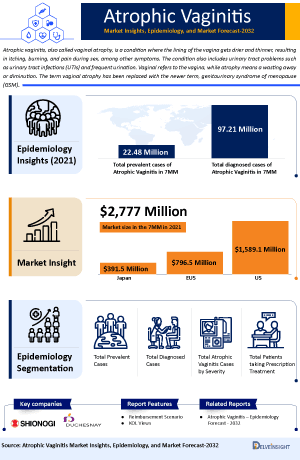
Atrophic Vaginitis Market Summary
Atrophic Vaginitis Insights and Trends
- The Atrophic Vaginitis also known as Genitourinary Syndrome of Menopause (GSM) market represents a sizeable and steadily expanding opportunity across the 7MM, driven by population aging, increasing life expectancy, and growing awareness of menopause-related health conditions. Despite affecting a substantial proportion of postmenopausal women, the condition remains significantly underdiagnosed and undertreated, creating a large addressable patient pool with considerable room for market expansion.
- The current market is dominated by localized estrogen therapies, which remain the cornerstone of treatment due to their proven efficacy in restoring vaginal tissue integrity, reducing vaginal pH, improving lubrication, and alleviating symptoms such as dyspareunia and vaginal dryness. Products such as VAGIFEM, YUVAFEM, ESTRING, and IMVEXXY have established strong positions within the treatment landscape and continue to drive the majority of prescription-based market revenue.
- Prasterone (INTRAROSA), approved by the US FDA in 2016, introduced a differentiated mechanism within the GSM market by providing intravaginal dehydroepiandrosterone (DHEA), which is locally converted into estrogens and androgens within vaginal tissues. The product has expanded treatment options for women seeking alternatives to traditional estrogen therapies and has strengthened the shift toward localized hormone delivery with minimal systemic exposure.
- In December 2025, the US FDA approved the first generic estradiol vaginal insert referencing IMVEXXY, marking an important milestone that is expected to increase pricing pressure within the local estrogen segment while simultaneously improving patient access and broadening treatment adoption. The entry of generics is likely to accelerate market penetration but may also intensify competition among branded therapies.
- Despite the availability of effective therapies, treatment adherence remains a major commercial and clinical challenge. Concerns regarding long-term hormone exposure, inconvenience of administration, treatment fatigue, and persistent symptoms contribute to high discontinuation rates. These factors continue to create opportunities for therapies offering improved convenience, enhanced safety profiles, and durable symptom control.
- The future market is expected to shift gradually from a predominantly estrogen-centric treatment paradigm toward a more diversified and personalized landscape incorporating hormonal, non-hormonal, and regenerative treatment approaches.
- Overall, the Atrophic Vaginitis market is expected to demonstrate sustained growth throughout the forecast period, supported by rising disease awareness, expanding treatment options, increasing healthcare engagement among postmenopausal women, and continued innovation aimed at addressing the limitations of current therapies and improving long-term quality-of-life outcomes.
Atrophic Vaginitis Market Size and Forecast in the 7MM
- 2025 Atrophic Vaginitis Market Size: ~USD XXXX
- 2036 Atrophic Vaginitis Market Size: ~USD XXXX
- Atrophic Vaginitis Growth Rate (2026–2036): XX% CAGR
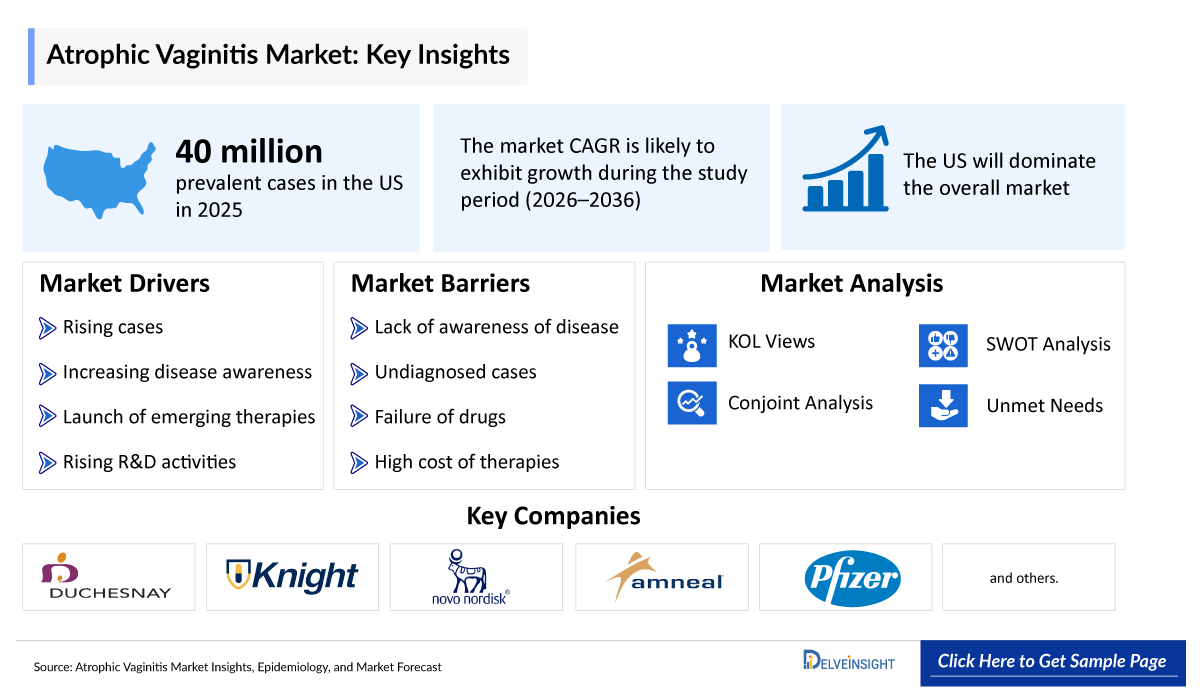
DelveInsight's ‘Atrophic Vaginitis Market Insights, Epidemiology and Market Forecast – 2036’ report delivers an in-depth understanding of the atrophic vaginitis, historical and forecasted epidemiology, as well as Atrophic Vaginitis market trends in the United States, EU4 (Germany, Spain, Italy, and France) and the United Kingdom, and Japan.
The atrophic vaginitis market report delivers a comprehensive analysis of the current treatment landscape, including standards of care, clinical practices, and evolving therapeutic algorithms. It evaluates atrophic vaginitis patient burden trends, revenue & market share dynamics, peak patient share & therapy uptake analysis, and provides an in-depth market size assessment and growth rate projections (Historical & Forecast 2022–2036) across global regions. The report highlights key unmet medical needs in atrophic vaginitis and maps the competitive and clinical landscape to uncover high‑value opportunities, providing a clear outlook on future market growth potential.
|
Study Period |
2022–2036 |
|
Historical Year |
2022–2025 |
|
Forecast Period |
2026–2036 |
|
Base Year |
2026 |
|
Geographies Covered |
|
|
Atrophic Vaginitis CAGR (Study period/Forecast period) |
XX% (2026 ̶ 2036) |
|
Atrophic Vaginitis Epidemiology Segmentation Analysis |
Patient Burden Assessment
|
|
Atrophic Vaginitis Companies |
|
|
Atrophic Vaginitis Therapies |
|
|
Atrophic Vaginitis Market |
Segmented by
|
|
Analysis |
|
Key Factors Driving the Atrophic Vaginitis Market
Increasing Prevalence of GSM and Aging Female Population
The growing global population of postmenopausal women is a major driver of the atrophic vaginitis market. Declining estrogen levels following menopause contribute to progressive vulvovaginal and urinary symptoms, including vaginal dryness, irritation, dyspareunia, burning, and recurrent urinary tract symptoms. Increased life expectancy, greater awareness of menopausal health, and improved recognition of GSM among healthcare professionals are contributing to higher diagnosis and treatment rates across major markets.
Growing Demand for Safe, Non-Hormonal, and Long-Term Treatment Options
Although several local estrogen therapies and selective estrogen receptor modulators (SERMs) are available, many women remain untreated or undertreated due to concerns regarding hormone exposure, contraindications in hormone-sensitive cancers, treatment inconvenience, and limited long-term adherence. The persistent burden of symptoms and the growing demand for non-hormonal, convenient, and durable treatment options create substantial opportunities for innovative therapies capable of improving symptom control, quality of life, and treatment compliance.
Emerging Atrophic Vaginitis Competitive Landscape
The Atrophic Vaginitis treatment landscape continues to evolve with the introduction of novel hormonal and non-hormonal therapies aimed at improving vaginal health and menopausal symptom management. Approved therapies such as ospemifene (OSPHENA), prasterone (INTRAROSA), estradiol (VAGIFEM), estradiol vaginal inserts (IMVEXXY), and estradiol vaginal ring (ESTRING) currently dominate the market. Meanwhile, emerging candidates such as DARE-VVA1 (Daré Bioscience) and other investigational vaginal restorative therapies are being developed to address existing treatment limitations. Advances in localized drug delivery and tissue-restorative approaches are expected to further expand treatment options and enhance long-term disease management.
Atrophic Vaginitis Understanding and Treatment Algorithm
Atrophic Vaginitis Overview and Diagnosis
Atrophic vaginitis, also known as GSM, is a chronic condition caused by declining estrogen levels, leading to thinning, dryness, inflammation, and reduced elasticity of vaginal tissues. It most commonly affects postmenopausal women but can also occur following surgical menopause, ovarian insufficiency, postpartum hormonal changes, or anti-estrogen therapy. Common symptoms include vaginal dryness, irritation, burning, dyspareunia, urinary urgency, dysuria, and recurrent urinary tract infections. The condition can significantly impair sexual health, emotional well-being, and overall quality of life. Despite its high prevalence, Atrophic Vaginitis remains substantially underdiagnosed and undertreated due to limited awareness, social stigma, and inadequate routine screening.
Atrophic Vaginitis Diagnosis
Diagnosis of Atrophic vaginitis is primarily based on clinical history, symptom assessment, and gynecological examination. Patients commonly present with vaginal dryness, irritation, dyspareunia, and recurrent urinary symptoms. Physical examination may reveal thin, pale vaginal mucosa, reduced lubrication, loss of vaginal elasticity, and decreased vaginal rugae. Vaginal pH testing and microscopic evaluation of vaginal epithelial cells may be used to support the diagnosis and assess the degree of atrophy. Laboratory investigations are generally performed only to exclude infections or other gynecological conditions with similar symptoms.
Further details are provided in the report.
Atrophic Vaginitis Treatment
The treatment of Atrophic Vaginitis is primarily focused on relieving vulvovaginal and urinary symptoms, restoring vaginal tissue health, improving sexual function, enhancing quality of life, and preventing recurrent genitourinary complications associated with estrogen deficiency. Management typically involves a combination of lifestyle modifications, non-hormonal therapies, local hormonal treatments, and ongoing symptom monitoring. Treatment selection depends on factors such as symptom severity, patient age, and menopausal status, and medical history, risk factors for hormone therapy, presence of genitourinary symptoms, sexual activity, and individual treatment preferences. Because Atrophic Vaginitis is a chronic and progressive condition, long-term management is often necessary to achieve sustained symptom control and maintain vaginal health.
Current treatment strategies include non-hormonal vaginal moisturizers and lubricants for women with mild symptoms, while local estrogen therapies remain the cornerstone of treatment for moderate-to-severe disease. Commonly used therapies include vaginal estradiol tablets, creams, inserts, and vaginal rings, which help restore vaginal epithelium thickness, improve lubrication, reduce vaginal pH, and alleviate symptoms such as dryness and dyspareunia. Other approved therapies include ospemifene, a selective estrogen receptor modulator (SERM), and prasterone (dehydroepiandrosterone; DHEA), which provide alternative treatment options for postmenopausal women experiencing vulvovaginal symptoms.
Further details related to country-based variations are provided in the report.
Atrophic Vaginitis Unmet Needs
The section “unmet needs of Atrophic Vaginitis” outlines the critical gaps between the current state of patient care, diagnosis, and the ideal & effective management of the disease. It highlights the obstacles experienced by patients, clinicians, and researchers and identifies potential solutions for future progress.
- Underdiagnosis and Undertreatment of atrophic vaginitis
- Need for Effective Non-Hormonal Treatment Options
- Limited Availability of Disease-Modifying Therapies
- Lack of Personalized Treatment Approaches and Predictive Biomarkers
- Need for Innovative Localized and Tissue-Restorative Therapies and others…
Comprehensive unmet needs insights in atrophic vaginitis and their strategic implications are provided in the full report.
Atrophic Vaginitis Epidemiology
Key Findings from Atrophic Vaginitis Epidemiological Analysis and Forecast
- In 2025, the total prevalent cases of Atrophic Vaginitis in the United States were estimated to be approximately 40 million, representing the largest patient population among the 7MM.
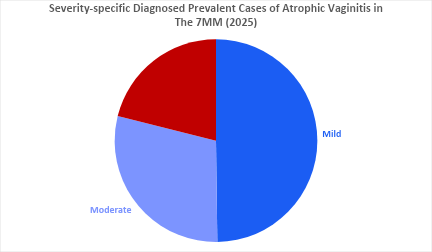
- According to DelveInsight's analysis, the majority of prevalent Atrophic Vaginitis cases in 2025 across the 7MM were mild, followed by moderate cases, while severe cases accounted for least number of cases. All severity segments are projected to increase steadily throughout the forecast period.
- In the EU4 and the UK countries, the diagnosed prevalent population of Atrophic Vaginitis was highest in Germany, with approximately in 2025, followed by Italy. The lowest number of diagnosed prevalent cases was observed in Spain in 2025.
- In 2025, the United States were receiving prescription treatment for Atrophic Vaginitis, accounting for nearly 40% of the treated population across the 7MM. This treated population is anticipated to increase steadily throughout the forecast period.
- An estimated 10–40 percent of postmenopausal women have symptoms of atrophic vaginitis, also referred to as urogenital atrophy. Despite the prevalence of symptoms, only 20–25 percent of symptomatic women seek medical attention.
Atrophic Vaginitis Drug Chapters & Competitive Analysis
The atrophic vaginitis drug chapter provides a detailed, market-focused review of approved therapies and the emerging pipeline across Phase I–III clinical trials. It covers the mechanism of action, clinical trial data, regulatory approvals, patents, collaborations, and strategic partnerships for each therapy, along with their advantages, limitations, and recent developments. This section offers critical insights into the Atrophic Vaginitis treatment landscape, supporting market assessment, competitive analysis, and growth forecasting for the Atrophic Vaginitis therapeutics market.
Approved Therapies for Atrophic Vaginitis
Ospemifene (OSPHENA): Duchesnay (Shionogi)
Ospemifene (OSPHENA) is an orally administered selective estrogen receptor modulator (SERM) indicated for the treatment of moderate-to-severe dyspareunia and vaginal dryness, symptoms of vulvar and vaginal atrophy, a component of GSM, in postmenopausal women. In recent years, OSPHENA has continued to maintain a significant position in the Atrophic Vaginitis treatment landscape due to its established efficacy in improving vaginal tissue health and reducing painful intercourse. Future sales growth may be moderated by generic competition in the broader vaginal estrogen segment, expanding availability of alternative hormonal and non-hormonal therapies, and the entry of emerging treatments targeting vulvovaginal atrophy.
In February 2013, The US Food and Drug Administration approved ospemifene (OSPHENA) to treat women experiencing moderate to severe dyspareunia, a symptom of vulvar and vaginal atrophy due to menopause.
Estradiol (IMVEXXY): TherapeuticsMD, Mayne Pharma, and Theramex
Estradiol (IMVEXXY) is a low-dose vaginal estrogen therapy indicated for the treatment of moderate-to-severe dyspareunia, a symptom of vulvar and vaginal atrophy (VVA), also commonly referred to as atrophic vaginitis, due to menopause. IMVEXXY contains bioidentical 17β-estradiol formulated as a softgel vaginal insert designed for local administration within the vaginal canal.
IMVEXXY was approved by the US FDA in May 2018 for the treatment of moderate-to-severe dyspareunia due to menopause. The therapy is available in ultra-low-dose 4 mcg and 10 mcg formulations, providing a convenient, applicator-free vaginal estrogen option.
Atrophic Vaginitis Marketed/Approved Therapies | ||||||
|
Drug/Therapy |
Company |
Indication |
Molecule Type |
RoA |
MoA |
Marketed Region |
|
Ospemifene (OSPHENA) |
Duchesnay (Shionogi) |
Moderate-to-severe dyspareunia and vaginal dryness associated with vulvar and vaginal atrophy |
Small Molecule |
Oral |
Selective estrogen receptor modulator (SERM) that acts as an estrogen agonist on vaginal epithelium to improve vaginal tissue health and reduce symptoms of VVA |
US: 2013, EU:2015 |
|
Estradiol (IMVEXXY) |
TherapeuticsMD, Mayne Pharma, and Theramex |
Moderate-to-severe dyspareunia, a symptom of vulvar and vaginal atrophy (atrophic vaginitis/VVA) due to menopause |
Hormonal Therapy (17β-Estradiol) |
Intravaginal |
Low-dose local estrogen therapy that restores vaginal epithelial integrity, improves lubrication, lowers vaginal pH, and alleviates symptoms associated with vulvovaginal atrophy and estrogen deficiency |
US: 2018 |
Atrophic Vaginitis Pipeline Analysis
DARE-VVA1: Dare Biosciences
DARE-VVA1 is an investigational proprietary intravaginal estradiol formulation being developed by Daré Bioscience for the treatment of vulvar and vaginal atrophy, a key manifestation of GSM. The therapy is designed to deliver low-dose estradiol directly to vaginal tissues, helping restore vaginal epithelial integrity, improve lubrication, normalize vaginal pH, and alleviate symptoms such as vaginal dryness, irritation, and dyspareunia. The product is currently being evaluated in Phase II clinical development for postmenopausal women with vulvovaginal atrophy.
-
In May 2018, the Company acquired Pear Tree Pharmaceuticals, to secure exclusive, sublicensable, worldwide rights under certain patents and knowhow to develop and commercialize a proprietary formulation of tamoxifen for vaginal administration. This acquisition led to the Company's DARE-VVA1 program.
AZU-101 (Lasofoxifene Tartrate): Azure Biotech
AZU-101 is an investigational vaginal formulation of lasofoxifene tartrate, a selective estrogen receptor modulator (SERM), being developed by Azure Biotech for the treatment of vulvovaginal atrophy (VVA), a key manifestation of GSM.
• In May 2026, Azure Biotech initiated enrollment in a Phase II proof-of-concept study evaluating vaginal AZU-101 in postmenopausal women with moderate-to-severe vulvovaginal atrophy.
Comparison of Emerging Drugs Under Development | |||||||
|
Drug Name |
Company |
Highest Phase |
Indication |
RoA |
MoA |
Molecule Type |
Anticipated Launch in the US |
|
DARE-VVA1 |
Daré Bioscience |
II |
Atrophic Vaginitis/Vulvovaginal Atrophy associated with GSM |
Intravaginal |
Localized low-dose estradiol therapy designed to restore vaginal epithelial integrity, improve lubrication, normalize vaginal pH, and alleviate symptoms associated with estrogen deficiency |
Hormonal Therapy |
Information is available in the full report |
|
AZU-101 (Lasofoxifene Tartrate) |
Azure Biotech |
II |
Atrophic Vaginitis/ Vulvovaginal Atrophy associated with GSM |
Intravaginal |
Selective estrogen receptor modulator (SERM) delivered locally to improve vaginal epithelial maturation, reduce vaginal pH, and alleviate symptoms of vulvovaginal atrophy while minimizing systemic estrogen exposure |
Small Molecule |
Information is available in the full report |
|
Note: Launch insights are provisional and may change with future report updates or the occurrence of major key catalysts. | |||||||
Note: A detailed emerging therapies assessment will be provided in the final report
Atrophic Vaginitis Key Players, Market Leaders and Emerging Companies
- Duchesnay
- Knight Therapeutics
- Novo Nordisk
- Pfizer
- Azure Biotech
- Dare Biosciences and others…
Atrophic Vaginitis Key Players Drug Updates
- In 2025, Daré Bioscience continued advancing the Phase II development of DARE-VVA1, positioning the candidate as a potential next-generation localized estrogen therapy for postmenopausal women with vulvovaginal atrophy. DARE-VVA 1, the US IND is cleared and Phase II study preparation is ongoing.
- In December 2025, the US FDA approved the first generic estradiol vaginal insert for the treatment of moderate-to-severe dyspareunia due to vulvovaginal atrophy associated with menopause. The approval is expected to increase competition within the local vaginal estrogen market and improve patient access to low-dose estradiol therapies.
Drug Class Insights
Atrophic Vaginitis Market Outlook
The atrophic vaginitis market is expected to witness steady growth during the forecast period, driven by the expanding postmenopausal population, increasing awareness of GSM, improving diagnosis rates, and growing recognition of the substantial impact of vulvovaginal symptoms on quality of life. Atrophic Vaginitis is a chronic condition resulting from estrogen deficiency, most commonly occurring after menopause, and is characterized by vaginal dryness, irritation, burning, dyspareunia, recurrent urinary symptoms, and reduced vaginal elasticity. Despite its high prevalence, the condition remains significantly underdiagnosed and undertreated due to patient reluctance to discuss symptoms, limited awareness, and misconceptions regarding available treatment options. As healthcare providers increasingly emphasize women’s health and healthy aging, the diagnosed and treated patient population is expected to expand across the 7MM.
Approved therapies for atrophic vaginitis/VVA associated with GSM include estradiol (VAGIFEM; Novo Nordisk), estradiol vaginal ring (ESTRING; Pfizer), ospemifene (OSPHENA; Duchesnay/Shionogi), and prasterone (INTRAROSA; Endoceutics/Lupin). These therapies encompass local estrogen replacement, selective estrogen receptor modulation, and intravaginal androgen precursor approaches, providing treatment options for postmenopausal women experiencing vaginal dryness, irritation, and dyspareunia associated with estrogen deficiency.
The market is also characterized by increasing generic competition, particularly within the vaginal estrogen segment. Generic estradiol vaginal inserts/tablets, including YUVAFEM (Amneal Pharmaceuticals) and other generic equivalents of VAGIFEM, have expanded patient access to low-dose local estrogen therapy while exerting pricing pressure on branded products. The growing availability of generic estradiol formulations is expected to intensify competition and influence prescribing dynamics within the atrophic vaginitis treatment landscape.
The market is increasingly attracting interest from developers seeking to introduce differentiated therapies that offer improved convenience, efficacy, and safety profiles. Emerging candidates such as DARE-VVA1 (Daré Bioscience) and AZU-101 (Lasofoxifene Tartrate) are being developed to expand treatment options for women with vulvovaginal atrophy and GSM. In parallel, ongoing research into hormone-free therapies, selective estrogen receptor modulators, novel local delivery systems, and personalized treatment approaches is expected to diversify the competitive landscape. Companies developing effective, safe, and patient-friendly treatment options capable of addressing the diverse needs of postmenopausal women are likely to gain a competitive advantage in the evolving atrophic vaginitis market.
Further details will be provided in the report….
Drug Class/Insights into Leading Emerging and Marketed Therapies in Atrophic Vaginitis (2022–2036 Forecast)
The atrophic vaginitis market is characterized by a diverse therapeutic landscape that includes local estrogen therapies, vaginal hormone replacement products, SERMs, intravaginal androgen-based therapies, vaginal rings, and emerging non-hormonal treatment approaches. Current treatment strategies are primarily focused on restoring vaginal tissue health, alleviating symptoms such as vaginal dryness and dyspareunia, improving vaginal pH, and enhancing quality of life in postmenopausal women. While several effective therapies are available, challenges related to treatment adherence, concerns regarding hormone exposure, and persistent under treatment continue to create opportunities for innovation and market expansion.
- Local Vaginal Estrogen Therapies: These therapies represent the cornerstone of Atrophic Vaginitis management and are designed to directly replenish estrogen levels within vaginal tissues while minimizing systemic exposure. They improve vaginal epithelial maturation, increase lubrication, restore vaginal elasticity, and normalize vaginal pH. Key therapies in this category include estradiol; Novo Nordisk (VAGIFEM), estradiol vaginal inserts; Amneal Pharmaceuticals (YUVAFEM), and other low-dose vaginal estradiol formulations that are widely prescribed for moderate-to-severe symptoms of vulvovaginal atrophy.
- Vaginal Estrogen Ring Therapies: These products provide continuous localized estrogen delivery over an extended period, offering convenience and improved treatment adherence compared with frequently administered vaginal preparations. A leading therapy in this class is ESTRING (Pfizer), a flexible vaginal ring that releases low-dose estradiol directly into vaginal tissues for up to 90 days, effectively relieving symptoms associated with vulvovaginal atrophy.
- Selective Estrogen Receptor Modulators (SERMs): SERMs selectively activate estrogen receptors in specific tissues while minimizing estrogenic activity in others, providing an alternative treatment approach for women who prefer not to use local vaginal estrogen therapies. The leading therapy in this category is ospemifene; Duchesnay (OSPHENA), an oral SERM approved for the treatment of moderate-to-severe dyspareunia and vaginal dryness associated with vulvovaginal atrophy in postmenopausal women.
Further details will be provided in the report….
Atrophic Vaginitis Drug Uptake
This section focuses on the uptake rate of potential drugs expected to be launched in the market during the forecast period (2026–2036). The analysis covers the Atrophic Vaginitis market's uptake by drugs, patient uptake by therapy, and sales of each drug.
The uptake of therapies in atrophic vaginitis is expected to remain largely concentrated among established hormonal treatment options during the forecast period. Local estrogen therapies such as estradiol (VAGIFEM), estradiol vaginal inserts (YUVAFEM), and estradiol vaginal ring (ESTRING) are expected to maintain significant utilization due to their well-established efficacy, favorable safety profiles, extensive clinical experience, and inclusion in treatment guidelines. In addition, ospemifene (OSPHENA), the only oral selective estrogen receptor modulator (SERM) approved for moderate-to-severe dyspareunia associated with vulvovaginal atrophy, and prasterone (INTRAROSA), an intravaginal DHEA therapy, are expected to continue gaining adoption among patients seeking alternatives to traditional local estrogen products. However, treatment uptake remains constrained by underdiagnoses, patient reluctance to seek treatment, concerns regarding hormone use, and limited awareness of available therapeutic options.
The atrophic vaginitis market is expected to gradually shift beyond traditional estrogen-based therapies as emerging candidates such as DARE-VVA1 advance in development and awareness of GSM improves. Increasing focus on personalized menopause care and innovative hormonal and non-hormonal treatment options is expected to expand patient access and support long-term market growth.
Further detailed analysis of emerging therapies' drug uptake in the report…
Market Access and Reimbursement of Atrophic Vaginitis
Reimbursement is a crucial factor that affects the drug’s access to the market. Often, the decision to reimburse comes down to the price of the drug relative to the benefit it produces in treated patients. To reduce the healthcare burden of these high-cost therapies, many payment models are being considered by payers and other industry insiders.
The US Reimbursement for Atrophic Vaginitis Therapies | |
|
Drug |
Access Program |
|
Ospemifene (OSPHENA) |
|
|
Estradiol (IMVEXXY) |
|
Further details are provided in the final report….
Atrophic Vaginitis Therapies Price Scenario & Trends
Pricing and analogue assessment of atrophic vaginitis therapies highlights evolving price dynamics structures. This section summarizes the cost of approved treatments, closest and most appropriate analogue selection for emerging therapies, and understanding of how pricing influences market access, adherence, and long-term uptake.
Further details are provided in the final report….
Industry Experts and Physician Views for Atrophic Vaginitis
To keep up with Atrophic Vaginitis market trends, we take Key Opinion Leaders (KOLs) and Subject Matter Experts (SMEs) opinions working in the domain through primary research to fill the data gaps and validate our secondary research. Industry experts were contacted for insights on the Atrophic Vaginitis emerging therapies, evolving treatment landscape, patient adherence to conventional therapies, therapy switching trends, drug adoption and uptake, accessibility challenges, and epidemiology and real-world prescription patterns in Atrophic Vaginitis, including MD, PhD, Instructor, Postdoctoral Researcher, Professor, Researcher, and others.
DelveInsight’s analysts connected with 10+ KOLs to gather insights; however, interviews were conducted with 6+ KOLs in the 7MM. Centers such as the Stanford University School of Medicine, University of California San Diego School of Medicine, Columbia University Irving Medical Center, Harvard Medical School, King's College London, etc. were contacted. Their opinion helps understand and validate current and emerging Atrophic Vaginitis therapies, highlight unmet medical needs, provide epidemiological context, and support strategic decisions for market access, therapy adoption, and pipeline prioritization in Atrophic Vaginitis.
Region |
Key Opinion Leaders (KOLs) and Subject Matter Experts (SMEs) |
|
United States |
“Atrophic Vaginitis remains substantially underdiagnosed and undertreated despite affecting millions of postmenopausal women. Many patients normalize symptoms such as vaginal dryness, irritation, and dyspareunia as an inevitable part of aging, delaying treatment. Greater awareness and broader access to effective therapies are essential to improve quality of life and long-term urogenital health.” |
|
Germany |
“Local estrogen therapies continue to represent the standard of care for moderate-to-severe atrophic vaginitis due to their strong efficacy and favorable safety profile. However, treatment adherence remains a challenge, highlighting the need for more convenient and individualized therapeutic options.” |
Qualitative Analysis: SWOT and Conjoint Analysis
We perform qualitative and market Intelligence analysis using various approaches, such as SWOT analysis and conjoint analysis. In the SWOT analysis of Atrophic Vaginitis, strengths, weaknesses, opportunities, and threats in terms of disease diagnosis, patient awareness, patient burden, competitive landscape, cost-effectiveness, and geographical accessibility of therapies are provided.
Conjoint analysis analyzes emerging therapies based on relevant attributes such as safety, efficacy, frequency of administration, route of administration, and order of entry. Scoring is given based on these parameters to analyze the effectiveness of therapy.
The team of analysts analyzes promising emerging therapies based on relevant attributes such as safety, efficacy, frequency of administration, route of administration, and order of entry. In efficacy, the trial’s primary and secondary outcome measures are evaluated, whereas the therapies’ safety is evaluated, wherein the acceptability, tolerability, and adverse events are majorly observed. In addition, the scoring is also based on the route of administration, order of entry, probability of success, and the addressable patient pool for each therapy. According to these parameters, the final weightage score and the ranking of the emerging therapies are decided.
Scope of the Report
- The report covers a segment of key events, an executive summary, a descriptive overview of atrophic vaginitis, explaining its causes, signs and symptoms, pathogenesis, and currently available treatments.
- Comprehensive insight has been provided into the epidemiology segments and forecasts, the future growth potential of the diagnosis rate, and disease progression along treatment guidelines.
- Additionally, an all-inclusive account of both the current and emerging treatments, along with the elaborative profiles of late-stage and prominent therapies, will have an impact on the current treatment landscape.
- A detailed review of the Atrophic Vaginitis market, historical and forecasted market size, market share by therapies, detailed assumptions, and rationale behind our approach is included in the report, covering the 7MM drug outreach.
- The report provides an edge while developing business strategies by understanding trends through SWOT analysis and expert insights/KOL views, patient journey, and treatment preferences that help in shaping and driving the 7MM Atrophic Vaginitis market.
Report Insights
- Atrophic Vaginitis Patient Population Forecast
- Atrophic Vaginitis Therapeutics Market Size
- Atrophic Vaginitis Pipeline Analysis
- Atrophic Vaginitis Market Size and Trends
- Atrophic Vaginitis Market Opportunity (Current and forecasted)
Report Key Strengths
- Epidemiology‑based (Epi‑based) Bottom‑up Forecasting
- Artificial Intelligence (AI)-enabled Market Research Report
- 11-year forecast
- Atrophic Vaginitis Market Outlook (North America, Europe, Asia-Pacific)
- Patient Burden Trends (by geography)
- Atrophic Vaginitis Treatment Addressable Market (TAM)
- Atrophic Vaginitis Competitive Landscape
- Atrophic Vaginitis Major Companies Insights
- Atrophic Vaginitis Price Trends and Analogue Assessment
- Atrophic Vaginitis Therapies Drug Adoption/Uptake
- Atrophic Vaginitis Therapies Peak Patient Share analysis
Report Assessment
- Atrophic Vaginitis Current Treatment Practices
- Atrophic Vaginitis Unmet Needs
- Atrophic Vaginitis Clinical Development Analysis
- Atrophic Vaginitis Emerging Drugs Product Profiles
- Atrophic Vaginitis Market Attractiveness
- Atrophic Vaginitis Qualitative Analysis (SWOT and Conjoint Analysis)
FAQs
Market Insights
- What was the Atrophic Vaginitis market size, the market size by therapies, market share (%) distribution in 2025, and what would it look like by 2036? What are the contributing factors for this growth?
- What are the anticipated pricing variations among different geographies for the emerging therapies in the future?
- What can be the future treatment paradigm of Atrophic Vaginitis?
- What are the disease risks, burdens, and unmet needs of Atrophic Vaginitis? What will be the growth opportunities across the 7MM concerning the patient population with Atrophic Vaginitis?
- Who is the major future competitor in the market, and how will the competitors affect their market share?
- What are the current options for the treatment of Atrophic Vaginitis? What are the current guidelines for treating Atrophic Vaginitis in the US, Europe, and Japan?
Reasons to Buy
- The report will help in developing business strategies by understanding the latest trends and changing treatment dynamics driving the Atrophic Vaginitis market.
- Bottom-up forecasting builds from the affected population to product forecasts, delivering a robust, data-driven approach ideal for new therapies and novel classes.
- Insights on patient burden/disease incidence, evolution in diagnosis, and factors contributing to the change in the epidemiology of the disease during the forecast years.
- Understand the existing market opportunities in varying geographies and the growth potential over the coming years.
- Identifying strong upcoming players in the market will help devise strategies to help get ahead of competitors.
- Detailed analysis and ranking of class-wise potential current and emerging therapies under the conjoint analysis section to provide visibility around leading classes.
- To understand KOLs’ perspectives on the accessibility, acceptability, and compliance-related challenges of existing treatment to overcome barriers in the future.
- Detailed insights on the unmet needs of the existing market so that the upcoming players can strengthen their development and launch strategy.
- This Artificial Intelligence (AI)-enabled report summarize and simplify complex datasets within the report into clear, actionable insights for stakeholders, investors, and healthcare providers, enabling faster, data-driven decisions.