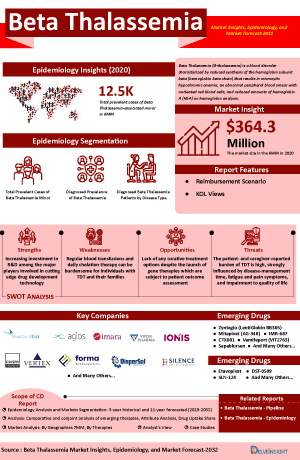
Beta Thalassemia Market Summary
- According to DelveInsight’s analysis, the Beta Thalassemia market across the major markets, including the United States, EU4 (Germany, France, Italy, and Spain), the United Kingdom, and Japan, is anticipated to witness notable growth during the forecast period, driven by increasing disease awareness, improved diagnosis rates, and the expanding adoption of enzyme replacement therapies.
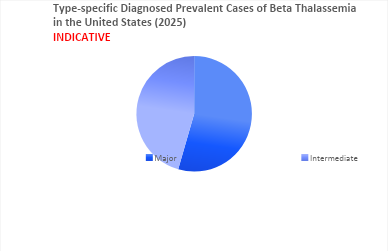
- The β-thalassemia population comprises three major phenotypes—Thalassemia Major, Thalassemia Intermedia, and Thalassemia Minor (carrier/trait). Epidemiologically, Thalassemia Minor constitutes the largest patient segment due to the high global carrier frequency, estimated at 80–90 million individuals worldwide. While carriers are typically asymptomatic or mildly affected, patients with Thalassemia Major and Intermedia represent a smaller but clinically significant population with higher healthcare utilization and treatment needs.
- Worldwide, at least 300,000 children are born each year affected with a severe form of hemoglobinopathy. Furthermore, at least 20% of the global population carries at least a single gene deletion for alpha thalassemia.
- Symptomatic β-thalassemia cases are relatively uncommon, the carrier (β-thalassemia trait/minor) population is substantially larger and serves as the primary source of disease transmission across generations.
- Patients with β-thalassemia major typically require lifelong regular red blood cell transfusions for survival, whereas patients with β-thalassemia intermedia generally do not require regular transfusions, although some may become transfusion-dependent over time
- Limited access to gene therapies and stem cell transplantation, coupled with their high cost and complex administration requirements, continues to leave many patients reliant on chronic transfusions and supportive care.
- FDA-approved therapies for beta-thalassemia include exagamglogene autotemcel (CASGEVY), betibeglogene autotemcel (ZYNTEGLO), luspatercept (REBLOZYL), and mitapivat (PYRUKYND). exagamglogene autotemcel and betibeglogene autotemcel are potentially curative gene therapies that address the underlying genetic defect and reduce or eliminate transfusion dependence, while luspatercept is an erythroid maturation agent that improves red blood cell production and decreases transfusion burden. Mitapivat, an oral pyruvate kinase activator, improves erythropoiesis and hemoglobin levels in both transfusion-dependent and non–transfusion-dependent alpha- and beta-thalassemia patients, further expanding treatment options beyond conventional supportive care.
- Although the beta-thalassemia pipeline remains relatively limited compared with other hematologic disorders, several promising investigational therapies are advancing through clinical development. Key companies, including Novo Nordisk with etavopivat, Regeneron Pharmaceuticals with REGN7999, Pharmacosmos of SP-420, and others are evaluating novel approaches aimed at improving erythropoiesis, reducing transfusion burden, and addressing unmet needs in patients with thalassemia.
- Despite advances in transfusion support and iron chelation therapy, a substantial unmet need remains in β-thalassemia due to the lifelong treatment burden, progressive iron overload complications, and limited access to curative options such as stem cell transplantation and gene therapies.
Beta-thalassemia Market Size and Forecast in the 7MM
- 2025 Beta-thalassemia Market Size: ~USD XX million
- 2036 Projected Beta-thalassemia Market Size: ~USD XX million
- Beta-thalassemia Growth Rate (2026–2036): ~XX% CAGR
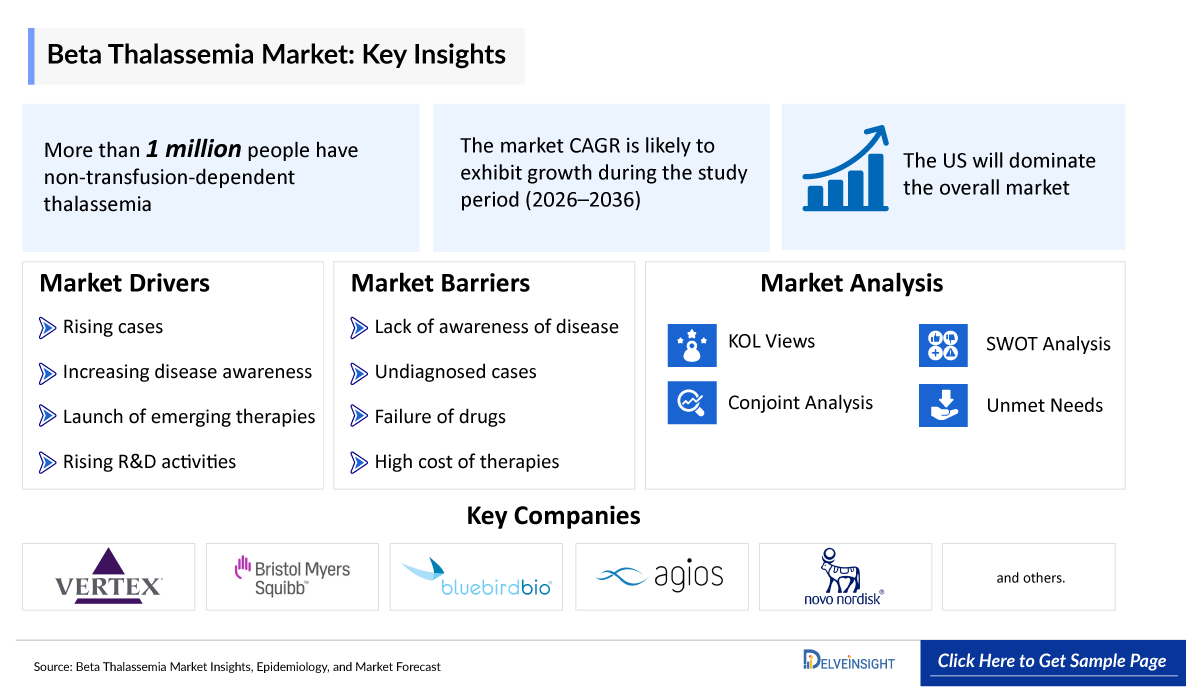
DelveInsight's ‘Beta-thalassemia – Market Insights, Epidemiology and Market Forecast – 2036’ report delivers an in-depth understanding of the Beta-thalassemia, historical and forecasted epidemiology, as well as the Beta-thalassemia market trends in the United States, EU4 (Germany, Spain, Italy, and France) and the United Kingdom, and Japan.
The Beta-thalassemia market report delivers a comprehensive analysis of the current treatment landscape, including standards of care, clinical practices, and evolving therapeutic algorithms. It evaluates Beta-thalassemia patient burden trends, revenue & market share dynamics, peak patient share & therapy uptake analysis, and provides an in-depth market size assessment, and growth rate projections (historical & forecast 2022–2036) across global regions. The report highlights key unmet medical needs in Beta-thalassemia and maps the competitive and clinical landscape to uncover high‑value opportunities, providing a clear outlook on future market growth potential.
|
Study Period |
2022–2036 |
|
Historical Year |
2022–2025 |
|
Forecast Period |
2026–2036 |
|
Base Year |
2026 |
|
Geographies Covered |
|
|
Beta-thalassemia Market CAGR (Forecast period) |
~XX% (2026–2036) |
|
Beta-thalassemia Epidemiology Segmentation Analysis |
Patient Burden Assessment
|
|
Beta-thalassemia Companies |
|
|
Beta-thalassemia Therapies |
|
|
Beta-thalassemia Market |
Segmented by
|
|
Analysis |
• Addressable Patient Population • Market Drivers And Market Barriers • Cost Assumptions And Pricing Analogues • KOL Views • SWOT Analysis • Reimbursement • Conjoint Analysis • Unmet Needs |
Key Factors Driving the Beta-thalassemia Market
-
Expansion of curative treatment approaches in Beta-thalassemia
Increasing development of gene therapies, gene-editing platforms, and stem cell–based approaches is reshaping the treatment paradigm for Beta-thalassemia. These advanced therapies offer the potential for long-term disease control and reduced transfusion dependency, driving significant interest across the market.
-
Growing burden of transfusion-dependent patient population
The persistent need for lifelong blood transfusions and iron chelation therapy in patients with severe Beta-thalassemia continues to create substantial clinical and economic burden. This ongoing unmet need is supporting demand for innovative therapies with improved efficacy, durability, and safety profiles.
-
Improving diagnosis and rare disease healthcare infrastructure
Enhanced newborn screening programs, genetic testing capabilities, and increasing awareness of inherited hematological disorders are contributing to earlier diagnosis and treatment initiation in Beta-thalassemia. In parallel, supportive rare disease policies and improved access to specialized care centers are strengthening market growth opportunities.
Beta-thalassemia Understanding and Treatment Algorithm
Beta-thalassemia Overview and Diagnosis
Beta-thalassemia is a hereditary blood disorder caused by mutations in the HBB gene on chromosome 11, resulting in reduced or absent production of beta-globin chains of hemoglobin. The defective hemoglobin synthesis leads to ineffective erythropoiesis, chronic hemolytic anemia, and impaired oxygen delivery, ultimately causing microcytic, hypochromic anemia of varying severity. Clinically, the disease is categorized into beta-thalassemia minor, intermedia, and major depending on the extent of beta-globin deficiency. Beta-thalassemia minor is generally mild or asymptomatic, whereas beta-thalassemia intermedia presents with moderate anemia and intermittent transfusion requirements. Beta-thalassemia major, also known as Cooley’s anemia, is the most severe form and is characterized by profound anemia, growth retardation, hepatosplenomegaly, skeletal abnormalities, and lifelong dependence on regular blood transfusions and iron chelation therapy. Additional variants include HbE/β-thalassemia, sickle β-thalassemia, dominant beta-thalassemia, and rare syndromic associations such as Hereditary Persistence of Fetal Hemoglobin (HPFH), X-linked Thrombocytopenia with Thalassemia (XLTT), and Trichothiodystrophy (TTD).
Diagnosis of beta-thalassemia involves a combination of hematologic evaluation, biochemical testing, imaging studies, and molecular genetic analysis. The disease is often suspected in infants and young children presenting with severe microcytic anemia, jaundice, fatigue, growth delay, and hepatosplenomegaly. Initial diagnostic workup includes complete blood count, red blood cell indices, peripheral blood smear, and hemoglobin electrophoresis or high-performance liquid chromatography (HPLC) to detect abnormal hemoglobin patterns. Definitive confirmation is achieved through molecular genetic testing to identify HBB gene mutations. Additional assessments, including serum iron studies, liver and cardiac MRI for iron overload monitoring, and skeletal radiographs for bone complications, are important for long-term disease management. Genetic counseling and prenatal diagnostic testing also play a critical role in identifying at-risk families and supporting early disease intervention strategies.
Further details are provided in the report.
Current Beta-thalassemia Treatment Landscape
Treatment of Beta-thalassemia varies depending on disease severity, clinical manifestations, and transfusion dependence. Patients with mild forms, such as beta-thalassemia trait, may require minimal or no treatment, whereas individuals with beta-thalassemia intermedia or major often need regular blood transfusions to maintain adequate hemoglobin levels and reduce complications associated with chronic anemia. Repeated transfusions can lead to iron overload, making iron chelation therapy with agents such as deferasirox, deferiprone, or deferoxamine essential for preventing cardiac, hepatic, and endocrine complications. Additional treatment approaches include supportive care, folic acid supplementation, and therapies such as luspatercept or hydroxyurea to reduce transfusion burden and improve erythropoiesis. In selected patients, splenectomy may be considered to manage hypersplenism and decrease transfusion requirements. Hematopoietic stem cell transplantation remains the only established curative option for eligible patients with suitable donors, while emerging gene therapies and gene-editing approaches are increasingly advancing the treatment landscape by offering the potential for long-term transfusion independence and disease modification.
Further details related to country-based variations are provided in the report.
Beta-thalassemia Unmet Needs
The section “unmet needs of Beta-thalassemia” outlines the critical gaps between the current state of patient care, diagnosis, and the ideal & effective management of the disease. It highlights the obstacles experienced by patients, clinicians, and researchers and identifies potential solutions for future progress.
-
Delayed diagnosis and limited access to specialized care centers in developing regions continue to negatively impact patient outcomes.
-
Existing therapies primarily address symptom management rather than the underlying genetic defect, highlighting the need for disease-modifying approaches.
-
There remains a substantial unmet need for oral, convenient, and less burdensome therapies that can reduce healthcare dependency and improve patient adherence.
-
Pediatric patients continue to face significant growth, developmental, and psychosocial challenges despite advances in supportive care and others…..
Note: Comprehensive unmet needs insights in Beta-thalassemia and their strategic implications are provided in the full report.
Beta-thalassemia Epidemiology
Key Findings from Beta-thalassemia Epidemiological Analysis and Forecast
- About 300 million people around the world have the “thalassemia trait”, which puts them at risk of having children with some form of thalassemia. More than 1 million people have non-transfusion-dependent thalassemia, while more than 100,000 people have transfusion-dependent thalassemia. In the US, there are at least 1,200 people with transfusion-dependent thalassemia.
- As per the secondary research, the prevalence of beta thalassemia major was observed to be 0.3 per 100,000 in different parts of the UK.
- According to NORD, beta thalassemia is relatively rare in the US. The incidence of symptomatic cases is estimated to be approximately 1 in 100,000 individuals in the general population.
- According to National Haemoglobinopathy Registry (NHR) annual report 2020, there were >900 beta thalassemia major patients and >200 beta thalassemia intermedia patients living in the UK.
Beta-thalassemia Drug Analysis & Competitive Landscape
The Beta-thalassemia drug chapter provides a detailed, market-focused review of approved therapies and the emerging pipeline across Phase I–III clinical trials. It covers the mechanism of action, clinical trial data, patents, collaborations, and strategic partnerships, upcoming key catalysts for each therapy, along with their advantages, limitations, and recent developments. This section offers critical insights into the Beta-thalassemia treatment landscape, supporting market assessment, competitive analysis, and growth forecasting for the Beta-thalassemia therapeutics market.
Approved Therapies for Beta-thalassemia
Exagamglogene autotemcel (CASGEVY): Vertex Pharmaceuticals
Exagamglogene autotemcel is the first FDA-approved therapy utilizing CRISPR/Cas9, a type of genome editing technology. Exagamglogene autotemcel is a non-viral, ex vivo CRISPR/Cas9 gene-edited cell therapy for eligible patients with sickle-cell disease or transfusion-dependent beta thalassemia, in which a patient’s own hematopoietic stem and progenitor cells are edited at the erythroid-specific enhancer region of the BCL11A gene through a precise double-strand break. This edit results in the production of high levels of fetal hemoglobin (HbF; hemoglobin F) in red blood cells. HbF is the form of the oxygen-carrying hemoglobin that is naturally present during fetal development, which then switches to the adult form of hemoglobin after birth. Exagamglogene autotemcel has been shown to reduce or eliminate vaso-occlusive crises for patients with sickle-cell disease and transfusion requirements for patients with transfusion-dependent beta thalassemia.
Patients’ hematopoietic (blood) stem cells are modified by genome editing using CRISPR/Cas9 technology. In January 2024, Vertex Pharmaceuticals announced the US FDA had approved exagamglogene autotemcel for the treatment of transfusion-dependent beta thalassemia in patients 12 years and older.
Luspatercept (REBLOZYL): Bristol-Myers Squibb
Luspatercept, a first-in-class therapeutic option, promotes late-stage red blood cell maturation in animal models. Luspatercept is being developed and commercialized through a global collaboration with Merck as of November 2021. With this approval, luspatercept is indicated in the US for the treatment of anemia in adult patients with beta thalassemia who require regular Red Blood Cell (RBC) transfusions.
In November 2019, the US FDA approved REBLOZYL for the treatment of anemia in adult patients with beta thalassemia who require regular red blood cell transfusions.
|
Marketed Drugs Competitive Landscape | ||||||
|
Product |
Company |
Indication |
MoA |
Molecule Type |
RoA |
Approval Year |
|
Exagamglogene autotemcel (CASGEVY) |
Vertex Pharmaceuticals |
Beta Thalassemia |
Gene Therapy |
ex vivo CRISPR/Cas9 cell-based gene therapy |
IV |
US: 2024 |
|
Luspatercept (REBLOZYL) |
Bristol-Myers Squibb |
Beta Thalassemia |
TGF-beta superfamily protein inhibitors |
Recombinant fusion protein |
SC |
US: 2019 |
|
Betibeglogene autotemcel (ZYNTEGLO) |
Blue Bird Bio |
Beta Thalassemia |
Gene Therapy |
Genetically modified cell suspension |
IV |
US: 2022 |
Beta-thalassemia Pipeline Analysis
Etavopivat (FT-4202): Novo Nordisk
Etavopivat is a small-molecule activator of the enzyme Pyruvate Kinase R (PKR). In its active state, PKR pushes red blood cells to produce energy, and 2,3-DPG levels drop. By reducing the levels of 2,3-DPG and increasing the production of energy, etavopivat should allow stronger binding of oxygen to the faulty hemoglobin protein. This would prevent red blood cells from taking on a sickle-like shape, thereby prolonging red blood cell survival, easing anemia, and reducing VOC frequency. Currently, it is being evaluated in Phase III for thalassemia in clinical trials, while as per the company’s pipeline the product is in Phase II for thalassemia.
SP-420: Pharmacosmos
SP-420 belongs to a novel class of orally active iron chelators called desferrithiocins. The drug has the ability to cross the blood-retinal and blood-brain barriers, requisite for retinal and neurological indications. In November 2021, Pharmacosmos acquired AbFero Pharmaceuticals and continued with the development of SP-420 in order to bring new treatment options for patients suffering from transfusional iron overload and other iron mediated.
|
Comparison of Emerging Drugs Under Development | ||||||
|
Drug Name |
Company |
Highest Phase |
Indication |
RoA |
Molecule Type |
Anticipated Launch in the US |
|
Etavopivat (FT-4202) |
Novo Nordisk |
III |
Beta Thalassemia |
Oral |
Small molecule |
2030 |
|
SP-420 |
Pharmacosmos |
II |
Beta Thalassemia | Oral |
Small molecule |
Information is available in the full report |
|
REGN7999 |
Regeneron Pharmaceuticals |
II |
Beta Thalassemia |
IV or SC |
Monoclonal antibody |
Information is available in the full report |
|
Note: Launch insights are provisional and may change with future report updates or the occurrence of major key catalysts. | ||||||
Note: Detailed emerging therapies assessment will be provided in the final report.
Beta-thalassemia Key Players, Market Leaders and Emerging Companies
- Vertex Pharmaceuticals
- Bristol-Myers Squibb
- Blue Bird Bio
- Agios Pharmaceuticals
- Novo Nordisk
- Regeneron Pharmaceuticals
- Pharmacosmos , and others
Beta-thalassemia Drug Updates
- In June 2026, Vertex Pharmaceuticals presented pivotal data at the European Hematology Association Congress demonstrating that Exagamglogene autotemcel delivered consistent efficacy and safety outcomes in children aged 5–11 years with severe sickle cell disease and transfusion-dependent beta-thalassemia, reinforcing its transformative clinical profile across age groups.
- In May 2026, Agios Pharmaceuticals announced the European Commission granted marketing authorization to mitapivat for the treatment of anemia associated with transfusion-dependent and non–transfusion-dependent alpha- or beta-thalassemia in adults, making it the first and only therapy approved across the EU for this broad thalassemia patient population.
- In 2026, as per Novo Nordisk’s presentation, Etavopivat is an investigational oral pyruvate kinase activator being developed for Beta-thalassemia, with Phase II results anticipated in Q2 2026 to evaluate its potential in improving hemoglobin levels and reducing transfusion burden.
Beta-thalassemia Market Outlook
Treatment of beta-thalassemia depends on disease severity and transfusion requirements, with regular blood transfusions remaining the cornerstone of therapy for patients with beta-thalassemia major and severe intermedia to maintain adequate hemoglobin levels and reduce complications associated with chronic anemia. However, long-term transfusions can lead to iron overload, increasing the risk of cardiac, hepatic, and endocrine complications, thereby necessitating iron chelation therapy with agents such as deferasirox, deferiprone, and desferrioxamine. Additional supportive management includes treatment of splenomegaly, splenectomy in selected patients, management of growth abnormalities and bone deformities, and routine monitoring for long-term complications. Hematopoietic stem cell or bone marrow transplantation remains the only established curative option for eligible patients, although its use is limited by donor availability and transplant-related risks including graft-versus-host disease and graft failure. The therapeutic landscape has further evolved with the approval of advanced therapies such as Exagamglogene autotemcel, Luspatercept and betibeglogene autotemcel which aim to reduce transfusion burden and provide long-term disease modification. In parallel, emerging therapies including Etavopivat, SP-420, and REGN7999 are being investigated to improve hemoglobin levels, reduce transfusion dependence, and address ongoing unmet needs in beta-thalassemia management.
Further details will be provided in the report….
Drug Class/Insights into Leading Emerging and Marketed Therapies in Beta-thalassemia (2022-2036)
The beta-thalassemia pipeline comprises therapies targeting improved erythropoiesis, reduction of transfusion dependence, correction of ineffective hemoglobin production, management of iron overload, and long-term disease modification through gene therapy and gene-editing approaches, with the goal of improving hemoglobin levels, reducing treatment burden and disease-related complications, and enhancing overall quality of life in patients with beta-thalassemia.
-
Ex vivo CRISPR/Cas9 cell-based gene therapy: It is an advanced gene-editing approach in which a patient's own hematopoietic stem cells are collected and genetically modified outside the body using CRISPR/Cas9 technology to correct or compensate for the underlying genetic defect. The edited cells are then reinfused into the patient following conditioning therapy, enabling the production of healthy red blood cells with improved hemoglobin function. This approach has the potential to provide a one-time, durable treatment that reduces or eliminates transfusion dependence and addresses the root cause of beta-thalassemia.
-
Iron chelator: They are agents designed to bind excess iron in the body and facilitate its excretion, thereby preventing iron overload and associated organ damage. They play a critical role in the management of transfusion-dependent disorders such as beta-thalassemia, where repeated blood transfusions lead to progressive iron accumulation in the liver, heart, and endocrine organs. By reducing iron burden and preventing complications including cardiomyopathy, liver dysfunction, and endocrine abnormalities, iron chelation therapies help improve long-term survival and quality of life. Available and investigational iron chelators are being developed to offer improved efficacy, safety, and convenience of administration for patients requiring lifelong iron management.
Beta-thalassemia Drug Uptake
This section focuses on the uptake rate of potential drugs expected to be launched in the market during the forecast period (2026–2036). The analysis covers the Beta-thalassemia drug’s uptake, performance at peak, factors affecting performance during prime years of growth, patient uptake by therapy, and anticipated sales generated by each drug.
Detailed insights into emerging therapies' drug uptake are included in the report.
Market Access and Reimbursement of Approved Therapies in Beta-thalassemia
The report further provides detailed insights on the country-wise accessibility and reimbursement scenarios, cost-effectiveness scenario of approved therapies, programs making accessibility easier and out-of-pocket costs more affordable, insights on patients insured under federal or state government prescription drug programs, etc.
Reimbursement is a crucial factor that affects the drug’s access to the market. Often, the decision to reimburse comes down to the price of the drug relative to the benefit it produces in treated patients. To reduce the healthcare burden of these high-cost therapies, many payment models are being considered by payers and other industry insiders.
The programs available in the US are:
-
Vaccines for Children Program (VFC)
-
Children’s Health Insurance Program (CHIP)
-
Medicare and Medicaid Coverage
NOTE: Further Details are provided in the final report….
Beta-thalassemia Therapies Price Scenario & Trends
Pricing and analogue assessment of Beta-thalassemia therapies highlights evolving price dynamics structures. This section summarizes the cost of approved treatments, the closest and most appropriate analogue selection for emerging therapies, and the understanding of how pricing influences market access, adherence, and long-term uptake.
Industry Experts and Physician Views for Beta-thalassemia
To keep up with Beta-thalassemia market trends, we take Key Opinion Leaders (KOLs) and Subject Matter Experts (SMEs) opinions working in the domain through primary research to fill the data gaps and validate our secondary research. Industry Experts were contacted for insights on Beta-thalassemia emerging therapies, evolving treatment landscape, patient adherence to conventional therapies, therapy switching trends, drug adoption and uptake, accessibility challenges, and epidemiology and real-world prescription patterns in Beta-thalassemia, including MD, PhD, Instructor, Postdoctoral Researcher, Professor, Researcher, and others.
DelveInsight’s analysts connected with 10+ KOLs to gather insights; however, interviews were conducted with 6+ KOLs in the 7MM. Centers such as the Hillman Cancer Center, Université Centre Léon Bérard, Society of Hematology, Aichi Medical University, etc. were contacted. Their opinion helps understand and validate current and emerging Beta-thalassemia therapies, highlight unmet medical needs, provide epidemiological context, and support strategic decisions for market access, therapy adoption, and pipeline prioritization in Beta-thalassemia.
|
Region |
Key Opinion Leaders (KOLs) and Subject Matter Experts (SMEs) |
|
United States |
“Red blood cell transfusions and iron chelation therapy are the cornerstone of treatment for β-thalassemia. The approval of luspatercept provides an extended and sustainable treatment choice for adult patients with transfusion-dependent β-thalassemia.” |
|
Spain |
“The prognosis for individuals with β-thalassemia major has dramatically improved over the last decades with the advent of noninvasive methods to measure organ iron before the appearance of clinical symptoms, new chelators, and increased blood safety measures.” |
Qualitative Analysis: SWOT and Conjoint Analysis
We perform qualitative and market Intelligence analysis using various approaches, such as SWOT analysis and conjoint analysis.
In the SWOT analysis of Beta-thalassemia, strengths, weaknesses, opportunities, and threats in terms of disease diagnosis, patient awareness, patient burden, competitive landscape, cost-effectiveness, and geographical accessibility of therapies are provided.
Conjoint analysis analyzes emerging therapies based on relevant attributes such as safety, efficacy, frequency of administration, route of administration, and order of entry. Scoring is given based on these parameters to analyze the effectiveness of therapy.
The team of analysts analyzes promising emerging therapies based on relevant attributes such as safety, efficacy, frequency of administration, route of administration, and order of entry. In efficacy, the trial’s primary and secondary outcome measures are evaluated, whereas the therapies’ safety is evaluated, wherein the acceptability, tolerability, and adverse events are mainly observed. In addition, the scoring is also based on the route of administration, order of entry, probability of success, and the addressable patient pool for each therapy. According to these parameters, the final weightage score and the ranking of the emerging therapies are decided.
Scope of the Report
- The report covers a segment of key events, an executive summary, a descriptive overview of Beta-thalassemia, explaining its causes, signs and symptoms, pathogenesis, and currently available treatments.
- Comprehensive insight has been provided into the epidemiology segments and forecasts, the future growth potential of the diagnosis rate, and disease progression along treatment guidelines.
- Additionally, an all-inclusive account of both the current and emerging treatments, along with the elaborative profiles of prominent therapies, will have an impact on the current treatment landscape.
- A detailed review of the Beta-thalassemia market, historical and forecasted market size, market share by therapies, detailed assumptions, and rationale behind our approach is included in the report, covering the 7MM drug outreach.
- The report provides an edge while developing business strategies by understanding trends through SWOT analysis and expert insights/KOL views, patient journey, and treatment preferences that help in shaping and driving the 7MM Beta-thalassemia market.
Report Insights
- Beta-thalassemia Patient Population Forecast
- Beta-thalassemia Therapeutics Market Size
- Beta-thalassemia Pipeline Analysis
- Beta-thalassemia Market Size and Trends
- Beta-thalassemia Market Opportunity (Current and forecasted)
Report Key Strengths
- Epidemiology‑based (Epi‑based) Bottom‑up Forecasting
- Artificial Intelligence (AI)-Enabled Market Research Report
- 11-Year Forecast
- Beta-thalassemia Market Outlook (North America, Europe, Asia-Pacific)
- Patient Burden Trends (By Geography)
- Beta-thalassemia Treatment Addressable Market (TAM)
- Beta-thalassemia Competitive Landscape
- Beta-thalassemia Major Companies Insights
- Beta-thalassemia Price Trends and Analogue Assessment
- Beta-thalassemia Therapies Drug Adoption/Uptake
- Beta-thalassemia Therapies Peak Patient Share Analysis
Report Assessment
- Beta-thalassemia Current Treatment Practices
- Beta-thalassemia Unmet Needs
- Beta-thalassemia Clinical Development Analysis
- Beta-thalassemia Emerging Drugs Product Profiles
- Beta-thalassemia Market attractiveness
- Beta-thalassemia Qualitative Analysis (SWOT and Conjoint analysis)
FAQs
Market Insights
- What was the Beta-thalassemia market size, the market size by therapies, market share (%) distribution in 2025, and what would it look like by 2036? What are the contributing factors for this growth?
- What are the anticipated pricing variations among different geographies for the emerging therapies in the future?
- What can be the future treatment paradigm of Beta-thalassemia?
- What are the disease risks, burdens, and unmet needs of Beta-thalassemia? What will be the growth opportunities across the 7MM concerning the patient population with Beta-thalassemia?
- Who is the major future competitor in the market, and how will the competitors affect their market share?
- What are the current options for the treatment of Beta-thalassemia? What are the current guidelines for treating Beta-thalassemia in the US, Europe, and Japan?
Reasons to Buy
- The report will help in developing business strategies by understanding the latest trends and changing treatment dynamics driving the Beta-thalassemia market.
- Bottom-up forecasting builds from the affected population to product forecasts, delivering a robust, data-driven approach ideal for new therapies and novel classes.
- Insights on patient burden/disease incidence, evolution in diagnosis, and factors contributing to the change in the epidemiology of the disease during the forecast years.
- Understand the existing market opportunities in varying geographies and the growth potential over the coming years.
- Identifying strong upcoming players in the market will help devise strategies to help get ahead of competitors.
- Detailed analysis and ranking of class-wise potential emerging therapies under the conjoint analysis section to provide visibility around leading classes.
- To understand KOLs’ perspectives on the accessibility, acceptability, and compliance-related challenges of existing treatment to overcome barriers in the future.
- Detailed insights on the unmet needs of the existing market so that the upcoming players can strengthen their development and launch strategy.
- This Artificial Intelligence (AI)-enabled report summarizes and simplifies complex datasets within the report into clear, actionable insights for stakeholders, investors, and healthcare providers, enabling faster, data-driven decisions.
-market.png&w=256&q=75)