Bone Metastasis In Solid Tumors Market
Bone Metastasis in Solid Tumour Insights and Trends
- The Bone Metastasis in Solid Tumors market is expected to evolve significantly over the forecast period, driven by rising cancer incidence, improved survival rates, increasing prevalence of metastatic disease, and the development of targeted therapies to prevent skeletal complications and improve outcomes.
- Bone metastasis occurs when cancer cells spread from their primary site to bone and is most commonly associated with breast, prostate, lung, kidney, and thyroid cancers. It represents a major cause of morbidity in patients with advanced solid tumors.
- Bone metastasis management relies on a multidisciplinary approach including systemic anticancer therapy, bone-targeted agents, radiotherapy, surgery, and supportive care to reduce skeletal-related events and maintain quality of life, despite the disease remaining largely incurable.
- Zoledronic acid and denosumab remain key supportive therapies, primarily reducing skeletal complications without directly altering tumor progression in the bone microenvironment.
- Despite treatment advances, patients continue to experience significant burden from pain, fractures, spinal cord compression, hypercalcemia, and functional decline.
- Improved understanding of tumor–bone interactions, osteoclast activation, angiogenesis, and signaling pathways is enabling the development of next-generation disease-modifying therapies.
- Emerging agents, including cabozantinib and other targeted therapies, immunotherapies, and radiopharmaceuticals, are shifting the focus toward metastatic control and survival improvement.
- Rising cancer survival rates and better diagnostics are increasing the population at risk of bone metastases, reinforcing the need for integrated, long-term, disease-modifying treatment strategies.
Bone Metastasis in Solid Tumor Market Size and Forecast in the 7MM
- 2025 Bone Metastasis in Solid Tumor Market Size: ~USD XXXX
- 2036 Projected Bone Metastasis in Solid Tumor Market Size: ~USD XXXX
- Bone Metastasis in Solid Tumor Growth Rate (2026–2036): XX% CAGR
DelveInsight's ‘Bone Metastasis in Solid Tumor Market Insights, Epidemiology and Market Forecast – 2036’ report delivers an in-depth understanding of the Bone Metastasis in Solid Tumor, historical and forecasted epidemiology, as well as Bone Metastasis in Solid Tumor market trends in the United States, EU4 (Germany, Spain, Italy, and France), and the United Kingdom, and Japan.
The Bone Metastasis in Solid Tumor market report delivers a comprehensive analysis of the current treatment landscape, including standards of care, clinical practices, and evolving therapeutic algorithms. It evaluates Bone Metastasis in Solid Tumor patient burden trends, revenue & market share dynamics, peak patient share & therapy uptake analysis, and provides an in-depth market size assessment and growth rate projections (Historical & Forecast 2022–2036) across global regions. The report highlights key unmet medical needs in Bone Metastasis in Solid Tumor and maps the competitive and clinical landscape to uncover high‑value opportunities, providing a clear outlook on future market growth potential.
|
Study Period |
2022–2036 |
|
Historical Year |
2022–2025 |
|
Forecast Period |
2026–2036 |
|
Base Year |
2026 |
|
Geographies Covered |
|
|
Bone Metastasis in Solid Tumor Market CAGR (Forecast period) |
XX% (2026 ̶ 2036) |
|
Bone Metastasis in Solid Tumor Epidemiology Segmentation Analysis |
Patient Burden Assessment
|
|
Bone Metastasis in Solid Tumor Companies |
|
|
Bone Metastasis in Solid Tumor Therapies |
|
|
Bone Metastasis in Solid Tumor Market |
Segmented by
|
|
Analysis |
|
Key Factors Driving the Bone Metastasis in Solid Tumor Market
Rising Burden of Bone Metastases in Solid Tumors
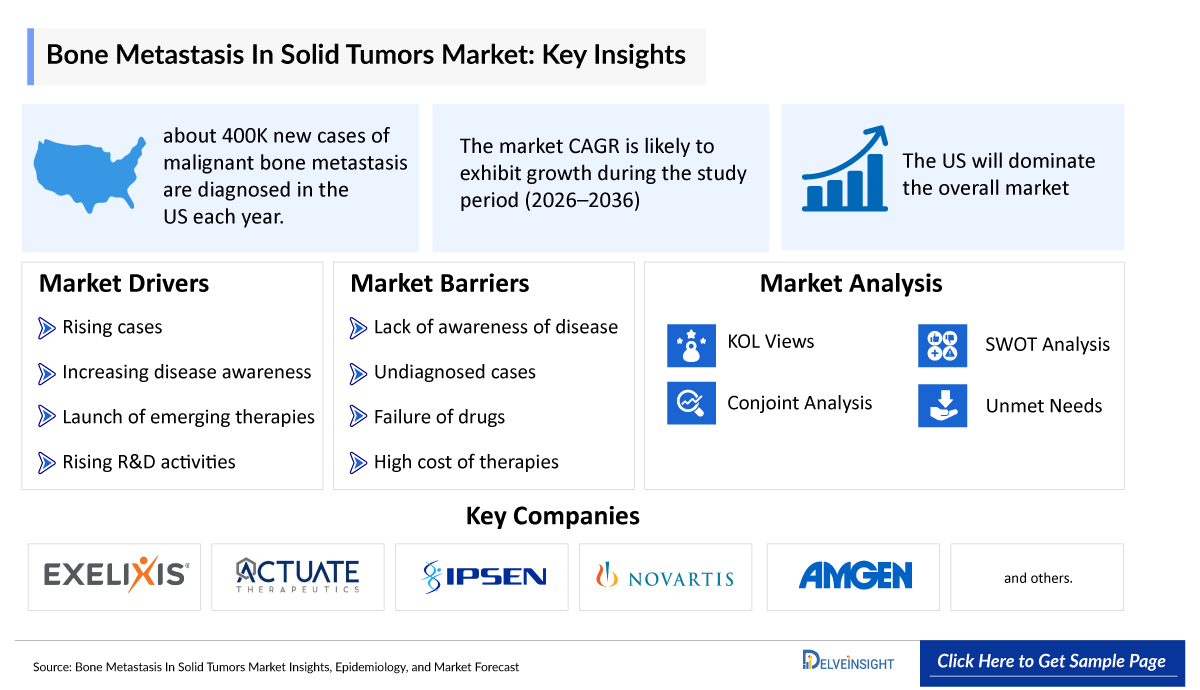
The rising incidence of advanced cancers, including breast, prostate, lung, kidney, and thyroid cancers, is a key driver of the bone metastasis market. Improved cancer survival from advances in systemic therapies has led to a larger patient population developing skeletal metastases, thereby increasing demand for bone-targeted treatments and supportive care.
Growing Opportunities for Targeted and Bone Microenvironment Therapies
Advances in understanding tumor–bone interactions, osteoclast activity, and bone microenvironment biology are driving the development of novel targeted therapies. Emerging agents designed to disrupt metastatic colonization, tumor-driven bone remodeling, and cancer cell survival within bone are expected to broaden treatment options and improve long-term outcomes.
Increasing Adoption of Radiopharmaceutical and Precision Oncology Approaches
Radiopharmaceuticals and precision oncology are increasingly being adopted in metastatic cancer care, enabling targeted treatment delivery, biomarker-guided therapy selection, and improved disease control with reduced off-target effects.
Evolving Competitive Landscape
The competitive landscape is expanding with next-generation bone-targeted therapies, radioligand treatments, immunotherapies, and combination strategies. Companies such as Exelixis, Novartis, Amgen, Bayer, AstraZeneca, Pfizer, Bristol Myers Squibb, and Johnson & Johnson are developing therapies aimed at both systemic tumor control and bone-specific disease management.
Bone Metastasis in Solid Tumor Understanding and Treatment Algorithm
Bone Metastasis in Solid Tumor Overview
Bone metastasis in solid tumors occurs when cancer cells spread from a primary tumor to the bone, forming secondary malignant lesions within the skeletal system. It is a common complication of advanced cancers such as breast, prostate, lung, renal cell carcinoma, and thyroid cancer. The process involves complex tumor–bone interactions that drive osteoclastic or osteoblastic activity, leading to bone destruction and remodeling. Bone metastases can result in significant morbidity through skeletal-related events, including pain, pathological fractures, spinal cord compression, hypercalcemia, and reduced mobility, severely impacting quality of life and increasing healthcare burden. Although generally incurable, advances in systemic therapies and supportive care have improved disease control and survival outcomes.
Bone Metastasis in Solid Tumor Diagnosis
Diagnosis is based on a combination of clinical evaluation, imaging studies, laboratory tests, and, when needed, histopathological confirmation. Patients typically present with persistent bone pain, fractures, neurological symptoms, or hypercalcemia. Imaging modalities such as bone scintigraphy, CT, MRI, PET, and PET/CT are key for detecting and characterizing metastatic lesions. Laboratory markers, including alkaline phosphatase, calcium, and tumor-specific biomarkers, provide supportive evidence of disease burden. In selected cases, a bone biopsy is performed to confirm metastasis and determine the primary tumor origin. Early and accurate diagnosis is essential for timely treatment, prevention of skeletal complications, and improved clinical outcomes.
Further details are provided in the report.
Bone Metastasis in Solid Tumor Treatment
Treatment is primarily aimed at controlling tumor progression, preventing skeletal-related events (SREs), relieving pain, preserving mobility, and improving quality of life. Management follows a multidisciplinary approach combining systemic anticancer therapies, bone-targeted agents, radiotherapy, surgery, and supportive care. Therapy selection depends on tumor type, extent of bone involvement, risk of fracture or spinal cord compression, symptom severity, disease stage, and patient performance status. While bone metastases are rarely curable, advances in oncology have improved disease control and survival. Current strategies include systemic treatments such as chemotherapy, hormonal therapy, targeted therapies, immunotherapies, and radiopharmaceuticals to manage the underlying malignancy. Bone-targeted agents like zoledronic acid and denosumab remain the standard of care for reducing skeletal complications and delaying disease progression within bone. External beam radiation therapy is commonly used for pain relief and local control, while surgery is reserved for fractures or spinal instability.
Despite these options, significant unmet needs persist due to ongoing skeletal morbidity and disease progression. As a result, the treatment landscape is shifting toward novel targeted therapies, radioligand approaches, and bone microenvironment-directed strategies to improve long-term outcomes and reshape disease management.
Further details related to country-based variations are provided in the report.
Bone Metastasis in Solid Tumor Unmet Needs
The section “unmet needs of Bone metastasis in Solid Tumor” outlines the critical gaps between the current state of patient care, diagnosis, and the ideal & effective management of the disease. It highlights the obstacles experienced by patients, clinicians, and researchers and identifies potential solutions for future progress.
- Limited availability of therapies that can prevent, delay, or reverse bone metastasis progression, with most current treatments focused on symptom control and reducing SREs.
- Persistent risk of SREs, including fractures, spinal cord compression, severe bone pain, and hypercalcemia, significantly impacts quality of life and increases healthcare burden.
- Bone-targeted agents such as bisphosphonates and denosumab reduce complications but do not eliminate metastatic disease or meaningfully improve overall survival in most patients.
- Unmet need for therapies that can both control systemic tumor growth and target tumor–bone microenvironment interactions driving metastatic progression and bone destruction.
- Limited options for patients with advanced, resistant, or rapidly progressing bone metastases who continue to experience symptoms despite standard-of-care treatments.
- Absence of robust biomarkers and predictive tools for identifying high-risk patients or enabling personalized treatment selection and monitoring.
- Need for innovative radiopharmaceuticals, targeted therapies, and combination approaches that improve survival outcomes while preserving bone integrity and quality of life….
Comprehensive unmet needs insights in Bone Metastasis in Solid Tumor and their strategic implications are provided in the full report.
Bone Metastasis in Solid Tumor Epidemiology
Key Findings from Bone Metastasis in Solid Tumor Epidemiological Analysis and Forecast
- According to Shibata et al. (2016), a study of autopsy cases from the Shikoku Cancer Center in Japan reported that bone metastasis frequencies varied by cancer type, reaching as high as 75% in breast and prostate cancers and as low as 22% in stomach and colon cancers.
- As per the study by Huang et al. (2020), the rate of bone metastases is 23.19% in SCLC, 22.50% in NSCLC (NOS/others), 20.28% in ADC, 8.44% in squamous cell carcinoma of the lung (SCC), and 4.11% in bronchioloalveolar carcinoma [NSCLC (BAC)].
- According to the American Cancer Society (ACS), about 400,000 new cases of malignant bone metastasis are diagnosed in the United States each year.
- Metastatic bone disease is commonly observed in breast (70%), prostate (85%), lung (40%), and kidney (40%) cancers, as reported by Coleman et al. (2020).
- In addition, as per ACS, the incidence of advanced malignant tumors with bone metastasis is 30–75%, especially common in patients with advanced prostate cancer and breast cancer.
- According to Hernandez et al. (2015), approximately 330,000 patients aged 18 years and older were living with solid tumors and bone metastases in 2012.
Bone Metastasis in Solid Tumor Drug Chapters & Competitive Analysis
The Bone Metastasis in Solid Tumor drug chapter provides a detailed, market-focused review of approved therapies and the emerging pipeline across Phase I–III clinical trials. It covers the mechanism of action, clinical trial data, regulatory approvals, patents, collaborations, and strategic partnerships for each therapy, along with their advantages, limitations, and recent developments. This section offers critical insights into the Bone Metastasis in Solid Tumor treatment landscape, supporting market assessment, competitive analysis, and growth forecasting for the Bone Metastasis in Solid Tumor therapeutics market.
Approved Therapies for Bone Metastasis in Solid Tumor
Denosumab (XGEVA): Amgen
Denosumab (XGEVA) is a fully human monoclonal antibody that binds RANK ligand (RANKL), inhibiting osteoclast formation, function, and survival. This reduces bone resorption and helps prevent skeletal-related events (e.g., fractures, spinal cord compression, and the need for bone surgery or radiation) in patients with bone metastases from solid tumors or multiple myeloma. It is also used for unresectable or surgically challenging giant cell tumors of bone. Denosumab acts on the tumor–bone microenvironment, not directly on tumor cells.
In March 2024, Sandoz announced FDA approval of Wyost and Jubbonti (denosumab-bbdz), the first biosimilars to denosumab. Wyost is approved for all indications of the reference product, including prevention of skeletal-related events in patients with bone metastases from solid tumors or multiple myeloma, treatment of giant cell tumor of bone in adults and skeletally mature adolescents, and treatment of hypercalcemia of malignancy that is refractory to bisphosphonate therapy.
Bone Metastasis in Solid Tumor Pipeline Analysis
Cabozantinib: Exelixis
Cabozantinib, sold under the brand names COMETRIQ and CABOMETYX among others, is an anti-cancer medication used to treat medullary thyroid cancer, renal cell carcinoma, and hepatocellular carcinoma. It is a small-molecule tyrosine-kinase inhibitor of c-Met and VEGFR2, and also inhibits AXL, RET, and FLT3.
From a pipeline perspective, Cabozantinib is considered a late-stage, clinically validated asset with expanding utility exploration in bone metastatic disease settings, including prostate and breast cancer bone involvement. Its activity in reducing skeletal-related events (SREs), modulating tumor-induced bone remodeling, and improving progression-free outcomes supports continued interest in combination strategies with bone-targeted agents and immuno-oncology therapies.
Comparison of Emerging Drugs Under Development | |||||||
|
Drug Name |
Company |
Highest Phase |
Indication |
RoA |
MoA |
Molecule Type |
Anticipated Launch in the US |
|
Cabozantinib (CABOMETYX) |
Exelixis |
III |
Bone Metastasis in Solid Tumors |
Oral |
Multi-TKI |
Small Molecule |
2028 |
|
Note: Launch insights are provisional and may change with future report updates or the occurrence of major key catalysts. | |||||||
Note: A detailed emerging therapies assessment will be provided in the final report
Bone Metastasis in Solid Tumor Key Players, Market Leaders, and Emerging Companies
- Exelixis
- Ipsen
- Novartis
- Amgen
- AstraZeneca
- Bayer
- Pfizer
- Eli Lilly and Company
- Merck & Co.
- Bristol Myers Squibb
- Novocure
- Fusion Pharmaceuticals
- Actinium Pharmaceuticals
- Telix Pharmaceuticals and others…
Bone Metastasis in Solid Tumor Key Players Drug Updates
- In June 2026, Exelixis continued to expand the clinical evaluation of Cabozantinib across advanced solid tumors with high bone metastatic burden, reinforcing its role in targeting the tumor–bone microenvironment through dual inhibition of c-MET and VEGFR2 signaling pathways, and supporting ongoing combination strategies with immune checkpoint inhibitors and bone-targeted agents in metastatic disease settings.
- In March 2026, emerging translational and real-world evidence further supported cabozantinib’s utility in reducing skeletal-related events and disease progression in patients with bone-metastatic renal cell carcinoma and prostate cancer, highlighting its anti-angiogenic and anti-resorptive effects as a clinically relevant mechanism for managing tumor-induced bone remodeling in advanced solid tumors.
Bone Metastasis in Solid Tumor Market Outlook
The Bone Metastasis in Solid Tumors market is expected to witness steady growth over the forecast period, driven by the rising incidence of metastatic breast, prostate, lung, kidney, and thyroid cancers. The United States, EU4, the UK, and Japan are expected to remain key markets due to strong oncology infrastructure, early adoption of advanced therapies, and broad access to supportive cancer care. Current management continues to rely on bone-targeted agents, radiotherapy, and systemic anticancer treatments.
A cornerstone of supportive care is XGEVA, a RANKL inhibitor widely used to prevent skeletal-related events such as fractures and spinal cord compression in patients with bone metastases. While Xgeva has significantly improved skeletal complication control, it does not modify underlying metastatic progression, leaving a clear need for disease-modifying therapies. Emerging approaches, including targeted therapies and radiopharmaceuticals, are increasingly being evaluated to address both tumor burden and the bone microenvironment.
Overall, the market is shifting toward combination strategies that integrate established bone-modifying agents like Xgeva with novel targeted and precision oncology therapies. Despite therapeutic advances, unmet needs remain high, particularly in preventing bone colonization, reducing skeletal-related events more effectively, and overcoming treatment resistance in advanced metastatic disease.
Further details will be provided in the report….
Drug Class/Insights into Leading Emerging and Marketed Therapies in Bone Metastasis in Solid Tumor (2022–2036 Forecast)
The Bone Metastasis in Solid Tumors market comprises bone-targeted therapies, RANKL inhibitors, bisphosphonates, tyrosine kinase inhibitors (TKIs), radiopharmaceutical therapies, immunotherapies, and emerging bone microenvironment-targeting agents. These therapeutic classes aim to reduce skeletal-related events (SREs), control metastatic progression within bone, alleviate pain, preserve bone integrity, and improve overall survival and quality of life in patients with advanced cancers.
- RANKL inhibitors and osteoclast-targeting therapies: These therapies inhibit osteoclast-mediated bone resorption, reducing skeletal complications and delaying disease progression in bone. The leading therapy in this class is denosumab (XGEVA) by Amgen, which has become a cornerstone treatment for preventing skeletal-related events in patients with bone metastases from solid tumors.
- Tyrosine kinase inhibitors (TKIs): These therapies target signaling pathways involved in tumor growth, angiogenesis, metastatic dissemination, and interactions between tumor cells and the bone microenvironment. Representative agents include CABOMETYX by Exelixis, which inhibits MET, VEGFR, and AXL pathways and is being investigated across multiple metastatic solid tumor settings with bone involvement.
- Radiopharmaceutical and targeted radionuclide therapies: These therapies selectively deliver radiation to metastatic bone lesions, providing pain relief and antitumor activity while minimizing damage to surrounding tissues. Key therapies include radium-223 dichloride (XOFIGO) by Bayer and emerging radioligand-based approaches that target metastatic bone disease.
Conventional bone-targeted agents such as denosumab and bisphosphonates currently dominate the Bone Metastasis in Solid Tumors treatment landscape due to their proven ability to reduce skeletal complications. However, emerging targeted therapies, radiopharmaceuticals, and bone microenvironment-directed approaches are expected to drive future innovation by addressing the underlying mechanisms of metastatic bone disease and improving long-term patient outcomes.
- According to the estimates, the United States accounted for the largest share of the Bone Metastasis in Solid Tumor in 2025 among the 7MM during the study period.
Further details will be provided in the report….
Bone Metastasis in Solid Tumor Drug Uptake
This section focuses on the uptake rate of potential drugs expected to be launched in the market during the forecast period (2026–2036). The analysis covers the Bone Metastasis in Solid Tumor market's uptake by drugs, patient uptake by therapy, and sales of each drug.
Therapy uptake in bone metastasis in solid tumors is expected to vary across bone-targeted agents, systemic anticancer therapies, radiotherapy, radiopharmaceuticals, and emerging targeted treatments over the forecast period. Bone-targeted therapies such as XGEVA and ZOMETA are expected to remain the mainstay of treatment due to their established efficacy in reducing skeletal-related events, alleviating bone pain, and preserving skeletal integrity. Radiotherapy and surgery will continue to play a key role in managing symptomatic lesions, pathological fractures, and spinal cord compression, while systemic therapies remain essential for controlling underlying tumor progression.
A gradual shift in treatment patterns is expected with increasing adoption of therapies that target both tumor growth and the bone metastatic microenvironment. Agents such as CABOMETYX are gaining interest due to their activity against pathways involved in tumor proliferation, angiogenesis, and metastatic spread. In addition, radiopharmaceuticals and investigational bone microenvironment-targeted therapies, including elraglusib, may see growing uptake by offering novel mechanisms to inhibit metastatic progression and improve disease control in solid tumors.
Over time, treatment approaches are expected to evolve from predominantly supportive care toward integrated strategies combining bone-targeted agents, systemic therapies, radiopharmaceuticals, and precision medicine. Advances in biomarker development, molecular profiling, and patient stratification are expected to further enable the adoption of more personalized and effective treatment options.
Overall, the market is expected to move toward more targeted and disease-modifying therapies that reduce skeletal-related events, delay disease progression, improve quality of life, and extend survival, thereby reshaping the treatment landscape over the forecast period.
Further detailed analysis of emerging therapies' drug uptake in the report…
Market Access and Reimbursement of Bone Metastasis in Solid Tumor
Reimbursement is a crucial factor that affects the drug’s access to the market. Often, the decision to reimburse comes down to the price of the drug relative to the benefit it produces in treated patients. To reduce the healthcare burden of these high-cost therapies, many payment models are being considered by payers and other industry insiders.
Further details are provided in the final report….
Bone Metastasis in Solid Tumor Therapies Price Scenario & Trends
Pricing and analogue assessment of Bone Metastasis in Solid Tumor therapies highlights evolving price dynamics structures. This section summarizes the cost of approved treatments, the closest and most appropriate analogue selection for emerging therapies, and the understanding of how pricing influences market access, adherence, and long-term uptake.
Further details are provided in the final report….
Industry Experts and Physician Views for Bone Metastasis in Solid Tumor
To keep up with Bone metastasis in the Solid Tumor market trends, we take Key Opinion Leaders (KOLs) and Subject Matter Experts (SMEs) opinions working in the domain through primary research to fill the data gaps and validate our secondary research. Industry experts were contacted for insights on the Bone Metastasis in Solid Tumor emerging therapies, evolving treatment landscape, patient adherence to conventional therapies, therapy switching trends, drug adoption and uptake, accessibility challenges, and epidemiology and real-world prescription patterns in Bone Metastasis in Solid Tumor, including MD, PhD, Instructor, Postdoctoral Researcher, Professor, Researcher, and others.
DelveInsight’s analysts connected with 10+ KOLs to gather insights; however, interviews were conducted with 6+ KOLs in the 7MM. Centers such as the University of Texas MD Anderson Cancer Center, University of Chicago Comprehensive Cancer Center, etc., were contacted. Their opinion helps understand and validate current and emerging Bone Metastasis in Solid Tumor therapies, highlight unmet medical needs, provide epidemiological context, and support strategic decisions for market access, therapy adoption, and pipeline prioritization in Bone metastasis in Solid Tumor.
Region |
Key Opinion Leaders (KOLs) and Subject Matter Experts (SMEs) |
|
United States |
“Bone metastases remain one of the most debilitating complications of advanced solid tumors, significantly affecting quality of life through pain, fractures, and other skeletal-related events. While bone-targeted agents have improved supportive care, there remains a critical need for therapies that can directly alter the biology of metastatic spread within the bone microenvironment.” |
|
Germany |
“Current management of bone metastases relies heavily on multidisciplinary care combining systemic anticancer therapies, radiotherapy, and bone-protective agents. However, disease progression within bone continues to pose major clinical challenges, highlighting the importance of novel targeted therapies and radiopharmaceutical approaches capable of improving long-term outcomes.” |
Qualitative Analysis: SWOT and Conjoint Analysis
We perform qualitative and market Intelligence analysis using various approaches, such as SWOT analysis and conjoint analysis.
In the SWOT analysis of Bone Metastasis in Solid Tumor, strengths, weaknesses, opportunities, and threats in terms of disease diagnosis, patient awareness, patient burden, competitive landscape, cost-effectiveness, and geographical accessibility of therapies are provided.
Conjoint analysis analyzes emerging therapies based on relevant attributes such as safety, efficacy, frequency of administration, route of administration, and order of entry. Scoring is given based on these parameters to analyze the effectiveness of therapy.
The team of analysts analyzes promising emerging therapies based on relevant attributes such as safety, efficacy, frequency of administration, route of administration, and order of entry. In efficacy, the trial’s primary and secondary outcome measures are evaluated, whereas the therapies’ safety is evaluated, wherein the acceptability, tolerability, and adverse events are mainly observed. In addition, the scoring is also based on the route of administration, order of entry, probability of success, and the addressable patient pool for each therapy. According to these parameters, the final weightage score and the ranking of the emerging therapies are decided.
Scope of the Report
- The report covers a segment of key events, an executive summary, a descriptive overview of Bone Metastasis in Solid Tumor, explaining its causes, signs and symptoms, pathogenesis, and currently available treatments.
- Comprehensive insight has been provided into the epidemiology segments and forecasts, the future growth potential of the diagnosis rate, and disease progression along treatment guidelines.
- Additionally, an all-inclusive account of both the current and emerging treatments, along with the elaborate profiles of late-stage and prominent therapies, will have an impact on the current treatment landscape.
- A detailed review of the Bone Metastasis in Solid Tumor market, historical and forecasted market size, market share by therapies, detailed assumptions, and rationale behind our approach is included in the report, covering the 7MM drug outreach.
- The report provides an edge while developing business strategies by understanding trends through SWOT analysis and expert insights/KOL views, patient journey, and treatment preferences that help in shaping and driving the 7MM Bone Metastasis in Solid Tumor market.
Report Insights
- Bone Metastasis in Solid Tumor Patient Population Forecast
- Bone Metastasis in Solid Tumor Therapeutics Market Size
- Bone Metastasis in Solid Tumor Pipeline Analysis
- Bone Metastasis in Solid Tumor Market Size and Trends
- Bone Metastasis in Solid Tumor Market Opportunity (Current and forecasted)
Report Key Strengths
- Epidemiology‑based (Epi‑based) Bottom‑up Forecasting
- Artificial Intelligence (AI)-enabled Market Research Report
- 11-year forecast
- Bone Metastasis in Solid Tumor Market Outlook (North America, Europe, Asia-Pacific)
- Patient Burden Trends (by geography)
- Bone Metastasis in Solid Tumor Treatment Addressable Market (TAM)
- Bone Metastasis in Solid Tumor Competitive Landscape
- Bone Metastasis in Solid Tumor Major Companies Insights
- Bone Metastasis in Solid Tumor Price Trends and Analogue Assessment
- Bone Metastasis in Solid Tumor Therapies Drug Adoption/Uptake
- Bone Metastasis in Solid Tumor Therapies Peak Patient Share Analysis
Report Assessment
- Bone Metastasis in Solid Tumor Current Treatment Practices
- Bone Metastasis in Solid Tumor Unmet Needs
- Bone Metastasis in Solid Tumor Clinical Development Analysis
- Bone Metastasis in Solid Tumor Emerging Drugs Product Profiles
- Bone Metastasis in Solid Tumor Market Attractiveness
- Bone Metastasis in Solid Tumor Qualitative Analysis (SWOT and Conjoint Analysis)
FAQs
Market Insights
- What was the Bone Metastasis in Solid Tumors market size, the market size by therapies, market share (%) distribution in 2025, and what would it look like by 2036? What are the contributing factors for this growth?
- What are the anticipated pricing variations among different geographies for the emerging therapies in the future?
- What can be the future treatment paradigm of Bone Metastasis in Solid Tumors?
- What are the disease risks, burdens, and unmet needs of Bone Metastasis in Solid Tumors? What will be the growth opportunities across the 7MM concerning the patient population with Bone Metastasis in Solid Tumor?
- Who is the major future competitor in the market, and how will the competitors affect their market share?
- What are the current options for the treatment of Bone Metastasis in Solid Tumors? What are the current guidelines for treating Bone Metastasis in Solid Tumors in the US, Europe, and Japan?
Reasons to Buy
- The report will help in developing business strategies by understanding the latest trends and changing treatment dynamics driving the Bone Metastasis in Solid Tumor market.
- Bottom-up forecasting builds from the affected population to product forecasts, delivering a robust, data-driven approach ideal for new therapies and novel classes.
- Insights on patient burden/disease incidence, evolution in diagnosis, and factors contributing to the change in the epidemiology of the disease during the forecast years.
- Understand the existing market opportunities in varying geographies and the growth potential over the coming years.
- Identifying strong upcoming players in the market will help devise strategies to help get ahead of competitors.
- Detailed analysis and ranking of class-wise potential current and emerging therapies under the conjoint analysis section to provide visibility around leading classes.
- To understand KOLs’ perspectives on the accessibility, acceptability, and compliance-related challenges of existing treatment to overcome barriers in the future.
- Detailed insights into the unmet needs of the existing market so that the upcoming players can strengthen their development and launch strategy.
- This Artificial Intelligence (AI)-enabled report summarizes and simplifies complex datasets within the report into clear, actionable insights for stakeholders, investors, and healthcare providers, enabling faster, data-driven decisions.