cardiac amyloidosis pipeline insight
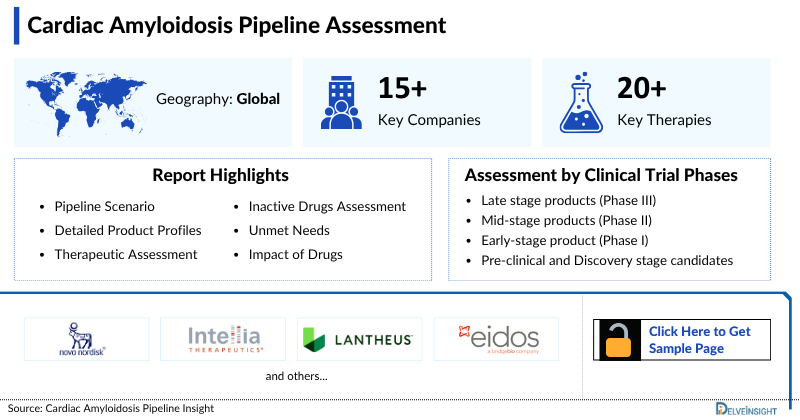
DelveInsight’s, “Cardiac Amyloidosis Pipeline Insight, 2026” report provides comprehensive insights about 15+ companies and 20+ pipeline drugs in Cardiac Amyloidosis pipeline landscape. It covers the pipeline drug profiles, including clinical and nonclinical stage products. It also covers the therapeutics assessment by product type, stage, route of administration, and molecule type. It further highlights the inactive pipeline products in this space.
Geography Covered
- Global coverage
Cardiac Amyloidosis Understanding
Cardiac Amyloidosis Overview
Cardiac amyloidosis is a progressive and potentially life-threatening infiltrative cardiomyopathy characterized by the deposition of misfolded amyloid proteins within the heart muscle. These abnormal protein deposits accumulate in the myocardium, causing the heart walls to become thickened, stiff, and less capable of relaxing and filling properly. Over time, this leads to heart failure, arrhythmias, and impaired cardiac function. The two most common forms of cardiac amyloidosis are light-chain (AL) amyloidosis, caused by abnormal plasma cells producing misfolded immunoglobulin light chains, and transthyretin amyloidosis (ATTR), which results from the deposition of transthyretin protein and may be hereditary or age-related (wild-type ATTR).
The signs and symptoms of cardiac amyloidosis are often nonspecific and may resemble those of other cardiovascular disorders, leading to delayed diagnosis. Common manifestations include progressive shortness of breath, fatigue, reduced exercise tolerance, swelling of the legs and ankles, dizziness, palpitations, and episodes of fainting. Patients may also develop heart rhythm abnormalities, conduction disturbances, chest discomfort, and symptoms of heart failure with preserved ejection fraction (HFpEF). In some cases, extracardiac features such as carpal tunnel syndrome, peripheral neuropathy, kidney dysfunction, or unexplained weight loss may provide clues to the underlying disease.
Diagnosis of cardiac amyloidosis requires a combination of clinical evaluation, laboratory testing, imaging studies, and tissue characterization. Blood and urine tests are used to identify monoclonal proteins associated with AL amyloidosis. Cardiac biomarkers such as troponin and NT-proBNP are often elevated. Imaging modalities including echocardiography and cardiac magnetic resonance imaging (MRI) can reveal characteristic structural and functional abnormalities. Nuclear scintigraphy using technetium-labeled tracers is particularly useful for diagnosing ATTR cardiac amyloidosis. In selected cases, tissue biopsy of the heart or another affected organ with amyloid typing is performed to confirm the diagnosis and determine the specific amyloid subtype.
Treatment depends on the type of amyloidosis and the extent of organ involvement. For AL amyloidosis, therapy focuses on eliminating the abnormal plasma cells through chemotherapy, targeted agents, and, in selected patients, autologous stem cell transplantation. For ATTR cardiac amyloidosis, disease-modifying therapies such as Tafamidis help stabilize transthyretin and slow disease progression. Additional therapies aimed at reducing transthyretin production or promoting amyloid clearance are also being investigated. Supportive management includes diuretics to control fluid overload, treatment of arrhythmias, and management of heart failure symptoms. Early diagnosis and initiation of appropriate therapy are critical for improving outcomes, slowing disease progression, and enhancing quality of life.
"Cardiac Amyloidosis Pipeline Insight, 2026" report by DelveInsight outlays comprehensive insights of present scenario and growth prospects across the indication. A detailed picture of the Cardiac Amyloidosis pipeline landscape is provided which includes the disease overview and Cardiac Amyloidosis treatment guidelines. The assessment part of the report embraces, in depth Cardiac Amyloidosis commercial assessment and clinical assessment of the pipeline products under development. In the report, detailed description of the drug is given which includes mechanism of action of the drug, clinical studies, NDA approvals (if any), and product development activities comprising the technology, Cardiac Amyloidosis collaborations, licensing, mergers and acquisition, funding, designations and other product related details.
Cardiac Amyloidosis Pipeline Report Highlights
- The companies and academics are working to assess challenges and seek opportunities that could influence Cardiac Amyloidosis R&D. The therapies under development are focused on novel approaches to treat/improve Cardiac Amyloidosis.
Cardiac Amyloidosis Emerging Drugs Analysis
This segment of the Cardiac Amyloidosis report encloses its detailed analysis of various drugs in different stages of clinical development, including Phase III, II, I, Preclinical and Discovery. It also helps to understand clinical trial details, expressive pharmacological action, agreements and collaborations, and the latest news and press releases.
Cardiac Amyloidosis Emerging Drugs
NNC6019-0001: Novo Nordisk A/S
NNC6019-0001 is an investigational therapeutic candidate being developed by Novo Nordisk A/S for the treatment of cardiac amyloidosis, particularly transthyretin amyloid cardiomyopathy (ATTR-CM). The therapy is designed to target the underlying disease process by reducing or preventing the accumulation of amyloid deposits in cardiac tissue. NNC6019-0001 is currently in clinical development, with studies evaluating its safety, tolerability, pharmacokinetics, and potential efficacy in improving cardiac function and disease outcomes in patients with amyloidosis.
NTLA-2001: Intellia Therapeutics
NTLA-2001 is the first CRISPR/Cas9-based therapy candidate to be administered systemically for precision editing of a gene in humans. It is designed to inactivate the TTR gene in liver cells to reduce the production of misfolded TTR protein, which accumulates in tissues throughout the body and causes the debilitating and often fatal complications of ATTR amyloidosis
Further product details are provided in the report……..
Cardiac Amyloidosis Drug Therapeutic Assessment
This segment of the report provides insights about the different Cardiac Amyloidosis drugs segregated based on following parameters that define the scope of the report, such as:
- Major Cardiac Amyloidosis Players in Cardiac Amyloidosis
- There are approx. 15+ key companies which are developing the therapies for Cardiac Amyloidosis. The companies which have their Cardiac Amyloidosis drug candidates in the most advanced stage, i.e. Phase III include, Novo Nordisk A/S.
Cardiac Amyloidosis Clinical Trial Phases
DelveInsight’s report covers around 20+ products under different phases of clinical development like
- Late stage products (Phase III)
- Mid-stage products (Phase II)
- Early-stage product (Phase I) along with the details of
- Pre-clinical and Discovery stage candidates
- Discontinued & Inactive candidates
Cardiac Amyloidosis Drug Route of Administration
Cardiac Amyloidosis pipeline report provides the therapeutic assessment of the pipeline drugs by the Route of Administration. Products have been categorized under various ROAs such as
- Oral
- Intravenous
- Subcutaneous
- Parenteral
- Topical
Cardiac Amyloidosis Product Molecule Type
Products have been categorized under various Molecule types such as
- Recombinant fusion proteins
- Small molecule
- Monoclonal antibody
- Peptide
- Polymer
- Gene therapy
Cardiac Amyloidosis Product Type
Drugs have been categorized under various product types like Mono, Combination and Mono/Combination.
Cardiac Amyloidosis Clinical Trial Activities
The Cardiac Amyloidosis Pipeline report provides insights into different Cardiac Amyloidosis Clinical Trial within Phase III, II, I, preclinical and discovery stage. It also analyses Cardiac Amyloidosis therapeutic drugs key players involved in developing key drugs.
Cardiac Amyloidosis Pipeline Development Activities
The Cardiac Amyloidosis Clinical Trial Analysis report covers the detailed information of collaborations, acquisition and merger, licensing along with a thorough therapeutic assessment of emerging Cardiac Amyloidosis drugs.
Cardiac Amyloidosis Report Insights
- Cardiac Amyloidosis Pipeline Analysis
- Cardiac Amyloidosis Therapeutic Assessment
- Cardiac Amyloidosis Unmet Needs
- Impact of Cardiac Amyloidosis Drugs
Cardiac Amyloidosis Report Assessment
- Cardiac Amyloidosis Pipeline Product Profiles
- Cardiac Amyloidosis Therapeutic Assessment
- Cardiac Amyloidosis Pipeline Assessment
- Cardiac Amyloidosis Inactive drugs assessment
- Cardiac Amyloidosis Market Unmet Needs
Key Questions Answered In the Cardiac Amyloidosis Pipeline Report
- Current Treatment Scenario and Emerging Therapies:
- How many companies are developing Cardiac Amyloidosis drugs?
- How many Cardiac Amyloidosis drugs are developed by each company?
- How many emerging drugs are in mid-stage, and late-stage of development for the treatment of Cardiac Amyloidosis?
- What are the key collaborations (Industry–Industry, Industry–Academia), Mergers and acquisitions, licensing activities related to the Cardiac Amyloidosis therapeutics?
- What are the recent trends, drug types and novel technologies developed to overcome the limitation of existing therapies?
- What are the clinical studies going on for Cardiac Amyloidosis and their status?
- What are the key designations that have been granted to the emerging drugs?
Cardiac Amyloidosis Key Players
- Novo Nordisk A/S
- Intellia Therapeutics
- Lantheus Germany GmbH
- Eidos Therapeutics, a BridgeBio company
Cardiac Amyloidosis Key Products
- NNC6019-0001
- NTLA-2001
- Florbetaben F18
- AG10