Cerebral Palsy Insights and Trends
- Cerebral palsy is a group of neurological disorders affecting movement, muscle tone, and posture, caused by early brain damage, most often before or shortly after birth.
-
It leads to impaired motor control, with symptoms ranging from jerky, involuntary movements to muscle stiffness or floppiness.
-
Most cases are congenital, while acquired cases occur after birth due to infections, brain injury, stroke, or trauma.
-
Based on brain involvement, it is classified into spastic, dyskinetic, ataxic, and mixed types. It is the most common childhood motor disability, with risk factors including prematurity, low birth weight, prenatal infections, and toxin exposure.
-
Clinical presentation varies widely, from mild gait abnormalities to severe disability requiring lifelong assistance. The condition is non-progressive, though symptoms may evolve.
-
Diagnosis is usually made within the first two years of life using clinical assessment supported by imaging such as MRI, CT, EEG, and ultrasound.
-
Management focuses on improving function, mobility, independence, and quality of life rather than a cure. Treatment is multidisciplinary, including physiotherapy, medications, surgery, assistive devices, and management of complications.
-
Common drug classes include anticonvulsants, antispastics, antidepressants, anticholinergics, anti-inflammatories, and stool softeners.
-
Spasticity is often managed with botulinum toxin injections or intrathecal baclofen delivery for severe cases. Surgical interventions may be used to improve limb function and correct musculoskeletal deformities. Market growth is supported by rising prevalence, advances in stem cell and personalized therapies, and increasing research initiatives focused on genetic insights.
-
However, treatment remains largely off-label with limited clinical guidelines, high unmet need, and challenges in pediatric clinical trial enrollment, which continue to constrain the therapeutic landscape.
Cerebral Palsy Market Size and Forecast in the 7MM
-
2025 Cerebral Palsy Market Size: ~USD XX million
-
2036 Projected Cerebral Palsy Market Size: ~USD XX million
-
Cerebral Palsy Growth Rate (2026–2036): XX% CAGR
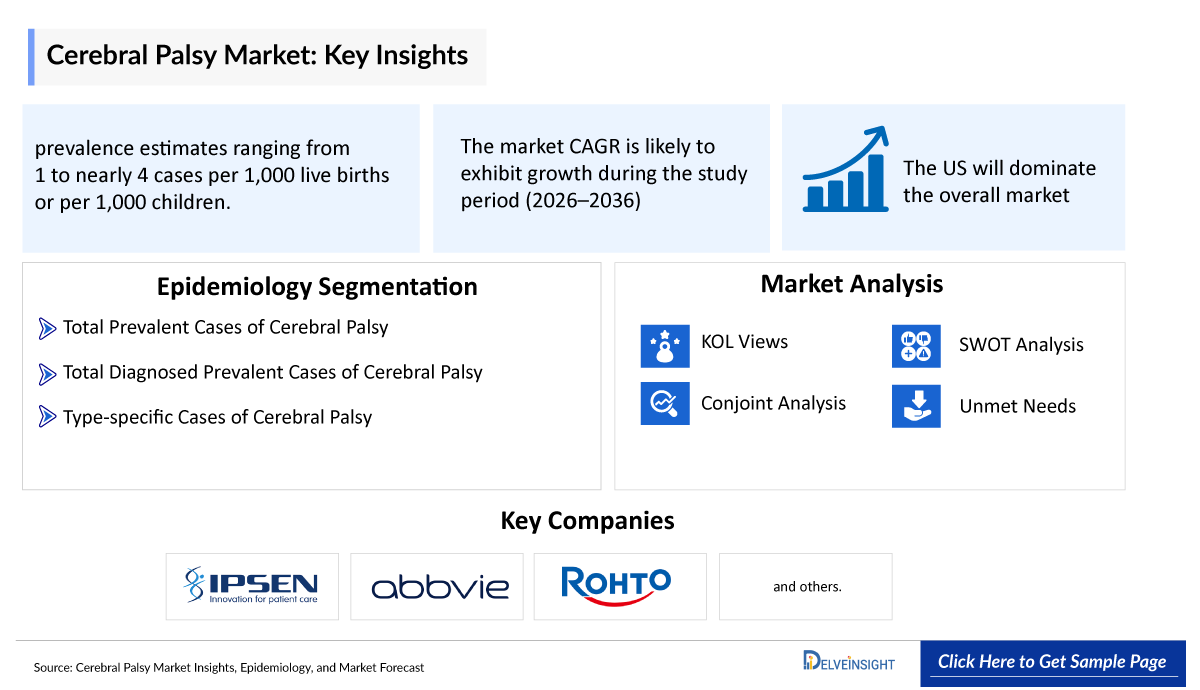
DelveInsight's ‘Cerebral Palsy Market Insights, Epidemiology and Market Forecast – 2036’ report delivers an in-depth understanding of Cerebral Palsy, historical and forecasted epidemiology, as well as the Cerebral Palsy market trends in the United States, EU4 (Germany, Spain, Italy, and France), and the United Kingdom, and Japan.
The Cerebral Palsy market report delivers a comprehensive analysis of the current treatment landscape, including standards of care, clinical practices, and evolving therapeutic algorithms. It evaluates Cerebral Palsy patient burden trends, revenue & market share dynamics, peak patient share & therapy uptake analysis, and provides an in-depth market size assessment and growth rate projections (Historical & Forecast 2022–2036) across global regions. The report highlights key unmet medical needs in Cerebral Palsy and maps the competitive and clinical landscape to uncover high‑value opportunities, providing a clear outlook on future market growth potential.
|
Study Period |
2022–2036 |
|
Historical Year |
2022–2025 |
|
Forecast Period |
2026–2036 |
|
Base Year |
2026 |
|
Geographies Covered |
|
|
Cerebral Palsy Market CAGR (Forecast period) |
XX% (2026–2036) |
|
Cerebral Palsy Epidemiology Segmentation Analysis |
Patient Burden Assessment
|
|
Cerebral Palsy Companies |
|
|
Cerebral Palsy Therapies |
|
|
Cerebral Palsy Market |
Segmented by
|
|
Analysis |
|
|
|
Key Factors Driving the Cerebral Palsy Market
Increasing Prevalence of Cerebral Palsy
Cerebral palsy is the most common developmental disability among children in the United States. According to the United Cerebral Palsy (UCP) Foundation, approximately 764,000 children and adults in the United States are living with one or more symptoms of cerebral palsy.
Stem Cell Therapies Can Do the Job
As research has advanced, it has been discovered that stem cells can be induced to become more specialized cell types, and when transplanted into the body, they can provide support to a damaged environment. In addition, these stem cells can be modified to express certain factors that can enhance this ability. For example, the cells can be modified to express scar-degrading factors that can help to reduce scarring in the brain and promote recovery.
Advances in Personalized Approach toward Treatment
There have been recent advancements toward the treatment of cerebral palsy apart from pharmacologic treatment. New advances in electronics, robotics, and other areas of cerebral palsy research have not just provided benefits but have been proven to be life-changing for those with cerebral palsy.
Cerebral Palsy Understanding
Cerebral Palsy Overview
Cerebral palsy is a group of permanent neurological disorders caused by early brain injury or abnormal brain development, leading to impaired movement, posture, muscle tone, and coordination. It is a non-progressive condition, but functional limitations may change over time. Cerebral palsy is mainly classified into spastic (70–80%), dyskinetic (10–20%), and ataxic (5–10%) types. Spastic cerebral palsy is characterized by increased muscle tone and abnormal gait, dyskinetic cerebral palsy by involuntary movements, and ataxic cerebral palsy by poor balance and coordination. Patients often present with associated conditions such as seizures, intellectual disability, and speech, vision, or hearing impairments, with severity varying widely.
Cerebral Palsy Diagnosis
Diagnosis of cerebral palsy is a clinical, multi-step process based on developmental surveillance, neurological examination, and neuroimaging, rather than a single definitive test. It is most often identified within the first 2 years of life, although milder cases may be confirmed later after ongoing monitoring of motor milestones, muscle tone, posture, reflexes, and coordination. Screening tools such as APGAR scoring at birth and routine developmental assessments (9, 18, and 24 months) help detect early delays. Confirmation is supported by imaging, with MRI as the preferred modality (abnormal in >80% of cases), while CT and cranial ultrasound assist in identifying structural brain abnormalities in infants. EEG and genetic/metabolic testing may be used to rule out seizures or alternative neuromuscular and metabolic disorders, ensuring accurate differential diagnosis.
Further details are provided in the report.
Cerebral Palsy Treatment
Treatment of cerebral palsy is multidisciplinary and individualized, aiming to improve function, mobility, independence, and quality of life, as the condition is not curable. Management is most effective when started early and is guided by the type and severity of symptoms, particularly spasticity, movement disorders, and associated complications.
Pharmacological therapy includes antispastics (baclofen, tizanidine, diazepam), botulinum toxin injections (Botox, Dysport) for focal spasticity, anticonvulsants for seizures, anticholinergics for involuntary movements and drooling, along with antidepressants and anti-inflammatory agents for associated symptoms. In severe cases, intrathecal baclofen pumps are used for continuous spasticity control. Surgical interventions are considered in cases of significant motor impairment and include orthopedic procedures (muscle/tendon lengthening, osteotomies) and selective dorsal rhizotomy to reduce severe spasticity and improve mobility.
Non-pharmacological management forms the backbone of care and includes physical therapy, occupational therapy, speech therapy, and rehabilitation programs, supported by orthotic devices and assistive technologies to enhance movement, communication, and daily functioning. Additional supportive care focuses on feeding, swallowing, and respiratory difficulties to prevent complications and improve overall outcomes.
Further details related to country-based variations are provided in the report.
Cerebral Palsy Unmet Needs
The section “unmet needs of cerebral palsy” outlines the critical gaps between the current state of patient care, diagnosis, and the ideal & effective management of the disease. It highlights the obstacles experienced by patients, clinicians, and researchers and identifies potential solutions for future progress.
-
Treatment Gets Hampered if Diagnosis is Delayed
-
Factors Affecting Patients’ Health‐related Quality of Life (HRQOL)
-
No Cure for the Disease
-
Complications and Comorbidities Associated With Cerebral Palsy
-
Special Health Challenges Associated With Cerebral Palsy
-
High Economic Burden of Cerebral Palsy, and others…..
Note: Comprehensive unmet needs insights in Cerebral Palsy and their strategic implications are provided in the full report.
Cerebral Palsy Epidemiology
Key Findings from Cerebral Palsy Epidemiological Analysis and Forecast
-
Cerebral palsy is the most common motor disability in childhood. Several population-based studies worldwide report prevalence estimates ranging from 1 to nearly 4 cases per 1,000 live births or per 1,000 children.
-
Dyskinetic cerebral palsy is the second most common subtype after spastic forms, while ataxic cerebral palsy is the least common type and is characterized by uncoordinated and jerky movements.
-
Spastic cerebral palsy is the most prevalent subtype, accounting for approximately 71–82% of all cerebral palsy cases, with prevalence estimates ranging from 2.6 to 3.0 cases per 1,000 children.
-
Children and adolescents with Cerebral Palsy are at increased risk of fragility fractures, particularly in non-weight-bearing patients, with higher fracture risk observed in those with severe growth impairment or receiving antiepileptic therapy.
-
Studies report an annual fracture incidence of ~4% among children and adolescents with non-ambulatory Cerebral Palsy, with more than 75% of fractures occurring in the lower extremities.
-
In France, cerebral palsy affects approximately 2 per 1,000 newborns, corresponding to nearly 1,500 new cases annually. Prevalence increases to approximately 5–8% among very preterm infants or those with very low birth weight.
Cerebral Palsy Drug Analysis & Competitive Landscape
The Cerebral Palsy drug chapter provides a detailed, market-focused review of approved therapies and the emerging pipeline across Phase I–III clinical trials. It covers the mechanism of action, clinical trial data, regulatory approvals, patents, collaborations, and strategic partnerships for each therapy, along with their advantages, limitations, and recent developments. This section offers critical insights into the Cerebral Palsy treatment landscape, supporting market assessment, competitive analysis, and growth forecasting for the Cerebral Palsy therapeutics market.
Approved Therapies for Cerebral Palsy
AbobotulinumtoxinA (DYSPORT): Ipsen
DYSPORT is an injectable form of a botulinum neurotoxin type A product, which is a substance derived from Clostridium bacteria producing botulinum toxin type A (BoNT-A) that inhibits the effective transmission of nerve impulses and thereby reduces muscular contractions. It is supplied as a lyophilized powder.
Onabotulinum toxin A (BOTOX): AbbVie
BOTOX is a sterile, vacuum-dried purified botulinum toxin type A, produced from the fermentation of Hall strain Clostridium botulinum type A and intended for intramuscular, intradetrusor, and intradermal use. It is purified from the culture solution by dialysis and a series of acid precipitations to a complex consisting of the neurotoxin and several accessory proteins. The complex is dissolved in a sterile sodium chloride solution containing Albumin Human and is sterile filtered (0.2 µm) before filling and vacuum-drying.
Note: Detailed marketed therapies assessment of therapies will be provided in the final report.
Cerebral Palsy Marketed/Approved Therapies | ||||||
|
Drug/Therapy |
Company |
Indication |
Molecule Type |
MoA |
RoA |
Marketed Region |
|
AbobotulinumtoxinA (Dysport) |
Ipsen |
Cerebral Palsy |
Protien |
Acetylcholine Inhibitor |
Intramuscular injection |
US: 2020 EU: 2020 |
|
Onabotulinum toxin A (Botox) |
Abbvie |
Cerebral Palsy |
Protien |
Acetylcholine Inhibitor |
Intramuscular injection |
US: 2020 EU: 2003 |
Cerebral Palsy Pipeline Analysis
UDI-001: Rohto Pharmaceutical
UDI-001 is Rohto Pharmaceuticals' novel candidate for a neurological disorder such as Cerebral Palsy. UDI-001 consists of umbilical cord-derived mesenchymal stromal cells (UC-MSCs). Mesenchymal stem cells have advantages such as high anti-inflammatory effects and low risk of canceration, and cell therapeutic agents using these cells are being developed worldwide. On the other hand, the mechanism of action has not been fully elucidated.
Competitive Landscape of Pipeline Drugs | ||||||
|
Drug Name |
Company |
Highest Phase |
Indication |
RoA |
MoA |
Anticipated Launch in the US |
|
UDI-001 |
Rohto Pharmaceutical |
I |
Cerebral Palsy |
IV |
Cell replacement |
Information is available in the full report |
|
Note: Launch insights are provisional and may change with future report updates or the occurrence of major key catalysts. | ||||||
Note: Detailed emerging therapies assessment will be provided in the final report.
Cerebral Palsy Key Players, Market Leaders, and Emerging Companies
-
Ipsen
-
Abbvie
-
Rohto Pharmaceutical, and others
Cerebral Palsy Drug Updates
-
In January 2026, Ipsen announced Dysport presentations at the TOXINS 2026 conference highlighted expanding clinical evidence across neurological movement disorders, including spasticity-related conditions, supporting its established role in patient care and ongoing evaluation in additional neurological indications relevant to Cerebral Palsy.
-
In 2025, Rohto Pharmaceutical announced in its Well-being Report that UDI-001 is currently in Phase I development for the treatment of Cerebral Palsy.
-
In July 2020, AbbVie announced the FDA had approved a supplemental Biologics License Application (sBLA) that supported the expanded use of Botox to treat spasticity in pediatric patients 2 years and older, including those with lower limb spasticity caused by cerebral palsy.
Cerebral Palsy Market Outlook
The Cerebral Palsy market is evolving from a predominantly supportive and symptomatic care-driven landscape toward more targeted neuromodulatory and emerging regenerative approaches, although the current standard of care remains centered on symptomatic management of spasticity and motor dysfunction. Therapies such as botulinum toxin injections (onabotulinumtoxinA/Botox and abobotulinumtoxinA/Dysport), oral and intrathecal baclofen, muscle relaxants, anticonvulsants, and anticholinergic agents continue to remain the mainstay of treatment for managing spasticity, pain, seizures, and associated motor and non-motor symptoms. Despite the availability of these therapies, many patients continue to experience persistent motor impairment, contractures, functional limitations, and associated comorbidities, highlighting a significant unmet clinical need for more durable and disease-modifying interventions.
The treatment landscape is increasingly shifting toward advanced neuromodulation techniques, improved drug delivery systems, and investigational regenerative therapies aimed at improving functional outcomes rather than only symptom control. Intrathecal baclofen therapy is widely used in severe generalized spasticity, while botulinum toxins remain the cornerstone for focal spasticity management. In parallel, emerging approaches such as stem cell-based therapies are under active investigation for their potential to repair or regenerate damaged neural pathways, although they remain experimental and not yet part of standard clinical practice. In parallel, emerging approaches such as stem cell-based therapies, spinal stimulation therapies, and investigational agents such as 5-Azacytidine for muscle contractures are under active evaluation for their potential to improve mobility and functional outcomes in Cerebral Palsy, although these approaches remain experimental and are not yet part of standard clinical practice. Surgical interventions, including selective dorsal rhizotomy and orthopedic correction procedures, continue to play a critical role in managing severe deformities and improving mobility in selected patients.
-
The United States and other developed 7MM markets represent the largest Cerebral Palsy treatment landscape, driven by higher diagnosis rates, strong rehabilitation infrastructure, and better access to advanced therapies.
-
Cerebral Palsy management is gradually shifting from isolated pharmacological symptom control toward a multidisciplinary, long-term functional improvement approach combining pharmacotherapy, rehabilitation, and surgical interventions.
-
Spasticity remains the most significant clinical burden in cerebral Palsy patients, with focal and generalized forms requiring differentiated treatment strategies.
-
Botulinum toxin therapies (Botox and Dysport) are expected to maintain a strong position in focal spasticity management due to their established efficacy and widespread use.
-
Stem cell and regenerative therapies represent a potential future paradigm shift but remain in early-stage development with no approved curative option currently available.
-
The Cerebral Palsy market is expected to remain predominantly supportive-care driven, with incremental innovation focused on improving functional outcomes, reducing spasticity burden, and enhancing quality of life.
Further details will be provided in the report….
Drug Class/Insights into Leading Emerging and Marketed Therapies in Cerebral Palsy (2022–2036 Forecast)
The Cerebral Palsy treatment landscape is structured around symptomatic management, rehabilitation therapies, pharmacologic spasticity control, and surgical interventions, with emerging interest in neuromodulation and regenerative approaches. Treatment is primarily aimed at improving motor function, reducing spasticity, preventing musculoskeletal complications, and enhancing overall quality of life, rather than disease modification.
-
Spasticity management therapies: Include botulinum toxin injections bonabotulinumtoxinA/Botox, abobotulinumtoxinA/Dysport), oral antispasticity agents such as baclofen, diazepam, tizanidine, and dantrolene, as well as intrathecal baclofen therapy (ITB). These therapies form the foundation of pharmacologic management and are used to reduce muscle stiffness, involuntary contractions, and functional impairment in both focal and generalized spasticity.
-
Adjunctive therapies: Include anticonvulsants for seizure control, anticholinergic agents for drooling and dystonia, antidepressants for mood disorders, and pain management agents such as NSAIDs. These therapies address the wide spectrum of neurological and systemic comorbidities associated with Cerebral Palsy, including epilepsy, behavioral disorders, and chronic pain.
-
Surgical and interventional therapies: Include selective dorsal rhizotomy (SDR), orthopedic corrective surgeries for contractures and skeletal deformities, and neurosurgical interventions in select severe cases. These procedures are primarily used in patients with severe spasticity, contractures, hip dislocation, or scoliosis where conservative management is insufficient.
-
Emerging and regenerative therapies: Include investigational stem cell-based therapies and other neuroregenerative approaches aimed at repairing or restoring damaged neural pathways. While these strategies represent a potential future shift toward disease-modifying treatment, they remain experimental and are not part of standard clinical practice.
Overall, the Cerebral Palsy treatment landscape remains multidisciplinary and supportive-care driven, with established therapies such as botulinum toxins and baclofen-based regimens continuing to dominate clinical practice, while rehabilitation and surgical interventions remain essential for long-term functional outcomes.
Cerebral Palsy Drug Uptake
This section focuses on the uptake rate of potential drugs expected to be launched in the market during the forecast period (2026–2036). The analysis covers the Cerebral Palsy drug’s uptake, performance at peak, factors affecting performance during prime years of growth, patient uptake by therapy, and anticipated sales generated by each drug.
The uptake of therapies in Cerebral Palsy is expected to vary across spasticity management therapies, adjunct symptomatic treatments, rehabilitative interventions, and surgical/advanced emerging approaches. Established pharmacologic therapies such as botulinum toxin injections (onabotulinumtoxinA/Botox and abobotulinumtoxinA/Dysport) and baclofen (oral and intrathecal formulations) are anticipated to maintain strong and sustained uptake due to their central role in managing focal and generalized spasticity, improving motor function, range of motion, and functional independence. In parallel, adjunct therapies including anticonvulsants, anticholinergic agents, antidepressants, and analgesics are expected to continue widespread use for the management of seizures, drooling, mood disorders, and chronic pain associated with Cerebral Palsy.
In contrast, surgical interventions such as selective dorsal rhizotomy (SDR) and orthopedic corrective procedures are expected to demonstrate selective but stable uptake, particularly in patients with severe spasticity, contractures, hip dislocation, or skeletal deformities who are inadequately managed with conservative therapies. Adoption of these procedures is driven by the need to improve long-term mobility and functional outcomes in advanced or refractory cases.
Rehabilitative therapies, including physiotherapy, occupational therapy, and speech and language therapy, are anticipated to maintain universal and sustained uptake, as they form the core foundation of long-term Cerebral Palsy management and are recommended across all disease severities in clinical guidelines.
Next-generation and emerging approaches, such as stem cell-based regenerative therapies and neurorestorative interventions, are expected to witness gradual and limited uptake, primarily within clinical trials and experimental settings. Their future adoption will depend on demonstrated improvements in motor function, neuroplasticity, safety profile, and long-term functional outcomes compared with existing standard-of-care therapies.
Detailed insights of emerging therapies' drug uptake is included in the report.
Market Access and Reimbursement of Cerebral Palsy
The United States
US Reimbursement of Therapies Approved for Cerebral Palsy | |
|
Drug/Therapy |
Access Program |
|
BOTOX |
BOTOX Savings Program |
Reimbursement is a crucial factor that affects the drug’s access to the market. Often, the decision to reimburse comes down to the price of the drug relative to the benefit it produces in treated patients. To reduce the healthcare burden of these high-cost therapies, many payment models are being considered by payers and other industry insiders.
NOTE: Further Details are provided in the final report….
Cerebral Palsy Therapies Price Scenario & Trends
Pricing and analogue assessment of Cerebral Palsy therapies highlights evolving price dynamics structures. This section summarizes the cost of approved treatments, the closest and most appropriate analogue selection for emerging therapies, and the understanding of how pricing influences market access, adherence, and long-term uptake.
Further details are provided in the final report….
Industry Experts and Physician Views for Cerebral Palsy
To keep up with Cerebral Palsy market trends, we take Key Opinion Leaders (KOLs) and Subject Matter Experts (SMEs) opinions working in the domain through primary research to fill the data gaps and validate our secondary research. Industry experts were contacted for insights on the emerging cerebral palsy therapies, evolving treatment landscape, patient adherence to conventional therapies, therapy switching trends, drug adoption and uptake, accessibility challenges, and epidemiology and real-world prescription patterns in cerebral palsy, including MD, PhD, Instructor, Postdoctoral Researcher, Professor, Researcher, and others.
|
Region |
Key Opinion Leaders (KOLs) and Subject Matter Experts (SMEs) |
|
United Kingdom |
For babies born prematurely, NICE guidelines recommend the use of magnesium sulphate (MnSO4), which has shown good activity in neonatal neuro-protection. In England, the PReCePT (Prevention of Cerebral Palsy in Preterm Labour) programme has hugely increased the uptake of MnSO4 from 30% to nearly 90% last year, thereby reducing four estimated cases of cerebral palsy in the newborn babies. |
|
France |
In France, nearly 1500-2000 babies per year are affected with cerebral palsy which accounts for the estimated prevalence of 125,000 in the country. In about 60% of cases, the cause of cerebral palsy can be identified, however, 40% of the cases the causes remain uncertain. |
DelveInsight’s analysts connected with 10+ KOLs to gather insights at the country level. Centers such as the Rutgers Robert Wood Johnson Medical School, New Brunswick, NJ, US, and Renal Division, Medical Center–University of Freiburg, Freiburg, Germany, etc., were contacted. Their opinion helps understand and validate current and emerging Cerebral Palsy therapies, highlight unmet medical needs, provide epidemiological context, and support strategic decisions for market access, therapy adoption, and pipeline prioritization in Cerebral Palsy.
Qualitative Analysis: SWOT and Conjoint Analysis
We perform qualitative and market Intelligence analysis using various approaches, such as SWOT analysis and conjoint analysis.
In the SWOT analysis of Cerebral Palsy, strengths, weaknesses, opportunities, and threats in terms of disease diagnosis, patient awareness, patient burden, competitive landscape, cost-effectiveness, and geographical accessibility of therapies are provided.
Conjoint analysis analyzes emerging therapies based on relevant attributes such as safety, efficacy, frequency of administration, route of administration, and order of entry. Scoring is given based on these parameters to analyze the effectiveness of therapy.
The team of analysts analyzes promising emerging therapies based on relevant attributes such as safety, efficacy, frequency of administration, route of administration, and order of entry. In efficacy, the trial’s primary and secondary outcome measures are evaluated, whereas the therapies’ safety is evaluated, wherein the acceptability, tolerability, and adverse events are mainly observed. In addition, the scoring is also based on the route of administration, order of entry, probability of success, and the addressable patient pool for each therapy. According to these parameters, the final weightage score and the ranking of the emerging therapies are decided.
Scope of the Report
-
The report covers a segment of key events, an executive summary, a descriptive overview of Cerebral Palsy, explaining its causes, signs and symptoms, pathogenesis, and currently available treatments.
-
Comprehensive insight has been provided into the epidemiology segments and forecasts, the future growth potential of the diagnosis rate, and disease progression along treatment guidelines.
-
Additionally, an all-inclusive account of both the current and emerging treatments, along with the elaborate profiles of late-stage and prominent therapies, will have an impact on the current treatment landscape.
-
A detailed review of the Cerebral Palsy market, historical and forecasted market size, market share by therapies, detailed assumptions, and rationale behind our approach is included in the report, covering the 7MM drug outreach.
-
The report provides an edge while developing business strategies by understanding trends through SWOT analysis and expert insights/KOL views, patient journey, and treatment preferences that help in shaping and driving the 7MM Cerebral Palsy market.
Report Insights
-
Cerebral Palsy Patient Population Forecast
-
Cerebral Palsy Therapeutics Market Size
-
Cerebral Palsy Pipeline Analysis
-
Cerebral Palsy Market Size and Trends
-
Cerebral Palsy Market Opportunity (Current and forecasted)
Report Key Strengths
-
Epidemiology‑based (Epi‑based) Bottom‑up Forecasting
-
Artificial Intelligence (AI)-Enabled Market Research Report
-
11-Year Forecast
-
Cerebral Palsy Market Outlook (North America, Europe, Asia-Pacific)
-
Patient Burden Trends (By Geography)
-
Cerebral Palsy Treatment Addressable Market (TAM)
-
Cerebral Palsy Competitive Landscape
-
Cerebral Palsy Major Companies Insights
-
Cerebral Palsy Price Trends and Analogue Assessment
-
Cerebral Palsy Therapies Drug Adoption/Uptake
-
Cerebral Palsy Therapies Peak Patient Share Analysis
Report Assessment
-
Cerebral Palsy Current Treatment Practices
-
Cerebral Palsy Unmet Needs
-
Cerebral Palsy Clinical Development Analysis
-
Cerebral Palsy Emerging Drugs Product Profiles
-
Cerebral Palsy Market Attractiveness
-
Cerebral Palsy Qualitative Analysis (SWOT and conjoint analysis)
FAQs
Market Insights
-
What was the Cerebral Palsy market size, the market size by therapies, the market share (%) distribution in 2025, and what would it look like by 2036? What are the contributing factors for this growth?
-
What are the anticipated pricing variations among different geographies for the emerging therapies in the future?
-
What can be the future treatment paradigm of Cerebral Palsy?
-
What are the disease risks, burdens, and unmet needs of Cerebral Palsy? What will be the growth opportunities across the 7MM concerning the patient population with Cerebral Palsy?
-
Who is the major future competitor in the market, and how will the competitors affect their market share?
-
What are the current options for the treatment of Cerebral Palsy? What are the current guidelines for treating Cerebral Palsy in the US, Europe, and Japan?
Reasons to Buy
-
The report will help in developing business strategies by understanding the latest trends and changing treatment dynamics driving the Cerebral Palsy market.
-
Bottom-up forecasting builds from the affected population to product forecasts, delivering a robust, data-driven approach ideal for new therapies and novel classes.
-
Insights on patient burden/disease incidence, evolution in diagnosis, and factors contributing to the change in the epidemiology of the disease during the forecast years.
-
Understand the existing market opportunities in varying geographies and the growth potential over the coming years.
-
Identifying strong upcoming players in the market will help devise strategies to help get ahead of competitors.
-
Detailed analysis and ranking of class-wise potential current and emerging therapies under the conjoint analysis section to provide visibility around leading classes.
-
To understand KOLs’ perspectives on the accessibility, acceptability, and compliance-related challenges of existing treatment to overcome barriers in the future.
-
Detailed insights into the unmet needs of the existing market so that the upcoming players can strengthen their development and launch strategy.
-
This Artificial Intelligence (AI)-enabled report summarizes and simplifies complex datasets within the report into clear, actionable insights for stakeholders, investors, and healthcare providers, enabling faster, data-driven decisions.