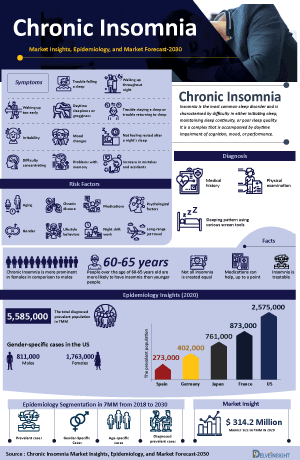
Chronic Insomnia Market Summary
- The chronic Insomina Market Size is anticipated to grow with a significant CAGR during the study period (2022-2036).
- Insomnia affects nearly 30% of the US population, with approximately 5% to 15% meeting criteria for chronic insomnia. It is associated with substantial impairment in quality of life, reduced productivity, and persistent fatigue and daytime drowsiness, while also increasing the risk of developing comorbid health conditions.
- Reduced sleep duration in chronic insomnia is associated with a significantly elevated risk of cardiometabolic conditions, including coronary artery disease, myocardial infarction, type 2 diabetes, obesity, and systemic hypertension, as well as increased all-cause mortality. It is also linked to a higher risk of developing psychiatric disorders, underscoring its broad systemic impact.
- Although chronic insomnia affects approximately 20–30% of children, with prevalence rising to as high as 86% in those with neurodevelopmental conditions, its clinical presentation varies markedly across different age groups.
- According to the International Classification of Sleep Disorders, 3rd edition criteria, insomnia is defined as complaints of Difficulty Initiating Sleep (DIS), and/or Difficulty Maintaining Sleep (DMS), and/or Early Morning Awakenings (EMA). These nocturnal symptoms must be accompanied by daytime impairment related to sleeping difficulties.
- Benzodiazepines and Z-drugs (like zolpidem) remain commonly prescribed for insomnia but are increasingly discouraged due to their unfavorable short- and long-term risk profiles. Melatonin receptor agonists offer a safer, well-tolerated alternative, though with modest efficacy. In contrast, dual orexin receptor antagonists provide a more targeted and effective option for both sleep onset and maintenance difficulties. Evidence supporting antihistamines is limited overall, although doxylamine demonstrates short-term efficacy of up to four weeks.
- Cognitive behavioral therapy for insomnia (CBT-I) is the recommended first-line treatment for chronic insomnia in adults, reflecting its strong evidence base and durability of benefit. Pharmacological therapy is typically reserved for cases where CBT-I is unavailable or insufficient. In such scenarios, benzodiazepines and benzodiazepine receptor agonists may be used, but their role is limited to short-term management, generally not exceeding four weeks, due to safety and dependence concerns.
- Because treating these patients is challenging, US and European insomnia guidelines recognize the use of medications indicated for other conditions. Drugs such as antidepressants, antipsychotics, antiepileptics, anxiolytics, and antihistamines, many of which act on neurotransmitters or sleep-related pathways, are commonly used in the management of chronic insomnia.
Chronic Insomnia Market Size and Forecast in the 7MM
- 2025 Chronic Insomnia Market Size: ~USD XXX million
- 2036 Projected Chronic Insomnia Market Size: ~USD XXX million
- Chronic Insomnia Growth Rate (2026–2036): XX% CAGR
Key Factors Driving the Chronic Insomnia Market
- Chronic Insomnia as a Long-Term Condition: Chronic insomnia is now understood as a long-lasting rather than episodic disorder, with about 40–75% of cases persisting over time and many patients remaining symptomatic for years without remission. The DSM-5 defines it as sleep difficulties occurring at least 3 nights per week for 3 months or longer, reinforcing its classification as a persistent clinical condition.
- Chronic Insomnia as a Hyperarousal Disorder: Chronic insomnia is increasingly viewed not just as a sleep timing issue but as a 24-hour hyperarousal state. It is associated with increased central nervous system activity, elevated β/γ EEG signals during sleep onset, higher metabolic and autonomic arousal, and dysregulation of wake-promoting systems such as orexin and monoamines.
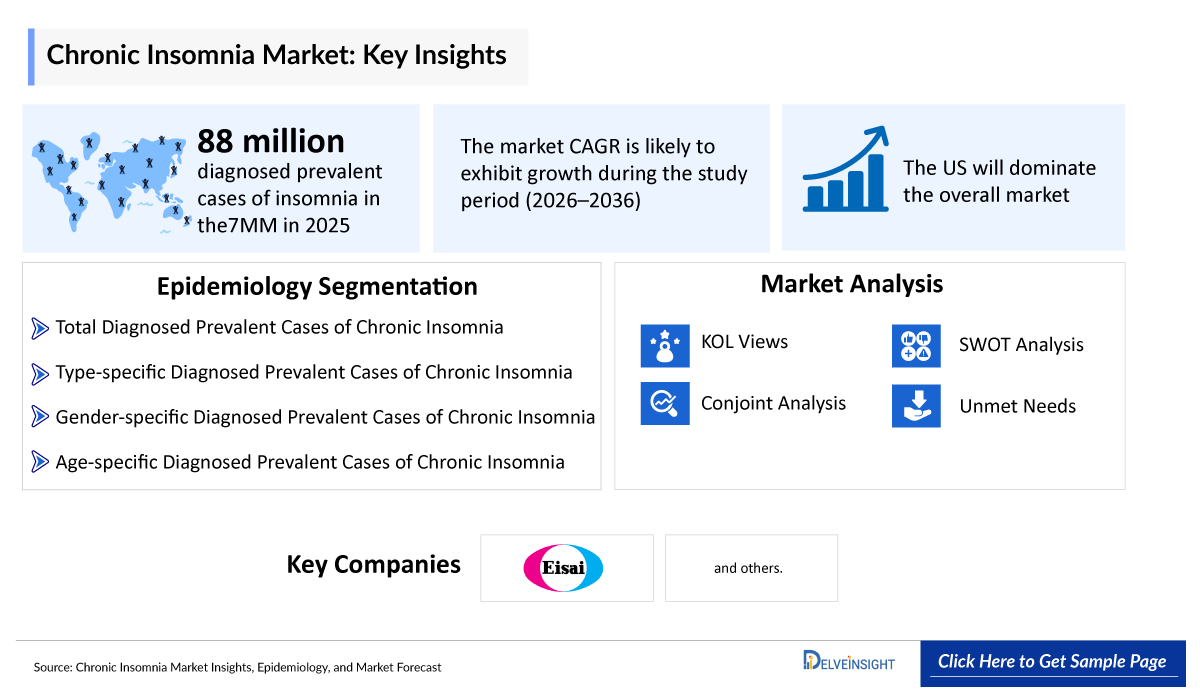
DelveInsight's ‘Chronic Insomnia Market Insights, Epidemiology and Market Forecast 2036’ report delivers an in-depth understanding of the Chronic Insomnia, historical and forecasted epidemiology, as well as the Chronic Insomnia market trends in the United States, EU4 (Germany, Spain, Italy, and France), and the United Kingdom, and Japan.
The Chronic Insomnia market report delivers a comprehensive analysis of the current treatment landscape, including standards of care, clinical practices, and evolving therapeutic algorithms. It evaluates Chronic Insomnia patient burden trends, revenue & market share dynamics, peak patient share & therapy uptake analysis, and provides an in-depth market size assessment and growth rate projections (Historical & Forecast 2022–2036) across global regions. The report highlights key unmet medical needs in Chronic Insomnia and maps the competitive and clinical landscape to uncover high‑value opportunities, providing a clear outlook on future market growth potential.
Scope of the Chronic Insomnia Market Report | |
|
Study Period |
2022–2036 |
|
Historical Year |
2022–2025 |
|
Forecast Period |
2026–2036 |
|
Base Year |
2026 |
|
Geographies Covered |
|
|
Chronic Insomnia Market CAGR (Forecast period) |
XX % (2026 ̶ 2036) |
|
Chronic Insomnia Epidemiology Segmentation Analysis |
Patient Burden Assessment
|
|
Chronic Insomnia Companies |
|
|
Chronic Insomnia Therapies |
|
|
Chronic Insomnia Market |
Segmented by
|
|
Analysis |
|
Chronic Insomnia Disease Understanding
Chronic Insomnia Overview
Chronic insomnia is the most prevalent sleep disorder, affecting up to 10% of the global population, while more than one-third of individuals worldwide report insufficient sleep as a frequent concern. Given its high burden, insomnia commonly co-occurs with both somatic and psychiatric conditions, often in a bidirectional relationship where each worsens the other. Disorders such as depression, anxiety, cardiovascular disease, and malignancies may act as key triggers for insomnia, consistent with behavioral models of its development.
Conversely, chronic insomnia is not merely a symptom but a contributing risk factor for these conditions. It is linked to multiple pathogenic pathways, including sustained activation of the stress response system, dysregulated neurotransmitter signaling, and impaired emotional regulation. Together, these mechanisms position insomnia as both a consequence and a driver of broader systemic disease.
Chronic Insomnia Diagnosis
Diagnosis of chronic insomnia involves a structured clinical evaluation to identify underlying causes and associated conditions. This typically includes a physical examination to detect medical contributors, with laboratory tests such as thyroid function assessment when indicated. A detailed review of sleep habits is essential, using clinical interviews, questionnaires, and sleep diaries to assess sleep–wake patterns and daytime impairment. When the diagnosis remains unclear, or a coexisting sleep disorder such as sleep apnea or restless legs syndrome is suspected, an overnight sleep study (polysomnography) may be performed to monitor physiological parameters, including brain activity, breathing, heart rate, and body movements during sleep.
Further details are provided in the report.
Chronic Insomnia Treatment
The treatment of chronic insomnia is multifaceted and focuses on both symptom relief and addressing underlying causes. First-line management is cognitive behavioral therapy for insomnia (CBT-I), which targets maladaptive sleep behaviors and thoughts through techniques such as stimulus control, sleep restriction, relaxation training, and cognitive restructuring. Alongside this, sleep hygiene practices, including maintaining a consistent sleep schedule, reducing caffeine and screen exposure, and optimizing the sleep environment, are essential supportive measures.
Pharmacological treatment may be considered when symptoms are severe or persist despite behavioral interventions. Common options include short-term use of hypnotic agents (such as benzodiazepine receptor agonists), melatonin or melatonin receptor agonists, and, in some cases, sedating antidepressants, particularly when comorbid psychiatric conditions are present. Importantly, medications are generally recommended for limited durations due to risks of dependence and side effects.
Management also requires identification and treatment of coexisting medical, psychiatric, or sleep disorders, as insomnia often occurs in a bidirectional relationship with these conditions. A combined and individualized approach, prioritizing behavioral therapy with judicious use of medication, offers the most effective and sustainable outcomes.
Further details related to country-based variations are provided in the report.
Chronic Insomnia Unmet Needs
The section “unmet needs of Chronic Insomnia” outlines the critical gaps between the current state of patient care, diagnosis, and the ideal & effective management of the disease. It highlights the obstacles experienced by patients, clinicians, and researchers and identifies potential solutions for future progress.
-
Inadequate Long-Term Management Strategies
-
Gaps in Standardized and Actionable Diagnostics
-
Limitations of Current Pharmacological Therapies, and others…..
Comprehensive unmet needs insights in Chronic Insomnia and their strategic implications are provided in the full report.
Chronic Insomnia Epidemiology
The Chronic Insomnia epidemiology section provides insights about the historical and current Chronic Insomnia patient pool and forecasted trends for individual seven major countries. It helps to recognize the causes of current and forecasted trends by exploring numerous studies and views of key opinion leaders. This part of the Chronic Insomnia market report also provides the diagnosed patient pool and their trends along with assumptions undertaken.
Key Findings from Chronic Insomnia Epidemiological Analysis and Forecast
- In 2025, diagnosed prevalent cases of insomnia across the 7MM were estimated at approximately 88 million.
- Among the 7MM, the US had the highest number of cases of insomnia, followed by France, Japan, and Germany in 2025.
- In 2025, age-specific diagnosed prevalent cases of insomnia showed the highest prevalence among individuals aged ≥65, with nearly 2.2 million cases, and the lowest among those aged 18–24, with approximately 300,000 cases in Japan.
- According to the American Academy of Sleep Medicine (2024), approximately 12% of Americans have been diagnosed with chronic insomnia.
- In 2025, France represented the highest number of diagnosed prevalent cases of insomnia among the EU4 and the UK, accounting for nearly 10 million cases alone, while Spain reported the lowest number of cases.
Chronic Insomnia Epidemiology Segmentation
- Total Diagnosed Prevalent Cases of Chronic Insomnia
- Type-specific Diagnosed Prevalent Cases of Chronic Insomnia
- Gender-specific Diagnosed Prevalent Cases of Chronic Insomnia
- Age-specific Diagnosed Prevalent Cases of Chronic Insomnia
Chronic Insomnia Drug Chapters & Competitive Analysis
The Chronic Insomnia drug chapter provides a detailed, market-focused review of approved therapies and the emerging pipeline across Phase I–III Chronic Insomnia clinical trials. It covers the mechanism of action, clinical trial data, regulatory approvals, patents, collaborations, and strategic partnerships for each therapy, along with their advantages, limitations, and recent developments. This section offers critical insights into the Chronic Insomnia treatment landscape, supporting market assessment, competitive analysis, and growth forecasting for the Chronic Insomnia therapeutics market.
Approved Therapies for Chronic Insomnia
DAYVIGO (lemborexant): Eisai
DAYVIGO is a dual orexin receptor antagonist that inhibits orexin neurotransmission, regulating sleep-wake rhythm by binding competitively to the two subtypes of orexin receptors (OX1R and OX2R). DAYVIGO acts on the orexin neurotransmitter system and is believed to facilitate sleep onset, sleep maintenance, and wake by regulating the sleep-wake rhythm. It was approved in the United States in 2019 for the treatment of insomnia characterized by difficulties with sleep onset and/or sleep maintenance in adults.
Note: Detailed marketed therapies assessment will be provided in the final report.
Chronic Insomnia Key Players and Market Leaders
-
Eisai, and others
Chronic Insomnia Market Outlook
The treatment landscape for chronic insomnia is evolving from short-term symptomatic control toward sustained, mechanism-based management. Traditional GABAergic hypnotics continue to be used but are increasingly limited by concerns around dependence, cognitive side effects, and lack of long-term efficacy. This has driven the adoption of newer agents such as dual orexin receptor antagonists, which target wake-promoting pathways and offer a more physiologically aligned and safer approach for chronic use. At the same time, pharmacotherapy is being used more strategically, often as part of combination or sequential treatment models rather than as a standalone solution.
In parallel, cognitive behavioral therapy for insomnia has become a foundational component of care, with digital delivery formats enabling scalability and long-term disease management. The overall approach is shifting toward personalized, multimodal treatment that accounts for insomnia heterogeneity and its frequent comorbidities. Advances in digital monitoring and wearable technologies are supporting more precise, longitudinal care, while treatment goals are expanding beyond sleep improvement to include daytime functioning and quality of life. Collectively, this reflects a transition toward an integrated chronic care model centered on durability, safety, and patient-specific outcomes.
Further details will be provided in the report….
Drug Class/Insights into Leading Marketed Therapies in Chronic Insomnia (2022–2036 Forecast)
DAYVIGO belongs to the dual orexin receptor antagonist (DORA) class, which represents a targeted approach to treating chronic insomnia by modulating the wake-promoting orexin system. Unlike traditional sedative-hypnotics that broadly depress central nervous system activity, DORAs selectively block orexin receptors OX1R and OX2R, inhibiting the neuropeptides responsible for maintaining wakefulness. This mechanism helps facilitate the natural transition to sleep without significantly altering sleep architecture. As a result, drugs in this class offer effective improvements in sleep onset and maintenance, with a potentially lower risk of dependence and next-day residual effects compared to older therapies.
Further details will be provided in the report….
Chronic Insomnia Drug Uptake
This section focuses on the uptake rate of potential drugs expected to be launched in the market during the forecast period (2026–2036). The analysis covers the Chronic Insomnia market's uptake by drugs, patient uptake by therapy, and sales of each drug.
Further detailed analysis of emerging therapies' drug uptake in the report…
Market Access and Reimbursement of Chronic Insomnia
-
The United States
The US Reimbursement for Chronic Insomnia Therapies | |
|
Drug |
Access Program |
|
DAYVIGO |
Instant Savings Card |
Reimbursement is a crucial factor that affects the drug’s access to the market. Often, the decision to reimburse comes down to the price of the drug relative to the benefit it produces in treated patients. To reduce the healthcare burden of these high-cost therapies, many payment models are being considered by payers and other industry insiders.
Further details are provided in the final report….
Chronic Insomnia Therapies Price Scenario & Trends
Pricing and analogue assessment of Chronic Insomnia therapies highlight evolving price dynamics structures. This section summarizes the cost of approved treatments, the closest and most appropriate analogue selection for emerging therapies, and the understanding of how pricing influences market access, adherence, and long-term uptake.
Further details are provided in the final report….
Industry Experts and Physician Views for Chronic Insomnia
To keep up with the Chronic Insomnia market trends, we take Key Opinion Leaders (KOLs) and Subject Matter Experts (SMEs) opinions working in the domain through primary research to fill the data gaps and validate our secondary research. Industry experts were contacted for insights on the emerging therapies for chronic insomnia, evolving treatment landscape, patient adherence to conventional therapies, therapy switching trends, drug adoption and uptake, accessibility challenges, and epidemiology and real-world prescription patterns in Chronic Insomnia, including MD, PhD, Instructor, Postdoctoral Researcher, Professor, Researcher, and others.
|
Region |
Key Opinion Leaders (KOLs) and Subject Matter Experts (SMEs) |
|
United States |
“Extensive research over several decades has established the effectiveness of behavioral and psychological therapies for adult insomnia, leading to their consistent endorsement in recent international guidelines as first-line treatment, particularly CBT-I.” |
|
Germany |
“Despite the shift in CBT toward transdiagnostic approaches, sleep continuity remains insufficiently addressed in both psychotherapeutic and psychiatric practice. Given that sleep disturbances are highly prevalent across psychiatric conditions and represent a fundamental component of health, the integration of core sleep-focused CBT modules should be considered a standard element of mental healthcare.” |
DelveInsight’s analysts connected with 10+ KOLs to gather insights; however, interviews were conducted with 6+ KOLs in the 7MM. Centers such as the Harvard Medical School, Boston Children’s Hospital, University of South Carolina, and Duke University, etc. were contacted. Their opinion helps understand and validate current and emerging Chronic Insomnia therapies, highlight unmet medical needs, provide epidemiological context, and support strategic decisions for market access, therapy adoption, and pipeline prioritization in Chronic Insomnia.
Chronic Insomnia Report Qualitative Analysis: SWOT and Conjoint Analysis
We perform qualitative and market Intelligence analysis using various approaches, such as SWOT analysis and conjoint analysis.
In the SWOT analysis of Chronic Insomnia, strengths, weaknesses, opportunities, and threats in terms of disease diagnosis, patient awareness, patient burden, competitive landscape, cost-effectiveness, and geographical accessibility of therapies are provided.
Conjoint analysis analyzes emerging therapies based on relevant attributes such as safety, efficacy, frequency of administration, route of administration, and order of entry. Scoring is given based on these parameters to analyze the effectiveness of therapy.
The team of analysts analyzes promising emerging therapies based on relevant attributes such as safety, efficacy, frequency of administration, route of administration, and order of entry. In efficacy, the trial’s primary and secondary outcome measures are evaluated, whereas the therapies’ safety is evaluated, wherein the acceptability, tolerability, and adverse events are mainly observed. In addition, the scoring is also based on the route of administration, order of entry, probability of success, and the addressable patient pool for each therapy. According to these parameters, the final weightage score and the ranking of the emerging therapies are decided.
Scope of the Chronic Insomnia Market Report
- The report covers a segment of key events, an executive summary, a descriptive overview of Chronic Insomnia, explaining its causes, signs and symptoms, pathogenesis, and currently available treatments.
- Comprehensive insight has been provided into the epidemiology segments and forecasts, the future growth potential of the diagnosis rate, and disease progression along treatment guidelines.
- Additionally, an all-inclusive account of both the current and emerging treatments, along with the elaborative profiles of late-stage and prominent therapies, will have an impact on the current treatment landscape.
- A detailed review of the Chronic Insomnia market, historical and forecasted market size, market share by therapies, detailed assumptions, and rationale behind our approach is included in the report, covering the 7MM drug outreach.
- The report provides an edge while developing business strategies by understanding trends through SWOT analysis and expert insights/KOL views, patient journey, and treatment preferences that help in shaping and driving the 7MM Chronic Insomnia market.
Chronic Insomnia Market Report Insights
- Chronic Insomnia Patient Population Forecast
- Chronic Insomnia Therapeutics Market Size
- Chronic Insomnia Pipeline Analysis
- Chronic Insomnia Market Size and Trends
- Chronic Insomnia Market Opportunity (Current and Forecasted)
Chronic Insomnia Market Report Key Strengths
- Epidemiology‑based (Epi‑based) Bottom‑up Forecasting
- Artificial Intelligence (AI)-enabled Market Research Report
- 11-year Forecast
- Chronic Insomnia Market Outlook (North America, Europe, Asia-Pacific)
- Patient Burden Trends (by geography)
- Chronic Insomnia Treatment Addressable Market (TAM)
- Chronic Insomnia Competitive Landscape
- Chronic Insomnia Major Companies Insights
- Chronic Insomnia Price Trends and Analogue Assessment
- Chronic Insomnia Therapies Drug Adoption/Uptake
- Chronic Insomnia Therapies Peak Patient Share Analysis
Chronic Insomnia Market Report Assessment
- Chronic Insomnia Current Treatment Practices
- Chronic Insomnia Unmet Needs
- Chronic Insomnia Clinical Development Analysis
- Chronic Insomnia Emerging Drugs Product Profiles
- Chronic Insomnia Market Attractiveness
- Chronic Insomnia Qualitative Analysis (SWOT and Conjoint Analysis)
- Chronic Insomnia Market Drivers
- Chronic Insomnia Market Barriers
FAQs Related to the Chronic Insomnia Market Report:
Chronic Insomnia Market Insights
- What was the Chronic Insomnia market size, the market size by therapies, market share (%) distribution in 2025, and what would it look like by 2036? What are the contributing factors for this growth?
- What are the anticipated pricing variations among different geographies for the emerging therapies in the future?
- What can be the future treatment paradigm of Chronic Insomnia?
- What are the disease risks, burdens, and unmet needs of Chronic Insomnia? What will be the growth opportunities across the 7MM concerning the Chronic Insomnia patient population?
- Who is the major future competitor in the market, and how will the competitors affect their market share?
- What are the current options for the treatment of Chronic Insomnia? What are the current guidelines for treating Chronic Insomnia in the US, Europe, and Japan?
Reasons to Buy Chronic Insomnia Market Forecast Report
- The report will help in developing business strategies by understanding the latest trends and changing treatment dynamics driving the Chronic Insomnia market.
- Bottom-up forecasting builds from the affected population to product forecasts, delivering a robust, data-driven approach ideal for new therapies and novel classes.
- Insights on patient burden/disease incidence, evolution in diagnosis, and factors contributing to the change in the epidemiology of the disease during the forecast years.
- Understand the existing market opportunities in varying geographies and the growth potential over the coming years.
- Identifying strong upcoming players in the market will help devise strategies to help get ahead of competitors.
- Detailed analysis and ranking of class-wise potential current and emerging therapies under the conjoint analysis section to provide visibility around leading classes.
- To understand KOLs’ perspectives on the accessibility, acceptability, and compliance-related challenges of existing treatment to overcome barriers in the future.
- Detailed insights into the unmet needs of the existing market so that the upcoming players can strengthen their development and launch strategy.
- This Artificial Intelligence (AI) -enabled report summarize and simplify complex datasets within the report into clear, actionable insights for stakeholders, investors, and healthcare providers, enabling faster, data-driven decisions.