Chronic Wounds Market Summary
- The Chronic Wounds Market Size is anticipated to grow with a significant CAGR during the study period (2020-2034).
- As the population ages, chronic conditions like diabetes, peripheral vascular disease, and immobility become more common, raising the risk of chronic wounds. Additionally, sedentary lifestyles, inadequate nutrition, and smoking further exacerbate this issue, hampering wound healing and escalating the likelihood of chronic wounds.
- Furthermore, improved diagnostic techniques and increased awareness among healthcare professionals may lead to more accurate diagnosis and reporting of chronic wounds during the forecast period (2024-2034).
- In the current market, for the treatment of chronic wounds biologic (becaplermin gel), cell-based therapies (DERMAGRAFT and APLIGRAF), fibroblast growth factor (trafermin), skin substitutes, and some other options are available including advanced dressings, wound debridement products, negative pressure wound therapy, hyperbaric oxygen therapy, and bioengineered skin substitutes, among others. Additionally, there's a growing interest in innovative technologies such as smart wound dressings and telemedicine solutions for wound management.
- Biomarkers can facilitate early detection and diagnosis of chronic wounds, enabling healthcare providers to intervene promptly and prevent complications. Currently, there is a lack of reliable biomarkers for accurately predicting wound healing trajectories and identifying patients at risk of developing chronic wounds.
- The scarcity of recent epidemiology data on chronic wounds impedes healthcare planning, resource allocation, and public health interventions, hindering effective treatment strategies. This gap limits the ability to target preventive measures and allocate resources optimally to manage chronic wounds.
- However, various therapies are being developed such as TTAX01 (Tissue Tech), ON101 (Oneness Biotech), and others that shall further create a positive impact on the market.
Request for unlocking the sample page of the "Chronic Wounds Treatment Market"
Key Factors Driving Chronic Wounds Market:
- Rising Prevalence of Chronic Diseases: Increasing cases of diabetes, obesity, and vascular disorders contribute to a higher incidence of chronic wounds, boosting market demand.
- Aging Population: Growth in the elderly population, who are more prone to wounds such as pressure ulcers and diabetic foot ulcers, drives market expansion.
- Advancements in Wound Care Products: Introduction of advanced dressings, bioengineered skin substitutes, and negative pressure wound therapy stimulates adoption.
- Rising Awareness and Early Diagnosis: Enhanced patient education, physician awareness, and early intervention strategies improve treatment uptake.
- Healthcare Infrastructure and Reimbursement Policies: Better healthcare access and supportive insurance coverage encourage timely treatment, further expanding market growth.
DelveInsight's "Chronic Wounds Market Insights, Epidemiology, and Market Forecast-2034" report delivers an in-depth understanding of the Chronic Wounds, historical and forecasted epidemiology as well as the Chronic Wounds therapeutics market trends in the United States, EU5 (Germany, Spain, Italy, France, and United Kingdom) and Japan.
The Chronic Wounds Treatment Market report provides current treatment practices, emerging drugs, market share of individual therapies, and current and forecasted 7MM Chronic Wounds market size from 2020 to 2034. The report also covers chronic wound treatment market practices/algorithms and unmet medical needs to curate the best opportunities and assess the market’s potential.
|
Study Period |
2020 to 2034 |
|
Forecast Period |
2024-2034 |
|
Geographies Covered |
|
|
Chronic Wounds Market |
|
|
Chronic Wounds Market Size |
USD 9000 Million in 2022 |
|
Chronic Wounds Companies |
Biotissue, PolarityTE, RHEACELL GmbH & Co. KG, Smith & Nephew, Kaken Pharmaceutical, MediWound, Paracrine, Inc., Oneness Biotech, Anterogen Co., Ltd., TR Therapeutics, and others. |
Chronic Wounds Disease Understanding
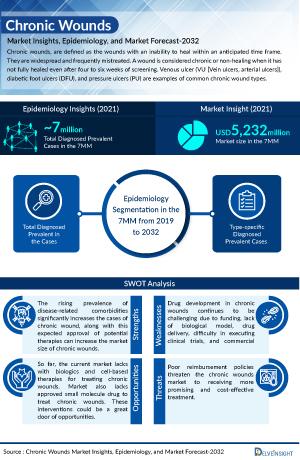
Chronic wounds are defined as wounds with an inability to heal within an anticipated time frame. They are widespread and frequently mistreated. A wound is considered chronic or non-healing when it has not fully healed even after four to six weeks of screening. Venous ulcers (VU [Vein ulcers, arterial ulcers]), diabetic foot ulcers (DFU), and pressure ulcers (PU) are examples of common chronic wound types.
While different etiologies of chronic wounds are associated with slightly different symptoms, the most common way to recognize a chronic wound is by its elevated, hyperproliferative, yet immobile wound edge. There will be inflammation in the vicinity of the wound, which could harm the healing process. Other common signs and symptom checklists include Bleeding, swelling, pain or blistering, darkened skin around the wound, difficulty moving the injured area, enlarged or deepened injury, fever, itching, milky pus, and warmth or heat when touched.
Continued in the report...
Chronic Wounds Diagnosis
The initial step in evaluating a wound clinically involves distinguishing between acute and chronic wounds. This is followed by a thorough physical examination, which includes assessing the wound's size, depth, location, and any indications of infection. Additionally, inspecting the surrounding skin and tissues for signs like inflammation, necrosis, or edema is crucial. Understanding the patient's medical history is also paramount, as conditions such as diabetes, peripheral vascular disease, immunosuppression, and prior wound healing complications can significantly impact healing. Consequently, documentation typically includes details such as the wound's location, size, depth, presence of drainage, and tissue type. By considering the wound's location and appearance, most chronic wounds can be categorized by their underlying cause, facilitating appropriate assessment and treatment recommendations.
Continued in the report...
Chronic Wounds Treatment
A thorough assessment of the patient and the wound will guide subsequent treatment by elucidating underlying areas of concern that need to be addressed. Diabetic patients frequently need improved control of their hyperglycemia, renal insufficiency, nutrition, and other associated medical comorbidities that may adversely affect the healing of their wound(s). Patients with VLUs might often have hemodynamic perturbations requiring improved medical management. PU patients, often bedridden from inter-current illness, will have significant nutritional deficits that need to be corrected to optimize tissue repair.
Treatment primarily focuses on treating the cause. First, all chronic wounds should be managed according to the principle of TIME: tissue debridement (in all cases except arterial ulcers), infection control, fluid balance, and wound margins. Effective management of infection in chronic wounds includes removal of necrotic tissue, cellular debris, and biofilm by debridement, and appropriate use of antimicrobial agents (including topical antiseptics and systemic antibiotics).
Chronic Wounds Epidemiology
As the market is derived using a patient-based model, the Chronic Wounds epidemiology chapter in the report provides historical as well as forecasted epidemiology segmented by total diagnosed prevalent cases of chronic wounds, type-specific diagnosed prevalent cases of chronic wounds in the 7MM covering the United States, EU4 countries (Germany, France, Italy, and Spain) and the United Kingdom, and Japan from 2020 to 2034.
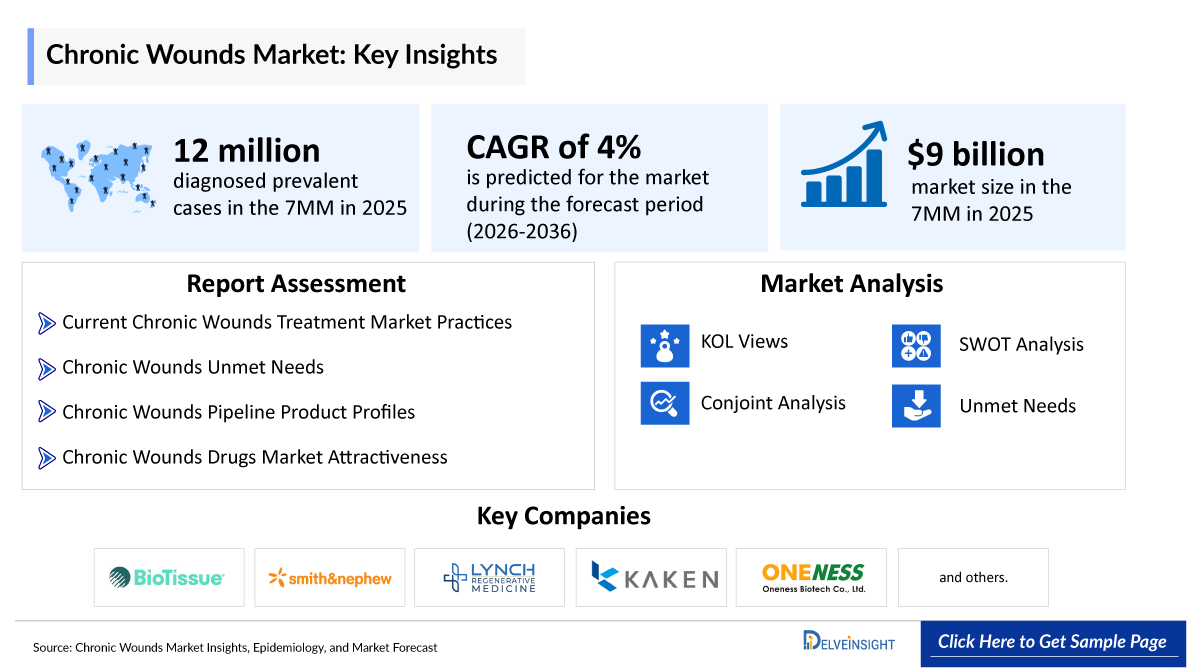
- As per DelveInsight analysis, in 2023, the total diagnosed prevalent cases of chronic wounds in the 7MM is estimated to be approximately 12 million cases. During the peak year of the COVID-19 pandemic, a steep decline in the cases of chronic wounds was recorded throughout the 7MM. However, these cases are anticipated to rise again during the forecasted period (2024-2034) primarily due to the aging population and a higher occurrence of chronic conditions like diabetes, peripheral vascular disease, and immobility, all of which contribute to the risk of chronic wounds.
- In 2023, the US accounted for approximately 7 million cases. Among these, pressure ulcers accounted for approximately 38%, diabetic foot ulcers for 35%, venous ulcers for 18%, and other types of chronic wounds for the remaining 9%. It is projected that these numbers will rise in the forecast period spanning from 2024 to 2034, driven by a rising interest in advanced technologies for managing wounds.
- Among the EU4 and the UK, Germany accounted for the highest cases i.e. nearly 1 million diagnosed prevalent cases of chronic wounds, followed by France and the UK with around 825 thousand, and 820 thousand respectively. These cases are expected to rise by 2034 primarily due to the heightened focus on research and clinical trials for the disease.
- In Japan, there were approximately 924 thousand cases diagnosed prevalent cases of chronic wounds.
- Among type-specific diagnosed prevalent cases of chronic wounds in Japan, pressure ulcers had the highest number of cases in 2023 with nearly 500 thousand cases, followed by around 217 thousand, 100 thousand, and 100 thousand cases for venous ulcers, diabetic foot ulcers, and others respectively. These cases anticipated that these numbers will climb by 2034 due to the growing prevalence of an aging population in Japan, which is at a heightened risk of developing chronic wounds.
Unlock comprehensive insights! Click Here to Purchase the Full Epidemiology Report @ Chronic Wounds Prevalence
Chronic Wounds Recent Developments
- In September 2025, Kane Biotech Inc. (TSX-V:KNE) announced the completion of its FDA 510(k) submission for the revyve® Antimicrobial Wound Cleanser. This marks the third product in the revyve line, complementing the existing Wound Gel and Gel Spray. Designed to cleanse acute and chronic wounds, the cleanser helps reduce bacterial load and is based on the same formulation as the Wound Gel.
Chronic Wounds Drug Analysis
The drug chapter segment of the chronic wounds treatment market report encloses a detailed analysis of chronic wounds -marketed drugs and late-stage (Phase III and Phase II) Chronic Wounds pipeline drugs. It also helps understand the chronic wounds clinical trials details, expressive pharmacological action, agreements and collaborations, approval and patent details, advantages and disadvantages of each included drug, and the latest Chronic Wounds news and press releases.
Chronic Wounds Marketed Drugs
-
Regranex (becaplermin): Smith & Nephew
REGRANEX is indicated for treating lower extremity diabetic neuropathic ulcers that extend into the SC tissue or beyond and have an adequate blood supply when used as an adjunct to, and not a substitute for, good ulcer care practices, including initial sharp debridement, pressure relief, and infection control. Regranex Gel contains becaplermin, a recombinant human platelet-derived growth factor (rhPDGF-BB) for topical administration. Becaplermin is produced by recombinant DNA technology by inserting the gene for the B chain of platelet-derived growth factor (PDGF) into the yeast Saccharomyces cerevisiae.
Regranex contains sodium chloride, sodium acetate trihydrate, glacial acetic acid, water for injection, methylparaben, propylparaben, and m-cresol as preservatives l-lysine hydrochloride as a stabilizer. Each gram of regranex gel contains 100 µg of becaplermin.
Note: Further marketed drugs and their details will be provided in the report...
-
Fiblast (trafermin): Kaken Pharmaceutical
Fiblast (trafermin) Spray is a wound-healing product that contains a recombinant human basic fibroblast growth factor (bFGF). Kaken Pharmaceuticals developed this product. It is a spray that is the world’s first marketed product for regenerative medicine treatment containing recombinant human basic bFGF.
Its active ingredient is trafermin, a recombinant human bFGF (basic fibroblast growth factor). bFGF was shown to promote the proliferation of undifferentiated mesenchymal stem cells and periodontal ligament-derived cells, as well as facilitate angiogenesis when administered to periodontal tissue defects, demonstrating the promotion of periodontal tissue regeneration.
Chronic Wounds Emerging Drugs
-
ON101: Oneness Biotech
ON101 is a new botanical drug ointment that possesses the function of diabetic wound healing and high safety. The main mechanisms of ON101 are to reduce wound inflammation, increase epithelialization of the epidermal tissues, promote collagen production, and decrease granulation tissue development in the wound. The active pharmaceutical ingredient (API) of ON101 is composed of extracts from two commonly used traditional Chinese herbal medicine, Plectranthus amboinicus, and the Centella asiatica.
It is a first-in-class drug targeting the subsets of macrophages to promote the healing of chronic wounds. It has been demonstrated with superior efficacy to the standard care dressing in a Phase III MRCT completed in the US, Taiwan, and China. It has been marketed under the trade name FESPIXON in Taiwan since June 2021 and has been granted the Fast Track designation by the US FDA in March 2021. Multiple NDA submissions of ON101 to Asian health authorities are underway.
-
TTAX01: Biotissue
TTAX01 is being developed by Biotissue to manage DFU and nonhealing wounds. It is a cryopreserved human umbilical cord product derived from donated human placental tissue following healthy, live, caesarian section, full-term births after determining donor eligibility and placenta suitability. The company’s proprietary technology CRYOTEK process, which devitalizes the living cells but retains the natural structural and biological characteristics relevant to this tissue, is being used. TTAX01 is aseptically processed in compliance with current Good Tissue Practices (cGTP).
The drug candidate is being investigated in two planned multicenter randomized controlled Phase III clinical trials conducted at 20 investigational sites across the US, with 220 patients in each trial. These trials, titled AMBULATE DFU and AMBULATE DFU II, study is expected to evaluate the benefits and risks of using TTAX01 to achieve complete wound closure of complex non-healing DFUs with high-risk factors of ulcer depth indicating exposed bone, tendon, muscle, and/or joint capsule, and clinical suspicion of osteomyelitis. TissueTech was rebranded, adopting the name BioTissue.
Note: Further emerging therapies and their detailed assessment will be provided in the final report...
Chronic Wounds Drugs Market Insights
Chronic wound treatment typically combines various medication classes to address underlying causes, enhance wound healing, prevent infections, and manage symptoms. Antibiotics like silver sulfadiazine or mupirocin are commonly applied topically to reduce bacterial presence and aid healing. Analgesics such as acetaminophen, NSAIDs, or opioids may be prescribed to alleviate pain. Growth factors like PDGF or EGF stimulate cell growth and angiogenesis for wound repair. Corticosteroids may reduce inflammation, while vasodilators like pentoxifylline enhance blood flow to improve tissue oxygenation. Biological dressings containing growth factors and other components support tissue regeneration, often complementing other medications to optimize healing.
Chronic Wound Market Outlook
Numerous elements must cooperate for a superficial wound to heal, moreover, wound dressings and treatments have advanced significantly to address potential obstacles to wound healing, from infection to hypoxia. Even under ideal conditions, the strength of the injured tissue never restores, and several aberrant healing states can lead to persistent non-healing wounds. Despite significant advances in technological innovation and the advent of various wound treatments, non-healing wounds continue to challenge physicians. Various nonsurgical approaches have been developed, and many drugs have been introduced to assist in managing such wounds.
Debridement is the removal of nonviable wound tissue, and it can be performed using surgical, autolytic, enzymatic, biological, or mechanical methods. Although several moisture-retentive dressings are available to manage chronic wounds, the best dressing is the one that keeps the wound moist but not too wet or dry. While there are multiple types of moisture-retentive dressings, the five basic categories include films, foams, hydrocolloids, alginates, and hydrogels. In addition to dressings, NPWT (also known as vacuum-assisted closure) has been used primarily in chronic wound management for diabetic foot ulcers and pressure ulcers. With the advancement of chronic wounds, there is a need for a more advanced technique to cure this situation.
Nonetheless, the anticipated release of promising treatments like TTAX01, ON101, and others is anticipated to positively influence the market size throughout the forecast period [2024-2034].
- According to DelveInsight, the overall the chronic wounds market dynamics are anticipated to change during the forecast period (2024-2034) owing to the expected launch of emerging therapies, the development of novel wound dressings, and advanced wound closure devices. Additionally, the increasing prevalence of diabetes is likely to drive the demand for advanced wound care solutions tailored to diabetic patients.
- In 2023, the total market size of chronic wounds in the 7MM was approximately USD 9 thousand million, out of which the US accounted for approximately USD 6 thousand million.
- Among the EU4 and the UK, Germany holds the highest market size of around 26% followed by France, and the UK with approximately 21%, and 20% respectively. These numbers are expected to change during the forecast period (2024-2034) driven by the ongoing research and development efforts that may lead to the discovery of more effective medications and therapies for treating chronic wounds.
- The chronic wound market size in Japan accounted for nearly 6% of the total 7MM market size in 2023, these numbers are expected to change by 2034.
Chronic Wounds Drugs Uptake
This section focuses on the uptake rate of potential Chronic Wounds drugs expected to be launched in the market during 2020–2034. For example, Oneness Biotech’s ON101, a new botanical drug ointment that possesses the function of diabetic wound healing and high safety to reduce wound inflammation, increase epithelialization of the epidermal tissues, promote collagen production, and decrease granulation tissue development in the wound.
Further detailed analysis of emerging therapies drug uptake in the report…
Chronic Wounds Pipeline Development Activities
The Chronic Wounds pipeline report provides insights into Chronic Wounds clinical trials within Phase III, Phase II, and Phase I. It also analyzes key Chronic Wounds companies involved in developing targeted therapeutics.
Chronic Wounds Pipeline development activities
The Chronic Wounds clinical trials analysis report covers information on collaborations, acquisitions and mergers, licensing, and patent details for emerging therapies for chronic wounds.
Take Your Research to the Next Level! Click Here to Get Access to the Full Pipeline Report @ Chronic Wounds Treatment Drugs
KOL Views on the Chronic Wounds Market Report
To keep up with current market trends, we take KOLs and SMEs’ opinions working in the domain through primary research to fill the data gaps and validate our secondary research. Industry Experts contacted for insights on chronic wounds evolving treatment landscape, patient reliance on conventional therapies, patient therapy switching acceptability, and drug uptake, along with challenges related to accessibility, including Medical/scientific writers, Medical Professionals, Professors, Directors, and Others.
DelveInsight’s analysts connected with 50+ KOLs to gather insights; however, interviews were conducted with 15+ KOLs in the 7MM. Centers like the Indiana University Health Comprehensive Wound Center, Michigan State University, German Medical Technology Association, University of Alicante, Imperial College London, The University of Manchester, and Hiroshima University were contacted. Their opinion helps understand and validate current and emerging therapy treatment patterns or chronic wounds market trends. This will support the clients in potential upcoming novel treatments by identifying the overall scenario of the market and the unmet needs.
Physician’s View
According to physicians, a primary challenge in chronic wound treatment lies in the complexity and variability of wound healing processes among different patients. Each chronic wound is unique, influenced by factors such as the underlying health conditions of the patient, the wound location, the presence of infection, and individual genetic factors. This complexity often makes it difficult to predict and manage the healing trajectory effectively.
A large segment of the US population suffers from chronic wounds that reduce their quality of life (QoL), and managing wounds has a substantial financial impact on healthcare. Chronic wounds are anticipated to continue to be a major clinical, social, and economic challenge due to the aging population, the growing global threat of diabetes and obesity, and the ongoing issue of infection. As per another KOL, millions of people are suffering from some type of chronic wound in Germany and it is assumed that their number will increase sharply in the future in line with changes in demographics and a rise in lifestyle diseases namely diabetes mellitus.
In another KOL in Japan, a rural Japanese community has a high population-based prevalence of pressure injuries. The proportion of patients with pressure injuries is highest in the oldest age group. Pressure injuries are a leading cause of age-related illness burden in Japan, which is mostly attributed to population aging.
Chronic Wounds Report Qualitative Analysis
We perform Qualitative and Chronic Wounds Drugs Market Intelligence analysis using various approaches, such as SWOT analysis and Attribute Analysis. In the SWOT analysis, strengths, weaknesses, opportunities, and threats in terms of disease diagnosis, patient awareness, patient burden, competitive landscape, cost-effectiveness, and geographical accessibility of therapies are provided. These pointers are based on the Analyst’s discretion and assessment of the patient burden, cost analysis, and existing and evolving treatment landscape.
Attribute Analysis analyzes multiple emerging therapies based on relevant attributes such as safety, efficacy, frequency of administration, route of administration, and order of entry. Scoring is given based on these parameters to analyze the effectiveness of therapy. In efficacy, the trial’s primary and secondary outcome measures are evaluated; for instance, in Chronic Wounds trials, one of the most important primary outcome measures is complete eschar removal.
Further, the therapies’ safety is evaluated wherein the acceptability, tolerability, and adverse events are majorly observed, and it sets a clear understanding of the side effects posed by the drug in the trials. In addition, the scoring is also based on the route of administration, order of entry and designation, probability of success, and the addressable patient pool for each therapy. According to these parameters, the final weightage score and the ranking of the emerging therapies are decided.
Chronic Wounds Therapeutics Market Access and Reimbursement
The high cost of therapies for the treatment is a major factor restraining the growth of the drug market. Because of the high cost, the economic burden is increasing, leading the patient to escape from proper treatment.
The reimbursement challenges related to medical care and treatment for individuals with chronic wounds can be significant as they often require specialized medical attention, covering the costs of diagnosis, treatment, and ongoing care. Health insurance plans may not fully cover limited coverage of some medical treatments, and therapies specific to chronic wounds. This can result in high out-of-pocket expenses for families seeking the best care for their loved ones. Moreover, it requires specialized care from healthcare providers with expertise. Finding and accessing such specialists may be challenging, and the associated costs may not always be fully reimbursed by insurance.
Scope of The Chronic Wounds Market Report
- The Chronic Wounds therapeutics market report covers a segment of key events, an executive summary, descriptive overview, explaining its causes, signs and symptoms, pathogenesis, and currently available therapies.
- Comprehensive insight has been provided into the epidemiology segments and forecasts, the future growth potential of diagnosis rate, disease progression, and treatment guidelines.
- Additionally, an all-inclusive account of the current and Chronic Wounds emerging therapies, along with the elaborative profiles of late-stage and prominent therapies, will impact the current Chronic Wounds treatment market landscape.
- A detailed review of the chronic wounds therapeutics market, historical and forecasted Chronic Wounds market size, Chronic Wounds market share by therapies, detailed assumptions, and rationale behind our approach is included in the report, covering the 7MM drug outreach.
- The Chronic Wounds treatment market report provides an edge while developing business strategies, by understanding trends, through SWOT analysis and expert insights/KOL views, patient journey, and treatment preferences that help shape and drive the 7MM chronic wounds drugs market.
Chronic Wounds Therapeutics Market Report Insights
- Patient- based Chronic Wounds Market Forecasting
- Chronic Wounds Therapeutic Approaches
- Chronic Wounds Pipeline Analysis
- Chronic Wounds Market Size and Trends
- Existing and Future Chronic Wounds Drugs Market Opportunity
Chronic Wounds Therapeutics Market Report Key Strengths
- 11 years Chronic Wounds Market Forecast
- The 7MM Coverage
- Chronic Wounds Epidemiology Segmentation
- Key Cross Competition
- Attribute analysis
- Chronic Wounds Drugs Uptake
- Key Chronic Wounds Market Forecast Assumptions
Chronic Wounds Treatment Market Report Assessment
- Current Chronic Wounds Treatment Market Practices
- Chronic Wounds Unmet Needs
- Chronic Wounds Pipeline Product Profiles
- Chronic Wounds Drugs Market Attractiveness
- Qualitative Analysis (SWOT and Conjoint Analysis)
- Chronic Wounds Market Drivers
- Chronic Wounds Market Barriers
Key Questions Answered In The Chronic Wounds Market Report:
Chronic Wounds Therapeutics Market Insights
- What was the Chronic Wounds drugs market share (%) distribution in 2020 and what it would look like in 2034?
- What was the total Chronic Wounds market size by therapies, and market share (%) distribution in 2020, and what would it look like by 2034? What are the contributing factors for this growth?
- How will ON101, and TTAX01 affect the treatment paradigm of Chronic Wounds?
- How will REGRANEX compete with upcoming products?
- Which drug is going to be the largest contributor by 2034?
- What are the pricing variations among different geographies for approved and marketed therapies?
- How would future opportunities affect the market dynamics and subsequent analysis of the associated trends?
Chronic Wounds Epidemiology Insights
- What are the disease risks, burdens, and Chronic Wounds Unmet Needs? What will be the growth opportunities across the 7MM concerning the patient population with chronic wounds?
- What is the historical and forecasted chronic wound patient pool in the United States, EU4 (Germany, France, Italy, and Spain) the United Kingdom, and Japan?
- Out of the above-mentioned countries, which country would have the highest diagnosed prevalent chronic wounds population during the forecast period (2024–2034)?
- What factors are factors contributing to the growth of chronic wound cases?
Current Chronic Wounds Treatment Market Scenario, Marketed Drugs, and Emerging Therapies
- What are the current options for the treatment of chronic wounds? What are the current guidelines for treating chronic wounds in the US and Europe?
- How many companies are developing therapies for the treatment of chronic wounds?
- How many emerging therapies are in the mid-stage and late stage of development for treating chronic wounds?
- What are the recent novel therapies, targets, mechanisms of action, and technologies developed to overcome the limitations of existing therapies?
- What is the cost burden of current treatment on the patient?
- Patient acceptability in terms of preferred treatment options as per real-world scenarios?
- What are the country-specific accessibility issues of approved therapies?
- What is the 7MM historical and forecasted Chronic Wounds Drugs Market?
Reasons to Buy Chronic Wounds Forecast Market Report
- The Chronic Wounds Therapeutics Market Report will help develop business strategies by understanding the latest trends and changing treatment dynamics driving the Chronic Wounds Drugs Market.
- Insights on patient burden/disease Chronic Wounds prevalence, evolution in diagnosis, and factors contributing to the change in the epidemiology of the disease during the forecast years.
- Understand the existing Chronic Wounds Drugs Market opportunities in varying geographies and the growth potential over the coming years.
- Distribution of historical and current patient share based on real-world prescription data in the US, EU4 (Germany, France, Italy, and Spain) the United Kingdom, and Japan.
- Identifying strong upcoming players in the Chronic Wounds Drugs Market will help devise strategies to help get ahead of competitors.
- Detailed analysis and ranking of class-wise potential current and emerging therapies under the conjoint analysis section to provide visibility around leading classes.
- Highlights of access and reimbursement policies for chronic wounds, barriers to accessibility of approved therapy, and patient assistance programs.
- To understand Key Opinion Leaders’ perspectives around the accessibility, acceptability, and compliance-related challenges of existing treatment to overcome barriers in the future.
- Detailed insights on the unmet needs of the existing market so that the upcoming players can strengthen their development and launch strategy.
Stay Updated with us for Recent Articles