Cocaine Use Disorder Epidemiology Insights
Key Highlights
- Cocaine Use Disorder is the compulsive use of cocaine despite its medical, psychological, and behavioural consequences. It is a severe public health problem, affecting millions of people globally. The devastating disorder impacts both individuals and society.
- Short-term cocaine use shows signs of mental alertness, extreme happiness, and energy, hypersensitivity to sight, sound, touch, and irritability. Other health effects of cocaine are dilated pupils, constricted blood vessels, nausea, restlessness, and raised body temperature.
- As per the DSM-5, two or three symptoms indicate mild CUD, four or five symptoms indicate moderate CUD and six or more symptoms indicate severe CUD.
- In 2023, the United States accounted for the highest diagnosed prevalent cases of Cocaine Use Disorder followed by the United Kingdom.
- In the 7MM, males reported more cases than females for Cocaine Use Disorder.
- In the United States, individuals of the ≥26 age group accounted for the highest number of diagnosed CUD cases in 2023.
Report Summary
- The report offers extensive knowledge regarding the epidemiology segments and predictions, presenting a deep understanding of the potential future growth in diagnosis rates, disease progression, and diagnostic guidelines. It provides comprehensive insights into these aspects, enabling a thorough assessment of the subject matter.
- The report includes qualitative insights that provide an edge while developing business strategies by understanding trends through SWOT analysis and expert insights/KOL views, including experts from various hospitals and prominent universities, patient journey, and preferences.
The table given below further depicts the key segments provided in the report
|
Study Period |
2021-2034 |
|
Forecast Period |
2024–2034 |
|
Geographies Covered |
US, EU4 (Germany, France, Italy, and Spain), the UK, and Japan |
|
Epidemiology |
Segmented by:
|
Cocaine Use Disorder (CUD) Disease Understanding and Diagnosis
Cocaine Use Disorder (CUD) Overview
Cocaine use disorder (CUD) is a pattern of cocaine use leading to clinically significant impairment or distress. Cocaine is a powerfully addictive stimulant made from coca plant leaves native to South America. Its use is associated with cardiovascular and neurologic effects, and chronic repeated exposure leads to tolerance, adverse psychological and behavioral effects, and complications, including infections, stroke, and seizure. According to the DSM-5, CUD is classified as mild, moderate, or severe based on the number of symptoms within 12 months. A minimum of two to three DSM-5 criteria is required for a mild diagnosis, between four and five for a moderate diagnosis, and between six and seven for a severe diagnosis.
Further details are provided in the report…
Cocaine Use Disorder (CUD) Diagnosis
The diagnosis of cocaine use disorder (CUD) involves a combination of physical examination, clinical evaluation, and laboratory testing. Physical examination may reveal external markers of chronic cocaine use, such as cracked lip and thumb caused by heat-related injuries, salmon-colored marks or infected areas from skin sloughing due to subcutaneous injection, and nasal septum perforation from snorting. Common clinical findings include tachycardia, hypertension, diaphoresis, mydriasis, tremulousness, extreme agitation, and mood lability, which may progress to suicidal depression. Urine toxicology screening plays a crucial role when the cause of hyperadrenergic symptoms is unclear; the detection of benzoylecgonine, a long-lasting cocaine metabolite, confirms cocaine use and may be followed by gas chromatography/mass spectrometry for validation. The presence of levamisole, a common cocaine adulterant, can further aid in detection. For patients presenting with chest pain, evaluation begins with ECG and cardiac enzyme analysis, as cocaine use can precipitate acute myocardial infarction, particularly in chronic users with underlying cardiac conditions. Brain imaging and electroencephalograms are warranted for individuals exhibiting seizures, recurrent episodes, or focal neurological symptoms, which may indicate cerebrovascular complications. Comprehensive assessment and targeted testing for associated complications are essential for accurate diagnosis and effective management of CUD.
Further details related to country-based variations are provided in the report…
Cocaine Use Disorder (CUD) Epidemiology
The Cocaine Use Disorder epidemiology chapter in the report provides historical as well as forecasted epidemiology segmented by Total diagnosed prevalent cases, Gender-specific cases, Age-specific cases, Severity-specific cases, and Total treated cases of Cocaine Use Disorder in the United States, EU4 countries (Germany, France, Italy, Spain) and the United Kingdom, and Japan from 2021 to 2034.
- Among the 7MM, the United States accounted for the highest number of cases of cocaine use disorder in 2023, with nearly 1,160,000 cases. These cases are anticipated to increase by 2034.
- In the United States, individuals of ≥26 year age group account for the highest number of cases of cocaine use disorder in 2023.
- In the 7MM, the prevalence of males is more than females in Cocaine Use Disorder.
- Among EU4 and the UK, the United Kingdom accounted for the highest number of diagnosed prevalent cases in 2023, while Italy accounted for the least.
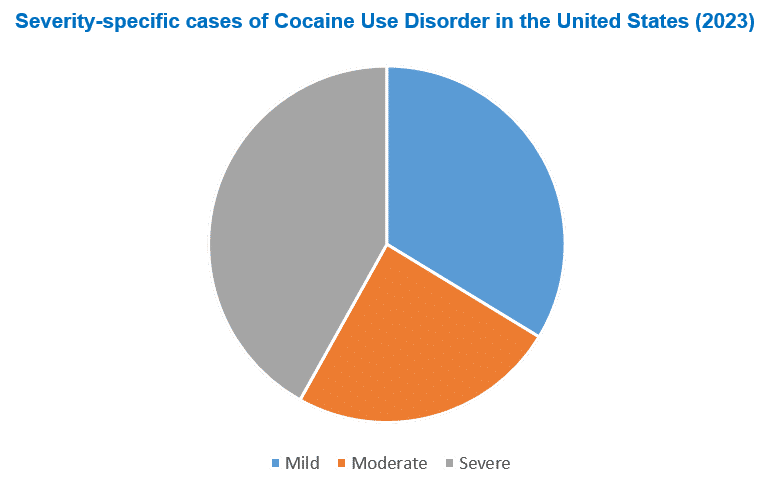
Further details related to epidemiology will be provided in the report…
KOL Views
To stay abreast of the latest trends, we conduct primary research by seeking the opinions of Key Opinion Leaders (KOLs) and Subject Matter Experts (SMEs) who work in the relevant field. This helps us fill any gaps in data and validate our secondary research.
We have reached out to industry experts to gather insights on various aspects of Cocaine Use Disorder, including patients’ reliance on conventional therapies, their acceptance of therapy switching, drug uptake, and challenges related to accessibility. The experts we contacted included medical/scientific writers, professors, and researchers from prestigious universities in the US, Europe, the UK, and Japan.
Our team of analysts at Delveinsight connected with more than 15 KOLs across the 7MM. We contacted institutions such as the Yale University School of Medicine, Tokyo Institute of Psychiatry, University of Chieti-Pescara, etc., among others. By obtaining the opinions of these experts, we gained a better understanding for analyzing the overall epidemiology scenario.
The opinions of experts from various regions have been provided below:
“Addiction is a chronic, relapsing brain disease that can be treated; yet unlike other chronic brain diseases, only a fraction of individuals with Cocaine use disorder receive any form of treatment. The addiction crisis is deadlier than ever. Overdoses are now the leading cause of accidental death in the United States and have increased devastatingly during the COVID-19 era.”
“Cocaine-related problems are increasing among adults and adolescents with the increasing use of cocaine. Cocaine use causes several other disabling conditions including heart attack, stroke, neuropsychiatric complications, and increases the risk of hepatitis C and contracting HIV options.”
Cocaine Use Disorder (CUD) Report Insights
- Patient Population
- Cocaine Use Disorder population size and Trends
Cocaine Use Disorder (CUD) Report Key Strengths
- Eleven-year Forecast
- The 7MM Coverage
- Cocaine Use Disorder Epidemiology Segmentation
Stay ahead with in-depth analysis of the Cocaine Use Disorder Market Forecast-discover emerging therapies, epidemiology data and growth opportunities.
Key Questions
- Would there be any changes observed in the current epidemiology trend?
- Will there be any improvements in Cocaine Use Disorder diagnosis recommendations?
- Would the diagnostic testing space experience a significant impact and lead to a positive shift in the treatment landscape of Cocaine Use Disorder?