Cocaine Use Disorder Market Summary
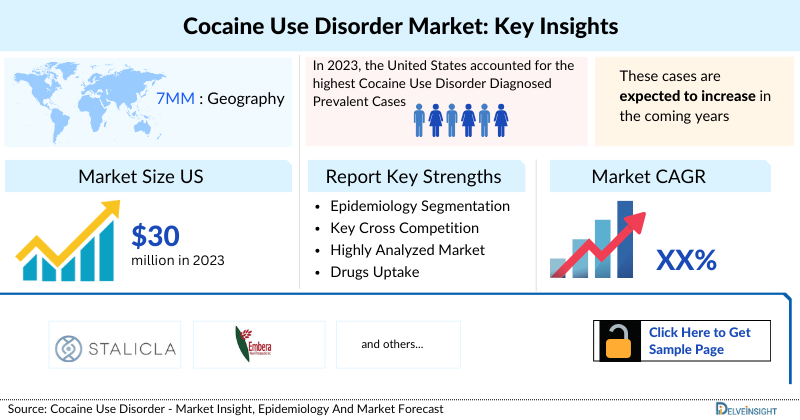
- The Cocaine Use Disorder Therapeutics Market Size in the 7MM was around ~USD 55 million in 2025 and is expected to grow at a significant CAGR, reaching a notable value by 2036.
- The leading Cocaine Use Disorder Companies include Embera NeuroTherapeutics, Novartis, Omeros Corporation, Indivior, Saniona, KemPharm, Kinoxis Therapeutics, STALICLA, Embera NeuroTherapeutics, and others.
Cocaine Use Disorder Market & Epidemiology Insights
- Additionally, an all-inclusive account of the current management techniques and emerging therapies and the elaborative profiles of late-stage (Phase II and Phase I) and prominent therapies that would impact the current Cocaine Use Disorder Market Landscape and result in an overall market shift has been provided in the report.
- The Cocaine Use Disorder Therapeutics Market report offers extensive knowledge regarding the epidemiology segments and predictions, presenting a deep understanding of the potential future growth in diagnosis rates, disease progression, and treatment guidelines. It provides comprehensive insights into these aspects, enabling a thorough assessment of the subject matter.
- The Cocaine Use Disorder Therapeutics Market Report also encompasses a comprehensive analysis of the Cocaine Use Disorder Drugs Market, providing an in-depth examination of its historical and projected market size (2022–2036). It also includes the market share of therapies, detailed assumptions, and the underlying rationale for our methodology. The report also includes drug outreach coverage in the 7MM region.
- The Cocaine Use Disorder Therapeutics Market Report includes qualitative insights that provide an edge while developing business strategies by understanding trends through SWOT analysis and expert insights/KOL views, including experts from various hospitals and prominent universities, patient journey, and treatment preferences that help shape and drive the 7MM Cocaine Use Disorder Drugs Market.
- Cocaine Use Disorder is the compulsive use of cocaine despite its medical, psychological, and behavioral consequences. It is a severe public health problem, affecting millions of people globally. The devastating disorder impacts both individuals and society.
- Short-term cocaine use shows signs of mental alertness, extreme happiness, and energy, hypersensitivity to sight, sound, touch, and irritability. Other health effects of cocaine are dilated pupils, constricted blood vessels, nausea, restlessness, and raised body temperature.
- As per the DSM-5, two or three symptoms indicate mild Cocaine Use Disorder, four or five symptoms indicate moderate Cocaine Use Disorder and six or more symptoms indicate severe Cocaine Use Disorder.
- According to leading physicians, psychosocial treatments like contingency management and cognitive-behavioral therapy for substance use disorders (CBT-SUD) have proved gold standards for Cocaine Use Disorder.
- So far, no medication has met the US Food and Drug Administration’s (FDA) criteria for approval or has proven to be effective; current Cocaine Use Disorder pharmacological treatment includes the use of off-label therapies with antidepressants (citalopram), selective serotonin reuptake inhibitors, psychostimulants (methadone and diacetylmorphine), dopamine agonists (amantadine and modafinil), dopamine blockers (CLOZARIL and ketamines), and others.
- The absence of a standard Cocaine Use Disorder Treatment has hampered clinical development. Without a guiding prototype, developing new treatments has proven challenging. Furthermore, the current understanding of the pathophysiologic characteristics of Cocaine Use Disorder remains insufficient for developing beneficial pharmacological therapies.
- The National Institute on Drug Abuse of the National Institutes of Health (NIDA) supports the medication development pipeline for treating Cocaine Use Disorder.
- Though the Cocaine Use Disorder Pipeline is scarce, DelveInsight forecasts that Mavoglurant, EMB-001, and others would prove to be successful labeled therapies for inducing abstinence in Cocaine Use Disorder with their launch in the 7MM in the forecast period (2026–2036).
- As per DelveInsight’s analysis, the total diagnosed prevalent cases of Cocaine Use Disorder in the 7MM were found to be ~2.48 million cases in 2025, which are expected to increase by 2036 at a significant CAGR during the study period (2022─2036).
Request for Unlocking the Sample Page of the "Cocaine Use Disorder Treatment Market"
Scope of the Cocaine Use Disorder Market Report | |
|
Study Period |
2022 to 2036 |
|
Forecast Period |
2026-2036 |
|
Geographies Covered |
|
|
Cocaine Use Disorder Market |
|
|
Cocaine Use Disorder s Market Size | |
|
Cocaine Use Disorder Companies |
|
|
Cocaine Use Disorder Epidemiology Segmentation |
|
Key Factors Driving the Growth of the Cocaine Use Disorder Market
-
Rising Cocaine Use Disorder Prevalence Trends
As per DelveInsight’s analysis, the total diagnosed prevalent cases of Cocaine Use Disorder in the 7MM were found to be approximately 2.48 million cases in 2025, which are expected to increase by 2036 at a significant CAGR during the study period (2022─2036).
-
Large Unmet Medical Need — No FDA-approved Pharmacotherapy
There are currently no FDA-approved medications for cocaine use disorder; behavioral therapies remain the mainstay. That gap creates a clear commercial opportunity for safe, effective drugs, vaccines or biologics. Some of the drugs in the pipeline include STP7 (STALICLA), EMB-001 (Embera NeuroTherapeutics), and others.
-
Strong Cocaine Use Disorder Market Growth Forecasts
The Cocaine Use Disorder Therapeutics Market Size in the 7MM was ~USD 48 million. It is expected to grow at a significant CAGR, reaching a notable value by the end of 2034. DelveInsight’s analysis forecasts market growth due to the introduction of emerging therapies, expecting a rise in market size during the study period (2022–2036). The anticipated increase in market size is driven by advancements in treatment options, greater healthcare access, and a rising prevalence of the condition, which together foster higher demand for innovative and effective therapies.
Cocaine Use Disorder Overview
Cocaine Use Disorder is a pattern of cocaine use leading to clinically significant impairment or distress. Cocaine is a powerfully addictive stimulant made from coca plant leaves native to South America. Its use is associated with cardiovascular and neurologic effects, and chronic repeated exposure leads to tolerance, adverse psychological and behavioral effects, and complications, including infections, stroke, and seizure.
According to the DSM-5, Cocaine Use Disorder is classified as mild, moderate, or severe based on the number of symptoms within 12 months. A minimum of two to three DSM-5 criteria is required for a mild diagnosis, between four and five for a moderate diagnosis, and between six and seven for a severe diagnosis.
Further details are provided in the report…
Cocaine Use Disorder Diagnosis
The Cocaine Use Disorder diagnosis involves a combination of physical examination, clinical evaluation, and laboratory testing. Physical examination may reveal external markers of chronic cocaine use, such as cracked lip and thumb caused by heat-related injuries, salmon-colored marks or infected areas from skin sloughing due to subcutaneous injection, and nasal septum perforation from snorting.
Common clinical findings include tachycardia, hypertension, diaphoresis, mydriasis, tremulousness, extreme agitation, and mood lability, which may progress to suicidal depression.
Urine toxicology screening plays a crucial role when the cause of hyperadrenergic symptoms is unclear; the detection of benzoylecgonine, a long-lasting cocaine metabolite, confirms cocaine use and may be followed by gas chromatography/mass spectrometry for validation. The presence of levamisole, a common cocaine adulterant, can further aid in detection.
For patients presenting with chest pain, evaluation begins with ECG and cardiac enzyme analysis, as cocaine use can precipitate acute myocardial infarction, particularly in chronic users with underlying cardiac conditions.
Brain imaging and electroencephalograms are warranted for individuals exhibiting seizures, recurrent episodes, or focal neurological symptoms, which may indicate cerebrovascular complications. Comprehensive assessment and targeted testing for associated complications are essential for accurate diagnosis and effective management of Cocaine Use Disorder.
Further details related to country-based variations are provided in the report…
Cocaine Use Disorder Treatment
The Cocaine Use Disorder treatment involves both nonpharmacological and pharmacological approaches. Psychosocial and behavioral interventions are currently the gold standard for managing Cocaine Use Disorder. Intensive outpatient therapy (IOT), cognitive-behavioral therapy for substance use disorders (CBT-SUD), and contingency management (CM) have proven effective in promoting abstinence and relapse prevention.
CM, which uses motivational incentives like vouchers, and CBT-SUD, which focuses on functional analysis and skills training, remain key strategies. Cocaine Use Disorder clinical trials are actively exploring novel treatments, focusing on medications and behavioral therapies to reduce relapse rates, improve abstinence outcomes, and enhance long-term recovery in patients.
However, no pharmacotherapy has been approved for Cocaine Use Disorder, though promising candidates include dopamine agonists (e.g., modafinil), GABA/glutamate modulators (e.g., topiramate), and novel agents like ketamine, which influences NMDA receptor signaling.
Emerging options such as galantamine, a cholinergic agent, are also being explored for their potential role in addressing disruptions in neurotransmitter systems associated with cocaine use. Integrating behavioral and pharmacological approaches remains the most effective strategy for managing Cocaine Use Disorder.
Further details related to treatment and management are provided in the report…
Cocaine Use Disorder Drug Analysis
The section dedicated to drugs in the Cocaine Use Disorder therapeutics market report provides an in-depth evaluation of late-stage Cocaine Use Disorder pipeline drugs (Phase II) related to Cocaine Use Disorder.
The drug chapters section provides valuable information on various aspects related to Cocaine Use Disorder clinical trials, such as the pharmacological mechanisms of the drugs involved, designations, approval status, patent information, and a comprehensive analysis of the pros and cons associated with each drug.
Furthermore, it presents the most recent news updates and press releases on drugs targeting Cocaine Use Disorder.
The Cocaine Use Disorder drugs market is witnessing growth due to increasing awareness, rising addiction rates, and ongoing clinical trials focused on developing effective pharmacological treatments and behavioral therapy combinations.
Cocaine Use Disorder Emerging Therapies
-
Mavoglurant (STP7): STALICLA
Mavoglurant (STP7) is a selective non-allosteric antagonist of the metabotropic glutamate receptor 5 (mGluR5), a key target implicated in addiction pathways, mood disorders, and neurodevelopmental conditions. By modulating glutamatergic signaling, the therapy is designed to reduce cocaine craving through targeted inhibition of mGluR5 activity in the brain.
A clinical Phase II study showed mavoglurant-induced abstinence in CUD patients through inhibition of mGluR5, with no evidence of withdrawal liability.
The company continues to advance STP7 (mavoglurant), having completed a Phase III–enabling drug–drug interaction study, with further development supported by the NIDA under the National Institutes of Health. Also, the company will use its precision neurobiology drug development platform (DEPI) to detect subgroups of high-responder patients with rare and common neurodevelopmental disorders where mavoglurant can be an effective treatment, as guided by earlier clinical studies.
-
Metyrapone (EMB-001): Embera NeuroTherapeutics
Metyrapone (EMB-001) is a novel combination of metyrapone and oxazepam designed to modulate the stress-response system implicated in addiction and relapse. By targeting stress-, cue-, and drug-induced pathways, it aims to reduce cravings and prevent relapse in CUD.
The therapy has completed Phase I and Phase II trials, with Phase II supported by the NIDA under the National Institutes of Health. However, further clinical updates remain limited, and its advancement into late-stage development is yet to be confirmed.
-
TMP-301: Tempero Bio
TMP-301 is an investigational mGluR5 negative allosteric modulator designed to target glutamatergic pathways implicated in addiction and relapse. By modulating this pathway, TMP-301 aims to reduce cocaine craving and prevent relapse in patients with CUD.
The drug has completed early-stage clinical evaluation, including a Phase I study assessing safety and cocaine interaction, and is advancing toward Phase II development. Backed by strong investor funding, TMP-301 represents one of the more actively progressing and mechanistically validated candidates in the otherwise limited CUD pipeline.
Cocaine Use Disorder Market Outlook
Currently, no medications are approved for cocaine dependence or Cocaine Use Disorder; however, recent advances in understanding the processes involved in cocaine addiction have allowed researchers to identify several promising new candidate medications. Several psychological treatments, including group counseling, individual drug counseling, cognitive behavioral therapy (CBT), and contingency management, are effective; however, many patients still do not respond to these treatments and are associated with high dropout rates.
Despite decades of efforts, Cocaine Use Disorder has not responded well to pharmacotherapeutic interventions. Nevertheless, a significant understanding of neurobiology has led to the discovery of potential medications like dopamine agonists, including long-acting amphetamine, modafinil, and gamma-aminobutyric acid (GABA)/glutamatergic medications, including topiramate.
A few combination medications, such as topiramate and mixed amphetamine salts, also appear promising.
In a nutshell, not many potential therapies are being investigated to manage Cocaine Use Disorder. It is too soon to comment on the above-mentioned promising candidate entering the market during the forecast period (2026–2036). Eventually, this drug will create a significant difference in the landscape of cocaine use disorder in the coming years.
The Cocaine Use Disorder Treatment space is expected to experience a significant positive shift in the coming years owing to the improvement in healthcare spending worldwide.
Cocaine Use Disorder Treatment Market Insights
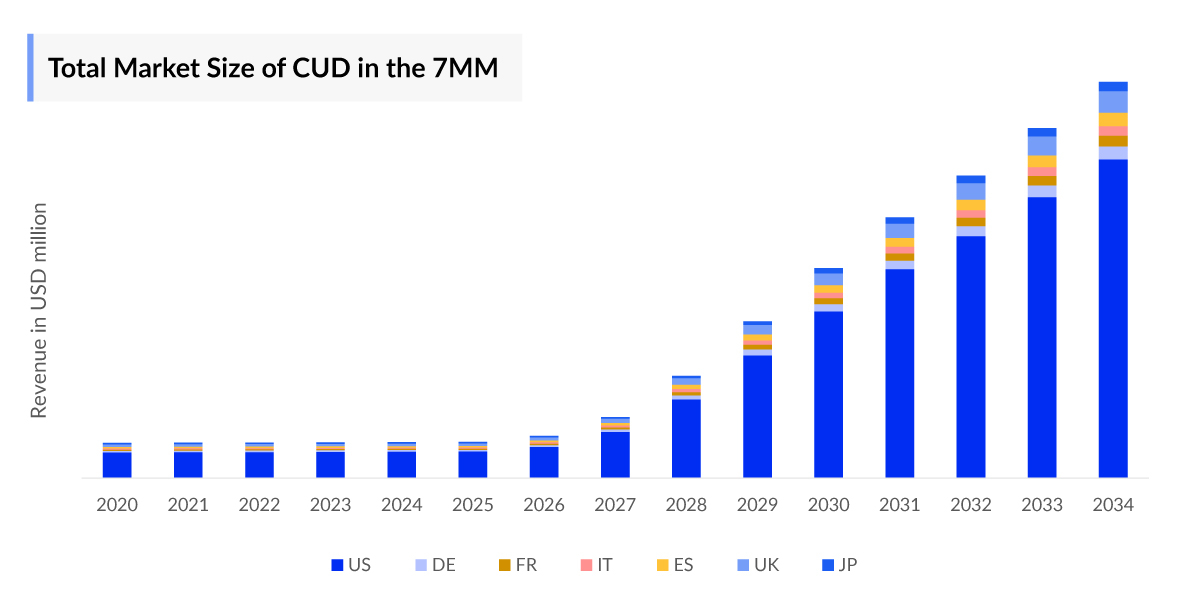
- The Cocaine Use Disorder Treatment Market Size in the 7MM was ~USD 55 million in 2025, which is expected to grow at a significant CAGR, reaching a notable value by 2036.
- In 2025, the United States accounted for the largest Cocaine Use Disorder Market Share in the 7MM, with overall market growth during the study period (2022–2036) expected to be driven by the anticipated introduction of emerging therapies, advancements in treatment options, improved healthcare access, and a rising prevalence of the condition.
- In EU4 and the UK, Germany and the UK accounted for the largest Cocaine Use Disorder Treatment Market Size in 2025, while Italy represented the smallest share.
- In 2025, Japan accounted for around 3% of the total Cocaine Use Disorder Therapeutics Market.
- In 2036, among all the therapies for Cocaine Use Disorder, the highest revenue is estimated to be generated by Metyrapone (EMB-001) in the United States.
Further details are provided in the report…
Cocaine Use Disorder Epidemiology Insights
The Cocaine Use Disorder epidemiology chapter in the report provides historical as well as forecasted epidemiology segmented by Total diagnosed prevalent cases, Gender-specific cases, Age-specific cases, Severity-specific cases, and Total treated cases of Cocaine Use Disorder in the United States, EU4 countries (Germany, France, Italy, Spain), the United Kingdom, and Japan from 2022 to 2036.
Key findings from Cocaine Use Disorder Epidemiological Analysis
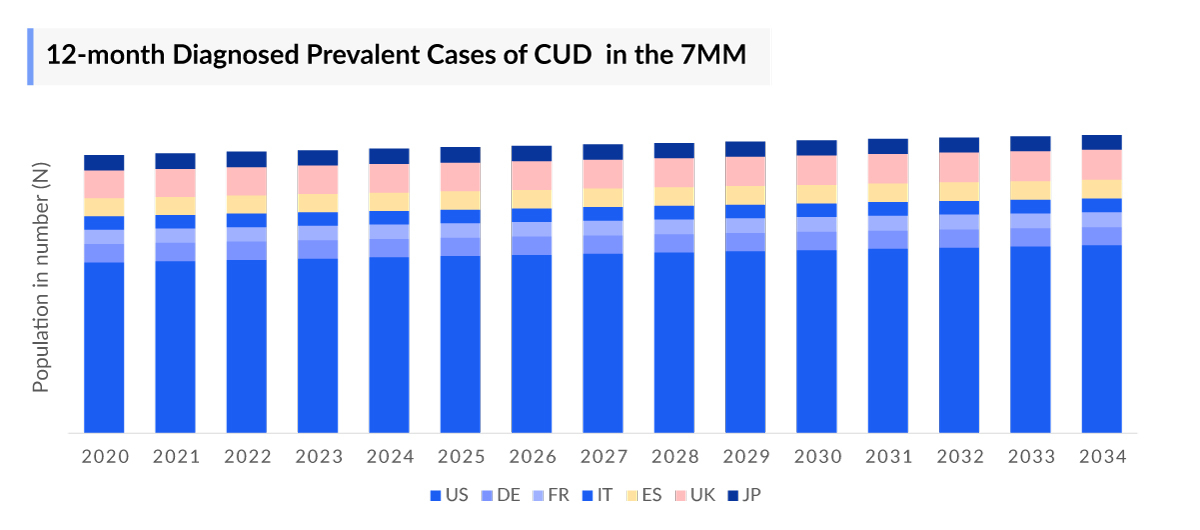
- As per DelveInsight’s analysis, the total diagnosed prevalent cases of Cocaine Use Disorder in the 7MM were found to be ~2.48 million cases in 2025, which are expected to increase by 2036 at a significant CAGR during the study period (2022─2036).
- The United States had the highest number of diagnosed prevalent cases of Cocaine Use Disorder in 2025, which is expected to increase by 2036.
- Among severity-specific cases of CUD in the EU4 and the UK, severe cases accounted for the highest number of cases (~501,950), followed by mild (~403,700), and moderate (~292,300) cases, in 2025.
- In Japan, the ≥26 years age group accounted for the highest number of cases (~82,450) in 2025, followed by 18–26 years group with ~15,250 cases, and 12–17 years group with ~3,600 cases.
Cocaine Use Disorder Epidemiological Segmentation
- Total Cocaine Use Disorder diagnosed prevalent cases
- Cocaine Use Disorder Gender-specific cases
- Cocaine Use Disorder Age-specific cases
- Cocaine Use Disorder Severity-specific cases
- Total Cocaine Use Disorder Treated cases
Cocaine Use Disorder Market Recent Breakthroughs and Developments
- In October, 2026 – Researchers published a randomized controlled trial protocol investigating deep transcranial magnetic stimulation (TMS) combined with contingency management to improve treatment outcomes in patients with Cocaine Use Disorder.
- In October, 2026 – Virginia Commonwealth University initiated a clinical study evaluating high-definition transcranial direct current stimulation (HD-tDCS) combined with cognitive behavioral therapy (CBT) for Cocaine Use Disorder.
Latest KOL Views on Cocaine Use Disorder
To stay abreast of the latest trends in the market, we conduct primary research by seeking the opinions of Key Opinion Leaders (KOLs) and Subject Matter Experts (SMEs) who work in the relevant field. This helps us fill any gaps in data and validate our secondary research.
We have reached out to industry experts to gather insights on various aspects of Cocaine Use Disorder, including the evolving treatment landscape, patients’ reliance on conventional therapies, their acceptance of therapy switching, drug uptake, and challenges related to accessibility. The experts we contacted included medical/scientific writers, professors, and researchers from prestigious universities in the US, Europe, the UK, and Japan.
Our team of analysts at Delveinsight connected with more than 15 KOLs across the 7MM. We contacted institutions such as the Yale University School of Medicine, Tokyo Institute of Psychiatry, University of Chieti-Pescara, etc., among others. By obtaining the opinions of these experts, we gained a better understanding of the current and emerging treatment patterns in the Cocaine Use Disorder market, which will assist our clients in analyzing the overall epidemiology and market scenario.
Opioid Use Disorder Drugs Uptake
This section focuses on the uptake rate of potential Opioid Use Disorder drugs analysis expected to be launched in the Opioid Use Disorder drugs market during 2026–2036, which depends on the Opioid Use Disorder competitive landscape, safety, and efficacy data along with order of entry. It is important to understand that the key players evaluating their novel therapies in the pivotal and confirmatory trials should remain vigilant when selecting appropriate comparators to stand the greatest chance of a positive opinion from regulatory bodies, leading to approval, smooth launch, and rapid uptake.
Opioid Use Disorder Clinical Trials Activities
The Opioid Use Disorder Therapeutics Market Report provides insights into different Opioid Use Disorder clinical trials within Phase III and Phase II stages. It also analyzes key Opioid Use Disorder Companies involved in developing targeted therapeutics.
Opioid Use Disorder Pipeline Development Activities
The Opioid Use Disorder clinical trials analysis report covers information on collaborations, acquisitions and mergers, licensing, and patent details for Opioid Use Disorder emerging therapies.
Cocaine Use Disorder Report Qualitative Analysis
We perform Qualitative and Cocaine Use Disorder Therapeutics Market Intelligence analysis using various approaches, such as SWOT analysis and Conjoint Analysis. In the SWOT analysis, strengths, weaknesses, opportunities, and threats in terms of disease diagnosis, patient awareness, patient burden, competitive landscape, cost-effectiveness, and geographical accessibility of therapies are provided. These pointers are based on the Analyst’s discretion and assessment of the patient burden, cost analysis, and existing and evolving Cocaine Use Disorder Market landscape.
Conjoint Analysis analyzes multiple approved and Cocaine Use Disorder Emerging Therapies based on relevant attributes such as safety, efficacy, frequency of administration, designation, route of administration, and order of entry. Scoring is given based on these parameters to analyze the effectiveness of therapy. In efficacy, the trial’s primary and secondary outcome measures are evaluated; for instance, in trials for Cocaine Use Disorder, one of the most important primary endpoints was achieving hemolysis control, LDH normalization, etc. Based on these, the overall efficacy is evaluated.
Further, the therapies’ safety is evaluated wherein the acceptability, tolerability, and adverse events are majorly observed, and it sets a clear understanding of the side effects posed by the drug in the trials. In addition, the scoring is also based on the route of administration, order of entry and designation, probability of success, and the addressable patient pool for each therapy. According to these parameters, the final weightage score and the ranking of the emerging therapies are decided.
Cocaine Use Disorder Therapeutics Market Access and Reimbursement
Because newly authorized drugs are often expensive, some patients escape receiving proper treatment or use off-label, less expensive prescriptions. Reimbursement plays a critical role in how innovative treatments can enter the market. The cost of the medicine, compared to the benefit it provides to patients who are being treated, sometimes determines whether or not it will be reimbursed.
Regulatory status, target population size, the setting of treatment, unmet needs, the number of incremental benefit claims, and prices can all affect market access and reimbursement possibilities.
The Cocaine Use Disorder Drugs Market report further provides detailed insights on the country-wise accessibility and reimbursement scenarios, cost-effectiveness scenario of approved therapies, programs making accessibility easier and out-of-pocket costs more affordable, insights on patients insured under federal or state government prescription drug programs, etc.
Cocaine Use Disorder Market Report Insights
- Patient-based Cocaine Use Disorder Market Forecast
- Cocaine Use Disorder Therapeutic Approaches
- Cocaine Use Disorder Market Size and Trends
- Existing Cocaine Use Disorder Drugs Market Opportunity
Cocaine Use Disorder Market Report Key Strengths
- 11 -year Cocaine Use Disorder Market Forecast
- The 7MM Coverage
- Cocaine Use Disorder Epidemiology Segmentation
- Key Cross Competition
Cocaine Use Disorder Market Report Assessment
- Current Cocaine Use Disorder Market Practices
- Cocaine Use Disorder Market Reimbursements
- Cocaine Use Disorder Drugs Market Attractiveness
- Qualitative Analysis (SWOT, Conjoint Analysis, Unmet needs)
- Cocaine Use Disorder Market Drivers
- Cocaine Use Disorder Market Barriers
Key Questions Answered In The Cocaine Use Disorder Market Report
- Would there be any changes observed in the current Cocaine Use Disorder treatment approach?
- Will there be any improvements in Cocaine Use Disorder management recommendations?
- Would research and development advances pave the way for future tests and Cocaine Use Disorder therapies?
- Would the diagnostic testing space experience a significant impact and lead to a positive shift in the Cocaine Use Disorder Market landscape?
- What kind of uptake will the new therapies witness in the coming years in Cocaine Use Disorder patients?
Stay Updated with us for Recent Articles