
Congenital Hyperinsulinism Market Summary
- The Congenital Hyperinsulinism Therapeutics Market Landscape is beginning to evolve with the emergence of targeted and mechanism-driven therapies. Notably, investigational agents such as Ersodetug (RZ358) are designed to modulate insulin receptor signaling, offering a novel approach for patients with severe or treatment-resistant disease and representing a shift toward functional disease modification.
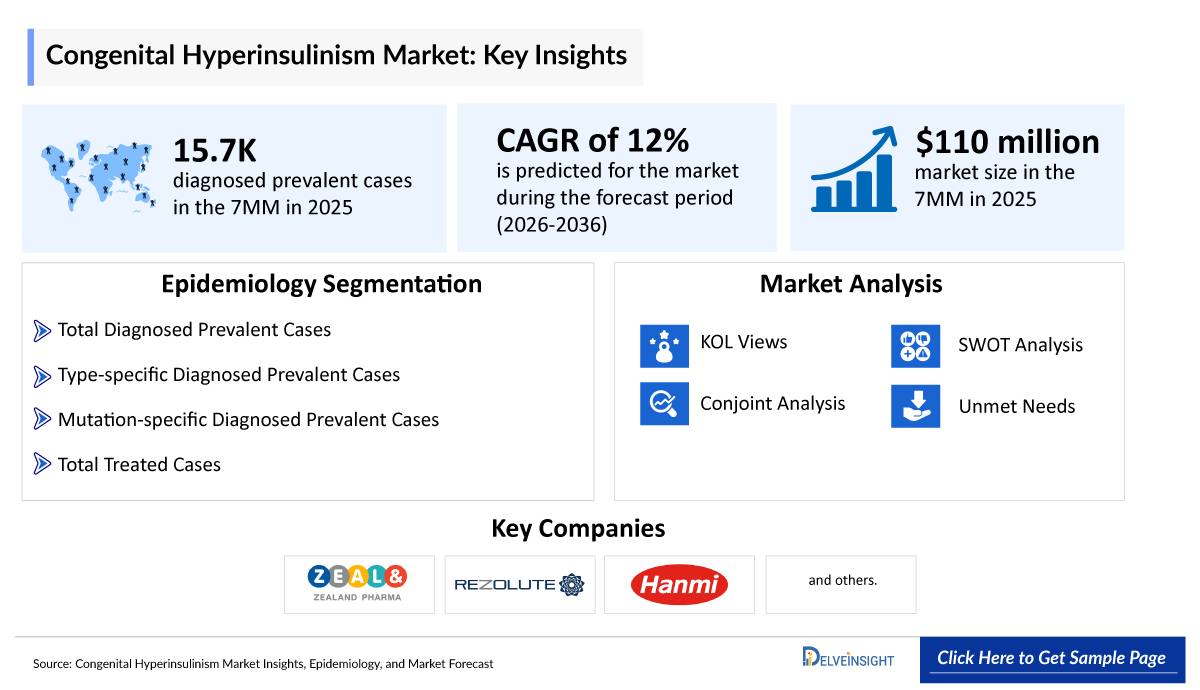
- The leading Congenital Hyperinsulinism Companies include Zealand Pharma, Rezolute, Hanmi Pharm, and others.
Congenital Hyperinsulinism Market and Epidemiology Insights
- Congenital Hyperinsulinism is primarily caused by mutations in genes such as ABCC8 and KCNJ11, which regulate insulin secretion. Disease severity varies widely, ranging from transient and mild hypoglycemia to severe, recurrent episodes that can result in irreversible neurological damage if not promptly managed.
- The Congenital Hyperinsulinism Treatment Landscape is largely focused on symptomatic management and prevention of hypoglycemia. This includes frequent feeding, continuous glucose infusion, and pharmacological interventions. First-line therapy typically involves diazoxide, while somatostatin analogs are used in unresponsive cases. In severe forms, particularly focal disease, surgical intervention such as partial pancreatectomy may be required.
- Despite available therapies, treatment response remains highly variable, with a substantial proportion of patients exhibiting resistance to standard options. This highlights a significant unmet need for more effective and consistent therapies, particularly those that can address the underlying disease mechanism rather than solely controlling symptoms.
- Pharmaceutical companies and research institutions are actively advancing clinical development programs, reflecting growing interest in this rare disorder. Ongoing research is focused on improving understanding of disease biology and identifying new therapeutic targets, particularly through genetic and molecular insights.
- The emerging Congenital Hyperinsulinism Pipeline is expanding, with a few candidates in clinical development that are expected to reshape the competitive landscape and address longstanding unmet needs. Increasing competition among emerging therapies is likely to drive innovation and improve patient outcomes in the coming years.
Request for Unlocking the Sample Page of the "Congenital Hyperinsulinism Treatment Market"
Congenital Hyperinsulinism Market Size and Forecast in the 7MM
| 2025 Congenital Hyperinsulinism Market Size | ~USD 110 million |
| 2036 Projected Congenital Hyperinsulinism Market Size | ~USD XXX million |
| Congenital Hyperinsulinism Growth Rate (2026–2036) | 12% CAGR |
Key Factors Driving the Growth of the Congenital Hyperinsulinism Market
-
Rising awareness and improved diagnosis
Increasing awareness of Congenital Hyperinsulinism among healthcare professionals, coupled with advancements in diagnostic tools such as genetic testing and neonatal screening, is enabling earlier and more accurate identification of cases. This is expanding the diagnosed patient pool and facilitating timely therapeutic intervention.
-
Advancements in genetic testing and precision diagnostics
The growing adoption of advanced genetic technologies, including next-generation sequencing, is improving the identification of causative mutations such as ABCC8 and KCNJ11. This enables better disease classification and supports personalized treatment approaches, thereby enhancing clinical outcomes and driving market demand.
-
Increasing detection of rare genetic disorders
Although Congenital Hyperinsulinism remains a rare condition, improvements in diagnostic capabilities, patient registries, and reporting systems are contributing to higher detection rates globally. This gradual increase in identified cases is supporting sustained demand for effective therapies.
DelveInsight's ‘Congenital Hyperinsulinism Market Insights, Epidemiology and Market Forecast – 2036’ report delivers an in-depth understanding of congenital hyperinsulinism, historical and forecasted epidemiology, as well as the congenital hyperinsulinism market trends in the United States, EU4 (Germany, Spain, Italy, and France), the United Kingdom, and Japan.
The Congenital Hyperinsulinism Treatment Market Report delivers a comprehensive analysis of the current treatment landscape, including standards of care, clinical practices, and evolving therapeutic algorithms. It evaluates congenital hyperinsulinism patient burden trends, revenue & market share dynamics, peak patient share & therapy uptake analysis, and provides an in-depth market size assessment, and growth rate projections (Historical & Forecast 2022–2036) across global regions. The report highlights key unmet medical needs in congenital hyperinsulinism and maps the competitive and clinical landscape to uncover high‑value opportunities, providing a clear outlook on future market growth potential.
Scope of the Congenital Hyperinsulinism Market Report | |
|
Study Period |
2022–2036 |
|
Historical Year |
2022–2025 |
|
Forecast Period |
2026–2036 |
|
Base Year |
2026 |
|
Geographies Covered |
|
|
Congenital Hyperinsulinism Market CAGR (Study period/Forecast period) | |
|
Congenital Hyperinsulinism Epidemiology Segmentation Analysis |
Patient Burden Assessment
|
|
Congenital Hyperinsulinism Companies |
|
|
Congenital Hyperinsulinism Therapies |
|
|
Congenital Hyperinsulinism Market |
Segmented by
|
|
Analysis |
|
Congenital Hyperinsulinism Understanding and Treatment Algorithm
Congenital Hyperinsulinism Overview
Congenital Hyperinsulinism is a rare, inherited metabolic disorder characterized by inappropriate and excessive secretion of insulin from pancreatic β-cells, leading to persistent hypoglycemia, particularly in neonates and infants. The condition arises due to genetic mutations affecting key regulators of insulin secretion—most commonly in genes encoding components of the pancreatic K_ATP channel (such as ABCC8 and KCNJ11)—resulting in dysregulated insulin release despite low blood glucose levels.
Pathophysiologically, the unrestrained insulin secretion inhibits hepatic glucose production and ketogenesis, depriving the brain of essential energy substrates and increasing the risk of seizures, developmental delay, and permanent neurological damage if not promptly managed. CHI presents in both diffuse and focal forms, with varying severity and responsiveness to therapy, making diagnosis and management complex. Early detection through biochemical testing and genetic analysis is critical to guide treatment decisions, which may range from medical therapy to surgical intervention in severe or drug-resistant cases.
Congenital Hyperinsulinism Diagnosis
Diagnosis is primarily based on the identification of persistent hypoglycemia in neonates or infants, along with biochemical evidence of inappropriate insulin secretion. During hypoglycemic episodes, key findings include elevated insulin levels, low blood ketones, and suppressed free fatty acids, indicating excess insulin activity. Further evaluation involves a critical sample test (blood collected during hypoglycemia) to confirm hyperinsulinemic hypoglycemia.
Imaging techniques such as 18F-DOPA PET/CT scans may be used to differentiate between focal and diffuse forms of the disease, which is crucial for treatment planning. In addition, genetic testing plays a central role in confirming the diagnosis by identifying mutations in genes such as ABCC8 and KCNJ11. Early and accurate diagnosis is essential to prevent neurological complications and guide appropriate management strategies.
Congenital Hyperinsulinism Treatment
Congenital Hyperinsulinism treatment focuses on maintaining normal blood glucose levels to prevent complications. Initial management includes frequent feeding and intravenous glucose. Diazoxide is the first-line therapy, while somatostatin analogs are used in unresponsive cases. Severe or resistant patients may require surgical intervention (pancreatectomy). Emerging targeted and gene-based therapies are under development to improve long-term outcomes.
Congenital Hyperinsulinism Unmet Needs
The section “unmet needs of Congenital Hyperinsulinism” outlines the critical gaps between the current state of patient care, diagnosis, and the ideal & effective management of the disease. It highlights the obstacles experienced by patients, clinicians, and researchers and identifies potential solutions for future progress.
- Absence of disease-modifying treatments
- Limited targeted and precision therapies
- Dependence on invasive surgical procedures
- Risk of long-term neurological complications
- Limited awareness and delayed diagnosis, and others…..
Congenital Hyperinsulinism Epidemiology Insights
Key Findings from Congenital Hyperinsulinism Epidemiological Analysis and Forecast
- The Congenital Hyperinsulinism Diagnosed Prevalent Cases in the 7MM were ~15,700 cases in 2025, which is expected to increase during the forecast period (2026–2036).
- The highest number of Congenital Hyperinsulinism Prevalent Cases was observed in the United States. On the other hand, within the EU4 and the UK, Germany accounted for the highest number of congenital hyperinsulinism cases, with approximately 2,800 cases reported in 2025.
- In Japan, the ABCC8 and KCNJ11 gene mutations have the highest contribution, followed by the other gene mutations.
- In 2025, France reported nearly 1,750 cases of diffuse congenital hyperinsulinism, 360 focal cases, and 165 atypical cases. This distribution highlights the variability of the disorder. Projections suggest these numbers are anticipated to rise by 2036, emphasizing the need for improved diagnostics.
Congenital Hyperinsulinism Epidemiological Segmentation in the 7MM
- Total Congenital Hyperinsulinism Diagnosed Prevalent Cases
- Congenital Hyperinsulinism Type-specific Diagnosed Prevalent Cases based on Histological Presentation
- Congenital Hyperinsulinism Mutation-specific Diagnosed Prevalent Cases
- Total Congenital Hyperinsulinism Treated Cases
Congenital Hyperinsulinism Market Recent Breakthroughs and Developments
- In August 2026, Rezolute continued advancing ersodetug (RZ358) for congenital hyperinsulinism, with the company expecting to engage with the FDA on the regulatory path forward following the Phase 3 sunRIZE study. Rezolute’s current pipeline indicates that the next milestone for congenital HI is FDA discussions in the second half of 2026.
- In August 2026, Rhythm Pharmaceuticals continued developing preclinical programs for congenital hyperinsulinism as part of its broader rare neuroendocrine disease pipeline.
Congenital Hyperinsulinism Drug Analysis & Competitive Analysis
The congenital hyperinsulinism drug chapter provides a detailed, market-focused review of the emerging pipeline across Phase I–III Congenital Hyperinsulinism Clinical Trials. It covers the mechanism of action, clinical trial data, regulatory approvals, patents, collaborations, and strategic partnerships for each therapy, along with their advantages, limitations, and recent developments. This section offers critical insights into the congenital hyperinsulinism treatment landscape, supporting market assessment, competitive analysis, and growth forecasting for the congenital hyperinsulinism therapeutics market.
Congenital Hyperinsulinism Pipeline Analysis
-
ZEGALOGUE (Dasiglucagon): Zealand Pharma
ZEGALOGUE is a glucagon analog that increases blood glucose by stimulating hepatic glucose release. While approved for Severe Hypoglycemia in Diabetes, it may have relevance in congenital hyperinsulinism due to its ability to counteract hypoglycemia associated with excessive insulin secretion. The drug is currently in the registration phase and expects to resubmit a new drug application (NDA) in 2H 2026.
-
- In October 2024, the US FDA issued a second complete response letter (CRL) for ZEGALOGUE to treat hypoglycemia in congenital hyperinsulinism.
- In October 2024, the US FDA reported issuing a CRL to Zealand Pharma, declining approval of ZEGALOGUE for hypoglycaemia in infants with congenital hyperinsulinism and requesting additional analyses from Phase III continuous glucose monitoring data.
-
Ersodetug (RZ358): Rezolute
Ersodetug is an investigational monoclonal antibody designed to regulate insulin activity by targeting the insulin receptor, thereby helping to stabilize blood glucose levels in congenital hyperinsulinism. It is currently in Phase III clinical development.
-
- The drug has received several regulatory designations, like the BTD, the UK’s Innovative Licensing and Access Pathway (ILAP), and Orphan Drug Designations (ODD) from the US and Europe union for congenital hyperinsulinism and insulinoma-related hypoglycemia.
- In December 2025, Rezolute reported that its Phase III sunRIZE study of ersodetug in congenital hyperinsulinism failed to meet the primary endpoint of reducing weekly hypoglycaemia events.
Table 2: Comparison of Emerging Drugs Under Development | |||||||
|
Drug Name |
Company |
Indication |
Highest Phase |
RoA |
MoA |
Molecule Type |
Anticipated Launch in the US |
|
ZEGALOGUE (dasiglucagon) |
Zealand Pharma |
Hypoglycemia in congenital hyperinsulinism |
III |
SC |
Glucagon receptor agonist |
Peptide hormone analog |
Information is available in the full report |
|
Ersodetug (RZ358) |
Rezolute |
Congenital hyperinsulinism |
III |
IV infusion |
Negative allosteric modulator of the insulin receptor (INSR) |
Monoclonal antibody |
Information is available in the full report |
|
Note: Launch insights are provisional and may change with future report updates or the occurrence of major key catalysts. | |||||||
Congenital Hyperinsulinism Market Outlook
Congenital hyperinsulinism is a rare but serious condition characterized by excessive insulin secretion from pancreatic beta cells, leading to persistent hypoglycemia. Effective treatment aims to maintain stable blood glucose levels, prevent neurological complications, and improve the quality of life. Management strategies can be broadly categorized into pharmacological and non-pharmacological approaches, depending on the severity and type of congenital hyperinsulinism.
Pharmacological treatment is the first-line approach for congenital hyperinsulinism in patients who do not require immediate surgery, with the choice of medication depending on genetic factors, treatment response, and hypoglycemia severity. Somatostatin analogues like Octreotide and lanreotide inhibit insulin secretion by targeting somatostatin receptors; Octreotide is administered subcutaneously or intravenously for patients unresponsive to diazoxide, while lanreotide, a long-acting option, is given monthly for long-term management. However, these drugs may cause gastrointestinal issues, growth suppression, and gallstones.
Glucagon therapy is used in acute hypoglycemic episodes, where it increases blood glucose by stimulating hepatic glycogen breakdown, and can be administered via injection or continuous infusion in emergency settings. Emergency care primarily includes intravenous glucose and glucagon infusion, while diazoxide and somatostatin analogues are used for ongoing control rather than acute management. Severe or refractory cases may require partial pancreatectomy.
Non-pharmacological management of congenital hyperinsulinism is vital for cases unresponsive to medication or requiring surgery. Nutritional strategies include frequent feeding, high-protein and complex carbohydrate diets, continuous enteral feeding for severe cases, and cornstarch therapy for older children. Surgical intervention, particularly targeted pancreatectomy, can cure focal congenital hyperinsulinism, while diffuse congenital hyperinsulinism may necessitate near-total pancreatectomy, increasing diabetes risk.
18F-DOPA PET scans guide surgical decisions. Continuous glucose monitoring (CGM) and frequent blood glucose checks help prevent Severe Hypoglycemia. In critical cases, intravenous dextrose or glucagon infusions provide metabolic support when oral intake is insufficient to maintain glucose homeostasis. Continued innovation is critical given the high disease burden and impact on patient quality of life. Overall, the congenital hyperinsulinism therapeutics market is expected to increase in the forecast period (2026–2036).
Key findings from Congenital Hyperinsulinism Market Forecast Report
- The Congenital Hyperinsulinism Treatment Market Size was USD 110 million in 2025, which is expected to rise in the forecast period (2026–2036).
- According to the estimates, the largest Congenital Hyperinsulinism Treatment Market Size is expected to be from the United States, i.e., USD 45 million in 2025.
Congenital Hyperinsulinism Companies
- Zealand Pharma
- Rezolute
- Hanmi Pharm, and others
Congenital Hyperinsulinism Drug Class/Insights into Leading Emerging and Marketed Therapies (2026–2036 Forecast)
The Congenital Hyperinsulinism Therapeutics Landscape remains largely symptomatic, focusing on maintaining euglycemia; however, emerging targeted and mechanism-driven approaches are beginning to shift the paradigm toward addressing underlying disease biology.
- Pharmacological therapies: Current standard treatments, such as diazoxide and somatostatin analogs, act by suppressing insulin secretion and stabilizing blood glucose levels. While effective in some patients, variability in response, particularly in genetically driven, diazoxide-unresponsive cases, limits their overall utility and highlights the need for more consistent therapies.
- Emerging gene and novel therapies: Novel strategies, including gene-based and other mechanism-driven interventions, are being explored to correct or modulate the underlying defects in insulin regulation. Although still in early stages, these therapies hold potential for disease-modifying outcomes but face challenges related to clinical validation, long-term efficacy, and safety.
Congenital Hyperinsulinism Drug Uptake
This section focuses on the uptake rate of potential Congenital Hyperinsulinism drugs expected to be launched in the market during the forecast period (2026–2036). The analysis covers the congenital hyperinsulinism market's uptake by drugs, patient uptake by therapy, and sales of each drug.
Drug uptake in congenital hyperinsulinism is increasingly driven by emerging targeted therapies such as Ersodetug (RZ358), particularly in patients with severe or treatment-resistant disease. Its growing adoption is attributed to its novel mechanism of action, which directly modulates insulin receptor signaling rather than solely suppressing insulin secretion.
Congenital Hyperinsulinism Market Access and Reimbursement
- US
Reimbursement is a crucial factor that affects the drug’s access to the market. Often, the decision to reimburse comes down to the price of the drug relative to the benefit it produces in treated patients. To reduce the healthcare burden of these high-cost therapies, many payment models are being considered by payers and other industry insiders.
Congenital Hyperinsulinism Therapies Price Scenario & Trends
Pricing and analogue assessment of congenital hyperinsulinism therapies highlights evolving price dynamics structures. This section summarizes the cost of approved treatments, the closest and most appropriate analogue selection for emerging therapies, and the understanding of how pricing influences market access, adherence, and long-term uptake.
- Pricing of Congenital Hyperinsulinism Drugs
The total therapy cost of Glucagon for Congenital Hyperinsulinism is estimated at approximately USD 61,600, based on average dosing requirements, treatment duration, and wholesale acquisition cost.
Congenital Hyperinsulinism Industry Experts and Physician Views
To keep up with the congenital hyperinsulinism market trends, we take Key Opinion Leaders (KOLs) and Subject Matter Experts (SMEs) opinions working in the domain through primary research to fill the data gaps and validate our secondary research. Industry experts were contacted for insights on the congenital hyperinsulinism emerging therapies, evolving treatment landscape, patient adherence to conventional therapies, therapy switching trends, drug adoption and uptake, accessibility challenges, and epidemiology and real-world prescription patterns in congenital hyperinsulinism, including MD, PhD, Instructor, Postdoctoral Researcher, Professor, Researcher, and others.
DelveInsight’s analysts connected with 10+ KOLs to gather insights; however, interviews were conducted with 6+ KOLs in the 7MM. Centers such as the University of North Carolina at Chapel Hill, the Berlin Institute of Health at Charité, and the University of Nottingham, etc. were contacted. Their opinion helps understand and validate current and emerging congenital hyperinsulinism therapies, highlight unmet medical needs, provide epidemiological context, and support strategic decisions for market access, therapy adoption, and pipeline prioritization in congenital hyperinsulinism.
Region |
Key Opinion Leaders (KOLs) and Subject Matter Experts (SMEs) |
|
United States |
“Despite significant advancements in congenital hyperinsulinism treatment, many children worldwide still suffer from severe neurological complications due to persistent hypoglycemia. This underscores the critical need for early diagnosis, timely intervention, and innovative therapies to prevent long-term damage and improve patient outcomes.” |
|
Germany |
“Congenital hyperinsulinism is a highly heterogeneous disorder with both transient and permanent forms, primarily driven by monogenic defects in pancreatic β-cells. While ABCC8 and KCNJ11 mutations dominate, nearly 50% of cases remain genetically unexplained, suggesting undiscovered loci and multifactorial influences. Understanding these mechanisms is crucial for advancing targeted therapies.” |
Congenital Hyperinsulinism Qualitative Analysis: SWOT and Conjoint Analysis
We perform qualitative and Congenital Hyperinsulinism Therapeutics Market Intelligence analysis using various approaches, such as SWOT analysis and conjoint analysis. In the SWOT analysis of Congenital Hyperinsulinism, strengths, weaknesses, opportunities, and threats in terms of disease diagnosis, patient awareness, patient burden, competitive landscape, cost-effectiveness, and geographical accessibility of therapies are provided.
Conjoint analysis analyzes emerging therapies based on relevant attributes such as safety, efficacy, frequency of administration, route of administration, and order of entry. Scoring is given based on these parameters to analyze the effectiveness of therapy.
The team of analysts analyzes promising emerging therapies based on relevant attributes such as safety, efficacy, frequency of administration, route of administration, and order of entry. In efficacy, the trial’s primary and secondary outcome measures are evaluated, whereas the therapies’ safety is evaluated, wherein the acceptability, tolerability, and adverse events are mainly observed. In addition, the scoring is also based on the route of administration, order of entry, probability of success, and the addressable patient pool for each therapy. According to these parameters, the final weightage score and the ranking of the emerging therapies are decided.
Scope of the Congenital Hyperinsulinism Market Report
- The Congenital Hyperinsulinism Therapeutics Market Report covers a segment of key events, an executive summary, a descriptive overview, explaining its causes, signs and symptoms, pathogenesis, and currently available treatments.
- Comprehensive insight has been provided into the epidemiology segments and forecasts, the future growth potential of the diagnosis rate, and disease progression along treatment guidelines.
- Additionally, an all-inclusive account of the emerging treatments, along with the elaborative profiles of late-stage and prominent therapies, will have an impact on the current Congenital Hyperinsulinism Treatment Landscape.
- A detailed review of the Congenital Hyperinsulinism Therapeutics Market, historical and forecasted Congenital Hyperinsulinism Treatment Market Size, Congenital Hyperinsulinism Drugs Market Share by therapies, detailed assumptions, and rationale behind our approach is included in the report, covering the 7MM drug outreach.
- The Congenital Hyperinsulinism Therapeutics Market Report provides an edge while developing business strategies by understanding trends through SWOT analysis and expert insights/KOL views, patient journey, and treatment preferences that help in shaping and driving the 7MM Congenital Hyperinsulinism Drugs Market
Congenital Hyperinsulinism Market Report Insights
- Congenital Hyperinsulinism Patient Population Forecast
- Congenital Hyperinsulinism Therapeutics Market Size
- Congenital Hyperinsulinism Pipeline Drugs Analysis
- Congenital Hyperinsulinism Market Size and Trends
- Congenital Hyperinsulinism Market Opportunity (Current and forecasted)
Congenital Hyperinsulinism Market Report Key Strengths
- Epidemiology‑based (Epi‑based) Bottom‑up Forecasting
- Artificial Intelligence (AI)-enabled Market Research Report
- 11-year forecast
- Congenital Hyperinsulinism Market Outlook (North America, Europe, Asia-Pacific)
- Patient Burden Trends (by geography)
- Congenital Hyperinsulinism Treatment Addressable Market (TAM)
- Congenital Hyperinsulinism Competitive Landscape
- Congenital Hyperinsulinism Major Companies Insights
- Congenital Hyperinsulinism Price Trends and Analogue Assessment
- Congenital Hyperinsulinism Therapies Drug Adoption/Uptake
- Congenital Hyperinsulinism Therapies Peak Patient Share Analysis
Congenital Hyperinsulinism Market Report Assessment
- Congenital Hyperinsulinism Current Treatment Practices
- Congenital Hyperinsulinism Unmet Needs
- Congenital Hyperinsulinism Clinical Development Analysis
- Congenital Hyperinsulinism Emerging Drugs Product Profiles
- Congenital Hyperinsulinism Market Attractiveness
- Congenital Hyperinsulinism Qualitative Analysis (SWOT and Conjoint Analysis)
Key Questions Answered in the Congenital Hyperinsulinism Treatment Market Report
Congenital Hyperinsulinism Market Insights
- What was the Congenital Hyperinsulinism Market Size, the Congenital Hyperinsulinism Market Size by therapies, Congenital Hyperinsulinism Drugs Market Share (%) distribution in 2025, and what would it look like by 2036? What are the contributing factors for this growth?
- What are the anticipated pricing variations among different geographies for the emerging therapies in the future?
- What can be the future treatment paradigm of congenital Hyperinsulinism?
- What are the disease risks, burdens, and unmet needs of Congenital Hyperinsulinism? What will be the growth opportunities across the 7MM concerning the patient population with congenital hyperinsulinism?
- Who is the major future competitor in the market, and how will the competitors affect their market share?
- What are the current options for the treatment of congenital hyperinsulinism? What are the current guidelines for treating congenital hyperinsulinism in the US, Europe, and Japan?
Reasons to Buy the Congenital Hyperinsulinism Market Report
- The Congenital Hyperinsulinism Therapeutics Market Report will help in developing business strategies by understanding the latest trends and changing treatment dynamics driving the Congenital Hyperinsulinism Drugs Market.
- Bottom-up forecasting builds from the affected population to product forecasts, delivering a robust, data-driven approach ideal for new therapies and novel classes.
- Insights on patient burden/disease: Congenital Hyperinsulinism Incidence, evolution in diagnosis, and factors contributing to the change in the epidemiology of the disease during the forecast years.
- Understand the existing market opportunities in varying geographies and the growth potential over the coming years.
- Identifying strong upcoming players in the Congenital Hyperinsulinism Drugs Market will help devise strategies to help get ahead of competitors.
- Detailed analysis and ranking of class-wise potential current and emerging therapies under the conjoint analysis section to provide visibility around leading classes.
- To understand KOLs’ perspectives on the accessibility, acceptability, and compliance-related challenges of existing treatment to overcome barriers in the future.
- Detailed insights into the unmet needs of the existing Congenital Hyperinsulinism Therapeutics Market so that the upcoming players can strengthen their development and launch strategy.
- This Artificial Intelligence (AI)-enabled report summarize and simplify complex datasets within the report into clear, actionable insights for stakeholders, investors, and healthcare providers, enabling faster, data-driven decisions.
Stay updated with us for Recent Articles