-market.png&w=256&q=75)
Congestive Heart Failure Market Summary
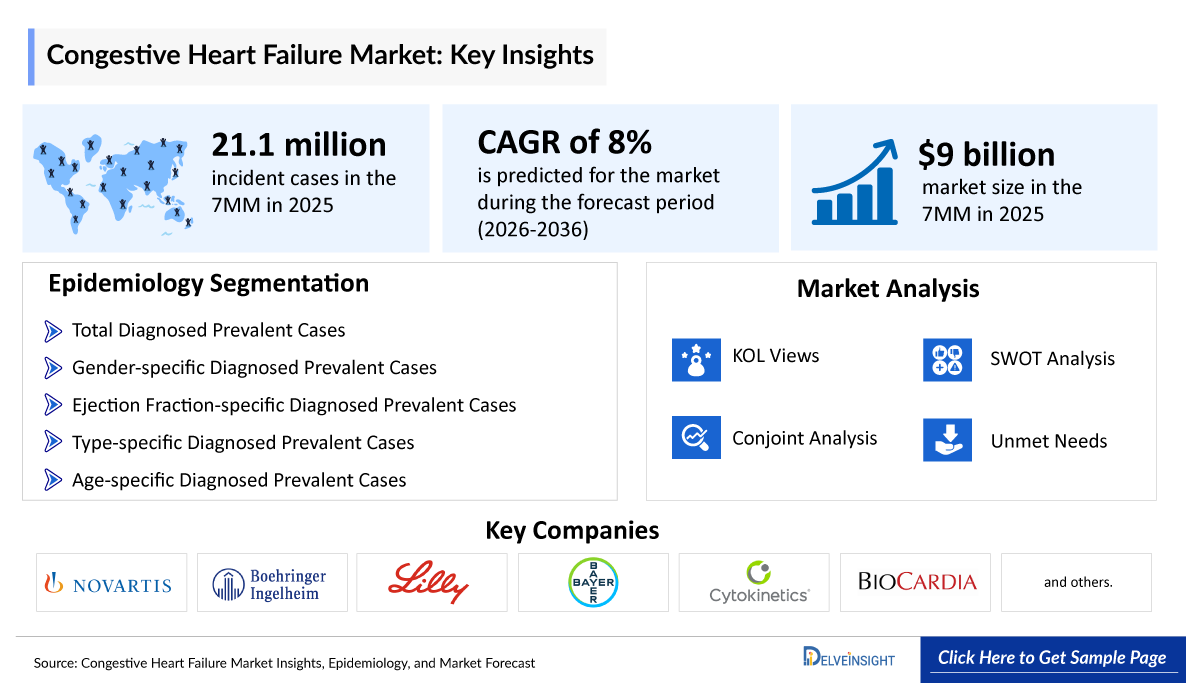
- The Congestive Heart Failure Market is witnessing significant growth, driven by the increasing prevalence of heart failure, rising geriatric population, advancements in diagnostic technologies, and the development of innovative therapies aimed at improving patient outcomes and reducing disease burden.
- The leading Congestive Heart Failure Companies include Novartis, Boehringer Ingelheim, Eli Lilly and Company, Bayer, Cytokinetics, BioCardia, Novo Nordisk, and others.
Congestive Heart Failure Market and Epidemiology Insights
- Heart failure is a leading cause of hospitalization among individuals aged ≥65 years and represents a major clinical and economic burden. Current heart failure Management is based on a multidrug therapeutic strategy that includes angiotensin-converting enzyme (ACE) inhibitors, angiotensin II receptor blockers (ARBs), mineralocorticoid receptor antagonists (MRAs), If-channel inhibitors, β-blockers, digoxin, nitrates, and other supportive therapies, which are used either as monotherapy or, more commonly, in combination to improve patient outcomes.
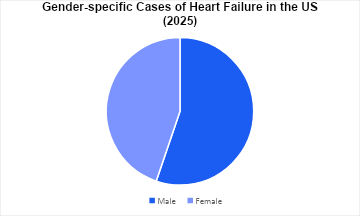
- Females are more prevalent in Europe for heart failure than males, but in the US, the trend is opposite.
- In 2025, the number of diagnosed prevalent cases of heart failure in Japan was 5,366,000, which is likely to increase by 2036. The total diagnosed prevalent cases of heart failure in Japan is expected to increase at a positive CAGR during the forecast period, 2022–2036.
- Leading cardiology societies in the US and globally recommend SGLT inhibitors, like INPEFA, as a core treatment for heart failure across all ejection fraction types.
- Recent launches of several high-potential therapies such as INPEFA (sotagliflozin, Lexicon Pharmaceuticals), JARDIANCE (empagliflozin, Boehringer Ingelheim/Eli Lilly), and FARXIGA (dapagliflozin, AstraZeneca), are expected to positively impact the global heart failure market.
- The Heart Failure Pipeline features a growing roster of mid- to late-stage cell therapies aiming to regenerate myocardial tissue and improve cardiac function. Key candidates include CardiAMP Cell Therapy (autologous bone marrow-derived cells) and CardiALLO Cell Therapy (allogeneic mesenchymal stem cells) from BioCardia, STM-01 (neonatal cardiac progenitor cells) from Secretome Therapeutics, and JK-07 (ERBB 4 receptor agonists) from Salubris Biotherapeutics, among others. These therapies represent diverse technological approaches ranging from autologous to allogeneic sources, and from mesenchymal to pluripotent stem cell lineages which are targeting the unmet need for structural and functional cardiac repair in heart failure.
- Additional promising investigational candidates include omecamtiv mecarbil (Cytokinetics), CRD-740 and CRD-750 (Cardurion Pharmaceuticals), AZD5462 (AstraZeneca and Mitsubishi Tanabe Pharma), and others.
- The FDA approved KERENDIA (finerenone) in July 2025, for the treatment of adult patients with heart failure and left ventricular ejection fraction (LVEF) ≥ 40% (HFmrEF and HFpEF), marking a significant advancement in therapy for preserved and mid-range ejection fraction heart failure.
Congestive Heart Failure Market Size and Forecast
| 2025 Congestive Heart Failure Market Size | USD ~9,000 million |
| 2036 Projected Congestive Heart Failure Market Size | USD ~19,000 million |
| Congestive Heart Failure Growth Rate (2026–2036) | 8% CAGR |
Request for Unlocking the Sample Page of the "Congestive Heart Failure Treatment Market"
Factors Contributing to the Growth of the Congestive Heart Failure Market
Increasing incidence due to aging populations and the growing burden of cardiovascular diseases globally.
-
Growing Geriatric Population
Elderly individuals are more susceptible to heart failure, significantly driving patient pool expansion.
-
Advancements in Diagnostic Technologies
Improved imaging techniques and biomarkers enabling early and accurate diagnosis.
-
Introduction of Novel Therapies
Launch of innovative drugs such as ARNIs, SGLT2 Inhibitors, and gene-based therapies, enhancing treatment outcomes.
-
Rising Healthcare Expenditure
Higher investments in healthcare infrastructure and access to advanced treatment options.
-
Strong Pipeline of Emerging Therapies
Robust R&D activities by pharmaceutical companies leading to promising late-stage candidates.
-
Shift Toward Personalized Medicine
Tailored treatment approaches improving efficacy and patient adherence.
-
Improved Survival Rates
Better management strategies leading to longer patient lifespan, thereby increasing treatment duration.
-
Growing Adoption of Combination Therapies
Use of multiple drug classes to enhance therapeutic effectiveness.
-
Technological Advancements in Devices
Increased use of implantable devices such as Pacemakers and Defibrillators.
-
Expansion of Healthcare Access in Emerging Markets
Improved diagnosis and treatment rates in developing regions.
-
Lifestyle-Related Risk Factors
Rising cases of obesity, diabetes, and hypertension contributing to Congestive Heart Failure incidence.
DelveInsight's ‘Congestive Heart Failure Market Insights, Epidemiology and Market Forecast – 2036’ report delivers an in-depth understanding of the Congestive Heart Failure, historical and forecasted epidemiology, as well as the Congestive Heart Failure market trends in the United States, EU4 (Germany, Spain, Italy, and France) and the United Kingdom, and Japan.
The Congestive Heart Failure Treatment Market Report delivers a comprehensive analysis of the current treatment landscape, including standards of care, clinical practices, and evolving therapeutic algorithms. It evaluates, Congestive Heart Failure patient burden trends, revenue & market share dynamics, peak patient share & therapy uptake analysis, and provides an in-depth market size assessment, and growth rate projections (Historical & Forecast 2022–2036) across global regions. The report highlights key unmet medical needs in Congestive Heart Failure and maps the competitive and clinical landscape to uncover high‑value opportunities, providing a clear outlook on future market growth potential.
Scope of the Congestive Heart Failure Market Report | |
|
Study Period |
2022–2036 |
|
Historical Year |
2022–2025 |
|
Forecast Period |
2026–2036 |
|
Base Year |
2026 |
|
Geographies Covered |
|
|
Congestive Heart Failure Market CAGR |
8% (2022–2036) |
|
Congestive Heart Failure Epidemiology Segmentation Analysis |
Patient Burden Assessment
|
|
Congestive Heart Failure Companies |
|
|
Congestive Heart Failure Therapies |
|
|
Congestive Heart Failure Market |
Segmented by
|
|
Analysis |
|
Congestive Heart Failure Understanding
Congestive Heart Failure Overview and Diagnosis
Chronic heart failure is a progressive condition in which the heart cannot pump sufficient blood to meet the body’s needs without increased filling pressures, usually due to impaired ventricular systolic or diastolic function, and is classified by left ventricular ejection fraction (LVEF) into reduced (<40%), preserved (≥50%), and mid-range (40–49%) categories.
Early symptoms are often subtle and mistaken for aging, but commonly include breathlessness, fatigue, and fluid retention causing pulmonary congestion and peripheral edema. Diagnosis involves clinical assessment along with laboratory tests (including BNP/NT-proBNP), ECG, and imaging such as chest X-ray and echocardiography, which confirms heart failure, measures ejection fraction, and guides staging and treatment decisions.
Further details are provided in the report.
Congestive Heart Failure Treatment
Currently, Congestive Heart Failure treatment depends on angiotensin-converting enzyme inhibitors, angiotensin receptor II blockers, beta-blockers, and diuretics. Additionally, other therapies, such as aldosterone antagonists, amiodarone, antiaggregants, anticoagulants, calcium antagonists, diuretics, and nitrates, among others, are used for the treatment of patients affected by heart failure.
In addition to this, the treatment of heart failure should be viewed uninterruptedly. In general, early treatment focuses on lifestyle changes (quitting smoking, avoiding alcohol, caffeine, and stress, reducing fluid intake, and reducing the amount of salt in the diet) and optimization of necessary medical therapies. The next step in treatment might include more intense medical therapies or the installation of a device, such as a pacemaker or Implantable Cardioverter Defibrillator (ICD).
Further details related to country-based variations are provided in the report.
Congestive Heart Failure Unmet Needs
The section “unmet needs of Congestive Heart Failure” outlines the critical gaps between the current state of patient care, diagnosis, and the ideal & effective management of the disease. It highlights the obstacles experienced by patients, clinicians, and researchers and identifies potential solutions for future progress.
- Need for tailored and effective treatment options
- Need for timely diagnosis
- Urgent need for prevention of heart failure in individuals at risk and others…..
Note: Comprehensive unmet needs insights in Congestive Heart Failure and their strategic implications are provided in the full report.
Congestive Heart Failure Epidemiology Insights in the 7MM
Key Findings from Congestive Heart Failure Epidemiological Analysis and Forecast
- As per Mauro et al. (2023), a significant number of acute heart failure patients (nearly 35–40%) do not have reduced left ventricle ejection fraction (LVEF). Patients with preserved LVEF are usually older (mean age of 75 years) and more frequently female (nearly 60% of patients).
- Congestive Heart Failure is the leading hospitalization cause for those over 65, creating substantial clinical and economic burdens. Types of heart failure are based on left ventricular ejection fraction (LVEF): HFrEF (≤40%), HFmrEF (41-49%), and HFpEF (≥50%). With nearly half of patients diagnosed with HFmrEF or HFpEF, effective treatments for these types remain scarce
- In 2025, there were ~4,597,000 patients affected with HFpEF, ~2,128,000 patient with HFrEF, and ~758,000 with Heart Failure with mildly reduced Ejection Fraction (HFmrEF) in the US.
- Females are more prevalent in Europe for heart failure than male but in the US, the trend is opposite. Among the EU4, the highest number of Congestive Heart Failure Diagnosed Prevalent Cases were found in Germany, followed by France, and Spain, and the lowest number of diagnosed prevalent cases in Italy in 2025.
Congestive Heart Failure Epidemiology Segmentation in the 7MM
- Total Diagnosed Prevalent Cases of Heart Failure
- Gender-specific Diagnosed Prevalent Cases of Heart Failure
- Ejection Fraction-specific Diagnosed Prevalent Cases of Heart Failure
- New York Heart Association (NYHA) Class-specific Diagnosed Prevalent Cases of Heart Failure
- Type-specific Diagnosed Prevalent Cases of Heart Failure
- Age-specific Diagnosed Prevalent Cases of Heart Failure
Congestive Heart Failure Market Recent Breakthroughs and Developments
- In November 2025, BioCardia announced that the first patient had been enrolled at Henry Ford Health in its ongoing Phase III CardiAMP HF II clinical trial for patients with ischemic HFrEF.
- In October, 2025, BioCardia announced that the first patient had been enrolled at University of Wisconsin School of Medicine and Public Health in its ongoing Phase III CardiAMP HF II clinical trial.
- In April 2025, BioCardia announced that the study’s independent Data Safety Monitoring Board (DSMB), which conducted a planned review of the 30-day safety data from the roll-in 20 million cell dosing cohort in the CardiALLO-HF trial, recommended that the study continue as designed.
Congestive Heart Failure Drug Analysis & Competitive Landscape
The Congestive Heart Failure Drug Chapter provides a detailed, market-focused review of approved therapies and the emerging Congestive Heart Failure Pipeline across Phase I–III Congestive Heart Failure Clinical Trials.
It covers mechanism of action, Congestive Heart Failure Clinical Trials Data, regulatory approvals, patents, collaborations, strategic partnerships upcoming Key catalyst for each therapy, along with their advantages, limitations, and recent developments. This section offers critical insights into the Congestive Heart Failure Treatment Market Landscape, supporting market assessment, competitive analysis, and growth forecasting for the Congestive Heart Failure market.
Congestive Heart Failure Approved Therapies
-
INJECTAFER (ferric carboxymaltose injection)/FERINJECT: American Regent, Vifor, and Daiichi Sankyo
INJECTAFER is an intravenous iron replacement therapy used to treat iron deficiency anemia (IDA), including in patients with congestive heart failure and chronic kidney disease. It works by replenishing iron stores, enabling effective hemoglobin production and improving oxygen transport (mechanism of action). Administered via intravenous infusion (route of administration), it is typically given in weight- and hemoglobin-based doses.
In June 2023, Daiichi Sankyo and American Regent announced that the US FDA approved INJECTAFER for the treatment of iron deficiency in adult patients with heart failure categorized as NYHA class II/III to improve exercise capacity. The approval was supported by INJECTAFER data from a randomized controlled study CONFIRM-HF.
-
INPEFA (sotagliflozin): Lexicon Pharmaceuticals and Viatris
INPEFA (sotagliflozin) is an oral inhibitor of two proteins responsible for glucose regulation known as SGLT2 and SGLT1. SGLT2 is responsible for glucose reabsorption by the kidney, and SGLT1 is responsible for glucose absorption in the gastrointestinal tract.
In May 2023, Lexicon Pharmaceuticals announced that the US FDA had approved INPEFA (sotagliflozin) to reduce the risk of cardiovascular death, hHF, and uHF visits in adults with heart failure or type 2 diabetes mellitus, chronic kidney disease, and other cardiovascular risk factors. The broad label encompasses heart failure patients across the full range of LVEF, including HFpEF and HFrEF, and for patients with or without diabetes. The approval of INPEFA in heart failure indication, along with the breadth of the label, is a major milestone in Lexicon’s path to fulfilling its mission of pioneering medicines that transform patients’ lives.
Table 1: Competitive Landscape: Congestive Heart Failure Marketed Therapies | ||||||
|
Product |
Company |
Mechanism of Action |
Indication |
ROA |
Molecule Type |
Initial Approval |
|
INPEFA (sotagliflozin) |
Lexicon Pharmaceuticals and Viatris |
Dual inhibitor of SGLT1 and SGLT2 |
Heart failure patients across the full range of LVEF, including HFpEF and HFrEF |
Oral |
Small molecule |
US: 2023 |
|
INJECTAFER (ferric carboxymaltose injection)/FERINJECT |
American Regent, Vifor, and Daiichi Sankyo |
Iron replacements |
Heart failure with iron deficiency |
IV |
Iron replacement product |
US: 2013 EU: 2007 JP: 2014 |
|
FUROSCIX (furosemide injection) |
scPharmaceuticals |
Inhibits the reabsorption of sodium and chloride in the proximal and distal tubules and the loop of Henle |
Congestion due to fluid overload in adult patients with NYHA Class II and Class III Congestive Heart Failure who display reduced responsiveness to oral diuretics and do not require hospitalization |
SC |
Small molecule |
US: 2022 |
|
JARDIANCE (empagliflozin) |
Boehringer Ingelheim/Eli Lilly |
SGLT2 inhibitor |
To reduce the risk of cardiovascular death in adult patients with type 2 diabetes mellitus and established cardiovascular disease |
Oral |
Small molecule |
US: 2014 EU:2014 JP:2015 |
Note: Detailed marketed therapies assessment will be provided in final report...
Congestive Heart Failure Pipeline Analysis
-
Omecamtiv mecarbil: Cytokinetics
Omecamtiv mecarbil is a selective small-molecule cardiac myosin activator. It is designed to directly target the contractile mechanism or pumping function of the heart. By stimulating cardiac myosin, a protein responsible for converting chemical energy into the mechanical force that helps the heart contract, omecamtiv mecarbil may improve cardiac muscle performance. Preclinical research has shown that cardiac myosin activators increase cardiac contractility without affecting intracellular myocyte calcium concentrations or myocardial oxygen consumption. It has completed its Phase III for Congestive Heart Failure.
-
CardiAMP Cell Therapy: BioCardia
CardiAMP cell therapy is designed to be a comprehensive biotherapeutic heart failure solution, incorporating a proprietary molecular diagnostic to characterize the potency of a patient’s bone marrow cells and determine if they are an optimal candidate for therapy, a point-of-care processing platform to prepare cells at the patient’s bedside. The Phase IIIB CardiAMP HF II Trial (NCT06258447) is actively enrolling in the US. The US FDA granted BTD for the CardiAMP cell therapy system to treat heart failure.
- In November 2025, BioCardia announced that the first patient had been enrolled at Henry Ford Health in its ongoing Phase III CardiAMP HF II clinical trial for patients with ischemic HFrEF.
- In October, 2025, BioCardia announced that the first patient had been enrolled at University of Wisconsin School of Medicine and Public Health in its ongoing Phase III CardiAMP HF II clinical trial.
Table 2: Competitive Landscape: Congestive Heart Failure Emerging Therapies | ||||||
|
Product |
Company |
Phase |
Indication |
RoA |
MoA |
Anticipated Launch in the US |
|
Omecamtiv mecarbil |
Cytokinetics |
III |
Heart failure |
Oral |
Cardiac myosin stimulants |
Information is available in the full report |
|
CardiAMP Cell Therapy |
BioCardia |
III |
Heart failure |
Intramyocardial injection |
Cardiac repair therapy |
Information is available in the full report |
|
CRD-740 |
Cardurion Pharmaceuticals |
II |
Heart failure |
Oral |
Histone deacetylase (HDAC) inhibitor |
Information is available in the full report |
|
Note: Launch insights are provisional and may change with future report updates or the occurrence of major key catalysts. | ||||||
Note: Detailed emerging therapies assessment will be provided in the final report.
Congestive Heart Failure Market Outlook
After over a decade of limited innovation, several new therapies for Congestive Heart Failure have been approved, including vericiguat (VERQUVO), sacubitril/valsartan (ENTRESTO, an ARNI), and ivabradine (CORLANOR), all used as part of comprehensive treatment. More recent additions include ferric carboxymaltose (INJECTAFER/FERINJECT) for iron deficiency and sotagliflozin (INPEFA) to reduce cardiovascular risk.
SGLT2 inhibitors like dapagliflozin (FARXIGA) and empagliflozin (JARDIANCE) further improve outcomes by lowering hospitalization and mortality risk. Overall, the Congestive Heart Failure treatment landscape now includes diverse, well-tolerated therapies, with recent label expansions extending use to broader patient populations.
Many major companies are investing in different mechanisms of action for the treatment of Congestive Heart Failure, SGLT2 inhibitors, cardiac myosin activators, myeloperoxidase inhibitors, mineralocorticoid receptor antagonists, GLP-1 receptor agonists, cell therapies, and others, which will boost the Congestive Heart Failure market in the future. Conclusively, the emerging pipeline for treating patients with Congestive Heart Failure is filled with potential drugs and cell therapies that can significantly capture a major market share, once launched into the Congestive Heart Failure treatment space.
The potential drugs and cell therapy that can mark a significant change in the upcoming period include vicadrostat + empagliflozin (Boehringer Ingelheim), Semaglutide and Ziltivekimab (Novo Nordisk), Omecamtiv Mecarbil (Cytokinetics), REVASCOR ([rexlemestrocel-L] Mesoblast), Balcinrenone + dapagliflozin and Mitiperstat (AstraZeneca), Tirzepatide ([LY3298176] Eli Lilly and Company), CardiAMP Cell Therapy (BioCardia), KERENDIA ([finerenone], Bayer), CRD-740 (Cardurion Pharmaceuticals), and others are evaluating their lead candidates in different stages of clinical development, respectively Key players like Bayer (KERENDIA [finerenone]), BioCardia (CardiAMP Cell Therapy), Mesoblast (REVASCOR [rexlemestrocel-L]), scPharmaceuticals (FUROSCIX Infusor), Cytokinetics (omecamtiv mecarbil), Lexicon Pharmaceuticals (sotagliflozin) and others are evaluating their lead candidates in different stages of clinical development.
Key Findings from Congestive Heart Failure Market Forecast Report
- The Congestive Heart Failure Treatment Market Size in the 7MM was estimated to be USD ~9,000 million in 2025, which is expected to show positive growth by 2036 at a positive CAGR during the forecast period (2026–2036)
- According to the estimates, the United States will account for the largest Congestive Heart Failure Treatment Market Size by 2036, owing to higher cases and comparatively higher treatment costs, followed by Germany and France.
- Among the 7MM, the United States accounted for the largest Congestive Heart Failure Market Size. The Congestive Heart Failure Treatment Market Size in 2025 was USD 6,500 million. Due to the emergence of novel therapies, the overall market size of Congestive Heart Failure is expected to increase by 2036 from 2022 to 2036.
Congestive Heart Failure Companies
- Novartis
- Boehringer Ingelheim
- Eli Lilly and Company
- Bayer
- Cytokinetics
- BioCardia
- Novo Nordisk and others.
Congestive Heart Failure Drug Class/Insights into Leading Emerging and Marketed Therapies (2022–2036 Forecast)
The Congestive Heart Failure Market comprises targeted small molecules and others alongside conventional and off-label therapies, each addressing distinct immunologic pathways and mechanisms underlying Congestive Heart Failure.
- Small molecules: Congestive Heart Failure therapies include several small-molecule agents that target key pathophysiological pathways such as neurohormonal activation, fluid overload, and cardiac dysfunction. These agents such as ACE inhibitors, ARBs, beta-blockers, mineralocorticoid receptor antagonists, and SGLT2 inhibitors work by improving cardiac output, reducing congestion, modulating adverse cardiac remodeling, and enhancing overall cardiovascular function, thereby alleviating symptoms and reducing hospitalization and mortality risk in heart failure patients.
Further details will be provided in the report….
Congestive Heart Failure Drug Uptake
This section focuses on the uptake rate of potential Congestive Heart Failure drugs expected to be launched in the market during the forecast period (2026–2036). The analysis covers the Congestive Heart Failure drug’s uptake, performance at peak, factors affecting performance during prime years of growth, patient uptake by therapy, and anticipated sales generated by each drug.
Detailed insights of emerging therapies' drug uptake is included in the report
Congestive Heart Failure Market Access and Reimbursement of Approved Therapies
The report further provides detailed insights on the country-wise accessibility and reimbursement scenarios, cost-effectiveness scenario of approved therapies, programs making accessibility easier and out-of-pocket costs more affordable, insights on patients insured under federal or state government prescription drug programs, etc.
The United States
Table 3: US Reimbursement of Therapies Approved for Congestive Heart Failure | |
|
Drug/Therapy |
Access Program |
|
INPEFA (sotagliflozin) |
|
Reimbursement is a crucial factor that affects the drug’s access to the market. Often, the decision to reimburse comes down to the price of the drug relative to the benefit it produces in treated patients. To reduce the healthcare burden of these high-cost therapies, many payment models are being considered by payers and other industry insiders.
NOTE: Further Details are provided in the final report….
Congestive Heart Failure Therapies Price Scenario & Trends
Pricing and analogue assessment of Congestive Heart Failure therapies highlights evolving price dynamics structures. This section summarizes the cost of approved treatments, closest and most approproiate analogue selection for emerging therapies, and understanding of how pricing influences market access, adherence, and long-term uptake.
- Pricing of Congestive Heart Failure Approved Drugs
The wholesale acquisition cost (WAC) for INPEFA is USD 598 per month in 2023, resulting in an annual cost of USD 7,176. INPEFA's price is comparable to JARDIANCE, which had a current list price of USD 570.48 per month in 2023, amounting to an annual cost of USD 6,846. This similarity in cost between the two drugs reflects comparable pricing strategies within their therapeutic class.
Industry Experts and Physician Views for Congestive Heart Failure
To keep up with Congestive Heart Failure Therapeutics Market Trends, we take Key Opinion Leaders (KOLs) and Subject Matter Experts (SMEs) opinions working in the domain through primary research to fill the data gaps and validate our secondary research. Industry Experts were contacted for insights on Congestive Heart Failure Emerging Therapies, evolving Congestive Heart Failure Treatment Landscape, patient adherence to conventional therapies, therapy switching trends, drug adoption and uptake, accessibility challenges, and epidemiology and real-world prescription patterns in Congestive Heart Failure, including MD, PhD, Instructor, Postdoctoral Researcher, Professor, Researcher, and others.
DelveInsight’s analysts connected with 10+ KOLs to gather insights at country level. Centers such as the University of California, Imperial College London, Hokkaido University, and the Cholangiocarcinoma Foundation, etc. were contacted. Their opinion helps understand and validate current and emerging Congestive Heart Failure therapies, highlight unmet medical needs, provide epidemiological context, and support strategic decisions for market access, therapy adoption, and pipeline prioritization in Congestive Heart Failure.
Region |
Key Opinion Leaders (KOLs) and Subject Matter Experts (SMEs) |
|
United States |
“Congestion due to worsening heart failure is one of the most common causes of hospital admissions in patients over 65, and today’s approval of FUROSCIX represents an important treatment advancement for the over seven million heart failure patients in the US that will be able to self-administer IV equivalent diuresis at home.” |
|
Italy |
“Cell therapy holds the promise to offer truly disease-modifying treatments for people living with serious chronic disease.” |
Congestive Heart Failure Report Qualitative Analysis: SWOT and Conjoint Analysis
We perform qualitative and market Intelligence analysis using various approaches, such as SWOT analysis and conjoint analysis. In the SWOT analysis of Congestive Heart Failure, strengths, weaknesses, opportunities, and threats in terms of disease diagnosis, patient awareness, patient burden, competitive landscape, cost-effectiveness, and geographical accessibility of therapies are provided.
Conjoint analysis analyzes emerging therapies based on relevant attributes such as safety, efficacy, frequency of administration, route of administration, and order of entry. Scoring is given based on these parameters to analyze the effectiveness of therapy.
The team of analysts analyzes promising emerging therapies based on relevant attributes such as safety, efficacy, frequency of administration, route of administration, and order of entry. In efficacy, the trial’s primary and secondary outcome measures are evaluated, whereas the therapies’ safety is evaluated, wherein the acceptability, tolerability, and adverse events are majorly observed.
In addition, the scoring is also based on the route of administration, order of entry, probability of success, and the addressable patient pool for each therapy. According to these parameters, the final weightage score and the ranking of the emerging therapies are decided.
Scope of the Congestive Heart Failure Market Report
- The Congestive Heart Failure Therapeutics Market Report covers a segment of key events, an executive summary, a descriptive overview explaining their causes, signs and symptoms, pathogenesis, and currently available treatments.
- Comprehensive insight has been provided into the epidemiology segments and forecasts, the future growth potential of the diagnosis rate, and disease progression along treatment guidelines.
- Additionally, an all-inclusive account of both the current and emerging treatments, along with the elaborative profiles of late-stage and prominent therapies, will have an impact on the current Congestive Heart Failure Treatment Market Landscape.
- A detailed review of the Congestive Heart Failure Treatment Market, historical and forecasted Congestive Heart Failure Market Size, Congestive Heart Failure Drugs Market Share by therapies, detailed assumptions, and rationale behind our approach is included in the report, covering the 7MM drug outreach.
- The Congestive Heart Failure Therapeutics Market Report provides an edge while developing business strategies by understanding trends through SWOT analysis and expert insights/KOL views, patient journey, and treatment preferences that help in shaping and driving the 7MM Congestive Heart Failure Drugs Market.
Congestive Heart Failure Market Report Insights
- Congestive Heart Failure Patient Population Forecast
- Congestive Heart Failure Therapeutics Market Size
- Congestive Heart Failure Pipeline Analysis
- Congestive Heart Failure Market Size And Trends
- Congestive Heart Failure Market Opportunity (current and forecasted)
Congestive Heart Failure Market Report Key Strengths
- Epidemiology‑based (Epi‑based) bottom‑up forecasting
- Artificial Intelligence (AI)-enabled market research report
- 11-year forecast
- Congestive Heart Failure market outlook (North America, Europe, Asia-Pacific)
- Patient Burden trends (by geography)
- Congestive Heart Failure Treatment Addressable Market (TAM)
- Congestive Heart Failure Competitive Landscape
- Congestive Heart Failure: Major Companies' Insights
- Congestive Heart Failure price trends and analogue assessment
- Congestive Heart Failure Therapies and Drug Adoption/Uptake
- Congestive Heart Failure Therapies: Peak Patient Share Analysis
Congestive Heart Failure Market Report Assessment
- Current Congestive Heart Failure Treatment practices
- Congestive Heart Failure Unmet Needs
- Congestive Heart Failure Clinical Development Analysis
- Congestive Heart Failure Emerging Drug Product Profiles
- Congestive Heart Failure Therapeutics Market Attractiveness
- Congestive Heart Failure Qualitative analysis (SWOT and conjoint analysis)
Key Questions Answered in the Congestive Heart Failure Treatment Market Report
Congestive Heart Failure Therapeutics Market Insights
- What was the Congestive Heart Failure Market Size, the Congestive Heart Failure Market Size by therapies, the Congestive Heart Failure Drugs Market Share (%) distribution in 2025, and what would it look like by 2036? What are the contributing factors for this growth?
- What are the anticipated pricing variations among different geographies for the emerging therapies in the future?
- What can be the future treatment paradigm of Congestive Heart Failure?
- What are the disease risks, burdens, and unmet needs of Congestive Heart Failure?
- What will be the growth opportunities across the 7MM concerning the patient population with Congestive Heart Failure?
- Who is the major future competitor in the market, and how will the competitors affect their market share?
- What are the current options for the treatment of Congestive Heart Failure?
- What are the current guidelines for treating Congestive Heart Failure in the US, Europe, and Japan?
Reasons to Buy the Congestive Heart Failure Therapeutics Market Report
- The Congestive Heart Failure Therapeutics Market Report will help in developing business strategies by understanding the latest trends and changing treatment dynamics driving the Congestive Heart Failure Drugs Market.
- Bottom-up forecasting builds from the affected population to product forecasts, delivering a robust, data-driven approach ideal for new therapies and novel classes.
- Insights on patient burden/disease Congestive Heart Failure Incidence, evolution in diagnosis, and factors contributing to the change in the epidemiology of the disease during the forecast years.
- Understand the existing Congestive Heart Failure Drugs Market opportunities in varying geographies and the growth potential over the coming years.
- Identifying strong upcoming players in the Congestive Heart Failure Drugs Market will help devise strategies to help get ahead of competitors.
- Detailed analysis and ranking of class-wise potential current and emerging therapies under the conjoint analysis section to provide visibility around leading classes.
- To understand KOLs’ perspectives on the accessibility, acceptability, and compliance-related challenges of existing treatment to overcome barriers in the future.
- Detailed insights on the unmet needs of the existing Congestive Heart Failure Drugs Market so that the upcoming players can strengthen their development and launch strategy.
- This Artificial Intelligence (AI)-enabled report summarize and simplify complex datasets withing the report into clear, actionable insights for stakeholders, investors, and healthcare providers, enabling faster, data-driven decisions.
Stay updated with us for Recent Articles