
Coronary Microvascular Dysfunction Market Summary
- The Coronary Microvascular Dysfunction Treatment Market is expected to maintain a consistent CAGR between 2024 and 2034. This increase in market earnings is primarily driven by advancements in diagnostic methods, increased awareness of the condition, and a rising incidence of reported cases.
- The existing Coronary Microvascular Dysfunction Therapeutics Market is characterized by less competition, as there are no FDA-approved treatments for the disease.
- The leading Coronary Microvascular Dysfunction Companies include Lisata Therapeutics Inc., Genetesis Inc., Shanghai Hutchison Pharmaceuticals Limited, Abbott, Merck Sharp & Dohme LLC, and others.
Coronary Microvascular Dysfunction Market & Epidemiology Analysis
- The increasing cases of Coronary Microvascular Dysfunction are driven by factors such as cardiac ischemia, vasospastic disease, and coronary artery disease, enhanced diagnostic criteria, widespread awareness, among others.
- The Coronary Microvascular Dysfunction Unmet Needs include the lack of accurate diagnostic tools, limited treatment options focusing mainly on symptom management, insufficient awareness and education among healthcare professionals and patients, and gaps in research regarding the condition's underlying mechanisms and risk factors. Addressing these needs is crucial for enhancing patient care and outcomes in Coronary Microvascular Dysfunction.
- With the expected approval of these therapies during the forecast period [2024–2034], the overall therapeutic Coronary Microvascular Dysfunction Therapeutics Market is likely to witness a rise at a significant CAGR.
Request for unlocking the CAGR of the "Coronary Microvascular Dysfuntion Treatment Market"
Key Factors Driving the Coronary Microvascular Dysfunction Market Growth
-
Increasing Prevalence of Cardiovascular Diseases
The growing global burden of cardiovascular disorders is contributing to a higher incidence of Coronary Microvascular Dysfunction, driving demand for improved diagnostics and treatments.
-
Rising Awareness of Microvascular Angina
Greater recognition of CMD as a significant cause of angina and ischemic symptoms, particularly in patients without obstructive coronary artery disease, is supporting market growth.
-
Advancements in Diagnostic Technologies
Innovations in cardiac imaging, coronary flow reserve assessment, PET scans, cardiac MRI, and invasive functional testing are improving CMD diagnosis and patient identification.
-
Growing Focus on Women's Cardiovascular Health
CMD is more prevalent among women, and increasing research into sex-specific cardiovascular diseases is expanding awareness and treatment opportunities.
-
Unmet Clinical Need
The lack of approved therapies specifically targeting CMD creates significant opportunities for pharmaceutical companies developing novel treatment approaches.
-
Expanding Research and Clinical Studies
Ongoing academic and industry-sponsored studies are enhancing understanding of CMD pathophysiology and supporting the development of targeted therapies.
-
Increasing Healthcare Expenditure
Rising investments in cardiovascular care, advanced diagnostics, and specialized treatment centers are facilitating earlier detection and management of CMD.
-
Growth in Precision Medicine Approaches
The adoption of personalized treatment strategies based on patient-specific cardiovascular risk factors and biomarkers is encouraging innovation in the Coronary Microvascular Dysfunction Market.
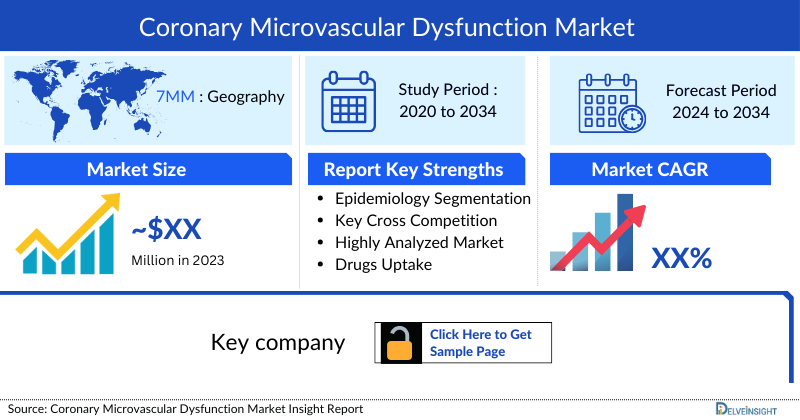
DelveInsight’s comprehensive report titled “Coronary Microvascular Dysfunction Market Insights, Epidemiology, and Market Forecast – 2034” offers a detailed analysis of CMD. The report presents historical and projected epidemiological data covering Total Prevalent Cases and Diagnosed Prevalent Cases of CMD further segmented by Gender, Symptom, and Severity. In addition to epidemiology, the market report encompasses various aspects related to the patient population. These aspects include the diagnosis process, prescription patterns, physician perspectives, market accessibility, treatment options, and prospective developments in the market across seven major markets: the United States, EU4 (Germany, France, Italy, and Spain), the United Kingdom, and Japan, spanning from 2020 to 2034.
The Coronary Microvascular Dysfunction Treatment Market Report analyzes the existing treatment practices and unmet medical requirements in CMD. It evaluates the market potential and identifies potential business prospects for enhancing therapies or interventions. This valuable information enables stakeholders to make well-informed decisions regarding product development and strategic planning for the market.
Scope of the Coronary Microvascular Dysfunction Market Report | |
|
Study Period |
2020–2034 |
|
Forecast Period |
2024–2034 |
|
Geographies Covered |
US, EU4 (Germany, France, Italy, and Spain) and the UK, and Japan |
|
Coronary Microvascular Dysfunction Epidemiology |
|
|
Coronary Microvascular Dysfunction Market |
|
|
Coronary Microvascular Dysfunction Market Analysis |
|
|
Future opportunity |
The development of breakthrough therapies, disease-modifying treatments, increased awareness and access to care, and personalized medicine may open up new avenues for targeted treatments, providing further opportunities for market growth. |
Coronary Microvascular Dysfunction Understanding
Coronary microvascular dysfunction is a heart disease that affects the walls and inner lining of tiny coronary artery blood vessels that branch off from the larger coronary arteries. It describes the abnormality in the microcirculation leading to an inadequate vasodilatory response, or a pathological vasoconstrictive response, to physiological or pharmacological stress. Moreover, it carries an increased risk of adverse cardiovascular clinical outcomes.
Coronary Microvascular Dysfunction can occur alone or in the presence of obstructive coronary artery disease (CAD). It has also been identified as a cause of cardiac ischemia, in addition to traditional atherosclerotic disease and vasospastic disease. It is present in 30% of patients with angina and is associated with increased morbidity and mortality. Moreover, half of all patients with non-obstructive coronary artery disease (NOCAD) have CMD. Several studies have also demonstrated that women, presenting with angina are more likely to suffer from NOCAD and CMD.
Patients with CMD tend to experience prolonged episodes of chest pain and a relatively poor response to oral nitrates. Other signs and symptoms include shortness of breath, sleep problems, fatigue, and lack of energy.
Coronary Microvascular Dysfunction Diagnosis and Treatment
The diagnosis of Coronary Microvascular Dysfunction Treatment Market is intricate and typically involves assessing the weakened coronary blood flow response to vasodilators. In addition to traditional vasoreactivity tests, imaging techniques such as MRI (Magnetic Resonance Imaging), PET (Positron Emission Tomography), and echocardiography are increasingly employed to aid in diagnosis and evaluation.
The current Coronary Microvascular Dysfunction Treatment Market approach for begins with lifestyle modifications and controlling risk factors. Management of risk factors involves the use of statins and angiotensin-converting enzyme (ACE) inhibitors, particularly in hypertensive patients, as these medications can improve endothelial dysfunction and are considered a first-line treatment for patients with microvascular angina. Additionally, therapeutic reduction of blood pressure can enhance coronary flow reserve (CFR), although excessive lowering of diastolic blood pressure may diminish this benefit. Metformin, an insulin sensitizer, has also demonstrated efficacy in improving endothelial function.
Beta-blockers are known to be effective in alleviating chest pain symptoms associated with CMD. While all groups of beta-blockers may offer some benefit to patients with Coronary Microvascular Dysfunction, those with vasodilatory properties are believed to provide the most advantages. Nebivolol, for instance, is a highly selective beta-1 blocker that also exhibits vasodilatory effects. It achieves this through the activation of the endothelial nitric oxide synthase (eNOS) pathway and the inhibition of endothelin-1 (ET-1) synthesis. These dual mechanisms make nebivolol a promising option for managing Coronary Microvascular Dysfunction-related symptoms.
Anti-anginal medications play a crucial role in managing Coronary Microvascular Dysfunction. Nitrates are effective due to their vasodilatory properties, reducing preload and potentially enhancing coronary vasodilation. While they can alleviate symptoms, their impact on endothelial function is not well-established. Ranolazine, on the other hand, inhibits the late sodium channel and reduces intracellular calcium levels, improving ventricular relaxation. However, its effectiveness in CMD remains uncertain due to conflicting results in studies.
Calcium channel blockers (CCBs) exert their effects by inducing endothelium-dependent relaxation and reducing smooth muscle constriction through the inhibition of endothelin-1. Additionally, they hinder the effects of platelet-derived growth factor, thereby impeding further vascular platelet deposition. While CCBs may benefit a subset of patients with coronary microvascular dysfunction due to their mechanism of action, they are typically not considered first-line therapy. Instead, they are often used adjunctively with other agents such as beta-blockers in the management of Coronary Microvascular Dysfunction.
Lifestyle modifications include weight loss, smoking cessation, a high-fiber diet, and fruit and vegetable consumption. Moreover, obesity is highly prevalent in patients with CMD, and exercise programs and cardiac rehabilitation facilitate important long-term lifestyle changes in these patients.
Coronary Microvascular Dysfunction Epidemiology
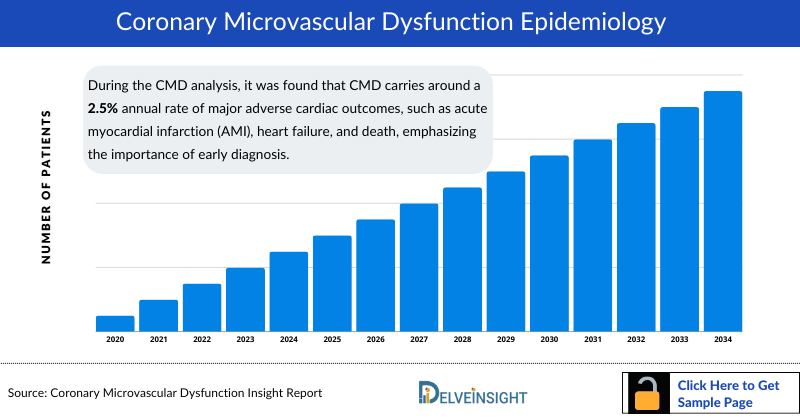
The epidemiology section of the Coronary Microvascular Dysfunction Market Size report offers information on the patient populations, including historical and projected trends for each of the seven major markets. Examining key opinion leader views from physicians or clinical experts can assist in identifying the reasons behind historical and projected trends. The Coronary Microvascular Dysfunction Diagnosed Patient Pool, their trends, and the underlying assumptions are all included in this section of the report.
This section also presents the data with relevant tables and graphs, offering a clear and concise view of the prevalence of Coronary Microvascular Dysfunction. Additionally, the report discloses the assumptions made during the analysis, ensuring data interpretation and presentation transparency. This epidemiological data is valuable for understanding the disease burden and its impact on the patient population across various regions.
Key Findings from Coronary Microvascular Dysfunction Epidemiological Analyses and Forecast
- During the Coronary Microvascular Dysfunction Market Share analysis, it was found that Coronary Microvascular Dysfunction Market carries around a 2.5% annual rate of major adverse cardiac outcomes, such as Acute Myocardial Infarction, Heart Failure, and death, emphasizing the importance of early diagnosis.
- It was observed that angina without Coronary Artery Disease has substantial morbidity and is present in 10% to 30% of patients undergoing angiography. Coronary Microvascular Dysfunction is present in 50% to 65% of these patients.
- In the analysis, it was observed that approximately 18% of patients with severe Coronary Microvascular Dysfunction, 10% with moderate Coronary Microvascular Dysfunction, and 5% with mild Coronary Microvascular Dysfunction experienced adverse cardiovascular events.
- During the analysis, it was observed that Coronary Microvascular Dysfunction can be found in approximately 50–60% of cases in patients exhibiting signs and symptoms of myocardial ischemia despite having unobstructed coronary arteries.
- It was found that women have a higher prevalence of Coronary Microvascular Dysfunction compared to men. Approximately 39% of women with chest pain but normal coronary arteries were found to have an abnormal coronary flow reserve (CFR) consistent with CMD.
- The Coronary Microvascular Dysfunction Epidemiology is expected to change during the forecast period (2024-2034).
Coronary Microvascular Dysfunction Epidemiology Segmentation
- Total Coronary Microvascular Dysfunction Prevalent Cases
- Coronary Microvascular Dysfunction Gender-specific Prevalent Cases
- Coronary Microvascular Dysfunction Prevalence associated with Chest Pain
- Coronary Microvascular Dysfunction Prevalence by Severity
Coronary Microvascular Dysfunction Market Recent Breakthroughs and Developments
- In January 2026, Johns Hopkins University launched a clinical study to assess the effects of vericiguat, a soluble guanylyl cyclase stimulator, on coronary vascular function in individuals with metabolic syndrome and pre-existing coronary vascular dysfunction. The study utilizes non-invasive cardiac magnetic resonance imaging (MRI) to evaluate treatment outcomes.

Coronary Microvascular Dysfunction Market Outlook
The Coronary Microvascular Dysfunction Treatment Market is further expected to increase by the major drivers, such as the rising prevalent population, technological advancements, and upcoming therapies in the forecast period [2024–2034]. With ongoing research and continued dedication, the future holds hope for even more effective treatments and, ultimately, a cure for this challenging condition. According to DelveInsight, the Coronary Microvascular Dysfunction market size in the 7MM is expected to change significantly during the study period 2020–2034.
Coronary Microvascular Dysfunction Market Segmentation
DelveInsight’s ‘Coronary Microvascular Dysfunction Market Insights, Epidemiology, and Market Forecast – 2034’ report provides a detailed outlook of the current and future CMD market, segmented within countries, by therapies, and by classes. Further, the market of each region is then segmented by each therapy to provide a detailed view of the current and future market share of all therapies.
Coronary Microvascular Dysfunction Market Size by Countries
The Coronary Microvascular Dysfunction Market Size is assessed separately for various countries, including the United States, EU4 (Germany, France, Italy, and Spain), the UK, and Japan. In 2023, the United States held a significant share of the overall 7MM (Seven Major Markets) Coronary Microvascular Dysfunction market, primarily attributed to the country's higher prevalence of the condition and the elevated cost of the available treatments. This dominance is projected to persist, especially with the potential early introduction of new products.
Coronary Microvascular Dysfunction Drugs Uptake
This section focuses on the sales uptake of potential Coronary Microvascular Dysfunction drugs that have recently been launched or are anticipated to be launched in the Coronary Microvascular Dysfuntion market between 2020 and 2034. It estimates the market penetration of Coronary Microvascular Dysfunction drugs for a given country, examining their impact within and across classes and segments.
It also touches upon the financial and regulatory decisions contributing to the probability of success (PoS) of the drugs in the Coronary Microvascular Dysfunction Therapeutics Market. The Coronary Microvascular Dysfunction emerging therapies are analyzed based on various attributes such as safety and efficacy in randomized clinical trials, order of entry and other market dynamics, and the unmet need they fulfill in the Coronary Microvascular Dysfunction market size.
Coronary Microvascular Dysfunction Market Access and Reimbursement
DelveInsight’s ‘Coronary Microvascular Dysfunction Market Insights, Epidemiology, and Market Forecast – 2034’ report provides a descriptive overview of the market access and reimbursement scenario of CMD. This section includes a detailed analysis of the country-wise healthcare system for each therapy, enlightening the market access, reimbursement policies, and health technology assessments.
Latest KOL Views on Coronary Microvascular Dysfunction
To keep up with current Coronary Microvascular Dysfunction market trends and fill gaps in secondary findings, we interview KOLs and SMEs’ working in the CMD domain. Their opinion helps understand and validate current and emerging therapies and treatment patterns or CMD market trends. This will support the clients in potential upcoming novel treatments by identifying the overall scenario of the market and the CMD unmet needs.
Coronary Microvascular Dysfunction Market: KOL Insights
DelveInsight’s analysts connected with 50+ KOLs to gather insights; however, interviews were conducted with 15+ KOLs in the 7MM. These KOLs were from organizations, institutes, and hospitals, such as the NIHR Biomedical Research Centre at the School of Cardiovascular Medicine and Sciences, King’s College London, London, UK, Department of Internal Medicine, S.Elia Hospital, Caltanissetta, Italy, Molecular and Nuclear Research Institute, St George's University, London, UK, the American Academy of Dermatology, and the American Medical Association, among others.
- “Ongoing research is crucial to unravel the pathophysiology of Coronary Microvascular Dysfunction Market and uncover novel therapeutic avenues.”
- “Living with Coronary Microvascular Dysfunction poses challenges due to symptoms such as chest pain, fatigue, and diminished exercise capacity.”
- “Healthcare policies should prioritize raising awareness of Coronary Microvascular Dysfunction among medical professionals, facilitating early detection, and ensuring appropriate management.”
Coronary Microvascular Dysfunction Competitive Intelligence Analysis
We conduct a Competitive and Market Intelligence analysis of the Coronary Microvascular Dysfunction Market Size, utilizing various Competitive Intelligence tools such as SWOT analysis and Market entry strategies. The inclusion of these analyses is contingent upon data availability, ensuring a comprehensive and well-informed assessment of the market landscape and competitive dynamics.
Major Coronary Microvascular Dysfunction Companies
Lisata Therapeutics Inc., Genetesis Inc., Shanghai Hutchison Pharmaceuticals Limited, Abbott, Merck Sharp & Dohme LLC, and others.
Coronary Microvascular Dysfunction Clinical Trial Activities
The Coronary Microvascular Dysfunction Therapeutics Market Report offers an analysis of therapeutic candidates in Phase II and III stages and examines companies involved in developing targeted Coronary Microvascular Dysfunction Therapeutics. It provides valuable insights into the advancements and progress of potential treatments in clinical development for this condition.
Coronary Microvascular Dysfunction Pipeline Development Activities
The Coronary Microvascular Dysfunction Pipeline Report covers information on collaborations, acquisitions and mergers, licensing, patent details, and other information for emerging CMD therapies.
Coronary Microvascular Dysfunction Market Report Insights
- Coronary Microvascular Dysfunction Patient Population
- Therapeutic Approaches
- Coronary Microvascular Dysfunction Pipeline Analysis
- Coronary Microvascular Dysfunction Market Size and Trends
- Coronary Microvascular Dysfunction Market Opportunities
- Impact of Upcoming Therapies
Coronary Microvascular Dysfunction Market Report Key Strengths
- 11 Years Coronary Microvascular Dysfunction Market Forecast
- The 7MM Coverage
- Coronary Microvascular Dysfunction Epidemiology Segmentation
- Key Cross Competition
- Highly Analyzed Coronary Microvascular Dysfunction Market Size
- Coronary Microvascular Dysfunction Drugs Uptake
Coronary Microvascular Dysfunction Market Report Assessment
- Coronary Microvascular Dysfunction Current Treatment Practices
- Coronary Microvascular Dysfunction Unmet Needs
- Coronary Microvascular Dysfunction Pipeline Product Profiles
- Coronary Microvascular Dysfunction Market Share & Potential
Key Questions Answered in the Coronary Microvascular Dysfunction Market Report
Coronary Microvascular Dysfunction Treatment Market Insights
- How common is Coronary Microvascular Dysfunction?
- What are the key findings of Coronary Microvascular Dysfunction Market Epidemiology across the 7MM, and which country will have the highest number of patients during the study period (2020–2034)?
- What are the currently available Coronary Microvascular Dysfunction Treatments?
- What is the disease risk, burden, and unmet needs of Coronary Microvascular Dysfunction?
- At what CAGR is the Coronary Microvascular Dysfunction Drugs Market and its epidemiology expected to grow in the 7MM during the forecast period (2024–2034)?
- How would the unmet needs impact the Coronary Microvascular Dysfunction market dynamics and subsequently influence the analysis of the related trends?
- What would be the forecasted patient pool of Coronary Microvascular Dysfunction Market in the 7MM covering the United States, EU4 (Germany, France, Italy, and Spain), the UK, and Japan?
- Among EU4 and the UK, which country will have the highest number of patients during the forecast period (2024–2034)?
- How many companies are currently developing therapies for the treatment of Coronary Microvascular Dysfunction?
Stay updated with us for Recent Articles @ New DelveInsight Blogs