-market.png&w=256&q=75)
Acute Myocardial Infarction Market Summary
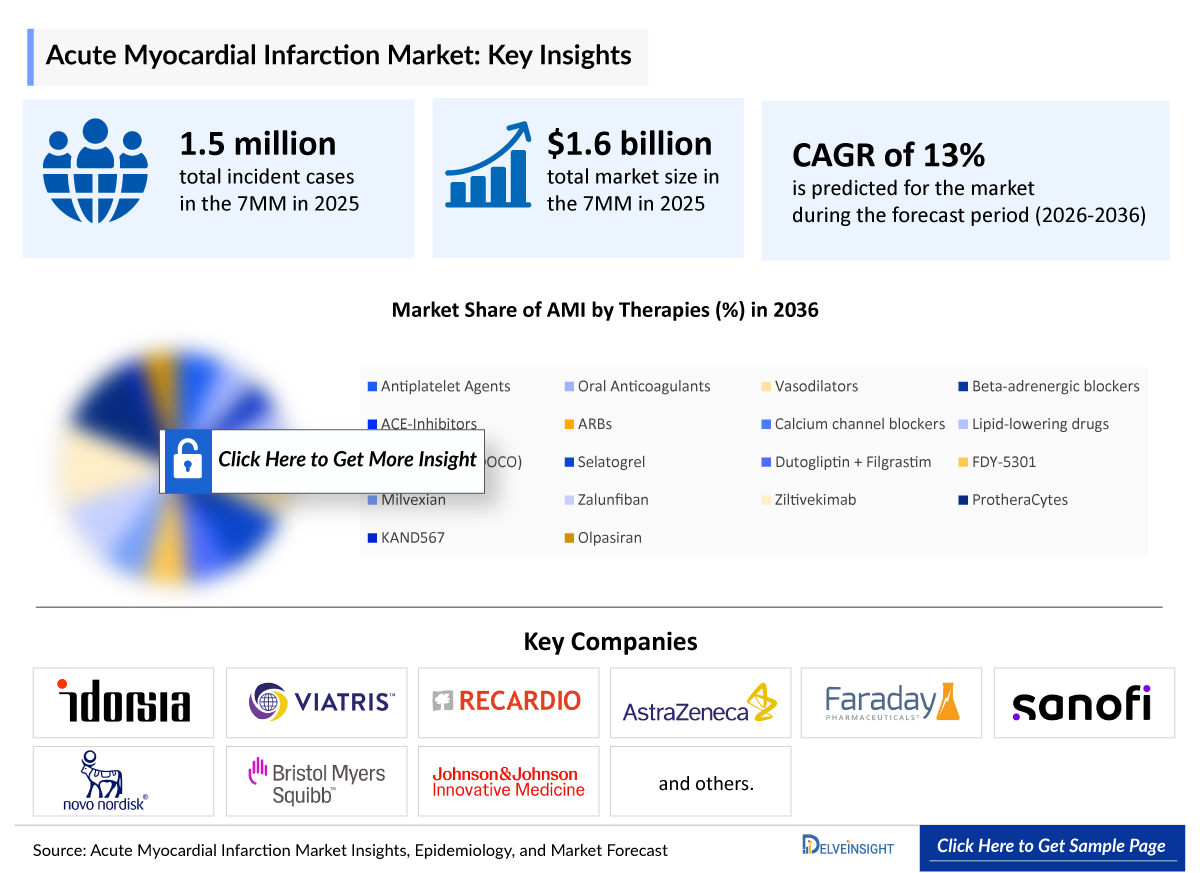
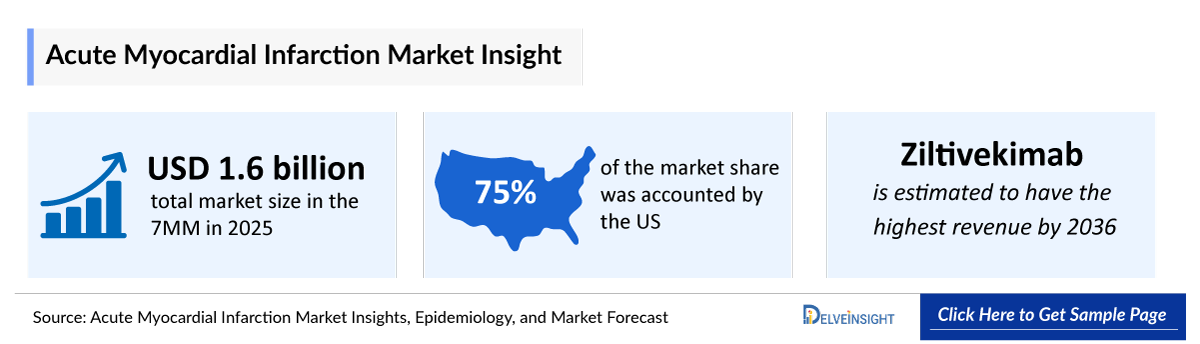
- According to DelveInsight’s analysis, the Acute Myocardial Infarction Market Size was found to be ~USD 1600 million in the leading markets (the United States, the EU4 (Germany, France, Italy, and Spain), the United Kingdom, and Japan) in 2025.
- The leading Acute Myocardial Infarction Companies such as Idorsia Pharmaceuticals, Viatris, Recardio, AstraZeneca, Faraday Pharmaceuticals, CeleCor Therapeutics, Novo Nordisk, Bristol Myers Squibb, Johnson & Johnson Innovative Medicine, CellProthera, BioCardia, Kancera, Amgen, Arrowhead Pharmaceuticals and others.
Acute Myocardial Infarction Market Insights and Trends
- AMI is defined as myocardial cell death due to prolonged ischemia, with early changes such as glycogen depletion, myofibril relaxation, and sarcolemmal disruption occurring within 10–15 minutes of onset.
- Clinical presentation typically includes chest pain/pressure, often radiating to the left arm, jaw, neck, back, or upper abdomen, and may be accompanied by sweating, nausea, vomiting, or syncope.
- The widespread use of cardiac biomarkers (e.g., troponins) has significantly improved diagnostic accuracy, but also complicates trend analyses due to evolving thresholds and the detection of smaller infarctions.
- Enhanced biomarker sensitivity has led to better case detection, which may mask true declines in incidence and create an apparent reduction in mortality rates by identifying milder cases.
- The current Acute Myocardial Infarction Treatment Landscape includes antiplatelets, Anticoagulants, beta-blockers, vasodilators, lipid-lowering agents, ACE inhibitors, ARBs, and calcium channel blockers, forming the backbone of AMI management.
- The approval of LODOCO by AGEPHA Pharma marks a shift toward targeting residual inflammatory risk, offering a novel mechanism to reduce cardiovascular events.
- Despite advances in prevention and treatment, AMI remains a leading cause of morbidity and mortality in the United States.
- Whereas the emerging Acute Myocardial Infarction Pipeline is steadily evolving, a number of late- and mid-stage assets such as Selatogrel, Dapagliflozin, FDY-5301, Zalunfiban (RUC 4) are currently being evaluated for their potential to improve clinical outcomes.
Acute Myocardial Infarction Market Size and Forecast in the 7MM
- 2025 Acute Myocardial Infarction Market Size: ~USD 1,600 million
- 2036 Projected Acute Myocardial Infarction Market Size: ~USD 6,000 million
- Acute Myocardial Infarction Growth Rate (2026–2036): 13% CAGR
Request for Unlocking the Sample Page of the "Acute Myocardial Infarction Treatment Market"
Key Factors Driving the Acute Myocardial Infarction Market
-
Expanding Therapeutic Landscape and Innovation
The Acute Myocardial Infarction Market is witnessing rapid innovation, with emerging therapies targeting residual cardiovascular risk, inflammation, and plaque stabilization. Key pipeline assets from companies such as Amgen, Novo Nordisk, and Bristol Myers Squibb are expected to transform treatment paradigms during the forecast period.
-
Growing Focus on Preventive and Long-term Management
There is an increasing emphasis on secondary prevention strategies, including lipid-lowering therapies, antiplatelets, and anti-inflammatory agents, to reduce recurrent cardiovascular events, thereby expanding the long-term treatment market.
-
Rising Healthcare Expenditure and Awareness
Increasing healthcare spending, improved access to advanced treatments, and growing awareness of cardiovascular diseases across the 7MM are supporting market expansion, particularly in developed regions.
DelveInsight's ‘Acute Myocardial Infarction Market Insights, Epidemiology and Market Forecast – 2036’ report delivers an in-depth understanding of the AMI, historical and forecasted epidemiology, as well as the AMI market trends in the United States, EU4 (Germany, Spain, Italy, and France) and the United Kingdom, and Japan.
The Acute Myocardial Infarction Treatment Market Report delivers a comprehensive analysis of the current treatment landscape, including standards of care, clinical practices, and evolving therapeutic algorithms. It evaluates AMI patient burden trends, revenue & market share dynamics, peak patient share & therapy uptake analysis, and provides an in-depth market size assessment, and growth rate projections (Historical & Forecast 2022–2036) across global regions. The report highlights key unmet medical needs in AMI and maps the competitive and clinical landscape to uncover high‑value opportunities, providing a clear outlook on future market growth potential.
Scope of the Acute Myocardial Infarction Therapeutics Market Report | |
|
Study Period |
2022–2036 |
|
Historical Year |
2022–2025 |
|
Forecast Period |
2026–2036 |
|
Base Year |
2026 |
|
Geographies Covered |
|
|
AMI Market CAGR (Forecast period) | |
|
Acute Myocardial Infarction Epidemiology Segmentation Analysis |
Patient Burden Assessment
|
|
Acute Myocardial Infarction Companies |
|
|
Acute Myocardial InfarctionTherapies |
|
|
Acute Myocardial InfarctionMarket |
Segmented by
|
|
Analysis |
|
Acute Myocardial Infarction Understanding and Treatment Algorithm
Acute Myocardial Infarction Overview and Diagnosis
Acute Myocardial Infarction is the ischemic necrosis of myocardial tissue, most commonly caused by coronary artery disease and acute plaque rupture with thrombosis. It typically presents as part of acute coronary syndrome (ACS) with symptoms such as chest pain, dyspnea, nausea, and diaphoresis. Myocardial Infarction is broadly classified into STEMI (ST-Elevation Myocardial Infarction) and NSTEMI (Non–ST-Elevation Myocardial Infarction), as well as Type 1 MI (atherothrombotic) and Type 2 MI (oxygen supply–demand mismatch). Despite advances in care, AMI remains a leading cause of mortality globally, driven by key risk factors including Hypertension, Diabetes, smoking, and dyslipidemia.
Acute Myocardial Infarction Diagnosis
Acute Myocardial Infarction Diagnosis is based on a combination of clinical presentation, electrocardiography (ECG) findings, and elevation of cardiac biomarkers, particularly troponins, which are the most sensitive and specific indicators of myocardial injury. ECG plays a critical role in differentiating STEMI vs. NSTEMI and guiding urgent treatment decisions. Additional tools, such as echocardiography, help identify wall motion abnormalities, while coronary angiography provides a definitive diagnosis and enables revascularization. Early and accurate diagnosis is essential for timely reperfusion therapy and reducing complications.
Acute Myocardial Infarction Treatment
The Acute Myocardial Infarction treatment centers on rapid symptom relief, early ECG diagnosis, and prompt reperfusion. Initial therapy includes nitroglycerin, morphine, immediate antiplatelet therapy (aspirin ± P2Y12 inhibitors), and anticoagulation. In STEMI, primary PCI (within 60–90 min) is preferred, while fibrinolysis with agents such as tenecteplase is used if PCI is not available. Long-term management focuses on reducing mortality and recurrence with dual antiplatelet therapy (DAPT), β-blockers, ACE inhibitors/ARBs, and statins. In addition to these standard therapies, select approved agents such as colchicine have demonstrated benefit in reducing cardiovascular events through anti-inflammatory mechanisms, while evolocumab provides intensive LDL-C lowering for high-risk patients, further supporting secondary prevention. Nitrates help relieve ischemia, and calcium channel blockers are alternatives when β-blockers are contraindicated.
Further details related to country-based variations are provided in the report.
Acute Myocardial Infarction Unmet Needs
The section “unmet needs of Acute Myocardial Infarction” outlines the critical gaps between the current state of patient care, diagnosis, and the ideal & effective management of the disease. It highlights the obstacles experienced by patients, clinicians, and researchers and identifies potential solutions for future progress.
- Treatment options for reperfusion injury
- Emergency care and prevention
- Use of a combination of cardiovascular endpoints
- Lack of data on longitudinal medication use
- Misdiagnosis, along with the need for faster diagnosis and treatment of AMI, and others…..
Note: Comprehensive unmet needs insights in Acute Myocardial Infarction and their strategic implications are provided in the full report.
Acute Myocardial Infarction Epidemiology
Key Findings from Acute Myocardial Infarction Epidemiological Analysis and Forecast
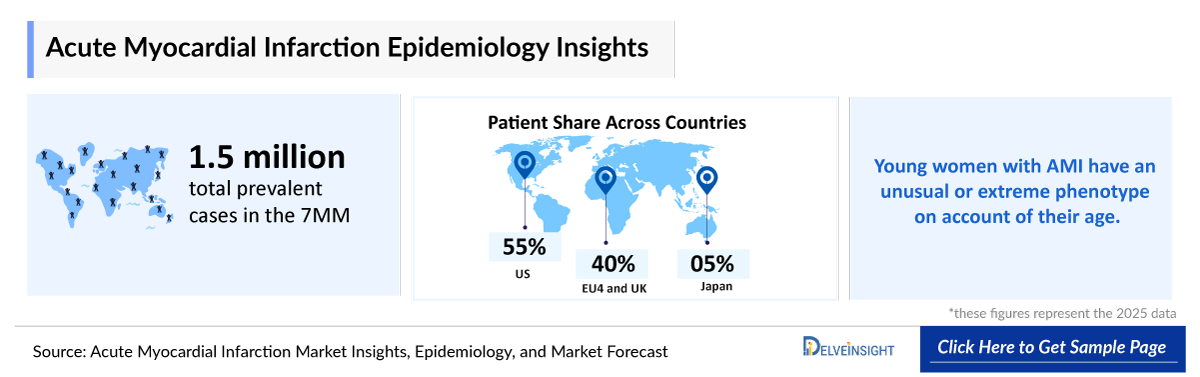
- According to DelveInsight estimates, approximately ~1,500,000 Acute Myocardial Infarction Incident Cases were reported across the 7MM in 2025, with the highest number of cases in the US.
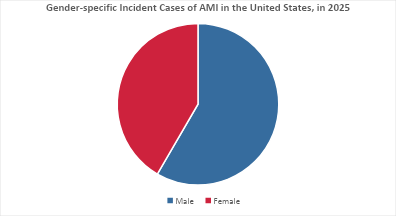
- AMI is more common in men than women, as there were 950,000 incident cases for males and 550,000 cases for females in the 7MM in 2025.
- Among the EU4 and the UK, Germany reported the highest number of Acute Myocardial Infarction Incident Cases in 2025, while Spain had the lowest.
- According to estimates, there were ~510,000 cases of STEMI and ~990,000 cases of NSTEMI in the 7MM in 2025.
- According to epidemiological estimates, STEMI accounts for a smaller proportion of total acute myocardial infarction cases compared to NSTEMI; however, STEMI is associated with higher immediate mortality and requires urgent reperfusion therapy, making it a critical focus of acute care management.
Acute Myocardial Infarction Epidemiology Segmentation in the 7MM
- Total Acute Myocardial Infarction Incident Cases
- Acute Myocardial Infarction Type-specific Incident Cases
- Acute Myocardial Infarction Gender-specific Incident Cases
Acute Myocardial Infarction Drug Analysis & Competitive Landscape
The Acute Myocardial Infarction drug chapter provides a detailed, market-focused review of approved therapies and the emerging Acute Myocardial Infarction Pipeline across Phase I–III clinical trials. It covers the Acute Myocardial Infarction Mechanism of Action, clinical trial data, regulatory approvals, patents, collaborations, and strategic partnerships for each therapy, along with their advantages, limitations, and recent developments. This section offers critical insights into the AMI treatment landscape, supporting market assessment, competitive analysis, and growth forecasting for the AMI therapeutics market.
Acute Myocardial Infarction Approved Therapies
-
Colchicine (LODOCO): AGEPHA Pharma
LODOCO, developed by AGEPHA Pharma, is an anti-inflammatory therapy approved to reduce the risk of recurrent cardiovascular events. In AMI, it is positioned as an adjunctive treatment in the Post-Myocardial Infarction setting, targeting residual inflammation to help lower the risk of subsequent events.
-
Tenecteplase (TNKase): Genentech
Tenecteplase is a fibrinolytic therapy indicated for AMI, used to achieve rapid reperfusion by dissolving coronary thrombi. Its longer half-life and single-bolus administration enable faster and more convenient treatment compared to alteplase, making it a key option when primary Percutaneous Coronary Intervention is not readily available.
Note: Detailed marketed therapies assessment will be provided in the final report.
Acute Myocardial Infarction Marketed/Approved Therapies | ||||||
|
Drug/Therapy |
Company |
Indication |
Molecule Type |
MoA |
RoA |
Marketed Region |
|
LODOCO (colchicine) |
AGEPHA Pharma |
Myocardial infarction |
Small molecule |
Disrupts cytoskeletal functions |
Oral |
US: 2023 |
|
TNKase (tenecteplase) |
Genentech |
AMI |
Recombinant protein |
Tissue plasminogen activator |
IV infusion |
US: 2000 EU: 2001 |
|
REPATHA (evolocumab) |
Amgen |
Myocardial infarction |
Monoclonal antibody |
PCSK9 inhibitor |
SC |
US: 2017 EU: 2018 |
Acute Myocardial Infarction Pipeline Analysis
-
Selatogrel (ACT-246475): Idorsia Pharmaceuticals and Viatris
Selatogrel is a potent, fast-acting, reversible, and highly selective P2Y12 inhibitor being developed for the treatment of patients with a history of AMI. It is intended to be self-administered subcutaneously via a drug delivery system (autoinjector). This novel, self-administered emergency agent has the potential to protect the heart muscle in the very early phase of an AMI in the crucial time between symptom onset and first medical attention, to treat the ongoing AMI, and prevent early death.
-
Dutogliptin (REC-01): Recardio
Dutogliptin, developed by Recardio, is a potent and selective DPP4 inhibitor. Dutogliptin is administered via SC injection; the protein belongs to the class of enzyme inhibitors called gliptins or DPP-IV inhibitors. The combination of G-CSF with dutogliptin significantly enhanced survival and reduced infarct size in the preclinical model. Once the Acute Myocardial Infarction Diagnosis is confirmed and percutaneous intervention and stent implantation are completed, the patient receives or can self-administer daily SC injection of dutogliptin for 2 weeks in co-administration with G-CSF for 5 days.
Comparison of Emerging Drugs Under Development | ||||||
|
Drug Name |
Company |
Highest Phase |
Indication |
RoA |
MoA |
Anticipated Launch in the US |
|
Selatogrel (ACT-246475) |
Idorsia Pharmaceuticals and Viatris |
III |
AMI |
SC |
P2Y12 inhibitor |
Information is available in the full report |
|
FARXIGA/FORXIGA (dapagliflozin) |
AstraZeneca |
III |
Patients without diabetes with AMI are at increased risk for subsequent development of heart failure |
Oral |
SGLT2 inhibitor |
Information is available in the full report |
|
FDY-5301 |
Faraday Pharmaceuticals |
III |
Ischemia-reperfusion injury (IRI) following myocardial infarction |
IV bolus injection |
Anti-peroxidant |
Information is available in the full report |
|
Note: Launch insights are provisional and may change with future report updates or the occurrence of major key catalysts. | ||||||
Note: Detailed emerging therapies assessment will be provided in the final report.
Acute Myocardial Infarction Companies, Market Leaders, and Emerging Companies
- AGEPHA Pharma
- Genentech
- Amgen
- Merck
- Regeneron and Sanofi
- Idorsia Pharmaceuticals and Viatris
- Recardio
- AstraZeneca
- Faraday Pharmaceuticals
- Novo Nordisk, and others
Acute Myocardial Infarction Drug Updates
- In June 2024, Faraday Pharmaceuticals announced the completion of enrollment in its ongoing pivotal Phase III Iocyte AMI-3 trial of FDY-5301.
- In February 2024, Idorsia announced that the company has entered into agreements for a significant global research and development collaboration with Viatris for the global development and commercialization of two Phase III assets – selatogrel and cenerimod – for an upfront payment of USD 350 million, potential development and regulatory milestone payments, and certain contingent payments of additional sales milestone payments and tiered royalties from mid-single- to low double-digit percentage on annual net sales.
- In July 2020, AstraZeneca announced that Farxiga (dapagliflozin) was granted Fast Track Designation by the US FDA for the treatment of heart failure following AMI, supporting its development in the Phase III DAPA-MI trial using an innovative registry-based study design to evaluate its potential in reducing cardiovascular death and heart failure outcomes post-MI.
Acute Myocardial Infarction Market Outlook
The Acute Myocardial Infarction Market is undergoing a gradual transformation following decades of reliance on reperfusion strategies and conventional antithrombotic therapies. While rapid intervention through PCI and thrombolytics remains the cornerstone of acute management, the expanding use of adjunctive and preventive therapies such as tenecteplase, colchicine, evolocumab, alirocumab, and vorapaxar reflects a shift toward comprehensive cardiovascular risk reduction. These therapies highlight the growing focus on addressing residual thrombotic, inflammatory, and lipid-driven risk, supporting a transition toward more mechanism-driven and long-term disease management in AMI.
With the advancement of targeted and novel therapies such as Selatogrel, Dutogliptin, Dapagliflozin, FDY-5301, Ziltivekimab, Milvexian, and Olpasiran, the Acute Myocardial Infarction Treatment landscape is evolving like other cardiovascular and metabolic diseases, where early innovation in targeted mechanisms is expected to catalyze broader therapeutic expansion. These emerging agents aim to address unmet needs in acute thrombosis management, inflammation control, and long-term risk reduction, thereby expanding the therapeutic scope beyond traditional approaches.
The United States continues to represent the largest Acute Myocardial Infarction Treatment Market, driven by high disease burden, advanced healthcare infrastructure, widespread access to PCI, and rapid adoption of novel therapies, compared with EU4, the United Kingdom, and Japan. Overall, the introduction of first-in-class and mechanism-driven therapies, along with improvements in early diagnosis and increasing awareness of secondary prevention, is expected to drive steady growth in the 7MM Acute Myocardial Infarction Treatment Market from 2022 to 2036, with strong commercial implications for both marketed products and emerging pipelines.
- The United States is expected to account for the largest Acute Myocardial Infarction Market Share among the 7MM, with projected significant growth through 2036.
- The Acute Myocardial Infarction Treatment Landscape is evolving as the focus expands from acute reperfusion to long-term risk management, with lipid-lowering and anti-inflammatory therapies driving adoption.
- Regional market dynamics indicate that the US leads in revenue, while Japan and EU markets demonstrate steady growth, supported by improving access to advanced therapies and increasing awareness.
- Among available therapies, agents such as evolocumab are expected to generate significant revenue, particularly in the secondary prevention setting.
- The entry of mid- to late-stage candidates such as Selatogrel, Milvexian, and Olpasiran is expected to intensify competition and expand treatment options in the Acute Myocardial Infarction Treatment Landscape during the forecast period.
Further details will be provided in the report….
Acute Myocardial Infarction Drug Class/Insights into Leading Emerging and Marketed Therapies (2022–2036 Forecast)
The Acute Myocardial Infarction Treatment Landscape comprises antithrombotic agents, cardioprotective drugs, and emerging targeted therapies, each addressing different aspects of thrombosis, ischemia, and post-MI remodeling.
- Antithrombotic agents: Include antiplatelets (e.g., aspirin, ticagrelor) and anticoagulants (e.g., heparins, bivalirudin), which form the backbone of AMI management by preventing thrombus formation and supporting reperfusion strategies such as PCI or fibrinolysis.
- Cardioprotective therapies: Include β-blockers, ACE inhibitors/ARBs, statins, and vasodilators, which reduce myocardial workload, limit infarct size, prevent adverse remodeling, and improve long-term survival following MI.
- Emerging therapies: Pipeline agents such as selatogrel and dutogliptin, along with cardiometabolic drugs like dapagliflozin, are being explored for early intervention, cardioprotection, and post- myocardial infarction remodeling benefits.
Overall, antithrombotic and cardioprotective drugs define the current standard of care, while novel targeted and cardiometabolic therapies are expected to drive future innovation in the AMI treatment landscape.
Acute Myocardial Infarction Drug Uptake
This section focuses on the uptake rate of potential Acute Myocardial Infarction drugs expected to be launched in the market during the forecast period (2026–2036). The analysis covers the AMI drug’s uptake, performance at peak, factors affecting performance during prime years of growth, patient uptake by therapy, and anticipated sales generated by each drug.
The uptake of Acute Myocardial Infarction Therapies is expected to vary across acute reperfusion agents, antithrombotics, lipid-lowering therapies, and emerging targeted agents. Established therapies such as tenecteplase are anticipated to maintain strong and immediate uptake due to their critical role in rapid reperfusion, particularly in settings where timely PCI is not feasible. In contrast, recently approved or expanding therapies such as colchicine, evolocumab, and alirocumab are expected to demonstrate moderate but progressive uptake, supported by their targeted mechanisms, growing clinical evidence, and increasing physician focus on residual cardiovascular risk reduction in post-MI patients. Their adoption is likely to be driven by the limitations of standard therapies in preventing recurrent events and the need for improved long-term outcomes.
In comparison, next-generation targeted therapies such as Selatogrel, Milvexian, Ziltivekimab, and Olpasiran are anticipated to show gradual but steady uptake as clinical evidence expands and these agents are progressively incorporated into treatment algorithms addressing thrombosis, inflammation, and lipid-mediated risk. Their future adoption will depend on demonstrated clinical benefit, safety profiles, and positioning within both acute and secondary prevention settings.
Detailed insights into emerging therapies' drug uptake are included in the report.
Acute Myocardial Infarction Market Access and Reimbursement
- The United States
|
The US Reimbursement for Acute Myocardial Infarction | |
|
Drug |
Access Program |
|
REPATHA (evolocumab) |
Amgen SupportPlus / RepathaReady |
Reimbursement is a crucial factor that affects the drug’s access to the market. Often, the decision to reimburse comes down to the price of the drug relative to the benefit it produces in treated patients. To reduce the healthcare burden of these high-cost therapies, many payment models are being considered by payers and other industry insiders.
NOTE: Further Details are provided in the final report….
Acute Myocardial Infarction Therapies Price Scenario & Trends
Pricing and analogue assessment of AMI therapies highlight evolving price dynamics structures. This section summarizes the cost of approved treatments, the closest and most appropriate analogue selection for emerging therapies, and the understanding of how pricing influences market access, adherence, and long-term uptake.
- Pricing of Acute Myocardial Infarction Approved Drugs
Evolocumab is administered at a dose of 140 mg every two weeks or 420 mg once monthly for patients at high cardiovascular risk, including those with a history of acute myocardial infarction. The list price was initially reported at approximately USD 14,100 annually, later reduced to around USD 5,850 per year, translating to an estimated annual therapy cost of USD 5,850.
Further details are provided in the final report….
Acute Myocardial Infarction Industry Experts and Physician Views
To keep up with AMI market trends, we take Key Opinion Leaders (KOLs) and Subject Matter Experts (SMEs) opinions working in the domain through primary research to fill the data gaps and validate our secondary research. Industry experts were contacted for insights on the AMI emerging therapies, evolving treatment landscape, patient adherence to conventional therapies, therapy switching trends, drug adoption and uptake, accessibility challenges, and epidemiology and real-world prescription patterns in AMI, including MD, PhD, Instructor, Postdoctoral Researcher, Professor, Researcher, and others.
DelveInsight’s analysts connected with 15+ KOLs to gather insights at the country level. Centers such as the Baylor Scott and White Research Institute in Dallas, Women’s Hospital and Harvard Medical School, and Uppsala University, etc. were contacted. Their opinion helps understand and validate current and emerging AMI therapies, highlight unmet medical needs, provide epidemiological context, and support strategic decisions for market access, therapy adoption, and pipeline prioritization in AMI.
Region |
Key Opinion Leaders (KOLs) and Subject Matter Experts (SMEs) |
|
United States |
"We did not reach our primary endpoint—there was a 10% relative risk reduction in the primary endpoint that was not statistically significant, a p-value of 0.21. Now, when we dissected the primary endpoint into its components, there was no signal of mortality benefit, but there was a 23% relative risk reduction [that was] statistically significant in failure hospitalization.” |
|
Spain |
“Young women with AMI are an unusual or extreme phenotype on account of their age. In the past, we found that young women, but not older women, have twice the risk of dying after an AMI than similarly aged men. In this new study, we have now identified significant differences in risk factor profiles and risk factor associations with AMI by sex.” |
Acute Myocardial Infarction Qualitative Analysis: SWOT and Conjoint Analysis
We perform qualitative and Acute Myocardial Infarction Therapeutics Market Intelligence analysis using various approaches, such as SWOT analysis and conjoint analysis. In the SWOT analysis of AMI, strengths, weaknesses, opportunities, and threats in terms of disease diagnosis, patient awareness, patient burden, competitive landscape, cost-effectiveness, and geographical accessibility of therapies are provided. Conjoint analysis analyzes emerging therapies based on relevant attributes such as safety, efficacy, frequency of administration, route of administration, and order of entry. Scoring is given based on these parameters to analyze the effectiveness of therapy.
The team of analysts analyzes promising emerging therapies based on relevant attributes such as safety, efficacy, frequency of administration, route of administration, and order of entry. In efficacy, the trial’s primary and secondary outcome measures are evaluated, whereas the therapies’ safety is evaluated, wherein the acceptability, tolerability, and adverse events are mainly observed. In addition, the scoring is also based on the route of administration, order of entry, probability of success, and the addressable patient pool for each therapy. According to these parameters, the final weightage score and the ranking of the emerging therapies are decided.
Scope of the Acute Myocardial Infarction Market Report
- The Acute Myocardial Infarction Therapeutics Market Report covers a segment of key events, an executive summary, a descriptive overview, explaining its causes, signs and symptoms, pathogenesis, and currently available treatments.
- Comprehensive insight has been provided into the epidemiology segments and forecasts, the future growth potential of the diagnosis rate, and disease progression along Acute Myocardial Infarction Treatment guidelines.
- Additionally, an all-inclusive account of both the current and emerging treatments, along with the elaborative profiles of late-stage and prominent therapies, will have an impact on the current Acute Myocardial Infarction Treatment landscape.
- A detailed review of the Acute Myocardial Infarction Therapeutics Market, historical and forecasted market size, market share by therapies, detailed assumptions, and rationale behind our approach is included in the report, covering the 7MM drug outreach.
- The Acute Myocardial Infarction Therapeutics Market Report provides an edge while developing business strategies by understanding trends through SWOT analysis and expert insights/KOL views, patient journey, and treatment preferences that help in shaping and driving the 7MM Acute Myocardial Infarction Drugs Market.
Acute Myocardial Infarction Market Report Insights
- Acute Myocardial Infarction Patient Population Forecast
- Acute Myocardial Infarction Therapeutics Market Size
- Acute Myocardial Infarction Pipeline Analysis
- Acute Myocardial Infarction Market Size and Trends
- Acute Myocardial Infarction Market Opportunity (Current and forecasted)
Acute Myocardial Infarction Market Report Key Strengths
- Epidemiology‑based (Epi‑based) Bottom‑up Forecasting
- Artificial Intelligence (AI)-Enabled Market Research Report
- 11-Year Forecast
- Acute Myocardial Infarction Market Outlook (North America, Europe, Asia-Pacific)
- Patient Burden Trends (By Geography)
- Acute Myocardial Infarction Treatment Addressable Market (TAM)
- Acute Myocardial Infarction Competitive Landscape
- Acute Myocardial Infarction Major Companies Insights
- Acute Myocardial Infarction Price Trends and Analogue Assessment
- Acute Myocardial Infarction Therapies Drug Adoption/Uptake
- AcutAcute Myocardial Infarctione Myocardial Infarction Therapies Peak Patient Share Analysis
Acute Myocardial Infarction Market Report Assessment
- Acute Myocardial Infarction Current Treatment Practices
- Acute Myocardial Infarction Unmet Needs
- Acute Myocardial Infarction Clinical Development Analysis
- Acute Myocardial Infarction Emerging Drugs Product Profiles
- Acute Myocardial Infarction Market Attractiveness
- Acute Myocardial Infarction Qualitative Analysis (SWOT and conjoint analysis)
Key Questions Answered in the Acute Myocardial Infarction Market Report
Acute Myocardial Infarction Treatment Market Insights
- What was the Acute Myocardial Infarction Market Size, the market size by therapies, Acute Myocardial Infarction Drugs Market Share (%) distribution in 2025, and what would it look like by 2036? What are the contributing factors for this growth?
- What are the anticipated pricing variations among different geographies for the emerging therapies in the future?
- What can be the future treatment paradigm of AMI?
- What are the disease risks, burdens, and unmet needs of AMI? What will be the growth opportunities across the 7MM concerning the patient population with AMI?
- Who is the major future competitor in the market, and how will the competitors affect their market share?
- What are the current options for the treatment of AMI? What are the current guidelines for treating AMI in the US, Europe, and Japan?
Reasons to Buy the Acute Myocardial Infarction Market Report
- The Acute Myocardial Infarction Therapeutics Market Report will help in developing business strategies by understanding the latest trends and changing treatment dynamics driving the Acute Myocardial Infarction Drugs Market.
- Bottom-up forecasting builds from the affected population to product forecasts, delivering a robust, data-driven approach ideal for new therapies and novel classes.
- Insights on patient burden/disease Acute Myocardial Infarction Incidence, evolution in diagnosis, and factors contributing to the change in the epidemiology of the disease during the forecast years.
- Understand the existing Acute Myocardial Infarction Drugs Market opportunities in varying geographies and the growth potential over the coming years.
- Identifying strong upcoming players in the Acute Myocardial Infarction Drugs Market will help devise strategies to help get ahead of competitors.
- Detailed analysis and ranking of class-wise potential current and emerging therapies under the conjoint analysis section to provide visibility around leading classes.
- To understand KOLs’ perspectives on the accessibility, acceptability, and compliance-related challenges of existing treatment to overcome barriers in the future.
- Detailed insights into the unmet needs of the existing Acute Myocardial Infarction Drugs Market so that the upcoming players can strengthen their development and launch strategy.
- This Artificial Intelligence (AI)-enabled report summarize and simplify complex datasets with in the report into clear, actionable insights for stakeholders, investors, and healthcare providers, enabling faster, data-driven decisions.
Stay updated with us for Recent Articles



