Critical limb Ischemia (CLI) Insights and Trends
- Critical limb ischemia (CLI), also referred to as chronic limb-threatening ischemia (CLTI), is a severe and advanced stage of peripheral arterial disease (PAD), characterized by significant arterial blockage in the lower extremities, leading to markedly reduced blood flow and a high risk of limb loss.
-
CLI has an annual incidence ranging ~22 per 100,000 in the general population, but significantly higher in older adults (up to ~100–200 per 100,000/year in ≥65 years).
-
CLI remains a rapidly progressive, high-risk stage of PAD, driving significant and ongoing healthcare burden across the 7MM despite advances in revascularization.
-
CLI is characterized by ischemic rest pain, non-healing ulcers or wounds, sensory loss, diminished or absent peripheral pulses, and advanced manifestations such as gangrene, resulting from progressive atherosclerotic limb ischemia driven by risk factors including aging, smoking, diabetes mellitus, obesity, dyslipidemia, hypertension, and sedentary lifestyle; diagnosis is established through clinical assessment supported by hemodynamic testing (ABI/TBI) and vascular imaging (DUS and CTA) to confirm disease severity and anatomical extent.
-
Current treatment strategies focus on restoring perfusion, pain relief, wound healing, and limb salvage. Standard interventions include endovascular revascularization (angioplasty, stenting, atherectomy), surgical revascularization, and in severe cases, primary amputation.
-
In patients unsuitable for revascularization, management includes analgesics, infection control, prostanoids, and optimization of cardiovascular risk factors. Therapeutic angiogenesis approaches, including gene and cell therapies, are emerging options for no-option CLI patients.
-
The treatment landscape remains limited with no broadly approved pharmacological therapies, highlighting a significant unmet medical need. Emerging strategies include angiogenic proteins, gene therapy, stem/progenitor cell therapies, and chemokine-based approaches.
-
The development pipeline remains modest, with investigational therapies such as ACP-01 (Hemostemix) and other cell and gene therapy candidates being evaluated for non-revascularizable CLI.
-
Overall, CLI remains a high-burden vascular disease associated with significant morbidity, amputation risk, and limited treatment options. The evolving pipeline of regenerative, gene, and cell-based therapies is expected to reshape the treatment landscape over the forecast period.
CLI Market Size and Forecast in the 7MM
-
2025 CLI Market Size: ~USD XX million
-
2036 Projected CLI Market Size: ~USD XX million
-
CLI Growth Rate (2026–2036): XX% CAGR
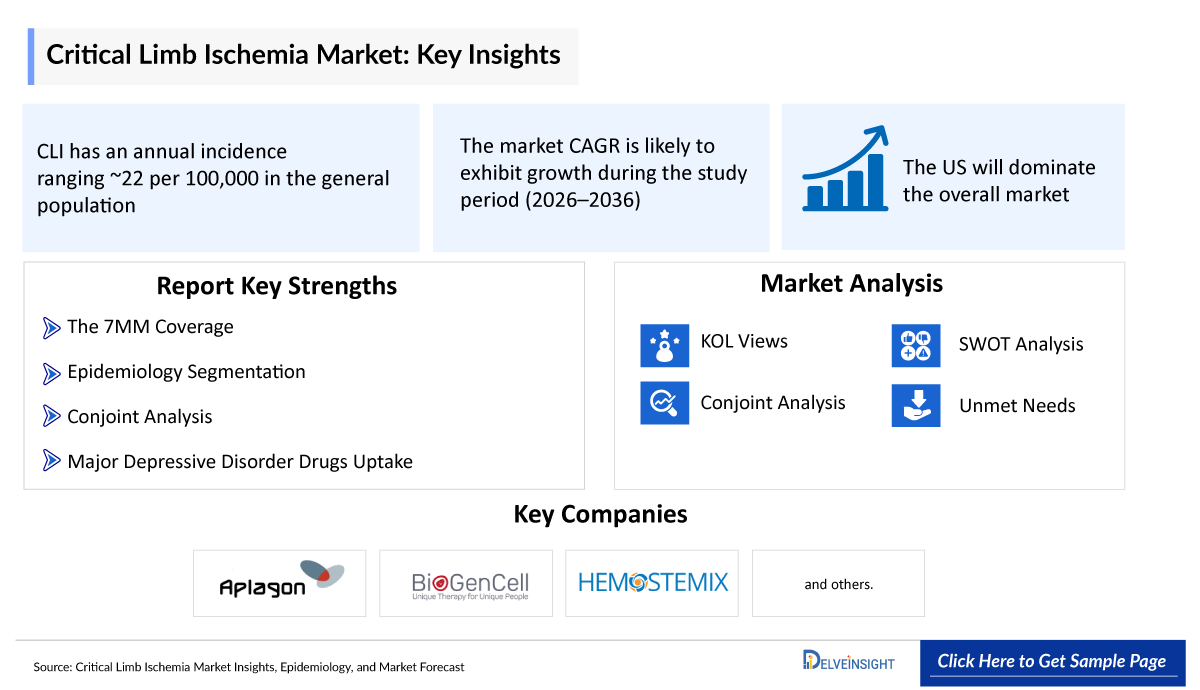
DelveInsight's ‘CLI Market Insights, Epidemiology and Market Forecast – 2036’ report delivers an in-depth understanding of the CLI, historical and forecasted epidemiology, as well as the CLI market trends in the United States, EU4 (Germany, Spain, Italy, and France), and the United Kingdom, and Japan.
The CLI market report delivers a comprehensive analysis of the current treatment landscape, including standards of care, clinical practices, and evolving therapeutic algorithms. It evaluates CLI patient burden trends, revenue & market share dynamics, peak patient share & therapy uptake analysis, and provides an in-depth market size assessment, and growth rate projections (Historical & Forecast 2022–2036) across global regions. The report highlights key unmet medical needs in CLI and maps the competitive and clinical landscape to uncover high‑value opportunities, providing a clear outlook on future market growth potential.
|
Study Period |
2022–2036 |
|
Historical Year |
2022–2025 |
|
Forecast Period |
2026–2036 |
|
Base Year |
2026 |
|
Geographies Covered |
|
|
CLI Market CAGR (Forecast period) |
XX% (2026–2036) |
|
CLI Epidemiology Segmentation Analysis |
Patient Burden Assessment
|
|
CLI Companies |
|
|
CLI Therapies |
|
|
CLI Market |
Segmented by
|
|
Analysis |
|
|
|
Key Factors Driving the CLI Market
-
High Disease Burden and Increasing Prevalence of Peripheral Artery Disease (PAD) Leading to CLI/CLTI
CLI, now more commonly referred to as Chronic Limb-Threatening Ischemia (CLTI), represents the most severe stage of PAD. Published literature indicates that a significant proportion of PAD patients progress to CLTI, driven by rising prevalence of diabetes, smoking, hypertension, and aging populations, which are key risk factors for peripheral vascular disease.
-
High Amputation Risk and Significant Unmet Clinical Need
CLTI is associated with extremely poor prognosis, including high rates of limb amputation and mortality within 1 year if untreated or inadequately managed. Despite advances in revascularization techniques, a substantial proportion of patients remain “no-option” cases, highlighting a major unmet need for novel pharmacological and regenerative therapies that can improve limb salvage and vascular perfusion.
-
Limited Long-Term Effectiveness of Current Standard of Care
Current management is dominated by endovascular or surgical revascularization, antiplatelet therapy, statins, and wound care, but these approaches primarily manage symptoms and restore blood flow mechanically rather than addressing underlying vascular degeneration. Published studies emphasize high rates of restenosis, treatment failure, and disease recurrence, reinforcing the need for more durable therapeutic options.CLI Understanding and Treatment Algorithm
CLI Overview
CLI, now referred to as chronic limb-threatening ischemia (CLTI), is the most severe form of peripheral arterial disease (PAD), caused by advanced arterial obstruction leading to critically reduced blood flow to the lower limbs. It is characterized by ischemic rest pain, non-healing ulcers, tissue loss, and gangrene, and is strongly associated with diabetes, smoking, hypertension, hyperlipidemia, aging, and sedentary lifestyle. Diagnosis is based on clinical evaluation and vascular assessment using ankle-brachial index (ABI), toe pressures (TBI), duplex ultrasound (DUS), and imaging modalities such as CTA/MRA to define arterial disease severity and guide treatment decisions.
Diagnosis of CLI/CLTI is based on clinical assessment of ischemic symptoms such as rest pain, non-healing ulcers, tissue loss, and gangrene, along with reduced or absent peripheral pulses. It is confirmed using vascular tests including ankle-brachial index (ABI), toe-brachial index (TBI), and pressure measurements, supported by duplex ultrasound (DUS). CT angiography (CTA) and MR angiography (MRA) are used to define arterial anatomy and guide treatment planning. Early diagnosis is essential for risk stratification, limb salvage decisions, and selection of revascularization strategies.
Further details are provided in the report.
CLI Treatment
Treatment of CLI/CLTI is primarily focused on pain relief, restoration of blood flow, wound healing, and limb salvage, with the overall goal of improving quality of life and survival. Revascularization is the mainstay of treatment and includes endovascular procedures such as angioplasty (plain/drug-eluting), stenting, and atherectomy, as well as surgical bypass in suitable patients.
In no-option or advanced cases, management is supportive and includes pain control, infection management, wound care, and cardiovascular risk factor optimization, with primary amputation considered when limb salvage is not feasible. Emerging approaches such as gene and cell therapies for therapeutic angiogenesis are being explored for patients unsuitable for revascularization, while prostanoids may be used in select refractory cases.
Further details related to country-based variations are provided in the report.
CLI Unmet Needs
The section “unmet needs of CLI” outlines the critical gaps between the current state of patient care, diagnosis, and the ideal & effective management of the disease. It highlights the obstacles experienced by patients, clinicians, and researchers and identifies potential solutions for future progress.
-
High risk of limb loss and poor clinical outcomes despite intervention
-
Limited durable treatment options for “no-option” patients
-
Lack of disease-modifying pharmacological therapies
-
High rates of restenosis, re-intervention, and disease recurrence, and others…..
Note: Comprehensive unmet needs insights in CLI and their strategic implications are provided in the full report.
CLI Epidemiology
Key Findings from CLI Epidemiological Analysis and Forecast
-
CLI is associated with a high rate of cardiovascular comorbidities, and patients frequently present with co-existing coronary artery disease, cerebrovascular disease, or chronic kidney disease, reinforcing that CLI is a manifestation of systemic atherosclerotic disease rather than an isolated limb disorder.
-
According to data from the US Medicare population, CLI prevalence increases with advancing age. The overall prevalence has been reported at approximately 0.23%, rising from 0.13% in individuals aged 65–69 years to 0.31% in those aged ≥85 years, reflecting a strong age-dependent increase in disease burden. In addition, other population-based studies suggest that nearly 20% of adults aged ≥70 years have a diagnosis consistent with CLI/CLT.
-
There is a markedly higher burden of CLI in patients with diabetes mellitus, with studies showing that diabetic patients account for a disproportionate share (often >50%) of CLI-related limb events and amputations, due to accelerated peripheral arterial disease and associated microvascular dysfunction.
-
Studies from the United Kingdom reported that CLI prevalence increases with age, with the highest burden in individuals aged ≥75 years. The condition is associated with high mortality, poor functional outcomes, and a frequent need for urgent vascular intervention to prevent limb loss or death.
-
Japanese PAD patients treated with endovascular therapy, around 28% had CLI at presentation, and approximately 5% progressed from intermittent claudication to CLI.
CLI Drug Analysis & Competitive Landscape
The CLI drug chapter provides a detailed, market-focused review of approved therapies and the emerging pipeline across Phase I–III clinical trials. It covers the mechanism of action, clinical trial data, regulatory approvals, patents, collaborations, and strategic partnerships for each therapy, along with their advantages, limitations, and recent developments. This section offers critical insights into the CLI treatment landscape, supporting market assessment, competitive analysis, and growth forecasting for the CLI therapeutics market.
CLI Pipeline Analysis
ACP-01: Hemostemix
ACP-01, developed by Hemostemix is an investigational autologous cell therapy derived from a patient's own blood. It contains angiogenic precursor cells that are being studied for their potential to support blood vessel repair and improve circulation in areas of the body affected by ischemic disease.
BGC101: Biogencell
BGC101 is an investigational cell-based therapy developed by BioGenCell for CLI/CLTI. It uses autologous bone marrow–derived mononuclear cells to promote therapeutic angiogenesis and improve limb perfusion. The therapy aims to enhance microvascular regeneration, wound healing, and limb salvage in patients with limited or no revascularization options. It represents a regenerative approach targeting underlying ischemia, addressing a major unmet need in advanced CLI.
Table 1: Competitive Landscape of Pipeline Drugs | ||||||
|
Drug Name |
Company |
Highest Phase |
Indication |
RoA |
MoA |
Anticipated Launch in the US |
|
ACP-01 |
Hemostemix |
II |
Critical Limb Ischemia |
IM |
Cell replacements |
Information is available in the full report |
|
BGC101 |
Biogencell |
II |
Critical Limb Ischemia |
IM |
Cell replacements |
Information is available in the full report |
|
Note: Launch insights are provisional and may change with future report updates or the occurrence of major key catalysts. | ||||||
Note: Detailed emerging therapies assessment will be provided in the final report.
CLI Key Players, Market Leaders, and Emerging Companies
-
BioGenCell
-
Hemostemix, and others
CLI Drug Updates
- In January 2026, Hemostemix announced the successful completion of its pre-Investigational New Drug (pre-IND) meeting with the US Food and Drug Administration (FDA).
- In December 2024, BioGenCell announced the US FDA has granted Fast Track Designation to its lead candidate, BGC101, for treating severe CLTI.
Drug Class Insights
CLI Market Outlook
The CLI market is primarily driven by a procedure based treatment paradigm, with endovascular revascularization (angioplasty, stenting, atherectomy) and surgical bypass remaining the standard of care. Despite advances in these interventions, a large proportion of patients remain “no-option” for revascularization, highlighting a significant unmet need.
Management is focused on restoring blood flow, preventing amputation, and promoting wound healing, supported by antiplatelet therapy, statins, infection control, and cardiovascular risk management. However, high restenosis rates, disease progression, and limb loss risk continue to limit long-term outcomes.
In response, the landscape is gradually shifting toward regenerative and biologic therapies, including cell therapy, gene therapy, and angiogenic approaches, aimed at promoting microvascular repair and therapeutic angiogenesis. Collategene (HGF plasmid) remains the only approved gene therapy in Japan, with ongoing efforts for broader development.
Overall, CLI remains a high-burden vascular disease with limited durable pharmacological options, driving growing interest in disease-modifying regenerative therapies, particularly for no-option patients.
Further details will be provided in the report….
Drug Class/Insights into Leading Emerging and Marketed Therapies in CLI (2022–2036 Forecast)
The CLI treatment landscape comprises revascularization therapies, supportive medical management, and emerging regenerative approaches, each addressing limb perfusion restoration, symptom control, and prevention of amputation.
-
Revascularization therapies: Include endovascular procedures and surgical bypass, which form the cornerstone of CLI management. Endovascular approaches include balloon angioplasty (plain and drug-coated), stenting (bare-metal and drug-eluting), and atherectomy, aimed at restoring arterial blood flow. Surgical bypass is used in more advanced or complex lesions where endovascular therapy is not feasible.
-
Supportive medical management: Includes antiplatelet therapy, statins, anticoagulation (selected cases), infection control, wound care, and cardiovascular risk factor optimization (e.g., diabetes, hypertension, smoking cessation). These therapies are essential for reducing disease progression but do not directly reverse arterial occlusion.
-
Advanced and limb-salvage strategies: In no-option CLTI patients, where revascularization is not possible, management focuses on analgesics, wound care, prostanoids (limited use), and primary amputation in severe cases. These patients represent a major unmet need due to lack of effective disease-modifying therapies.
CLI Drug Uptake
This section focuses on the uptake rate of potential drugs expected to be launched in the market during the forecast period (2026–2036). The analysis covers the CLI drug’s uptake, performance at peak, factors affecting performance during prime years of growth, patient uptake by therapy, and anticipated sales generated by each drug.
The treatment landscape for CLI/CLTI is primarily revascularization-based, with endovascular interventions (angioplasty, stenting, atherectomy) and surgical bypass forming the standard of care to restore limb perfusion and reduce the risk of limb loss. Supportive medical management, including antiplatelet therapy, statins, wound care, infection control, and cardiovascular risk factor optimization, is used as adjunctive therapy but does not address the underlying arterial occlusion.
Despite these options, a substantial proportion of patients progress to advanced or no-option CLTI, where revascularization is not feasible and care becomes largely conservative, often culminating in amputation, reflecting a significant unmet clinical need. Emerging approaches such as cell-based therapies, gene therapies, and pro-angiogenic strategies are under investigation to promote vascular regeneration and improve limb perfusion, but remain largely experimental. Overall, CLI remains a procedure-driven disease area with limited disease-modifying therapies, and regenerative strategies are still in early clinical development.
Detailed insights of emerging therapies' drug uptake is included in the report.
Market Access and Reimbursement of CLI
The report further provides detailed insights on the country-wise accessibility and reimbursement scenarios, cost-effectiveness scenario of approved therapies, programs making accessibility easier and out-of-pocket costs more affordable, insights on patients insured under federal or state government prescription drug programs, etc.
Reimbursement is a crucial factor that affects the drug’s access to the market. Often, the decision to reimburse comes down to the price of the drug relative to the benefit it produces in treated patients. To reduce the healthcare burden of these high-cost therapies, many payment models are being considered by payers and other industry insiders.
NOTE: Further Details are provided in the final report….
CLI Therapies Price Scenario & Trends
Pricing and analogue assessment of CLI therapies highlights evolving price dynamics structures. This section summarizes the cost of approved treatments, the closest and most appropriate analogue selection for emerging therapies, and understanding of how pricing influences market access, adherence, and long-term uptake.
Further details are provided in the final report….
Industry Experts and Physician Views for CLI
To keep up with CLI market trends, we take Key Opinion Leaders (KOLs) and Subject Matter Experts (SMEs) opinions working in the domain through primary research to fill the data gaps and validate our secondary research. Industry experts were contacted for insights on the emerging CLI therapies, evolving treatment landscape, patient adherence to conventional therapies, therapy switching trends, drug adoption and uptake, accessibility challenges, and epidemiology and real-world prescription patterns in CLI, including MD, PhD, Instructor, Postdoctoral Researcher, Professor, Researcher, and others.
DelveInsight’s analysts connected with 10+ KOLs to gather insights at the country level. Centers such as the The American Association of Neurological Surgeons, US, and the University of Leicester, UK, etc., were contacted. Their opinion helps understand and validate current and emerging CLI therapies, highlight unmet medical needs, provide epidemiological context, and support strategic decisions for market access, therapy adoption, and pipeline prioritization in CLI.
|
Region |
Key Opinion Leaders (KOLs) and Subject Matter Experts (SMEs) |
|
United States |
“CLI typically manifests as a burning pain in the lower leg or foot that occurs while resting, especially when lying down, and is relieved by standing or sitting. This pain is more severe than intermittent claudication, which is associated with activity.” |
|
United Kingdom |
“Critical limb ischemia (CLI) is a growing global health concern, affecting millions of people, particularly older adults and those with underlying conditions such as diabetes and peripheral artery disease.” |
Qualitative Analysis: SWOT and Conjoint Analysis
We perform qualitative and market Intelligence analysis using various approaches, such as SWOT analysis and conjoint analysis.
In the SWOT analysis of CLI, strengths, weaknesses, opportunities, and threats in terms of disease diagnosis, patient awareness, patient burden, competitive landscape, cost-effectiveness, and geographical accessibility of therapies are provided.
Conjoint analysis analyzes emerging therapies based on relevant attributes such as safety, efficacy, frequency of administration, route of administration, and order of entry. Scoring is given based on these parameters to analyze the effectiveness of therapy.
The team of analysts analyzes promising emerging therapies based on relevant attributes such as safety, efficacy, frequency of administration, route of administration, and order of entry. In efficacy, the trial’s primary and secondary outcome measures are evaluated, whereas the therapies’ safety is evaluated, wherein the acceptability, tolerability, and adverse events are majorly observed. In addition, the scoring is also based on the route of administration, order of entry, probability of success, and the addressable patient pool for each therapy. According to these parameters, the final weightage score and the ranking of the emerging therapies are decided.
Scope of the Report
-
The report covers a segment of key events, an executive summary, a descriptive overview of CLI, explaining their causes, signs and symptoms, pathogenesis, and currently available treatments.
-
Comprehensive insight has been provided into the epidemiology segments and forecasts, the future growth potential of the diagnosis rate, and disease progression along treatment guidelines.
-
Additionally, an all-inclusive account of both the current and emerging treatments, along with the elaborate profiles of late-stage and prominent therapies, will have an impact on the current treatment landscape.
-
A detailed review of the CLI market, historical and forecasted market size, market share by therapies, detailed assumptions, and rationale behind our approach is included in the report, covering the 7MM drug outreach.
-
The report provides an edge while developing business strategies by understanding trends through SWOT analysis and expert insights/KOL views, patient journey, and treatment preferences that help in shaping and driving the 7MM CLI market.
Report Insights
-
CLI Patient Population Forecast
-
CLI Therapeutics Market Size
-
CLI Pipeline Analysis
-
CLI Market Size and Trends
-
CLI Market Opportunity (Current and forecasted)
Report Key Strengths
-
Epidemiology‑based (Epi‑based) Bottom‑up Forecasting
-
Artificial Intelligence (AI)-Enabled Market Research Report
-
11-Year Forecast
-
CLI Market Outlook (North America, Europe, Asia-Pacific)
-
Patient Burden Trends (By Geography)
-
CLI Treatment Addressable Market (TAM)
-
CLI Competitive Landscape
-
CLI Major Companies Insights
-
CLI Price Trends and Analogue Assessment
-
CLI Therapies Drug Adoption/Uptake
-
CLI Therapies Peak Patient Share Analysis
Report Assessment
-
CLI Current Treatment Practices
-
CLI Unmet Needs
-
CLI Clinical Development Analysis
-
CLI Emerging Drugs Product Profiles
-
CLI Market Attractiveness
-
CLI Qualitative Analysis (SWOT and conjoint analysis)
FAQs
Market Insights
-
What was the CLI market size, the market size by therapies, the market share (%) distribution in 2025, and what would it look like by 2036? What are the contributing factors for this growth?
-
What are the anticipated pricing variations among different geographies for the emerging therapies in the future?
-
What can be the future treatment paradigm of CLI?
-
What are the disease risks, burdens, and unmet needs of CLI? What will be the growth opportunities across the 7MM concerning the patient population with CLI?
-
Who is the major future competitor in the market, and how will the competitors affect their market share?
-
What are the current options for the treatment of CLI? What are the current guidelines for treating CLI in the US, Europe, and Japan?
Reasons to Buy
-
The report will help in developing business strategies by understanding the latest trends and changing treatment dynamics driving the CLI market.
-
Bottom-up forecasting builds from the affected population to product forecasts, delivering a robust, data-driven approach ideal for new therapies and novel classes.
-
Insights on patient burden/disease incidence, evolution in diagnosis, and factors contributing to the change in the epidemiology of the disease during the forecast years.
-
Understand the existing market opportunities in varying geographies and the growth potential over the coming years.
-
Identifying strong upcoming players in the market will help devise strategies to help get ahead of competitors.
-
Detailed analysis and ranking of class-wise potential current and emerging therapies under the conjoint analysis section to provide visibility around leading classes.
-
To understand KOLs’ perspectives on the accessibility, acceptability, and compliance-related challenges of existing treatment to overcome barriers in the future.
-
Detailed insights into the unmet needs of the existing market so that the upcoming players can strengthen their development and launch strategy.
-
This Artificial Intelligence (AI)-enabled report summarizes and simplifies complex datasets within the report into clear, actionable insights for stakeholders, investors, and healthcare providers, enabling faster, data-driven decisions.