Diabetic Foot Ulcers Market Summary
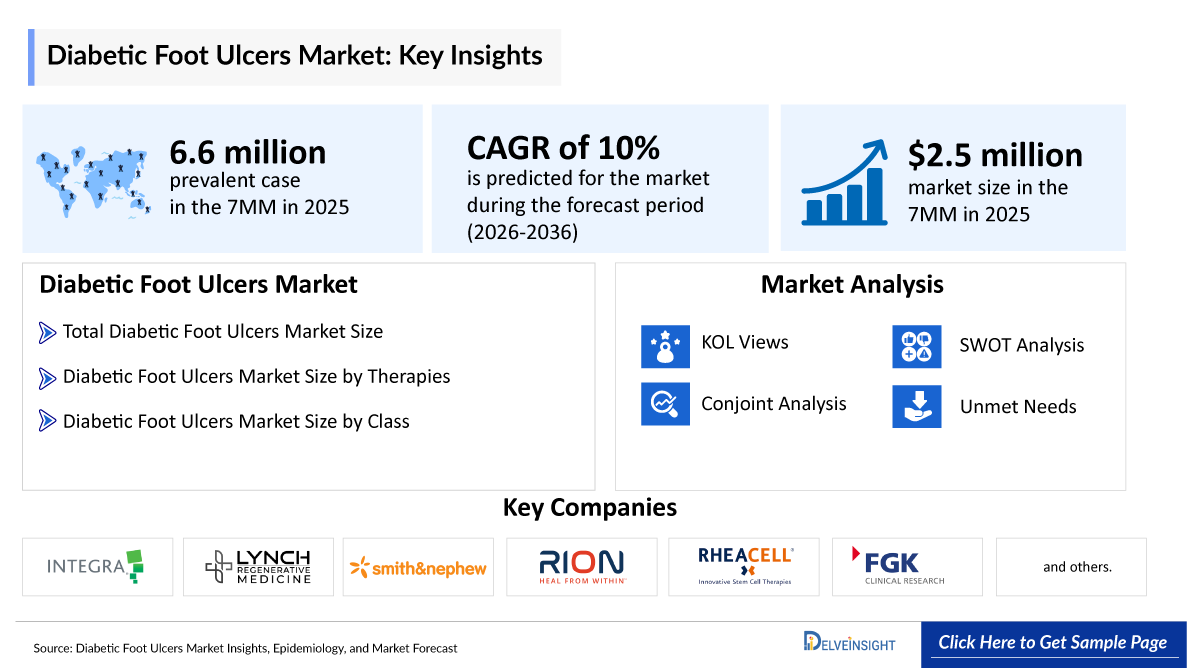
- The Diabetic Foot Ulcer market size was valued at approximately USD 2.5 billion in 2025 and is anticipated to witness significant growth during the forecast period, expanding at a CAGR of 10% from 2026 to 2036.
- The leading Diabetic Foot Ulcer companies developing therapies in the treatment market include - Integra Life Sciences, Lynch Regenerative Medicine, Smith & Nephew , Rion, RHEACELL GmbH , FGK Clinical Research GmbH, Ticeba GmbH, Eluciderm, and others.
Diabetic Foot Ulcer Market & Epidemiology Insights
- A significant proportion of Diabetic Foot Ulcer burden is associated with comorbid conditions such as diabetes mellitus (long-standing and poorly controlled glycemic levels), peripheral arterial disease (PAD), peripheral neuropathy, chronic kidney disease, obesity, and infection risk, with peripheral neuropathy and ischemia being the primary drivers of ulcer formation, highlighting the need for multidisciplinary care, early risk stratification, regular foot screening, and optimized glycemic and vascular management to prevent complications such as infection and amputation.
- Despite advances in Diabetic Foot Ulcer management and secondary prevention strategies, recurrence rates remain unacceptably high, with many ulcers recurring within months after apparent healing despite successful wound closure.
- Currently, treatment strategies for Diabetic Foot Ulcer mainly include non-surgical treatment for mild and moderate ulcers and surgical treatment for ulcers classified as severe. The current approach to managing Diabetic Foot Ulcers involves several key components, including pressure off-loading, wound care, restoration of tissue perfusion, infection management, glycemic control, management of comorbidities, and patient and family education.
- Non-surgical treatments for Diabetic Foot Ulcer’s involve daily wound care, growth factors, skin substitutes, antibiotics, drainage, and cellulitis management. Surgical options include debridement and vascular surgeries for improved blood flow. Platelet-derived growth factor (PDGF) is a key factor, FDA-approved for diabetic neuropathic foot ulcers. In the US, practices include surgical debridement, dressings, wound off-loading, vascular assessment, and infection control. In Europe, antibiotic therapy, wound off-loading, and surgical management are standard.
- OMNIGRAFT Dermal Regeneration Matrix and Becaplermin (REGRANEX), have been approved by the FDA for the treatment of Diabetic Foot Ulcer’s.
- Diabetic Foot Ulcer recurrence is associated with substantial morbidity in individuals with diabetes and contributes significantly to healthcare burden and costs. Current clinical guidelines define a Diabetic Foot Ulcer as healed when complete re-epithelialization has been achieved and wound closure is sustained for approximately two weeks.
- The emerging Diabetic Foot Ulcer pipeline remains moderately active, several investigational and novel therapeutic candidates are being evaluated to address the unmet need in chronic non-healing wounds. Key emerging therapies include PEP-TISSEEL, a biologic fibrin sealant-based wound healing candidate designed to enhance tissue adhesion and promote healing in complex ulcers; Allo-APZ2-Diabetic Foot Ulcer, an allogeneic biologic skin substitute therapy under development for improving wound closure and regenerative repair in Diabetic Foot Ulcer; and ELU42, a novel small molecule Wnt pathway modulator with bacteriostatic and regenerative properties, aimed at accelerating wound healing and reducing infection burden in Diabetic Foot Ulcer patients.
Diabetic Foot Ulcer Market Size and Forecast in the 7MM
- 2025 Diabetic Foot Ulcer Market Size: ~USD 2,500 million
- Diabetic Foot Ulcer Growth Rate (2026–2036): ~10% CAGR
Request for unlocking the sample page of the "Diabetic Foot Ulcer Market Forecast"
Key Factors Driving the Diabetic Foot Ulcer Market
- Rising Diabetic Foot Ulcer Prevalence: The increasing prevalence of Diabetic Foot Ulcer, particularly among males, is a primary driver of Diabetic Foot Ulcer market expansion. In the US, in 2025, there were ~ 5,060,000 prevalent cases of Diabetic Foot Ulcer.
- Rising Opportunities in Advanced Diabetic Foot Ulcer Therapies: Innovative therapies such as biologics, skin substitutes, and regenerative agents are creating opportunities by improving wound healing and reducing complications compared to standard care.
- Emerging Diabetic Foot Ulcer Competitive Landscape: The Diabetic Foot Ulcer pipeline is evolving with agents like PEP-TISSEEL, Allo-APZ2-Diabetic Foot Ulcer, and ELU42, focusing on wound healing and regeneration, though unmet needs in efficacy and infection control remain.
DelveInsight's "Diabetic Foot Ulcer Market Insights, Epidemiology and Market Forecast – 2036" report delivers an in-depth understanding of the Diabetic Foot Ulcer, historical and forecasted epidemiology, as well as the Diabetic Foot Ulcer market trends in the United States, EU4 (Germany, Spain, Italy, and France) and the United Kingdom, and Japan.
The Diabetic Foot Ulcer market report delivers a comprehensive analysis of the current treatment landscape, including standards of care, clinical practices, and evolving therapeutic algorithms. It evaluates, Diabetic Foot Ulcer patient burden trends, revenue & market share dynamics, peak patient share & therapy uptake analysis, and provides an in-depth market size assessment, and growth rate projections (Historical & Forecast 2022–2036) across global regions. The report highlights key unmet medical needs in Diabetic Foot Ulcer and maps the competitive and clinical landscape to uncover high value opportunities, providing a clear outlook on future market growth potential.
Diabetic Foot Ulcer Disease Understanding
Diabetic Foot Ulcer Overview
Diabetic Foot Ulcer is a serious and common complication of diabetes, arising from a combination of peripheral neuropathy, peripheral arterial disease, and impaired wound healing. It occurs when minor trauma or pressure on the foot goes unnoticed due to loss of sensation, leading to skin breakdown and chronic ulcer formation. Diabetic Foot Ulcers can range from superficial wounds to deep ulcers involving muscle and bone, often accompanied by infection in advanced stages. Common symptoms include non-healing wounds, redness, swelling, discharge, and, in severe cases, tissue necrosis. Diabetic Foot Ulcer is primarily caused by prolonged hyperglycemia, poor circulation, and repetitive mechanical stress.
Diabetic Foot Ulcer Diagnosis
Diabetic Foot Ulcer is diagnosed through clinical examination and supportive tests, often detected during routine foot checks in diabetic patients. Physical assessment focuses on ulcer size, depth, infection signs, and evaluation of neuropathy and blood circulation. Blood tests such as glucose levels and HbA1c assess glycemic control, while imaging (X-ray Devices or MRI Devices) may be used to detect deep infection or osteomyelitis. Vascular tests like ankle-brachial index (ABI) help identify poor blood flow, and wound cultures may be performed to guide treatment in infected ulcers.
Further details are provided in the report...
Diabetic Foot Ulcer Treatment
The primary goals of Diabetic Foot Ulcer treatment are to promote wound healing, prevent infection and lower-extremity amputation, and address contributing factors such as hyperglycemia, peripheral ischemia, and pressure-related tissue injury. Standard management includes regular wound debridement, pressure offloading using total contact casts or therapeutic footwear, and appropriate infection control with systemic antibiotics selected according to infection severity and microbiological findings. Commonly used agents include amoxicillin–clavulanate and clindamycin, while broad-spectrum therapies such as piperacillin–tazobactam may be required in severe infections. Advanced or adjunctive therapies include negative pressure wound therapy (NPWT), growth factor–based treatments such as becaplermin, and bioengineered skin substitutes including Apligraf and Dermagraft. In patients with peripheral arterial disease, revascularization procedures such as angioplasty or bypass surgery may be necessary to restore tissue perfusion. In addition, optimal glycemic control through individualized antidiabetic therapy is essential for improving healing outcomes and reducing ulcer recurrence.
Further details related to country-based variations are provided in the report...
Diabetic Foot Ulcer Unmet Needs
The section “unmet needs of Diabetic Foot Ulcer” outlines the critical gaps between the current state of patient care, diagnosis, and the ideal & effective management of the disease. It highlights the obstacles experienced by patients, clinicians, and researchers and identifies potential solutions for future progress.
1. Delayed and inaccurate diagnosis
2. Significant impact on quality of life (QoL)
3. Complications in high-risk populations
4. Limitations of existing treatment options, and others...
Comprehensive unmet needs insights in Diabetic Foot Ulcer and their strategic implications are provided in the full report...
Diabetic Foot Ulcer Epidemiology
The Diabetic Foot Ulcer epidemiology section provides insights about the historical and current Diabetic Foot Ulcer patient pool and forecasted trends for individual seven major countries. It helps to recognize the causes of current and forecasted trends by exploring numerous studies and views of key opinion leaders. This part of the Diabetic Foot Ulcer market report also provides the diagnosed patient pool and their trends along with assumptions undertaken.
Key Findings from Diabetic Foot Ulcer Epidemiological Analysis and Forecast
- According to DelveInsight’s estimates, the total prevalent cases of Diabetic Foot Ulcer in the 7MM were approximately 6,600, 000 in 2025.
- Among the EU4, Italy accounted for the highest number of prevalent cases of Diabetic Foot Ulcer, followed by Germany, whereas Spain accounted for the lowest number of cases in 2025.
- The observed male predominance and earlier onset of Diabetic Foot Ulcer highlight the importance of early risk stratification, routine foot screening, and targeted preventive care strategies in high-risk populations to reduce complications and improve outcomes.
- The prevalence of Diabetic Foot Ulcer was 77% in the US population. Females had a lower prevalence of Diabetic Foot Ulcer than males.
Diabetic Foot Ulcer Epidemiology Segmentation
Recent Developments in the Diabetic Foot Ulcer Treatment Landscape:
- In August 2026, FibroBiologics, Inc. released its third cGMP-compliant batch of CYWC628, an allogeneic fibroblast-based topical drug candidate evaluating wound healing in Phase 1/2 diabetic foot ulcer trials. Completing this third batch provides sufficient drug supply to conclude the trial while generating surplus inventory for future R&D initiatives. The efficient production run minimizes cash outlays, and FibroBiologics expects to release interim clinical trial findings in the third quarter of 2026.
- In September 2025, RION partnered with Lonza to enable cGMP manufacturing and scale-up of its PEP exosome therapy, leveraging Lonza’s expertise and Houston facility to support late-stage clinical supply and future commercial production.
- In June 2025, Eluciderm received US FDA IND clearance for ELU42, a topical Wnt modulator with bacteriostatic properties, and announced the initiation of a Phase I/IIa trial in August 2025 across three US sites (n = 15) to evaluate safety and efficacy in diabetic foot ulcers, with data expected to support Phase II development in 2026 and potential Breakthrough Therapy designation by 2027.
- In March 2025, Lynch Regenerative Medicine, acquired exclusive rights to REGRANEX gel and recombinant PDGF from Smith & Nephew, to expand its use beyond diabetic foot ulcers into broader soft tissue regeneration and aesthetic wound healing.
- In January 2025, RION announced completion of patient enrollment in its Phase II trial of PEP (Purified Exosome Product) for Diabetic Foot Ulcer, building on encouraging Phase 1B safety and efficacy data; the company plans to advance to a Phase III study and pursue a BLA filing with the FDA if results are successful.
Diabetic Foot Ulcer Drug Analysis & Competitive Analysis
The Diabetic Foot Ulcer drug chapter provides a detailed, market-focused review of approved therapies and the emerging pipeline across Phase I–III Diabetic Foot Ulcer clinical trials. It covers the mechanism of action, clinical trial data, regulatory approvals, patents, collaborations, and strategic partnerships for each therapy, along with their advantages, limitations, and recent developments. This section offers critical insights into the Diabetic Foot Ulcer treatment landscape, supporting market assessment, competitive analysis, and growth forecasting for the Diabetic Foot Ulcer therapeutics market.
Approved Therapies for Diabetic Foot Ulcer
OMNIGRAFT Dermal Regeneration Matrix: Integra Life Sciences
OMNIGRAFT Dermal Regeneration Matrix, developed by Integra Life Sciences, is a bilayer bioengineered skin substitute approved by the US FDA for the treatment of chronic Diabetic Foot Ulcers lasting longer than six weeks. It promotes wound healing by providing a collagen-based scaffold that supports tissue regeneration, cellular infiltration, and new blood vessel formation. OMNIGRAFT is used alongside standard wound care measures such as debridement, infection control, and offloading, and plays an important role in managing difficult-to-heal Diabetic Foot Ulcers.
Becaplermin (REGRANEX) Gel: Lynch Regenerative Medicine (Smith & Nephew)
Becaplermin (REGRANEX) Gel, marketed by Lynch Regenerative Medicine (Smith & Nephew), is a topical recombinant human Platelet-Derived Growth Factor (PDGF) approved by the US FDA in 1997 for the treatment of lower extremity diabetic neuropathic ulcers that extend into the subcutaneous tissue. It promotes wound healing by stimulating chemotaxis and proliferation of cells involved in tissue repair, thereby enhancing granulation tissue formation. REGRANEX is typically used as an adjunct to comprehensive wound care, including debridement, infection control, and offloading. Despite its targeted mechanism, its use has been moderated due to safety considerations and the need for careful patient selection, reflecting a specialized but important role in the management of Diabetic Foot Ulcer.
In July 2012, the European Commission withdrew the marketing authorization for REGRANEX following the manufacturer’s voluntary withdrawal request for commercial reasons.
Note: Detailed marketed therapies assessment will be provided in the final report...
Diabetic Foot Ulcer Pipeline Analysis
PEP-TISSEEL: Rion
PEP-TISSEEL, developed by Rion is a topical fibrin-based biological sealant designed to support wound healing in conditions such as diabetic foot ulcers and other chronic wounds. It mimics the final stages of the coagulation cascade by combining fibrinogen and thrombin to form a stable fibrin clot at the application site. This clot acts as a temporary extracellular matrix, promoting cell migration, angiogenesis, and tissue regeneration. By providing both hemostatic and wound-healing properties, PEP-TISSEEL facilitates faster closure of difficult-to-heal wounds and serves as an adjunct to standard wound care, reflecting its role as a regenerative, biologically active therapy.
Allo-APZ2-Diabetic Foot Ulcer: RHEACELL GmbH /FGK Clinical Research GmbH/Ticeba GmbH
Allo-APZ2-Diabetic Foot Ulcer, is an advanced cell-based therapy composed of allogeneic ABCB5-positive mesenchymal stromal cells (MSCs) derived from human skin. It is being investigated for the treatment of Diabetic Foot Ulcer, particularly chronic, non-healing wounds.
This therapy leverages the immunomodulatory, anti-inflammatory, and pro-angiogenic properties of ABCB5+ MSCs to promote tissue regeneration and wound healing. By enhancing neovascularization, reducing inflammation, and supporting cellular repair processes, Allo-APZ2-Diabetic Foot Ulcer aims to address key underlying pathophysiological drivers of impaired healing in Diabetic Foot Ulcer. It is currently in clinical development, reflecting growing interest in regenerative and cell-based approaches for difficult-to-treat chronic wounds.
Note: A detailed emerging therapies assessment will be provided in the final report...
Diabetic Foot Ulcer Key Players, Market Leaders and Emerging Companies
- Integra Life Sciences
- Lynch Regenerative Medicine
- Smith & Nephew
- Rion
- RHEACELL GmbH
- FGK Clinical Research GmbH
- Ticeba GmbH
- Eluciderm, and others
Diabetic Foot Ulcer Market Outlook
The Diabetic Foot Ulcer market is undergoing a meaningful shift, moving beyond conventional wound care approaches such as debridement, offloading, and standard dressings toward advanced, mechanism-driven therapies that actively promote tissue regeneration and healing. Increasing adoption of biologics, growth factors, skin substitutes, and emerging modalities such as exosome-based therapies and cell-based treatments reflects a transition toward more targeted and effective interventions. These innovations aim to accelerate wound closure, reduce infection risk, and lower amputation rates, while improving patient outcomes and healthcare efficiency, thereby strengthening clinical confidence in next-generation regenerative therapies.
With the continued development of novel agents, including stem cell therapies, platelet-derived products, and small molecules targeting pathways such as Wnt signaling, the Diabetic Foot Ulcer treatment landscape is evolving in line with other chronic, high-burden conditions where innovation is expanding therapeutic possibilities. The United States remains the largest Diabetic Foot Ulcer market, driven by high disease prevalence, advanced healthcare infrastructure, strong reimbursement frameworks, and rapid uptake of innovative wound care technologies compared with Europe and other regions. The introduction of differentiated regenerative therapies, expansion of advanced wound care products, improvements in early diagnosis and multidisciplinary management, and rising awareness among diabetic populations are expected to drive steady growth in the 7MM Diabetic Foot Ulcer market from 2022–2036, creating substantial commercial opportunities for both established therapies and emerging pipeline candidates.
- According to the estimates, the largest market size of Diabetic Foot Ulcer was captured by the United States, i.e., ~USD 2,300 million in 2025.
- The Diabetic Foot Ulcer market is evolving as treatment focus shifts from conventional wound care approaches (e.g., debridement, offloading, infection control, and standard dressings) toward advanced and regenerative therapies, with growth factors (e.g., REGRANEX), bioengineered skin substitutes, cell-based therapies, and emerging exosome and gene-modulating agents driving adoption due to improved healing outcomes, faster wound closure, and reduced amputation risk.
- The management of Diabetic Foot Ulcers remains particularly challenging owing to impaired wound healing, poor treatment adherence, and inconsistent implementation of evidence-based guidelines. The latest International Working Group on the Diabetic Foot (IWGDF) guidelines therefore recommend that selected adjunctive therapies be considered in patients whose ulcers fail to heal despite optimal standard care.
- Regional market dynamics show the United States leading in revenue due to higher adoption of advanced wound care products and strong reimbursement frameworks, while Europe and Japan demonstrate steady growth, supported by rising diabetes prevalence, increasing awareness of chronic wound management, and gradual uptake of innovative therapies.
Further details will be provided in the report...
Drug Class/Insights into Leading Emerging and Marketed Therapies in Diabetic Foot Ulcer (2022–2036 Forecast)
The Diabetic Foot Ulcer treatment market comprises standard wound care therapies, advanced wound care products, biologics and growth factors, and emerging regenerative medicines, each targeting different aspects of wound healing such as infection control, tissue regeneration, and wound closure.
Standard wound care therapies: Conventional approaches including debridement, offloading, and infection control with antibiotics such as amoxicillin and clindamycin remain the foundation of Diabetic Foot Ulcer management, though outcomes are often limited in chronic or non-healing wounds.
Advanced wound care products: Technologies such as negative pressure wound therapy (NPWT) and skin substitutes like Apligraf and Dermagraft enhance the wound healing environment by promoting granulation tissue formation and accelerating closure.
Biologics and growth factors: Agents such as Regranex (platelet-derived growth factor) stimulate cellular proliferation and angiogenesis, addressing impaired healing mechanisms in diabetic patients.
Regenerative and cell-based therapies: Emerging treatments including PEP, Allo-APZ2-Diabetic Foot Ulcer, and ELU42 aim to restore healing through immunomodulation, antimicrobial effects, and regenerative signaling.
Advanced wound care and regenerative therapies together define the core innovation landscape in Diabetic Foot Ulcer, with established biologics like Regranex and skin substitutes already in use, while exosome-based, cell-based, and small-molecule regenerative therapies are driving next-generation market growth.
Further details will be provided in the report...
Diabetic Foot Ulcer Drug Uptake
This section focuses on the uptake rate of potential Diabetic Foot Ulcer drugs expected to be launched in the market during the forecast period (2026–2036). The analysis covers the Diabetic Foot Ulcer market's uptake by drugs, patient uptake by therapy, and sales of each drug.
The uptake of therapies in Diabetic Foot Ulcer is expected to vary across standard wound care approaches, advanced biologics, and emerging regenerative therapies. Conventional treatments such as debridement, infection control, offloading devices, and topical dressings continue to demonstrate moderate to high uptake as the foundation of care, while advanced therapies including growth factors (e.g., PDGF-based agents), skin substitutes, and negative pressure wound therapy are witnessing increasing adoption due to their ability to accelerate wound closure and reduce complications.
Emerging therapies such as cell-based treatments, exosome-based products, and novel small molecules are anticipated to show progressive uptake, supported by their potential to enhance tissue regeneration, modulate inflammation, and address underlying pathophysiology. Their adoption is likely to be driven by the limitations of conventional care, including prolonged healing time, high recurrence rates, and risk of infection and amputation. In comparison, next-generation regenerative approaches are expected to witness gradual but steady uptake as clinical evidence strengthens, manufacturing scalability improves, and these therapies are increasingly incorporated into clinical practice guidelines for complex and non-healing Diabetic Foot Ulcer cases.
Further detailed analysis of emerging therapies' drug uptake in the report...
Market Access and Reimbursement of Diabetic Foot Ulcer
Reimbursement is a crucial factor that affects the drug’s access to the market. Often, the decision to reimburse comes down to the price of the drug relative to the benefit it produces in treated patients. To reduce the healthcare burden of these high-cost therapies, many payment models are being considered by payers and other industry insiders.
Further details are provided in the final report...
Diabetic Foot Ulcer Therapies Price Scenario & Trends
Pricing and analogue assessment of Diabetic Foot Ulcer therapies highlights evolving price dynamics structures. This section summarizes the cost of approved treatments, closest and most appropriate analogue selection for emerging therapies, and understanding of how pricing influences market access, adherence, and long-term uptake.
Further details are provided in the final report...
Industry Experts and Physician Views for Diabetic Foot Ulcer
To keep up with Diabetic Foot Ulcer market trends, we take Key Opinion Leaders (KOLs) and Subject Matter Experts (SMEs) opinions working in the domain through primary research to fill the data gaps and validate our secondary research. Industry experts were contacted for insights on the Diabetic Foot Ulcer emerging therapies, evolving treatment landscape, patient adherence to conventional therapies, therapy switching trends, drug adoption and uptake, accessibility challenges, and epidemiology and real-world prescription patterns in Diabetic Foot Ulcer, including MD, PhD, Instructor, Postdoctoral Researcher, Professor, Researcher, and others.
DelveInsight’s analysts connected with 10+ KOLs to gather insights; however, interviews were conducted with 6+ KOLs in the 7MM. Centers such as the Harvard Medical School, University of Nottingham, and Japanese Red Cross Central Blood Institute, etc. were contacted. Their opinion helps understand and val te current and emerging Diabetic Foot Ulcer therapies, highlight unmet medical needs, provide epidemiological context, and support strategic decisions for market access, therapy adoption, and pipeline prioritization in Diabetic Foot Ulcer.
Diabetic Foot Ulcer Report Qualitative Analysis: SWOT and Conjoint Analysis
We perform qualitative and market Intelligence analysis using various approaches, such as SWOT analysis and conjoint analysis.
In the SWOT analysis of Diabetic Foot Ulcer, strengths, weaknesses, opportunities, and threats in terms of disease diagnosis, patient awareness, patient burden, competitive landscape, cost-effectiveness, and geographical accessibility of therapies are provided.
Conjoint analysis analyzes emerging therapies based on relevant attributes such as safety, efficacy, frequency of administration, route of administration, and order of entry. Scoring is given based on these parameters to analyze the effectiveness of therapy.
The team of analysts analyzes promising emerging therapies based on relevant attributes such as safety, efficacy, frequency of administration, route of administration, and order of entry. In efficacy, the trial’s primary and secondary outcome measures are evaluated, whereas the therapies’ safety is evaluated, wherein the acceptability, tolerability, and adverse events are majorly observed. In addition, the scoring is also based on the route of administration, order of entry, probability of success, and the addressable patient pool for each therapy. According to these parameters, the final weightage score and the ranking of the emerging therapies are decided.
Scope of the Diabetic Foot Ulcer Market Report
- The report covers a segment of key events, an executive summary, a descriptive overview of Diabetic Foot Ulcer, explaining its causes, signs and symptoms, pathogenesis, and currently available treatments.
- Comprehensive insight has been provided into the epidemiology segments and forecasts, the future growth potential of the diagnosis rate, and disease progression along treatment guidelines.
- Additionally, an all-inclusive account of both the current and emerging treatments, along with the elaborative profiles of late-stage and prominent therapies, will have an impact on the current treatment landscape.
- A detailed review of the Diabetic Foot Ulcer market, historical and forecasted market size, market share by therapies, detailed assumptions, and rationale behind our approach is included in the report, covering the 7MM drug outreach.
- The report provides an edge while developing business strategies by understanding trends through SWOT analysis and expert insights/KOL views, patient journey, and treatment preferences that help in shaping and driving the 7MM Diabetic Foot Ulcer market.
Diabetic Foot Ulcer Market Report Insights
- Diabetic Foot Ulcer Patient Population Forecast
- Diabetic Foot Ulcer Therapeutics Market Size
- Diabetic Foot Ulcer Pipeline Analysis
- Diabetic Foot Ulcer Market Size and Trends
- Diabetic Foot Ulcer Market Opportunity (Current and Forecasted)
Diabetic Foot Ulcer Market Report Key Strengths
- Diabetic Foot Ulcer Epidemiology based (Epi based) Bottom up Forecasting
- Artificial Intelligence (AI)-enabled Market Research Report
- 11-year Forecast
- Diabetic Foot Ulcer Market Outlook (North America, Europe, Asia-Pacific)
- Diabetic Foot Ulcer Patient Burden Trends (by Geography)
- Diabetic Foot Ulcer Treatment Addressable Market (TAM)
- Diabetic Foot Ulcer Competitive Landscape
- Diabetic Foot Ulcer Major Companies Insights
- Diabetic Foot Ulcer Price Trends and Analogue Assessment
- Diabetic Foot Ulcer Therapies Drug Adoption/Uptake
- Diabetic Foot Ulcer Therapies Peak Patient Share Analysis
Diabetic Foot Ulcer Market Report Assessment
- Diabetic Foot Ulcer Current Treatment Practices
- Diabetic Foot Ulcer Unmet Needs
- Diabetic Foot Ulcer Clinical Development Analysis
- Diabetic Foot Ulcer Emerging Drugs Product Profiles
- Diabetic Foot Ulcer Market Attractiveness
- Diabetic Foot Ulcer Qualitative Analysis (SWOT and Conjoint Analysis)
- Diabetic Foot Ulcer Market Drivers
- Diabetic Foot Ulcer Market Barriers
FAQs Related to the Diabetic Foot Ulcer Market Report:
Diabetic Foot Ulcer Market Insights
- What was the Diabetic Foot Ulcer market size, the market size by therapies, market share (%) distribution in 2025, and what would it look like by 2036? What are the contributing factors for this growth?
- What are the anticipated pricing variations among different geographies for the emerging therapies in the future?
- What can be the future treatment paradigm of Diabetic Foot Ulcer?
- What are the disease risks, burdens, and unmet needs of Diabetic Foot Ulcer? What will be the growth opportunities across the 7MM concerning the Diabetic Foot Ulcer patient population?
- Who is the major future competitor in the market, and how will the competitors affect their market share?
- What are the current options for the treatment of Diabetic Foot Ulcer? What are the current guidelines for treating Diabetic Foot Ulcer in the US, Europe, and Japan?
Reasons to Buy Diabetic Foot Ulcer Market Forecast Report
- The report will help in developing business strategies by understanding the latest trends and changing treatment dynamics driving the Diabetic Foot Ulcer market.
- Bottom up forecasting builds from the affected population to product forecasts, delivering a robust, data driven approach ideal for new therapies and novel classes.
- Insights on patient burden/disease incidence, evolution in diagnosis, and factors contributing to the change in the epidemiology of the disease during the forecast years.
- Understand the existing market opportunities in varying geographies and the growth potential over the coming years.
- Identifying strong upcoming players in the market will help devise strategies to help get ahead of competitors.
- Detailed analysis and ranking of class-wise potential current and emerging therapies under the conjoint analysis section to provide visibility around leading classes.
- To understand KOLs’ perspectives on the accessibility, acceptability, and compliance-related challenges of existing treatment to overcome barriers in the future.
- Detailed insights on the unmet needs of the existing market so that the upcoming players can strengthen their development and launch strategy.
- This Artificial Intelligence (AI) enabled report summarize and simplify complex datasets within the report into clear, actionable insights for stakeholders, investors, and healthcare providers, enabling faster, data driven decisions.