
Diabetic Nephropathy Insights and Trends
- According to DelveInsight’s analysis, the DKD market size was found to be ~USD 8,800 million in the leading markets (the United States, the EU4 (Germany, France, Italy, and Spain), the United Kingdom, and Japan) in 2025.
- A higher concentration of DKD cases in the ≥ 60 years population compared to 18-59 years highlights the progressive nature of the disease and its strong association with long-standing diabetes. This underscores the need for early screening, timely intervention, and sustained management in younger patients to delay progression and reduce long-term renal and cardiovascular complications.
- Therapeutic management in DKD is focused on slowing disease progression, preserving renal function, and reducing cardiovascular risk by addressing underlying metabolic and hemodynamic factors. Current treatment strategies follow a step-wise and individualized approach, incorporating lifestyle modifications, glycemic and blood pressure control, renin-angiotensin-aldosterone system (RAAS) inhibitors, sodium-glucose cotransporter 2 inhibitors (SGLT2) inhibitors, non-steroidal (mineralocorticoid receptor antagonists) MRAs, and other emerging targeted therapies.
- The current treatment landscape of DKD comprises a range of targeted therapies across multiple mechanisms of action, led by major pharmaceutical companies such as Boehringer Ingelheim/Eli Lilly (JARDIANCE), Bayer (KERENDIA), and AstraZeneca (FARXIGA/FORXIGA), highlighting ongoing innovation and competitive dynamics in the DKD market.
- Whereas the DKD pipeline continues to evolve, a number of emerging therapies such as esaxerenone (MINNEBRO), SER150, and bremelanotide (VYLEESI) are being evaluated across different stages of disease severity, from early-stage renal impairment to advanced stages, reflecting a growing focus on stage-specific and progression-targeted treatment approaches.
Diabetic Nephropathy/ Diabetes Kidney Disease (DKD) Market Size and Forecast in the 7MM
- 2025 DKD Market Size: ~USD 8,800 million
- 2036 Projected DKD Market Size: USD XXXX million
- DKD Growth Rate (2026–2036): ~5% CAGR
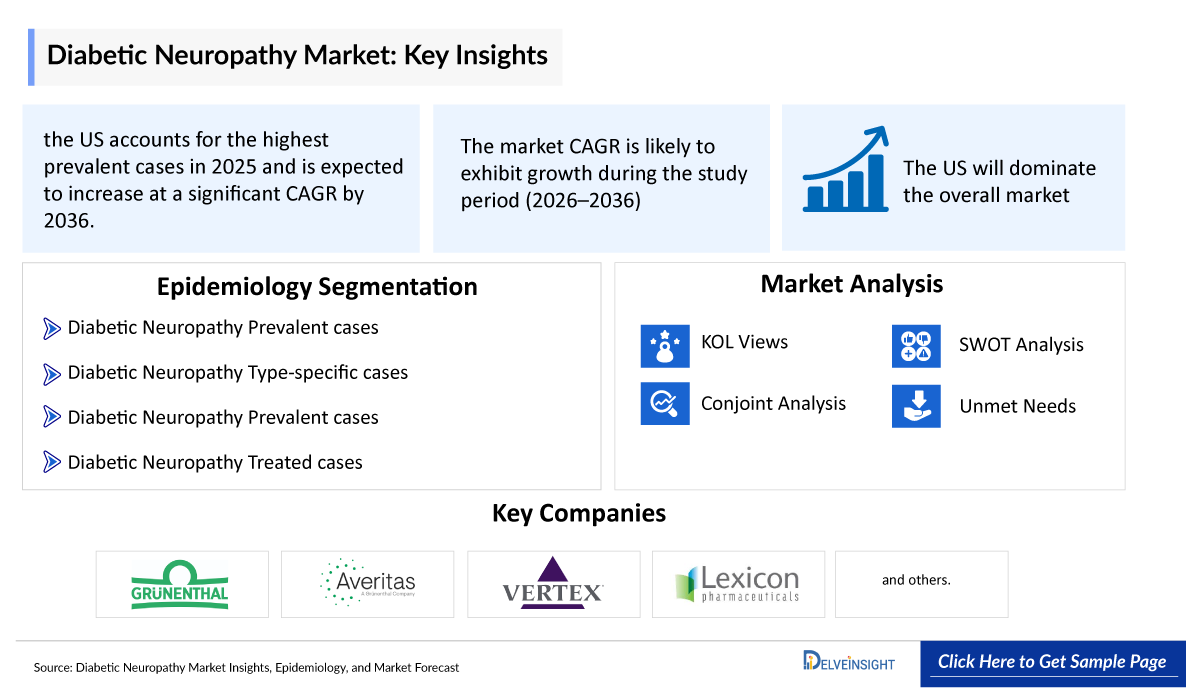
DelveInsight's ‘Diabetic Nephropathy/ Diabetes Kidney Disease (DKD) Market Insights, Epidemiology and Market Forecast – 2036’ report delivers an in-depth understanding of the DKD, historical, and forecasted epidemiology, as well as the DKD market trends in the United States, EU4 (Germany, Spain, Italy, and France), the United Kingdom, and Japan.
The Diabetic Nephropathy/ Diabetes Kidney Disease (DKD) market report delivers a comprehensive analysis of the current treatment landscape, including standards of care, clinical practices, and evolving therapeutic algorithms. It evaluates Diabetic Nephropathy/ Diabetes Kidney Disease (DKD) patient burden trends, revenue & market share dynamics, peak patient share & therapy uptake analysis, and provides an in-depth market size assessment, and growth rate projections (Historical & Forecast 2022–2036) across global regions. The report highlights key unmet medical needs in Diabetic Nephropathy/ Diabetes Kidney Disease (DKD) and maps the competitive and clinical landscape to uncover high‑value opportunities, providing a clear outlook on future market growth potential.
|
Study Period |
2022–2036 |
|
Historical Year |
2022–2025 |
|
Forecast Period |
2026–2036 |
|
Base Year |
2026 |
|
Geographies Covered |
|
|
DKD Market CAGR (Forecast period) |
~5% (2026–2036) |
|
DKD Epidemiology Segmentation Analysis |
Patient Burden Assessment
|
|
DKD Companies |
|
|
DKD Therapies |
|
|
DKD Market |
Segmented by
|
|
Analysis |
|
Key Factors Driving the Diabetic Nephropathy/ Diabetes Kidney Disease (DKD) Market
Rising Diabetic Nephropathy/ Diabetes Kidney Disease (DKD) Incidence
The rising prevalence of DKD, particularly among individuals aged ≥60 years, is a key driver of market growth.
Rising Opportunities in Diabetic Nephropathy/ Diabetes Kidney Disease (DKD)-Targeted Therapies
Emerging clinical evidence demonstrating the efficacy and renal-protective benefits of novel agents such as SGLT2 inhibitors and non-steroidal MRAs highlights a growing opportunity for drug developers to focus on therapies targeting key pathways involved in inflammation, fibrosis, and metabolic dysregulation in DKD.
Emerging Diabetic Nephropathy/ Diabetes Kidney Disease (DKD) Competitive Landscape
The DKD market is being propelled by a robust and evolving pipeline, with emerging therapies such as Esaxerenone from Daiichi Sankyo, SER150 from Serodus, Bremelanotide from Palatin Technologies, and INV-202 from Novo Nordisk/Inversago Pharma, supporting continued innovation and expanding future treatment options.
Diabetic Nephropathy/ Diabetes Kidney Disease (DKD) Understanding and Treatment Algorithm
Diabetic Nephropathy/ Diabetes Kidney Disease (DKD) Overview and Diagnosis
DKD, also known as Diabetic Nephropathy (DN), is a clinical syndrome characterized by persistent albuminuria and a progressive decline in renal function, and the term infers the presence of a typical pattern of glomerular disease. DKD is usually associated with arterial hypertension and increased cardiovascular morbidity and mortality. The causes of DKD are complex and most likely related to many factors, but the major factor is hyperglycemia. In the early stages, there may not be any symptoms. However, as kidney function decreases further, toxic wastes build up. Consequently, patients often feel sick to their stomachs and throw up, lose their appetites, have hiccups, and gain weight due to fluid retention. If left untreated, patients can develop heart failure and fluid in their lungs.
Diabetic Nephropathy/ Diabetes Kidney Disease (DKD) Diagnosis
The detection and diagnosis of DKD can be challenging. Screening and renal biopsy are the two primary diagnostic tests that are conducted to detect DKD in patients. Other diagnoses considered in non-albumin uric DKD are ischemic nephropathy, dysproteinemia, and tubule-interstitial nephritis (TIN). Guidelines from the American Diabetes Association (ADA) and Kidney Disease Improving Global Outcomes (KDIGO) recommend that all people with T2DM should have their renal function and albuminuria measured annually, starting from initial diagnosis in T1DM; this can start from 5 years after diagnosis.
Further details are provided in the report.
Diabetic Nephropathy/ Diabetes Kidney Disease (DKD) Treatment
The current pharmacological treatments include blood glucose control and blood pressure and lipid control with renin-angiotensin-aldosterone system (RAS) inhibitors, SGLT2 inhibitors, biguanides, meglitinides, DPP-4 inhibitors, and sulfonylureas. Blood pressure lowering in patients with DKD to levels below 130/80 mmHg is recommended. Combination antihypertensive therapy is required for most individuals with DKD. In such cases, the combination of an ACE inhibitor or ARB plus a dihydropyridine calcium channel blocker is often preferred; however, a non-dihydropyridine calcium channel blocker or a diuretic may be preferred rather than a dihydropyridine calcium channel blocker in patients with severely increased albuminuria. Non-pharmacological approaches with appropriate weight management and guidance for diet and smoking cessation are also crucial.
Further details related to country-based variations are provided in the report.
Diabetic Nephropathy/ Diabetes Kidney Disease (DKD) Unmet Needs
The section “unmet needs of Diabetic Nephropathy/ Diabetes Kidney Disease (DKD)” outlines the critical gaps between the current state of patient care, diagnosis, and the ideal & effective management of the disease. It highlights the obstacles experienced by patients, clinicians, and researchers and identifies potential solutions for future progress.
- Limited Disease-Modifying Therapies and Regulatory Gaps
- Persistent Cardiovascular Risk and Mortality Burden
- Delayed Diagnosis and Inadequate Early Screening
- Lack of Sensitive and Predictive Biomarkers, and others…..
Comprehensive unmet needs insights in DKD and their strategic implications are provided in the full report.
Diabetic Nephropathy/ Diabetes Kidney Disease (DKD) Epidemiology
Key Findings from Diabetic Nephropathy/ Diabetes Kidney Disease (DKD) Epidemiological Analysis and Forecast
- According to DelveInsight’s estimates, the total number of prevalent cases of DKD in the 7MM was nearly 34,000,000 cases in 2025 and is projected to increase during the forecasted period.
- The total number of prevalent cases of DKD in the United States was nearly 15,000,000 in 2025.
- In 2025 in the US, approximately 30% of DKD cases are observed in individuals aged 18–59 years, while the majority, around 70%, occur in those aged 60 years and above.
- Among the EU4 and the UK, Germany accounted for the highest number of prevalent cases of DKD, followed by Spain, whereas France accounted for the lowest number of cases in 2025.
- In Japan, approximately 95% of patients in Stages 2–4 actively seek treatment, indicating a high treatment uptake in moderate-to-severe disease stages.
Diabetic Nephropathy/ Diabetes Kidney Disease (DKD) Drug Chapters & Competitive Analysis
The DKD drug chapter provides a detailed, market-focused review of approved therapies and the emerging pipeline across Phase I–III clinical trials. It covers the mechanism of action, clinical trial data, regulatory approvals, patents, collaborations, and strategic partnerships for each therapy, along with their advantages, limitations, and recent developments. This section offers critical insights into the DKD treatment landscape, supporting market assessment, competitive analysis, and growth forecasting for the DKD therapeutics market.
Approved Therapies for Diabetic Nephropathy/ Diabetes Kidney Disease (DKD)
Empagliflozin (JARDIANCE): Boehringer Ingelheim/Eli Lilly
JARDIANCE is an oral, once-daily, highly selective SGLT2 inhibitor. Inhibition of SGLT2 with JARDIANCE in people with type 2 diabetes (T2D) and high blood sugar levels prevents sugar from being reabsorbed by the kidneys, leading to the excretion of excess sugar in the urine. In addition, the initiation of JARDIANCE also prevents salt from being reabsorbed, leading to increased excretion of salt from the body and reducing the fluid load of the body’s blood vessel system (i.e., intravascular volume).
Finerenone (KERENDIA): Bayer
KERENDIA is a novel, first-in-class nonsteroidal, selective mineralocorticoid receptor antagonist (MRA) that has been shown to block the harmful effects of mineralocorticoid receptor (MR) overactivation. In T2D, MR overactivation contributes to chronic kidney disease (CKD) progression and cardiovascular damage, which metabolic, hemodynamic, or inflammation and fibrosis factors can drive.
|
Diabetic Nephropathy/ Diabetes Kidney Disease (DKD) Marketed/Approved Therapies | ||||||
|
Drug/Therapy |
Company |
Indication |
Molecule Type |
RoA |
MoA |
Marketed Region |
|
Empagliflozin (JARDIANCE) |
Boehringer Ingelheim/Eli Lilly |
DKD / CKD associated with T2DM |
Small molecule |
Oral |
SGLT2 inhibitor |
US: 2023 EU:2023 |
|
Finerenone (KERENDIA) |
Bayer |
DKD associated with T2DM |
Small molecule |
Oral |
Non-steroidal mineralocorticoid receptor antagonist |
US: 2021 EU: 2022 JP: 2022 |
|
Dapagliflozin (FARXIGA / FORXIGA) |
AstraZeneca |
CKD (including DKD) |
Small molecule |
Oral |
SGLT2 inhibitor |
US: 2021 EU: 2021 |
Note: Detailed marketed therapies assessment will be provided in the final report.
Diabetic Nephropathy/ Diabetes Kidney Disease (DKD) Pipeline Analysis
Esaxerenone (MINNEBRO): Daiichi Sankyo
Esaxerenone is an orally administered, nonsteroidal, selective inhibitor of the mineralocorticoid receptor (MR). The binding of aldosterone to the MR plays a central role in the regulation of plasma sodium (Na+), extracellular potassium (K+), and arterial blood pressure by acting on the collecting ducts in nephrons.
SER150: Serodus
SER150 is an orally administered, dual inhibitor of the thromboxane pathway, targeting both thromboxane synthase and the thromboxane A₂ (TXA₂) receptor. By inhibiting TXA₂ production and receptor signaling, it reduces renal vasoconstriction, inflammation, and platelet aggregation, thereby helping to mitigate glomerular injury and slow disease progression in DKD.
|
Comparison of Emerging Drugs Under Development | |||||||
|
Drug Name |
Company |
Highest Phase |
Indication |
RoA |
MoA |
Molecule Type |
Anticipated Launch in the US |
|
Esaxerenone (MINNEBRO) |
UCB Biopharma |
III |
DKD |
Oral |
MR blocker |
Small molecule |
Information is available in the full report |
|
SER150 |
Serodus |
II/III |
DKD |
Oral |
Thromboxane receptor antagonists |
Small molecules |
Information is available in the full report |
|
Bremelanotide (VYLEESI) |
Palatin |
IIb |
DKD |
SC |
Melanocortin receptor agonists |
Hormones |
Information is available in the full report |
|
Note: Launch insights are provisional and may change with future report updates or the occurrence of major key catalysts. | |||||||
Note: A detailed emerging therapies assessment will be provided in the final report
Diabetic Nephropathy/ Diabetes Kidney Disease (DKD) Key Players, Market Leaders, and Emerging Companies
- Boehringer Ingelheim
- Eli Lilly
- Bayer
- AstraZeneca
- UCB Biopharma
- Serodus
- Palatin, and others
Diabetic Nephropathy/ Diabetes Kidney Disease (DKD) Drug Updates
- In March 2026, a Phase III study reported that KERENDIA met its primary endpoint in patients with chronic kidney disease, demonstrating a statistically significant improvement in kidney function decline (eGFR slope) compared to placebo, with a safety profile consistent with previous findings.
Drug Class Insights
Diabetic Nephropathy/ Diabetes Kidney Disease (DKD) Market Outlook
DKD, a form of CKD linked to diabetes, represents the most prevalent cause of end-stage renal disease. The progression of DKD has been correlated with inadequate glycemic control. Effectively managing glucose levels while concurrently impeding the advancement of CKD has been a longstanding objective in treating individuals with DKD. However, numerous glucose-lowering drugs (GLDs) pose challenges, either being contraindicated or demanding meticulous dose adjustments for DKD patients. Blood sugar control in those with CKD adds another level of complexity. It requires detailed knowledge of which medications can be safely used and how kidney disease affects the metabolism of these medications. Initially, the treatment scenario included only ACE inhibitors (ACEi) and angiotensin II receptor blockers (ARBs). The advent of SGLT2 inhibitors has led to a positive shift in the treatment paradigm. They also show promise in safeguarding kidney function for non-diabetic individuals with early kidney disease, but detectable albumin in their urine. There are various FDA-approved SGLT2 inhibitors currently being used to treat DKD, including INVOKANA, FARXIGA, and JARDIANCE. The other class of drugs commonly used to treat DKD includes nonsteroidal mineralocorticoid antagonists (MRA) and GLP-1 RA (Glucagon-like peptide-1 receptor agonists). KERENDIA has been granted FDA approval for individuals with type 2 diabetes-related kidney disease. The utilization of GLP-1 RAs is particularly recommended for individuals contending with kidney disease and coronary artery issues, encompassing conditions like heart attacks, coronary stents, or bypass surgeries.
The treatment paradigm for DKD involves a multifaceted approach aimed at managing diabetes, controlling blood pressure, and mitigating the progression of kidney damage. It is highly dynamic, and the emergence of promising therapies such as esaxerenone (MINNEBRO), SER150, bremelanotide (VYLEESI), and others might lead to a positive shift as far as the treatment landscape of DKD is concerned. Thus, the launch of key assets, along with an increase in the DKD prevalence, will further boost the market during the forecasted period.
- According to estimates, the DKD market in the 7MM is valued at USD 8,800 million, with the United States accounting for the largest share and projected to grow at a significant CAGR through 2036.
- Among the EU4 and the UK, Germany held the largest DKD market size in 2025, followed by Italy, with France having the smallest.
- The DKD market is shifting from conventional therapies to targeted agents like SGLT2 inhibitors and non-steroidal MRAs, driven by their renal/cardiovascular benefits, superior safety, and rising clinical use.
- In 2025, among all the therapies for DKD, the highest revenue is estimated to be generated by antidiabetic drugs in the 7MM.
Further details will be provided in the report….
Drug Class/Insights into Leading Emerging and Marketed Therapies in Diabetic Nephropathy/ Diabetes Kidney Disease (DKD) (2022–2036 Forecast)
The DKD market comprises targeted small molecules and supportive therapies alongside standard-of-care treatments, each addressing distinct metabolic, hemodynamic, and fibrotic pathways underlying disease progression.
- Targeted small molecules: SGLT2 inhibitors such as dapagliflozin (FARXIGA/FORXIGA) and empagliflozin (JARDIANCE) improve glycemic control while delivering significant renal and cardiovascular protection by modulating glucose reabsorption and intra-glomerular pressure, validating the clinical and commercial potential of mechanism-driven oral therapies in DKD.
- Non-steroidal MRAs: Finerenone (KERENDIA) selectively blocks mineralocorticoid receptor over-activation, reducing inflammation and fibrosis in the kidneys and highlighting the importance of targeting cardio-renal pathways for disease modification.
Targeted small molecules and MRAs together define the core innovation landscape in DKD, with established therapies driving current clinical practice and next-generation agents supporting future market growth.
Further details will be provided in the report….
Diabetic Nephropathy/ Diabetes Kidney Disease (DKD) Drug Uptake
This section focuses on the uptake rate of potential drugs expected to be launched in the market during the forecast period (2026–2036). The analysis covers the DKD market's uptake by drugs, patient uptake by therapy, and sales of each drug.
The uptake of therapies in DKD is expected to vary across SGLT2 inhibitors, non-steroidal mineralocorticoid receptor antagonists (MRAs), and conventional standard-of-care treatments such as RAAS inhibitors. Recently approved and emerging targeted therapies such as dapagliflozin (FARXIGA/FORXIGA), empagliflozin (JARDIANCE), and finerenone (KERENDIA) are demonstrating moderate to high uptake, supported by strong clinical evidence in slowing disease progression, reducing cardiovascular risk, and increasing physician confidence in early intervention. Their adoption is largely driven by the limitations of conventional therapies in halting renal decline and the growing need for cardio-renal protective strategies.
In comparison, other emerging therapies such as esaxerenone and pipeline agents are expected to show gradual but steady uptake as further clinical data become available and treatment guidelines increasingly incorporate these agents into DKD management pathways.
Further detailed analysis of emerging therapies' drug uptake in the report…
Market Access and Reimbursement of Diabetic Nephropathy/ Diabetes Kidney Disease (DKD)
-
US
|
The US Reimbursement for IDA Therapies | |
|
Drug |
Access Program |
Empagliflozin (JARDIANCE) |
|
Finerenone (KERENDIA) |
|
Reimbursement is a crucial factor that affects the drug’s access to the market. Often, the decision to reimburse comes down to the price of the drug relative to the benefit it produces in treated patients. To reduce the healthcare burden of these high-cost therapies, many payment models are being considered by payers and other industry insiders.
Further details are provided in the final report….
Diabetic Nephropathy/ Diabetes Kidney Disease (DKD) Therapies Price Scenario & Trends
Pricing and analogue assessment of DKD therapies highlights evolving price dynamics structures. This section summarizes the cost of approved treatments, the closest and most appropriate analogue selection for emerging therapies, and understanding of how pricing influences market access, adherence, and long-term uptake.
- Pricing of Diabetic Nephropathy/ Diabetes Kidney Disease (DKD) Approved Drugs
Bayer's once-daily KERENDIA carries a list price of USD 19 per day before discounts and patient assistance, equating to an annual therapy cost of approximately USD 6,935.
Further details are provided in the final report….
Industry Experts and Physician Views for Diabetic Nephropathy/ Diabetes Kidney Disease (DKD)
To keep up with DKD market trends, we take Key Opinion Leaders (KOLs) and Subject Matter Experts (SMEs) opinions working in the domain through primary research to fill the data gaps and validate our secondary research. Industry experts were contacted for insights on the DKD emerging therapies, evolving treatment landscape, patient adherence to conventional therapies, therapy switching trends, drug adoption and uptake, accessibility challenges, and epidemiology and real-world prescription patterns in DKD, including MD, PhD, Instructor, Postdoctoral Researcher, Professor, Researcher, and others.
DelveInsight’s analysts connected with 10+ KOLs to gather insights; however, interviews were conducted with 6+ KOLs in the 7MM. Centers such as the University of North Carolina at Chapel Hill, the Berlin Institute of Health at Charité, and the University of Nottingham, etc. were contacted. Their opinion helps understand and validate current and emerging DKD therapies, highlight unmet medical needs, provide epidemiological context, and support strategic decisions for market access, therapy adoption, and pipeline prioritization in DKD.
|
Region |
Key Opinion Leaders (KOLs) and Subject Matter Experts (SMEs) |
|
United States |
“There are notable limitations in the early detection of DKD, as commonly used markers such as albuminuria and eGFR often fail to identify patients at initial stages of kidney damage. This underscores the need for more sensitive biomarkers and integrated risk assessment tools to enable earlier diagnosis and more precise monitoring of disease progression.” |
|
Germany |
“Early and proactive intervention using combination therapies such as RAAS inhibitors, SGLT2 inhibitors, and emerging agents is increasingly emphasized. Rather than a reactive approach, timely treatment initiation is considered critical to slow disease progression, reduce cardiovascular risk, and delay the onset of end-stage kidney disease.” |
Qualitative Analysis: SWOT and Conjoint Analysis
We perform qualitative and market Intelligence analysis using various approaches, such as SWOT analysis and conjoint analysis.
In the SWOT analysis of Diabetic Nephropathy/ Diabetes Kidney Disease (DKD), strengths, weaknesses, opportunities, and threats in terms of disease diagnosis, patient awareness, patient burden, competitive landscape, cost-effectiveness, and geographical accessibility of therapies are provided.
Conjoint analysis analyzes emerging therapies based on relevant attributes such as safety, efficacy, frequency of administration, route of administration, and order of entry. Scoring is given based on these parameters to analyze the effectiveness of therapy.
The team of analysts analyzes promising emerging therapies based on relevant attributes such as safety, efficacy, frequency of administration, route of administration, and order of entry. In efficacy, the trial’s primary and secondary outcome measures are evaluated, whereas the therapies’ safety is evaluated, wherein the acceptability, tolerability, and adverse events are mainly observed. In addition, the scoring is also based on the route of administration, order of entry, probability of success, and the addressable patient pool for each therapy. According to these parameters, the final weightage score and the ranking of the emerging therapies are decided.
Scope of the Report
- The report covers a segment of key events, an executive summary, a descriptive overview of Diabetic Nephropathy/ Diabetes Kidney Disease (DKD), explaining its causes, signs and symptoms, pathogenesis, and currently available treatments.
- Comprehensive insight has been provided into the epidemiology segments and forecasts, the future growth potential of the diagnosis rate, and disease progression along treatment guidelines.
- Additionally, an all-inclusive account of both the current and emerging treatments, along with the elaborative profiles of late-stage and prominent therapies, will have an impact on the current treatment landscape.
- A detailed review of the Diabetic Nephropathy/ Diabetes Kidney Disease (DKD) market, historical and forecasted market size, market share by therapies, detailed assumptions, and rationale behind our approach is included in the report, covering the 7MM drug outreach.
- The report provides an edge while developing business strategies by understanding trends through SWOT analysis and expert insights/KOL views, patient journey, and treatment preferences that help in shaping and driving the 7MM Diabetic Nephropathy/ Diabetes Kidney Disease (DKD) market.
Report Insights
- Diabetic Nephropathy/ Diabetes Kidney Disease (DKD) Patient Population Forecast
- Diabetic Nephropathy/ Diabetes Kidney Disease (DKD) Therapeutics Market Size
- Diabetic Nephropathy/ Diabetes Kidney Disease (DKD) Pipeline Analysis
- Diabetic Nephropathy/ Diabetes Kidney Disease (DKD) Market Size and Trends
- Diabetic Nephropathy/ Diabetes Kidney Disease (DKD) Market Opportunity (Current and forecasted)
Report Key Strengths
- Epidemiology‑based (Epi‑based) Bottom‑up Forecasting
- Artificial Intelligence (AI)-enabled Market Research Report
- 11-year Forecast
- Diabetic Nephropathy/ Diabetes Kidney Disease (DKD) Market Outlook (North America, Europe, Asia-Pacific)
- Patient Burden Trends (by geography)
- Diabetic Nephropathy/ Diabetes kidney disease (DKD) Treatment Addressable Market (TAM)
- Diabetic Nephropathy/ Diabetes Kidney Disease (DKD) Competitive Landscape
- Diabetic Nephropathy/ Diabetes Kidney Disease (DKD) Major Companies Insights
- Diabetic Nephropathy/ Diabetes Kidney Disease (DKD) Price Trends and Analogue Assessment
- Diabetic Nephropathy/ Diabetes kidney disease (DKD) Therapies Drug Adoption/Uptake
- Diabetic Nephropathy/ Diabetes kidney disease (DKD) Therapies Peak Patient Share analysis
Report Assessment
- Diabetic Nephropathy/ Diabetes Kidney Disease (DKD) Current Treatment Practices
- Diabetic Nephropathy/ Diabetes Kidney Disease (DKD) Unmet Needs
- Diabetic Nephropathy/ Diabetes Kidney Disease (DKD) Clinical Development Analysis
- Diabetic Nephropathy/ Diabetes Kidney Disease (DKD) Emerging Drugs Product Profiles
- Diabetic Nephropathy/ Diabetes Kidney Disease (DKD) Market Attractiveness
- Diabetic Nephropathy/ Diabetes kidney disease (DKD) Qualitative Analysis (SWOT and Conjoint Analysis)
FAQs
Market Insights
- What was the Diabetic Nephropathy/ Diabetes kidney disease (DKD) market size, the market size by therapies, market share (%) distribution in 2025, and what would it look like by 2036? What are the contributing factors for this growth?
- What are the anticipated pricing variations among different geographies for the emerging therapies in the future?
- What can be the future treatment paradigm of Diabetic Nephropathy/ Diabetes kidney disease (DKD)?
- What are the disease risks, burdens, and unmet needs of Diabetic Nephropathy/ Diabetes kidney disease (DKD)? What will be the growth opportunities across the 7MM concerning the patient population with Diabetic Nephropathy/ Diabetes kidney disease (DKD)?
- Who is the major future competitor in the market, and how will the competitors affect their market share?
- What are the current options for the treatment of Diabetic Nephropathy/ Diabetes kidney disease (DKD)? What are the current guidelines for treating Diabetic Nephropathy/ Diabetes kidney disease (DKD) in the US, Europe, and Japan?
Reasons to Buy
- The report will help in developing business strategies by understanding the latest trends and changing treatment dynamics driving the Diabetic Nephropathy/ Diabetes kidney disease (DKD) market.
- Bottom-up forecasting builds from the affected population to product forecasts, delivering a robust, data-driven approach ideal for new therapies and novel classes.
- Insights on patient burden/disease incidence, evolution in diagnosis, and factors contributing to the change in the epidemiology of the disease during the forecast years.
- Understand the existing market opportunities in varying geographies and the growth potential over the coming years.
- Identifying strong upcoming players in the market will help devise strategies to help get ahead of competitors.
- Detailed analysis and ranking of class-wise potential current and emerging therapies under the conjoint analysis section to provide visibility around leading classes.
- To understand KOLs’ perspectives on the accessibility, acceptability, and compliance-related challenges of existing treatment to overcome barriers in the future.
- Detailed insights into the unmet needs of the existing market so that the upcoming players can strengthen their development and launch strategy.
- This Artificial Intelligence (AI) - enabled report summarize and simplify complex datasets within the report into clear, actionable insights for stakeholders, investors, and healthcare providers, enabling faster, data-driven decisions.