Diagnostic Imaging Equipment Market Summary
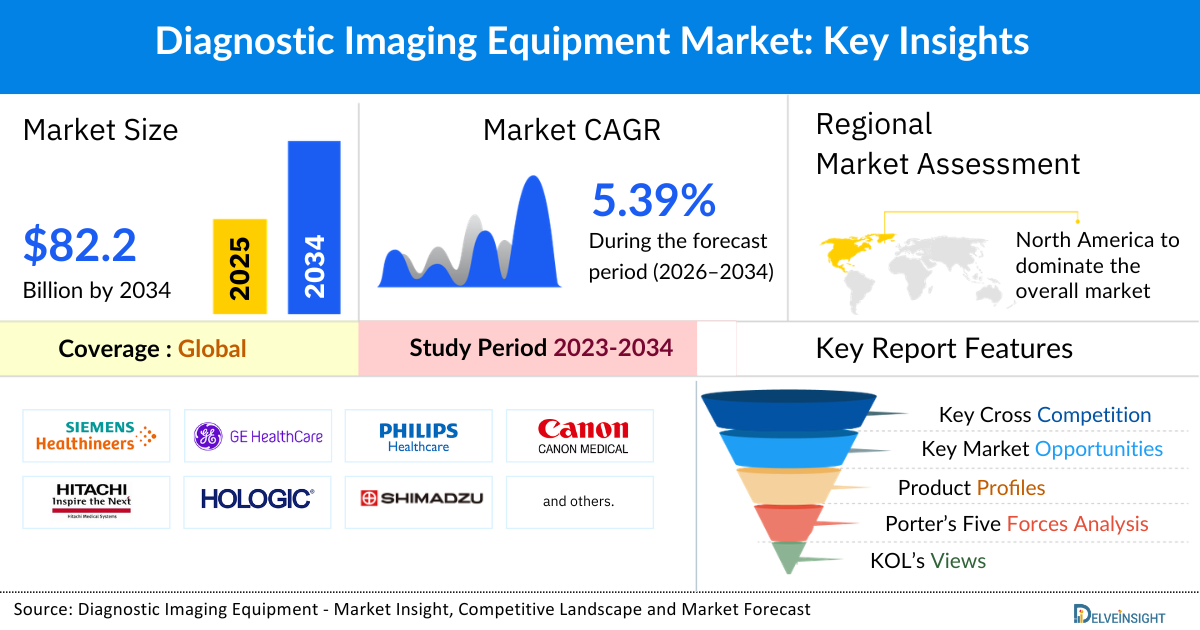
- The Global Diagnostic Imaging Equipment Market is expected to increase from USD 51,560.07 million in 2025 to USD 82,258.46 million by 2034, reflecting strong and sustained growth.
- The Global Diagnostic Imaging Equipment Market is growing at a CAGR of 5.39% during the forecast period from 2026 to 2034.
Diagnostic Imaging Equipment Market Trends & Insights
- The Diagnostic Imaging Equipment Market is being primarily driven by the rising prevalence of chronic diseases such as cardiovascular disorders, cancer, neurological conditions, and orthopedic problems, which require early and accurate diagnosis. The growing aging population worldwide is another major factor, as elderly individuals are more prone to conditions that demand frequent imaging procedures like MRI, CT scans, ultrasound, and X-Rays.
- Additionally, rapid technological advancements, including AI-integrated imaging systems, 3D/4D imaging, and portable and point-of-care devices, are improving diagnostic accuracy and workflow efficiency, thereby increasing adoption across hospitals and diagnostic centers. Expanding healthcare infrastructure in emerging economies, rising healthcare expenditure, and increasing awareness about preventive healthcare and early disease detection are further contributing to market growth. Moreover, the shift toward minimally invasive procedures and image-guided interventions is significantly boosting demand for advanced imaging systems globally.
- The leading Diagnostic Imaging Equipment such as Siemens Healthineers, GE Healthcare, Philips Healthcare, Canon Medical Systems Corporation, Hitachi Medical Systems, Hologic, Inc., Shimadzu Corporation, Fujifilm Medical Systems, Carestream Health, Agfa-Gevaert Group, Esaote SpA, Samsung Healthcare, Toshiba Medical Systems Corporation (now part of Canon Medical Systems), Konica Minolta Healthcare, Varian Medical Systems, Ziehm Imaging GmbH, Mindray Medical International Limited, Planmed Oy, Analogic Corporation, Neusoft Medical Systems Co., Ltd., and others.
- North America is expected to dominate the overall Diagnostic Imaging Equipment Market due to its well-established healthcare infrastructure, high healthcare spending, and early adoption of advanced imaging technologies. The region has a strong presence of leading market players, continuous product innovations, and rapid integration of artificial intelligence and digital imaging solutions into clinical practice. Additionally, the high prevalence of chronic diseases such as cancer, cardiovascular disorders, and neurological conditions significantly increases the demand for diagnostic imaging procedures. Favorable reimbursement policies, a large aging population, and strong government support for research and development further contribute to market growth. The growing emphasis on early disease detection and preventive healthcare, along with the availability of skilled healthcare professionals, also strengthens North America’s dominant position in the global Diagnostic Imaging Equipment market.
- In the product segment of the Diagnostic Imaging Equipment Market, the Magnetic Resonance Imaging (MRI) systems category is estimated to account for the largest market share in 2025.
Request for Unlocking the Sample Page of the Report @ Diagnostic Imaging Equipment Market
Diagnostic Imaging Equipment Market Size and Forecasts
|
Report Metrics |
Details |
|
2025 Market Size |
USD 51,560.07 million |
|
2034 Projected Market Size |
USD 82,258.46 million |
|
Growth Rate (2026-2034) |
5.39% CAGR |
|
Largest Market |
North America |
|
Fastest Growing Market |
Asia-Pacific |
|
Market Structure |
Moderately to Highly Concentrated |
Factors Contributing to the Growth of the Diagnostic Imaging Equipment Market
-
Rising prevalence of chronic diseases and a growing geriatric population leading to a surge in Diagnostic Imaging Equipment:
The rising prevalence of chronic diseases, including cancer, cardiovascular, and neurological disorders, coupled with a growing geriatric population, is driving a surge in demand for Diagnostic Imaging Equipment. As older adults and patients with chronic conditions require frequent and accurate diagnosis, healthcare providers are increasingly adopting advanced imaging technologies such as MRI, CT, ultrasound, and X-ray systems to enable early detection, effective monitoring, and better disease management.
-
Increasing technological advancements escalating the market of Diagnostic Imaging Equipment:
Increasing technological advancements are escalating the market of Diagnostic Imaging Equipment by improving accuracy, efficiency, and diagnostic capabilities. Innovations such as AI-powered imaging, 3D/4D systems, portable devices, and high-resolution imaging enable faster and more precise detection of diseases, driving higher adoption in hospitals, diagnostic centers, and outpatient facilities worldwide.
-
Increase in product development activities among the key market players:
The increase in product development activities among key market players is boosting the Diagnostic Imaging Equipment market by introducing advanced, efficient, and specialized imaging solutions. Continuous innovation, including the launch of AI-integrated systems, portable devices, and high-resolution imaging equipment, is enhancing clinical accuracy and expanding applications, thereby driving higher adoption across healthcare settings globally.
Diagnostic Imaging Equipment Market Report Segmentation
This Diagnostic Imaging Equipment Market Report offers a comprehensive overview of the global Diagnostic Imaging Equipment market, highlighting key trends, growth drivers, challenges, and opportunities. It covers detailed market segmentation by Product (X-Ray Imaging Systems, Computed Tomography (CT) Scanners, Ultrasound Systems, Magnetic Resonance Imaging (MRI) Systems, Nuclear Imaging Systems, Mammography Systems, and Others), Application (Cardiology, Oncology, Neurology, Orthopedics, Gastroenterology, Gynecology, and Others), End-User (Hospitals, Diagnostic Imaging Centres, and Others), and geography.
The Diagnostic Imaging Equipment Market Report provides valuable insights into the competitive landscape, regulatory environment, and market dynamics across major markets, including North America, Europe, and Asia-Pacific. Featuring in-depth profiles of leading industry players and recent product innovations, this report equips businesses with essential data to identify market potential, develop strategic plans, and capitalize on emerging opportunities in the rapidly growing Diagnostic Imaging Equipment market.
Diagnostic Imaging Equipment refers to medical devices used to create visual representations of the internal structures and functions of the body to aid in disease detection, diagnosis, and treatment planning. This includes technologies such as X-rays, CT scans, MRI, ultrasound, and nuclear imaging systems, which help healthcare professionals accurately identify abnormalities, monitor conditions, and guide interventions.
The Diagnostic Imaging Equipment Market is being primarily driven by the rising prevalence of chronic diseases such as cardiovascular disorders, cancer, neurological conditions, and orthopedic problems, which require early and accurate diagnosis. The growing aging population worldwide is another major factor, as elderly individuals are more prone to conditions that demand frequent imaging procedures like MRI, CT scans, ultrasound, and X-rays.
Additionally, rapid technological advancements, including AI-integrated imaging systems, 3D/4D imaging, and portable and point-of-care devices, are improving diagnostic accuracy and workflow efficiency, thereby increasing adoption across hospitals and diagnostic centers. Expanding healthcare infrastructure in emerging economies, rising healthcare expenditure, and increasing awareness about preventive healthcare and early disease detection are further contributing to market growth. Moreover, the shift toward minimally invasive procedures and image-guided interventions is significantly boosting demand for advanced imaging systems globally.
Get More Insights into the Report @ Diagnostic Imaging Equipment Market
What are the latest Diagnostic Imaging Equipment Market Dynamics and Trends?
The Global Diagnostic Imaging Equipment Market has witnessed significant growth in recent years, largely driven by the increasing prevalence of chronic diseases such as cardiovascular disorders, cancer, neurological conditions, and orthopedic conditions, the increase in technological advancements, and increasing product development activities among the key market players.
According to the data provided by the International Agency for Research on Cancer (2026), in 2025, globally, the estimated new cases of cancer were projected to occur 21.3 millions and the projections further estimated that these new cases would rise upto 32.6 million by 2045. Imaging technologies such as MRI, CT scans, PET scans, and ultrasound play a vital role in identifying tumors, determining their size and location, and monitoring disease progression or response to treatment. With the global rise in cancer prevalence, healthcare providers are investing more in advanced imaging systems to ensure timely diagnosis, guide biopsies, plan surgeries, and monitor therapy outcomes.
Additionally, according to the data provided by the Institute for Health Metrics and Evaluation (2024), the most common form of arthritis, osteoarthritis, affects 15% of the global population over the age of 30. Osteoarthritis, a degenerative joint disease affecting millions worldwide, often requires imaging modalities such as X-rays, MRI, and ultrasound to assess joint damage, cartilage deterioration, and inflammation. Advanced imaging helps physicians determine the severity of the condition, plan appropriate treatments, and monitor the progression or response to therapy, thereby escalating the overall Diagnostic Imaging Equipment Market globally.
Furthermore, the technological advancements are significantly boosting the overall Diagnostic Imaging Equipment Market by enhancing imaging quality, diagnostic accuracy, workflow efficiency, and clinical capabilities, which in turn drives higher adoption across healthcare settings worldwide. For example, in January 2025, Siemens Healthineers unveils Dry Cool technology-enabled and virtually helium-free 1.5T MAGNETOM Flow MRI, the Dual Source CT scanner SOMATOM Pro. Pulse, Digital X-ray systems MULTIX Impact E, and versatile AI-powered Ultrasound systems ACUSON Maple and ACUSON Sequoia.
MAGNETOM Flow is our latest AI-based 1.5 Tesla magnetic resonance imaging (MRI) platform based on innovative Dry cool technology. This innovative design reduces liquid helium requirements from 1,500 liters to just 0.7 liters, enabling sustainability in healthcare. These advancements, especially the integration of AI, reduction in scan times, improved patient comfort, and hybrid imaging capabilities, are enabling healthcare providers to detect diseases earlier and manage patients more effectively, thereby accelerating market growth.
Thus, the factors mentioned above are expected to boost the overall Diagnostic Imaging Equipment Market during the forecast period from 2026 to 2034. However, the modalities such as X-rays, CT scans, and nuclear imaging involve ionizing radiation, which can pose health risks if used excessively, and a stringent regulatory process for product approvals can limit the market of Diagnostic Imaging Equipment during the forecast period.
Diagnostic Imaging Equipment Market Segment Analysis
Diagnostic Imaging Equipment Market by Product (X-Ray Imaging Systems, Computed Tomography (CT) Scanners, Ultrasound Systems, Magnetic Resonance Imaging (MRI) Systems, Nuclear Imaging Systems, Mammography Systems, and Others), Application (Cardiology, Oncology, Neurology, Orthopedics, Gastroenterology, Gynecology, and Others), End-User (Hospitals, Diagnostic Imaging Centres, and Others), and Geography (North America, Europe, Asia-Pacific, and Rest of the World)
By Product: Magnetic Resonance Imaging (MRI) Systems Projected to Register Highest Revenue Share
In the product segment of the Diagnostic Imaging Equipment Market, the Magnetic Resonance Imaging (MRI) systems category is projected to grow at the fastest CAGR of 6.41% during the forecast period from 2026 to 2034. Magnetic Resonance Imaging (MRI) systems are playing a pivotal role in boosting the overall Diagnostic Imaging Equipment Market due to their ability to provide highly detailed, non-invasive, and radiation-free imaging of soft tissues, organs, and anatomical structures.
The increasing prevalence of chronic diseases such as cancer, neurological disorders, and musculoskeletal conditions is driving the demand for MRI systems, as they enable accurate diagnosis, treatment planning, and disease monitoring. Technological advancements in MRI, including higher magnetic field strengths (3T and above), functional MRI (fMRI), diffusion tensor imaging (DTI), and AI-powered image reconstruction, are enhancing image clarity, reducing scan times, and improving workflow efficiency. Additionally, the introduction of open and wide-bore MRI systems is improving patient comfort and expanding accessibility for claustrophobic or pediatric patients, further increasing adoption in hospitals and diagnostic centers.
Furthermore, the rising trend of precision medicine and personalized healthcare is also fueling the need for advanced MRI imaging, as clinicians increasingly rely on MRI for early detection and targeted treatment strategies. Moreover, ongoing product launches and approvals, such as in November 2024, Philips Next‑Generation BlueSeal Helium‑Free MRI Ingenia Ambition X 1.5T MRI systems, which incorporate AI-assisted imaging and helium-free cooling technologies, are driving market growth by offering energy-efficient, faster, and more accurate imaging solutions.
Thus, the expanding applications of MRI in neurology, oncology, cardiology, and musculoskeletal imaging, combined with rising healthcare expenditure and growing awareness of preventive healthcare, are collectively making MRI systems one of the major growth drivers in the global Diagnostic Imaging Equipment Market. Overall, the factors mentioned above are expected to boost the market of MRI, escalating the overall market of Diagnostic Imaging Equipment during the forecast period.
By Application: Cardiology Category Dominates the Market
The cardiology application segment is boosting the overall Diagnostic Imaging Equipment market. Cardiology applications are significantly boosting the overall market of Diagnostic Imaging Equipment, as cardiovascular diseases (CVDs) remain the leading cause of morbidity and mortality worldwide, necessitating precise and early diagnosis. Imaging modalities such as echocardiography, cardiac MRI, CT angiography, and nuclear imaging play a critical role in evaluating heart structure, function, blood flow, and identifying abnormalities such as coronary artery disease, valve disorders, cardiomyopathies, and congenital heart defects.
The increasing prevalence of risk factors like hypertension, obesity, diabetes, and sedentary lifestyles is driving higher demand for cardiac imaging procedures, prompting healthcare providers to invest in advanced diagnostic systems. Technological innovations such as 3D/4D echocardiography, AI-assisted cardiac MRI reconstruction, and high-resolution CT angiography have enhanced image accuracy, reduced scan times, and enabled non-invasive assessment of cardiac function, making these tools indispensable for both diagnostic and interventional cardiology. Moreover, the adoption of hybrid imaging systems, which combine modalities such as PET/CT or SPECT/CT, allows for more comprehensive evaluation of myocardial perfusion and viability, further expanding clinical applications. Hospitals, cardiac centers, and outpatient clinics are increasingly leveraging these sophisticated imaging solutions to support early detection, personalized treatment planning, and long-term disease management.
Moreover, the increase in product development activities among the key market players is further boosting the overall market of cardiology application-based imaging equipment. For instance, in June, 2024, Philips announced next‑gen AI‑enabled cardiovascular ultrasound applications cleared by the FDA, including automated heart wall motion scoring and fully automated 3D quantification of mitral regurgitation, integrated into its EPIQ CVx and Affiniti CVx systems to improve cardiac diagnosis efficiency.
Collectively, this combination of rising cardiovascular disease prevalence, technological advancement, and growing awareness of preventive cardiology is driving the robust growth of the Diagnostic Imaging Equipment market, positioning cardiology as one of the key segments fueling overall market expansion.
By End-Users: Hospitals Category Dominates the Market
Hospitals are the primary growth driver of the global Diagnostic Imaging Equipment Market because they serve as the central hubs for diagnosis, treatment, and monitoring of a wide range of medical conditions. With a high patient influx and the need for accurate and timely diagnosis of chronic diseases, cardiovascular disorders, cancer, and neurological conditions, hospitals invest heavily in advanced imaging technologies such as MRI, CT, X-ray, ultrasound, and nuclear imaging systems.
The increasing adoption of minimally invasive procedures, image-guided surgeries, and preventive healthcare initiatives further encourages hospitals to upgrade or expand their imaging infrastructure. Additionally, hospitals benefit from better funding, skilled personnel, and favorable reimbursement policies, enabling them to acquire state-of-the-art imaging equipment. The growing emphasis on improving diagnostic efficiency, patient outcomes, and workflow optimization within hospital settings is, therefore, significantly driving the demand for Diagnostic Imaging Equipment globally.
Diagnostic Imaging Equipment Market Regional Analysis
North America Diagnostic Imaging Equipment Market Trends
North America is expected to account for the highest proportion of 41% of the Diagnostic Imaging Equipment market in 2025, out of all regions. This domination is due to its well-established healthcare infrastructure, high healthcare spending, and early adoption of advanced imaging technologies. The region has a strong presence of leading market players, continuous product innovations, and rapid integration of artificial intelligence and digital imaging solutions into clinical practice. Additionally, the high prevalence of chronic diseases such as cancer, cardiovascular disorders, and neurological conditions significantly increases the demand for diagnostic imaging procedures. Favorable reimbursement policies, a large aging population, and strong government support for research and development further contribute to market growth. The growing emphasis on early disease detection and preventive healthcare, along with the availability of skilled healthcare professionals, also strengthens North America’s dominant position in the global Diagnostic Imaging Equipment market.
As per the data from GLOBOCAN (2025), the projected number of new cases of cancer in the United States was projected to occur 2.54 million, with further projections suggesting an increase to 3.38 million cases by 2045. Additionally, according to the American Academy of Neurology (2025), disorders of the nervous system impacted more than 180 million of the nearly 333 million Americans.
The rising prevalence of cancer and nervous system disorders is significantly boosting the overall Diagnostic Imaging Equipment Market, as these conditions require precise, timely, and often repeated imaging for accurate diagnosis, treatment planning, and monitoring. In oncology, imaging modalities such as MRI, CT, PET/CT, and ultrasound are essential for detecting tumors, determining their size and location, guiding biopsies, planning surgeries, and monitoring therapeutic responses. Similarly, for nervous system disorders, including stroke, Alzheimer’s disease, Parkinson’s disease, epilepsy, and multiple sclerosis, advanced imaging systems like MRI, functional MRI (fMRI), and CT scans provide critical insights into brain structure, function, and abnormalities, thereby escalating the overall market of Diagnostic Imaging Equipment across the region.
Moreover, leading industry players in the region are further engaged in boosting the overall Diagnostic Imaging Equipment Market. For example, in June 2025, Hyperfine received FDA clearance for its next‑generation Swoop® portable MRI system powered by Optive AI, enhancing image quality and portability for brain imaging. Therefore, the factors mentioned above are expected to significantly propel the growth of the Diagnostic Imaging Equipment Market in the United States.
Europe Diagnostic Imaging Equipment Market Trends
In Europe, the growth of the Diagnostic Imaging Equipment market is being strongly driven by the rising prevalence of chronic diseases, an aging population, and increasing demand for advanced imaging technologies. Additionally, well-established healthcare infrastructure, favorable government initiatives, high healthcare expenditure, and the adoption of AI-enabled and high-resolution imaging systems are further accelerating market expansion across hospitals and diagnostic centers in the region.
According to the data provided by the Versus Arthritis Organization UK (2025), more than 3,000,000 people in the UK are estimated to have osteoporosis, and around 75,000 hip fractures occur each year in the UK. Osteoarthritis, which commonly affects the elderly population, requires imaging modalities such as X-rays, MRI, and CT scans to evaluate joint space narrowing, cartilage loss, bone spurs, and inflammation. Similarly, hip fractures, often linked to osteoporosis and age-related bone weakness, demand immediate imaging for confirmation, surgical planning, and post-operative monitoring, thereby escalating the overall market of Diagnostic Imaging Equipment in Europe.
Additionally, the increase in product development activites are further boosting the overall market of Diagnostic Imaging Equipment in Europe. For instance, in January 2026, Seno Medical received CE Mark certification for its next-generation Imagio® Imaging System, Model 9100. Thus, the factors mentioned are expected to boost the overall market of Diagnostic Imaging Equipment in Europe during the forecast period.
Asia-Pacific Diagnostic Imaging Equipment Market Trends
The Asia Pacific region is emerging as a significant growth driver for the Diagnostic Imaging Equipment market, fueled by a rapidly expanding healthcare infrastructure, rising healthcare expenditure, and a growing burden of chronic diseases. Increasing awareness about early disease detection, a large aging population, and improving access to advanced medical technologies are further supporting market growth. Additionally, government initiatives to strengthen healthcare systems, along with increasing investments by both domestic and international market players, are accelerating the adoption of advanced imaging modalities such as MRI, CT, and ultrasound across the region.
According to the data provided by the International Agency for Research on Cancer (2026), in 2025, the estimated new cases of cancer in India were projected to be 1.53 millions and the projections further estimated that these cases would rise upto 2.46 million by 2045. Imaging modalities such as MRI, CT scans, PET/CT, ultrasound, and mammography are essential for identifying tumors, determining their size and spread, guiding biopsies, and evaluating treatment response.
Additionally, the increase in product development activites are further escalating the overall Diagnostic Imaging Equipment Market in the Asia-Pacific regions. For instance, in June 2025, ZEISS Medical Technology announced that the CLARUS® 700 from ZEISS has received National Medical Products Administration (NMPA) approval in China, offering advanced retinal diagnostic capabilities with ultra-widefield, high-resolution images in True Color and unsurpassed quality. Thus, the factors mentioned above are expected to boost the overall market of Diagnostic Imaging Equipment in the Asia-Pacific region.
Who are the major players in the Diagnostic Imaging Equipment Market?
The following are the leading companies in the Diagnostic Imaging Equipment market. These companies collectively hold the largest market share and dictate industry trends.
- Siemens Healthineers
- GE Healthcare
- Philips Healthcare
- Canon Medical Systems Corporation
- Hitachi Medical Systems
- Hologic, Inc.
- Shimadzu Corporation
- Fujifilm Medical Systems
- Carestream Health
- Agfa-Gevaert Group
- Esaote SpA
- Samsung Healthcare
- Toshiba Medical Systems Corporation (now part of Canon Medical Systems)
- Konica Minolta Healthcare
- Varian Medical Systems
- Ziehm Imaging GmbH
- Mindray Medical International Limited
- Planmed Oy
- Analogic Corporation
- Neusoft Medical Systems Co., Ltd.
How is the competitive landscape shaping the Diagnostic Imaging Equipment Market?
The competitive landscape of the Diagnostic Imaging Equipment Market is characterized by the strong presence of a few global players such as GE HealthCare, Siemens Healthineers, Philips, Canon Medical Systems, and Fujifilm, leading to a moderately to highly consolidated market structure, particularly in advanced modalities like MRI and CT. These companies compete primarily through continuous technological innovation, AI integration, product differentiation, strategic partnerships, and geographic expansion. High capital requirements, strict regulatory approvals, and the need for strong service networks create significant entry barriers, limiting the presence of small players in high-end imaging segments.
However, regional and local manufacturers are increasingly gaining traction in cost-sensitive markets by offering affordable and portable imaging solutions, especially in emerging economies. Additionally, mergers, acquisitions, and collaborations are reshaping the competitive environment, as major companies aim to strengthen their product portfolios and expand their global footprint. Overall, intense competition, rapid technological advancements, and strategic consolidation are shaping the market dynamics and influencing pricing, innovation cycles, and long-term growth strategies in the Diagnostic Imaging Equipment Market.
Diagnostic Imaging Equipment Market Recent Developments and Breakthroughs
- In January 2026, Seno Medical received CE Mark certification for its next-generation Imagio® Imaging System, Model 9100.
- In June 2025, Hyperfine received FDA clearance for its next‑generation Swoop® portable MRI system powered by Optive AI, enhancing image quality and portability for brain imaging.
- In January 2025, Siemens Healthineers unveils Dry Cool technology-enabled and virtually helium-free 1.5T MAGNETOM Flow MRI*, the Dual Source CT scanner SOMATOM Pro. Pulse, Digital X-ray systems MULTIX Impact E, and versatile AI-powered Ultrasound systems ACUSON Maple and ACUSON Sequoia. MAGNETOM Flow* is our latest AI-based 1.5 Tesla magnetic resonance imaging (MRI) platform based on innovative Dry cool technology.
- In June 2025, ZEISS Medical Technology announced that the CLARUS® 700 from ZEISS has received National Medical Products Administration (NMPA) approval in China, offering advanced retinal diagnostic capabilities with ultra-widefield, high-resolution images in True Color and unsurpassed quality.
- In November 2024, Philips Next‑Generation BlueSeal Helium‑Free MRI Ingenia Ambition X 1.5T MRI systems, which incorporate AI-assisted imaging and helium-free cooling technologies, are driving market growth by offering energy-efficient, faster, and more accurate imaging solutions.
- In June, 2024, Philips announced next‑gen AI‑enabled cardiovascular ultrasound applications cleared by the FDA, including automated heart wall motion scoring and fully automated 3D quantification of mitral regurgitation, integrated into its EPIQ CVx and Affiniti CVx systems to improve cardiac diagnosis efficiency.
|
Report Metrics |
Details |
|
Study Period |
2023 to 2034 |
|
Base Year |
2025 |
|
Forecast Period |
2026 to 2034 |
|
Diagnostic Imaging Equipment Market CAGR | |
|
Diagnostic Imaging Equipment Companies |
|
|
Diagnostic Imaging Equipment Market Segments |
By Product, by Application, by End-Users, and by Geography |
|
Diagnostic Imaging Equipment Regional Scope |
North America, Europe, Asia Pacific, the Middle East, Africa, and South America |
|
Diagnostic Imaging Equipment Country Scope |
U.S., Canada, Mexico, Germany, United Kingdom, France, Italy, Spain, China, Japan, India, Australia, South Korea, and key Countries |
Diagnostic Imaging Equipment Market Segmentation
- Diagnostic Imaging Equipment by Product Exposure
- X-Ray Imaging Systems
- Computed Tomography (CT) Scanners
- Ultrasound Systems
- Magnetic Resonance Imaging (MRI) Systems
- Nuclear Imaging Systems
- Mammography Systems
- Others
- Diagnostic Imaging Equipment Application Exposure
- Cardiology
- Oncology
- Neurology
- Orthopedics
- Gastroenterology
- Gynecology
- Others
- Diagnostic Imaging Equipment End-Users Exposure
- Hospitals
- Diagnostic Imaging Centres
- Others
- Diagnostic Imaging Equipment Geography Exposure
- North America Diagnostic Imaging Equipment Market
- United States Diagnostic Imaging Equipment Market
- Canada Diagnostic Imaging Equipment Market
- Mexico Diagnostic Imaging Equipment Market
- Europe Diagnostic Imaging Equipment Market
- United Kingdom Diagnostic Imaging Equipment Market
- Germany Diagnostic Imaging Equipment Market
- France Diagnostic Imaging Equipment Market
- Italy Diagnostic Imaging Equipment Market
- Spain Diagnostic Imaging Equipment Market
- Rest of Europe Diagnostic Imaging Equipment Market
- Asia-Pacific Diagnostic Imaging Equipment Market
- China Diagnostic Imaging Equipment Market
- Japan Diagnostic Imaging Equipment Market
- India Diagnostic Imaging Equipment Market
- Australia Diagnostic Imaging Equipment Market
- South Korea Diagnostic Imaging Equipment Market
- Rest of Asia-Pacific Diagnostic Imaging Equipment Market
- Rest of the World Diagnostic Imaging Equipment Market
- South America Diagnostic Imaging Equipment Market
- Middle East Diagnostic Imaging Equipment Market
- Africa Diagnostic Imaging Equipment Market
Diagnostic Imaging Equipment Market Recent Industry Trends and Milestones (2022-2026)
|
Category |
Key Developments |
|
Diagnostic Imaging Equipment Product Launch |
Philips launched the BlueSeal helium‑free 1.5T wide‑bore MRI system, Siemens Healthineers launched MAGNETOM Flow 1.5T MRI platform, and Medscan Merrylands introduced the NAEOTOM Alpha. Pro photon‑counting CT scanner. |
|
Diagnostic Imaging Equipment Regulatory Approvals |
Seno Medical - Imagio® Imaging System, Model 9100 (EU Approval), Hyperfine - Swoop® portable MRI system (FDA), ZEISS Medical Technology - CLARUS® 700 (NMPA). |
|
Acquisition in the Diagnostic Imaging Equipment Market |
GE HealthCare acquired Intelerad, Block Imaging Acquires Platinum X-Ray Solutions, Siemens Healthineers Acquires Advanced Accelerator Applications Molecular Imaging. |
|
Company Strategy |
GE HealthCare focuses heavily on integrating artificial intelligence into its imaging systems (MRI, CT, ultrasound) to enhance image reconstruction, reduce scan time, and improve workflow efficiency. Siemens Healthineers prioritizes high-end innovation, including photon-counting CT, advanced MRI platforms, and AI-powered imaging software. |
|
Emerging Technology |
Artificial Intelligence (AI) and Machine Learning, Photon-Counting Computed Tomography (PCCT), Hybrid Imaging Systems, 3D/4D Ultrasound and Elastography, Portable and Point-of-Care Imaging, Molecular and Functional Imaging. |
Impact Analysis
AI-Powered Innovations and Applications:
AI-powered innovations are transforming Diagnostic Imaging Equipment by enhancing image quality, improving diagnostic accuracy, and streamlining clinical workflows. Advanced deep learning algorithms are now integrated into MRI, CT, X-ray, and ultrasound systems to enable faster image reconstruction, reduce noise, and maintain high-resolution output even at lower radiation doses. AI applications assist in automated detection and quantification of abnormalities such as tumors, lung nodules, brain hemorrhages, cardiac dysfunction, and fractures, helping radiologists make quicker and more consistent diagnoses.
In addition, AI-driven workflow tools prioritize urgent cases, automate measurements, generate structured reports, and reduce interpretation time, thereby improving efficiency in busy hospital settings. Predictive analytics and decision-support systems further enhance personalized treatment planning by analyzing imaging data alongside clinical information. These innovations not only improve patient outcomes through early and accurate detection but also optimize operational efficiency, making AI integration a key growth driver in the Diagnostic Imaging Equipment market.
U.S. Tariff Impact Analysis on Diagnostic Imaging Equipment Market
The U.S. tariff impact on the Diagnostic Imaging Equipment market has introduced additional cost pressures and reshaped supply chain strategies, influencing pricing, sourcing decisions, and competitive dynamics. Tariffs on imported components or finished imaging systems, such as those previously applied to medical devices and electronics from certain countries, can increase production costs for manufacturers that rely on global supply chains, leading to higher prices for end buyers like hospitals and diagnostic centers. These added costs may slow equipment procurement, particularly for cost-sensitive healthcare providers, and could delay technology upgrades or limit the adoption of advanced modalities in some segments.
To mitigate tariff effects, many companies are reevaluating their manufacturing footprints by shifting production to tariff-free regions, expanding local assembly operations in the U.S., or renegotiating supplier contracts to reduce dependency on affected imports. At the same time, strong domestic demand for high-end imaging equipment and favorable reimbursement policies in the U.S. help sustain market growth despite tariff challenges. Overall, while tariffs can introduce short-term cost hurdles and supply chain complexity, strategic adjustments by manufacturers and robust healthcare investment in the United States continue to support long-term expansion of the Diagnostic Imaging Equipment market.
How This Analysis Helps Clients
- Cost Management: By understanding the tariff landscape, clients can anticipate cost increases and adjust pricing strategies accordingly, ensuring profitability.
- Supply Chain Optimization: Clients can identify alternative sourcing options and diversify their supply chains to reduce dependency on high-tariff regions, enhancing resilience.
- Regulatory Navigation: Expert guidance on navigating the evolving regulatory environment helps clients maintain compliance and avoid potential legal challenges.
- Strategic Planning: Insights into tariff impacts enable clients to make informed decisions about manufacturing locations, partnerships, and market entry strategies.
Startup Funding & Investment Trends
|
Company Name |
Total Funding |
Main Products |
Stage of Development |
Core Technology |
|
OneImaging |
$38 million |
Imaging Platform |
Series A |
A full-stack platform that simplifies booking, pricing, and scheduling of diagnostic imaging (MRI, CT, etc.) while increasing transparency and cutting patient costs. |
|
NVision Imaging |
$30 million |
Quantum-powered MRI polarizer systems |
Series A |
To boost image clarity, speed, and robustness in MRI workflows. |
Key Takeaways from the Diagnostic Imaging Equipment market report study
- Market size analysis for the current Diagnostic Imaging Equipment Market Size (2025), and market forecast for 8 years (2026 to 2034)
- Top key product/technology developments, mergers, acquisitions, partnerships, and joint ventures happened over the last 3 years.
- Key companies dominating the Diagnostic Imaging Equipment market.
- Various opportunities are available for the other competitors in the Diagnostic Imaging Equipment market space.
- What are the top-performing segments in 2025? How these segments will perform in 2034?
- Which are the top-performing regions and countries in the current Diagnostic Imaging Equipment market scenario?
- Which are the regions and countries where companies should have concentrated on opportunities for the Diagnostic Imaging Equipment market growth in the future?
Stay updated with us for Recent Articles @ New DelveInsight Blogs

