
Dravet Syndrome Epidemiology
- According to DelveInsight’s analysis, the total diagnosed prevalent cases of Dravet syndrome were ~22,600 in the 7MM (the United States, the EU4 (Germany, France, Italy, and Spain), the United Kingdom, and Japan) in 2025.
- Dravet syndrome, previously referred to as Severe Myoclonic Epilepsy of Infancy (SMEI), is a rare, lifelong form of childhood epilepsy that is typically resistant to treatment. It is classified as a developmental and epileptic encephalopathy, where persistent, difficult-to-control seizures contribute to significant developmental delays and cognitive impairment.
- In Dravet syndrome, seizures typically begin between 2 and 15 months of age. About 3–8% of infants with seizures in the first year may be diagnosed with Dravet syndrome. Early episodes are often fever-triggered, prolonged (15–30 minutes or more), and may present as febrile convulsive status epilepticus requiring urgent care.
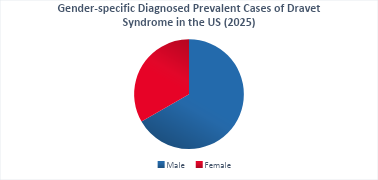
- Dravet syndrome demonstrates a higher prevalence in males compared with females, with a reported male-to-female ratio of approximately 2:1.
- Approximately 85% of patients with Dravet syndrome have a mutation or deletion in the SCN1A gene, which encodes a voltage-gated sodium channel protein.
- Mortality affects up to 20% of children and adolescents with Dravet syndrome before adulthood, primarily due to sudden unexpected death in epilepsy, prolonged seizures, severe infections, or seizure-related accidents.
- Challenges in diagnosing Dravet syndrome include overlap of symptoms with other epilepsy syndromes, progressive evolution of clinical features that delays early recognition, and genetic heterogeneity, as not all patients carry an SCN1A mutation. Timely and accurate diagnosis is further hindered by limited access to specialized genetic testing and low clinical awareness among healthcare providers.
Dravet Syndrome Epidemiology Forecast in the 7MM
- 2025 Dravet Syndrome Diagnosed Prevalent Cases: ~22,600
- 2036 Dravet Syndrome Diagnosed Prevalent Cases: ~XXX
- Dravet syndrome Growth Rate (2026–2036): ~0.3% CAGR
DelveInsight's ‘Dravet Syndrome – Epidemiology Forecast – 2036’ report delivers an in-depth understanding of Dravet syndrome, historical and forecasted epidemiology in the United States, EU4 (Germany, Spain, Italy, and France) and the United Kingdom, and Japan.
|
Study Period |
2022–2036 |
|
Historical Year |
2022–2025 |
|
Forecast Period |
2026–2036 |
|
Base Year |
2026 |
|
Geographies Covered |
|
|
Dravet Syndrome Epidemiology CAGR (Study period/Forecast period) |
~0.3% (2026–2036) |
|
Dravet Syndrome Epidemiology Segmentation Analysis |
Patient Burden Assessment
|
Dravet Syndrome Understanding and Diagnosis Algorithm
Dravet Syndrome Overview and Diagnosis
Dravet syndrome is a rare, severe form of genetic epilepsy that typically begins in infancy, often within the first year of life. It is primarily caused by mutations in the SCN1A gene, leading to dysfunction in neuronal sodium channels. The condition is characterized by prolonged, treatment-resistant seizures along with developmental delay, cognitive impairment, and behavioral issues. Patients often experience worsening symptoms over time, including motor and speech difficulties. Due to its complexity, Dravet syndrome requires lifelong, multidisciplinary management.
Dravet Syndrome Diagnosis
Diagnosis is primarily based on clinical presentation, including the onset of prolonged febrile seizures in infancy and evolving seizure types. Genetic testing (especially for SCN1A mutations) is key to confirmation, although not all patients test positive. EEG and MRI may support diagnosis, but are often normal in early stages, making early identification challenging.
Further details are provided in the report.
Dravet Syndrome Epidemiology
Key Findings from Dravet Syndrome Epidemiological Analysis and Forecast
- The total diagnosed prevalence of Dravet syndrome in the 7MM comprised ~25,600 cases in 2025.
- In the 7MM, the US accounted for the highest share (~50%) of diagnosed prevalent cases of Dravet syndrome in 2025.
- As per secondary analysis, the prevalence of Dravet syndrome is estimated to range from 1 in 20,000 to 1 in 40,000 individuals.
- Dravet syndrome is a severe infantile-onset epileptic encephalopathy associated with mutations in the sodium channel alpha 1 subunit gene SCN1A in about 80–90% of cases.
- An analysis reveals notable age-related disparities in Dravet syndrome prevalence in Spain. Pediatric patients exhibit an average rate of 1.1 cases per million inhabitants, while adults show a significantly lower rate of 0.5 cases per million. This underscores the critical need for targeted diagnostic and treatment strategies across different age groups.
Numbers are subject to change with report updation, clinical information updates, etc.
Scope of the Report
- The report covers a segment of an executive summary, a descriptive overview of Dravet syndrome, explaining its causes, signs and symptoms, and pathogenesis.
- Comprehensive insight has been provided into the epidemiology segments and forecasts, the future growth potential of the diagnosis rate, and disease progression.
Report Insights
Dravet Syndrome Patient Population Forecast
Report Key Strengths
- Epidemiology‑based (Epi‑based) Bottom‑up Forecasting
- 11-year Forecast
- Patient Burden Trends (by geography)
FAQs
- What are the disease risks, burdens, and unmet needs of Dravet syndrome? What will be the growth opportunities across the 7MM concerning the patient population with Dravet syndrome?
- What is the historical and forecasted Dravet syndrome patient pool in the US, EU4 (Germany, France, Italy, and Spain), the UK, and Japan?
Reasons to Buy
- Insights on patient burden/disease prevalence, evolution in diagnosis, and factors contributing to the change in the epidemiology of the disease during the forecast years.
- To understand key opinion leaders’ perspectives on the diagnostic challenges to overcome barriers in the future.
- Detailed insights into various factors hampering disease diagnosis and other existing diagnostic challenges.