Dry Age-related Macular Degeneration Market
Dry Age-related Macular Degeneration (AMD) Insights and Trends
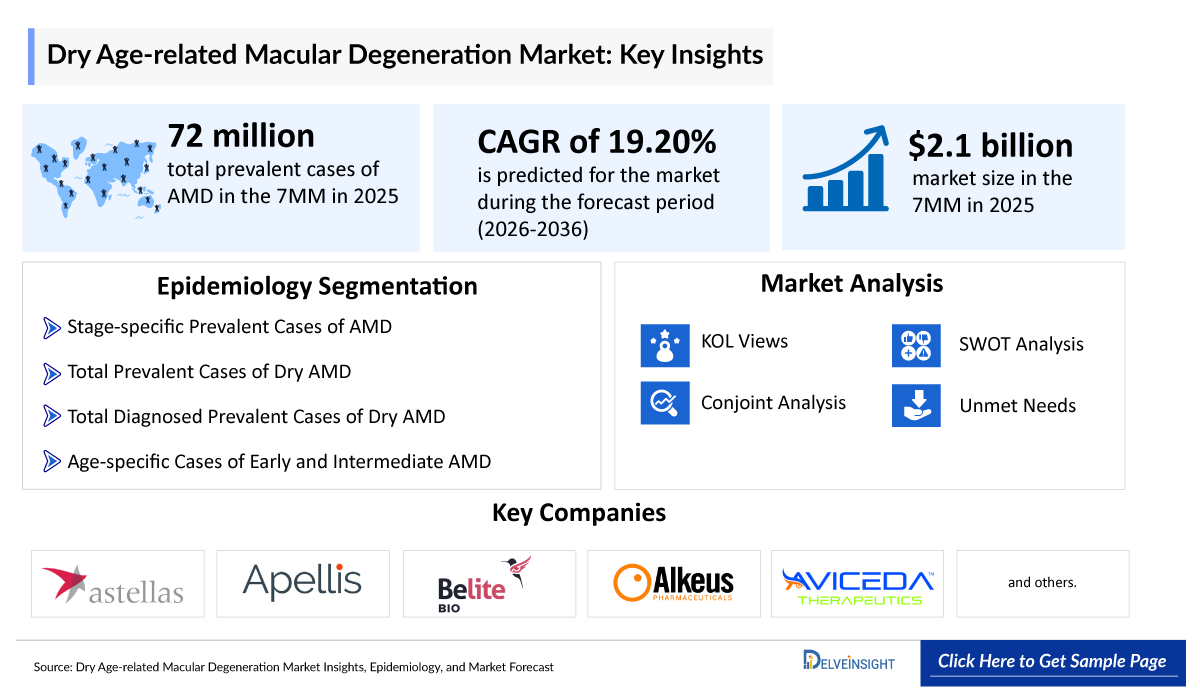
- According to DelveInsight’s analysis, the Dry AMD market size was found to be ~USD 2,150 million in the 7MM (the United States, the EU4 (Germany, France, Italy, and Spain), the United Kingdom, and Japan) in 2025.
- Dry AMD may progress to geographic atrophy, leading to irreversible vision loss due to degeneration of the retinal pigment epithelium (RPE), photoreceptors, and choriocapillaris in the macula. Therefore, early diagnosis, regular monitoring, and lifestyle modifications are critical to delay disease progression and support comprehensive disease management.
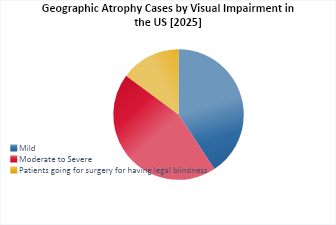
- In 2025, the total number of prevalent cases of geographic atrophy was ~831,000 in the US. These cases are projected to increase by 2036.
- In the US, the total age-specific cases of geographic atrophy were the highest in the age group 85+ years followed by 65-84 years and ≤64 years age group in 2025.
- The FDA’s approval of Pegcetacoplan (SYFOVRE) and Avacincaptad pegol (IZERVAY) marks a significant advancement, establishing complement system modulation as a promising therapeutic avenue for mitigating the progression of geographic atrophy in AMD.
- The majority of pipeline candidates for dry AMD target geographic atrophy, an advanced stage, rather than focusing on the early and intermediate stages.
- ANX007, the inaugural therapeutic contender for treating geographic atrophy, achieves PRIME designation in the EU.
- Emerging companies such as Belite Bio, Alkeus Pharmaceuticals, Aviceda Therapeutics, Allegro Ophthalmics, and Johnson & Johnson Innovative Medicine are actively shaping the dry AMD pipeline through innovative therapies.
Dry Age-related Macular Degeneration (AMD) Market Size and Forecast in the 7MM
- 2025 Dry AMD Market Size: ~2,150 million
- 2036 Projected Dry AMD Market Size: 14,500 million
- Dry AMD Growth Rate (2026–2036): ~19.2 CAGR
DelveInsight's ‘Dry Age-related Macular Degeneration (AMD) Market Insights, Epidemiology and Market Forecast – 2036’ report delivers an in-depth understanding of dry AMD, historical and forecasted epidemiology, as well as the dry AMD market trends in the United States, EU4 (Germany, Spain, Italy, and France) and the United Kingdom, and Japan.
The Dry AMD market report delivers a comprehensive analysis of the current treatment landscape, including standards of care, clinical practices, and evolving therapeutic algorithms. It evaluates dry AMD patient burden trends, revenue & market share dynamics, peak patient share & therapy uptake analysis, and provides an in-depth market size assessment, and growth rate projections (Historical & Forecast 2022–2036) across global regions. The report highlights key unmet medical needs in dry AMD and maps the competitive and clinical landscape to uncover high‑value opportunities, providing a clear outlook on future market growth potential.
|
Study Period |
2022–2036 |
|
Historical Year |
2022–2025 |
|
Forecast Period |
2026–2036 |
|
Base Year |
2026 |
|
Geographies Covered |
|
|
Dry Age-related Macular Degeneration (AMD) Market CAGR (Forecast period) |
19.2% (2026–2036) |
|
Dry Age-related Macular Degeneration (AMD) Epidemiology Segmentation Analysis |
Patient Burden Assessment
|
|
Dry Age-related Macular Degeneration (AMD) Companies |
|
|
Dry Age-related Macular Degeneration (AMD) Therapies |
|
|
Dry Age-related Macular Degeneration (AMD) Market |
Segmented by
|
|
Analysis |
|
|
|
Key Factors Driving the Dry Age-related Macular Degeneration (AMD) Market
-
Aging Global Population
Dry AMD predominantly affects people aged 60+ and especially 85+. The rapid growth of the elderly population globally is directly increasing the patient pool.
-
Rising Disease Prevalence & Risk Factors
Dry AMD already accounts for ~85–90% of all AMD cases, amplifying market size. Growth in geographic atrophy (advanced dry AMD) further expands treatment demand.
-
Improved Diagnostic Technologies
Advanced imaging tools such as Optical Coherence Tomography (OCT) and Fundus imaging enable earlier and more accurate diagnosis, increasing the number of treated patients .
Dry Age-related Macular Degeneration (AMD) Understanding and Treatment Algorithm
Dry Age-related Macular Degeneration (AMD) Overview and Diagnosis
Dry AMD is a chronic, progressive retinal disorder that primarily affects the macula, the central part of the retina responsible for sharp, detailed vision. It is the most common form of age-related macular degeneration. The condition is characterized by the accumulation of extracellular deposits called drusen beneath the retina and gradual degeneration of retinal pigment epithelium (RPE) cells. Over time, this leads to central vision loss, impacting activities such as reading, driving, and recognizing faces. Advanced stages may progress to geographic atrophy, a severe form marked by irreversible retinal cell loss. Risk factors include aging, smoking, genetic predisposition, and cardiovascular conditions.
Diagnosis of dry AMD relies on comprehensive ophthalmic evaluation and advanced imaging techniques. Eye care specialists typically use dilated fundus examination to identify drusen and pigmentary changes. Imaging modalities such as OCT provide high-resolution cross-sectional images of the retina, enabling early detection and monitoring of disease progression. Fundus autofluorescence and fluorescein angiography may also be used to assess retinal health and differentiate between dry and wet AMD. Increasingly, artificial intelligence-based tools are being integrated into diagnostic workflows to improve accuracy and facilitate earlier intervention.
Further details are provided in the report.
Current Dry Age-related Macular Degeneration (AMD) Treatment Landscape
Treatment options for dry AMD have historically been limited, focusing mainly on slowing disease progression rather than reversing damage. Nutritional supplementation based on the AREDS Study formulation (vitamins C and E, zinc, copper, lutein, and zeaxanthin) is commonly recommended for intermediate stages to reduce progression risk. Recently, targeted therapies such as complement inhibitors have emerged, offering the first disease-modifying approaches for geographic atrophy. Supportive measures, including low-vision aids and lifestyle modifications (e.g., smoking cessation and healthy diet), remain essential components of care. Ongoing research into gene therapy and regenerative treatments is expected to further transform the therapeutic landscape.
Note: Further details related to country-based variations are provided in the report.
Dry Age-related Macular Degeneration (AMD) Unmet Needs
The section “unmet needs of dry AMD” outlines the critical gaps between the current state of patient care, diagnosis, and the ideal & effective management of the disease. It highlights the obstacles experienced by patients, clinicians, and researchers and identifies potential solutions for future progress.
- Lack of research regarding pathophysiology
- Lack of clinical endpoints
- Functional impact of dry AMD on patient’s quality of life (QoL)
- Inadequate risk stratification, and others…..
Note: Comprehensive unmet needs insights in Dry Age-related Macular Degeneration (AMD) and their strategic implications are provided in the full report.
Dry Age-related Macular Degeneration (AMD) Epidemiology
Key Findings from Dry Age-related Macular Degeneration (AMD) Epidemiological Analysis and Forecast
- In 2025, the total prevalent cases of AMD were ~72,103,000 in the 7MM. These cases are projected to increase by 2036.
- The early and intermediate stages of AMD are major contributors among the stage-specific prevalent cases of AMD. In 2025, the late stage accounted for ~1,846,500 cases in the US.
- In the US, the total age-specific cases of geographic atrophy were 77,570 in the ≤64 years age group in 2025.
- It is observed that early and intermediate AMD occurs majorly in the age group of 65-84 years. In the US, the total age-specific cases of early and intermediate AMD were ~5,024,900 in the ≤64 years in 2025.
Dry Age-related Macular Degeneration (AMD) Drug Analysis & Competitive Landscape
The dry AMD drug chapter provides a detailed, market-focused review of the emerging pipeline across Phase III-II/III clinical trials and preclinical trials. It covers the mechanism of action, clinical trial data, regulatory approvals, patents, collaborations, and strategic partnerships for each therapy, along with their advantages, limitations, and recent developments. This section offers critical insights into the dry AMD treatment landscape, supporting market assessment, competitive analysis, and growth forecasting for the dry AMD therapeutics market.
Approved Therapies for Dry Age-related Macular Degeneration (AMD)
Avacincaptad pegol (IZERVAY): Astellas Pharma and Iveric Bio
Avacincaptad pegol (IZERVAY) is a novel ophthalmic therapy developed by Iveric Bio and later commercialized under Astellas Pharma following its acquisition of Iveric Bio in 2023. It is an RNA aptamer-based drug designed for the treatment of geographic atrophy. The drug received US FDA approval in August 2023, marking a significant milestone as one of the first disease-modifying therapies targeting dry AMD progression. Avacincaptad pegol is administered as a monthly intravitreal injection into the affected eye. Its approval was based on Phase III trials (GATHER1 and GATHER2), which demonstrated a statistically significant reduction in the rate of geographic atrophy lesion growth compared with sham treatment.
Pegcetacoplan (SYFOVRE): Apellis Pharmaceuticals
Pegcetacoplan (SYFOVRE) is a first-in-class complement inhibitor approved for the treatment of geographic atrophy. It targets complement component C3, a central protein in the complement cascade. Administered via intravitreal injection either monthly or every other month, SYFOVRE demonstrated clinically meaningful reductions in GA lesion growth in Phase III (OAKS and DERBY) trials, with increasing efficacy observed over time. While it does not restore lost vision, it significantly slows disease progression.
|
Table 1: Competitive Lnadscape of Marketed/Approved Therapies | ||||||
|
Drug/Therapy |
Company |
Indication |
Molecule Type |
MoA |
RoA |
Marketed Region |
|
Avacincaptad pegol (IZERVAY) |
Astellas Pharma/Iveric Bio |
Geographic atrophy secondary to AMD |
Oligonucleotide, chemically synthesized single-stranded nucleic acid aptamer |
Complement C5 Inhibitor |
IVT injection |
US: 2023 |
|
Pegcetacoplan (SYFOVRE) |
Apellis Pharmaceuticals |
Geographic atrophy secondary to AMD |
Synthetic cyclic peptide |
Complement C3 inhibitor |
IVT injection |
US: 2023 |
Note: Detailed marketed therapies assessment will be provided in the final report.
Dry Age-related Macular Degeneration (AMD) Pipeline Analysis
Tinlarebant (LBS-008): Belite Bio
Tinlarebant is a novel oral therapy that is intended to reduce the accumulation of vitamin A-based toxins (known as bisretinoids) that contribute to disease progression in geographic atrophy. Bisretinoids are by-products of the visual cycle, which is dependent on the supply of vitamin A (retinol) to the eye. Tinlarebant works by reducing and maintaining levels of serum retinol binding protein 4 (RBP4), the sole carrier protein for retinol transport from the liver to the eye.
Gildeuretinol acetate (ALK-001): Alkeus Pharmaceuticals
Oral gildeuretinol acetate (ALK-001) is a new molecular entity designed to reduce the dimerization of vitamin A without modulating the visual cycle. Gildeuretinol is being evaluated in clinical trials for the treatment of Stargardt disease and has been studied for geographic atrophy secondary to age-related macular degeneration.
|
Table 2: Competitive Landscape of Emerging Drugs | ||||||
|
Drug Name |
Company |
Highest Phase |
Indication |
RoA |
MoA |
Anticipated Launch in the US |
|
Tinlarebant (LBS-008) |
Belite Bio |
III |
Geographic Atrophy |
Oral |
RBP4 antagonist |
Information is available in the full report |
|
Gildeuretinol acetate (ALK-001) |
Alkeus Pharmaceuticals |
III |
Geographic atrophy secondary to AMD |
Oral |
Inhibits the formation of toxic vitamin A aggregates |
Information is available in the full report |
|
AVD-104* |
Aviceda Therapeutics |
II/III |
Geographic atrophy secondary to AMD |
Intravitreal injection |
Addresses both macrophage/ microglial-mediated inflammation while also targeting the complement pathway |
Information is available in the full report |
|
Note: Launch insights are provisional and may change with future report updates or the occurrence of major key catalysts. | ||||||
Note: Detailed emerging therapies assessment will be provided in the final report.
Dry Age-related Macular Degeneration (AMD) Key Players, Market Leaders and Emerging Companies
- Astellas Pharma/Iveric Bio
- Apellis Pharmaceuticals
- Belite Bio
- Alkeus Pharmaceuticals
- Aviceda Therapeutics
- Allegro Ophthalmics
- Johnson & Johnson Innovative Medicine
- and others.
Dry Age-related Macular Degeneration (AMD) Drug Updates
- In December 2025, Alkeus Pharmaceuticals announced that data from its clinical studies of investigational oral gildeuretinol for the treatment of geographic atrophy will be presented at the 13th International FLORetina ICOOR Congress at the Fortezza de Basso in Florence, Italy.
- In July 2025, Alkeus Pharmaceuticals announced that data from its clinical studies of investigational oral gildeuretinol for the treatment of geographic atrophy secondary to age-related macular degeneration (SAGA) will be presented during the American Society of Retina Specialists (ASRS) 43rd Annual Scientific Meeting.
- In February 2025, Alkeus Pharmaceuticals announced that results from its clinical studies of investigational oral gildeuretinol for the treatment of geographic atrophy secondary to age-related macular degeneration (SAGA) will be presented at the 48th Annual Meeting of the Macula Society.
Dry Age-related Macular Degeneration (AMD) Market Outlook
The treatment landscape for dry AMD has historically been limited to supportive care, primarily involving nutritional supplementation (e.g., AREDS formulations), lifestyle modifications, and visual aids to slow disease progression and manage symptoms. The approved therapies consist of Avacincaptad pegol (IZERVAY) and Pegcetacoplan (SYFOVRE), both targets the complement cascade. These therapies represent a paradigm shift toward mechanism-based treatment by slowing the progression of geographic atrophy, although they do not restore lost vision and require regular intravitreal administration.
The pipeline for dry AMD is rapidly evolving, with emerging therapies focusing on novel biological pathways beyond complement inhibition. Tinlarebant (LBS-008) is an oral therapy designed to reduce the accumulation of toxic vitamin A byproducts in the retina, thereby addressing a key driver of retinal degeneration. Similarly, Gildeuretinol acetate (ALK-001) targets vitamin A dimerization to prevent the formation of harmful retinal deposits. AVD-104 utilizes glycoimmune modulation to reduce inflammation and protect retinal cells. These therapies highlight a shift toward oral and less invasive treatment options, alongside innovative mechanisms targeting metabolic and inflammatory pathways.
Overall, the emergence of both approved complement inhibitors and a diverse pipeline of targeted therapies marks a significant transition from supportive care to disease-modifying strategies in dry AMD. Improved trial design is expected to drive innovation and market expansion across the 7MM from 2022 to 2036, yielding significant commercial opportunities for existing products and pipeline candidates.
Further details will be provided in the report….
Drug Class/Insights into Leading Emerging and Marketed Therapies in Dry Age-related Macular Degeneration (AMD) (2022–2036 Forecast)
The dry AMD market (2022–2036 forecast) is increasingly transitioning toward mechanism-based therapies that target core disease pathways such as complement-mediated inflammation, retinal toxicity, and metabolic dysfunction. The market consists of small molecules and biologics.
- Biologics: Approved therapies such as IZERVAY and SYFOVRE represent a major advancement. These intravitreal therapies inhibit complement proteins (C5 and C3, respectively), reducing chronic retinal inflammation and slowing lesion growth in geographic atrophy.
- Small molecules: The emerging pipeline therapies such as Tinlarebant (LBS-008) and Gildeuretinol acetate (ALK-001), focus on modulating the visual cycle and reducing toxic vitamin A byproducts that contribute to retinal damage. AVD-104 introduces a differentiated glycoimmune approach aimed at controlling inflammation and protecting retinal cells. These therapies offer the potential advantage of reduced treatment burden and broader applicability across earlier disease stages.
Overall, innovation in dry AMD is being driven by a combination of complement inhibition and metabolic/retinal protection strategies acting on complementary biological pathways. As these therapies advance through clinical development and expand across major markets, they are expected to move the treatment paradigm beyond supportive care toward sustained disease modification, addressing longstanding unmet needs and supporting robust market growth.
Dry Age-related Macular Degeneration (AMD) Drug Uptake
This section focuses on the uptake rate of potential drugs expected to be launched in the market during the forecast period (2026–2036). The analysis covers the dry AMD drug’s uptake, performance at peak, factors affecting performance during prime years of growth, patient uptake by therapy, and anticipated sales generated by each drug.
During the forecast period, approved therapies such as IZERVAY and SYFOVRE are expected to witness increasing uptake as foundational treatments for geographic atrophy. Their adoption is primarily driven by their ability to slow disease progression through complement inhibition (C5 and C3 pathways, respectively).
Among emerging therapies, Tinlarebant (LBS-008) is expected to gain strong traction due to its oral administration and mechanism targeting vitamin A metabolism, offering a less invasive alternative with potential use in earlier-stage disease. Similarly, Gildeuretinol acetate (ALK-001) is projected to show promising uptake driven by its disease-modifying potential in reducing retinal toxicity. Overall uptake will depend on clinical efficacy, safety outcomes, and positioning alongside standard of care therapies.
Detailed insights of emerging therapies' drug uptake is included in the report
Market Access and Reimbursement of Approved Therapies in Dry Age-related Macular Degeneration (AMD)
Reimbursement is a crucial factor that affects the drug’s access to the market. Often, the decision to reimburse comes down to the price of the drug relative to the benefit it produces in treated patients. To reduce the healthcare burden of these high-cost therapies, many payment models are being considered by payers and other industry insiders.
The United States
|
Table 3: US Reimbursement of Therapies Approved for Dry AMD | |
|
Drug/Therapy |
Access Program |
|
Avacincaptad pegol |
IZERVAY My Way Program |
Reimbursement is a crucial factor that affects the drug’s access to the market. Often, the decision to reimburse comes down to the price of the drug relative to the benefit it produces in treated patients. To reduce the healthcare burden of these high-cost therapies, many payment models are being considered by payers and other industry insiders.
NOTE: Further Details are provided in the final report….
Recent Development
- In August 2026, Insilico Medicine nominated ISM9077, a potential first-in-class Target Y inhibitor, as a preclinical candidate for ocular diseases, inflammatory conditions, and aging. Designed via generative AI, ISM9077 showed superior preclinical efficacy over existing treatments in dry AMD and dry eye disease models.
Dry Age-related Macular Degeneration (AMD) Therapies Price Scenario & Trends
Pricing and analogue assessment of dry AMD therapies highlights evolving price dynamics structures. This section summarizes the cost of approved treatments, the closest and most appropriate analogue selection for emerging therapies, and the understanding of how pricing influences market access, adherence, and long-term uptake.
Industry Experts and Physician Views for Dry Age-related Macular Degeneration (AMD)
To keep up with dry AMD market trends, we take Key Opinion Leaders (KOLs) and Subject Matter Experts (SMEs) opinions working in the domain through primary research to fill the data gaps and validate our secondary research. Industry experts were contacted for insights on the dry AMD emerging therapies, evolving treatment landscape, patient adherence to conventional therapies, therapy switching trends, drug adoption and uptake, accessibility challenges, and epidemiology and real-world prescription patterns in dry AMD, including MD, PhD, Instructor, Postdoctoral Researcher, Professor, Researcher, and others.
DelveInsight’s analysts connected with 15+ KOLs to gather insights at the country level. Centers such as the Department of Ophthalmology at NYU Grossman School of Medicine, Saint John’s Health Center, and Clinical Research at Sierra Eye Associates, etc. were contacted. Their opinion helps understand and validate current and emerging dry AMD therapies, highlight unmet medical needs, provide epidemiological context, and support strategic decisions for market access, therapy adoption, and pipeline prioritization in dry AMD.
Region |
Key Opinion Leaders (KOLs) and Subject Matter Experts (SMEs) |
|
United States |
“While there are currently limited treatment options for dry AMD, more data are needed before we can truly evaluate the benefits of adopting risuteganib into the clinic. Conversely, several effective treatment options exist for DME; hence, risuteganib must show that it can add to these results, especially in those with refractory disease, before retina specialists adopt risuteganib into their treatment regimens.” |
|
Germany |
“Geographic atrophy has a devastating impact on patients’ lives and can lead to irreversible vision loss. As a C5 inhibitor, IZERVAY has been shown to slow GA progression by targeting the source of retinal cell death and may preserve the upstream benefits of the complement system. The FDA approval of IZERVAY is great news for the retina community and our patients suffering from geographic atrophy.” |
Qualitative Analysis: SWOT and Conjoint Analysis
We perform qualitative and market Intelligence analysis using various approaches, such as SWOT analysis and conjoint analysis.
In the SWOT analysis of dry AMD, strengths, weaknesses, opportunities, and threats in terms of disease diagnosis, patient awareness, patient burden, competitive landscape, cost-effectiveness, and geographical accessibility of therapies are provided.
Conjoint analysis analyzes emerging therapies based on relevant attributes such as safety, efficacy, frequency of administration, route of administration, and order of entry. Scoring is given based on these parameters to analyze the effectiveness of therapy.
The team of analysts analyzes promising emerging therapies based on relevant attributes such as safety, efficacy, frequency of administration, route of administration, and order of entry. In efficacy, the trial’s primary and secondary outcome measures are evaluated, whereas the therapies’ safety is evaluated, wherein the acceptability, tolerability, and adverse events are majorly observed. In addition, the scoring is also based on the route of administration, order of entry, probability of success, and the addressable patient pool for each therapy. According to these parameters, the final weightage score and the ranking of the emerging therapies are decided.
Scope of the Report
- The report covers a segment of key events, an executive summary, a descriptive overview of dry AMD, explaining its causes, signs and symptoms, pathogenesis, and currently available treatments.
- Comprehensive insight has been provided into the epidemiology segments and forecasts, the future growth potential of the diagnosis rate, and disease progression along treatment guidelines.
- Additionally, an all-inclusive account of both the current and emerging treatments, along with the elaborative profiles of late-stage and prominent therapies, will have an impact on the current treatment landscape.
- A detailed review of the dry AMD market, historical and forecasted market size, market share by therapies, detailed assumptions, and rationale behind our approach is included in the report, covering the 7MM drug outreach.
- The report provides an edge while developing business strategies by understanding trends through SWOT analysis and expert insights/KOL views, patient journey, and treatment preferences that help in shaping and driving the 7MM dry AMD market.
Report Insights
- Dry AMD Patient Population Forecast
- Dry AMD Therapeutics Market Size
- Dry AMD Pipeline Analysis
- Dry AMD Market Size and Trends
- Dry AMD Market Opportunity (Current and forecasted)
Report Key Strengths
- Epidemiology‑based (Epi‑based) Bottom‑up Forecasting
- Artificial Intelligence (AI)-Enabled Market Research Report
- 11-Year Forecast
- Dry AMD Market Outlook (North America, Europe, Asia-Pacific)
- Patient Burden Trends (By Geography)
- Dry AMD Treatment Addressable Market (TAM)
- Dry AMD Competitve Landscape
- Dry AMD Major Companies Insights
- Dry AMD Price Trends and Analogue Assessment
- Dry AMD Therapies Drug Adoption/Uptake
- Dry AMD Therapies Peak Patient Share Analysis
Report Assessment
- Dry AMD Current Treatment Practices
- Dry AMD Unmet Needs
- Dry AMD Clinical Development Analysis
- Dry AMD Emerging Drugs Product Profiles
- Dry AMD Market attractiveness
- Dry AMD Qualitative Analysis (SWOT and conjoint analysis)
FAQs
Market Insights
- What was the dry AMD market size, the market size by therapies, market share (%) distribution in 2025, and what would it look like by 2036? What are the contributing factors for this growth?
- What are the anticipated pricing variations among different geographies for the emerging therapies in the future?
- What can be the future treatment paradigm of dry AMD?
- What are the disease risks, burdens, and unmet needs of dry AMD? What will be the growth opportunities across the 7MM concerning the patient population with dry AMD?
- Who is the major future competitor in the market, and how will the competitors affect their market share?
- What are the current options for the treatment of dry AMD? What are the current guidelines for treating dry AMD in the US, Europe, and Japan?
Reasons to Buy
- The report will help in developing business strategies by understanding the latest trends and changing treatment dynamics driving the dry AMD market.
- Bottom-up forecasting builds from the affected population to product forecasts, delivering a robust, data-driven approach ideal for new therapies and novel classes.
- Insights on patient burden/disease incidence, evolution in diagnosis, and factors contributing to the change in the epidemiology of the disease during the forecast years.
- Understand the existing market opportunities in varying geographies and the growth potential over the coming years.
- Identifying strong upcoming players in the market will help devise strategies to help get ahead of competitors.
- Detailed analysis and ranking of class-wise potential emerging therapies under the conjoint analysis section to provide visibility around leading classes.
- To understand KOLs’ perspectives on the accessibility, acceptability, and compliance-related challenges of existing treatment to overcome barriers in the future.
- Detailed insights on the unmet needs of the existing market so that the upcoming players can strengthen their development and launch strategy.
- This Artificial Intelligence (AI)-enabled report summarize and simplify complex datasets with in the report into clear, actionable insights for stakeholders, investors, and healthcare providers, enabling faster, data-driven decisions.