
Duchenne Muscular Dystrophy (DMD) Insights and Trends
- DMD is a rare, severe, X-linked neuromuscular disorder characterized by progressive muscle degeneration caused by mutations in the dystrophin gene. The absence of functional dystrophin leads to loss of muscle integrity and gradual replacement of muscle tissue with fat and fibrosis.
- The underlying pathology involves disruption of dystrophin, a key structural protein that stabilizes muscle cell membranes. Its deficiency results in increased susceptibility to muscle damage, chronic inflammation, and repeated cycles of degeneration and regeneration, ultimately leading to irreversible muscle loss and systemic complications.
- The disease typically presents in early childhood with delayed motor milestones, proximal muscle weakness, and difficulty in ambulation. Over time, progression leads to loss of ambulation, respiratory insufficiency, and cardiomyopathy, which are the primary causes of morbidity and mortality.
- Diagnosis relies on clinical evaluation, markedly elevated creatine kinase (CK) levels, and confirmation through genetic testing, which is considered the gold standard. Advances in molecular diagnostics and increasing awareness are enabling earlier detection and improved identification of affected individuals.
- Although rare, DMD imposes a significant clinical and socioeconomic burden due to its early onset, progressive nature, and lifelong disability. Increasing diagnostic capabilities and better disease recognition are contributing to a growing identified patient population globally.
Duchenne Muscular Dystrophy (DMD) Epidemiology Forecast in the 7MM
-
2025 Prevalent Cases of Duchenne Muscular Dystrophy (DMD): ~ 32,000
-
Duchenne Muscular Dystrophy (DMD) Growth Rate (2026–2036): 1% CAGR
DelveInsight's ‘Duchenne Muscular Dystrophy Epidemiology Forecast – 2036’ report delivers an in-depth understanding of the DMD, historical and forecasted epidemiology of the United States, EU4 (Germany, Spain, Italy, and France), and the United Kingdom, and Japan.
|
Study Period |
2022–2036 |
|
Historical Year |
2022–2025 |
|
Forecast Period |
2026–2036 |
|
Base Year |
2026 |
|
Geographies Covered |
|
|
Duchenne Muscular Dystrophy (DMD) Epidemiology CAGR (Study period/Forecast period) |
1% (2026–2036) |
|
Duchenne Muscular Dystrophy (DMD) Epidemiology Segmentation Analysis |
Patient Burden Assessment
|
Duchenne Muscular Dystrophy (DMD) Understanding
Duchenne Muscular Dystrophy (DMD) Overview and Diagnosis
DMD is a severe, X-linked neuromuscular disorder caused by mutations in the dystrophin gene, leading to progressive muscle degeneration and weakness, primarily affecting young boys. Symptoms typically appear in early childhood and worsen over time, eventually impacting respiratory and cardiac function. Diagnosis is based on clinical evaluation, elevated creatine kinase (CK) levels, and confirmation through genetic testing, which is the gold standard. Advances in molecular diagnostics have enabled earlier and more accurate detection, supporting timely intervention and disease management.
Further details are provided in the report.
Duchenne Muscular Dystrophy (DMD) Epidemiology
Key Findings from Duchenne Muscular Dystrophy (DMD) Epidemiological Analysis and Forecast
- The total number of prevalent cases of Duchenne Muscular Dystrophy (DMD) in the 7MM was around 32,000 in 2025.
- The United States encompasses the highest prevalent population of Duchenne Muscular Dystrophy (DMD), around 17,500 in 2025.
- Among EU4 and the UK, the UK accounts for the highest number of prevalent cases of Duchenne Muscular Dystrophy (DMD), whereas Spain accounts for the least number of prevalent cases.
- In the US, the age group of 5-9 years accounted for the highest cases in 2025, followed by 10-14 years.
- Most cases of Duchenne Muscular Dystrophy (DMD) involve non-ambulatory individuals.
- There are several comorbidities associated with Duchenne Muscular Dystrophy (DMD) patients. In the United States, the maximum number of DMD patients affected with Scoliosis, followed by Attention-deficit hyperactivity disorder (ADHD) cases, was in 2025.
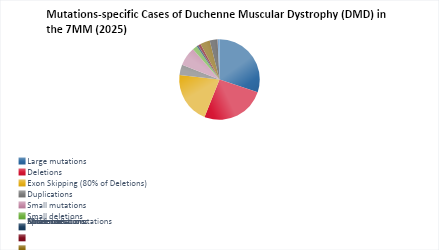
Scope of the Report
- The report covers a segment of a descriptive overview of DMD, explaining its causes, signs and symptoms, and pathogenesis.
- Comprehensive insight has been provided into the epidemiology segments and forecasts, the future growth potential of the diagnosis rate, and disease progression.
Report Insights
Duchenne Muscular Dystrophy (DMD) Patient Population Forecast
Report Key Strengths
- Epidemiology‑based (Epi‑based) bottom‑up forecasting
- 11-year forecast
- Patient Burden trends (by geography)
Download detailed Duchenne Muscular Dystrophy market forecast report covering epidemiology, treatment landscape, and forecast projections through 2036.
FAQs
- What are the disease risks, burdens, and unmet needs of DMD? What will be the growth opportunities across the 7MM concerning the patient population with DMD?
- What is the historical and forecasted DMD patient pool in the US, EU4 (Germany, France, Italy, and Spain), the UK, and Japan?
Reasons to Buy
- Insights on patient burden/disease prevalence, evolution in diagnosis, and factors contributing to the change in the epidemiology of the disease during the forecast years.
- To understand key opinion leaders’ perspectives on the diagnostic challenges to overcome barriers in the future.
- Detailed insights into various factors hampering disease diagnosis and other existing diagnostic challenges.



-pipeline.png&w=256&q=75)

