
Duchenne Muscular Dystrophy Market Summary
- The Duchenne Muscular Dystrophy market size was valued at approximately USD 4,000 million in 2025 and is projected to grow at a strong CAGR of 11% during 2026–2036, reflecting rapid advancements in treatment development and increasing therapeutic demand.
- The Duchenne Muscular Dystrophy companies developing therapies in the treatment market include - Sarepta Therapeutics, PTC Therapeutics, Nippon Shinyaku, Santhera Pharmaceuticals, ReveraGen BioPharma, Taiho Pharmaceutical, FibroGen, Capricor, Daiichi Sankyo, ItalfarmacoAntisense Therapeutics, Solid Biosciences, and others.
Duchenne Muscular Dystrophy Market & Epidemiology Insights and Trends
- According to DelveInsight’s analysis, the Duchenne Muscular Dystrophy market size was found to be USD 4,000 million in the leading markets (the United States, the EU4 (Germany, France, Italy, and Spain), the United Kingdom, and Japan) in 2025.
- The current market is anchored by corticosteroids such as Prednisone and Deflazacort, which remain the standard of care for delaying disease progression. Approved mutation-specific therapies, including exon-skipping agents like Eteplirsen and Golodirsen, target subsets of patients. Additionally, off-label use of cardiac, respiratory, and bone-protective medications supports comprehensive disease management.
- Despite therapeutic availability, most treatments primarily address symptoms or slow functional decline rather than halting disease progression. While these interventions have extended ambulation and survival, they do not fully prevent muscle degeneration or long-term complications.
- Significant gaps remain due to the limited applicability of mutation-specific therapies, variability in patient response, long-term safety concerns, and the continued progression of muscle weakness. The absence of broadly effective, disease-modifying therapies underscores the high unmet need in the DMD market.
- Existing therapies often require chronic administration and are associated with notable side effects (e.g., corticosteroid-related toxicities). Moreover, exon-skipping therapies benefit only small genetic subgroups, leaving a large proportion of patients without targeted options.
- The pipeline is rapidly evolving, with increasing focus on gene replacement therapies, next-generation exon-skipping technologies, and RNA-based approaches aimed at restoring dystrophin expression. These innovations represent a shift toward disease-modifying strategies with the potential for long-term benefit.
- Ongoing clinical trials are exploring novel delivery systems, improved gene-editing tools, and combination therapies to enhance efficacy and durability. Increased investment, regulatory support, and scientific progress are accelerating the transition from symptomatic care to precision medicine.
- The DMD market is expected to undergo a significant transformation as emerging therapies mature. While challenges such as high costs, safety concerns, and access barriers persist, the focus on curative or long-lasting treatments positions the market for substantial innovation and growth in the coming years.
Duchenne Muscular Dystrophy Market Size and Forecast in the 7MM
-
2025 Duchenne Muscular Dystrophy Market Size: USD 4,000 million
-
Duchenne Muscular Dystrophy Growth Rate (2026–2036): 11% CAGR
Request a sample to unlock the CAGR for "Duchenne Muscular Dystrophy Market Forecast"
Key Factors Driving the Duchenne Muscular Dystrophy Market
- Genetic prevalence: Increasing identification of Duchenne Muscular Dystrophy cases due to improved genetic screening and early diagnostic awareness is expanding the patient pool.
- Advancements in gene therapy: Rapid progress in exon-skipping therapies, gene replacement approaches, and novel molecular treatments is significantly driving market growth.
- Strong clinical pipeline: A robust pipeline of investigational drugs targeting dystrophin restoration and muscle function improvement is accelerating innovation in the Duchenne Muscular Dystrophy market.
- Regulatory support and orphan drug incentives: Favorable FDA and EMA incentives, including fast-track and orphan designations, are encouraging drug development and commercialization.
- Increasing healthcare investment: Rising funding from governments, biotech firms, and rare disease programs is boosting research and improving access to advanced DMD therapies.
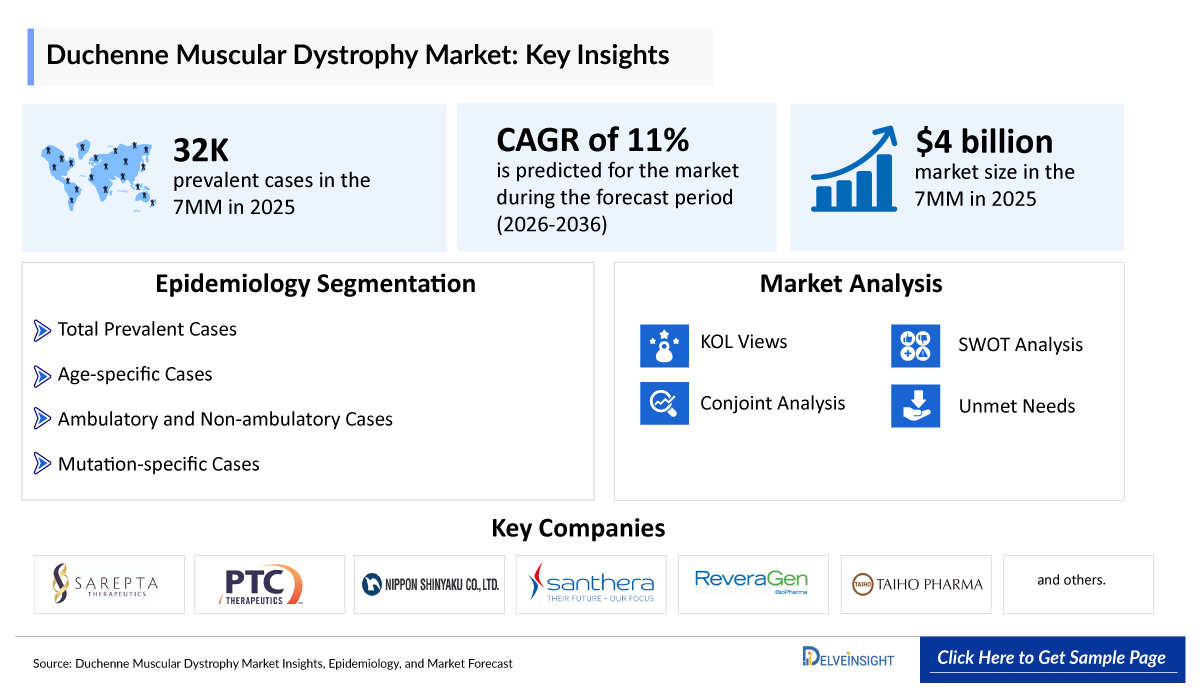
DelveInsight's "Duchenne Muscular Dystrophy Market Insights, Epidemiology and Market Forecast – 2036" report delivers an in-depth understanding of the DMD, historical and forecasted epidemiology, as well as the DMD therapeutics market trends in the United States, EU4 (Germany, Spain, Italy, and France) and the United Kingdom, and Japan.
The DMD market report delivers a comprehensive analysis of the current treatment landscape, including standards of care, clinical practices, and evolving therapeutic algorithms. It evaluates DMD patient burden trends, revenue & market share dynamics, peak patient share & therapy uptake analysis, and provides an in-depth market size assessment, and growth rate projections (Historical & Forecast 2022–2036) across global regions. The report highlights key unmet medical needs in DMD and maps the competitive and clinical landscape to uncover high‑value opportunities, providing a clear outlook on future market growth potential.
Scope of the Duchenne Muscular Dystrophy Market Report | |
|
Study Period |
2022–2036 |
|
Historical Year |
2022–2025 |
|
Forecast Period |
2026–2036 |
|
Base Year |
2026 |
|
Geographies Covered |
|
|
Duchenne Muscular Dystrophy Market CAGR (Study period/Forecast period) |
11% (2026–2036) |
|
Duchenne Muscular Dystrophy Epidemiology Segmentation Analysis |
Patient Burden Assessment
|
|
Duchenne Muscular Dystrophy Companies |
|
|
Duchenne Muscular Dystrophy Therapies |
|
|
Duchenne Muscular Dystrophy Market |
Segmented by
|
|
Analysis |
|
Duchenne Muscular Dystrophy Disease Understanding
Duchenne Muscular Dystrophy Overview and Diagnosis
DMD is a severe, X-linked neuromuscular disorder caused by mutations in the dystrophin gene, leading to progressive muscle degeneration and weakness, primarily affecting young boys. Symptoms typically appear in early childhood and worsen over time, eventually impacting respiratory and cardiac function. Diagnosis is based on clinical evaluation, elevated creatine kinase (CK) levels, and confirmation through genetic testing, which is the gold standard. Advances in molecular diagnostics have enabled earlier and more accurate detection, supporting timely intervention and disease management.
Further details are provided in the report....
Current Duchenne Muscular Dystrophy Treatment Landscape
The treatment landscape of DMD primarily focuses on slowing disease progression and managing symptoms. Standard care includes corticosteroids such as Prednisone and Deflazacort, along with supportive therapies like physiotherapy and respiratory care. Recent advances include mutation-specific exon-skipping therapies such as Eteplirsen and Golodirsen, marking a shift toward targeted treatment approaches. However, significant unmet needs remain, driving ongoing development of gene therapies and disease-modifying treatments.
Further details related to country-based variations are provided in the report....
Duchenne Muscular Dystrophy Unmet Needs
The section “unmet needs of Duchenne Muscular Dystrophy” outlines the critical gaps between the current state of patient care, diagnosis, and the ideal & effective management of the disease. It highlights the obstacles experienced by patients, clinicians, and researchers and identifies potential solutions for future progress.
- Lack of Curative Therapies
- Limited Applicability of Mutation-specific Therapies
- Progressive Loss of Function Despite Treatment
- High Treatment Burden and Accessibility Challenges, and others…..
Note: Comprehensive unmet needs insights in DMD and their strategic implications are provided in the full report...
Duchenne Muscular Dystrophy Epidemiology
The Duchenne Muscular Dystrophy epidemiology section provides insights about the historical and current Duchenne Muscular Dystrophy patient pool and forecasted trends for individual seven major countries. It helps to recognize the causes of current and forecasted trends by exploring numerous studies and views of key opinion leaders. This part of the Duchenne Muscular Dystrophy market report also provides the diagnosed patient pool and their trends along with assumptions undertaken.
Key Findings from Duchenne Muscular Dystrophy Epidemiological Analysis and Forecast
- The total number of prevalent cases of Duchenne Muscular Dystrophy in the 7MM was around 32,000 in 2025.
- The United States encompasses the highest prevalent population of Duchenne Muscular Dystrophy, around 17,500 in 2025.
- Among EU4 and the UK, the UK accounts for the highest number of prevalent cases of Duchenne Muscular Dystrophy, whereas Spain accounts for the least number of prevalent cases.
- In the US, the age group of 5-9 years accounted for the highest cases in 2025, followed by 10-14 years.
- Most cases of Duchenne Muscular Dystrophy involve non-ambulatory individuals.
- There are several comorbidities associated with Duchenne Muscular Dystrophy patients. In the United States, the maximum number of DMD patients affected with Scoliosis, followed by Attention-deficit hyperactivity disorder (ADHD) cases, was in 2025.
Recent Developments in the Duchenne Muscular Dystrophy Treatment Landscape
- In June 2026, global pharmaceutical group Servier completed its strategic acquisition of Edgewise Therapeutics' muscular dystrophy business. This transaction secures Servier the exclusive global rights to Edgewise's promising pipeline of clinical assets, including therapies targeting Duchenne and Becker muscular dystrophies. The acquisition significantly strengthens Servier's established portfolio in rare neurological and muscular diseases, leveraging their global clinical development and commercial capabilities to bring these critical treatments to market.
- In June 2026, Cumberland Pharmaceuticals presented updated results from its Phase 2 FIGHT DMD trial at the Parent Project Muscular Dystrophy Annual Conference on June 26. The trial evaluates ifetroban, an oral therapy targeting Duchenne muscular dystrophy-associated heart disease. New data reinforced ifetroban's cardioprotective effects, showing reduced markers of heart injury alongside a previously established 5.4% improvement in left ventricular ejection fraction. Long-term data from the ongoing open-label extension confirmed a favorable safety profile across 36 months.
- In June 2026, NS Pharma announced that its parent firm, Nippon Shinyaku, entered an exclusive global option agreement with Elixirgen Therapeutics to develop and commercialize EXG-7001. Aimed at treating Duchenne muscular dystrophy, EXG-7001 is a preclinical, locally administered, mRNA-based therapeutic drug. It is uniquely engineered to express full-length human dystrophin protein within muscle cells, helping suppress local muscle dysfunction regardless of a patient's specific genetic mutation. Elixirgen is currently preparing for initial U.S. clinical trials.
- In March 2026, Sarepta Therapeutics provided an update on its ongoing regulatory interactions with the US FDA regarding VYONDYS 53 for the treatment of DMD. Sarepta requested a meeting with the FDA to discuss submitting an sNDA seeking conversion of the accelerated approval of VYONDYS 53 to traditional approvals. This request was supported by data from the ESSENCE confirmatory study; substantial, published real-world evidence supporting treatment; and the favorable safety profiles of both therapies. The Company intends to submit the sNDAs by the end of April.
- In March 2026, Regenxbio announced new positive interim data from the Phase I/II AFFINITY DUCHENNE trial of RGX-202, a potential best-in-class gene therapy for DMD. Trial investigator Carolina Tesi-Rocha, M.D., Clinical Professor, Neurology, Stanford School of Medicine, Stanford Children's Health, presented this data, including new functional, safety, biomarker, and cardiac MRI measures, at the Muscular Dystrophy Association (MDA) Clinical and Scientific Conference.
- In October 2025, Regenxbio announced the completion of enrollment in the AFFINITY DUCHENNE pivotal trial of RGX-202, an investigational gene therapy for the treatment of DMD, as well as the successful production of the first batches intended for commercial supply.
Duchenne Muscular Dystrophy Epidemiology Segmentation
- Total Prevalent Cases of Duchenne Muscular Dystrophy
- Age-specific Cases of Duchenne Muscular Dystrophy
- Ambulatory and Non-ambulatory Cases of Duchenne Muscular Dystrophy
- Mutation-specific Cases of Duchenne Muscular Dystrophy
- Associated Comorbidities in Duchenne Muscular Dystrophy
Duchenne Muscular Dystrophy Drug Analysis & Competitive Landscape
The DMD drug chapter provides a detailed, market-focused review of approved therapies and the emerging pipeline across Phase I–III Duchenne Muscular Dystrophy clinical trials. It covers the mechanism of action, clinical trial data, regulatory approvals, patents, collaborations, and strategic partnerships for each therapy, along with their advantages, limitations, and recent developments. This section offers critical insights into the DMD treatment landscape, supporting market assessment, competitive analysis, and growth forecasting for the DMD market.
Approved Therapies for Duchenne Muscular Dystrophy
Deflazacort (EMFLAZA): PTC Therapeutics
EMFLAZA, a corticosteroid, is indicated for the treatment of DMD in patients two years of age and older. The active ingredient in EMFLAZA is deflazacort. The recommended once-daily dosage is approximately 0.9 mg/kg/day administered orally. EMFLAZA for oral administration is available as an immediate-release tablet in strengths of 6, 18, 30, and 36 mg and an immediate-release oral suspension in the strength of 22.75 mg/mL.
In February 2017, the US FDA approved EMFLAZA to treat all forms of DMD. Before gaining approval in the US, a version of the drug had already been approved in Europe.
Golodirsen (VYONDYS 53): Sarepta Therapeutics
VYONDYS 53, developed by Sarepta Therapeutics, is indicated for the treatment of DMD in patients who have a confirmed mutation of the DMD gene that is amenable to exon 53 skipping. This indication is approved under accelerated approval based on an increase in dystrophin production in skeletal muscle observed in patients treated with VYONDYS 53. In December 2019, the US FDA approved VYONDYS 53, granting it New Chemical Entity (NCE) exclusivity through December 2024 and Orphan Drug Exclusivity through December 2026.
In March 2026, Sarepta Therapeutics provided an update on its ongoing regulatory interactions with the US FDA regarding VYONDYS 53 for the treatment of DMD. Sarepta requested a meeting with the FDA to discuss submitting supplemental new drug applications (sNDA) seeking conversion of the accelerated approval of VYONDYS 53 to traditional approvals. This request was supported by data from the ESSENCE confirmatory study; substantial, published real-world evidence supporting treatment; and the favorable safety profiles of both therapies. The Company intends to submit the sNDAs by the end of April.
Duchenne Muscular Dystrophy Market Landscape of Pipeline Drugs | |||||
|
Drug Name |
Company |
Molecule type |
RoA |
MoA |
Initial approval |
|
VILTEPSO |
Nippon Shinyaku |
Antisense oligonucleotide |
IV |
Exon 53 skipping |
US: 2020 Japan: 2020 |
|
VYONDYS 53 |
Sarepta Therapeutics |
Antisense oligonucleotide |
IV |
Exon 53 Skipping |
US: 2019 |
|
EMFLAZA |
PTC Therapeutics |
Small molecule |
Oral |
Steroid receptor agonists |
US: 2017 |
|
EXONDYS 51 |
Sarepta Therapeutics |
Antisense oligonucleotide |
IV |
Exon 51 Skipping |
US: 2016 |
Note: Detailed marketed therapies assessment will be provided in the final report...
Duchenne Muscular Dystrophy Pipeline Analysis
Pizuglanstat (TAS-205): Taiho Pharmaceutical
TAS-205 is a selective hematopoietic prostaglandin D synthase (HPGDS) inhibitor discovered by Taiho Pharmaceutical. HPGDS produces the inflammatory mediator prostaglandin D2 (PGD2), which is increased in DMD patients and may play a role in the underlying molecular mechanisms that promote the progression and symptomatic presentations of this disease.
Currently, the drug is being investigated in a Phase III developmental clinical trial for the treatment of DMD patients
RGX 202: Regenxbio
RGX-202 is an investigational gene therapy for DMD that uses the NAV AAV8 vector to deliver a novel microdystrophin transgene incorporating key functional elements of the C-terminal domain of natural dystrophin.
- In March 2026, Regenxbio announced new positive interim data from the Phase I/II AFFINITY DUCHENNE trial of RGX-202, a potential best-in-class gene therapy for DMD. Trial investigator Carolina Tesi-Rocha, M.D., Clinical Professor, Neurology, Stanford School of Medicine, Stanford Children's Health, presented this data, including new functional, safety, biomarker, and cardiac MRI measures, at the Muscular Dystrophy Association (MDA) Clinical and Scientific Conference.
- In October 2025, Regenxbio announced the completion of enrollment in the AFFINITY DUCHENNE pivotal trial of RGX-202, an investigational gene therapy for the treatment of DMD, as well as the successful production of the first batches intended for commercial supply.
Competitive Landscape of Duchenne Muscular Dystrophy Pipeline Drugs | ||||||
|
Drug Name |
Company |
Highest Phase |
Indication |
RoA |
MoA |
Anticipated Launch in the US |
|
Pizuglanstat (TAS-205) |
Taiho Pharmaceutical |
III |
DMD |
Oral |
Selectively inhibits hematopoietic prostaglandin D synthase |
Information is available in the full report |
|
RGX 202 |
Regenxbio |
III |
DMD |
IV infusion |
Novel microdystrophin |
Information is available in the full report |
|
Note: Launch insights are provisional and may change with future report updates or the occurrence of major key catalysts. | ||||||
Note: Detailed emerging therapies assessment will be provided in the final report...
Duchenne Muscular Dystrophy Key Players, Market Leaders, and Emerging Companies
- Sarepta Therapeutics
- PTC Therapeutics
- Nippon Shinyaku
- Santhera Pharmaceuticals
- ReveraGen BioPharma
- Taiho Pharmaceutical
- FibroGen
- Capricor
- Daiichi Sankyo
- Italfarmaco
- Antisense Therapeutics, and others
Duchenne Muscular Dystrophy Market Outlook
The treatment landscape for DMD is evolving steadily, driven by advancements in disease-modifying therapies and improved standards of care. Currently, corticosteroids such as Prednisone and Deflazacort (marketed as EMFLAZA) remain the backbone of treatment, supporting prolonged ambulation and delayed disease progression, despite associated side effects.
The market is witnessing a shift toward targeted therapies, particularly exon-skipping drugs and emerging gene therapies, which aim to address the underlying genetic cause of DMD. Increasing regulatory support, orphan drug incentives, and accelerated approvals are encouraging the development and commercialization of innovative treatments. Additionally, improved diagnostic capabilities and rising awareness are expanding the treated patient pool.
However, challenges such as high treatment costs, limited applicability of mutation-specific therapies, and the need for long-term efficacy and safety data may restrain growth. Overall, the DMD market is expected to grow significantly, driven by a strong pipeline and the transition from symptomatic management to disease-modifying approaches.
- In 2025, the total market size of DMD by therapies was USD 4000 million in the 7MM. The highest revenue was captured by VILTEPSO, accounting for USD 560 million in 2025.
- During the forecast period (2026–2036), pipeline candidates such as Pizuglanstat, RGX 202, and others are expected to drive the growth of the DMD market size.
Further details will be provided in the report….
Drug Class/Insights into Leading Emerging and Marketed Therapies in Duchenne Muscular Dystrophy (2022–2036 Forecast)
The treatment landscape of DMD remains largely focused on slowing disease progression and managing complications; however, emerging therapies are increasingly targeting the underlying genetic cause of the disease.
Gene-targeting therapies: Advanced approaches such as exon-skipping therapies aim to restore the reading frame of the dystrophin gene, enabling the production of a partially functional dystrophin protein. Approved agents like Eteplirsen and Golodirsen exemplify this strategy, while next-generation gene therapies are being evaluated to deliver functional dystrophin genes and provide long-term disease modification.
Small molecules: Current pharmacological treatments primarily address symptoms and disease progression. Corticosteroids such as Prednisone and Deflazacort remain the standard of care, helping to preserve muscle strength and delay functional decline, while additional supportive medications manage cardiac, respiratory, and orthopedic complications.
Duchenne Muscular Dystrophy Drug Uptake
This section focuses on the uptake rate of potential Duchenne Muscular Dystrophy drugs expected to be launched in the market during the forecast period (2026–2036). The analysis covers the DMD market's uptake by drugs, patient uptake by therapy, and sales of each drug.
Detailed insights of emerging therapies' drug uptake is included in the report...
Duchenne Muscular Dystrophy Market Access and Reimbursement of Approved Therapies
The United States
ITF ARC provides a variety of financial support options for eligible patients:
Copay Program
With our copay assistance program, you could pay as little as USD 0 per month in out-of-pocket costs for those with commercial insurance whose health plan covers DUVYZAT.
Patient Assistance Program
This program provides medication free of charge to those who are eligible and do not have insurance, or whose insurance does not cover their prescription.
Temporary supply programs
Our temporary supply programs help ensure patients have access to treatment from the start while waiting for insurance approvals or other processes to be completed. These programs help ensure you or your loved one gets medicine without disruption in treatment.
Reimbursement is a crucial factor that affects the drug’s access to the market. Often, the decision to reimburse comes down to the price of the drug relative to the benefit it produces in treated patients. To reduce the healthcare burden of these high-cost therapies, many payment models are being considered by payers and other industry insiders.
NOTE: Further Details are provided in the final report….
Duchenne Muscular Dystrophy Therapies Price Scenario & Trends
Pricing and analogue assessment of DMD therapies highlights evolving price dynamics structures. This section summarizes the cost of approved treatments, the closest and most appropriate analogue selection for emerging therapies, and understanding of how pricing influences market access, adherence, and long-term uptake.
-
Pricing of DMD-Approved Drugs
EMFLAZA: The average annual cost of therapy (ACOT) is calculated based on unit pricing across dosing strengths of 6 mg, 18 mg, 30 mg, and 36 mg. As treatment cost varies with patient weight, a WAC-based annual price of USD 92,710 has been assumed for a 45–50 kg patient.
Industry Experts and Physician Views for Duchenne Muscular Dystrophy
To keep up with DMD market trends, we take Key Opinion Leaders (KOLs) and Subject Matter Experts (SMEs) opinions working in the domain through primary research to fill the data gaps and validate our secondary research. Industry Experts were contacted for insights on the DMD emerging therapies, evolving treatment landscape, patient adherence to conventional therapies, therapy switching trends, drug adoption and uptake, accessibility challenges, and epidemiology and real-world prescription patterns in DMD, including MD, PhD, Instructor, Postdoctoral Researcher, Professor, Researcher, and others.
DelveInsight’s analysts connected with 10+ KOLs to gather insights at country level. Centers such as the DMD Research Foundation (MMRF), University of Texas MD Anderson Cancer Center, and Iwate Medical University, etc. were contacted. Their opinion helps understand and validate current and emerging DMD therapies, highlight unmet medical needs, provide epidemiological context, and support strategic decisions for market access, therapy adoption, and pipeline prioritization in DMD.
|
Region |
Key Opinion Leaders (KOLs) and Subject Matter Experts (SMEs) |
|
United States |
“FTD by the FDA for pamrevlumab in DMD underscores the high unmet medical need for patients suffering from this debilitating disease and the potential to advance a new treatment option. We look forward to working closely with the FDA on the development of pamrevlumab as a potential therapy for DMD.” |
|
Spain |
“Developing drugs designed for patients with specific mutations is a critical part of personalized medicine. Today’s approval of AMONDYS 45 provides a targeted treatment option for DMD patients with this confirmed mutation.” |
Duchenne Muscular Dystrophy Report Qualitative Analysis: SWOT and Conjoint Analysis
We perform qualitative and market Intelligence analysis using various approaches, such as SWOT analysis and conjoint analysis.
In the SWOT analysis of DMD, strengths, weaknesses, opportunities, and threats in terms of disease diagnosis, patient awareness, patient burden, competitive landscape, cost-effectiveness, and geographical accessibility of therapies are provided.
Conjoint analysis analyzes emerging therapies based on relevant attributes such as safety, efficacy, frequency of administration, route of administration, and order of entry. Scoring is given based on these parameters to analyze the effectiveness of therapy.
The team of analysts analyzes promising emerging therapies based on relevant attributes such as safety, efficacy, frequency of administration, route of administration, and order of entry. In efficacy, the trial’s primary and secondary outcome measures are evaluated, whereas the therapies’ safety is evaluated, wherein the acceptability, tolerability, and adverse events are mainly observed. In addition, the scoring is also based on the route of administration, order of entry, probability of success, and the addressable patient pool for each therapy. According to these parameters, the final weightage score and the ranking of the emerging therapies are decided.
Scope of the Duchenne Muscular Dystrophy Market Report
- The report covers a segment of key events, an executive summary, a descriptive overview of DMD, explaining its causes, signs and symptoms, pathogenesis, and currently available treatments.
- Comprehensive insight has been provided into the epidemiology segments and forecasts, the future growth potential of the diagnosis rate, and disease progression along treatment guidelines.
- Additionally, an all-inclusive account of both the current and emerging treatments, along with the elaborative profiles of late-stage and prominent therapies, will have an impact on the current treatment landscape.
- A detailed review of the DMD market, historical and forecasted market size, market share by therapies, detailed assumptions, and rationale behind our approach is included in the report, covering the 7MM drug outreach.
- The report provides an edge while developing business strategies by understanding trends through SWOT analysis and expert insights/KOL views, patient journey, and treatment preferences that help in shaping and driving the 7MM DMD market.
Duchenne Muscular Dystrophy Market Report Insights
- Duchenne Muscular Dystrophy Patient Population Forecast
- Duchenne Muscular Dystrophy Market Opportunity (Current and Forecasted)
- Duchenne Muscular Dystrophy Pipeline Analysis
- Duchenne Muscular Dystrophy Market Size and Trends
- Duchenne Muscular Dystrophy Market Opportunity (Current and Forecasted)
Duchenne Muscular Dystrophy Market Report Key Strengths
- Duchenne Muscular Dystrophy Epidemiology‑based (Epi‑based) bottom‑up Forecasting
- Artificial Intelligence (AI)-enabled Market Research Report
- 11-year Forecast
- Duchenne Muscular Dystrophy Market Outlook (North America, Europe, Asia-Pacific)
- Patient Burden Trends (by geography)
- Duchenne Muscular Dystrophy Treatment Addressable Market (TAM)
- Duchenne Muscular Dystrophy Competitive Landscape
- Duchenne Muscular Dystrophy Major Companies Insights
- Duchenne Muscular Dystrophy Price Trends and Analogue Assessment
- Duchenne Muscular Dystrophy Therapies and Drug Adoption/Uptake
- Duchenne Muscular Dystrophy Therapies Peak Patient Share Analysis
Duchenne Muscular Dystrophy Market Report Assessment
- Duchenne Muscular Dystrophy Current Treatment Practices
- Duchenne Muscular Dystrophy Unmet Needs
- Duchenne Muscular Dystrophy Clinical Development Analysis
- Duchenne Muscular Dystrophy Emerging Drugs Product Profiles
- Duchenne Muscular Dystrophy Market Attractiveness
- Duchenne Muscular Dystrophy Qualitative Analysis (SWOT and Conjoint Analysis)
- Duchenne Muscular Dystrophy Market Drivers
- Duchenne Muscular Dystrophy Market Barriers
FAQs Related to Duchenne Muscular Dystrophy Market Report:
Duchenne Muscular Dystrophy Market Insights
- What was the DMD market size, the market size by therapies, market share (%) distribution in 2025, and what would it look like by 2036? What are the contributing factors for this growth?
- What are the anticipated pricing variations among different geographies for the emerging therapies in the future?
- What can be the future treatment paradigm of DMD?
- What are the disease risks, burdens, and unmet needs of DMD? What will be the growth opportunities across the 7MM concerning the DMD patient population?
- Who is the major future competitor in the market, and how will the competitors affect their market share?
- What are the current options for the treatment of DMD? What are the current guidelines for treating DMD in the US, Europe, and Japan?
Reasons to Buy Duchenne Muscular Dystrophy Market Forecast Report
- The report will help in developing business strategies by understanding the latest trends and changing treatment dynamics driving the DMD market.
- Bottom-up forecasting builds from the affected population to product forecasts, delivering a robust, data-driven approach ideal for new therapies and novel classes.
- Insights on patient burden/disease incidence, evolution in diagnosis, and factors contributing to the change in the epidemiology of the disease during the forecast years.
- Understand the existing market opportunities in varying geographies and the growth potential over the coming years.
- Identifying strong upcoming players in the market will help devise strategies to help get ahead of competitors.
- Detailed analysis and ranking of class-wise potential current and emerging therapies under the conjoint analysis section to provide visibility around leading classes.
- To understand KOLs’ perspectives on the accessibility, acceptability, and compliance-related challenges of existing treatment to overcome barriers in the future.
- Detailed insights into the unmet needs of the existing market so that the upcoming players can strengthen their development and launch strategy.
- This Artificial Intelligence (AI)-enabled report summarize and simplify complex datasets within the report into clear, actionable insights for stakeholders, investors, and healthcare providers, enabling faster, data-driven decisions.
Stay Updated with us for New Articles:-
- Sarepta’s ELEVIDYS: First Gene Therapy for Duchenne Muscular Dystrophy Treatment
- Zealand Pharma’s Phase III Results of Glepaglutide; FDA Approves Amylyx’s ALS Drug Relyvrio; Novo Nordisk and Ventus Therapeutics Signs Licencing Deal; FDA Approves Futibatinib; Sarepta Files Duchenne Muscular Dystrophy for FDA Approval; Biogen and Eisai’s Lcanemab Phase III Study
- What Does the Future Hold For Gene Therapy in the Duchenne Muscular Dystrophy Treatment Market?
- Duchenne Muscular Dystrophy Market: What's More Beyond Exon-Skipping Therapies?
- In Search for a Curative Treatment Option for Duchenne Muscular Dystrophy
- Is the cure for Duchenne Muscular Dystrophy in the pipeline?
- Duchenne Muscular Dystrophy Market: Blog
- Duchenne Muscular Dystrophy Market: Infographics
- Duchenne Muscular Dystrophy Market: Newsletter
Explore More Insights: Encourages readers to delve deeper into related reports for comprehensive insights @ Latest DelveInsight Blogs


-pipeline.png&w=256&q=75)