Dystrophic Epidermolysis Bullosa Market Summary
Dystrophic Epidermolysis Bullosa (DEB) Insights and Trends
- The DEB treatment paradigm is undergoing a significant shift from traditional supportive care (wound management, pain control) to advanced disease-modifying approaches, particularly gene and cell therapies, aimed at correcting the underlying COL7A1 mutation and altering disease progression.
- Treatment for DEB remains largely supportive, with a strong focus on symptom management, prevention of complications, and improving quality of life. Core management includes advanced wound care, infection control, pain management, and nutritional support to promote healing and reduce morbidity. Patients often require specialized non-adhesive dressings, bandaging techniques, and protective measures to minimize mechanical trauma. In severe cases, particularly Recessive Dystrophic Epidermolysis Bullosa (RDEB), multidisciplinary care is essential due to systemic involvement. Surgical interventions may be needed to manage complications such as mitten deformities of the hands, esophageal strictures, and chronic wounds.
- In recent years, the treatment landscape for DEB has begun to evolve with the emergence of targeted and disease-modifying therapies, including gene therapies, cell-based approaches, and protein replacement strategies aimed at restoring type VII collagen (COL7A1) function. Additionally, topical gene therapy and ex vivo gene-corrected skin grafts are being explored, offering potential long-term therapeutic benefit beyond symptomatic care.
- The approval of VYJUVEK marks a breakthrough as the first topical gene therapy for DEB, demonstrating strong clinical efficacy in wound healing and rapid market uptake driven by high unmet need. Additionally, autologous cell-based gene therapies such as ZEVASKYN are reinforcing the shift toward regenerative approaches, despite high costs and procedural complexity.
- Despite recent advancements, currently available therapies require repeated administration or complex procedures, highlighting the need for durable, one-time, or curative treatments that can provide sustained clinical benefit and reduce treatment burden.
- Existing therapies primarily address wound healing but do not fully target systemic manifestations such as fibrosis or the high risk of aggressive squamous cell carcinoma, representing a critical gap in comprehensive disease management.
- New therapies are emerging that target either the primary genetic defect or the secondary inflammatory footprint of the disease; treatment innovations include the early phase clinical testing of gene, cell-based, protein, and miscellaneous small molecule or repositioned drug therapies to help combat this debilitating disorder.
- The DEB pipeline is expanding rapidly with next-generation gene therapies, gene editing (CRISPR), protein replacement, and stem cell-based approaches, aiming to improve durability, efficacy, and ease of administration.
Dystrophic Epidermolysis Bullosa (DEB) Market Size and Forecast in the 7MM
- 2025 Dystrophic Epidermolysis Bullosa (DEB) Market Size: XXXX million
- Dystrophic Epidermolysis Bullosa (DEB) Growth Rate (2026–2036): 7% CAGR
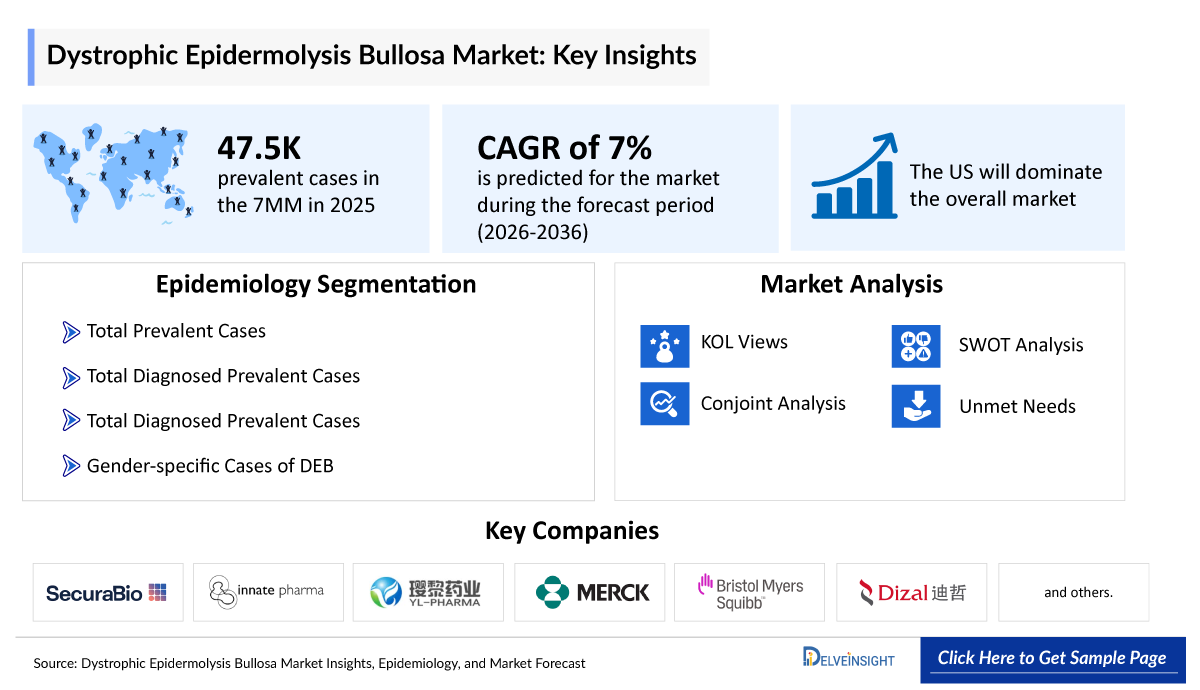
DelveInsight's ‘Dystrophic Epidermolysis Bullosa (DEB) – Market Insights, Epidemiology and Market Forecast – 2036’ report delivers an in-depth understanding of the dystrophic epidermolysis bullosa, historical and forecasted epidemiology, as well as the dystrophic epidermolysis bullosa market trends in the United States, EU4 (Germany, Spain, Italy, and France) and the United Kingdom, and Japan.
The Dystrophic Epidermolysis Bullosa (DEB) market report delivers a comprehensive analysis of the current treatment landscape, including standards of care, clinical practices, and evolving therapeutic algorithms. It evaluates dystrophic epidermolysis bullosa patient burden trends, revenue & market share dynamics, peak patient share & therapy uptake analysis, and provides an in-depth market size assessment, and growth rate projections (Historical & Forecast 2022–2036) across global regions. The report highlights key unmet medical needs in dystrophic epidermolysis bullosa and maps the competitive and clinical landscape to uncover high‑value opportunities, providing a clear outlook on future market growth potential.
|
Study Period |
2022–2036 |
|
Historical Year |
2022–2025 |
|
Forecast Period |
2026–2036 |
|
Base Year |
2026 |
|
Geographies Covered |
|
|
Dystrophic Epidermolysis Bullosa (DEB) Market CAGR (Study period/Forecast period) |
7% (2026–2036) |
|
Dystrophic Epidermolysis Bullosa (DEB) Epidemiology Segmentation Analysis |
Patient Burden Assessment
|
|
Dystrophic Epidermolysis Bullosa (DEB) Companies |
|
|
Dystrophic Epidermolysis Bullosa (DEB) Therapies |
|
|
Dystrophic Epidermolysis Bullosa (DEB) Market |
Segmented by
|
|
Analysis |
|
Key Factors Driving the Dystrophic Epidermolysis Bullosa (DEB) Market
Advancements in gene and cell therapies
Rapid progress in gene therapy, cell-based approaches, and regenerative medicine is enabling the development of treatments targeting the underlying genetic defect (COL7A1 mutation), shifting the focus from symptomatic relief to long-term disease correction.
Increasing R&D investments and pipeline expansion
Rising investments from biotechnology and pharmaceutical companies, along with a robust clinical pipeline, are accelerating the development of innovative therapies, thereby supporting market growth.
Supportive regulatory environment
Favorable regulatory frameworks, including orphan drug designations and expedited approval pathways, are encouraging the development and commercialization of therapies for rare diseases such as DEB.
Dystrophic Epidermolysis Bullosa (DEB) Understanding and Treatment Algorithm
Dystrophic Epidermolysis Bullosa (DEB) Overview
DEB is a rare, inherited skin disorder characterized by extreme skin fragility, leading to recurrent blistering, erosions, and chronic wounds following minor mechanical trauma. The condition is caused by mutations in the COL7A1 gene, which encodes type VII collagen, a critical component responsible for anchoring the epidermis to the dermis. DEB is broadly classified into dominant and recessive forms, with recessive DEB generally presenting with more severe clinical manifestations, including extensive blistering, scarring, deformities, and increased risk of aggressive squamous cell carcinoma. The disease significantly impacts patients’ quality of life, often requiring lifelong wound care, pain management, and multidisciplinary clinical support.
Dystrophic Epidermolysis Bullosa (DEB) Diagnosis
Diagnosis of DEB is based on clinical features such as skin fragility, blistering, and scarring, typically presenting early in life. Confirmation is achieved through genetic testing to identify COL7A1 mutations. Skin biopsy with immunofluorescence mapping or electron microscopy may be used to determine the level of skin separation and support diagnosis.
Further details are provided in the report.
Dystrophic Epidermolysis Bullosa (DEB) Treatment
Treatment of DEB is primarily supportive, focusing on wound care, pain management, and prevention of infections. Advanced wound dressings, topical therapies, and systemic antibiotics are commonly used to manage symptoms and improve quality of life.
Emerging therapies, including gene therapy, cell-based approaches, and protein replacement treatments, are being developed to address the underlying genetic defect and offer potential long-term benefits.
Further details related to country-based variations are provided in the report.
Dystrophic Epidermolysis Bullosa (DEB) Unmet Needs
The section “unmet needs of Dystrophic Epidermolysis Bullosa (DEB)” outlines the critical gaps between the current state of patient care, diagnosis, and the ideal & effective management of the disease. It highlights the obstacles experienced by patients, clinicians, and researchers and identifies potential solutions for future progress.
- Lack of curative therapies
- High disease burden and poor quality of life
- Limited access to advanced therapies
- Challenges in early and accurate diagnosis, and others…..
Comprehensive unmet needs insights in Dystrophic Epidermolysis Bullosa (DEB) and their strategic implications are provided in the full report.
Dystrophic Epidermolysis Bullosa (DEB) Epidemiology
Key Findings from Dystrophic Epidermolysis Bullosa (DEB) Epidemiological Analysis and Forecast
- The total prevalent cases of epidermolysis bullosa in the 7MM were ~47,500 cases in 2025, which is expected to increase during the forecast period (2026–2036).
- The highest number of prevalent cases was observed in the United States. On the other hand, among EU4 and the UK countries, the highest number of epidermolysis bullosa cases was observed in Germany in 2025.
- In 2025, the total diagnosed prevalent cases of dystrophic epidermolysis bullosa in 7MM were 14,300, which are expected to increase by 2036.
- Epidermolysis is more prevalent in children and young adults, as ~78% cases were in the age group of <19 years in the 7MM in 2025.
- Epidermolysis bullosa simplex is the most common form of epidermolysis bullosa, accounting for approximately 61%, 5% and 34% cases of EBS, JEB, and DEB in the 7MM in 2025.
Dystrophic Epidermolysis Bullosa (DEB) Drug Chapters & Competitive Analysis
The Dystrophic Epidermolysis Bullosa (DEB) drug chapter provides a detailed, market-focused review of approved therapies and the emerging pipeline across Phase I–III clinical trials. It covers the mechanism of action, clinical trial data, regulatory approvals, patents, collaborations, and strategic partnerships for each therapy, along with their advantages, limitations, and recent developments. This section offers critical insights into the dystrophic epidermolysis bullosa treatment landscape, supporting market assessment, competitive analysis, and growth forecasting for the dystrophic epidermolysis bullosa therapeutics market.
Approved Therapies for Dystrophic Epidermolysis Bullosa (DEB)
VYJUVEK (beremagene geperpavec): Krystal Biotech
Beremagene geperpavec (B-VEC) is a non-invasive, topical, redosable gene therapy designed to deliver two copies of the COL7A1 gene when applied directly to DEB wounds.
In September 2025, Krystal Biotech announced that the US FDA approved a label update for VYJUVEK that expands the VYJUVEK eligible patient population to include DEB patients from birth and provides patients full flexibility with respect to VYJUVEK application and managing wound dressings. In July 2025, Krystal Biotech announced that the Japanese Ministry of Health, Labour and Welfare (MHLW) granted marketing authorization to VYJUVEK for the treatment of wounds in patients with DEB, starting from birth. VYJUVEK is the first genetic medicine approved in Japan for the treatment of DEB. The Japanese approval allows for dosing at home or in a healthcare setting, with the option for administration by patients or their family members.
FILSUVEZ (oleogel-S10): Chiesi Farmaceutici
FILSUVEZ is a herbal medicinal product that contains birch triterpenes from birch bark. This sterile gel is being developed to speed up the healing of skin wounds in adults and children with severe subtypes of epidermolysis bullosa; these subtypes are DEB and JEB. FILSUVEZ joined the Chiesi portfolio as part of the agreement reached during the acquisition of Amryt Pharma in January of this year.
In December 2023, Chiesi Global Rare Diseases announced that the US FDA approved FILSUVEZ (birch triterpenes) topical gel for the treatment of partial thickness wounds in patients 6 months and older with JEB and DEB. FILSUVEZ is the first approved treatment for wounds associated with JEB, a rare, moderate-to-severe form of epidermolysis bullosa with blisters beginning in infancy.
|
Dystrophic Epidermolysis Bullosa (DEB) Marketed/Approved Therapies | ||||||
|
Drug/Therapy |
Company |
Indication |
Molecule Type |
RoA |
MoA |
Marketed Region |
|
VYJUVEK (beremagene geperpavec) |
Krystal Biotech |
Patients 6 months of age and older with DEB with mutations in the COL7A1 gene |
Gene therapy |
Topical gel |
Deliver COL7A1 gene when applied directly to DEB wounds |
US: May 2023 EU: November 2023 JP: July 2025 |
|
FILSUVEZ (oleogel-S10) |
Chiesi Farmaceutici |
Partial thickness wounds associated with DEB and JEB in patients 6 months and older |
Birch bark extract (small molecule) |
Topical gel |
Facilitating the migration, differentiation, and proliferation of keratinocytes |
US: December 2022 EU: June 2022 |
Note: Detailed marketed therapies assessment will be provided in the final report.
Dystrophic Epidermolysis Bullosa (DEB) Pipeline Analysis
D-Fi (dabocemagene autoficel): Castle Creek Biosciences
Using its proprietary ex vivo platform, Lenti-VEX, the company is developing and evaluating D-Fi, also known as FCX-007 (dabocemagene autoficel), an autologous gene therapy candidate to treat DEB, a progressive, devastatingly painful and debilitating, rare genetic skin disorder.
In October 2021, Castle Creek Biosciences announced that the US FDA’s Office of Orphan Products Development (OOPD) awarded the company a research grant of USD 1.825 million over four years. This funding supports a significant portion of the Phase III clinical development of dabocemagene autoficel (FCX-007, D-Fi) for the treatment of RDEB.
ABCB5+ mesenchymal stem cells (ABCB5+ MSCs): RHEACELL
ABCB5+ mesenchymal stem cells (ABCB5+ MSCs) may represent a new, promising therapeutic approach to epidermolysis bullosa. ABCB5+ MSCs are infused into the bloodstreams and can migrate to the wounds, decreasing inflammation and promoting wound healing. ABCB5+ MSCs target all wounds (internal and external) and release and deposit collagen VII.
In October 2021, the biopharmaceutical company RHEACELL was honored by the organization ‘Dystrophic Epidermolysis Bullosa Research Association of America’ (DEBRA) with the ‘Partners in Progress Award’ to recognize RHEACELL’s research commitment and medical advancements in the development of a therapy to treat severe forms of epidermolysis bullosa.
|
Table 2: Comparison of Emerging Drugs Under Development | |||||||
|
Drug Name |
Company |
Indication |
Highest Phase |
RoA |
MoA |
Molecule Type |
Anticipated Launch in the US |
|
D-Fi (dabocemagene autoficel) |
Castle Creek Biosciences |
RDEB |
III |
Intradermal injection |
Provides functional type VII collagen (COL7) locally to affected areas |
Autologous cell-based gene therapy |
2028 |
|
ABCB5+ mesenchymal stem cells (ABCB5+ MSCs) |
RHEACELL |
RDEB, JEB |
III |
IV infusion |
Form structural proteins collagen VII, laminin-322, and keratin14 and thus support wound healing |
Stem cell-based therapy |
Information is available in the full report |
|
Redasemtide |
Shionogi |
DEB |
II |
IV infusion |
Regeneration-Inducing Medicine |
HMGB1 Fragment Peptide |
Information is available in the full report |
|
Note: Launch insights are provisional and may change with future report updates or the occurrence of major key catalysts. | |||||||
Note: A detailed emerging therapies assessment will be provided in the final report
Dystrophic Epidermolysis Bullosa (DEB) Key Players, Market Leaders, and Emerging Companies
- Krystal Biotech
- Chiesi Farmaceutici
- Japan Tissue Engineering
- Abeona Therapeutics
- Castle Creek Biosciences
- RHEACELL
- Shionogi, and others
Dystrophic Epidermolysis Bullosa (DEB) Drug Updates
- In September 2025, Krystal Biotech announced that the US FDA approved a label update for VYJUVEK that expands the VYJUVEK eligible patient population to include DEB patients from birth and provides patients full flexibility with respect to VYJUVEK application and managing wound dressings.
- In July 2025, Krystal Biotech announced that the Japanese Ministry of Health, Labour and Welfare (MHLW) granted marketing authorization to VYJUVEK for the treatment of wounds in patients with DEB, starting from birth. VYJUVEK is the first genetic medicine approved in Japan for the treatment of DEB. The Japanese approval allows for dosing at home or in a healthcare setting, with the option for administration by patients or their family members.
- In April 2025, Abeona Therapeutics announced the US FDA had approved ZEVASKYN gene-modified cellular sheets, also known as pz-cel, as the first and only autologous cell-based gene therapy for the treatment of wounds in adult and pediatric patients with RDEB.
Dystrophic Epidermolysis Bullosa (DEB) Market Outlook
Significant advances in understanding the pathophysiology of epidermolysis bullosa have driven the development of repurposed drugs and novel targeted therapies, particularly disease-modifying approaches aimed at restoring defective proteins. However, no curative treatments exist for most epidermolysis bullosa subtypes, and current management remains largely supportive, focusing on wound care, pain control, and prevention of complications. Wound care is the cornerstone, but it is time-intensive, costly, and places a substantial burden on patients and caregivers, especially in severe forms such as recessive dystrophic epidermolysis bullosa (RDEB).
Supportive treatment commonly includes antibiotics, pain medications, and anti-pruritic therapies. Pruritus is a major concern and is managed with topical agents (ointments, corticosteroids, antihistamines) and systemic medications such as hydroxyzine and gabapentin. However, long-term use of some therapies, particularly corticosteroids, may lead to adverse effects.
Emerging therapeutic strategies include gene therapy, cell-based therapies, and protein replacement approaches. While early studies (e.g., fibroblast injections and bone marrow transplantation) have shown partial benefits, challenges related to safety, tolerability, and durability remain. Japan has led in cell therapy approvals with JACE, while Europe approved FILSUVEZ for wound treatment. A breakthrough occurred in 2023 with the US approval of VYJUVEK, the first topical gene therapy for DEB, which promotes wound healing and reduces blister formation.
Despite these advances, treatment availability remains limited across regions, highlighting significant unmet needs. Current research focuses on two main strategies: correcting the underlying genetic defect (e.g., COL7A1 gene therapies) and reducing inflammation to alleviate symptoms. A robust pipeline, including candidates such as D-Fi and ABCB5+ mesenchymal stem cells (ABCB5+ MSCs), as well as stem cell and combination gene-cell therapies, continues to evolve, with the potential to transform the treatment landscape. Continued innovation is critical given the high disease burden and impact on patient quality of life. Overall, the epidermolysis bullosa therapeutics market is expected to increase in the forecast period (2026–2036).
- The market size of dystrophic epidermolysis bullosa in the 7MM is USD XXXX million in 2025, which is expected to rise in the forecast period (2026-2036).
- According to the estimates, the largest market size of dystrophic epidermolysis bullosa is to be from the United States in 2025.
Further details will be provided in the report….
Drug Class/Insights into Leading Emerging and Marketed Therapies in Dystrophic Epidermolysis Bullosa (DEB) (2026–2036 Forecast)
The DEB therapeutic landscape remains largely supportive; however, recent advances in gene and cell-based therapies have initiated a shift toward disease-modifying, mechanism-driven approaches aimed at correcting underlying genetic defects.
Gene therapies: Targeted gene therapies such as VYJUVEK deliver functional copies of defective genes (e.g., COL7A1), promoting wound healing and reducing blister formation. These therapies represent a major advancement toward durable, disease-modifying treatment in DEB.
Cell and regenerative therapies: Approaches including autologous cultured epidermal grafts (e.g., JACE) and stem cell–based therapies aim to restore skin integrity and enhance healing. While promising, challenges related to scalability, tolerability, and long-term efficacy remain.
Further details will be provided in the report….
Dystrophic Epidermolysis Bullosa (DEB) Drug Uptake
This section focuses on the uptake rate of potential drugs expected to be launched in the market during the forecast period (2026–2036). The analysis covers the Dystrophic Epidermolysis Bullosa (DEB) market's uptake by drugs, patient uptake by therapy, and sales of each drug.
Drug uptake in DEB is currently highest for ZEVASKYN (prademagene zamikeracel), driven by its disease-modifying potential and ability to address the underlying genetic defect rather than providing only symptomatic relief. Its targeted gene therapy approach and promising clinical outcomes have supported strong physician interest and early adoption.
Further detailed analysis of emerging therapies' drug uptake in the report…
Market Access and Reimbursement of Dystrophic Epidermolysis Bullosa (DEB)
- US
Reimbursement is a crucial factor that affects the drug’s access to the market. Often, the decision to reimburse comes down to the price of the drug relative to the benefit it produces in treated patients. To reduce the healthcare burden of these high-cost therapies, many payment models are being considered by payers and other industry insiders.
The price of gene and cell therapies depends mainly on their perceived value as defined by multiple factors, including their level of innovation, durable clinical benefit, treatable patient population size, and impact on health systems. The Institute for Clinical and Economic Review estimates that the cumulative budget impact for gene and cell therapies alone could rise to USD 3 trillion in the US when only about 10% of eligible patients are treated with these therapies.
To reduce the healthcare burden of these high-cost therapies, payers and other industry insiders are considering many payment models. The payment models are based on clinical outcomes, annuity payments, and expanded risk pools.
Further details are provided in the final report….
Dystrophic Epidermolysis Bullosa (DEB) Therapies Price Scenario & Trends
Pricing and analogue assessment of dystrophic epidermolysis bullosa therapies highlights evolving price dynamics structures. This section summarizes the cost of approved treatments, the closest and most appropriate analogue selection for emerging therapies, and the understanding of how pricing influences market access, adherence, and long-term uptake.
- Pricing of Dystrophic Epidermolysis Bullosa (DEB) Approved Drugs
The recommended dose of FILSUVEZ is 10% birch triterpenes w/w supplied in 25 mL sterile tubes, with the total therapy cost being approximately USD 190,000.
Further details are provided in the final report….
Industry Experts and Physician Views for Dystrophic Epidermolysis Bullosa (DEB)
To keep up with Dystrophic Epidermolysis Bullosa (DEB) market trends, we take Key Opinion Leaders (KOLs) and Subject Matter Experts (SMEs) opinions working in the domain through primary research to fill the data gaps and validate our secondary research. Industry experts were contacted for insights on the Dystrophic Epidermolysis Bullosa (DEB) emerging therapies, evolving treatment landscape, patient adherence to conventional therapies, therapy switching trends, drug adoption and uptake, accessibility challenges, and epidemiology and real-world prescription patterns in Dystrophic Epidermolysis Bullosa (DEB), including MD, PhD, Instructor, Postdoctoral Researcher, Professor, Researcher, and others.
DelveInsight’s analysts connected with 10+ KOLs to gather insights; however, interviews were conducted with 6+ KOLs in the 7MM. Centers such as the University of North Carolina at Chapel Hill, the Berlin Institute of Health at Charité, and the University of Nottingham, etc. were contacted. Their opinion helps understand and validate current and emerging Dystrophic Epidermolysis Bullosa (DEB) therapies, highlight unmet medical needs, provide epidemiological context, and support strategic decisions for market access, therapy adoption, and pipeline prioritization in Dystrophic Epidermolysis Bullosa (DEB).
|
Region |
Key Opinion Leaders (KOLs) and Subject Matter Experts (SMEs) |
|
United States |
“I think the approach of B-VEC is exciting because it goes on to wounds and has an enduring effect for months, which is very helpful. As new wounds develop, you can just get on and treat them. And you can treat different anatomical sites, which again is helpful for people with lots of wounds in the axilla or around the neck and the flexors. Really hard areas to dress and areas that are not going to be suitable for ex vivo gene therapy grafting.” |
|
Germany |
“Diagnostic testing for DEB is more common for patients with severe phenotypes; understanding the course of major clinical events may enable improved counseling on prognosis and management of DEB.” |
Qualitative Analysis: SWOT and Conjoint Analysis
We perform qualitative and market Intelligence analysis using various approaches, such as SWOT analysis and conjoint analysis.
In the SWOT analysis of Dystrophic Epidermolysis Bullosa (DEB), strengths, weaknesses, opportunities, and threats in terms of disease diagnosis, patient awareness, patient burden, competitive landscape, cost-effectiveness, and geographical accessibility of therapies are provided.
Conjoint analysis analyzes emerging therapies based on relevant attributes such as safety, efficacy, frequency of administration, route of administration, and order of entry. Scoring is given based on these parameters to analyze the effectiveness of therapy.
The team of analysts analyzes promising emerging therapies based on relevant attributes such as safety, efficacy, frequency of administration, route of administration, and order of entry. In efficacy, the trial’s primary and secondary outcome measures are evaluated, whereas the therapies’ safety is evaluated, wherein the acceptability, tolerability, and adverse events are mainly observed. In addition, the scoring is also based on the route of administration, order of entry, probability of success, and the addressable patient pool for each therapy. According to these parameters, the final weightage score and the ranking of the emerging therapies are decided.
Scope of the Report
- The report covers a segment of key events, an executive summary, a descriptive overview of dystrophic epidermolysis bullosa, explaining its causes, signs and symptoms, pathogenesis, and currently available treatments.
- Comprehensive insight has been provided into the epidemiology segments and forecasts, the future growth potential of the diagnosis rate, and disease progression along treatment guidelines.
- Additionally, an all-inclusive account of both the current and emerging treatments, along with the elaborative profiles of late-stage and prominent therapies, will have an impact on the current treatment landscape.
- A detailed review of the dystrophic epidermolysis bullosa market, historical and forecasted market size, market share by therapies, detailed assumptions, and rationale behind our approach is included in the report, covering the 7MM drug outreach.
- The report provides an edge while developing business strategies by understanding trends through SWOT analysis and expert insights/KOL views, patient journey, and treatment preferences that help in shaping and driving the 7MM dystrophic epidermolysis bullosa market.
Report Insights
- Dystrophic Epidermolysis Bullosa (DEB) Patient Population Forecast
- Dystrophic Epidermolysis Bullosa (DEB) Therapeutics Market Size
- Dystrophic Epidermolysis Bullosa (DEB) Pipeline Analysis
- Dystrophic Epidermolysis Bullosa (DEB) Market Size and Trends
- Dystrophic Epidermolysis Bullosa (DEB) Market Opportunity (Current and Forecasted)
Report Key Strengths
- Epidemiology‑based (Epi‑based) Bottom‑up Forecasting
- Artificial Intelligence (AI)-enabled Market Research Report
- 11-year forecast
- Dystrophic Epidermolysis Bullosa (DEB) Market Outlook (North America, Europe, Asia-Pacific)
- Patient Burden Trends (by geography)
- Dystrophic Epidermolysis Bullosa (DEB) Treatment Addressable Market (TAM)
- Dystrophic Epidermolysis Bullosa (DEB) Competitive Landscape
- Dystrophic Epidermolysis Bullosa (DEB) Major Companies Insights
- Dystrophic Epidermolysis Bullosa (DEB) Price Trends and Analogue Assessment
- Dystrophic Epidermolysis Bullosa (DEB) Therapies Drug Adoption/Uptake
- Dystrophic Epidermolysis Bullosa (DEB) Therapies Peak Patient Share analysis
Report Assessment
- Dystrophic Epidermolysis Bullosa (DEB) Current Treatment Practices
- Dystrophic Epidermolysis Bullosa (DEB) Unmet Needs
- Dystrophic Epidermolysis Bullosa (DEB) Clinical Development Analysis
- Dystrophic Epidermolysis Bullosa (DEB) Emerging Drugs Product Profiles
- Dystrophic Epidermolysis Bullosa (DEB) Market Attractiveness
- Dystrophic Epidermolysis Bullosa (DEB) Qualitative Analysis (SWOT and Conjoint Analysis)
FAQs
Market Insights
- What was the dystrophic epidermolysis bullosa market size, the market size by therapies, market share (%) distribution in 2025, and what would it look like by 2036? What are the contributing factors for this growth?
- What are the anticipated pricing variations among different geographies for the emerging therapies in the future?
- What can be the future treatment paradigm of dystrophic epidermolysis bullosa?
- What are the disease risks, burdens, and unmet needs of dystrophic epidermolysis bullosa? What will be the growth opportunities across the 7MM concerning the patient population with dystrophic epidermolysis bullosa?
- Who is the major future competitor in the market, and how will the competitors affect their market share?
- What are the current options for the treatment of dystrophic epidermolysis bullosa? What are the current guidelines for treating dystrophic epidermolysis bullosa in the US, Europe, and Japan?
Reasons to Buy
- The report will help in developing business strategies by understanding the latest trends and changing treatment dynamics driving the dystrophic epidermolysis bullosa market.
- Bottom-up forecasting builds from the affected population to product forecasts, delivering a robust, data-driven approach ideal for new therapies and novel classes.
- Insights on patient burden/disease incidence, evolution in diagnosis, and factors contributing to the change in the epidemiology of the disease during the forecast years.
- Understand the existing market opportunities in varying geographies and the growth potential over the coming years.
- Identifying strong upcoming players in the market will help devise strategies to help get ahead of competitors.
- Detailed analysis and ranking of class-wise potential current and emerging therapies under the conjoint analysis section to provide visibility around leading classes.
- To understand KOLs’ perspectives on the accessibility, acceptability, and compliance-related challenges of existing treatment to overcome barriers in the future.
- Detailed insights into the unmet needs of the existing market so that the upcoming players can strengthen their development and launch strategy.
- This Artificial Intelligence (AI)-enabled report summarize and simplify complex datasets within the report into clear, actionable insights for stakeholders, investors, and healthcare providers, enabling faster, data-driven decisions.