EGFR Inhibitors-Induced Skin Disorders Market Summary
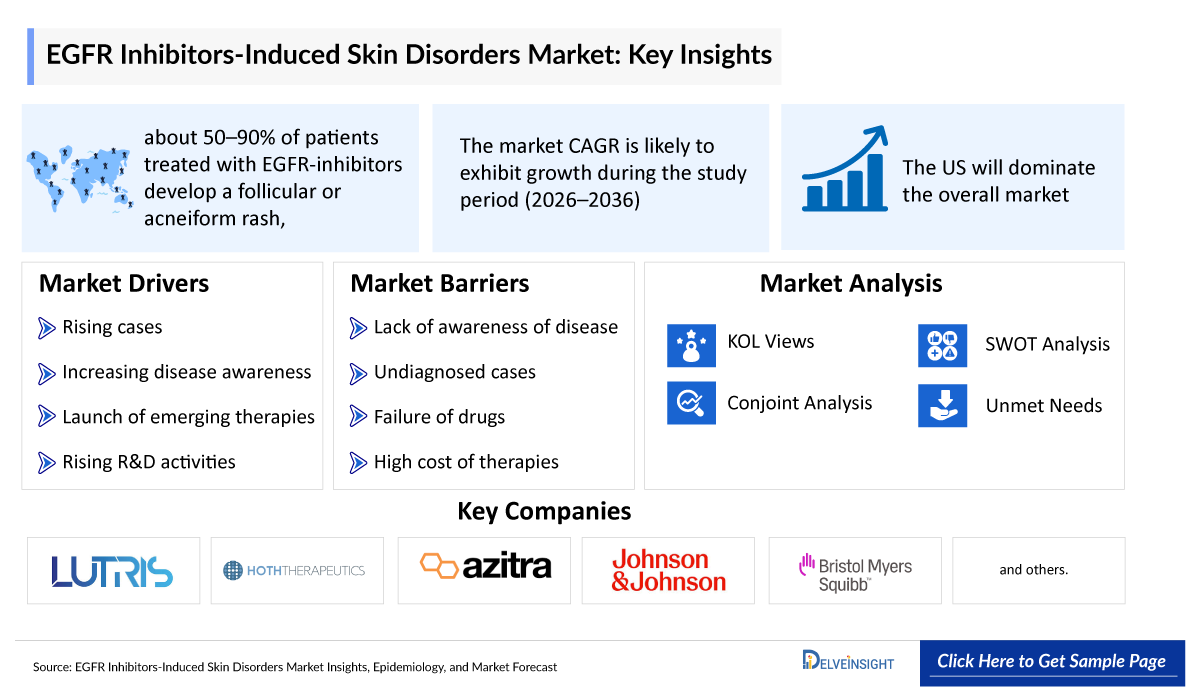
- The EGFR Inhibitor–Induced Skin Disorders market size is anticipated to grow with a significant CAGR during the study period (2022-2036).
- The leading EGFR Inhibitor–Induced Skin Disorders companies developing therapies in the treatment market include - Lutris Pharma, Hoth Therapeutics, Azitra, Doxycycline, Minocycline, Topical Clindamycin, Hydrocortisone Cream, Mometasone Furoate and others.
EGFR Inhibitor–Induced Skin Disorders Market & Epidemiology Insights
- The dynamics of the EGFR inhibitor–induced skin disorders market are expected to evolve significantly during the forecast period, driven by the expanding use of EGFR-targeted therapies across multiple cancer indications, increasing awareness of treatment-related dermatologic toxicities, and the growing need for therapies that can effectively manage these adverse events without compromising anticancer efficacy.
- EGFR inhibitor–induced skin disorders represent one of the most common toxicities associated with EGFR-targeted therapies, frequently manifesting as acneiform rash, xerosis, pruritus, eczema, paronychia, and other cutaneous complications that can substantially impair patient quality of life and treatment adherence.
- The epidemiological burden of EGFR inhibitor–related skin toxicities is expected to increase alongside the growing use of EGFR inhibitors in non-small cell lung cancer (NSCLC), colorectal cancer (CRC), head and neck cancer, pancreatic cancer, and breast cancer, with dermatologic adverse events reported in the majority of treated patients.
- Current management strategies rely largely on supportive care measures, including topical corticosteroids, emollients, antibiotics, antihistamines, and dose modifications; however, these approaches often provide incomplete symptom control and do not adequately address the underlying mechanisms driving skin toxicity.
- At present, there are no approved therapies specifically indicated for EGFR inhibitor–induced skin disorders, creating a significant unmet need and a substantial opportunity for innovative therapies capable of preventing or treating these toxicities while allowing patients to maintain optimal cancer treatment.
- Emerging therapies such as LUT-014 (Lutris Pharma), HT-001 (Hoth Therapeutics), and ATR-04 (Azitra) are being developed to address the limitations of conventional supportive care and provide targeted treatment options for EGFR inhibitor–associated cutaneous adverse events.
- The competitive landscape is expected to evolve as companies increasingly focus on dermatology-oncology crossover indications, with novel topical formulations and microbiome-based approaches offering potential differentiation in this underserved market.
EGFR-Induced Skin Disorders and Forecast in the 7MM
- 2025 EGFR-Induced Skin Disorders Market Size: ~USD XXXX
- 2036 EGFR-Induced Skin Disorders Market Size: ~USD XXXX
- EGFR-Induced Skin Disorders Growth Rate (2026–2036): XX% CAGR
Request for unlocking the sample page of the "EGFR-Induced Skin Disorders Market Forecast"
Key Factors Driving the EGFR-Induced Skin Disorders Market
- Growing Burden of EGFR Inhibitor–Induced Skin Disorders: The increasing use of EGFR inhibitors across multiple cancer indications, including NSCLC, colorectal cancer, pancreatic cancer, and head and neck cancer, is a major driver of market growth. As EGFR-targeted therapies become more widely adopted, the incidence of treatment-related dermatologic toxicities such as acneiform rash, xerosis, pruritus, and paronychia continues to rise, creating a substantial patient population requiring effective management.
- Rising Opportunities in Targeted EGFR Toxicity Management: Growing recognition of the impact of EGFR inhibitor–induced skin toxicities on treatment adherence, quality of life, and clinical outcomes is driving demand for targeted therapeutic approaches. Emerging therapies such as LUT-014 (Lutris Pharma), HT-001 (Hoth Therapeutics), and ATR-04 (Azitra) are being developed to address the limitations of current supportive care and provide disease-specific treatment options.
- Emerging EGFR-Induced Skin Disorders Competitive Landscape: The competitive landscape remains in an early stage, with no therapies currently approved specifically for EGFR inhibitor–induced skin disorders. However, the pipeline is gradually expanding, led by novel candidates including LUT-014, HT-001, ATR-04, and other investigational dermatology-oncology therapies aimed at reducing cutaneous toxicities while allowing patients to maintain optimal anticancer treatment.
DelveInsight's "EGFR-Induced Skin Disorders Market Insights, Epidemiology and Market Forecast – 2036" report delivers an in-depth understanding of the EGFR-Induced Skin Disorders, historical and forecasted epidemiology, as well as EGFR-Induced Skin Disorders therapeutics market trends in the United States, EU4 (Germany, Spain, Italy, and France) and the United Kingdom, and Japan.
The EGFR-Induced Skin Disorders market report delivers a comprehensive analysis of the current treatment landscape, including standards of care, clinical practices, and evolving therapeutic algorithms. It evaluates EGFR-Induced Skin Disorders patient burden trends, revenue & market share dynamics, peak patient share & therapy uptake analysis, and provides an in-depth market size assessment and growth rate projections (Historical & Forecast 2022–2036) across global regions. The report highlights key unmet medical needs in EGFR-Induced Skin Disorders and maps the competitive and clinical landscape to uncover high value opportunities, providing a clear outlook on future market growth potential.
Scope of the EGFR-Induced Skin Disorders Market Report | |
|
Study Period |
2022–2036 |
|
Historical Year |
2022–2025 |
|
Forecast Period |
2026–2036 |
|
Base Year |
2026 |
|
Geographies Covered |
· North America: The US; · Europe: Germany, France, Italy, Spain and the UK; · Asia-Pacific: Japan |
|
EGFR-Induced Skin Disorders CAGR (Study period/Forecast period) |
XX% (2026 ̶ 2036) |
|
EGFR-Induced Skin Disorders Epidemiology Segmentation Analysis |
Patient Burden Assessment · Incident Cases of Indications Harbouring EGFR Mutation (NSCLC, CRC, Pancreatic, Head and Neck Cancer, Breast Cancer) · Incident Cases of EGFR Mutation in Respective Indications · Incident Cases of Treatable Population by EGFR Inhibitors · Incident Cases of EGFR Inhibitors-induced Skin Disorders |
|
EGFR-Induced Skin Disorders Companies |
· Lutris Pharma · Hoth Therapeutics · Azitra · Johnson & Johnson · Bristol Myers Squibb · Amgen · AstraZeneca · Bayer · Pfizer · Eli Lilly and Company · Merck & Co. · AbbVie · Regeneron Pharmaceuticals · Sanofi · Novartis · Roche and others… |
|
EGFR-Induced Skin Disorders Therapies |
· LUT-014 (Lutris Pharma) · HT-001 (Hoth Therapeutics) · ATR-04 (Azitra) · Doxycycline · Minocycline · Topical Clindamycin · Hydrocortisone Cream · Mometasone Furoate and others |
|
EGFR-Induced Skin Disorders Market |
Segmented by · Region/Geographies · Drugs/Therapies |
|
Analysis |
· KOL Views · SWOT Analysis · Reimbursement · Conjoint Analysis · Unmet Need · Market Drivers and Barriers · Epidem Patient Burden |
EGFR-Induced Skin Disorders Disease Understanding
EGFR-Induced Skin Disorders Overview
EGFR Inhibitor–Induced Skin Disorders are a group of dermatologic toxicities that occur as a consequence of treatment with Epidermal Growth Factor Receptor (EGFR) inhibitors, which are widely used in the management of cancers such as non-small cell lung cancer (NSCLC), colorectal cancer, head and neck cancer, pancreatic cancer, and breast cancer. EGFR plays a critical role in maintaining normal skin homeostasis, keratinocyte proliferation, epidermal differentiation, and hair follicle function. Inhibition of EGFR signaling disrupts these physiological processes, leading to cutaneous adverse events including acneiform rash, xerosis (dry skin), pruritus, eczema, paronychia, fissures, and hair abnormalities. These toxicities affect a majority of patients receiving EGFR-targeted therapies and can significantly impair quality of life, compromise treatment adherence, necessitate dose modifications, and potentially reduce the effectiveness of anticancer therapy. As the use of EGFR inhibitors continues to expand across oncology indications, the clinical burden associated with EGFR inhibitor–induced skin disorders is becoming increasingly important.
EGFR Inhibitor–Induced Skin Disorders Diagnosis
Diagnosis is primarily based on clinical assessment, patient history, and the temporal relationship between symptom onset and initiation of EGFR inhibitor therapy. Dermatologic evaluation typically includes assessment of rash severity, lesion distribution, and extent of skin involvement, associated symptoms such as itching or pain, and the impact on daily functioning. Standardized grading systems, including the Common Terminology Criteria for Adverse Events (CTCAE), are commonly used to classify severity and guide treatment decisions. Additional investigations may be performed to exclude secondary infections or alternative dermatologic conditions when clinically indicated. Early recognition and accurate grading of skin toxicities are critical for timely intervention, minimizing treatment interruptions, maintaining adherence to cancer therapy, and improving overall patient outcomes.
Further details are provided in the report...
EGFR Inhibitor–Induced Skin Disorders Treatment
The treatment of EGFR inhibitor–induced skin disorders focuses on managing dermatologic toxicities, maintaining patient quality of life, minimizing treatment interruptions, and ensuring continued benefit from anticancer therapy. Management typically involves a multidisciplinary approach incorporating preventive skin care, topical therapies, systemic medications, and, when necessary, modification of EGFR inhibitor treatment. Early recognition and intervention are essential to reduce complications and support treatment adherence.
Current treatment strategies are largely supportive and symptom-based. Preventive measures include regular use of moisturizers, emollients, sunscreen, and gentle skin care products to maintain skin barrier function and reduce irritation. Acneiform rash, the most common EGFR inhibitor–associated toxicity, is typically managed with topical corticosteroids, topical antibiotics, and oral tetracycline antibiotics such as doxycycline or minocycline. Pruritus is generally treated with moisturizers, topical corticosteroids, and antihistamines, while xerosis is managed with intensive skin hydration and barrier-repair products.
Paronychia and other nail-related toxicities may require topical antibiotics, antiseptic soaks, corticosteroids, and treatment of secondary infections. In severe cases, systemic corticosteroids, dermatology referral, and temporary dose reduction or interruption of EGFR inhibitor therapy may be necessary to control symptoms.
Despite the availability of these interventions, treatment remains largely reactive and focused on symptom management. Persistent dermatologic toxicities continue to impact patient quality of life and may compromise adherence to anticancer therapy, highlighting the importance of proactive monitoring and multidisciplinary care.
Further details related to country-based variations are provided in the report...
EGFR Inhibitor–Induced Skin Disorders Unmet Needs
The section “unmet needs of EGFR Inhibitor–Induced Skin Disorders” outlines the critical gaps between the current state of patient care, diagnosis, and the ideal & effective management of the disease. It highlights the obstacles experienced by patients, clinicians, and researchers and identifies potential solutions for future progress.
- Absence of Approved Disease-Specific Therapies
- Persistent Impact on Treatment Adherence and Quality of Life
- Limited Efficacy of Current Supportive Care Approaches
- Need for Effective Preventive and Long-Term Management Strategies
- Lack of Predictive Biomarkers and Standardized Treatment Algorithms
- Growing Demand for Targeted Dermatology-Oncology Therapies and others….
- Comprehensive unmet needs insights in EGFR Inhibitor–Induced Skin Disorders and their strategic implications are provided in the full report.
EGFR Inhibitor–Induced Skin Disorders Epidemiology
The EGFR Inhibitor–Induced Skin Disorders epidemiology section provides insights about the historical and current EGFR Inhibitor–Induced Skin Disorders patient pool and forecasted trends for individual seven major countries. It helps to recognize the causes of current and forecasted trends by exploring numerous studies and views of key opinion leaders. This part of the EGFR Inhibitor–Induced Skin Disorders market report also provides the diagnosed patient pool and their trends along with assumptions undertaken.
Key Findings from EGFR Inhibitor–Induced Skin Disorders Epidemiological Analysis and Forecast
- According to various studies it was found that the incidence, severity, and nature of dermatologic toxicity occurring with either panitumumab or cetuximab treatment are generally similar. The most frequent Grade 1/2 skin-related toxicities that occurred in the panitumumab and cetuximab arms were skin rash (45.4% vs. 47.4%), dermatitis acneiform (24.4% vs. 24.3%), dry skin (16.5% vs. 15.7%), pruritus (i.e., severe itching; 15.9% vs. 17.3%), paronychia (9.5% vs. 12.9%), and acne (9.9% vs. 12.7%). Few patients had Grade ≥3 skin-related toxicities.
- According to a study, about 50–90% of patients treated with EGFR-inhibitors develop a follicular or acneiform rash, which can be symptomatic and source of psychosocial distress, negatively impacting quality of life.
- As per the secondary research, cutaneous complications are the most frequent adverse side effects of EGFR inhibitors, occurring in up to 90% of patients treated with cetuximab therapy, with grade 3–4 adverse events occurring in 11–18% of treated individuals.
- Dermatologic toxicity of any grade occurs in most patients who receive anti-EGFR therapy; approximately 10% to 20% of patients experienced grade 3/4 toxicity.
- The reported incidence of severe skin reactions grade 3/4 is ∼0–17%, slightly more seen in patients treated with monoclonal antibodies than in patients treated with EGFR small molecule tyrosine kinase inhibitors.
- The United States holds the largest patient share of the EGFR inhibitors-induced skin disorders among the 7MM in 2025.
- Among EU4 and the UK, Germany had the highest cases of EGFR inhibitors induced skin disorders followed by France and Spain in 2025.
- In 2025, there were approximately 13,000 cases of EGFR inhibitors-induced skin disorders in NSCLC cases in the United States.
- In 2025, highest number of cases of EGFR inhibitors-induced skin disorders was found in CRC, followed by NSCLC, and head and neck cancers in the 7MM.
EGFR Inhibitor–Induced Skin Disorders Epidemiology Segmentation
- Incident Cases of Indications Harbouring EGFR Mutation (NSCLC, CRC, Pancreatic, Head and Neck Cancer, Breast Cancer)
- Incident Cases of EGFR Mutation in Respective Indications
- Incident Cases of Treatable Population by EGFR Inhibitors
- Incident Cases of EGFR Inhibitors-induced Skin Disorders
Recent Developments in the EGFR Inhibitor–Induced Skin Disorders Treatment Landscape:
- In March 2026, Hoth Therapeutics reported positive pharmacokinetic, safety, and clinical activity data for HT-001 in cancer patients experiencing EGFR therapy–associated skin toxicities. The study demonstrated favorable tolerability, no serious adverse events, minimal systemic absorption, and encouraging reductions in symptom severity, supporting the continued development of HT-001 as a treatment for EGFR inhibitor–related dermatologic adverse events.
- In August 2025, Azitra announced the dosing of the first patient in its Phase I/II clinical trial evaluating ATR04-484 (ATR-04) for EGFR inhibitor–associated rash. The program, which has received FDA Fast Track designation, is designed to evaluate a novel topical live biotherapeutic product aimed at reducing EGFR inhibitor–related skin toxicity and improving patient adherence to cancer therapy.
- In June 2025, Lutris Pharma presented additional positive Phase II data for LUT-014 gel at the ESMO Gastrointestinal Cancers Congress 2025, demonstrating significant efficacy in the treatment of acneiform rash associated with anti-EGFR cancer therapies. The findings further supported LUT-014’s potential as a targeted therapy for EGFR inhibitor–induced dermatologic toxicities and reinforced its position as one of the leading late-stage assets in the space.
- In May 2025, Azitra presented details of its multicenter, randomized, double-blind Phase I/II study of ATR04-484 at the ASCO Annual Meeting 2025, highlighting the clinical development strategy for treating EGFR inhibitor–induced dermal toxicity through modulation of the skin microbiome and restoration of skin barrier function.
EGFR Inhibitor–Induced Skin Disorders Drug Chapters & Competitive Analysis
The EGFR Inhibitor–Induced Skin Disorders drug chapter provides a detailed, market-focused review of approved therapies and the emerging pipeline across Phase I–III EGFR Inhibitor–Induced Skin Disorders clinical trials. It covers the mechanism of action, clinical trial data, regulatory approvals, patents, collaborations, and strategic partnerships for each therapy, along with their advantages, limitations, and recent developments. This section offers critical insights into the EGFR Inhibitor–Induced Skin Disorders treatment landscape, supporting market assessment, competitive analysis, and growth forecasting for the EGFR Inhibitor–Induced Skin Disorders therapeutics market.
EGFR Inhibitor–Induced Skin Disorders Pipeline Analysis
LUT-014: Lutris Pharma
LUT014 is a topical B-Raf Inhibitor, is a proprietary, first-in-class, small molecule currently in a Phase II clinical trial in metastatic CRC patients with EGFR inhibitor induced acneiform lesions and has successfully completed a Phase I study for the treatment of radiation-induced dermatitis in breast cancer patients. LUT014 received the Orphan Drug Designation (ODD) for the treatment of EGFR-induced acneiform rash.
- In April 2025, Lutris Pharma presented new data from its completed clinical trial of LUT014 gel demonstrating efficacy in treating acneiform rash associated with the use of anti-EGFR cancer therapies at the American Association for Cancer Research (AACR) Annual Meeting 2025.
HT-001: Hoth Therapeutics
HT-001 is a topical formulation being developed by Hoth Therapeutics and is currently under development to treat patients with mild to moderate rash and skin disorders associated with initial and repeat courses of tyrosine kinase inhibitor/EGFR inhibitor therapy. The Phase IIa CLEER clinical trial is currently underway to evaluate the safety and efficacy of HT-001 in patients with rash and skin disorders associated with EGFR inhibitor therapy.
- In September 2025, Hoth Therapeutics announced that it had submitted a clinical trial application to the European Medicines Agency to expand its ongoing Phase II trial of HT-001 for skin toxicities associated with EGFR inhibitors. In June 2025, Hoth Therapeutics presented interim results from the Phase IIa CLEER-001 trial of HT-001, highlighting preservation of cancer treatment while resolving dermatologic side effects.
ATR-04: Azitra
ATR-04 is a live biotherapeutic product candidate consisting of an S. epidermidis strain that was isolated from a healthy volunteer and engineered to be safer by deleting an antibiotic resistance gene and engineering auxotrophy to control the growth of ATR-04. ATR-04 is in development for EGFR inhibitor-associated skin toxicity, which is caused by the suppression of skin immunity by EGFR inhibitor and subsequent inflammation and often elevated levels of IL-36γ and S. aureus.
- In May 2025, Azitra presented a poster describing the Phase I/II clinical trial of ATR04-484 in EGFR inhibitor–associated rash at the 2025 American Society of Clinical Oncology Annual Meeting. In May 2025, Azitra presented a poster describing the Phase I/II clinical trial of ATR04-484 at the Annual Meeting of the American Society of Gene and Cell Therapy.
Competitive Landscape of EGFR Inhibitor–Induced Skin Disorders Emerging Therapies | |||||||
|
Drug Name |
Company |
Highest Phase |
Indication |
RoA |
MoA |
Molecule Type |
Anticipated Launch in the US |
|
LUT-014 |
Lutris Pharma |
II |
EGFR Inhibitor–Induced Skin Disorders |
Topical |
B-Raf kinase inhibitor |
Small Molecule |
2029 |
|
HT-001 |
Hoth Therapeutics |
II |
EGFR Inhibitor–Induced Skin Disorders |
Topical |
Anti-inflammatory skin barrier restoration |
Small Molecule |
Information is available in the full report |
|
ATR-04 |
Azitra |
I/II |
EGFR Inhibitor–Induced Skin Rash |
Topical |
Microbiome-mediated anti-inflammatory therapy |
Live Biotherapeutic Product |
Information is available in the full report |
|
Note: Launch insights are provisional and may change with future report updates or the occurrence of major key catalysts. | |||||||
Note: A detailed emerging therapies assessment will be provided in the final report...
EGFR Inhibitor–Induced Skin Disorders Key Players, Market Leaders and Emerging Companies
- LUT-014 (Lutris Pharma)
- HT-001 (Hoth Therapeutics)
- ATR-04 (Azitra)
- Doxycycline
- Minocycline
- Topical Clindamycin
- Hydrocortisone Cream
- Mometasone Furoate, and others
EGFR Inhibitor–Induced Skin Disorders Market Outlook
The EGFR Inhibitor–Induced Skin Disorders market is expected to witness notable growth during the forecast period, driven by the expanding use of EGFR-targeted therapies across multiple cancer indications, increasing recognition of treatment-related dermatologic toxicities, and growing emphasis on maintaining treatment adherence and patient quality of life. EGFR inhibitor–associated skin disorders, including acneiform rash, xerosis, pruritus, paronychia, and eczema-like reactions, affect a substantial proportion of patients receiving EGFR-targeted therapies for non-small cell lung cancer, colorectal cancer, head and neck cancer, pancreatic cancer, and other malignancies. The United States, EU4, the UK, and Japan are expected to remain the major markets owing to high utilization of EGFR inhibitors, advanced oncology infrastructure, and greater access to supportive care interventions.
The current treatment landscape remains largely dependent on supportive and symptom-based management strategies, including topical corticosteroids, emollients, oral antibiotics, antihistamines, and dose modification of anticancer therapy when necessary. While these approaches help alleviate symptoms, they often fail to adequately prevent or reverse dermatologic toxicities and may not fully support long-term continuation of cancer treatment. As a result, market dynamics are gradually shifting toward targeted therapies specifically designed to address the underlying mechanisms of EGFR inhibitor–induced skin disorders. Emerging therapies such as LUT-014 (Lutris Pharma), HT-001 (Hoth Therapeutics), and ATR-04 (Azitra) have the potential to reshape the treatment landscape by providing more effective and disease-specific management options.
The United States is expected to remain the largest commercial market due to the high prevalence of EGFR-targeted therapy use, strong oncology treatment infrastructure, favorable reimbursement mechanisms, and rapid adoption of innovative supportive care products. Europe is anticipated to experience steady growth supported by increasing awareness of dermatologic adverse events and broader implementation of multidisciplinary oncology care, while Japan is expected to benefit from expanding use of targeted cancer therapies and increasing focus on treatment-related quality-of-life outcomes. The market is also expected to benefit from growing research into skin barrier dysfunction, inflammatory signaling pathways, and microbiome-based therapeutic approaches associated with EGFR inhibitor toxicity.
Despite ongoing progress, significant unmet needs remain, including the absence of approved disease-specific therapies, limited efficacy of current supportive care approaches, persistent treatment-related morbidity, and the risk of anticancer therapy interruption due to severe skin toxicities. Consequently, companies developing targeted dermatology-oncology therapies capable of reducing toxicity severity, improving treatment adherence, and enhancing patient quality of life are expected to gain a significant competitive advantage in the evolving EGFR Inhibitor–Induced Skin Disorders market.
Further details will be provided in the report...
Drug Class/Insights into Leading Emerging and Marketed Therapies in EGFR Inhibitor–Induced Skin Disorders (2022–2036 Forecast)
The EGFR Inhibitor–Induced Skin Disorders market comprises supportive dermatologic therapies, topical anti-inflammatory agents, topical kinase inhibitors, microbiome-based therapeutics, wound healing and skin barrier restoration therapies, and emerging targeted dermatology-oncology treatments. These therapeutic classes aim to reduce the severity of EGFR inhibitor–associated cutaneous toxicities, improve patient quality of life, maintain adherence to anticancer therapy, and minimize treatment interruptions or dose reductions.
- Topical anti-inflammatory and corticosteroid therapies: These therapies are commonly used to manage acneiform rash, erythema, pruritus, and inflammatory skin reactions associated with EGFR inhibitors. Representative treatments include topical corticosteroids such as hydrocortisone, alclometasone, and triamcinolone formulations, which remain widely utilized as part of standard supportive care.
- Antibiotics and anti-infective therapies: These agents help control inflammatory papulopustular eruptions and reduce the risk of secondary skin infections. Commonly used therapies include doxycycline, minocycline, tetracycline, and topical antibiotics, which are frequently incorporated into prophylactic and reactive treatment strategies for EGFR inhibitor–related rash.
- Topical kinase inhibitors and targeted dermatology-oncology therapies: These therapies are designed to directly address the molecular pathways involved in EGFR inhibitor–induced skin toxicity while preserving the anticancer activity of EGFR-targeted agents. A leading therapy in this class is LUT-014 by Lutris Pharma, a topical B-Raf inhibitor being developed for the treatment of EGFR inhibitor–associated acneiform rash.
- Skin barrier restoration and wound-healing therapies: These therapies focus on improving skin integrity, reducing xerosis, promoting tissue repair, and alleviating cutaneous symptoms. Representative agents include HT-001 by Hoth Therapeutics, a topical formulation designed to reduce inflammation, irritation, and skin damage associated with cancer treatment–related dermatologic toxicities.
- Microbiome-based and live biotherapeutic therapies: These innovative approaches aim to restore skin microbial balance, enhance barrier function, and modulate local inflammatory responses. A key emerging therapy is ATR-04 (ATR04-484) by Azitra, an engineered live biotherapeutic product being developed specifically for EGFR inhibitor–associated rash.
Further details will be provided in the report...
EGFR Inhibitor–Induced Skin Disorders Drug Uptake
This section focuses on the uptake rate of potential drugs expected to be launched in the market during the forecast period (2026–2036). The analysis covers the EGFR Inhibitor–Induced Skin Disorders market's uptake by drugs, patient uptake by therapy, and sales of each drug.
Further detailed analysis of emerging therapies' drug uptake in the report...
The report further provides detailed insights on the country-wise accessibility and reimbursement scenarios, cost-effectiveness scenario of approved therapies, programs making accessibility easier and out-of-pocket costs more affordable, insights on patients insured under federal or state government prescription drug programs, etc.
Reimbursement is a crucial factor that affects the drug’s access to the market. Often, the decision to reimburse comes down to the price of the drug relative to the benefit it produces in treated patients. To reduce the healthcare burden of these high-cost therapies, many payment models are being considered by payers and other industry insiders.
Further details are provided in the final report...
EGFR Inhibitor–Induced Skin Disorders Therapies Price Scenario & Trends
Pricing and analogue assessment of EGFR Inhibitor–Induced Skin Disorders therapies highlights evolving price dynamics structures. This section summarizes the cost of approved treatments, closest and most appropriate analogue selection for emerging therapies, and understanding of how pricing influences market access, adherence, and long-term uptake.
Further details are provided in the final report...
Industry Experts and Physician Views for EGFR Inhibitor–Induced Skin Disorders
To keep up with EGFR Inhibitor–Induced Skin Disorders market trends, we take Key Opinion Leaders (KOLs) and Subject Matter Experts (SMEs) opinions working in the domain through primary research to fill the data gaps and validate our secondary research. Industry experts were contacted for insights on the EGFR Inhibitor–Induced Skin Disorders emerging therapies, evolving treatment landscape, patient adherence to conventional therapies, therapy switching trends, drug adoption and uptake, accessibility challenges, and epidemiology and real-world prescription patterns in EGFR Inhibitor–Induced Skin Disorders, including MD, PhD, Instructor, Postdoctoral Researcher, Professor, Researcher, and others.
DelveInsight’s analysts connected with 10+ KOLs to gather insights; however, interviews were conducted with 6+ KOLs in the 7MM. Centers such as the The University of Texas MD Anderson Cancer Center, Memorial Sloan Kettering Cancer Center, Dana-Farber Cancer Institute/Harvard Medical School, University of Chicago Medicine Comprehensive Cancer Center, etc. were contacted. Their opinion helps understand and validate current and emerging EGFR Inhibitor–Induced Skin Disorders therapies, highlight unmet medical needs, provide epidemiological context, and support strategic decisions for market access, therapy adoption, and pipeline prioritization in EGFR Inhibitor–Induced Skin Disorders.
|
Region |
Key Opinion Leaders (KOLs) and Subject Matter Experts (SMEs) |
|
United States |
“EGFR inhibitor–induced skin disorders remain among the most common and clinically significant adverse events associated with targeted cancer therapies. These toxicities can substantially affect patient quality of life, treatment adherence, and dose intensity, underscoring the need for effective therapies specifically designed to prevent and manage dermatologic complications without compromising anticancer efficacy.” |
|
Germany |
“Current management of EGFR inhibitor–related skin toxicities relies largely on supportive care measures, including topical corticosteroids, antibiotics, and emollients. However, the absence of approved disease-specific treatments continues to present a major unmet need, creating strong interest in emerging therapies that can restore skin barrier function, reduce inflammation, and enable uninterrupted cancer treatment.” |
EGFR Inhibitor–Induced Skin Disorders Report Qualitative Analysis: SWOT and Conjoint Analysis
We perform qualitative and market Intelligence analysis using various approaches, such as SWOT analysis and conjoint analysis. In the SWOT analysis of EGFR Inhibitor–Induced Skin Disorders, strengths, weaknesses, opportunities, and threats in terms of disease diagnosis, patient awareness, patient burden, competitive landscape, cost-effectiveness, and geographical accessibility of therapies are provided.
Conjoint analysis analyzes emerging therapies based on relevant attributes such as safety, efficacy, frequency of administration, route of administration, and order of entry. Scoring is given based on these parameters to analyze the effectiveness of therapy.
The team of analysts analyzes promising emerging therapies based on relevant attributes such as safety, efficacy, frequency of administration, route of administration, and order of entry. In efficacy, the trial’s primary and secondary outcome measures are evaluated, whereas the therapies’ safety is evaluated, wherein the acceptability, tolerability, and adverse events are majorly observed. In addition, the scoring is also based on the route of administration, order of entry, probability of success, and the addressable patient pool for each therapy. According to these parameters, the final weightage score and the ranking of the emerging therapies are decided.
Scope of the EGFR Inhibitor–Induced Skin Disorders Market Report
- The report covers a segment of key events, an executive summary, a descriptive overview of EGFR Inhibitor–Induced Skin Disorders, explaining its causes, signs and symptoms, pathogenesis, and currently available treatments.
- Comprehensive insight has been provided into the epidemiology segments and forecasts, the future growth potential of the diagnosis rate, and disease progression along treatment guidelines.
- Additionally, an all-inclusive account of both the current and emerging treatments, along with the elaborative profiles of late-stage and prominent therapies, will have an impact on the current treatment landscape.
- A detailed review of the EGFR Inhibitor–Induced Skin Disorders market, historical and forecasted market size, market share by therapies, detailed assumptions, and rationale behind our approach is included in the report, covering the 7MM drug outreach.
- The report provides an edge while developing business strategies by understanding trends through SWOT analysis and expert insights/KOL views, patient journey, and treatment preferences that help in shaping and driving the 7MM EGFR Inhibitor–Induced Skin Disorders market.
EGFR Inhibitor–Induced Skin Disorders Market Report Insights
- EGFR Inhibitor–Induced Skin Disorders Patient Population Forecast
- EGFR Inhibitor–Induced Skin Disorders Therapeutics Market Size
- EGFR Inhibitor–Induced Skin Disorders Pipeline Analysis
- EGFR Inhibitor–Induced Skin Disorders Market Size and Trends
- EGFR Inhibitor–Induced Skin Disorders Market Opportunity (Current and forecasted)
EGFR Inhibitor–Induced Skin Disorders Market Report Key Strengths
- EGFR Inhibitor–Induced Skin Disorders Epidemiology based (Epi based) Bottom up Forecasting
- Artificial Intelligence (AI)-enabled Market Research Report
- 11-year forecast
- EGFR Inhibitor–Induced Skin Disorders Market Outlook (North America, Europe, Asia-Pacific)
- EGFR Inhibitor–Induced Skin Disorders Patient Burden Trends (by geography)
- EGFR Inhibitor–Induced Skin Disorders Treatment Addressable Market (TAM)
- EGFR Inhibitor–Induced Skin Disorders Competitive Landscape
- EGFR Inhibitor–Induced Skin Disorders Major Companies Insights
- EGFR Inhibitor–Induced Skin Disorders Price Trends and Analogue Assessment
- EGFR Inhibitor–Induced Skin Disorders Therapies Drug Adoption/Uptake
- EGFR Inhibitor–Induced Skin Disorders Therapies Peak Patient Share analysis
EGFR Inhibitor–Induced Skin Disorders Market Report Assessment
- EGFR Inhibitor–Induced Skin Disorders Current Treatment Practices
- EGFR Inhibitor–Induced Skin Disorders Unmet Needs
- EGFR Inhibitor–Induced Skin Disorders Clinical Development Analysis
- EGFR Inhibitor–Induced Skin Disorders Emerging Drugs Product Profiles
- EGFR Inhibitor–Induced Skin Disorders Market Attractiveness
- EGFR Inhibitor–Induced Skin Disorders Qualitative Analysis (SWOT and Conjoint Analysis)
- EGFR Inhibitor–Induced Skin Disorders Market Drivers
- EGFR Inhibitor–Induced Skin Disorders Market Barrriers
FAQs Related to the EGFR Inhibitor–Induced Skin Disorders Market Report:
EGFR Inhibitor–Induced Skin Disorders Market Insights
- What was the EGFR Inhibitor–Induced Skin Disorders market size, the market size by therapies, market share (%) distribution in 2025, and what would it look like by 2036? What are the contributing factors for this growth?
- What are the anticipated pricing variations among different geographies for the emerging therapies in the future?
- What can be the future treatment paradigm of EGFR Inhibitor–Induced Skin Disorders?
- What are the disease risks, burdens, and unmet needs of EGFR Inhibitor–Induced Skin Disorders? What will be the growth opportunities across the 7MM concerning the EGFR Inhibitor–Induced Skin Disorders patient population?
- Who is the major future competitor in the market, and how will the competitors affect their market share?
- What are the current options for the treatment of EGFR Inhibitor–Induced Skin Disorders? What are the current guidelines for treating EGFR Inhibitor–Induced Skin Disorders in the US, Europe, and Japan?
Reasons to Buy EGFR Inhibitor–Induced Skin Disorders Market Forecast Report
- The report will help in developing business strategies by understanding the latest trends and changing treatment dynamics driving the EGFR Inhibitor–Induced Skin Disorders market.
- Bottom-up forecasting builds from the affected population to product forecasts, delivering a robust, data-driven approach ideal for new therapies and novel classes.
- Insights on patient burden/disease incidence, evolution in diagnosis, and factors contributing to the change in the epidemiology of the disease during the forecast years.
- Understand the existing market opportunities in varying geographies and the growth potential over the coming years.
- Identifying strong upcoming players in the market will help devise strategies to help get ahead of competitors.
- Detailed analysis and ranking of class-wise potential current and emerging therapies under the conjoint analysis section to provide visibility around leading classes.
- To understand KOLs’ perspectives on the accessibility, acceptability, and compliance-related challenges of existing treatment to overcome barriers in the future.
- Detailed insights on the unmet needs of the existing market so that the upcoming players can strengthen their development and launch strategy.
- This Artificial Intelligence (AI)-enabled report summarize and simplify complex datasets within the report into clear, actionable insights for stakeholders, investors, and healthcare providers, enabling faster, data-driven decisions.