Endometrial Cancer Market
- The Endometrial Cancer Market Size is anticipated to grow with a significant CAGR durin gthe study period (2020-2034).
- The Endometrial Cancer companies developing therapies in the treatment landscape include - GlaxoSmithKline, Merck, AstraZeneca, Daiichi Sankyo, Hoffmann-La Roche, Karyopharm Therapeutics, Faeth Therapeutics, Iovance Biotherapeutics, Evergreen Therapeutics, Incyte Corporation, and others.
Endometrial Cancer Market and Epidemiology Analysis
- Endometrial cancer, also referred to as uterine cancer, is a condition characterized by the development of malignant cells in the endometrium, the inner lining of the uterus.
- Nearly 6.5%–20% of women diagnosed with early disease (stage I and II) experiences a recurrence, and 10%-15% of endometrial cancer patients overall are diagnosed with advanced disease (stage III and stage IV).
- The current available diverse range of treatments for endometrial cancer includes surgeries like hysterectomy, chemotherapy, radiation therapy, and drug therapies targeting PD-1 and tyrosine kinase receptors.
- The current approaches of treatments include the considerations of mismatch repair proficient (pMMR), mismatch repair deficient (dMMR), and microsatellite instability-high (MSI-H). Moreover, the drugs are being developed for advanced and recurrent endometrial cancers as well.
- KEYTRUDA (pembrolizumab) has been in the market since 2021 and has accounted the majority of the market share for endometrial cancer.
- IMFINZI (durvalumab) and JEMPERLI (dostarlimab) are the other recently FDA-approved therapies (2024) to treat patients with endometrial cancer.
- Quantitatively, the endometrial cancer pipeline seems to be quite strong. The most promising assets include MK-2870 (sacituzumab tirumotecan) by Merck, XPOVIO (selinexor) by Karyopharm Therapeutics, FTH-001/003 by Faeth Therapeutics, ENHERTU (trastuzumab deruxtecan) ± radiotherapy by AstraZeneca and Daiichi Sankyo, giredestrant (RG6171, GDC-9545) by Hoffmann-La Roche, lifileucel by Iovance Biotherapeutics, and others.
- In May 2025, AstraZeneca presented the data of the Phase III trial of IMFINZI + carboplatin/paclitaxel, followed by IMFINZI ± LYNPARZA (olaparib) as first-line treatment for endometrial cancer.
- In April 2024, the FDA granted priority review to a supplemental biologics license application (sBLA) for JEMPERLI + carboplatin and paclitaxel in all adult patients with primary advanced or recurrent endometrial cancer.
- In a nutshell, it is estimated that the endometrial cancer treatment space will experience significant growth during the forecast period of 2025–2034. The future is brighter for patients with endometrial cancer. Targeted agents and biomarker-driven therapies hold promise for improved outcomes both as single agents and in combinations.
Request for unlocking the Sample Page of the "Endometrial Cancer Market Insights"
Key Factors Driving the Endometrial Cancer Market
- Rising Disease Incidence: The global incidence of endometrial cancer is increasing, largely due to aging populations, rising obesity rates, and higher prevalence of metabolic disorders, driving demand for effective treatments.
- Advancements in Targeted and Immunotherapies: Rapid progress in immuno-oncology, particularly checkpoint inhibitors and biomarker-driven therapies (MSI-H/dMMR, HER2), is expanding treatment options and improving outcomes in advanced disease.
- Growing Focus on Precision Medicine: Increased use of molecular profiling enables personalized treatment strategies, supporting higher adoption of targeted therapies and combination regimens.
- Strong Clinical Pipeline and R&D Investments: Robust clinical trial activity and sustained investments by leading pharmaceutical companies are accelerating the development of novel therapies across multiple disease stages.
- Favorable Regulatory and Reimbursement Environment: Orphan drug designations, expedited approval pathways, and broader reimbursement coverage in key markets are supporting faster market uptake of innovative endometrial cancer therapies.
DelveInsight’s “Endometrial Cancer Market Insights, Epidemiology, and Market Forecast – 2034” report delivers an in-depth understanding of the endometrial cancer, historical and forecasted epidemiology as well as the endometrial cancer therapeutics market trends in the United States, EU4 (Germany, Spain, Italy, and France) and the United Kingdom, and Japan.
The endometrial cancer market report provides real-world prescription pattern analysis, emerging drugs, market share of individual therapies, and historical and forecasted 7MM endometrial cancer market size from 2020 to 2034. The report also covers current endometrial cancer treatment practices/algorithms and unmet medical needs to curate the best opportunities and assess the market’s potential.
Scope of the Endometrial Cancer Market | |
|
Study Period |
2020 to 2034 |
|
Forecast Period |
2024-2034 |
|
Geographies Covered |
|
|
Endometrial Cancer Market |
|
|
Endometrial Cancer Market Size | |
|
Endometrial Cancer Companies |
GlaxoSmithKline, Merck, AstraZeneca, Daiichi Sankyo, Hoffmann-La Roche, Karyopharm Therapeutics, Faeth Therapeutics, Iovance Biotherapeutics, Evergreen Therapeutics, Incyte Corporation, and others |
|
Endometrial Cancer Epidemiology Segmentation |
|
Endometrial Cancer Disease Understanding
Endometrial Cancer Overview
Endometrial cancer is cancer of the endometrium, the lining of the uterus. It is the most common type of cancer that affects the female reproductive organs. A pre-invasive intraepithelial lesion progresses to invasive cancer involving the endometrial stroma and then penetrates even more deeply into the myometrium. The lymphatic capillaries become engaged, carrying the malignancy to regional lymph nodes, where metastases may occur through vascular channels. Tumorous involvement of the uterine cervix and stroma most likely occurs through lymphatic channels, particularly by dedifferentiated carcinomas. However, surface spread can occur from endometrial cancers in the lower uterine segment.
Endometrial Cancer Classification
Type I (low-grade endometrial endometrioid carcinomas): They are with less than 50% myometrium invasion and have a favourable prognosis, approaching 100% 5-year survival rates. They are usually not very aggressive, and they do not spread to other tissues quickly. They are thought to be caused by too much estrogen. They sometimes develop from atypical hyperplasia, an abnormal overgrowth of cells in the endometrium.
Type II (high-grade non-endometrioid): They are serous, undifferentiated, and clear cell carcinomas. They are associated with a significantly poorer 5-year survival rate. They are more likely to grow and spread outside the uterus.
Endometrial Cancer Diagnosis
Early detection means a better prognosis. A full drug history and a gynecology history have to be obtained via pelvic examinations. Two investigations are mandatory in women with suspected endometrial cancer: a transvaginal ultrasound scan and an endometrial biopsy. In the endometrial biopsy, a thin, flexible tube is inserted through the cervix and into the uterus. Using suction, a small amount of tissue is removed through the tube. If an endometrial biopsy is unable to be performed, Dilation and Curettage (D&C) may be done in the operating room. The cervix is dilated (enlarged) with a series of increasingly larger metal rods. A tool called a curette is then used to take cells from the uterus lining. A thin, telescope-like device with a light (hysteroscope) is put into the uterus through the vagina. The doctor then looks at the uterus and the openings to the fallopian tubes. Small pieces of tissue can be removed. Hysteroscopy may be done with a D&C. If endometrial cancer is diagnosed, imaging will likely need to be performed to find out more about what the disease looks like and to see if it may have spread outside of the uterus. Ultrasound, MRI, CT, etc., can be performed for that purpose. Various blood tests like Complete Metabolic Panel (CMP), Complete Blood Count (CBC), etc., can be done to have a better understanding of the indication.
Further details related to country-based variations in diagnosis are provided in the report…
Endometrial Cancer Treatment
Surgery is the first treatment for almost all women with endometrial cancer. The operation includes removing the uterus, fallopian tubes, and ovaries. After surgery, chemotherapy with or without radiation therapy is given to help keep the cancer from coming back. The chemotherapy usually includes the drugs carboplatin and paclitaxel, but other drugs can also be used. Progestin therapy can also be given if the woman wants to have a pregnancy. It can cause the cancer to shrink or even go away for some time. One treatment option is to have surgery first, followed by radiation therapy. The surgery includes a radical hysterectomy, removal of both fallopian tubes and ovaries, and pelvic and para-aortic lymph node dissection or sampling. Combinations of chemotherapy drugs may help some women for a time.
Note: Further Details are provided in the final report...
Endometrial Cancer Epidemiology
As the market is derived using a patient-based model, the endometrial cancer epidemiology chapter in the report provides historical as well as forecasted epidemiology segmented by total incident cases of endometrial cancer, subtype-specific incident cases of endometrial cancer, mutation-specific incident cases of endometrial cancer, age-specific incident cases of endometrial cancer, stage-specific incident cases of endometrial cancer, and line-wise treated cases of endometrial cancer in the 7MM covering the United States, EU4 countries (Germany, France, Italy, and Spain) and the United Kingdom, and Japan from 2020 to 2034.
Key Findings from Endometrial Cancer Epidemiological Analyses and Forecast
- In the US, approximately, 67,880 women were diagnosed with endometrial cancer in 2024.
- In 2022, the endometrial cancer cases were 66,055 in the US, 11,767 in Germany, 9,760 in France, 10,202 in Spain, 10,440 in the UK, and 18,338 in Japan.
- In 2020, there were 130,051 estimated incident cases of endometrial cancer in Europe, and there were 29,963 deaths.
- In Spain, endometrial cancer is the fourth most common cancer in women (behind breast, lung, and colon and rectal cancer). It has an incidence per 100,000 women of 13-14 cases per year, with a mortality of 3-4 cases.
- In Spain, the average age of diagnosis is 63 years. Although most patients are diagnosed after 55 years of age, up to 25% of cases are identified before that age, and 5-6% between 35 and 44 years of age.
- In females in the UK, uterine cancer is the fourth most common cancer, with around 9,800 new cases every year.
- In Europe, approximately 69–75% of patients with endometrial cancer have pMMR/MSS tumours.
- The incidence of endometrial cancer throughout Asia is heterogeneous, with 10.2 per 100,000 in Japan.
Endometrial Cancer Epidemiology Segmentation
- Total Incident Cases of Endometrial Cancer
- Subtype-specific Incident Cases of Endometrial Cancer
- Mutation-Specific Incident Cases of Endometrial Cancer
- Age-specific Incident Cases of Endometrial Cancer
- Stage-specific Incident Cases of Endometrial Cancer
- Line-wise Treated Cases of Endometrial Cancer
Recent Developments in the Endometrial Cancer Treatment Landscape
- In August 2025, Genmab received FDA Breakthrough Therapy Designation for Rina-S®, its investigational FRα-directed ADC, for treating recurrent or progressive endometrial cancer.
Endometrial Cancer Drug Analysis
The drug chapter segment of the endometrial cancer report encloses a detailed analysis of endometrial cancer emerging drugs or late-stage (Phase III and Phase II) endometrial cancer pipeline drugs. It also deep dives into endometrial cancer pivotal clinical trial details, recent and expected market approvals, patent details, the latest news, and recent deals and collaborations.
Endometrial Cancer Marketed Drugs
KEYTRUDA (Pembrolizumab): Merck
KEYTRUDA is a prescription medicine that binds to the protein PD-1 to help immune cells kill cancer cells. It, as a single agent in combination with carboplatin and paclitaxel is developed for adult patients with primary advanced or recurrent endometrial cancer. KEYTRUDA is in combination with lenvatinib for the treatment of adult patients with advanced endometrial carcinoma that is pMMR as determined by an FDA-approved test or not MSI-H, who have disease progression following prior systemic therapy in any setting and are not candidates for curative surgery or radiation. It is developed as a single agent for the treatment of adult patients with advanced endometrial carcinoma that is MSI-H or dMMR, as determined by an FDA-approved test, who have disease progression following prior systemic therapy in any setting and are not candidates for curative surgery or radiation.
- In July 2021, the FDA approved KEYTRUDA in combination with lenvatinib for patients with advanced endometrial carcinoma who have disease progression following prior systemic therapy in any setting and are not candidates for curative surgery or radiation.
- In March 2022, the FDA approved KEYTRUDA as a single agent for patients with advanced endometrial carcinoma that is MSI-H or dMMR, who have disease progression following prior systemic therapy in any setting and who are not candidates for curative surgery or radiation.
- In June 2024, the FDA approved it for adult patients with primary advanced or recurrent endometrial carcinoma.
IMFINZI (durvalumab): AstraZeneca
IMFINZI is a human monoclonal antibody that binds to the PD-L1 protein and blocks the interaction of PD-L1 with the PD-1 and CD80 proteins, countering the tumor’s immune-evading tactics and releasing the inhibition of immune responses. As a single agent, it is developed in combination with carboplatin and paclitaxel for the treatment of adult patients with primary advanced or recurrent endometrial cancer that is dMMR.
In June 2024, the FDA approved IMFINZI in combination with carboplatin plus paclitaxel for adult patients with primary advanced or recurrent endometrial cancer that is dMMR. Efficacy was evaluated in DUO-E Phase III, a randomized, multicenter, double-blind, placebo-controlled trial in patients.
Comparison of Endometrial Cancer Marketed Drugs | ||||
|
Product |
Company |
MoA |
Initial Approval |
Patient Segment |
|
IMFINZI (durvalumab) |
AstraZeneca |
PD-1 inhibitor |
2024 |
Adult patients with primary advanced or recurrent endometrial cancer that is dMMR |
|
KEYTRUDA (pembrolizumab) |
Merck |
PD-1 inhibitor |
2022 |
Advanced endometrial carcinoma that is MSI-H or dMMR, who have disease progression following prior systemic therapy in any setting, and are not candidates for curative surgery or radiation |
|
JEMPERLI (dostarlimab) |
GSK |
PD-1 inhibitor |
2021 |
Adult patients with dMMR recurrent or advanced endometrial cancer that have progressed on or following prior treatment with a platinum-containing regimen |
|
LENVIMA (lenvatinib) + KEYTRUDA (pembrolizumab) |
Eisai and Merck |
RTK inhibitor + PD-1 inhibitor |
2019 |
Advanced endometrial carcinoma that is not MSI-H or dMMR, who have disease progression following prior systemic therapy and are not candidates for curative surgery or radiation |
Note: Detailed marketed therapies assessment will be provided in the final report...
Endometrial Cancer Emerging Drugs
Sacituzumab tirumotecan (MK-2870): Merck
It is a recombinant humanized IgG1 anti-TROP2 monoclonal antibody conjugated to a topoisomerase I inhibitor. It is a third-generation Antibody-drug Conjugate (ADC) that acts by targeting cells expressing (trophoblast antigen) TROP2. It is administered through an intravenous route in the form of powder. The drug candidate is being developed based on the ADC conjugation technology. It is under development for the treatment of endometrial carcinoma and other indications. It is currently being evaluated in the Phase III trial.
XPOVIO (selinexor): Karyopharm Therapeutics
It is a first-in-class, oral Selective Inhibitor of Nuclear Export (SINE) compound. It functions by binding with and inhibiting the nuclear export protein, XPO1, leading to the accumulation of tumor suppressor proteins in the cell nucleus. This reinitiates and amplifies their tumor suppressor function and is believed to lead to the selective induction of apoptosis in cancer cells, while largely sparing normal cells. It is currently being evaluated in the Phase III trial (the SIENDO study) as a maintenance therapy versus placebo in patients with endometrial cancer after first- or second-line chemotherapy. Another Phase III trial (XPORT-EC-042) is evaluating selinexor as a maintenance treatment for patients with TP53 wild-type advanced or recurrent endometrial cancer, with the company expecting to release the data by mid-2026.
Comparison of Endometrial Cancer Emerging Drugs under Development | |||||
|
Drug Name |
Company name |
MoA |
RoA |
Phase |
Indication |
|
Sacituzumab tirumotecan (MK-2870) |
Merck |
Anti-TROP2 |
IV |
III |
Endometrial cancer |
|
XPOVIO (selinexor) |
Karyopharm Therapeutics |
XPO1 inhibitor |
Oral |
III |
Endometrial cancer |
|
ENHERTU (trastuzumab deruxtecan) ± radiotherapy |
AstraZeneca and Daiichi Sankyo |
Targets HER2-positive |
IV |
III |
Post-surgery in anticancer treatment naïve (including neoadjuvant therapy) endometrial cancer (with various HER2 expression levels) |
|
FTH-001/003 (Serabelisib + Sapanisertib) |
Faeth Therapeutics |
PI3K-α inhibitor & dual mTORC1/2 inhibitor (PIKTOR) |
Oral |
II |
Advanced/recurrent endometrial cancer |
|
Giredestrant (RG6171, GDC-9545) |
Hoffmann-La Roche |
Selective Estrogen Receptor Degrader (SERD) |
Oral |
II |
Grade I endometrial cancer |
|
Lifileucel |
Iovance Biotherapeutics |
Tumor re-infiltration with TILs |
IV |
II |
Advanced endometrial cancer |
Note: Detailed emerging therapies assessment will be provided in the final report...
Endometrial Cancer Drug Class Insights
The market of endometrial carcinoma is mainly dominated by PD-1 inhibitors like KEYTRUDA, IMFINZI, and JEMPERLI. Although the first approval as a combination of RTK inhibitor + PD-1 inhibitor, i.e., LENVIMA + KEYTRUDA, in 2019. But since then, various PD-1 inhibitors have come in front to treat endometrial cancer.
The emerging landscape does hold a diversity of drug classes, being investigated to treat different patient segments of endometrial cancer. Some of the very strong assets in the pipeline are ENHERTU and XPOVIO. This is due to their previous approvals and strong uptake. Their approvals will change the market scenario. MK-2870, an anti-TROP2 ADC, is another therapy with a very promising class. Giredestrant, an emerging SERD, a newly introduced drug class, is expected to transform the treatment of endometrial cancer. The market of endometrial cancer holds a void, creating an opportunity for many classes to get approvals and treat various segments of endometrial cancer.
Endometrial Cancer Market Outlook
The gold standard treatment for endometrial cancer is hysterectomy. However, in the last few years, several drugs such as KEYTRUDA, first approved in 2021, and others have received regulatory approval for endometrial cancer in the US. These drugs can be administered intravenously or orally. The Cancer Genome Atlas Project (TCGA) identified specific types of endometrial cancer tumors based on genomic characterization that have been shown to be reliable prognostic biomarkers for this disease. These endometrial cancer types are either dMMR or MSI-H. The recent approval of treatments specific to tumor status has changed the treatment landscape for patients with recurrent or advanced endometrial cancer.
These recent successful developments include PD-1 inhibitors in the form of drugs such as JEMPERLI and IMFINZI. LENVIMA + KEYTRUDA recently got approval from the FDA in 2022 for patients with advanced endometrial cancer and not dMMR or MSI-H. Other standard therapies include carboplatin taxol, megestrol acetate, medroxyprogesterone acetate, etc. However, more effective therapeutic approaches against endometrial cancer are necessary to improve clinical outcomes further.
Key players like Merck, Karyopharm Therapeutics, Faeth Therapeutics, GSK, and others are evaluating their lead candidates in different stages of clinical development.
Endometrial Cancer Market Insights
- As per the corporate presentation of Karyopharm Therapeutics 2025, the company is anticipating the Phase III trial (XPORT-EC-042) data, evaluating selinexor as a maintenance treatment for patients with TP53 wild-type advanced or recurrent endometrial cancer, by mid-2026.
- In June 2025, Daiichi Sankyo announced that the first patient dosing for the Phase III DESTINY- Endometrial01 study of ENHERTU in combination with rilvegostomig or pembrolizumab versus platinum-based chemotherapy (carboplatin and paclitaxel) in combination with pembrolizumab as a first-line therapy in patients with HER2 expressing (IHC 3+/ 2+), pMMR primary advanced or recurrent endometrial cancer.
Endometrial Cancer Competitive Landscape
The endometrial cancer competitive landscape is shaped by a mix of established chemotherapy, hormone therapies, and rapidly expanding targeted and immunotherapy options. Key pharmaceutical players such as Merck, Eisai, Roche, AstraZeneca, Pfizer, GSK, and Bristol Myers Squibb are actively advancing treatments, particularly immune checkpoint inhibitors and targeted agents for advanced or recurrent disease. Combination regimens, biomarker-driven therapies targeting MSI-H/dMMR, HER2, and PI3K/AKT/mTOR pathways are gaining momentum. Ongoing clinical trials, strategic partnerships, and regulatory approvals are intensifying competition and driving innovation toward more personalized and effective treatment approaches.
Key Endometrial Cancer Companies
The Key Endometrial Cancer companies actively involved in the Endometrial Cancer treatment landscape include -
- GlaxoSmithKline
- Merck
- AstraZeneca
- Daiichi Sankyo
- Hoffmann-La Roche
- Karyopharm Therapeutics
- Faeth Therapeutics
- Iovance Biotherapeutics
- Evergreen Therapeutics
- Incyte Corporation, and others
Endometrial Cancer Drugs Uptake
Both JEMPERLI and KEYTRUDA are currently allowed as single agents in a subtype of endometrial cancer with the dMMR biomarker. KEYTRUDA also carries an additional indication for use alongside Eisai-partnered LENVIMA in previously treated endometrial cancer. JEMPERLI acts as a strong contender to KEYTRUDA; however, till now, KEYTRUDA has managed to maintain its stronger uptake in the field.
This section focuses on the uptake rate of potential drugs expected to be launched in the market during 2025–2034, which depends on the competitive landscape, safety, efficacy data, and order of entry. It is important to understand that the key players evaluating their novel therapies in the pivotal and confirmatory trials should remain vigilant when selecting appropriate comparators to stand the greatest chance of a positive opinion from regulatory bodies, leading to approval, smooth launch, and rapid uptake.
Further detailed analysis of emerging therapies' drug uptake in the report…
Endometrial Cancer Clinical Trial Activities
The Endometrial Cancer pipeline report provides insights into Endometrial Cancer clinical trials within Phase III and II. It also analyzes key players involved in developing targeted therapeutics.
Endometrial Cancer Pipeline Development Activities
The Endometrial Cancer clinical trial analysis report covers information on collaborations, acquisitions and mergers, licensing, and patent details for endometrial cancer therapies.
Latest KOL Views on Endometrial Cancer Market Report
To keep up with the real-world scenario in current and emerging market trends, we take opinions from Key Industry leaders working in the domain through primary research to fill the data gaps and validate our secondary research. Industry Experts contacted for insights on the evolving treatment landscape, patient reliance on conventional therapies, patient therapy switching acceptability, and drug uptake, along with challenges related to accessibility, including Medical/scientific Writers, Professors, and others.
DelveInsight’s analysts connected with 20+ KOLs to gather insights; however, interviews were conducted with 10+ KOLs in the 7MM. Centers such as Emory University School of Medicine, Anderson Cancer Center, Southwestern Medical Center, etc., were contacted. Their opinion helps understand and validate current and emerging therapy treatment patterns or Endometrial Cancer market trends.
|
Region |
KOL Views |
|
United States |
“The reason that most women are diagnosed at an early stage is that this type of cancer really does present with symptoms early in its course, and a woman who is clued into these symptoms typically communicates this with her doctor. There are no specific screening tests for endometrial cancer, not like a Pap smear for cervical cancer.” |
|
Italy |
“Although most endometrial cancers are diagnosed at an early stage and a total hysterectomy with bilateral adnexectomy by a GG may be adequate treatment, some steps of endometrial cancers diagnosis and treatment cannot be separated from evaluation by a gynecological oncology expert. These crucial assessments can be ensured by high-volume centers (hubs), where specialists can acquire and maintain the appropriate skills.” |
Endometrial Cancer Report Qualitative Analysis
We perform qualitative and market Intelligence analysis using various approaches, such as SWOT analysis and conjoint analysis. In the SWOT analysis, strengths, weaknesses, opportunities, and threats in terms of gaps in disease diagnosis, patient awareness, physician acceptability, competitive landscape, cost-effectiveness, and geographical accessibility of therapies are provided.
The analyst analyzes multiple emerging therapies based on relevant attributes such as safety, efficacy, frequency of administration, route of administration, and order of entry.
In efficacy, the trial’s primary and secondary outcome measures are evaluated. Further, the therapies’ safety is evaluated wherein the acceptability, tolerability, and adverse events are majorly observed, and it sets a clear understanding of the side effects posed by the drug in the trials.
Endometrial Cancer Market Access and Reimbursement
Reimbursement may be referred to as the negotiation of a price between a manufacturer and payer that allows the manufacturer access to the market. It is provided to reduce the high costs and make the essential drugs affordable. Health Technology Assessment (HTA) plays an important role in reimbursement decision-making and recommending the use of a drug. These recommendations vary widely throughout the seven major markets, even for the same drug. In the US healthcare system, both Public and Private health insurance coverage are included. Also, Medicare and Medicaid are the largest government-funded programs in the US. The major healthcare programs including Medicare, Medicaid, Health Insurance Program (CHIP), and the state and federal health insurance marketplaces, are overseen by the Centers for Medicare & Medicaid Services (CMS). Other than these, Pharmacy Benefit Managers (PBMs), and third-party organizations that provide services, and educational programs to aid patients are also present. The report further provides detailed insights on the country-wise accessibility and reimbursement scenarios, cost-effectiveness scenario of currently used therapies, programs making accessibility easier and out-of-pocket costs more affordable, insights on patients insured under federal or state government prescription drug programs, etc.
Note: Further Details are provided in the final report...
Scope of the Endometrial Cancer Market Report
- The report covers a segment of key events, an executive summary, and a descriptive overview of Endometrial Cancer, explaining its causes, signs and symptoms, pathogenesis, and currently available therapies.
- Comprehensive insight has been provided into the epidemiology segments and forecasts, the future growth potential of diagnosis rate, disease progression, and treatment guidelines.
- Additionally, an all-inclusive account of the current and emerging therapies, along with the elaborative profiles of late-stage and prominent therapies, will impact the current treatment landscape.
- A detailed review of the endometrial cancer market, historical and forecasted market size, market share by therapies, detailed assumptions, and rationale behind our approach is included in the report, covering the 7MM drug outreach.
- The report provides an edge while developing business strategies by understanding trends through SWOT analysis and expert insights/KOL views, patient journey, and treatment preferences that help shape and drive the 7MM endometrial cancer Market.
Endometrial Cancer Market Report Insights
- Endometrial Cancer Patient Population
- Endometrial Cancer Therapeutic Approaches
- Endometrial Cancer Pipeline Analysis
- Endometrial Cancer Market Size and Trends
- Existing and future Market Opportunity
Endometrial Cancer Market Report Key Strengths
- Ten Years Forecast
- The 7MM Coverage
- Endometrial Cancer Epidemiology Segmentation
- Key Cross Competition
- Conjoint analysis
- Endometrial Cancer Drugs Uptake
- Key Endometrial Cancer Market Forecast Assumptions
Endometrial Cancer Market Report Assessment
- Current Endometrial Cancer Treatment Practices
- Endometrial Cancer Unmet Needs
- Endometrial Cancer Pipeline Product Profiles
- Endometrial Cancer Market Attractiveness
- Qualitative Analysis (SWOT and Conjoint Analysis)
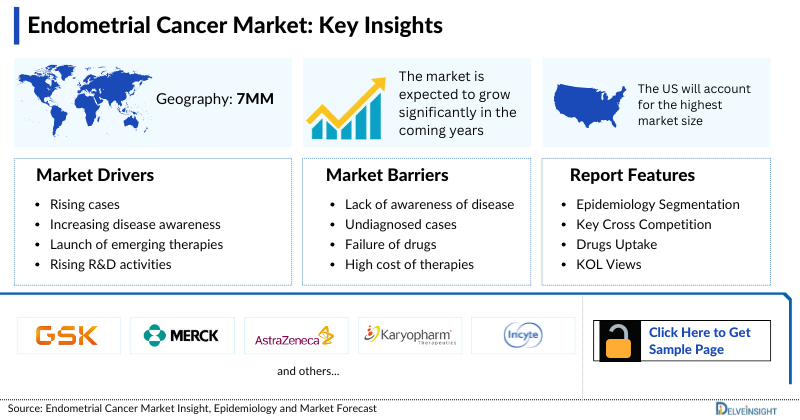
- Endometrial Cancer Market Drivers
- Endometrial Cancer Market Barriers
FAQs Related to Endometrial Cancer Market Report:
- What is the historical and forecasted endometrial cancer patient pool in the United States, EU4 (Germany, France, Italy, and Spain) the United Kingdom, and Japan?
- What was the total endometrial cancer market size, the market size by therapies, market share (%) distribution in 2024, and what would it look like in 2034? What are the contributing factors for this growth?
- What are the pricing variations among different geographies for approved and off-label therapies?
- How would the market drivers, barriers, and future opportunities affect the market dynamics and subsequent analysis of the associated trends?
- Although multiple expert guidelines recommend testing for targetable mutations before therapy initiation, why do barriers to testing remain high?
- What are the current and emerging options for treating endometrial cancer?
- How many companies are developing therapies to treat endometrial cancer?
- What are the recent novel therapies, targets, mechanisms of action, and technologies developed to overcome the limitations of existing therapies?
- Patient acceptability in terms of preferred treatment options as per real-world scenarios?
- What are the country-specific accessibility issues of expensive, recently approved therapies?
Reasons to buy Endometrial Cancer Market Forecast Report
- The report will help develop business strategies by understanding the latest trends and changing treatment dynamics driving the endometrial cancer Market.
- Insights on patient burden/disease prevalence, evolution in diagnosis, and factors contributing to the change in the epidemiology of the disease during the forecast years
- Understand the existing market opportunities in varying geographies and the growth potential over the coming years.
- Distribution of historical and current patient share based on real-world prescription data along with reported sales of approved products in the US, EU4 (Germany, France, Italy, and Spain), the United Kingdom, and Japan.
- Identifying strong upcoming players in the market will help devise strategies to help get ahead of competitors.
- Highlights of access and reimbursement policies of approved therapies, barriers to accessibility of expensive off-label therapies, and patient assistance programs.
- To understand Key Opinion Leaders’ perspectives around the accessibility, acceptability, and compliance-related challenges of existing treatment to overcome barriers in the future.
- Detailed insights on the unmet needs of the existing market so that the upcoming players can strengthen their development and launch strategy.