ENT Devices Market Summary
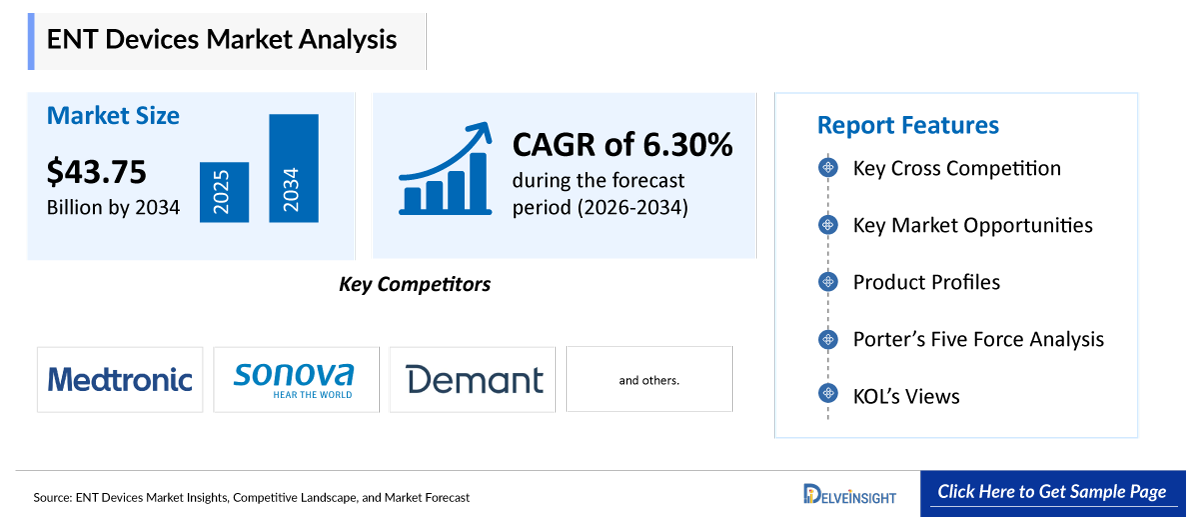
- The global ENT devices market size was valued at USD 25.25 billion in 2025 and is projected to reach USD 43.75 billion by 2034.
- The market is expected to expand at a CAGR of 6.30% during the forecast period 2026-2034, supported by the rising prevalence of ear, nose, and throat disorders, an aging population, growing demand for minimally invasive procedures, and continuous technological advancement in surgical and hearing devices.
- By product type, the hearing aids segment dominated the ENT devices market with a 30% share in 2025.
- By anatomy, the ear (otology and audiology) segment dominated the ENT devices market with a 52% share in 2025.
- By end-user, the hospitals segment dominated the ENT devices market with a 49% share in 2025.
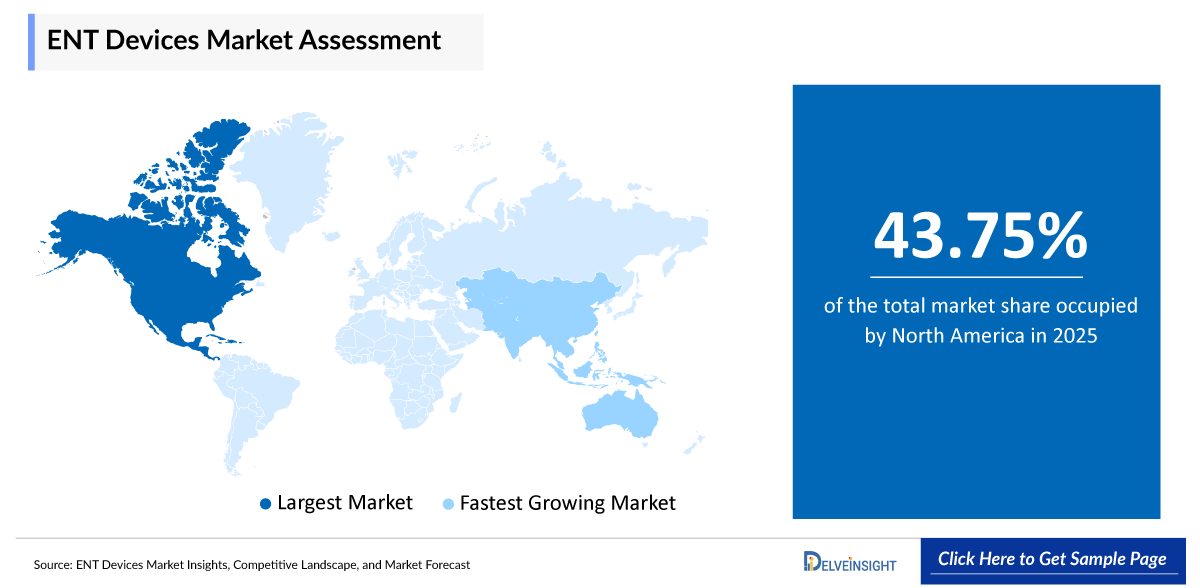
- North America accounted for the largest share of the ENT devices market at 40% in 2025, while Asia-Pacific is anticipated to register the fastest growth through 2034.
An ENT device, also known as an otolaryngology device, is a specialized medical instrument or system used for the diagnosis, treatment, and management of disorders of the ear, nose, throat, and related structures of the head and neck. The market is best understood by the way manufacturers and clinicians organize the specialty, which is based on three anatomical franchises and the device classes that serve them. The ear and audiology franchise, the largest, spans diagnostic otoscopy and audiometry, hearing aids in behind-the-ear, receiver-in-canal, and in-the-ear form factors including the newer over-the-counter category, and surgically implanted hearing devices comprising cochlear implants, bone-anchored and bone-conduction systems, and middle-ear and ossicular implants.
The nose and sinus franchise spans diagnostic and surgical endoscopy, powered instruments such as microdebriders and drills, image-guided surgical navigation, balloon sinus dilation, and drug-eluting sinus implants. The throat, head, and neck franchise spans laryngoscopy and voice devices, intraoperative nerve monitoring, energy-based and powered surgical instruments, tracheostomy and airway devices, and voice-restoration prostheses. Underpinning all three are the visualization platforms, endoscopes, and navigation systems that have moved ENT surgery toward minimally invasive and office-based care. The contemporary market is defined by the shift to minimally invasive and outpatient procedures, the rapid integration of artificial intelligence into diagnostics and hearing devices, single-use endoscopy, and robotic and image-guided surgical platforms.
ENT Devices Market Key Growth Drivers
- Rising global prevalence of hearing loss, with the World Health Organization reporting that over 1.5 billion people live with some degree of hearing loss, projected to rise to 2.5 billion by 2050.
- A rapidly aging population, in which over 25% of individuals aged 60 and above are affected by disabling hearing loss and age-related ENT conditions, becomes more common.
- A high and rising burden of chronic ENT conditions, including chronic sinusitis, allergic rhinitis, and obstructive sleep apnea, with the American Academy of Sleep Medicine estimating some 30 million United States adults have obstructive sleep apnea.
- A growing incidence of head and neck cancers, with the American Cancer Society projecting some 71,110 new cases in the United States in 2024.
- Rising demand for minimally invasive and outpatient procedures such as balloon sinus dilation and office-based ear-tube placement that reduce recovery time and cost.
- Continuous technological advancement, including AI-powered diagnostics and hearing aids, single-use endoscopes, powered instruments, and robotic and image-guided surgical systems.
- The rise of over-the-counter hearing aids and teleaudiology, democratizing access and expanding the market to previously underserved populations.
Key Companies in ENT Devices Market
The competitive field spans two distinct groups: the diversified surgical-device companies that lead the ENT surgical, endoscopy, and navigation franchises, and the specialist audiology companies that lead the hearing aid and hearing implant franchises. The leading participants in the ENT devices market include the following:
- Medtronic plc
- Sonova Holding AG
- Demant A/S
- Cochlear Limited
- WS Audiology A/S
- Karl Storz SE & Co. KG
- Olympus Corporation
- Stryker Corporation
- GN Store Nord A/S
- Smith & Nephew plc, and others
For illustrative purposes, only the top 10 companies are listed in the Table of Contents. The report may include analysis and references to additional companies relevant to the market assessment.
ENT Devices Market Size
The following table summarizes the headline market metrics for the global ENT devices market across the base year and the forecast horizon.
|
Report Metrics |
Details |
|
2025 Market Size |
USD 25.25 billion |
|
2034 Projected Market Size |
USD 43.75 billion |
|
Growth Rate (2026-2034) |
6.30% CAGR |
|
Largest Market |
North America (40% share in 2025) |
|
Fastest Growing Market |
Asia-Pacific |
|
Market Structure |
Moderately Concentrated |
All market values are expressed in USD and represent DelveInsight estimates synthesized from primary and secondary research.
Factors Contributing to the Growth of the ENT Devices Market
ENT Devices Market Drivers
- Rising Prevalence of Hearing Loss and an Aging Population: The foundational driver of the ENT devices market is the large and rising global burden of hearing loss, which anchors the largest segment of the market and generates durable demand for both hearing aids and surgically implanted hearing devices. According to the World Health Organization, over 1.5 billion people worldwide live with some degree of hearing loss, a figure projected to rise to 2.5 billion by 2050, of whom 700 million will require rehabilitation, and over 25% of individuals aged 60 and above are affected by disabling hearing loss. This burden is driven substantially by demographic aging, as presbycusis, the age-related decline in hearing, becomes more common with each additional year of life expectancy, and the same aging trend increases the prevalence of balance disorders, chronic ear disease, and other age-related ENT conditions that require diagnosis and treatment. Because hearing loss is progressive and, once established, generally permanent, the affected population accumulates and expands, and because effective rehabilitation depends on devices ranging from hearing aids through cochlear and bone-conduction implants, the growing prevalence translates directly and durably into device demand. Global hearing aid unit sales have risen steadily, reaching some 22.69 million units in 2024 according to the European Hearing Instrument Manufacturers Association, and the aging of the population in the developed markets and increasingly in the large developing economies ensures that this demographic driver will remain among the most powerful and stable in the market.
- Growing Burden of Chronic ENT Disorders and Head and Neck Cancer: The rising incidence of chronic ear, nose, and throat disorders and of head and neck cancer is a powerful driver of the ENT devices market, generating demand across the diagnostic, surgical, and therapeutic segments. Chronic conditions including chronic rhinosinusitis, allergic rhinitis, and recurrent ear infections are highly prevalent across all age groups and are the principal drivers of the very high volume of sinus, ear, and airway procedures performed worldwide, while obstructive sleep apnea has emerged as a major and growing indication, with the American Academy of Sleep Medicine estimating that some 30 million United States adults are affected. The growing incidence of head and neck cancers adds a high-acuity source of demand for advanced surgical, navigation, and monitoring devices, with the American Cancer Society projecting some 71,110 new cases in the United States in 2024, and infections such as meningitis contribute to the burden by causing long-term complications including hearing loss in a meaningful share of patients. Each of these conditions maps to a distinct set of ENT devices, from diagnostic endoscopes and imaging through powered surgical instruments, navigation, and nerve monitoring to implants and rehabilitation devices, so the rising prevalence of chronic and oncologic ENT disease sustains broad-based demand across the entire product portfolio. Because these conditions are chronic, recurrent, and frequently progressive, the demand they generate is durable and expanding.
- Rising Demand for Minimally Invasive and Outpatient Procedures: The strong and accelerating shift toward minimally invasive and outpatient ENT care is a central driver of the market, reshaping both the mix of devices demanded and the settings in which they are used. Patients and clinicians increasingly favor minimally invasive techniques for their shorter recovery times, reduced pain, lower complication rates, and improved outcomes, and the maturation of the enabling technologies has made a widening range of procedures feasible outside the traditional operating room. Balloon sinus dilation has transformed the management of chronic sinusitis by allowing sinus outflow to be restored through a minimally invasive, often office-based procedure, and single-use systems for office-based pediatric ear-tube placement under topical anesthesia have moved a common procedure out of the operating room entirely, reducing cost and burden. This migration is supported by favorable reimbursement for the outpatient setting and by the rapid growth of dedicated ENT clinics and ambulatory surgical centers, which offer cost-effectiveness, convenience, and a lower risk of hospital-acquired infection and are projected to be the fastest-growing end-user setting. Because minimally invasive and office-based procedures require their own specialized devices, including balloon dilation systems, single-use endoscopes, and portable navigation and visualization, the shift both expands the total procedure volume by lowering the barrier to treatment and drives demand toward higher-value enabling technologies. This trend is among the most consequential structural changes in the ENT devices market.
- Technological Advancement and Product Innovation: Continuous technological advancement is a major catalyst of the ENT devices market, enhancing diagnostic accuracy and treatment efficacy and creating a steady cycle of product upgrades that raises the value delivered per procedure. In diagnostics, the integration of artificial intelligence is enabling more accurate and faster identification of disease, with AI-powered otoscopes able to detect middle-ear effusions with high accuracy and AI imaging systems able to analyze computed tomography, endoscopic video, and voice patterns to detect laryngeal lesions, nasal polyps, and early tumors with high reliability. In the surgical segment, powered instruments such as microdebriders and drills, image-guided navigation systems, and emerging robotic-assisted platforms improve procedural precision and reduce patient trauma, and next-generation navigation platforms increasingly integrate artificial intelligence for real-time guidance. The hearing aid segment is a prime example of innovation-driven growth, with AI-enabled processing that dynamically separates speech from background noise, Bluetooth Low Energy and Auracast connectivity, rechargeable batteries, and biometric sensors for health monitoring including fall detection, all of which improve the user experience and drive replacement demand. Single-use endoscopes address cross-contamination and reprocessing costs, and smart cochlear implant systems improve mapping and outcomes. Because the installed base of clinicians and facilities grows only gradually, growth comes disproportionately from raising the sophistication and value of the devices used, making continuous innovation the principal commercial lever in the market.
- Expansion of Telemedicine, Home-Based Care, and Over-the-Counter Access: The expansion of telehealth, remote monitoring, and over-the-counter access is an increasingly important driver of the ENT devices market, reshaping distribution and expanding the addressable population, particularly in audiology and sleep medicine. Patients can now receive remote hearing aid adjustments and have their sleep apnea therapy data monitored from home, reducing the need for in-person visits and improving adherence and convenience, and teleaudiology has become a mainstream channel for fitting and follow-up. The most transformative development is the emergence of the over-the-counter hearing aid category, enabled by regulatory change and consumer-friendly technology, which allows adults with perceived mild-to-moderate hearing loss to purchase hearing aids directly without a professional fitting, democratizing access and expanding the market to a large, previously underserved population that had been deterred by cost, stigma, or access barriers. This shift provides manufacturers with new direct-to-consumer distribution channels and opportunities to develop user-centric, portable, and connected devices, and it is complemented by the entry of consumer-electronics and hearables companies that broaden the category. The development of affordable and ultra-low-cost AI-enabled hearing aids further extends access in cost-sensitive and developing markets. Because these channels reach patients who would not otherwise have been treated and create new categories of device and service, the expansion of telemedicine, home-based care, and over-the-counter access is a significant and structural contributor to market growth.
- Rising Cosmetic and Reconstructive Procedures: The global rise in cosmetic and reconstructive procedures of the head and neck is a meaningful driver of the ENT devices market, particularly for the surgical instruments and implants used in facial plastic and reconstructive surgery. Rhinoplasty and otoplasty, procedures that reshape the nose and ear, are among the most commonly performed aesthetic operations worldwide, and the growing public inclination toward enhancing physical appearance, combined with the availability of safer, minimally invasive techniques and increasing disposable income, is driving strong growth in this sub-segment. Reconstructive procedures following trauma, cancer resection, or congenital conditions add a further source of demand for specialized ENT and facial plastic surgical devices, nasal splints, and implants. These procedures require dedicated instruments, endoscopic visualization, and fixation and implant materials, and because facial aesthetic and reconstructive surgery overlaps substantially with the otolaryngology specialty, its growth flows directly into ENT device demand. The trend is reinforced by the broader normalization of aesthetic procedures, the influence of social media and video communication on appearance awareness, and the expansion of aesthetic surgical capacity in Asia-Pacific and other emerging markets. Because it combines elective, self-pay demand with reconstructive clinical need, this driver adds a resilient and higher-margin source of growth to the market.
- Expanding Healthcare Infrastructure in Emerging Markets: The expansion and modernization of healthcare infrastructure across emerging markets is a significant driver of the ENT devices market, converting a large and previously undertreated burden of ear, nose, and throat disease into treated procedures and adding a fast-growing demand base to the mature markets of North America, Europe, and Japan. Governments across Asia-Pacific and other developing regions are significantly increasing their healthcare budgets and investing in new hospitals and clinics, particularly in large economies such as India and China, which are rapidly upgrading their medical infrastructure and expanding access to specialized ENT care. This expansion allows for the procurement of modern, high-technology devices that were previously unavailable, and it is accompanied by growth in the number of trained ENT specialists and audiologists, addressing a historical constraint on treatment. Rising disposable income, growing health awareness, and the gradual extension of insurance coverage further increase the population able to access diagnosis and treatment, and the entry of both multinational and capable domestic manufacturers offering devices across the price spectrum accelerates adoption. Because these markets combine very large populations, a high untreated burden of hearing loss and chronic ENT disease, rapid aging, and improving access, they are expected to grow substantially faster than the developed markets and to become an increasingly important source of incremental demand over the forecast period.
ENT Devices Market Restraints
Despite a broad and durable demand base, the ENT devices market faces material constraints that temper the pace of adoption. The most significant is the high cost of advanced ENT devices and the associated procedures. Surgical navigation systems, robotic and powered platforms, high-definition and single-use endoscopes, cochlear implants, and premium hearing aids represent substantial capital and per-procedure expense, and this cost limits access particularly in cost-sensitive and developing markets and exposes the market to the reimbursement decisions of payers, who may restrict coverage or require that conservative options be exhausted first. The second constraint is the shortage of skilled ENT specialists and audiologists, which is especially acute in developing nations and rural regions and which limits the diffusion of advanced procedures and devices regardless of clinical need, since the sophisticated surgical and hearing technologies that drive market value require trained physicians, surgeons, and audiologists to deploy and manage. The third constraint is limited and heterogeneous reimbursement coverage. In many health systems, coverage for hearing aids in particular is limited or absent, requiring substantial out-of-pocket payment that suppresses adoption despite high clinical need, and reimbursement for newer procedures and premium devices varies significantly across countries, moderating the pace of technology penetration. Additional constraints include the risk and cost of product recalls and safety alerts, which have affected endoscope accessories, surgical instruments, and cochlear implants and can disrupt supply and erode confidence; the pricing pressure exerted by competitive markets and consolidated purchasing; and the volatility that tariffs on imported components and finished devices add to cost and supply, given the globally distributed nature of ENT device manufacturing. Together, these economic, workforce, and structural factors ensure that growth, while robust and broad-based, proceeds unevenly across geographies and care settings. Source: peer-reviewed literature; company disclosures; national health authorities.
ENT Devices Market Segment Analysis
The global ENT devices market is segmented by product type (hearing aids, hearing implants, ENT endoscopes and visualization systems, powered surgical instruments, surgical navigation and nerve monitoring systems, nasal and sinus devices, otological and airway devices, and diagnostic ENT devices); by anatomy (ear (otology and audiology), nose (rhinology and sinus), and throat, head, and neck); by end-user (hospitals, ENT clinics and ambulatory surgical centers, and audiology and home-care settings); and by geography (North America, Europe, Asia-Pacific, and the Rest of the World).
By Product Type
Dominant Subsegment: Hearing Aids.
The hearing aids category is expected to dominate the market.
Dominant: Hearing Aids ~ 30%
The hearing aids segment accounted for a 30% share of the ENT devices market in 2025. Hearing aids dominate the product-type structure because the global burden of hearing loss is the single largest source of demand in ENT and because hearing aids are the primary treatment for the mild-to-moderate hearing loss that affects the majority of the affected population. According to the World Health Organization, over 1.5 billion people live with some degree of hearing loss, projected to rise to 2.5 billion by 2050, and over 25% of individuals aged 60 and above have disabling hearing loss, creating a vast and expanding patient base that has driven global hearing aid unit sales to some 22.69 million units in 2024. The segment is propelled by rapid innovation, with modern devices integrating artificial-intelligence processing that separates speech from background noise, Bluetooth Low Energy and Auracast connectivity, rechargeable batteries, and biometric sensors, and by the emergence of the over-the-counter category, which has democratized access and expanded the market to a broad new user base. Hearing implants form a distinct and high-value segment, comprising cochlear implants for severe-to-profound loss and bone-anchored, bone-conduction, and middle-ear implants for conductive and mixed loss. The surgical franchises of ENT endoscopes and visualization, powered instruments, navigation and nerve monitoring, and nasal, sinus, and airway devices together constitute the majority of the market when aggregated and are led by the diversified device companies. Hearing aids are expected to retain their leading single-category share throughout the forecast period, reinforced by aging demographics and over-the-counter expansion.
By Anatomy
Dominant Subsegment: Ear (Otology and Audiology).
The ear category is expected to dominate the market.
Dominant: Ear (Otology and Audiology) ~ 52%
The ear (otology and audiology) segment accounted for a 52% share of the ENT devices market in 2025. The ear and audiology franchise dominates the anatomical structure because it combines the largest single device category, hearing aids, with the high-value hearing implant segment and the diagnostic and surgical otology devices used to treat ear disease, together accounting for the majority of the market. The franchise is anchored by the enormous and growing global burden of hearing loss and is reinforced by demographic aging, and it spans a continuum of devices from diagnostic otoscopes and audiometers through hearing aids in their several form factors to surgically implanted cochlear, bone-anchored, and middle-ear systems, as well as the ventilation tubes, ossicular reconstruction implants, and otologic drills used in ear surgery. The breadth and depth of this franchise, and the recurring nature of hearing aid replacement and sound-processor upgrade demand, concentrate market value in the ear. The nose and sinus franchise forms the second anatomical segment and a large and fast-growing one, driven by the very high prevalence of chronic rhinosinusitis and allergic rhinitis and by the strong shift toward minimally invasive and office-based sinus procedures, and it encompasses endoscopes, powered instruments, navigation, balloon dilation, and drug-eluting sinus implants. The throat, head, and neck franchise spans laryngoscopy and voice devices, nerve monitoring, energy-based instruments, airway and tracheostomy devices, and voice-restoration prostheses, and is reinforced by the head and neck cancer burden. The ear franchise is expected to retain its leading share throughout the forecast period.
By End-User
Dominant Subsegment: Hospitals.
The hospitals category is expected to dominate the market.
Dominant: Hospitals ~ 49%
The hospitals segment accounted for a 49% share of the ENT devices market in 2025. Hospitals dominate the end-user structure because they possess the specialized operating rooms, advanced imaging, and multidisciplinary teams required for the complex ENT surgeries that generate the greatest device intensity, including skull base tumor resection, advanced cochlear implantation, and major head and neck oncologic and reconstructive procedures. Hospitals are the primary setting for emergency ENT cases and for procedures that require extended observation or general anesthesia, and they have the capital capacity to invest in the surgical navigation, powered instruments, nerve monitoring, and high-definition endoscopy platforms that these procedures demand, all of which concentrate high-value procedural volume in the inpatient and hospital-outpatient setting. The dominance of hospitals is being challenged, however, by the rapid growth of the ENT clinic and ambulatory surgical center segment, which is projected to be the fastest-growing end-user setting as the shift toward minimally invasive and outpatient procedures such as balloon sinus dilation, routine tonsillectomy, and office-based ear-tube placement accelerates, and as favorable reimbursement and improving technology make more procedures feasible outside the hospital. Ambulatory settings offer cost-effectiveness, patient convenience, and a lower risk of hospital-acquired infection, positioning them to capture a rising share of high-volume, lower-complexity procedures. Audiology and home-care settings, encompassing hearing clinics, retail audiology, and the direct-to-consumer over-the-counter channel, constitute a large and growing end-user segment for the hearing aid franchise. Hospitals are expected to retain their leading share throughout the forecast period, even as ambulatory and audiology settings grow faster.
ENT Devices Market Region Analysis
Dominant Region: North America
Dominant: North America ~ 40% (Largest)
North America accounted for a 40% share of the global ENT devices market in 2025. The region holds a dominant position globally, driven by a high prevalence of ENT disorders, a robust healthcare system, and a strong culture of technological adoption. The United States and Canada face a substantial burden of chronic conditions including sinusitis, obstructive sleep apnea, and age-related hearing loss, creating a large and consistent patient pool for both diagnostic and therapeutic devices, with the American Academy of Sleep Medicine estimating some 30 million United States adults affected by obstructive sleep apnea and the American Cancer Society projecting some 71,110 new head and neck cancer cases in 2024. Beyond patient demographics, the strength of the market is rooted in advanced healthcare infrastructure, high healthcare expenditure, favorable and comprehensive reimbursement, and a high concentration of leading medical device and hearing manufacturers. North America is a pioneer in the adoption of cutting-edge technologies, witnessing rapid integration of AI-powered diagnostics, robotic-assisted surgical systems, single-use endoscopes, and smart hearing aids with Bluetooth connectivity and remote monitoring, and it is the reference market for regulatory approval, hosting recent clearances for surgical navigation, office-based ear-tube systems, and ENT laser platforms. These innovations, coupled with a strong emphasis on minimally invasive procedures and a growing network of ambulatory surgical centers, ensure that North America will continue to be a primary growth engine for the global market. The region is expected to retain its dominant position throughout the forecast period.
Fastest Growing Region: Asia-Pacific
Asia-Pacific is projected to register the fastest compound annual growth rate in the ENT devices market through 2034. The region is the fastest-growing market for ENT devices globally, with growth projected to exceed 7% annually through the forecast period, propelled by a massive and aging population, particularly in countries such as Japan and China, that is directly fueling a rise in age-related conditions such as presbycusis while lifestyle changes contribute to an increased prevalence of obstructive sleep apnea and chronic sinusitis. These factors create a vast patient pool and a consistent demand for advanced diagnostic and therapeutic devices. Governments across Asia-Pacific are significantly increasing their healthcare budgets to address the needs of their populations, leading to major investments in new hospitals and clinics, particularly in emerging economies such as India and China, which are rapidly upgrading their medical infrastructure, improving access to specialized ENT care, and enabling the procurement of modern, high-technology devices that were previously unavailable. China contributes the largest incremental volume, supported by a vast population, a growing domestic device and hearing industry, and expanding surgical capacity; Japan combines a deeply aged population with advanced clinical practice and high device adoption; and India represents a substantial long-term opportunity as access and specialist capacity broaden. The entry and expansion of both multinational and domestic manufacturers offering devices across the price spectrum is accelerating adoption. Regional growth is expected to exceed the global average across every segment, making Asia-Pacific the principal source of incremental demand over the forecast period.
ENT Devices Regional Commentary
North America
North America leads on value, innovation, and regulatory precedence, holding a 40% share in 2025. The region combines a high burden of chronic ENT disease, hearing loss, and obstructive sleep apnea with advanced infrastructure, favorable reimbursement, high healthcare expenditure, and a concentration of leading device and hearing manufacturers. The United States is the reference market for AI diagnostics, single-use endoscopy, surgical navigation, and office-based procedure approvals. Near-term dynamics are shaped by the shift to minimally invasive and ambulatory care, AI-enabled hearing aids and the over-the-counter category, robotic and image-guided surgery, and tariff-driven supply reconfiguration.
Europe
Europe is a large and innovation-oriented market, supported by aging populations in Germany, Italy, France, and the United Kingdom that are highly susceptible to age-related hearing loss and chronic ENT conditions, sustaining strong demand for hearing aids, cochlear implants, and diagnostic and surgical devices. European companies, including several of the leading hearing and endoscopy manufacturers, are at the forefront of innovation in smaller, more precise, and digitally integrated devices, AI-powered diagnostics for early cancer detection, and minimally invasive endoscopic and balloon procedures, with an additional emphasis on sustainability and energy efficiency. The European Union Medical Device Regulation has raised the evidentiary burden for new approvals and reshaped product availability in favor of manufacturers with regulatory scale.
Asia-Pacific
Asia-Pacific is the fastest-growing region, with growth projected above 7% annually, propelled by a massive aging population, rising presbycusis, obstructive sleep apnea, and chronic sinusitis, and rapidly expanding healthcare infrastructure. Government investment in new hospitals and clinics, particularly in China and India, is improving access to specialized ENT care and enabling procurement of modern devices. China contributes the largest incremental volume and a growing domestic industry, Japan combines deep aging with advanced practice, and India offers a substantial long-term opportunity. The entry of multinational and domestic manufacturers across the price spectrum accelerates adoption across every segment.
Rest of World
The Rest of the World comprises the Middle East, Africa, and South America. Access is highly stratified. The Gulf Cooperation Council states and the larger South American markets, particularly Brazil, have invested in ENT and audiology capacity and increasingly offer advanced diagnostic, surgical, and hearing devices, representing growing markets, while much of Africa carries a very high untreated burden of hearing loss and chronic ENT disease alongside a severe shortage of specialists and infrastructure, so a large share of need is unmet. The high cost of devices and limited reimbursement constrain access in developing countries. Regional growth will be driven by investment in healthcare infrastructure, hearing-health and cancer initiatives, rising awareness, and lower-cost devices from regional and Asian manufacturers.
ENT Devices Market Competitive Landscape
The global ENT devices market is classified as Moderately Concentrated. The market is structured upon two distinct competitive groups: the diversified surgical-device companies that lead the ENT surgical, endoscopy, and navigation franchises, and the specialist audiology companies that lead the hearing aid and hearing implant franchises. A few global leaders dominate each group through strong product portfolios, extensive distribution networks, and continuous research and development, while regional and emerging players contribute cost-effective solutions and niche innovations, intensifying competition. Competition centers on minimally invasive surgical tools, advanced hearing solutions, image-guided navigation, and the integration of artificial intelligence, and strategic mergers, acquisitions, and partnerships are prominent.
The competitive landscape is evaluated across the following dimensions:
- Market concentration: Moderately concentrated within each franchise, with a few leaders dominating ENT surgery and navigation and a separate oligopoly of large manufacturers dominating hearing aids and implants, alongside regional and niche innovators.
- Leading players: Medtronic is the global leader in ENT surgery, navigation, and nerve monitoring; Karl Storz and Olympus lead in endoscopy and visualization, Stryker and Smith & Nephew compete in powered surgery, and Sonova, Demant, WS Audiology, GN Store Nord, and Cochlear lead the hearing aid and implant franchises.
- Geographic reach: The leading participants operate global commercial and clinical-education organizations, with the hearing manufacturers built upon extensive audiology retail and clinic networks and the surgical manufacturers upon hospital and ambulatory relationships, while regional manufacturers serve large domestic markets.
- Product portfolio strength: Competitive advantage rests on depth within a franchise, whether a full ENT surgical portfolio spanning navigation, powered instruments, and monitoring, or a complete hearing portfolio spanning aids and implants across form factors and price tiers, since customers select suppliers by franchise rather than across the whole market.
- Pipeline strength: Development is concentrated in AI-enabled diagnostics and hearing processing, single-use endoscopy, robotic and image-guided surgery, next-generation cochlear and bone-conduction implants, balloon and drug-eluting sinus devices, and connected and over-the-counter hearing devices.
- Strategic partnerships: Collaboration spans alliances between device makers and health systems and academic centers, between endoscopy makers and cloud and AI providers, and between hearing manufacturers and health systems, exemplified by partnerships integrating navigation, visualization, and artificial intelligence.
- M&A activity: Acquisition is a defining dynamic, exemplified by the Integra LifeSciences acquisition of Acclarent to lead in minimally invasive sinus solutions and the Cochlear acquisition of the Oticon Medical implant business, alongside continued consolidation across both the surgical and hearing franchises.
- Innovation focus: Innovation is shifting toward artificial intelligence in diagnostics and hearing, minimally invasive and office-based procedures, single-use and connected devices, robotic and image-guided surgery, and the democratization of hearing care through over-the-counter and teleaudiology channels.
- Regulatory standing: United States 510(k) and premarket approval and European Union Medical Device Regulation certification are decisive competitive credentials, and manufacturers increasingly pursue dual United States and European clearance to accelerate multi-region market access, while recalls and safety alerts represent a material competitive risk.
ENT Devices Market Recent Developmental Activities
- In March 2026, Medtronic plc received U.S. Food and Drug Administration clearance for its Stealth AXiS Surgical System, a next-generation image-guided navigation platform for cranial and ENT procedures that delivers high-precision navigation and enhanced visualization tailored to the sinuses and skull base, integrated with the AiBLE ecosystem. Strategic significance: the refresh of the leading ENT navigation platform by the global market leader, which has led ENT navigation since the LandmarX system in 1998, reinforced the central role of image-guided surgery in complex sinus and skull base procedures and extended the reach of artificial intelligence into surgical guidance.
- In April 2025, Medency secured U.S. Food and Drug Administration 510(k) clearance for its RAPIDO ENT BLUE Laser System, engineered specifically for otolaryngology and using a blue laser technology to deliver precise tissue interaction with minimal collateral thermal damage. Strategic significance: the clearance introduced a differentiated energy modality for delicate ENT procedures and illustrated the continued entry of specialized energy-based platforms into the surgical franchise, expanding the options available for precise soft-tissue surgery.
- In August 2024, Karl Storz, through its AventaMed division, secured U.S. Food and Drug Administration clearance for its Solo+ system, enabling office-based pediatric tympanostomies using only topical anesthesia for patients aged six months to twenty-four months, with a single-use design that simplifies ear-tube procedures outside the operating room. Strategic significance: moving a common pediatric ear-tube procedure entirely out of the operating room and into the office under topical anesthesia advanced the broad shift toward office-based and minimally invasive ENT care, reducing cost, anesthesia risk, and burden.
- In June 2025, Cochlear Limited introduced the Cochlear Nucleus Nexa System, described as a smart cochlear implant system, extending its leadership in implantable hearing solutions. Strategic significance: the launch of a smart, connected cochlear implant platform reinforced the strategic emphasis on connectivity, upgradability, and data in implantable hearing, deepening the long-term relationship with recipients through sound-processor upgrades and remote programming.
- In 2024, Cochlear Limited completed its acquisition of the Oticon Medical cochlear and bone-conduction implant business from Demant, consolidating implantable hearing assets. Strategic significance: the acquisition strengthened the position of the implantable-hearing leader by absorbing a competitor implant portfolio and recipient base, illustrating the consolidation of the high-value hearing implant franchise among a small number of specialist leaders.
- In 2024, Integra LifeSciences expanded its ENT franchise through the acquisition of Acclarent, the balloon sinus dilation and minimally invasive sinus business, positioning itself as a leading provider in minimally invasive sinus solutions, and also acquired the MicroFrance and Xomed manual ENT instrument lines from Medtronic. Strategic significance: the bolt-on acquisitions built a focused minimally invasive sinus and ENT instrument franchise, exemplifying the strategy of assembling specialist ENT scale through targeted acquisition of established product lines.
- In 2025, Karl Storz advanced its ENT visualization portfolio and pursued partnerships integrating surgical imaging with cloud and artificial-intelligence platforms, including a collaboration with Google Cloud, alongside a global rollout strategy for its office-based systems and dual United States and European regulatory clearances. Strategic significance: the integration of endoscopic visualization with cloud and artificial intelligence and the pursuit of simultaneous multi-region clearance reflected a strategy of differentiating visualization through software and accelerating global market access.
- In 2024 and 2025, Sonova Holding AG and Starkey Hearing Technologies launched next-generation hearing aids featuring artificial-intelligence sound processing, remote diagnostics, and enhanced wireless streaming, including devices with health-monitoring and fall-detection sensors. Strategic significance: the acceleration of AI-enabled and health-sensing hearing aids by the leading audiology companies reinforced the transformation of the hearing aid from a simple amplifier into a connected, intelligent, and multifunctional wearable, driving replacement demand and differentiation.
- In 2024 and 2025, GN Store Nord A/S advanced its ReSound and Beltone hearing aid brands with AI-enabled and consumer-electronics-integrated devices supporting Bluetooth Low Energy and Auracast streaming. Strategic significance: the emphasis on connectivity, streaming, and consumer-electronics integration reflected the convergence of hearing aids with the broader hearables and consumer-audio market and the competitive imperative to match the digital experience expected by younger and first-time users.
- In 2024 and 2025, the over-the-counter hearing aid category continued to expand following regulatory change, with established manufacturers and consumer-electronics entrants launching direct-to-consumer devices and with ultra-low-cost AI-enabled hearing aids advancing to broaden access. Strategic significance: the maturation of the over-the-counter category democratized access to hearing care and expanded the market to a large, previously underserved population, while introducing new competition and distribution models that reshape the traditional audiology channel.
- In 2024 and 2025, Olympus Corporation expanded its portfolio of flexible endoscopes tailored for ENT specialists and advanced single-use endoscopy solutions, while managing regulatory actions related to endoscope accessories. Strategic significance: the emphasis on flexible and single-use ENT endoscopy addressed the twin priorities of visualization quality and infection control, and the management of recalls underscored the material competitive and reputational risk that quality and safety events pose in the endoscopy franchise.
- In 2024 and 2025, the leading manufacturers advanced the integration of artificial intelligence across ENT diagnostics and surgery, including AI-powered otoscopy able to identify middle-ear effusions with high accuracy, AI analysis of imaging and voice for early cancer and voice-disorder detection, and AI-enhanced surgical navigation for real-time guidance. Strategic significance: the pervasive integration of artificial intelligence across diagnosis, hearing, and surgery signaled the shift of competitive differentiation from hardware toward intelligent software, personalization, and data, positioning artificial intelligence as a key factor in the continued growth of the market.
ENT Devices Market Segmentation
- ENT Devices Market Assessment by Product Type
- Hearing Aids
- Behind-the-Ear (BTE) and Receiver-in-Canal (RIC)
- In-the-Ear (ITE) and Canal Devices
- Over-the-Counter (OTC) Hearing Aids
- Hearing Implants
- Cochlear Implants
- Bone-Anchored and Bone-Conduction Implants
- Middle-Ear and Ossicular Implants
- ENT Endoscopes and Visualization Systems
- Rigid Endoscopes
- Flexible and Video Endoscopes
- Single-Use Endoscopes
- Powered Surgical Instruments (Microdebriders, Drills, RF/Energy)
- Surgical Navigation and Nerve Monitoring Systems
- Nasal and Sinus Devices (Balloon Dilation, Sinus Implants, Nasal Splints)
- Otological and Airway Devices (Ventilation Tubes, Tracheostomy, Voice Prostheses)
- Diagnostic ENT Devices (Otoscopes, Audiometers, Hearing Screening)
- Hearing Aids
- ENT Devices Market Assessment by Anatomy
- Ear (Otology and Audiology)
- Nose (Rhinology and Sinus)
- Throat, Head, and Neck
- ENT Devices Market Assessment by End-User
- Hospitals
- ENT Clinics and Ambulatory Surgical Centers
- Audiology and Home-Care Settings
ENT Devices Market Assessment by Geography
- North America ENT Devices Market Assessment
- United States ENT Devices Market Size in USD million (2023-2034)
- Canada ENT Devices Market Size in USD million (2023-2034)
- Mexico ENT Devices Market Size in USD million (2023-2034)
- Europe ENT Devices Market Assessment
- France ENT Devices Market Size in USD million (2023-2034)
- Germany ENT Devices Market Size in USD million (2023-2034)
- United Kingdom ENT Devices Market Size in USD million (2023-2034)
- Italy ENT Devices Market Size in USD million (2023-2034)
- Spain ENT Devices Market Size in USD million (2023-2034)
- Rest of Europe ENT Devices Market Size in USD million (2023-2034)
- Asia-Pacific ENT Devices Market Assessment
- China ENT Devices Market Size in USD million (2023-2034)
- Japan ENT Devices Market Size in USD million (2023-2034)
- India ENT Devices Market Size in USD million (2023-2034)
- Australia ENT Devices Market Size in USD million (2023-2034)
- South Korea ENT Devices Market Size in USD million (2023-2034)
- Rest of Asia-Pacific ENT Devices Market Size in USD million (2023-2034)
- Rest of the World ENT Devices Market Assessment
- Middle East ENT Devices Market Size in USD million (2023-2034)
- Africa ENT Devices Market Size in USD million (2023-2034)
- South America ENT Devices Market Size in USD million (2023-2034)
ENT Devices Market Recent Industry Trends and Milestones (2023-2026):
|
Category |
Key Developments |
|
ENT Devices Market Product Approval |
The 2023 to 2026 period produced clearances across surgical navigation, energy, office-based, and hearing platforms. Medtronic obtained United States clearance for its Stealth AXiS image-guided surgical system for cranial and ENT procedures in March 2026, Medency secured clearance for its RAPIDO ENT BLUE laser system in April 2025, and Karl Storz obtained clearance for its Solo+ single-use office-based pediatric ear-tube system in August 2024. In hearing, Cochlear introduced the smart Nucleus Nexa cochlear implant system in June 2025, and the leading audiology companies launched successive generations of AI-enabled hearing aids. The over-the-counter hearing aid category continued to expand under the regulatory framework enabling direct-to-consumer sales, broadening the range of approved devices and channels. |
|
ENT Devices Market Product Expansion |
Product expansion advanced along three axes. The first is surgical, as manufacturers extended image-guided navigation, powered instruments, and energy platforms and moved toward single-use endoscopy and office-based procedure systems that shift care out of the operating room. The second is hearing, as hearing aids gained AI sound processing, Bluetooth Low Energy and Auracast streaming, rechargeable batteries, and health-sensing, and as cochlear and bone-conduction implants gained connectivity and upgradability. The third is intelligence and access, as artificial intelligence was integrated across otoscopy, imaging, voice analysis, and surgical guidance, and as the over-the-counter category and teleaudiology expanded access to hearing care. Balloon sinus dilation and drug-eluting sinus implants continued to broaden the minimally invasive rhinology franchise. |
|
ENT Devices Market Investment |
Investment was shaped by consolidation within each franchise and by the integration of artificial intelligence. In hearing, Cochlear acquired the Oticon Medical implant business, consolidating the implant franchise, while the leading aid manufacturers invested in AI processing, connectivity, and the over-the-counter channel. In surgery, Integra LifeSciences expanded its ENT franchise through the acquisition of Acclarent and the MicroFrance and Xomed instrument lines, and the diversified leaders invested in navigation, robotics, and single-use endoscopy. Partnerships proliferated between endoscopy makers and cloud and AI providers and between device makers and health systems and academic centers. Venture capital supported AI diagnostic, robotic ENT surgery, and point-of-care detection innovators. Manufacturing and sourcing investment responded to tariff pressure on imported components and finished devices, favoring supply-chain diversification. |
|
Company Strategy |
The unifying strategic theme is depth within a franchise combined with the integration of artificial intelligence and the shift toward minimally invasive and connected care. Medtronic is extending its leadership in ENT navigation, powered instruments, and nerve monitoring through AI-enabled platforms. Karl Storz and Olympus are advancing endoscopic visualization, single-use endoscopy, and AI and cloud integration, and pursuing simultaneous multi-region regulatory clearance. Integra LifeSciences is building a focused minimally invasive sinus and ENT instrument franchise through acquisition. In hearing, Sonova, Demant, WS Audiology, and GN Store Nord are competing on AI processing, connectivity, and the over-the-counter channel, while Cochlear and the implant specialists consolidate and advance connected implantable hearing. Regional manufacturers pursue cost-effective devices for their domestic markets. |
|
Emerging Technologies |
The defining emerging technologies are artificial intelligence across the specialty, including AI-powered otoscopy that identifies middle-ear effusions with high accuracy, AI analysis of imaging and voice for early detection of laryngeal and other cancers and voice disorders, and AI-enhanced surgical navigation for real-time guidance; single-use endoscopy that addresses cross-contamination and reprocessing cost; robotic and image-guided surgical systems that improve precision in delicate sinus, skull base, and otologic procedures; and connected, AI-enabled, and health-sensing hearing aids together with smart, upgradable cochlear and bone-conduction implants. Supporting these are balloon and drug-eluting sinus devices, office-based and single-use procedure systems, energy-based platforms such as ENT lasers, and the over-the-counter and teleaudiology models that democratize hearing care. Across these, the trajectory is toward ENT care that is more precise, more minimally invasive, more intelligent, and more accessible. |
ENT Devices Market Startup Funding and Investment Trends
Investment in the ENT devices field has concentrated on technologies that bring intelligence, precision, and access to a specialty historically served by hardware, namely artificial-intelligence diagnostics that improve detection at the point of care, robotic and flexible surgical systems that extend minimally invasive reach, and objective point-of-care tools that reduce reliance on specialist interpretation. Because the core market is dominated by diversified surgical leaders and a hearing oligopoly with entrenched customer relationships, most innovators pursue a differentiated technology suited to acquisition or partnership. The table below summarizes representative companies advancing the next generation of ENT devices.
|
Company |
Total Funding |
Funding Stage |
Main Product/Offering |
Core Technology |
|
OtoNexus Medical |
Over USD 34.8 million |
Late clinical stage |
Ultrasound otoscope |
Point-of-care ultrasound otoscopy |
|
WSK Medical (Zeno AI) |
Grants and early-stage |
Clinical/pilot |
Zeno AI laryngoscopy |
Real-time AI lesion detection |
|
Request for unlocking the report of the @ ENT Devices Market Insights | ||||
Capital formation in this field is shaped by the difficulty of competing directly against the diversified surgical leaders and the hearing oligopoly, whose comprehensive franchise portfolios, clinical-education relationships, and distribution networks create high barriers, so investors have favored companies that introduce a differentiated technology suited to acquisition or that address a point-of-care or access gap the incumbents serve poorly. Artificial-intelligence diagnostics are the clearest technology thesis, seeking to improve detection of middle-ear disease, laryngeal cancer, and voice disorders at the point of care and to reduce reliance on scarce specialists, and objective point-of-care tools such as ultrasound otoscopy address the diagnostic uncertainty of conventional examination. Robotic and flexible surgical systems that extend minimally invasive reach into the sinus, airway, and skull base constitute a second major thesis, and teleaudiology and access-expanding platforms a third. The archetypal outcome is acquisition by one of the diversified leaders or hearing majors seeking to add a differentiated capability, exemplified by the bolt-on acquisitions that have built focused minimally invasive sinus and implant franchises. The principal risks are the lengthy regulatory pathway, the capital intensity of clinical validation, the entrenched relationships and franchise depth of the incumbents, and the workforce and reimbursement constraints that gate adoption. Source: company disclosures.
Key Takeaways from the ENT Devices Market Report Study
- Market size analysis for the current ENT devices market size (2025), and market forecast for 9 years (2026 to 2034).
- Top key product/technology developments, mergers, acquisitions, partnerships, and joint ventures that happened over the last 3 years.
- Key companies dominating the global ENT devices market.
- Various opportunities available for competitors in the ENT devices market space.
- What are the top-performing segments in 2025? How will these segments perform in 2034?
- Which are the top-performing regions and countries in the current ENT devices market scenario?
- Which are the regions and countries where companies should concentrate their opportunities for ENT devices market growth in the future?
Target audience who can benefit from this ENT Devices market report study
- Herbal medicines product providers
- Research organizations and consulting companies
- Herbal medicines-related organizations, associations, forums, and other alliances
- Government and corporate offices
- Start-up companies, venture capitalists, and private equity firms
- Distributors and traders dealing in ENT devices
- Various end-users who want to know more about the ENT devices market and the latest technological developments in the ENT devices market.
Frequently Asked Questions
Q1. At what rate is the ENT devices market expected to grow?
The global ENT devices market is projected to grow at a compound annual growth rate of 6.30% during the forecast period from 2026 to 2034.
Q2. What is the current and projected size of the ENT devices market?
The global ENT devices market size was valued at USD 25.25 billion in 2025 and is projected to reach USD 43.75 billion by 2034.
Q3. Which region dominates the ENT devices market?
North America dominated the ENT devices market with a 40% share in 2025, driven by a high prevalence of chronic ENT disorders, hearing loss, and obstructive sleep apnea, a robust healthcare system, favorable reimbursement, high healthcare expenditure, the concentration of leading device and hearing manufacturers, and rapid adoption of AI diagnostics, single-use endoscopy, and robotic surgery. Asia-Pacific is projected to record the fastest compound annual growth rate, above 7% annually, driven by a massive aging population, rising presbycusis and chronic ENT disease, and expanding healthcare infrastructure across China, Japan, and India.
Q4. What are the key factors driving growth in the ENT devices market?
The principal drivers are the rising prevalence of hearing loss, with the World Health Organization reporting over 1.5 billion people affected, projected to reach 2.5 billion by 2050; an aging population; the growing burden of chronic ENT disorders and head and neck cancer, including some 30 million United States adults with obstructive sleep apnea; rising demand for minimally invasive and outpatient procedures; continuous technological advancement including AI diagnostics, single-use endoscopy, and robotic surgery; and the expansion of over-the-counter hearing aids and teleaudiology.
Q5. Who are the major players in the ENT devices market?
The leading ENT Devices companies in the market is moderately concentrated and structured upon two groups: the diversified surgical leaders, led by Medtronic in ENT surgery and navigation with Karl Storz, Olympus, Stryker, and Smith & Nephew in endoscopy and powered surgery, and the hearing majors, comprising Sonova, Demant, WS Audiology, GN Store Nord, and Cochlear. Additional participants including Johnson & Johnson MedTech, MED-EL, Starkey, Atos Medical, Integra LifeSciences (Acclarent), and PENTAX Medical compete across the surgical and hearing franchises.