Facioscapulohumeral Muscular Dystrophy Market Summary
Facioscapulohumeral Muscular Dystrophy (FSHD) Insights and Trends
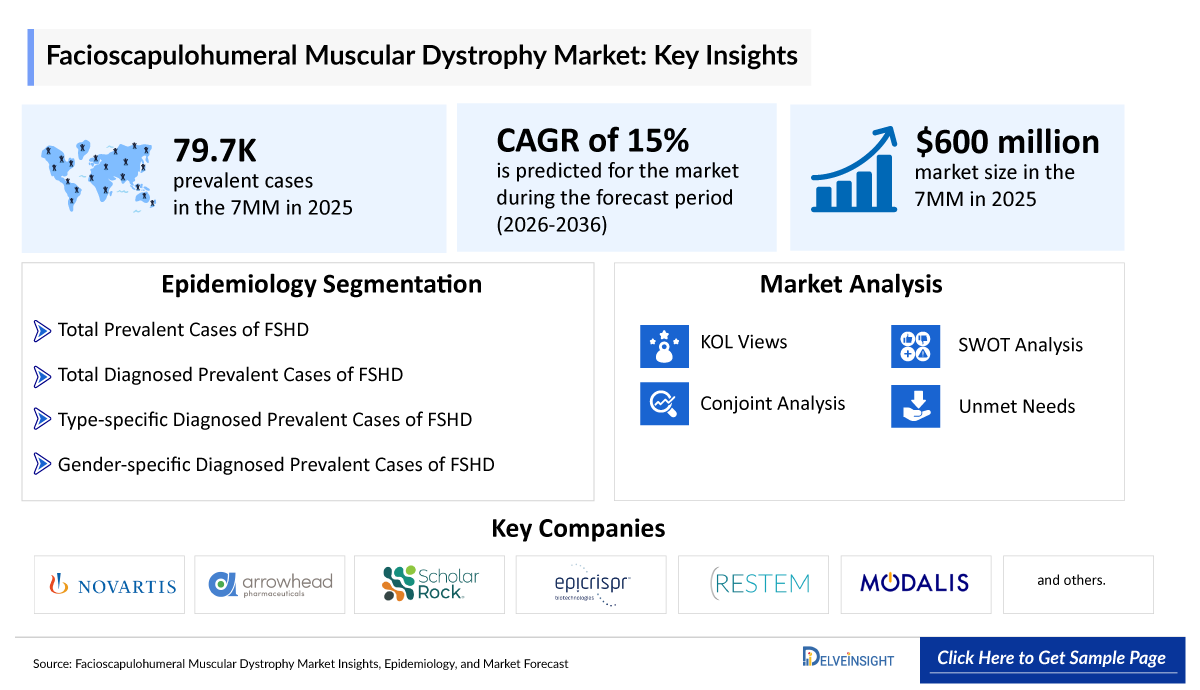
- According to DelveInsight’s analysis, the FSHD market size was found to be ~USD 600 million in the leading markets (the United States, the EU4 (Germany, France, Italy, and Spain), the United Kingdom, and Japan) in 2025.
- FSHD is the second most common adult-onset muscular dystrophy worldwide. It presents with weakness in the facial, shoulder-girdle, and upper-arm muscles and progressively extends to the abdominal, lower-limb, and pelvic-girdle muscles. This characteristic pattern of muscle involvement is central to its diagnosis and clinical management.
- About 80% of people with the FSHD genotype will develop symptoms, while 20% who test positive are asymptomatic (do not have symptoms). Symptoms may appear later in life or be so mild that they go unnoticed.
- In FSHD1, a child of an affected parent has a 50% chance of inheriting the condition, while in FSHD2, the risk varies based on both parents' genetics but is generally between 25% and 50%.
- Early-onset FSHD is generally characterised by facial muscle weakness appearing before age 5 and/or weakness in the shoulder and upper arm muscles before age 10. This early form represents roughly 5–10% of all FSHD cases.
- Genetic testing is a valuable tool for confirming an FSHD diagnosis, as it identifies the specific genetic changes associated with the condition and helps differentiate it from other disorders with similar symptoms. Individuals and their families are encouraged to consult healthcare professionals to determine whether genetic testing is an appropriate option for their situation.
- While there is no cure for FSHD, available therapies aim to enhance mobility, daily functioning, and quality of life while reducing complications and mortality risk. About 20% eventually lose the ability to stand and walk, becoming reliant on a wheelchair for mobility.
- The emerging pipeline in FSHD includes Delpacibart braxlosiran (del-brax) (Novartis/Avidity Biosciences), EPI-321 (Epicrispr Biotechnologies), MDL-103 (Modalis Therapeutics), Restem-L (Restem), and others.
Facioscapulohumeral Muscular Dystrophy (FSHD) Market Size and Forecast in the 7MM
- 2025 Facioscapulohumeral Muscular Dystrophy (FSHD) Market Size: ~USD 600 million
- 2036 Projected Facioscapulohumeral Muscular Dystrophy (FSHD) Market Size: ~USD XXX million
- Facioscapulohumeral Muscular Dystrophy (FSHD) Growth Rate (2026–2036): ~15% CAGR
DelveInsight's ‘Facioscapulohumeral Muscular Dystrophy (FSHD) Market Insights, Epidemiology and Market Forecast – 2036’ report delivers an in-depth understanding of the FSHD, historical and forecasted epidemiology, as well as the FSHD market trends in the United States, EU4 (Germany, Spain, Italy, and France) and the United Kingdom, and Japan.
The Facioscapulohumeral Muscular Dystrophy (FSHD) market report delivers a comprehensive analysis of the current treatment landscape, including standards of care, clinical practices, and evolving therapeutic algorithms. It evaluates FSHD patient burden trends, revenue & market share dynamics, peak patient share & therapy uptake analysis, and provides an in-depth market size assessment, and growth rate projections (Historical & Forecast 2022–2036) across global regions. The report highlights key unmet medical needs in Facioscapulohumeral Muscular Dystrophy (FSHD) and maps the competitive and clinical landscape to uncover high‑value opportunities, providing a clear outlook on future market growth potential.
Scope of the Facioscapulohumeral Muscular Dystrophy (FSHD) Market | |
|
Study Period |
2022–2036 |
|
Historical Year |
2022–2025 |
|
Forecast Period |
2026–2036 |
|
Base Year |
2026 |
|
Geographies Covered |
|
|
FSHD Market CAGR (Study period/Forecast period) |
~15% (2026 ̶ 2036) |
|
FSHD Epidemiology Segmentation Analysis |
Patient Burden Assessment
|
|
FSHD Companies |
|
|
FSHD Therapies |
|
|
FSHD Market |
Segmented by
|
|
Analysis |
|
Key Factors Driving the Facioscapulohumeral Muscular Dystrophy (FSHD) Market
Rising FSHD Prevalence
The increasing prevalence of FSHD, supported by improved diagnostic capabilities and greater disease awareness, is a key factor driving market growth. In the US, there were ~79,700 prevalent cases of FSHD in 2025, which are expected to increase further by 2036.
Rising Opportunities in Targeted and Genetic Therapies
Emerging FSHD therapies focus on gene-targeting, RNA-based approaches, and muscle modulation, aiming to address DUX4-driven disease mechanisms. This shift toward disease-modifying strategies creates opportunities in genetic correction and muscle regeneration.
Emerging FSHD Competitive Landscape
Some of the FSHD drugs in clinical trials include Delpacibart braxlosiran (del-brax), ARO-DUX4, Apitegromab, and others.
Facioscapulohumeral Muscular Dystrophy (FSHD) Understanding and Treatment Algorithm
Facioscapulohumeral Muscular Dystrophy (FSHD) Overview and Diagnosis
Facioscapulohumeral Muscular Dystrophy (FSHD) is a genetic muscle disorder characterised by progressive weakening of the facial, shoulder, and upper arm muscles. It is one of the most common forms of muscular dystrophy, with symptoms often beginning in adolescence or early adulthood, though early-onset cases can occur in childhood. FSHD is caused by genetic changes that lead to inappropriate activation of the DUX4 gene, resulting in muscle damage over time. The disease progression is highly variable, ranging from mild muscle weakness to significant physical disability. Diagnosis is confirmed through clinical evaluation and genetic testing. While there is currently no cure, supportive therapies such as physical therapy and assistive devices help manage symptoms and improve quality of life.
Facioscapulohumeral Muscular Dystrophy (FSHD) Diagnosis
Diagnosis of FSHD is based on a combination of clinical evaluation, medical and family history, and characteristic patterns of muscle weakness. Doctors may use blood tests (CK and aldolase levels), neurological examinations, and sometimes a muscle biopsy to rule out other causes of muscle weakness. However, these tests alone cannot confirm FSHD with certainty. A definitive diagnosis is made through genetic testing, which identifies FSHD Type 1 or Type 2.
Further details are provided in the report.
Facioscapulohumeral Muscular Dystrophy (FSHD) Treatment
FSHD treatment focuses on managing symptoms and improving quality of life, as there is currently no cure. Care typically includes physical therapy to maintain muscle strength and mobility and reduce contractures. Occupational therapy and assistive devices, such as braces or mobility aids, help support daily functioning. Pain management and tailored exercise programs may also be recommended to improve comfort and endurance. In some cases, surgical interventions may be considered for severe complications, while ongoing research continues to explore disease-modifying therapies.
Further details related to country-based variations are provided in the report.
Facioscapulohumeral Muscular Dystrophy (FSHD) Unmet Needs
The section “unmet needs of Facioscapulohumeral Muscular Dystrophy (FSHD)” outlines the critical gaps between the current state of patient care, diagnosis, and the ideal & effective management of the disease. It highlights the obstacles experienced by patients, clinicians, and researchers and identifies potential solutions for future progress.
- Need for earlier and more accurate diagnosis to reduce delays in disease identification
- Lack of disease-modifying therapies to slow or stop progression
- Limited treatment options for muscle weakness, fatigue, and functional impairment
- Inadequate management strategies for pain and long-term disability
- Need for better multidisciplinary care and long-term patient support, and others…..
Facioscapulohumeral Muscular Dystrophy (FSHD) Epidemiology
Key Findings from Facioscapulohumeral Muscular Dystrophy (FSHD) Epidemiological Analysis and Forecast
- In 2025, among the 7MM, the US accounted for approximately 45% of total cases in the 7MM, which are expected to increase by 2036.
- In 2025, among the age-specific cases of FSHD in the 7MM, the highest cases were in patients aged 50 years and above, while the lowest were in those below 18.
- In 2025, there were nearly 16,000 cases of FSHD1, with FSHD1 accounting for approximately 95% of cases in the US, significantly higher than FSHD2.
- According to secondary analysis, FSHD is diagnosed through a combination of clinical evaluation and genetic testing and is classified as either Type 1 or Type 2, with approximately 95% of patients diagnosed with Type 1.
- As per secondary sources, the prevalence of FSHD is estimated at approximately 1 in 8,000 to 1 in 15,000 in the US and about 1 in 20,000 in both Italy and the UK.
- FSHD is one of the most common myopathies, involving over 870,000 people worldwide and over 20 FSHD national registries.
- In the US, the highest proportion of FSHD cases is observed in the most severe category (severity score 7 to 10) at ~40%%, followed by 4 to 6 severity. This is followed by 1 to 3 severity, while the lowest proportion is seen in score 0 cases.
- In the US, FSHD cases are distributed almost equally between males and females, with a slight predominance in males compared to females.
Facioscapulohumeral Muscular Dystrophy (FSHD) Drug Chapters & Competitive Analysis
The FSHD drug chapter provides a detailed, market-focused review of current treatment and the emerging pipeline across Phase I–III clinical trials. It covers the mechanism of action, clinical trial data, regulatory approvals, patents, collaborations, and strategic partnerships for each therapy, along with their advantages, limitations, and recent developments. This section offers critical insights into the FSHD treatment landscape, supporting market assessment, competitive analysis, and growth forecasting for the FSHD therapeutics market.
Facioscapulohumeral Muscular Dystrophy (FSHD) Pipeline Analysis
Delpacibart braxlosiran (del-brax): Novartis (Avidity Biosciences)
Del-brax is designed to treat the underlying cause of FSHD, which is caused by the abnormal expression of a gene called double homeobox 4 or DUX4. Del-brax is currently in development in the registrational, fully enrolled ongoing FORTITUDE biomarker cohort in the Phase I/II FORTITUDE trial, the Phase II FORTITUDE open-label extension (FORTITUDE-OLE) trial and the Phase III FORTITUDE-3 (formerly known as FORWARD) trial. The US FDA and the EMA have granted Orphan designation (ODD) for del-brax, and the FDA has granted del-brax Fast Track designation (FTD).
Topline data from the FORTITUDE biomarker cohort is expected in Q2 2026. The company has aligned with the FDA on accelerated and full approval pathways for del-brax and has launched the global Phase III FORTITUDE-3 trial to support worldwide approvals. The Phase III readout and global regulatory submissions are anticipated in 2028.
EPI-321: Epicrispr Biotechnologies
Epicrispr’s lead candidate, EPI-321, is the first and only epigenetic editing therapy to receive IND authorisation within the U.S. and is currently being evaluated in a first-in-human Phase I/II trial in the US. EPI-321 has received FDA FTD, ODD, and Rare Pediatric Disease Designation for FSHD. Designed to suppress pathogenic gene activity without cutting DNA, EPI-321 targets the root cause of FSHD and has the potential to be a one-time, disease-modifying, curative therapy for this progressive neuromuscular condition affecting more than one million people globally.
Comparison of Emerging Facioscapulohumeral Muscular Dystrophy Drugs Under Development | |||||||
|
Drug Name |
Company |
Highest Phase |
Indication |
RoA |
MoA |
Molecule Type |
Anticipated Launch in the US |
|
Delpacibart braxlosiran (del-brax) |
Novartis (Avidity Biosciences) |
III |
FSHD |
IV infusion |
Targets the abnormal expression of the DUX4 gene |
Antibody-oligonucleotide conjugate (AOC) |
2029 |
|
ARO-DUX4 |
Arrowhead Pharmaceuticals |
II |
FSHD |
IV infusion |
Targets the DUX4 gene |
RNA interference (RNAi) conjugate |
Information is available in the full report |
|
Apitegromab |
Scholar Rock |
II |
FSHD |
IV infusion |
Selective anti-latent myostatin |
Monoclonal antibody |
Information is available in the full report |
|
EPI-321 |
Epicrispr Biotechnologies |
I/II |
FSHD |
IV infusion |
Silencing DUX4 gene |
Gene therapy |
Information is available in the full report |
|
Restem-L |
Restem |
I/II |
FSHD |
IV infusion |
immunomodulatory agent |
Umbilical Cord Lining-derived Progenitor Cells (ULPCs) |
Information is available in the full report |
|
MDL-103 |
Modalis Therapeutics |
Preclinical |
FSHD |
- |
- |
- |
Information is available in the full report |
|
Note: Launch insights are provisional and may change with future report updates or the occurrence of major key catalysts. | |||||||
Note: A detailed emerging therapies assessment will be provided in the final report
Facioscapulohumeral Muscular Dystrophy (FSHD) Key Players, Market Leaders and Emerging Companies
- Novartis (Avidity Biosciences)
- Arrowhead Pharmaceuticals
- Scholar Rock
- Epicrispr Biotechnologies
- Restem
- Modalis Therapeutics, and others
Facioscapulohumeral Muscular Dystrophy (FSHD) Drug Updates
- In March 2026, Chugai Pharmaceutical announced that Roche had decided to discontinue the clinical development of GYM329 (emugrobart), an investigational anti-latent myostatin-sweeping antibody for FSHD.
- In February 2026, Novartis completes the acquisition of Avidity Biosciences, strengthening its late-stage neuroscience pipeline and advancing its xRNA strategy.
- In January 2026, Epicrispr reported early clinical data from its ongoing first-in-human, open-label study evaluating EPI-321, an investigational epigenetic therapy for FSHD.
- In August 2025, Epicrispr Biotechnologies announced it had dosed the first patient in its global first-in-human clinical trial of EPI-321, the first investigational therapy designed to silence DUX4 expression through epigenetic modulation for FSHD.
Facioscapulohumeral Muscular Dystrophy (FSHD) Market Outlook
FSHD is a progressive and genetically driven muscle disorder marked by gradual and often asymmetric muscle weakness, primarily affecting the facial, shoulder, and upper limb muscles, with a “stuttering progression pattern” characterised by periods of stability followed by rapid decline. Clinical manifestations may include facial weakness, scapular instability, abdominal and hip muscle involvement, and, in some cases, retinal and skeletal abnormalities, often appearing years before formal diagnosis.
Diagnosis involves clinical evaluation, supported by genetic testing detecting D4Z4 repeat contraction, which confirms the condition in most cases, along with tools such as the RICCI score to assess disease severity. Additional investigations, such as CK levels, EMG, and muscle biopsy, are used to support the diagnosis and exclude other neuromuscular disorders.
Currently, there are no approved disease-modifying therapies, and treatment focuses on symptomatic and supportive care, including physical therapy, low-intensity exercise, pain management, and, in selected cases, surgical interventions such as scapular fixation to improve function. However, these approaches do not halt disease progression, highlighting a significant unmet need.
The FSHD market is anticipated to expand due to improved diagnosis, increasing awareness, and rising healthcare investment, alongside advancements in genetic, RNA-based, and gene-editing therapies targeting DUX4 expression. Emerging pipeline therapies and growing pharmaceutical interest are expected to transform the treatment landscape, although challenges such as high costs and lack of effective therapies continue to limit optimal disease management.
Overall, the launch of first-in-class therapies, improved diagnostic approaches, and increasing disease awareness are expected to drive steady growth in the 7MM FSHD market from 2022 to 2036, with strong commercial implications for both marketed products and emerging pipelines.
Key findings from Facioscapulohumeral Muscular Dystrophy Market Forecast and Analysis
- According to the estimates, the largest market size of FSHD was captured by the United States, i.e., ~USD 600 million in 2025.
- Regional market dynamics show the US leading in revenue, while Europe and Japan demonstrate steady growth, supported by increasing cardiovascular disease burden, improved diagnosis rates, and gradual adoption of novel adjunctive therapies and personalised treatment strategies in FSHD management.
Further details will be provided in the report….
Drug Class/Insights into Leading Emerging and Marketed Therapies in Facioscapulohumeral Muscular Dystrophy (FSHD) (2022–2036 Forecast)
The FSHD pipeline is primarily driven by gene-targeting therapies, RNA-based approaches, and muscle-modulating biologics, focusing on key disease mechanisms such as DUX4 gene expression and muscle degeneration pathways. These emerging therapies aim to address the underlying genetic cause of FSHD and improve muscle function.
- DUX4-targeting therapies (AOC & RNAi approaches): Delpacibart braxlosiran (del-brax) and ARO-DUX4 are designed to silence or reduce DUX4 gene expression, the primary driver of FSHD pathology. These advanced therapies, including AOC and RNA interference (RNAi) platforms, highlight a targeted approach to modifying disease progression.
- Myostatin inhibitors (muscle growth modulators): Apitegromab is a monoclonal antibody that selectively inhibits latent myostatin, a negative regulator of muscle growth, thereby aiming to improve muscle strength and function in FSHD patients.
- Gene-editing and gene therapy approaches: EPI-321 represents a novel gene therapy strategy focused on silencing DUX4 expression at the genomic level, offering potential long-term disease modification through advanced gene-editing technologies.
- Cell-based and regenerative therapies: Restem-L utilises ULPCs with immunomodulatory and regenerative properties, aiming to support muscle repair and reduce disease-related inflammation.
Further details will be provided in the report….
Facioscapulohumeral Muscular Dystrophy (FSHD) Drug Uptake
This section focuses on the uptake rate of potential drugs expected to be launched in the market during the forecast period (2026–2036). The analysis covers the FSHD market's uptake by drugs, patient uptake by therapy, and sales of each drug.
The current market uptake in FSHD remains limited, as there are no approved disease-modifying therapies, and treatment primarily relies on symptomatic management such as physical therapy, pain control, and supportive care. However, the emergence of gene-targeting, RNA-based, and regenerative therapies is expected to gradually improve uptake, with future adoption likely to increase as these innovative treatments demonstrate clinical efficacy and receive regulatory approval.
Further detailed analysis of emerging therapies' drug uptake in the report…
Market Access and Reimbursement of FSHD
Reimbursement may be referred to as the negotiation of a price between a manufacturer and a payer that allows the manufacturer access to the market. It is provided to reduce the high costs and make the essential drugs affordable. Health technology assessment (HTA) plays an important role in reimbursement decision-making and recommending the use of a drug. These recommendations vary widely throughout the seven major markets, even for the same drug. In the US healthcare system, both Public and Private health insurance coverage are included. Also, Medicare and Medicaid are the largest government-funded programs in the US. The major healthcare programs, including Medicare, Medicaid, Health Insurance Program (CHIP), and the state and federal health insurance marketplaces, are overseen by the Centres for Medicare & Medicaid Services (CMS). Other than these, Pharmacy Benefit Managers (PBMs) and third-party organisations that provide services and educational programs to aid patients are also present.
The report further provides detailed insights on the country-wise accessibility and reimbursement scenarios, cost-effectiveness scenario of currently used therapies, programs making accessibility easier and out-of-pocket costs more affordable, insights on patients insured under federal or state government prescription drug programs, etc.
Further details are provided in the final report….
Facioscapulohumeral Muscular Dystrophy (FSHD) Therapies Price Scenario & Trends
Pricing and analogue assessment of FSHD therapies highlights evolving price dynamics structures. This section summarises the cost of approved treatments, the closest and most appropriate analogue selection for emerging therapies, and understanding of how pricing influences market access, adherence, and long-term uptake.
Further details are provided in the final report….
Industry Experts and Physician Views for Facioscapulohumeral Muscular Dystrophy (FSHD)
To keep up with FSHD market trends, we take Key Opinion Leaders (KOLs) and Subject Matter Experts (SMEs) opinions working in the domain through primary research to fill the data gaps and validate our secondary research. Industry experts were contacted for insights on the FSHD emerging therapies, evolving treatment landscape, patient adherence to conventional therapies, therapy switching trends, drug adoption and uptake, accessibility challenges, and epidemiology and real-world prescription patterns in FSHD, including MD, PhD, Instructor, Postdoctoral Researcher, Professor, Researcher, and others.
DelveInsight’s analysts connected with 10+ KOLs to gather insights; however, interviews were conducted with 6+ KOLs in the 7MM. Centres such as the University of Utah, University of Verona, and the University of Nottingham, etc. were contacted. Their opinion helps understand and validate current and emerging FSHD therapies, highlight unmet medical needs, provide epidemiological context, and support strategic decisions for market access, therapy adoption, and pipeline prioritisation in FSHD.
What are the KOL Views on Facioscapulohumeral Muscular Dystrophy Market? | |
|
Region |
Key Opinion Leaders (KOLs) and Subject Matter Experts (SMEs) |
|
United States |
“Patients and families have long lacked options for this progressive neuromuscular disorder. EPI-321’s innovative approach targeting the root cause of FSHD offers new hope for treatment. We are optimistic about the upcoming US clinical trial and the potential benefits this therapy could bring to individuals living with FSHD.” |
|
Italy |
“Individuals with FSHD face ongoing muscle weakness and atrophy, which compromise mobility, contribute to overall disability, and limit social engagement. Current patient management remains suboptimal, and multiple strategies are required to effectively meet their real-world needs.” |
Facioscapulohumeral Muscular Dystrophy Qualitative Analysis: SWOT and Conjoint Analysis
We perform qualitative and market Intelligence analysis using various approaches, such as SWOT analysis and conjoint analysis.
In the SWOT analysis of Facioscapulohumeral Muscular Dystrophy (FSHD), strengths, weaknesses, opportunities, and threats in terms of disease diagnosis, patient awareness, patient burden, competitive landscape, cost-effectiveness, and geographical accessibility of therapies are provided.
Conjoint analysis analyses emerging therapies based on relevant attributes such as safety, efficacy, frequency of administration, route of administration, and order of entry. Scoring is given based on these parameters to analyse the effectiveness of therapy.
The team of analysts analyses promising emerging therapies based on relevant attributes such as safety, efficacy, frequency of administration, route of administration, and order of entry. In efficacy, the trial’s primary and secondary outcome measures are evaluated, whereas the therapies’ safety is evaluated, wherein the acceptability, tolerability, and adverse events are mainly observed. In addition, the scoring is also based on the route of administration, order of entry, probability of success, and the addressable patient pool for each therapy. According to these parameters, the final weightage score and the ranking of the emerging therapies are decided.
Scope of the Facioscapulohumeral Muscular Dystrophy Market Report
- The Facioscapulohumeral Muscular Dystrophy Market report covers a segment of key events, an executive summary, a descriptive overview of Facioscapulohumeral Muscular Dystrophy (FSHD), explaining its causes, signs and symptoms, pathogenesis, and currently available treatments.
- Comprehensive insight has been provided into the epidemiology segments and forecasts, the future growth potential of the diagnosis rate, and disease progression along treatment guidelines.
- Additionally, an all-inclusive account of both the current and emerging treatments, along with the elaborate profiles of late-stage and prominent therapies, will have an impact on the current treatment landscape.
- A detailed review of the Facioscapulohumeral Muscular Dystrophy (FSHD) market, historical and forecasted market size, market share by therapies, detailed assumptions, and rationale behind our approach is included in the report, covering the 7MM drug outreach.
- The Facioscapulohumeral Muscular Dystrophy Market report provides an edge while developing business strategies by understanding trends through SWOT analysis and expert insights/KOL views, patient journey, and treatment preferences that help in shaping and driving the 7MM Facioscapulohumeral Muscular Dystrophy (FSHD) market.
Facioscapulohumeral Muscular Dystrophy Market Report Insights
- Facioscapulohumeral Muscular Dystrophy (FSHD) Patient Population Forecast
- Facioscapulohumeral Muscular Dystrophy (FSHD) Therapeutics Market Size
- Facioscapulohumeral Muscular Dystrophy (FSHD) Pipeline Analysis
- Facioscapulohumeral Muscular Dystrophy (FSHD) Market Size
- Facioscapulohumeral Muscular Dystrophy Market Trends
- Facioscapulohumeral Muscular Dystrophy (FSHD) Market Opportunity (Current and forecasted)
Facioscapulohumeral Muscular Dystrophy Market Report Key Strengths
- Epidemiology‑based (Epi‑based) Bottom‑up Forecasting
- Artificial Intelligence (AI)-enabled Market Research Report
- 11-year forecast
- Facioscapulohumeral Muscular Dystrophy (FSHD) Market Outlook (North America, Europe, Asia-Pacific)
- Patient Burden Trends (by geography)
- Facioscapulohumeral Muscular Dystrophy (FSHD) Treatment Addressable Market (TAM)
- Facioscapulohumeral Muscular Dystrophy (FSHD) Competitive Landscape
- Facioscapulohumeral Muscular Dystrophy (FSHD) Major Companies Insights
- Facioscapulohumeral Muscular Dystrophy (FSHD) Price Trends and Analogue Assessment
- Facioscapulohumeral Muscular Dystrophy (FSHD) Therapies Drug Adoption/Uptake
- Facioscapulohumeral Muscular Dystrophy (FSHD) Therapies Peak Patient Share analysis
Facioscapulohumeral Muscular Dystrophy Market Report Assessment
- Facioscapulohumeral Muscular Dystrophy (FSHD) Current Treatment Practices
- Facioscapulohumeral Muscular Dystrophy (FSHD) Unmet Needs
- Facioscapulohumeral Muscular Dystrophy (FSHD) Clinical Development Analysis
- Facioscapulohumeral Muscular Dystrophy (FSHD) Emerging Drugs Product Profiles
- Facioscapulohumeral Muscular Dystrophy (FSHD) Market Attractiveness
- Facioscapulohumeral Muscular Dystrophy (FSHD) Qualitative Analysis (SWOT and Conjoint Analysis)
Frequently Asked Questions from Facioscapulohumeral Muscular Dystrophy Market Report
Facioscapulohumeral Muscular Dystrophy Market Insights
- What was the Facioscapulohumeral Muscular Dystrophy (FSHD) market size, the market size by therapies, market share (%) distribution in 2025, and what would it look like by 2036? What are the contributing factors for this growth?
- What are the anticipated pricing variations among different geographies for the emerging therapies in the future?
- What can be the future treatment paradigm of Facioscapulohumeral Muscular Dystrophy (FSHD)?
- What are the disease risks, burdens, and unmet needs of Facioscapulohumeral Muscular Dystrophy (FSHD)? What will be the growth opportunities across the 7MM concerning the patient population with Facioscapulohumeral Muscular Dystrophy (FSHD)?
- Who is the major future competitor in the market, and how will the competitors affect their market share?
- What are the current options for the treatment of Facioscapulohumeral Muscular Dystrophy (FSHD)? What are the current guidelines for treating Facioscapulohumeral Muscular Dystrophy (FSHD) in the US, Europe, and Japan?
Reasons to Buy the Facioscapulohumeral Muscular Dystrophy Market Report
- The Facioscapulohumeral Muscular Dystrophy Market report will help in developing business strategies by understanding the latest trends and changing treatment dynamics driving the Facioscapulohumeral Muscular Dystrophy (FSHD) market.
- Bottom‑up forecasting builds from the affected population to product forecasts, delivering a robust, data‑driven approach ideal for new therapies and novel classes.
- Insights on patient burden/disease incidence, evolution in diagnosis, and factors contributing to the change in the epidemiology of the disease during the forecast years.
- Understand the existing Facioscapulohumeral Muscular Dystrophy Market opportunities in varying geographies and the growth potential over the coming years.
- Identifying strong upcoming Facioscapulohumeral Muscular Dystrophy companies in the market will help devise strategies to help get ahead of competitors.
- Detailed analysis and ranking of class-wise potential current and emerging therapies under the conjoint analysis section to provide visibility around leading classes.
- To understand KOLs’ perspectives on the accessibility, acceptability, and compliance-related challenges of existing treatment to overcome barriers in the future.
- Detailed insights into the unmet needs of the existing market so that the upcoming Facioscapulohumeral Muscular Dystrophy companies can strengthen their development and launch strategy.
- This Artificial Intelligence (AI)‑enabled report summarises and simplifies complex datasets within the report into clear, actionable insights for stakeholders, investors, and healthcare providers, enabling faster, data‑driven decisions.